Does Meat Consumption Increase Disease Risk?

Is It Meat Or Something Else?

Author: Dr. Stephen Chaney 

ArgumentWe are told we should be consuming more protein. But where should we get our protein?

Meat is an obvious choice. But meat consumption is controversial. The arguments are intense.

There are those who claim that meat consumption, particularly red meat, increases our risk of cancer, heart disease, diabetes, and many other diseases. Others claim that meat has been maligned. It doesn’t increase disease risk. We should eat more of it, not less.

The problem is that both sides are basing their claims on published clinical studies. Studies on meat consumption and disease risk are all over the map.

I have covered this controversy in previous issues of “Health Tips From the Professor”. In attempting to make sense of the conflicting data I made the observation that studies showing meat consumption reduced disease risk tended to come from third world countries while studies showing meat consumption increased disease risk tended to come from high-income western countries.

So, my interest was peaked when I saw a very large study (K Papier et al, BMC Medicine,: 19:53, 2021) on meat consumption and disease risk in the UK.

How Was This Study Done?

clinical studyThe investigators used data from the UK Biobank Study, a study that recruited 503,317 young men and women throughout the UK between 2006 and 2010. Upon entry into the study participants completed questionnaires about physical data (height, weight, etc), biological data (blood sugar, cholesterol levels, etc.), and diet.

This particular study used data from a subset (474,985) participants who completed a 24-hour dietary recall questionnaire.

Participants were then linked to the National Health Service database to assess the first occurrence of the 25 leading non-cancerous causes of hospital admissions for each patient and followed for an average of 8 years.

Cancer admissions were excluded from this study because the International Agency for Research on Cancer (IARC), the cancer agency of the WHO, has already classified red meat as a probable carcinogen and processed meat as a likely carcinogen.

Does Meat Consumption Increase Disease Risk?
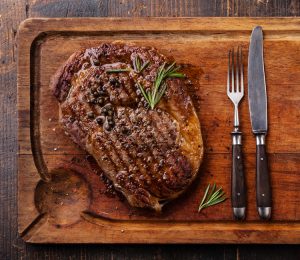
SteakThe investigators looked at four distinct categories of meat consumption (total meat, red meat, processed meat, and poultry) and the risk of 25 common diseases (excluding cancer). In each case, they divided meat consumption into quartiles and compared the disease risk for those in the highest quartile to those in the lowest quartile.

For the sake of simplicity, I will only report the most significant disease risks (those with p ≤001).

Total Meat Consumption (Lowest quartile = 1.2 oz/d; Highest quartile = 4.1 oz/d):

Disease Increased

Risk

Heart Disease 29%
Stroke 24%
Diverticular Disease 29%
Colon Polyps 14%
Diabetes 85%

Red Meat Consumption (Lowest quartile = 0.2 oz/d; Highest quartile = 2.0 oz/d):

Disease Increased

Risk

Heart Disease 25%
Stroke NS
Diverticular Disease 26%
Colon Polyps 11%
Diabetes 53%

Processed Meat Consumption (Lowest quartile = 0.15 oz/d; Highest quartile = 1.0 oz/d):

Disease Increased

Risk

Heart Disease 17%
Stroke 23%
Diverticular Disease 18%
Colon Polyps 11%
Diabetes 52%

Poultry Consumption (Lowest quartile = 1.2 oz/d; Highest quartile = 4.1 oz/d):

Disease Increased

Risk

Heart Disease 12%
Stroke NS
Diverticular Disease 18%
Colon Polyps 11%
Diabetes 32%
GERD 16%
Gastritis 10%

My evaluation of the data is:

  • These differences are highly significant (p <001) and the study size was very large (~475,000 participants), so the increased risk is probably true for a high-income Western country like the UK.
    • However, some of these differences are relatively small. It’s easy to understand how they might be missed in smaller studies.
    • Even increased risk in the 25-30% range might disappear in studies that combine data from high-income countries and third world countries.
    • With this perspective it is easy to understand why previous studies have been so confusing.
  • Because the investigators looked at the effect of each kind of meat separately, one can get a better idea of the relative contribution of each meat to various diseases [With, of course, the caveat that people who consume more red meat also tend to consume more processed meat and vice versa.] For example:
    • Red meat appears to contribute more to heart disease risk than processed meat or poultry – possibly due to its high saturated fat and cholesterol content.
    • Processed meat appears to contribute more to stroke risk than red meat or poultry – possibly due to added nitrates and other food additives.
    • All meats appear to contribute to diverticular disease – possibly due to a change in gut bacteria because meats replace plant foods in the diet.
  • The increased risk of GERD and gastritis associated with poultry consumption was surprising, but the increased risk was small.

The authors concluded, “Our findings from this large prospective study of British adults show that meat consumption is associated with higher risks of several common conditions but a lower risk of iron deficiency anemia…Additional research is needed to evaluate whether these differences in risk reflect causal relationships, and if so what proportion [of these outcomes] could be prevented by decreasing meat consumption.”

Is It Meat Or Something Else?

Question MarkOf course, the question, “Is it meat or something else in our diet that is causing the increased risk of disease?” One hint that something else might be contributing to disease risk came when the authors corrected the data for obesity. The results are shown below:

Total Meat Consumption Corrected For Obesity

Disease Increased

Risk

Corrected

For Obesity

Heart Disease 29% 17%
Stroke 24% 22%
Diverticular Disease 29% 18%
Colon Polyps 14% 10%
Diabetes 85% 33%

Red Meat Consumption Corrected For Obesity

Disease Increased

Risk

Corrected

For Obesity

Heart Disease 25% 16%
Stroke NS NS
Diverticular Disease 26% 17%
Colon Polyps 11% 8%
Diabetes 53% 21%

Processed Meat Consumption Corrected For Obesity

Disease Increased

Risk

Corrected

For Obesity

Heart Disease 17% 9%
Stroke 23% 17%
Diverticular Disease 18% 17%
Colon Polyps 11% 8%
Diabetes 52% 24%

Poultry Consumption Corrected For Obesity

Disease Increased

Risk

Corrected

For Obesity

Heart Disease 12% 8%
Stroke NS NS
Diverticular Disease 14% 10%
Colon Polyps 6% 7%
Diabetes 32% 14%
GERD 16% 17%
Gastritis 10% 12%

When corrected for obesity, the risk of:

  • Heart disease decreased by 33-47%.
  • Diverticular disease decreased by 23-38%.
  • Diabetes decreased by 54-61%.

But how do we interpret that? It would be easy to conclude that the influence of meat consumption on heart disease, diverticular disease, and diabetes is small. However, that’s not the real world. People aren’t meat eaters or overweight. In the real world, people are often meat eaters and overweight.

So, the important question to ask is why so many meat eaters are overweight.

  • It could simply be a question of calories. A serving of steak is around 680 calories, while a serving of beans is around 110 calories.
  • It could be what is eaten with the steak or beans. A medium baked potato with butter and sour cream adds 300-500 calories. A vegetable stir fry adds 170 calories.
  • It could be how we cook it. In our country over 50% of chicken we eat is fried. And to make matters worse, we often add French Fries and other highly processed foods to our fried chicken meal.

What Does This Study Mean For You?

confusionThis study shows that in a high-income western society like ours, meat consumption is likely to increase our risk of several diseases, For example:

  • Red meat is associated with increased risk of heart disease, diabetes, and diverticular disease.
  • Processed meat is associated with increased risk of stroke, diabetes, and diverticular disease.
  • Poultry consumption is associated with increased risk of diabetes and digestive diseases.
  • All three kinds of meat are associated with obesity.

While it is easy to blame meat consumption for all our ills, it may be how we cook it and what we eat along with it.

Perhaps we should eat our meat the way they do in Third World countries. Rather than eating it as a main course, perhaps we should use it as flavoring for a vegetable stir fry or a lentil stew.

The Bottom Line

A recent study looked at the association of meat consumption with disease risk in the UK. It found that:

  • Red meat is associated with increased risk of heart disease, diabetes, and diverticular disease.
  • Processed meat is associated with increased risk of stroke, diabetes, and diverticular disease.
  • Poultry consumption is associated with increased risk of diabetes and digestive diseases.
  • All three kinds of meat are associated with obesity.

For more information on this study and what it means for you, read the article above.

These statements have not been evaluated by the Food and Drug Administration. This information is not intended to diagnose, treat, cure or prevent any disease.

____________________________________________________________________________

My posts and “Health Tips From the Professor” articles carefully avoid claims about any brand of supplement or manufacturer of supplements. However, I am often asked by representatives of supplement companies if they can share them with their customers.

My answer is, “Yes, as long as you share only the article without any additions or alterations. In particular, you should avoid adding any mention of your company or your company’s products. If you were to do that, you could be making what the FTC and FDA consider a “misleading health claim” that could result in legal action against you and the company you represent.

For more detail about FTC regulations for health claims, see this link.

https://www.ftc.gov/business-guidance/resources/health-products-compliance-guidance

______________________________________________________________________

About The Author 

Dr. Chaney has a BS in Chemistry from Duke University and a PhD in Biochemistry from UCLA. He is Professor Emeritus from the University of North Carolina where he taught biochemistry and nutrition to medical and dental students for 40 years.  Dr. Chaney won numerous teaching awards at UNC, including the Academy of Educators “Excellence in Teaching Lifetime Achievement Award”. Dr Chaney also ran an active cancer research program at UNC and published over 100 scientific articles and reviews in peer-reviewed scientific journals. In addition, he authored two chapters on nutrition in one of the leading Biochemistry textbooks for medical students.

Since retiring from the University of North Carolina, he has been writing a weekly health blog called “Health Tips From the Professor”. He has also written two best-selling books, “Slaying the Food Myths” and “Slaying the Supplement Myths”. And most recently he has created an online lifestyle change course, “Create Your Personal Health Zone”. For more information visit https://chaneyhealth.com.

For the past 54 years Dr. Chaney and his wife Suzanne have been helping people improve their health holistically through a combination of good diet, exercise, weight control and appropriate supplementation.

Will Processed Meat Kill You?

What Is The Truth About Meat?

Author: Dr. Stephen Chaney 

Vegans will tell you that any meat is bad for you. Keto enthusiasts haven’t found a meat they don’t like. To them grains and most fruits and vegetables are the problem.

But what about those of us who aren’t at either extreme? Which meat, if any, should be part of a healthy diet? And how much of them should we eat?

For years the paradigm had been clear:

  • Fish was best, especially fish rich in omega-3s. They were good for your heart and your brain. And some studies suggested that high intake of omega-3-rich fish might help you live longer.
  • Poultry and other white meats were neutral.
  • Red meat was probably bad for you. It was high in saturated fat and cholesterol, and some studies linked it to an increased risk of heart disease. Plus, the International Agency for Research on Cancer (IARC), an agency of the WHO, listed it as a probable carcinogen. [Note: Recent studies have questioned concerns about red meat. I will discuss this below.]
  • Processed meats were considered a “no-no” The IARC listed processed meat as a definite carcinogen for humans based on studies linking it to colon, stomach, lung, and pancreatic cancers. It is also linked to an increased risk of heart disease.

However, most of these studies were done in the United States. And our diet is very different from that of many other countries.

That’s why a recent study (R Iqbal et al, American Journal of Clinical Nutrition, 114:1049-1058, 2021) caught my eye. The study was designed to measure the association between unprocessed red meat & poultry and processed meat intake with the risk both mortality and major cardiovascular disease with cancer as a secondary end point. And the study used data from 21 countries around the world except the United States.

How Was This Study Done?

Clinical StudyThe authors used data from the Prospective Urban Rural Epidemiology (PURE) study. The study is a large-scale (164,007 individuals), prospective (meaning it follows the individuals over time rather than taking measurements from them at a single time) study. The individuals in the study were aged 35-70 years and were followed for an average of 9.5 years.

The individuals came from 21 low-, middle-, and high-income countries.

  • The low-income countries included Bangladesh, India, Pakistan, Tanzania, and Zimbabwe.
  • The middle-income countries included Argentina, Brazil, Chile, China, Columbia, Iran, Poland, South Africa, and Turkey.
  • The high-income countries included Canada, Saudi Arabia, Sweden, and the United Arab Emirates. [Note: The United States was not included in the study.]

At the beginning of the study and at 3, 6, and 9 years the following data were collected from everyone enrolled in the study.

  • Demographic information (age, sex, location, education, wealth index, and smoking status).
  • Lifestyle information (diet and physical activity).
  • Health history.
  • Medication use.
  • Cardiovascular events and mortality.

Will Processed Meat Kill You?

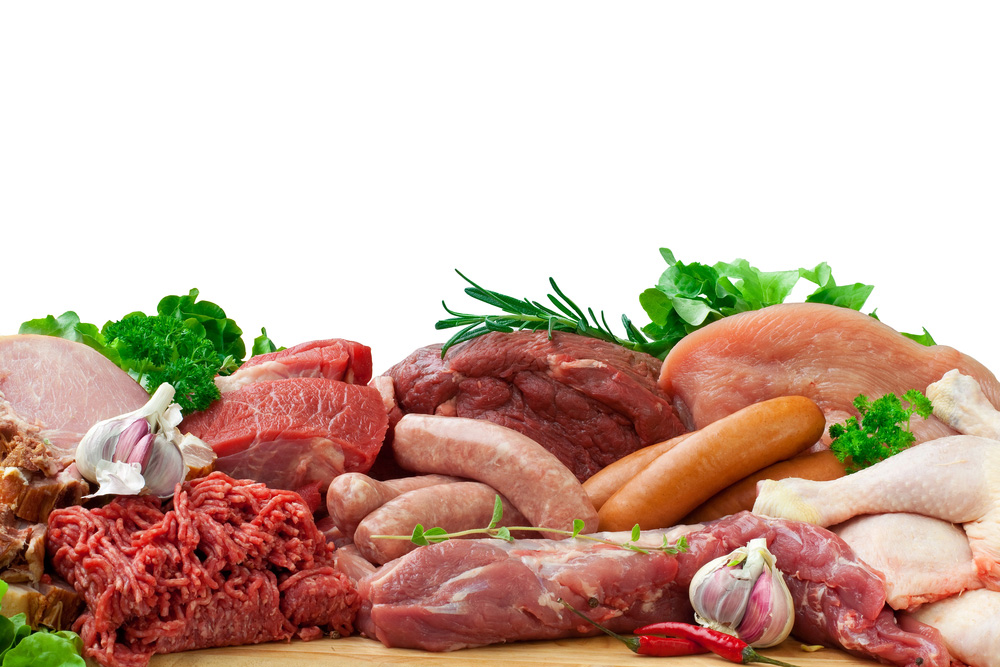
The authors compared high intake of processed meats (5 ounces per week, the equivalent of two sausages/week) with zero intake of processed meats. They reported that high intake of processed meats increased the risk of:

  • Mortality by 51%.
  • Major cardiovascular disease by 46%.
  • Non-cardiovascular mortality by 50%
  • Cancer by 84%.
  • Heart attack by 62%.
  • Stroke by 56%.

Furthermore, even as little as 1.5 ounces of processed meat per week significantly increased the risk of mortality.

For red meat and poultry, the authors compared high intake (9 ounces per week) with low intake (2 ounces per week). For both red meat and poultry they did not find any association between high weekly intake and any of the health outcomes.

[I would note however, that many Americans consume 4 ounces of chicken or an 8-ounce steak at dinner – that’s one meal on one day. The corresponding weekly intake would be 28 ounces of chicken or 56 ounces of red meat. That’s significantly higher than the highest weekly intake used in this study.]

The authors concluded, “We observed no significant association between the consumption of unprocessed red meat and poultry intake and health outcomes. And higher intake of processed meat was associated with higher risks of mortality and cardiovascular disease. These findings may indicate that limiting the intake of processed meat should be encouraged.”

In my opinion, there are so many studies linking the consumption of processed meat with heart disease, cancer, and premature death that the last sentence of their conclusion should have said, “These findings unambiguously confirm that limiting the intake of processed meats should be encouraged.”

What Is The Truth About Meat? 

truthRed Meat:

Yes, there is a lot of confusion about red meat. Many studies, like this one, find no adverse health effects associated with red meat consumption. That has led many experts to conclude that the dangers of red meat have been greatly exaggerated.

I think we should dig a little deeper. Most of the studies showing that red meat consumption increases the risk of heart disease, cancer, and mortality have been done in this country. So, perhaps we should be asking what is different about red meat consumption in our country.

There are several factors to consider:

  • Cooking Methods: The authors of this article pointed out that we often grill our meat at high temperatures which causes the formation of cancer-causing chemicals, while many of the countries in the PURE database stew their red meat at much lower temperatures.
  • Diet Context: As I have explained in a previous article of Health Tips From the Professor, fruits, vegetables, and whole grains are the antidotes to the cancer-causing chemicals formed when we cook red meat. And they bind to cholesterol in the intestine and flush it out of the body. Finally, they dilute the saturated fat in red meat with polyunsaturated fats, which helps create a healthier balance of fats.

In this country we often pair our steaks with French fries or a baked potato loaded with butter and sour cream. However, in low- and middle-income countries red meat is an expensive luxury and is often used as a garnish to dishes containing lots of vegetables and whole grains.

  • Amount Consumed: As a mentioned above, the amount of red meat most Americans consume in a week far exceeds the highest weekly intake of red meat in this study. The highest weekly consumption of red meat in this study is more consistent with using red meat as a garnish than as a main course.

Poultry:

For poultry, there is no confusion. Studies done in this country also find no association between poultry consumption and cardiovascular disease, cancer, or mortality. That may be due to a healthier fat profile and the ways in which poultry is usually cooked.

Processed Meat:

For processed meat, there is also no confusion. Virtually every published study from across the world agrees that it increases the risk of cancer, heart disease, and premature death. And the effect is not trivial. This study suggests that just 2 sausages a week is enough to increase your risk of premature death by 50%! So, the answer to the question, “Will processed meat kill you?” appears to be, “Yes”.

The authors of this article pointed out that the saturated fat and cholesterol in processed meat and red meat were very similar. They didn’t mention it, but the cooking techniques are also similar. So, neither of these explain why processed meat is so bad for us.

However, the amounts of preservatives and food additives in processed and unprocessed meats differ greatly. Based on this, the authors of the study and many other experts postulate that it is the preservatives and food additives that are responsible for the health risks of processed meats.

What Does this Mean For You? 

This study agrees with many other studies showing that processed meats are bad for us. The authors recommend limiting your intake of processed meats.

However, their data show that as little as two strips of bacon, one hot dog, or half a large sausage per week significantly increases your risk of heart disease, cancer, and premature death. Based on that, my advice would be to avoid processed meats as much as possible.

As I described above, most experts feel that it is the preservatives and food additives that are responsible for the health risks associated with processed meats.

Some studies suggest that nitrates in processed meats may be the main culprit. Based on that belief, some food companies are offering nitrate-free processed meats as a healthier option.

However, there still may be some additives in nitrate-free processed meats (read the label carefully), and we have no clinical studies showing that the nitrate-free processed meats in the marketplace are good for us.

Red meat is more confusing. This study and others suggest it poses no health hazards. And many experts are telling you that the warnings about consuming red meat were overblown. They are telling you that red meat is good for you.

However, some studies suggest that red meat increases your risk of heart disease, cancer and premature death. When you examine the data behind the studies, I think that better advice would be that red meat can be good for you or bad for you depending on three factors:

  • Portion size: We should think of red meat as a garnish rather than a main course – 3-4 ounces is a healthy portion size. 8-12 ounces may be too much.
  • Cooking method: Many of the bad things associated with red meat are the result of high temperature cooking, especially over a flame or on a grill. Choose low temperature cooking methods whenever possible.
  • Diet context: Whole fruits, vegetables and whole grains are the antidotes to all the bad things associated with red meat. 3-4 ounces of red meat in a vegetable stir fry or green salad is likely to be much better for you than an 8-ounce steak with French fries.

Also, red meat already has more than enough saturated fat and cholesterol. Adding foods or sauces high in fat and cholesterol may overload the body’s ability to safely process them. But adding vegetables or vegetable oils helps to restore a better balance between good and bad fats.

Finally, this and other studies agree that white meat is healthy. My only advice is:

  • Avoid white meat that has been fried (especially by fast food restaurants that only change their oil every 20,000 miles) or cooked with fatty sauces.
  • Think of the whole diet rather than just the protein source. White meat will be the healthiest as part of a whole food, primarily plant-based diet.

The Bottom Line 

A recent study reported that eating as 5 ounces of processed foods per week increases your risk of heart disease, cancer, and premature death by 50%. That is equivalent to two sausages per week!) The authors of the study recommended that you limit your intake of processed meats.

However, the study showed that even as little as 1.5 ounces (2 strips of bacon, one hot dog, or half of a large sausage) per week significantly increases your risk of all three. Based on that data, my recommendation is to consider avoiding processed meat altogether.

The study reported that unprocessed red and white meat are not associated with increased health risks. I put those findings into the context of other published studies on the topic. I discuss my recommendations for unprocessed red and white meat in the article above.

For more information on this study and what it means for you, read the article above.

These statements have not been evaluated by the Food and Drug Administration. This information is not intended to diagnose, treat, cure or prevent any disease.

____________________________________________________________________________

My posts and “Health Tips From the Professor” articles carefully avoid claims about any brand of supplement or manufacturer of supplements. However, I am often asked by representatives of supplement companies if they can share them with their customers.

My answer is, “Yes, as long as you share only the article without any additions or alterations. In particular, you should avoid adding any mention of your company or your company’s products. If you were to do that, you could be making what the FTC and FDA consider a “misleading health claim” that could result in legal action against you and the company you represent.

For more detail about FTC regulations for health claims, see this link.

https://www.ftc.gov/business-guidance/resources/health-products-compliance-guidance

_____________________________________________________________________

About The Author 

Dr. Chaney has a BS in Chemistry from Duke University and a PhD in Biochemistry from UCLA. He is Professor Emeritus from the University of North Carolina where he taught biochemistry and nutrition to medical and dental students for 40 years.

Dr. Chaney won numerous teaching awards at UNC, including the Academy of Educators “Excellence in Teaching Lifetime Achievement Award”.

Dr Chaney also ran an active cancer research program at UNC and published over 100 scientific articles and reviews in peer-reviewed scientific journals. In addition, he authored two chapters on nutrition in one of the leading biochemistry text books for medical students.

Since retiring from the University of North Carolina, he has been writing a weekly health blog called “Health Tips From the Professor”. He has also written two best-selling books, “Slaying the Food Myths” and “Slaying the Supplement Myths”. And most recently he has created an online lifestyle change course, “Create Your Personal Health Zone”. For more information visit https://chaneyhealth.com.

For the past 54 years Dr. Chaney and his wife Suzanne have been helping people improve their health holistically through a combination of good diet, exercise, weight control and appropriate supplementation.

Could What You Eat Save The Planet?

Eating For A Healthy Planet

Author: Dr. Stephen Chaney 

Earth DayEarth Day is tomorrow. So, it is time for my annual reminder that what you eat affects a lot more than just your health. It also affects the health of our planet. Once again, it’s time to ask yourself, “Could what you eat save the planet?

This is not a new question, but a recent commission of international scientists has conducted a comprehensive study into our diet and its effect on our health and our environment. Their report (W. Willet et al, The Lancet, 393, issue 10170, 447-492, 2019) serves as a dire warning of what will happen if we don’t change our ways.

The commission carefully evaluated diet and food production methods and asked three questions:

  • Are they good for us?
  • Are they good for the planet?
  • Are they sustainable? Will they be able to meet the needs of the projected population of 10 billion people in 2050 without degrading our environment?

The commission described the typical American diet as a “lose-lose-lose diet”. It is bad for our health. It is bad for the planet. And it is not sustainable.

In its place they carefully designed their version of a primarily plant-based diet they called a “win-win-win diet”. It is good for our health. It is good for the planet. And it is sustainable.

In their publication they refer to their diet as the “universal healthy reference diet” (What else would you expect from a committee?). However, it has become popularly known as the “Planetary Diet”.

I have spoken before about the importance of a primarily plant-based diet for our health. In that context it is a personal choice. It is optional.

However, this report is a wake-up call. It puts a primarily plant-based diet in an entirely different context. It is essential for the survival of our planet. It is no longer optional.

If you care about our environment…If you care about saving our planet, there is no other choice.

How Was The Study Done?

The publication (W. Willet et al, The Lancet, 393, issue 10170, 447-492, 2019) was the report of the EAT-Lancet Commission on Healthy Diets from Sustainable Food Systems. This Commission convened 30 of the top experts from across the globe to prepare a science-based evaluation of the effect of diet on both health and sustainable food production through the year 2050. The Commission included world class experts on healthy diets, agricultural methods, climate change, and earth sciences. The Commission reviewed 356 published studies in preparing their report.

Can The Foods You Eat Affect The Health Of Our Planet?

Factory FarmWhen they looked at the effect of food production on the environment, the Commission concluded:

  • “Strong evidence indicates that food production is among the largest drivers of global environmental change.” Specifically, the commission reported:
    • Agriculture occupies 40% of global land (58% of that is for pasture use).
    • Food production is responsible for 30% of global greenhouse gas emissions and 70% of freshwater use.
    • Conversion of natural ecosystems to croplands and pastures is the largest factor causing species to be threatened with extinction. Specifically, 80% of extinction threats to mammals and bird species are due to agricultural practices.
    • Overuse and misuse of nitrogen and phosphorous in fertilizers causes eutrophication. In case you are wondering, eutrophication is defined as the process by which a body of water becomes enriched in dissolved nutrients (such as phosphates from commercial fertilizer) that stimulate the growth of algae and other aquatic plant life, usually resulting in the depletion of dissolved oxygen. This creates dead zones in lakes and coastal regions where fish and other marine organisms cannot survive.
    • About 60% of world fish stocks are fully fished and more than 30% are overfished. Because of this, catch by global marine fisheries has been declining since 1996.
  • “Reaching the Paris Agreement of limiting global warming…is not possible by only decarbonizing the global energy systems. Transformation to healthy diets from sustainable food systems is essential to achieving the Paris Agreement.”
  • The world’s population is expected to increase to 10 billion by 2050. The current system of food production is unsustainable.

Food ChoicesWhen they looked at the effect of the foods we eat on the environment, the Commission concluded:

  • Beef and lamb are the biggest contributors to greenhouse gas emissions and land use.
    • The concern about land use is obvious because of the large amount of pastureland required to raise cattle and sheep.
    • The concern about greenhouse gas emissions is because cattle and sheep are ruminants. They not only breathe out CO2, but they also release methane into the atmosphere from fermentation in their rumens of the food they eat. Methane is a potent greenhouse gas, and it persists in the atmosphere 25 times longer than CO2. 

The single most important thing we can do as individuals to reduce greenhouse gas emissions is to eat less beef and lamb. [Note: grass fed cattle produce more greenhouse gas emissions than cattle raised on corn because they require 3 years to bring to market rather than 2 years.] 

    • In contrast, plant crops reduce greenhouse gas emissions by removing CO2 from the atmosphere.
  • In terms of energy use beef, lamb, pork, chicken, dairy, and eggs all require much more energy to produce than any of the plant foods.
  • In terms of eutrophication of our lakes and oceans, beef, lamb, and pork all cause much more eutrophication than any plant food. Dairy and eggs cause more eutrophication than any plant food except fruits.

Eating For A Healthy Planet

Planetary DietIn the words of the Commission: “[The Planetary Diet] largely consists of vegetables, fruits, whole grains, legumes, nuts, and unsaturated oils. It includes a low to moderate amount of seafood, poultry, and eggs. It includes no or a very low amount of red meat, processed meat, sugar, refined grains, and starchy vegetables.”

When described in that fashion it sounds very much like other healthy diets such as semi-vegetarian, Mediterranean, DASH, and Flexitarian. However, what truly distinguishes it from the other diets is the restrictions placed on the non-plant portion of the diet to make it both environmentally friendly and sustainable. Here is a more detailed description of the diet:

  • It starts with a vegetarian diet. Vegetables, fruits, beans, nuts, soy foods, and whole grains are the foundation of the diet.
  • It allows the option of adding one serving of dairy a day (It turns out that cows produce much less greenhouse emissions per serving of dairy than per serving of beef. That’s because cows take several years to mature before they can be converted to meat, and they are emitting greenhouse gases the entire time).
  • It allows the option of adding one 3 oz serving of fish or poultry or one egg per day.
  • It allows the option of swapping seafood, poultry, or egg for a 3 oz serving of red meat no more than once a week. If you want a 12 oz steak, that would be no more than once a month.

This is obviously very different from the way most Americans currently eat. According to the Commission:

  • “This would require greater than 50% reduction in consumption of unhealthy foods, such as red meat and sugar, and greater than 100% increase in the consumption of healthy foods, such as nuts, fruits, vegetables, and legumes”.
  • “In addition to the benefits for the environment, “dietary changes from current diets to healthy diets are likely to substantially benefit human health, averting about 10.8-11.6 million deaths per year globally.”

What Did The Commission Recommend About Food Production?

In addition to changes in our diets, the Commission also recommended several changes in the way food is produced. Here are a few of them.

1) Reduce greenhouse gas emissions from the fuel used to transport food to market.

2) Reduce food losses and waste by at least 50%.

3) Make radical improvements in the efficiency of fertilizer and water use. In terms of fertilizer, the change would           be two-fold:

  • In developed countries, reduce fertilizer use and put in place systems to capture runoff and recycle the phosphorous.
  • In third world countries, make fertilizer more available so that crop yields can be increased, something the Commission refer to as eliminating the “yield gap” between third world and developed countries.
  • Stop the expansion of new agricultural land use into natural ecosystems and put in place policies aimed at restoring and re-foresting degraded land.
  • Manage the world’s oceans effectively to ensure that fish stocks are used responsibly and global aquaculture (fish farm) production is expanded sustainability.

What we can do: While most of these are government level policies, we can contribute to the first three by reducing personal food waste and purchasing organic produce locally whenever possible.

Could What You Eat Save The Planet?

The short answer is, “Yes, what we eat can go a long way towards protecting the health of our planet.”

If you are a vegan, you are probably asking why the Commission did not recommend a completely plant-based diet. The answer is that a vegan diet is perfect for the health of our planet. However, the Commission wanted to make a diet that was as consumer friendly as possible and still meet their goals of a healthy, environmentally friendly, and sustainable diet.

If you are eating a typical American diet or one of the fad diets that encourage meat consumption, you are probably wondering how you can ever make such drastic changes to your diet. The answer is “one step at a time”. If you have read the Forward to my books “Slaying The Food Myths” or “Slaying the Supplement Myths”, you know that my wife and I did not change our diet overnight. Our diet evolved to something very close to the Planetary Diet over a period of years.

The Commission also purposely designed the Planetary Diet so that you “never have to say never” to your favorite foods. Three ounces of red meat a week does not sound like much, but it allows you a juicy steak once a month.

Sometimes you just need to develop a new mindset. As I shared in my books, my father prided himself on grilling the perfect steak. I love steaks, but I decided to set a few parameters. I don’t waste my red meat calories on anything besides filet mignon at a fine restaurant. It must be a special occasion, and someone else must be buying. That limits it to 2-3 times a year. I still get to enjoy good steak on occasion, and I stay well within the parameters of the Planetary diet.

Develop your strategy for enjoying some of your favorite foods within the parameters of the Planetary Diet and have fun with it.

The Bottom Line

Could what you eat save the planet? This is not a new question, but a recent commission of international scientists has conducted a comprehensive study into our diet and its effect on our health and our environment. Their report serves as a dire warning of what will happen to us and our planet if we don’t change our ways.

The Commission carefully evaluated diet and food production methods and asked three questions:

  • Are they good for us?
  • Are they good for the planet?
  • Are they sustainable? Will they be able to meet the needs of the projected population of 10 billion people in 2050 without degrading our environment.

The Commission described the typical American diet as a “lose-lose-lose diet”. It is bad for our health. It is bad for the planet. And it is not sustainable.

In its place they carefully designed their version of a primarily plant-based diet they called a “win-win-win diet”. It is good for our health. It is good for the planet. And, it is sustainable.

In their publication they refer to their diet as the “universal healthy reference diet” (What else would you expect from a committee?). However, it has become popularly known as the “Planetary Diet”.

The Planetary Diet is similar to other healthy diets such as semi-vegetarian, Mediterranean, DASH, and Flexitarian. However, what truly distinguishes it from the other diets is the restrictions placed on the non-plant portion of the diet to make it both environmentally friendly and sustainable (for details, read the article above).

I have spoken before about the importance of a primarily plant-based diet for our health. In that context it is a personal choice. It is optional.

However, this report is a wake-up call. It puts a primarily plant-based diet in an entirely different context. It is essential for the survival of our planet. It is no longer optional.

If you care about global warming…If you care about saving our planet, there is no other choice.

For more details read the article above.

These statements have not been evaluated by the Food and Drug Administration. This information is not intended to diagnose, treat, cure or prevent any disease.

______________________________________________________________________________

My posts and “Health Tips From the Professor” articles carefully avoid claims about any brand of supplement or manufacturer of supplements. However, I am often asked by representatives of supplement companies if they can share them with their customers.

My answer is, “Yes, as long as you share only the article without any additions or alterations. In particular, you should avoid adding any mention of your company or your company’s products. If you were to do that, you could be making what the FTC and FDA consider a “misleading health claim” that could result in legal action against you and the company you represent.

For more detail about FTC regulations for health claims, see this link.

https://www.ftc.gov/business-guidance/resources/health-products-compliance-guidance

 ________________________________________________________________________

About The Author 

Dr. Chaney has a BS in Chemistry from Duke University and a PhD in Biochemistry from UCLA. He is Professor Emeritus from the University of North Carolina where he taught biochemistry and nutrition to medical and dental students for 40 years.

Dr. Chaney won numerous teaching awards at UNC, including the Academy of Educators “Excellence in Teaching Lifetime Achievement Award”.

Dr Chaney also ran an active cancer research program at UNC and published over 100 scientific articles and reviews in peer-reviewed scientific journals. In addition, he authored two chapters on nutrition in one of the leading biochemistry text books for medical students.

Since retiring from the University of North Carolina, he has been writing a weekly health blog called “Health Tips From the Professor”. He has also written two best-selling books, “Slaying the Food Myths” and “Slaying the Supplement Myths”. And most recently he has created an online lifestyle change course, “Create Your Personal Health Zone”. For more information visit https://chaneyhealth.com.

For the past 54 years Dr. Chaney and his wife Suzanne have been helping people improve their health holistically through a combination of good diet, exercise, weight control and appropriate supplementation.

Can You Cut Your Risk Of Heart Disease By 90%?

The Effect Of Ultra-Processed Foods On Heart Disease Risk
 

Author: Dr. Stephen Chaney

strong heartHeart disease is a killer. It continues to be the leading cause of death – both worldwide and in industrialized countries like the United States and the European Union. When we look at heart disease trends, it is a good news – bad news situation.

  • The good news is that heart disease deaths are continuing to decline in adults over 70.
    • The decline among senior citizens is attributed to improved treatment of heart disease and more seniors following heart-healthy diets.
  • The bad news is that heart disease deaths are starting to increase in younger adults, something I reported in an earlier issue of “Health Tips From the Professor.”
    • The reason for the rise in heart disease deaths in young people is less clear. However, the obesity epidemic, junk and convenience foods, and the popularity of fad diets all likely play a role.

Everyone has a magic diet to reduce the risk of heart disease. The American Heart Association tells us to avoid fats, especially saturated fats. Vegans tell us to avoid animal protein. Paleo and Keto enthusiasts tell us carbs are the problem.

But what if we eliminated junk and convenience food AND switched to a really healthy diet? How much would that reduce heart disease risk? A recent study (Y Willett et al, The American Journal of Medicine, in press, 2026) looked at the first part of that question. It looked at the effect of ultra-processed food (what we call junk and convenience foods) consumption on the risk of developing heart disease.

How Was This Study Done?

Clinical StudyThe scientists analyzed data from 4787 participants in the most recently published (2021 to 2023) National Health and Nutrition Examination Survey (NHANES). The average age of participants in the survey was 55 years, with 56% of them being women.

All the participants in this study had completed a dietary survey of everything they ate over the last two days. They also reported whether they had ever experienced a heart attack or stroke.

Ultra-processed foods were defined as foods that are industrially modified and loaded with added fats, sugars, starches, salts, and chemical additives.

The percentage of ultra-processed foods in their diet was calculated, and the participants were divided into quartiles based on the percentage of ultra-processed foods they consumed.

Participants with the highest quartile of ultra-processed food consumption were compared to those in the lowest quartile with respect to the risk of cardiovascular disease (self-reported heart attack or stroke). The data were corrected for age, sex, race, ethnicity, smoking status, and income.

The Effect Of Ultra-Processed Foods On Heart Disease Risk

Fast Food DangersThe results were striking:

  • The participants in the highest quartile for ultra-processed food consumption had a 47% higher risk of heart disease compared to those in the lowest quartile for ultra-processed food consumption.

The authors concluded, “Adults who consumed the highest amount of ultra-processed foods had a statistically significant 47% increased risk of heart disease. Large scale randomized trials are needed, but in the meantime, health care providers should advise patients to decrease consumption of ultra-processed foods in addition to adopting other therapeutic lifestyle changes and adjunctive drug therapies of proven benefit.”

The authors recognized the difficulty of making those changes in a world where ultra-processed foods are ubiquitous and cheap.

However, they drew parallels to tobacco use in this country. They said, “Just as it took decades for the dangers of smoking to become widely accepted, reducing reliance on ultra-processed foods may take time. This is partly due to the influence of large multinational companies that dominate the food market. In addition, many people face limited access to healthier food options.”

They went on to say, “Addressing ultra-processed foods isn’t just about individual choices – it’s about creating environments where the healthy option is the easy option.”

Can You Cut Your Risk Of Heart Disease By 90%?

The short answer is, “probably not”. But you can reduce the risk of heart disease by a lot – and probably by a lot more than 47%.

That’s because this study did not look at what the participants were replacing the ultra-processed foods with. Some participants may have replaced them with whole food, primarily plant-based diets. Others may have replaced ultra-processed foods with whole food, meat-based diets high in saturated fats.

So, let’s look at the other side of the equation – how much you can reduce your risk of heart disease by eating a healthier diet. In a recent issue of “Health Tips From The Professor”, I reviewed a meta-analysis published in 2022 that looked at 99 clinical studies with tens of thousands of participants that measured the associations between foods or food groups and heart disease risk.

That study reported that:

  • Processed Meat: A single serving of processed meat increased heart disease risk by 27% to 44%.
  • Red Meat: Unprocessed red meat increased heart disease risk by as much as 27% – but only at ≥3 servings per day. The results with lower intakes were inconsistent – some studies showed increased risk, but others did not.
  • Poultry, Eggs, and Dairy Foods: They did not appear to affect heart disease risk.
  • Fish: Two to four servings per week of fatty fish decreased heart disease risk by around 12%.
  • Fruit: Two servings per day of fruit reduced heart disease risk by 21-32%.Vegan Foods
  • Vegetables: Two servings of vegetables per day reduced heart disease risk by 18-21%.
  • Legumes (beans and peas): Four servings per week reduced the risk of heart disease by around 14%.
  • Nuts: One serving (a handful) per day reduced the risk of heart disease by around 25%. 
  • Whole Grains: Two servings of whole grains per day reduced the risk of heart disease by 25%-34%.
  • Overall: When heart-healthy foods were consumed as part of the Mediterranean diet heart disease risk was reduced by 47%. Similar overall reductions in heart disease risk are likely with other heart-healthy diets like DASH, MIND, Flexitarian (flexible semi-vegetarian), and vegan diets.

In summary:

  • The first study shows that eliminating ultra-processed foods (junk and convenience foods) from your diet can decrease heart disease risk by 47% – but doesn’t tell us what the ultra-processed foods were replaced with. And it would take a much larger study to determine which food swaps were most effective at reducing heart disease risk.
  • The second study was a meta-analysis that told us that eating more fish and plant foods in the context of a heart-healthy diet can decrease your risk of heart disease by 47% – but doesn’t tell us what those healthy foods were replacing. And many of the individual studies included in the meta-analysis were conducted when ultra-processed food consumption was much less than it is today.

It would be tempting to add 47% plus 47% and conclude that eliminating ultra-processed food consumption and replacing ultra-processed foods with heart-healthy foods could decrease your risk of heart disease by 94%. But it’s not that simple. There are too many unanswered questions from these studies.

But it is safe to say that if we eliminated ultra-processed foods AND replaced them with heart-healthy foods in the context of a heart-healthy diet, we should be able to reduce our heart disease risk by more than 47% – perhaps much more.

What Do These Studies Mean For You?

There are two important lessons from these studies:

#1: Eliminating ultra-processed foods from your diet will significantly decrease your risk of heart disease.

And it isn’t just heart disease. Other recent studies have shown that eliminating ultra-processed foods from your diet helps you:

  • Control your weight (It is perhaps the most important lifestyle change to make if you want to maintain GLP-1-aided weight loss).
  • Reduce your risk of cancer.
  • Reduce your risk of diabetes.
  • Reduce your risk of inflammatory diseases.
  • Reduce anxiety and depression.
  • Increase your healthspan (your healthy years).

In short, ultra-processed foods are killers.

#2: Replacing ultra-processed foods with heart-healthy foods (fruits, vegetables, legumes, nuts, whole grains, and fish) in the context of a healthy diet (Mediterranean, DASH, MIND, Flexitarian, and vegan, for example) is likely to decrease your risk of heart disease even more.

  • And if your diet consists of mostly heart-healthy foods, you can add moderate amounts of heart-neutral foods (poultry, eggs, and dairy).
  • And the latest evidence suggests that you can even add small amounts of red meat in the context of a heart-healthy diet (As I have said in previous issues of “Health Tips From the Professor”, plant foods contain the antidotes to all the bad things about red meat.)

Finally, you might ask why I emphasize both heart-healthy foods and heart-healthy diets. There are two reasons:

  • Most of us think in terms of foods rather than diets.
  • The food industry is only too happy to provide us with ultra-processed foods for “heart-healthy” diets like the vegan and Mediterranean diet.

The Bottom Line

Two recent studies have shown how each of us can dramatically reduce our risk of heart disease.

  • The first study showed that eliminating ultra-processed foods from our diet can significantly decrease our heart disease risk – but didn’t tell us what the ultra-processed foods were replaced with.
  • The second study showed that eating more heart-healthy foods in the context of a heart-healthy diet can significantly decrease our risk of heart disease – but didn’t tell us what those healthy foods were replacing.

Taken together, those studies show us a clear path for dramatically decreasing our heart disease risk.

For more details about these studies and what they mean for you, read the article above.

These statements have not been evaluated by the Food and Drug Administration. This information is not intended to diagnose, treat, cure or prevent any disease.

 _____________________________________________________________________________

My posts and “Health Tips From the Professor” articles carefully avoid claims about any brand of supplement or manufacturer of supplements. However, I am often asked by representatives of supplement companies if they can share them with their customers.

My answer is, “Yes, as long as you share only the article without any additions or alterations. In particular, you should avoid adding any mention of your company or your company’s products. If you were to do that, you could be making what the FTC and FDA consider a “misleading health claim” that could result in legal action against you and the company you represent.

For more detail about FTC regulations for health claims, see this link.

https://www.ftc.gov/business-guidance/resources/health-products-compliance-guidance

_______________________________________________________________________

About The Author 

Dr. Chaney has a BS in Chemistry from Duke University and a PhD in Biochemistry from UCLA. He is Professor Emeritus from the University of North Carolina where he taught biochemistry and nutrition to medical and dental students for 40 years.  Dr. Chaney won numerous teaching awards at UNC, including the Academy of Educators “Excellence in Teaching Lifetime Achievement Award”.

Dr Chaney also ran an active cancer research program at UNC and published over 100 scientific articles and reviews in peer-reviewed scientific journals. In addition, he authored two chapters on nutrition in one of the leading biochemistry text books for medical students.

Since retiring from the University of North Carolina, he has been writing a weekly health blog called “Health Tips From the Professor”. He has also written two best-selling books, “Slaying the Food Myths” and “Slaying the Supplement Myths”. And most recently he has created an online lifestyle change course, “Create Your Personal Health Zone”. For more information visit https://chaneyhealth.com.

For the past 45 years Dr. Chaney and his wife Suzanne have been helping people improve their health holistically through a combination of good diet, exercise, weight control and appropriate supplementation.

 

Does Meat Increase Diabetes Risk?

Why Does Meat Increase Diabetes Risk?

Author: Dr. Stephen Chaney

diabetesThe statistics for type 2 diabetes are alarming. In the United States:

  • 38.1 million adults (15% of the adult population) had diabetes in 2021, with 95% of them having type 2 diabetes.
    • 8.7 million of those adults were unaware they had diabetes.
    • If current trends continue, by 2030 the number of adults with diabetes is projected to increase by 54% to around 55 million.
  • Another 96 million Americans (33% of the population) have pre-diabetes. Unless they change their diet and lifestyle, most of them are destined to progress to type 2 diabetes in the next few years.
  • Diabetes is the eight leading cause of death in this country.
  • The costs associated with diabetes in the United States are currently around $410 billion and are projected to increase to around $622 billion by 2030.

The statistics are not much different worldwide:

  • Type 2 diabetes currently affects more than 500 million people worldwide and is expected to double by 2050.
  • Diabetes is also the 8th leading cause of death worldwide.

This is a major concern because diabetes dramatically increases the risk of:

  • Heart disease and stroke.
  • Certain types of cancer.
  • Painful neuropathies.
  • Vision loss and blindness.
  • Cognitive decline and Alzheimer’s disease.

Just to name a few. Diabetes affects your quality of life, and it can shorten your lifespan by several years.

So, you are probably wondering what you can do to decrease your risk of developing type 2 diabetes. There are lots of fad diets (low carb, low fat, low glycemic, high fiber, Paleo, Keto, etc.), but the weight of evidence is that your best bet for decreasing the risk of developing diabetes is a healthy diet that:

  • Is primarily plant-based.
  • Consists mostly of unprocessed or minimally processed foods.
  • Emphasizes healthy fats such as monounsaturated and omega-3 fats.
  • Includes lots of fruits and vegetables.
  • Emphasizes whole rather than refined grains.
  • Includes plant protein sources like beans, nuts, and seeds.
  • Has a low caloric density (which it will if you follow the guidelines above), so you can lose weight slowly and naturally.

But what about meat? Here the data are less clear. Several studies have suggested that eating red and processed meat increases your risk of type-2 diabetes. Studies on poultry are mixed with some studies suggesting they increase the risk of developing type 2 diabetes, and other studies suggesting they have no effect.

Unfortunately, the data from the previous studies were inconsistent, in part because the methods used to collect and analyze the data varied widely from study to study. In addition, the studies were primarily performed in the United States and Europe, so it was unclear whether the correlation between meat consumption and type 2 diabetes was universal, or whether it was restricted to western countries.

With this in mind, the authors of the current study (C Li et al, The Lancet Diabetes and Endocrinology, 12: 619-630, 2024) decided to perform a much more comprehensive study by combining studies from all across the world that used similar methodologies.

How Was This Study Done? 

clinical studyThis study was a meta-analysis of data obtained from the InterConnect project. The InterConnect project is registry of more than 200 studies from around the world. The investigators chose 31 studies with a total of 1,966,444 individuals from 20 countries for this meta-analysis based on the following criteria:

  • Participants in the studies were adults between 40 and 60 years old.
  • Participants were excluded from the study if they already had type 2 diabetes.
  • The diets of participants in the studies were assessed by having the participants fill out standardized dietary assessment forms at the beginning of the study.
  • Participants were followed for an average of 10 years (7-15 years) to see how many developed a newly diagnosed case of type 2 diabetes. During this time 10,271 participants in these studies developed type 2 diabetes.
  • The correlation between 3 types of meat (processed meat, red meat, and poultry) and type 2 diabetes was adjusted for other factors that affect the risk of diabetes (e.g., age, sex, ethnicity, smoking, drinking, physical activity, obesity, and family history of type 2 diabetes)

Does Meat Increase Diabetes Risk? 

High Blood SugarThe results of this meta-analysis were:

  • There was a log-linear (greater than linear) dose-response correlation without any obvious threshold or ceiling effect with the risk of developing type-2 diabetes for all three meats tested in this study.
  • For processed meat each 50-gram increase (equivalent to 4 slices of smoked ham) increases the risk of developing type 2 diabetes by 15%.
  • For unprocessed red meat each 100-gram increase (equivalent to 3.5 ounces of steak) increases the risk of developing type 2 diabetes by 10%.
  • For poultry each 100-gram increase (equivalent to 3.5 ounces of chicken) increases the risk of developing type 2 diabetes by 8%. However, after correcting for other diet and lifestyle factors that increase the risk of type 2 diabetes, the effect of poultry on diabetes risk was non-significant.

When they looked at the effect of replacing one type of meat with another:

  • Replacing 50 grams of processed meat with 100 grams of unprocessed red meat decreased the risk of diabetes by 7%.
  • Replacing 50 grams of processed meat with 100 grams of poultry decreased the risk of diabetes by 10%.
  • I should note that previous studies have shown that replacing either processed meat or unprocessed red meat with vegetable protein foods (beans, nuts, and seeds) significantly decreases the risk of developing diabetes.


When they looked at different regions of the world:

  • The effect of both processed and unprocessed red meat on type 2 diabetes risk was seen in America, Europe, Western Pacific regions, and east Asia.
  • However, no effect of either unprocessed or processed red meat on type 2 diabetes risk was seen in the Eastern Mediterranean and South Asia.

The authors concluded, “The consumption of meat, particularly processed and unprocessed red meat, is a risk factor for developing type 2 diabetes across populations. These findings highlight the importance of reducing meat consumption for public health and should inform dietary guidelines.”

Why Does Meat Increase Diabetes Risk?

Question MarkThis study supports and strengthens previous studies suggesting that we should add red and processed meats to the list of risk factors for developing type 2 diabetes. However, unless you are a vegan, the idea of giving up all red and processed meat is probably a non-starter.

Instead, let’s ask why red and processed meats increase diabetes risk. Is it the meat itself, or something else that triggers the increase in the risk of developing type 2 diabetes. Is it:

#1: Guilt By Association: Diets high in meats are also high in saturated fats, which increase the risk of diabetes.

#2: Guilt By Omission: Diets high in meats are often low in fruits, vegetables, nuts, and seeds – all healthy foods that lower diabetes risk.

#3: Guilt By Addition: Processed meats contain additives that can increase the risk of developing diabetes. For example, nitrates or nitrites are often added as preservatives. But they can be converted in the gut to N-nitroso compounds which increase inflammation, which in turn increases the risk of developing diabetes.

#4: Guilt By Cooking: High temperature grilling and frying creates compounds that create oxidative stress, which can increase the risk of developing diabetes.

#5: Guilt By Microbiome: The microbiome (gut bacteria) of heavy meat eaters is very different from the microbiome of people who eat a more plant-based diet. If a meat eater consumes a steak, their gut bacteria convert L-carnitine in the meat to a toxic compound called trimethylamine N-oxide (TMAO). However, if you were able to convince a vegan to eat the same steak, that wouldn’t happen.

#6: Guilt By Diet Context: The fact that there was no association between red and processed meat and diabetes in Mediterranean and South Asian regions gives us an important clue. The bad effects of red and processed meats are influenced by the context of the overall diet. What do the cuisines of the Mediterranean and South Asian regions have in common? They are both primarily whole food, plant-based cuisines.

I have discussed each of these mechanisms in more detail in an article in a recent edition of “Health Tips From the Professor”.

I also discussed ways to reduce the risk of each of these mechanisms, but if you don’t want to read the article,here is a spoiler alert:

  • Plant foods are the antidotes for the bad things associated with red and processed meats.
  • We should think of meat as a garnish for a primarily plant-based meal rather than a main course with a baked potato or fries as a garnish.

The Bottom Line

A recent study looked at the effects various meats on the risk of developing type 2 diabetes worldwide. The study found:

  • For processed meat each 50-gram increase (equivalent to 4 slices of smoked ham) increases the risk of developing type 2 diabetes by 15%.
  • For unprocessed red meat each 100-gram increase (equivalent to 3.5 ounces of steak) increases the risk of developing type 2 diabetes by 10%.
  • The effect of poultry on diabetes risk was non-significant.

When they looked at the effect of replacing one type of meat with another:

  • Replacing 50 grams of processed meat with 100 grams of unprocessed red meat decreased the risk of diabetes by 7%.
  • Replacing 50 grams of processed meat with 100 grams of poultry decreased the risk of diabetes by 10%.
  • I should note that previous studies have shown that replacing either processed meat or unprocessed red meat with vegetable protein foods (beans, nuts, and seeds) significantly decreases the risk of developing diabetes.

The authors concluded, “The consumption of meat, particularly processed and unprocessed red meat, is a risk factor for developing type 2 diabetes across populations. These findings highlight the importance of reducing meat consumption for public health and should inform dietary guidelines.”

For more details on this study, why meats increase diabetes risk, and what this study means for you, read the article above.

These statements have not been evaluated by the Food and Drug Administration. This information is not intended to diagnose, treat, cure or prevent any disease.

 _____________________________________________________________________________

My posts and “Health Tips From the Professor” articles carefully avoid claims about any brand of supplement or manufacturer of supplements. However, I am often asked by representatives of supplement companies if they can share them with their customers.

My answer is, “Yes, as long as you share only the article without any additions or alterations. In particular, you should avoid adding any mention of your company or your company’s products. If you were to do that, you could be making what the FTC and FDA consider a “misleading health claim” that could result in legal action against you and the company you represent.

For more detail about FTC regulations for health claims, see this link.

https://www.ftc.gov/business-guidance/resources/health-products-compliance-guidance

 ________________________________________________________________________

About The Author 

Dr. Chaney has a BS in Chemistry from Duke University and a PhD in Biochemistry from UCLA. He is Professor Emeritus from the University of North Carolina where he taught biochemistry and nutrition to medical and dental students for 40 years.

Dr. Chaney won numerous teaching awards at UNC, including the Academy of Educators “Excellence in Teaching Lifetime Achievement Award”.

Dr Chaney also ran an active cancer research program at UNC and published over 100 scientific articles and reviews in peer-reviewed scientific journals. In addition, he authored two chapters on nutrition in one of the leading biochemistry text books for medical students.

Since retiring from the University of North Carolina, he has been writing a weekly health blog called “Health Tips From the Professor”. He has also written two best-selling books, “Slaying the Food Myths” and “Slaying the Supplement Myths”. And most recently he has created an online lifestyle change course, “Create Your Personal Health Zone”. For more information visit https://chaneyhealth.com.

For the past 53 years Dr. Chaney and his wife Suzanne have been helping people improve their health holistically through a combination of good diet, exercise, weight control and appropriate supplementation.

 

Is The New Food Guide Pyramid Healthy?

A Brief History Of USDA Food Guides

Author: Dr. Stephen Chaney

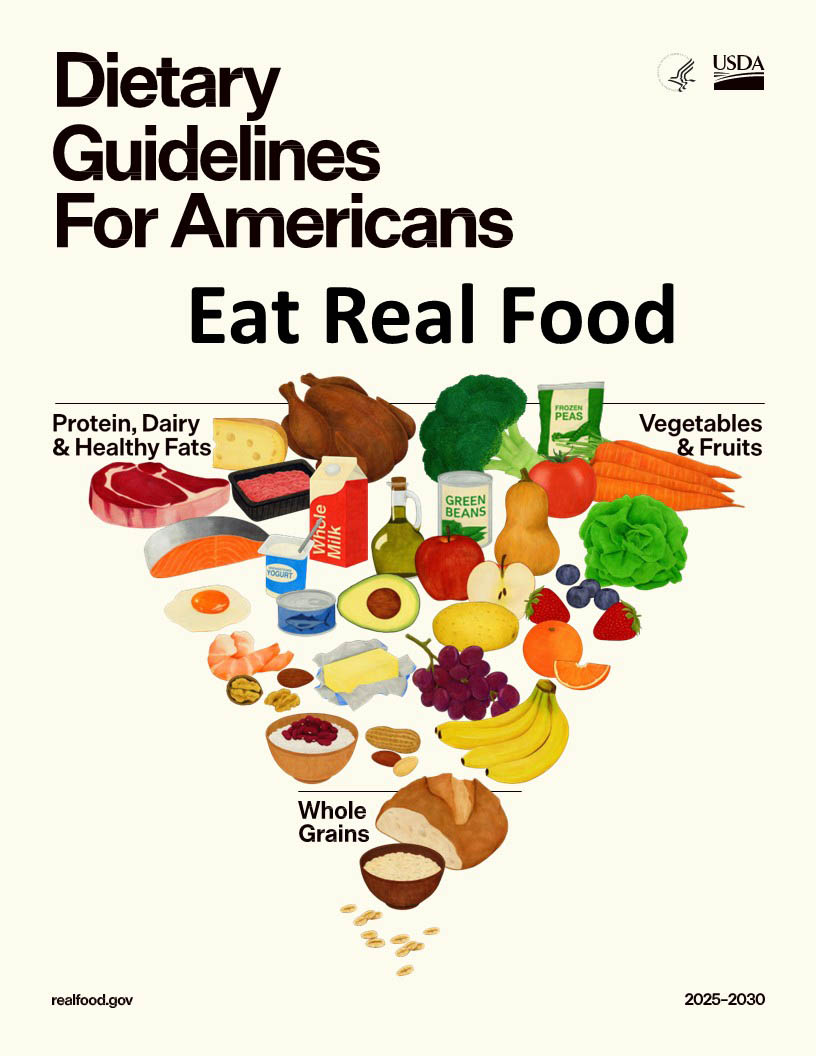
Unless you have cut yourself off from all outside media, you already know the USDA has just released new “Dietary Guidelines For Americans” and a new, upside down, food pyramid.

Both the AMA and AHA have endorsed the new guidelines with some reservations. But like everything else in today’s world they have become both political and controversial.

  • Some experts are saying, “The new guidelines are fantastic. They will make Americans much healthier. It’s about time the government caught up with the latest scientific advances.
  • Others are saying, “The new guidelines are terrible. They will set medicine back 20 years.”

As usual, the truth lies somewhere in the middle. I will explore that middle ground and discuss the pros and cons of the new dietary guidelines and food guide pyramid in this article.

But first we should start with something everyone can agree with, “What we are doing now isn’t working!” For example:

  • The percentage of Americans who are overweight or obese is approaching 70%.
  • The United States spends more on healthcare per person than any other country in the world. But we…
    • Rank 48th in life expectancy. We not only rank below every developed country, but we also rank below many 3rd world countries.
      • And we are losing ground. In 1990, we ranked 35th in life expectancy.
    • Rank 69th in health span (healthy life expectancy).
      • Again, we are losing ground. Our ranking was 42nd in 1990.
    • Rank dead last (183rd out of 183) in health span as a percentage of life expectancy.

In short, we are falling behind the rest of the world in terms of lifespan, health span, and percentage of healthy years.

And our deteriorating health is costly.

90% of our health care spending is for preventable diseases

A Brief History Of USDA Food Guides

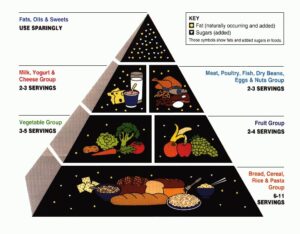
The USDA introduced the first food guide pyramid in 1992 based on the best nutrition science of the time. You probably remember the mantra:

  • 2-3 servings of dairy, preferably low fat.
  • 2-3 servings in the protein category (lean meats, fish, dry beans, eggs, and nuts).
  • 2-4 servings of fruits and 3-5 servings of vegetables.
  • 6-11 servings of grains (bread, cereals, rice, and pasta).
  • Fats, oils, and sweets were at the top of the pyramid with the caption, “Use Sparingly”.

This pyramid and the accompanying dietary guidelines were publicized so much that practically everyone knew them by heart.

Ten years later the USDA did a nutrition survey to see if their guidelines had changed American’s eating behavior. The answer was a clear, “No”. Only 5% of Americans ate according to the food guide pyramid.

The Geniuses at the USDA concluded that the food guide pyramid must be too difficult for the average American, so they introduced a simpler version, My Pyramid in 2005.

Guess what! Only 5% of Americans followed those recommendations, so they went to the super simple My Plate. By now you have probably guessed that only 5% of Americans followed the My Plate recommendations.

It turns out Americans weren’t confused by the recommendations. The recommendations were just too different from the way they were used to eating.

So, one change you will see in the new food guide pyramid is it includes some of Americans favorite foods, such as red meat, butter, and full fat dairy. Is that sacrilege or is it smart? Only time will tell.

With that in mind, let’s discuss the new “Dietary Guidelines For Americans”.

#1: Eat Real Food

This is one recommendation that virtually everyone agrees with. The average American is getting 55% of their calories from highly processed foods. And the health consequences of that much processed food are devastating. Consumption of highly processed foods is linked to higher risk of:

  • Obesity.
  • Type 2 diabetes.
  • Heart attack.
  • Stroke.
  • Some cancers.
  • Depression and anxiety.
  • Dementia
  • Premature death.

If you are wondering how we got to this point, the answer is simple. It stems from the desire of Americans to eat a healthier diet without giving up their favorite foods and the willingness of Big Food Inc (the food industry) to give us exactly what we want. For example:

  • Some people want to eat a more plant-based diet, but don’t want to give up their favorite meats. Big Food Inc is only too happy to oblige. They mix some fat, salt, and a witch’s brew of chemicals to give us phony baloney, faken bacon, and everyone’s favorite, tofurkey.
  • Some people are convinced keto diets are healthy, but don’t want to give their favorite sweets. Again, Big Food Inc is only too happy to oblige. They mix up a witch’s brew of chemicals to give us keto cookies and keto pastries.

I’m being facetious, but you get my point.

Some representatives of Big Food Inc claim that the health risks of processed foods are unproven. They are lying!

If you would like to read my reviews of major studies showing the health risks of highly processed foods, just go to https://www.chaneyhealth.com/healthtips/ and put “processed foods” in the search box.

#2: Prioritize Protein Foods at Every Meal

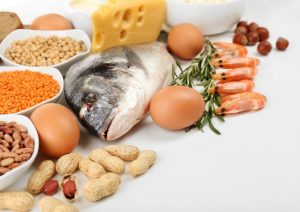
protein foodsThis is one of the more controversial recommendations of the new food guide pyramid. The new USDA dietary guidelines increase the protein recommendation by 50-100% compared to previous versions…

  • From 0.36 grams of protein per pound of body weight to…
  • Between 0.54 and 0.72 grams of protein per pound of body weight.

[Note: If these numbers seem different from what you have seen, that is because the official recommendations are in grams of protein per kilogram of body weight. Since most Americans have no idea what their body weight is in kilograms, those numbers are useless.]

The main criticisms about the new protein recommendations are:

#1: “There isn’t solid evidence that most people need this much protein.”

My response is that anyone who makes that claim hasn’t kept up with the last two decades of protein research.

The old 0.36/pound standard is probably OK for the average middle-aged couch potato, but higher protein intakes are needed for people who are:

  • Active, especially if they are trying to increase muscle mass, strength, or endurance.
  • Over 50 and are trying to maintain muscle mass, strength, and mobility.
  • Trying to lose weight without losing muscle, especially if they are using GLP-1 drugs.
  • Trying to reduce the risk of type 2 diabetes and other chronic diseases.

In short, almost everyone except the couch potatoes will benefit from higher protein intakes. And, yes, the latest science shows that it is best to get at least 20 grams of protein with each meal.

You can find more information about the science behind increased protein recommendations by going to https://www.chaneyhealth.com/healthtips/ and putting “protein” in the search box.

#2: “The new guidelines don’t steer people towards plant proteins”. This is a subtle distinction. The new USDA dietary guidelines include plant protein sources. But they do not recommend that they replace some of the animal proteins in the diet, as did previous versions. This allows people to choose between animal and plant proteins based on their preferences.

Those of you who have been following my “Health Tips From the Professor” blog know that I am an advocate of primarily plant-based diets. I am fully in the “replace some animal protein with vegetable protein” camp.

  • But I acknowledge that is not the way most Americans eat. Perhaps it is time to make dietary recommendations that align more closely with the way people eat if we want to get above 5% acceptance.
  • It would also be difficult to meet the new protein guidelines with plant protein alone unless you add commercially available plant protein supplements.

#3: “Higher protein intakes may be harmful for some people”. Recent research has shown that this concern is overblown for most Americans. However, there are some people who should probably check with their doctor before they increase their protein intake.

  • People who have been diagnosed with kidney disease.
  • People with genetic conditions or diseases that predispose to kidney disease. One example would be poorly controlled diabetes. [Note: I do not mean to imply that higher protein intake is likely to cause kidney disease in these situations. I included this category because people in these situations may have undiagnosed kidney disease.]

In most of these cases, you have probably been warned by your doctor to be careful about excess protein intake. But if you are uncertain about your risk for kidney disease, it never hurts to check with your doctor before increasing your protein intake.

What About Red Meat?

SteakThe new dietary guidelines have been criticized for emphasizing red meat. That criticism is inaccurate. It’s a “tempest in a teapot”.

In fact, red meat is pictured in both the original and the most recent versions of the food guide pyramid. And red meat is mentioned as one source of protein in both the original and the latest versions of dietary guidelines. It is given no special emphasis over other protein sources in either version of the dietary guidelines.

However, I would like to share my perspective on red meat.

  • Diet context matters. As I have said in previous issues of “Health Tips From The Professor”, fruits, vegetables, whole grains, and beans are the antidotes to all the bad aspects of red meat.” And if you look at the new food guide pyramid, red meat and other proteins are in the same neighborhood as fruits and vegetables.
  • Amount matters. Think of red meat as a garnish – for example, 2-3 ounces of red meat as part of a steak salad or stir fry with lots of veggies rather than an 8-ounce steak with fries.

#3: Consume Dairy

dairy foodsThe new dietary guidelines differ from previous versions in both the amount and kind of dairy foods consumed. For example:

  • The old guidelines recommended 2-3 servings of dairy foods per day.
    • The new guidelines recommend 3 servings per day as part of a 2,000-calorie dietary pattern.
    • Since most Americans consume 3,600 to 3,800 calories per day that recommendation translates to at least 5 servings per day.
  • The old guidelines recommended choosing low fat dairy foods.
    • The new guidelines say, “When consuming dairy, include full-fat dairy with no added sugars.”

Since the full-fat dairy recommendation is the most controversial change, I will address it first.

Let me start by saying that I have been a traditionalist with respect to dairy foods. I have recommended low-fat dairy foods for years. But a good scientist must be willing to change their recommendations based on the latest research findings.

And new findings have clearly challenged our perspective on full-fat dairy foods. Several large, well-designed studies over the past decade have shown that full-fat dairy foods are just as healthy as low-fat dairy foods. I will make two comments about these studies.

  • I suspect that the studies may be skewed because much of the data on full-fat dairy comes from countries where most of full-fat dairy foods are fermented – and we know that fermented dairy foods are very healthy.
    • Admittedly, I have no data to back up my suspicion, but I recommend fermented dairy foods as part of your dairy intake. That’s a recommendation everyone can agree with!
  • One recent study has suggested that diet context is important. Specifically, the study suggests that the benefits of full-fat dairy foods are greatest in the context of a healthy, primarily plant-based diet.
    • Similar observations have been made for egg consumption. That suggests that full-fat dairy and eggs provide some important nutrients that may be missing in a vegetarian diet. But in a diet that is already high in saturated fat and cholesterol, the “bad” effects of full-fat dairy and eggs may outweigh the benefits.

You can find more information about full-fat dairy by going to https://www.chaneyhealth.com/healthtips/ and putting “dairy” in the search box.

As for the amount of dairy foods you should consume, I wouldn’t get hung up on the number of servings per day. I interpret the new guidelines as saying, “Don’t be afraid of dairy. It can be an important part of your diet.”

However, the servings of dairy products are more frequently determined by lactose intolerance or sensitivity to milk protein than by dietary guidelines. Many people, including myself, can only consume small, occasional servings of dairy without experiencing digestive distress.

#4: Eat Vegetables & Fruits Throughout The Day

Colorful fruits and vegetablesThe dietary guidelines say, “Eat a variety of colorful, nutrient-dense vegetables and fruits. Specifically, the recommendation is:

  • 3 servings/day of vegetables and 2 servings/day of fruits each day.
    • Once again, the number of servings are based on a 2,000-calorie diet.
    • When you take into account the actual caloric intake of Americans, the recommendations become 3-5 servings/day of vegetables and 2-4 servings/day of fruits.

These recommendations are not controversial. They are universally accepted.

#5: Incorporate Healthy Fats

The new dietary guidelines are:

  • “Healthy fats are plentiful in many whole foods, such as meats, poultry, eggs, omega-3 rich seafood, nuts, seeds, full-fat dairy, olives, and avocados.”
    • This recommendation is not controversial.
  • “When cooking with or adding fats to meals, prioritize oils with essential fatty acids, such as olive oil. Other options can include butter or beef tallow.”
    • This is the most controversial portion of the new dietary guidelines. The usual comment is something like, “How dare they include butter and lard as healthy fats!”

I’m not a fan of lard but let me make a couple of observations about butter.

  • Butter is a whole food. Its ingredient list is typically cream, milk, and salt. If you buy the unsalted version, the ingredient list is even shorter. Margarine and butter substitutes have much longer ingredient lists, often including some questionable ingredients.
  • The frequency of butter use is important. Let me share a personal example. We eat a whole food, primarily plant-based diet. We substitute almond butter for butter on toast and muffins. But there are certain foods like potatoes, winter squash, and corn on the cob that just aren’t the same without real butter. We buy 4 sticks of butter at a time, cut it into pats of butter, and freeze it. Four sticks of butter lasts us a year.

Finally, the critics who say that the new guidelines should not include foods that are high in saturated fat are ignoring the fact that the guidelines say, “Saturated fat consumption should not exceed 10% of total daily calories.” This statement has remained constant since the first food guide pyramid in 1992.

So, the new guidelines are not recommending that we eat more saturated fat as many critics have claimed. They are saying, “A little bit of saturated fat is OK in the context of a whole food diet with lots of fruits, vegetables, and whole grains.

#6: Focus On Whole Grains

The new dietary guidelines are:

  • “Prioritize fiber-rich whole grains.”
  • “Significantly reduce the consumption of highly processed, refined carbohydrates.”

These guidelines are unchanged from previous versions of the guidelines.

What is new is that the guidelines now recommend only 2-4 servings of whole grains per day. That’s a big change from the 6-11 servings per day recommended in the original food guide pyramid.

  • If the 6-11 servings per day were whole grains, the new recommendation would represent a significant decrease in fiber intake. But that’s not how most Americans eat.
  • Since most of the grains in a typical American’s diet are highly processed and refined, reducing the recommended intake to 2-4 servings per day is a step in the right direction.

#7: Limit Highly Processed Foods, Added Sugars, & Refined Carbohydrates

fast foodI call this, “Avoid the bad stuff”. Specifically:

  • Avoid highly processed foods with added sugar and sodium.
  • Limit foods and beverages that include artificial flavors, colors, preservatives, and sweeteners
  • Avoid sugar-sweetened and artificially sweetened beverages.

These recommendations are accepted by almost everyone except the food industry.

However, I should point out that there is also a slight difference in emphasis from previous versions of the USDA dietary guidelines:

  • The new guidelines are more restrictive for added sugars than previous versions of the dietary guidelines. For example, they say:
    • One meal should contain no more than 10 grams of added sugars.
    • Children under the age of 10 should not be given foods with added sugars (previous versions of the dietary guidelines recommend avoiding added sugars for children under the age of 2).

Given the wealth of evidence that added sugars are linked to increased risk of obesity and chronic diseases, these stricter restrictions on added sugars make good sense – especially because the USDA dietary guidelines form the basis for school lunch programs.

But these guidelines are very different from how the average American eats. I’m not sure how many Americans will follow them.

#8: Limit Alcoholic Beverages

The guidelines:

  • Say, “Consume less alcohol for better overall health”.
  • List people who should completely avoid alcohol.

The only controversy about this recommendation is that it is less specific than the previous guidelines that recommended no more than 1 alcoholic drink/day for women and no more than 2/day for men.

I recognize the desire for specificity. But alcohol tolerance depends on several factors such as body weight, genetics, and medication usage.

What Does This Mean For You?

Questioning WomanThe USDA just released a new version of the Food Guide Pyramid and accompanying “Dietary Guidelines For Americans”, and they are very different from previous versions. What do these changes mean for you?

While the AMA and AHA have both endorsed the new guidelines, they have been controversial. In the article above, I have summarized the pros and cons of every recommendation. There are lots of recommendations, so it was a long article.

To help you make sense of the article let me summarize the recommendations and criticisms by dividing the recommendations into 4 categories:

#1: Recommendations that are accepted by almost everyone except the food industry. These are non-controversial.

  • Eat real food
  • Eat vegetables and fruits throughout the day.
  • Focus on whole grains.
  • Limit highly processed foods, added sugar, and refined carbohydrates.

#2: Changes in recommendations that reflect recent scientific advances. Critics of these changes simply haven’t kept up with scientific publications over the past couple of decades.

  • Increasing the daily protein recommendations.
  • Including full-fat dairy as a healthy dairy food.

#3: Tempests in a teapot: There is a kernel of truth in these criticisms, but the changes are much more modest than the critics would have you believe.

  • Including red meat in the protein recommendations.
  • Including some saturated fats in the “healthy fats” category.
  • Not including specific limits on alcohol consumption, as the previous version had done.

#4: What I would have liked to have seen:

  • More emphasis on plant proteins.
  • Elimination of lard from the “healthy fat” category.
  • Inclusion of high-quality vegetable oils in the “healthy fats” category.

The Bottom Line

The USDA just released a new version of the Food Guide Pyramid and accompanying “Dietary Guidelines For Americans”.

While the AMA and AHA have both endorsed the new guidelines, they have been controversial.

In this article I describe the pros and cons of each dietary guideline and divide them into ones for which:

  • They are clearly an improvement over the previous guideline.
  • They are accepted by almost everyone.
  • The criticism is a “tempest in a teapot”.
  • The criticism is at least partially accurate.

For more information on the pros and cons of the new “Dietary Guidelines For Americans” and how these guidelines apply to you, read the article above.

These statements have not been evaluated by the Food and Drug Administration. This information is not intended to diagnose, treat, cure or prevent any disease.

 _____________________________________________________________________________

My posts and “Health Tips From the Professor” articles carefully avoid claims about any brand of supplement or manufacturer of supplements. However, I am often asked by representatives of supplement companies if they can share them with their customers.

My answer is, “Yes, as long as you share only the article without any additions or alterations. In particular, you should avoid adding any mention of your company or your company’s products. If you were to do that, you could be making what the FTC and FDA consider a “misleading health claim” that could result in legal action against you and the company you represent.

For more detail about FTC regulations for health claims, see this link.

https://www.ftc.gov/business-guidance/resources/health-products-compliance-guidance

_______________________________________________________________________

About The Author 

Dr. Chaney has a BS in Chemistry from Duke University and a PhD in Biochemistry from UCLA. He is Professor Emeritus from the University of North Carolina where he taught biochemistry and nutrition to medical and dental students for 40 years.  Dr. Chaney won numerous teaching awards at UNC, including the Academy of Educators “Excellence in Teaching Lifetime Achievement Award”. Dr Chaney also ran an active cancer research program at UNC and published over 100 scientific articles and reviews in peer-reviewed scientific journals. In addition, he authored two chapters on nutrition in one of the leading Biochemistry textbooks for medical students.

Since retiring from the University of North Carolina, he has been writing a weekly health blog called “Health Tips From the Professor”. He has also written two best-selling books, “Slaying the Food Myths” and “Slaying the Supplement Myths”. And most recently he has created an online lifestyle change course, “Create Your Personal Health Zone”. For more information visit https://chaneyhealth.com.

For the past 55 years Dr. Chaney and his wife Suzanne have been helping people improve their health holistically through a combination of good diet, exercise, weight control and appropriate supplementation.



Can Red Meat Be Good For You?

Everything You Wanted To Know About Red Meat 

Author: Dr. Stephen Chaney 

ArgumentNutrition is a bit like politics and religion. Everyone has an opinion, and there is not much grace for those with different opinions.

And everything is black or white. There is no middle ground. Red meat is a perfect example. Cardiologists tell us the saturated fat and cholesterol in red meat increases our risk of heart disease. Oncologists tell us red meat increases our risk of colon, breast, prostate, and pancreatic cancer.

The association with red meat consumption and colon cancer is so strong that the World Health Organization has classified red meat as a probable carcinogen.

  • Vegans and vegetarians tell you to avoid red meat at all costs and substitute plant proteins in its place.
  • Keto and carnivore diet enthusiasts tell you that red meat is healthy if you avoid any plant foods containing carbohydrates (which is most plant foods).

Who is right? Is red meat good for you or bad for you? As usual, the answer is somewhere in the middle. We also need to stop looking at individual foods and start looking at the overall diet. We need to ask how our overall diet alters the effect of red meat on our health.

But first, let’s explore:

  • Why red meat is good for us.
  • Why red meat is bad for us.
  • How diet can help us minimize the bad and maximize the good.

I call this section, “Everything You Wanted To Know About Red Meat”.

Everything You Wanted To Know About Red Meat

thumbs upWhy Red Meat Is Good For Us.

  • Red meat is an excellent source of protein, iron, and vitamin B12. Plus, the iron in red meat is primarily found in the heme molecule and heme iron is absorbed much more efficiently than other forms of iron.
  • Red meat contains creatine, which powers our muscles. You can think of creatine molecules as little power packs that are charged when we eat and release a burst of energy whenever we begin to exercise.
  • Red meat contains carnitine, which helps our muscles use fat as an energy source. This is particularly important for heart muscle.
  • But both creatine and carnitine also have a dark side, which I will discuss below.

Why Red Meat Is Bad For Us.thumbs down

When we think about heart disease:

  • The traditional view is that saturated fat and cholesterol are the problem, and we can reduce our risk of heart disease simply by choosing leaner cuts of meat.
  • Other experts feel the link between red meat and heart disease is more complicated. For example, some recent studies have suggested that the carnitine in red meat can be converted by gut bacteria to TMAO, and TMAO increases our risk of heart disease. I have discussed this in a previous issue of “Health Tips From the Professor”.

SteakWhen we think about cancer:

  • When fat and juices from the meat drip onto an open flame, carcinogenic polyaromatic hydrocarbons are formed that stick to the surface of the This can be reduced, but not eliminated, by lower fat meat choices.
  • When red meat is cooked at high temperatures, amino acids in the meat combine with creatine, which is found in all red meats, to form carcinogenic heterocyclic amines. This can be reduced, but not eliminated, by cooking the meat at lower
  • The nitrates and nitrites used as preservatives in many processed meats react with amino acids from the meat to form carcinogenic N-nitrosamines in our intestines.
  • Heme iron, which is found in all red meats, also combines with amino acids in the meat to form carcinogenic N-nitroso compounds in our intestines. This mechanism is inherent in all red meats and cannot be eliminated by choosing lower fat cuts or cooking at lower

Finally, diets high in red meat increase several markers of inflammation, and inflammation increases the risk of both heart disease and cancer.

How Can Diet Help Us Minimize The Bad And Maximize The Good?

Question MarkI’m going to start this section with a provocative statement: “Plant foods are the antidote to all the bad effects of red meat.” Let me explain.

Plant foods are an excellent source of:

  • Antioxidants
  • Polyphenols and other phytonutrients
  • Fiber
  • Plus, the fiber and phytonutrients found in plant foods support the growth of beneficial gut bacteria.

Here is where it gets very complex:

  • Beneficial gut bacteria convert some of the foods we eat into compounds that are absorbed into the bloodstream and improve blood sugar control, reduce cholesterol synthesis, and reduce inflammation.
  • Polyphenols support the growth of certain gut bacteria, and those gut bacteria can convert these polyphenols into compounds that can be absorbed from the intestine. This necessary for many polyphenols to exert their beneficial effects in the body.
  • And, as you might expect, the gut bacteria of meat eaters and vegetarians is very different.

With this in mind, let’s come back to the concept of plant foods being the antidote for red meat.

strong heartIn terms of heart health,

  • You may remember that I said above that the carnitine in red meat can be converted by gut bacteria into TMAO which increases the risk of heart disease. The operative wording here is “can be”. It turns out this only happens with the gut bacteria of habitual meat eaters. Here is the study that showed that:
    • When habitual meat eaters were fed an 8-ounce sirloin steak, both carnitine and TMAO increased in their blood and urine.
    • When vegans were fed the same 8-ounce steak, only carnitine increased. No TMAO was detected.
    • When the meat eaters were treated with an antibiotic that wiped out their gut bacteria prior to eating the steak, no TMAO was detected. This showed it was the gut bacteria in the meat eaters that were responsible for converting carnitine to TMAO.
  • Fiber from whole grains, fruits, and vegetables binds to cholesterol and flushes it out of the intestine, preventing its absorption into the bloodstream.
  • Plant-based diets are anti-inflammatory.

CancerIn terms of cancer,

  • The fiber found in fruits, vegetables and whole grains binds to polyaromatic hydrocarbons and heterocyclic amines and flushes them out through the intestines.
  • Polyaromatic hydrocarbons require activation by the liver before they become carcinogenic. Indoles and isothiocyanates found in broccoli, cabbage, and other cruciferous vegetables inhibit the enzymes that catalyze this activation.
  • Antioxidants found in fruits, vegetables and whole grains reduce the formation of N-nitroso compounds in the intestines.
  • A largely plant-based diet appears to favor a population of intestinal bacteria that is less likely to convert compounds in meat into cancer-causing chemicals. [Note: This is a new area of research, so the data supporting this mechanism of cancer prevention are less definitive than for the other three ]

These observations are based studies designed to identify the mechanisms by which plant-based diets negate the bad effects of red meat. For example, let me share a recent study (T Onali et al, Journal of Nutritional Biochemistry, 141, 109906, 2025) asking whether berries could negate the bad effects of adding red meat (pork) to a typical Finnish diet.

How Was This Study Done?

Clinical StudyThis study was conducted by a group of scientists at the University of Helsinki. They recruited 43 adults aged 20-68 and divided them into two groups. Each group was told to continue with their regular diet, except that consumption of any red meat or berries other than the foods they were provided with was prohibited.

  • Each group was given an extra 5 ounces of pork (minced pork, pulled pork, pork strips from fillet, cold cuts, sausages, and bacon) to eat each day.
  • One group was also given 1 cup of berries (bilberries, strawberries, cloudberries, raspberries, lingonberries, and blackcurrant) to eat each day.
    • Note: These are the foods most familiar to people from Finland in each category.
  • They were provided with these foods on a weekly basis.
  • This intervention portion of the study lasted four weeks.

Dietary intake was assessed in each group using 3-day food records (two weekdays and one weekend day) at the beginning and the end of the study.

Participants in the study collected stool samples on two consecutive days at the beginning and end of the study. These stool samples were analyzed in the following ways:

  • Bacterial DNA was extracted from the stool samples and used to determine which gut bacteria were present in the stools.
  • The stool samples were homogenized and filtered to:
    • Determine the polyphenols and polyphenol metabolites present in the stool samples.
    • Determine whether low molecular weight compounds present in the stool samples were able to inhibit the growth of human colon cancer cells in cell culture.

What Did The Study Show?

Questioning WomanThe dietary analysis found that total calories, protein, carbohydrate, fat, and saturated fat did not change significantly in either group. This indicates that the study participants likely substituted the pork they were given for other high-fat meats they were eating before the study.

However, in the group that was also given berries fiber, vitamin C, vitamin E, manganese, and several polyphenols increased significantly. This suggests that study participants likely substituted the berries for less healthy foods they were eating before the study.

The study found that:

  • In the red meat-only group the relative abundance of beneficial Roseburia and Fecalibacterium gut bacteria was decreased. This did not occur in the red meat + berries group.
  • In the red meat + berries group the concentration of several beneficial polyphenols and polyphenol metabolites was increased.
  • In the red meat + berries group, the filtrate obtained from stool samples inhibited the growth of several human colon cancer cell lines in cell culture experiments. These experiments did not identify which berry polyphenols were responsible for inhibiting the growth of cancer cells. It also did not determine whether the polyphenols came directly from the berries or were created when gut bacteria modified the polyphenol(s).

But these experiments did show that something from a high berry diet inhibited colon cancer cell growth.

The author’s concluded, “Berry supplementation to a diet high in red and processed meat led to berry-derived polyphenolic metabolites in the feces, beneficially modified gut microbiota, inhibited the viability of colon cancer cells, collectively suggesting potential in cancer prevention.

The difference seen in gut metabolism was probably induced by the higher intakes of dietary fiber, vitamin C and E, manganese, and polyphenols by the berry diet.”

Can Red Meat Be Good For You?

This study is one piece of the puzzle to help us understand the effect of diet on the benefits and risks of red meat consumption. Here is what I mean by that.

We can think of scientific investigations in terms of solving a large puzzle with lots of little pieces. If you are a puzzle enthusiast, you know the best way to solve a complicated puzzle is to put the edge pieces together first and then fill in the rest of the puzzle.

In this context, the studies showing that small amounts of red meat are not harmful in the context of healthy, primarily plant-based diets like the DASH and Mediterranean diets are the edge of the puzzle. Smaller studies that define the mechanisms of this effect and provide proof these mechanisms are accurate are the interior pieces that fill out the puzzle. This study is one of those interior pieces.

So, what does that mean for you? It means that diet context is important.

Most of the studies showing the bad effects of red meat have been done in the context of the typical American diet. That might consist of an 8 or 12-ounce steak with fries and either a soft drink or iced tea. Fruits and vegetables, if present at all, are minimal. Dessert usually consists of some sugary treats.

In this context, red meat is bad for you.

In contrast, consider the place red meat occupies in a primarily plant-based diet. Red meat becomes a condiment rather than the main course. Think of 2-3 ounces of red meat as part of a green salad or stir fry with a variety of greens and other vegetables. You might have beans, whole grains, or another vegetable to round out your plate. Dessert would be whatever fruit is in season. And your beverage might be water, milk, or herbal tea.

In this context, the bad effects of red meat disappear. In short, there are no bad foods, only bad diets.

I started this blog with the question, “Can red meat be good for you?”  You may be wondering if I have answered that question.

At the beginning of this article, I listed the good things about red meat, namely that it is a good source of protein, iron, vitamin B12, carnitine, and creatine.

If you remove the bad, only the good remains. So, the answer is, “Yes. In the right diet context red meat can be good for you”.

The Bottom Line

You have heard that red meat is bad for you. It increases your risk of heart disease and cancer. You should avoid it at all costs.

But is that true? In the article above I:

  • Describe both the benefits and risks of red meat.
  • Discuss how plant foods negate many of the bad effects of red meat.
  • Share a study providing proof of that concept.
  • Share how you can enjoy the benefits of red meat while avoiding the bad effects of red meat consumption.

For more details read the article above.

These statements have not been evaluated by the Food and Drug Administration. This information is not intended to diagnose, treat, cure or prevent any disease.

______________________________________________________________________________

My posts and “Health Tips From the Professor” articles carefully avoid claims about any brand of supplement or manufacturer of supplements. However, I am often asked by representatives of supplement companies if they can share them with their customers.

My answer is, “Yes, as long as you share only the article without any additions or alterations. In particular, you should avoid adding any mention of your company or your company’s products. If you were to do that, you could be making what the FTC and FDA consider a “misleading health claim” that could result in legal action against you and the company you represent.

For more detail about FTC regulations for health claims, see this link.

https://www.ftc.gov/business-guidance/resources/health-products-compliance-guidance

______________________________________________________________________

About The Author 

Dr. Chaney has a BS in Chemistry from Duke University and a PhD in Biochemistry from UCLA. He is Professor Emeritus from the University of North Carolina where he taught biochemistry and nutrition to medical and dental students for 40 years.

Dr. Chaney won numerous teaching awards at UNC, including the Academy of Educators “Excellence in Teaching Lifetime Achievement Award”.

Dr Chaney also ran an active cancer research program at UNC and published over 100 scientific articles and reviews in peer-reviewed scientific journals. In addition, he authored two chapters on nutrition in one of the leading biochemistry text books for medical students.

Since retiring from the University of North Carolina, he has been writing a weekly health blog called “Health Tips From the Professor”. He has also written two best-selling books, “Slaying the Food Myths” and “Slaying the Supplement Myths”. And most recently he has created an online lifestyle change course, “Create Your Personal Health Zone”. For more information visit https://chaneyhealth.com.

For the past 45 years Dr. Chaney and his wife Suzanne have been helping people improve their health holistically through a combination of good diet, exercise, weight control and appropriate supplementation.
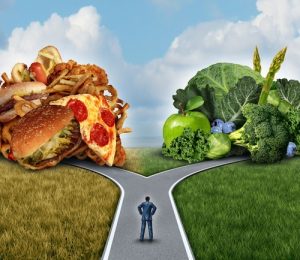
What Diet Is Best For Healthy Aging?

What About Primarily Meat-Based Diets?

Author: Dr. Stephen Chaney

Pinochio

It’s so confusing. Everyone claims they have clinical proof that their diet is the best. You will be healthier and live longer.

But the diets are so different. They range from vegan to keto. They can’t all be equally healthy. What is the truth?

To answer that question, we first need to understand how the proponents of each diet can claim theirs is the perfect diet for health and longevity. It’s because they base their claims on:

  • Short-term studies. Most of their claims are based on studies that range from a few weeks to a few months. You need 20- or 30-year studies to measure the effects of a particular diet on health outcomes.
  • Biological markers (Things like cholesterol and triglyceride levels, blood sugar control, and/or inflammation). Biological markers can predict possible health outcomes. But without long-term studies on actual health outcomes, you don’t know whether those predictions are accurate.
  • Comparisons with the typical American diet. Any diet looks good compared with the American diet.
  • Elimination of highly processed foods. While these diets emphasize different foods, they are all whole food diets. Again, any diet that eliminates processed foods is an improvement.
    • It doesn’t matter whether you restrict calories, restrict certain foods or food groups, or restrict the time you allow yourself to eat. You unconsciously eat less.
    • And when you eat less, you lose weight.
    • And when you lose weight, your cholesterol and triglyceride levels fall, your blood sugar control improves, and inflammation decreases.
    • That’s why short-term weight loss and improvement in biological markers are virtually identical with vegan and keto diets. Those diets are as different as any two diets could be. But they are both highly restrictive diets.

The take-home lesson is clear. Don’t be confused by claims based on short-term studies. What you should look for is:

  • Long-term studies (20 years or more)…
  • that look at the effect of diet on health outcomes, and…
  • do not compare their diet with the typical American diet.

When I first reviewed this topic 8 years ago, I could only find a few studies that met these criteria:

  • One study showed that people consuming primarily plant-based diets weighed less than people who consumed primarily meat-based diets for 20 years or more.
  • Other studies showed that people consuming primarily plant-based diets had a reduced risk of diabetes and heart disease compared to people consuming primarily meat-based diets for 20 years or more.

These are valuable observations, but they are limited. That’s why I was so excited when I came across a recent 30-year study (A-J Tessier et al, Nature Medicine, volume 31, pages 1644-1652, 2025) looking at the effect of 9 different diets on longevity and health outcomes. In short, this study looked at the effect of different diets on healthy aging.

How Was This Study Done?

Clinical StudyThe authors of this study used data from 105,015 participants in the Nurses’ Health Study (NHS) and Health Professionals Follow Up Study (HPFS). Both studies enrolled participants in 1986 and followed them through 2016. In short, they were both 30-year studies. Participants with preexisting chronic diseases were excluded from the study.

  • Lifestyle factors and medical histories were assessed every two years.
  • A detailed dietary assessment was conducted every four years. The assessments measured the intake of 152 foods. Food intakes were averaged over the duration of the study for each participant.

[Note: This study did not measure how the diets of participants changed between 1986 and 2016, although that is an interesting question. Perhaps a future study is planned.]

Based on the foods eaten, the diets of the participants were evaluated for adherence to 9 dietary patterns, which I have described in more detail below.

[Note: To be clear, the participants were not trying to follow these diets. They ate what they ate, and the investigators subsequently compared their dietary pattern with various healthy diets.]

For each of the diets included in this study, participants were divided into quintiles based on how closely their food intake adhered to the recommendations for that diet. Then the highest quintile was compared to the lowest quintile to determine how well that diet predicted “healthy aging” after a 30-year follow-up.

The term “healthy aging” was based on 5 criteria:

  • Longevity – achieving an age of 70 or more.
  • Absence of the top 11 major chronic diseases (cancer, diabetes, myocardial infarction (heart attack), coronary artery disease, congestive heart failure, stroke, Parkinson’s disease, multiple sclerosis, and ALS).
  • No impairment of cognitive function.
  • No impairment of physical health.
  • No mental health issues.

In other words, these were not just individuals who survived 70 years or more. They survived and thrived. They were enjoying their golden years because they still had good health and excellent quality of life.

Diets Included In This Study

The diets included in this study were:

  • AHEI – Alternative Healthy Eating Index (A scoring system developed by Harvard researchers to measure overall diet quality based on its ability to predict lower risks of heart attacks, strokes, and diabetes).
  • aMed – Alternative Mediterranean Diet Index (The aMed diet index differs from the original Med index by separating fruits and nuts into different groups, eliminating dairy, emphasizing whole grains, and excluding red and processed meats in favor of chicken and fish).
  • DASH – Dietary Approaches to Stop Hypertension (The name speaks for itself. But I also sometimes refer to this diet as “the Americanized version of the Mediterranean diet’ because it features foods more familiar to Americans. For example, it allows more red meat options than most of the other diets in this list.
  • MIND – Mediterranean-Dash intervention for Neurogenerative Delay (It is a dietary pattern designed to reduce the risk of Alzheimer’s disease and other forms of dementia. It combines elements of the Mediterranean and DASH diets but differs from both by emphasizing berries as a major fruit source, among other things.)
  • hPDI – Healthy Plant-Based Diet Index (It is a scoring system that measures adherence to a diet rich in healthy plant-based foods and lower consumption of less-healthy plant foods and animal foods.)
  • PHDI – Planetary Health Diet Index (It emphasizes foods (primarily plant foods) that are healthy and are good for the environment. Of the diets on this list, it is the most restrictive and closest to a vegan diet)
  • EDIH – Empirical Dietary Index For Hyperinsulinemia (It is a scoring system that measures the potential of a diet to cause chronically high insulin levels, which is associated with type 2 diabetes and certain cancers.)
  • EDIP – Empirical Dietary Inflammation Pattern (It is a scoring system that measures the inflammatory potential of a diet.)
  • UPF – Consumption of Ultraprocessed Foods (Since recent studies have shown that most Americans get between 55 and 70% of their calories from ultraprocessed foods, this is fast becoming a measure of the typical American diet.)

Note: Except for the UPF diet, these are all whole food, primarily plant-based diets.

What Diet Is Best For Healthy Aging?

Here are the results of the study (drum roll, please):

  • Of the 105,015 participants in this study, only 9.3% achieved healthy aging.
  • Adherence to any of the 8 healthy diets improved the probability of achieving healthy aging.
  • The odds of achieving healthy aging ranged from 1.45 for the Healthy Plant-Based Diet to 1.86 for the Alternative Healthy Eating Index.
  • If you were to pick one winner, it would be the Alternative Healthy Eating Index. And if you were to define healthy aging as achieving an age of 75 or more with the other 4 criteria, the odds increase to 2.24 (more than double) for the Alternative Healthy Eating Index.
  • As you might expect, adherence to a diet high in ultraprocessed foods had the opposite effect. It decreased the odds of achieving healthy aging by 32%.

When you look at each of the criteria for healthy aging individually, the results were a bit more nuanced:

  • For survival to 70+ years, the Alternative Healthy Eating Index and the Planetary Health Diet Index were tied. Both increased the odds of survival by more than 2-fold.
  • The Alternative Healthy Eating Index and the Planetary Health Diet Index were also tied for surviving to 70 with intake cognitive health and intact physical function.
  • The Empirical Dietary Index For Hyperinsulinemia edged out the Alternative Healthy Eating Index for freedom from 11 chronic diseases.

The effect of healthy diets on the odds of achieving healthy aging is independent from BMI, smoking, and physical activity. This means that:

  • The effects of healthy diets on healthy aging were not because people consuming healthy diets weighed less, smoked less, or exercised more.
  • Even if some of your lifestyle choices are suboptimal, choosing a healthy diet will increase your odds of surviving and thriving.

Finally, the study looked at the effects of individual foods on healthy aging. The results were:

  • Higher intakes of fruits, vegetables, whole grains, unsaturated fats, nuts, legumes, and low-fat dairy products increase your odds of healthy aging.
  • Higher intakes of trans fats, sodium, sugary beverages, and red or processed meats decrease your odds of achieving healthy aging.

The effects of these foods on healthy aging aren’t novel. They are consistent with dozens of other studies that have looked at the effect of individual foods on long-term health outcomes. In fact, the diets included in this study were chosen because they included foods that positively affect health outcomes and minimize foods that negatively affect health outcomes.

What About Primarily Meat-Based Diets?

the paleo dietI have good friends who advocate for primarily meat-based diets such as keto, paleo, and carnivore. I’m sure they are going to say, “This study is a sham. It only included primarily plant-based diets, so, of course, it is only going to show benefits for primarily plant-based diets.” I can hear their their questions now:

  • Why didn’t this study include any of the primarily meat-based diets? My answer is: “All the popular meat-based diets exclude one or more of the food groups associated with health and longevity and emphasize one or more of the food groups associated with a shorter, less healthy life. And these food associations are consistent among multiple long-term studies looking at the effect of various foods on health outcomes. 

The authors could have constructed a similar index for each of the popular meat-based diets. But they would have been the inverse of the plant-based diet indices because the foods included and excluded from plant-based and meat-based diets are opposite. Therefore, just like the UPF index, they would have been associated with a decreased probability of achieving healthy aging.”

  • Why did the scientists designing this study ignore the proven health benefits of primarily meat-based diets? My answer is: “The “proven benefits” of primarily meat-based diets are based on short-term studies showing the effects of those diets on biological markers. Long-term studies looking at health outcomes are lacking.”
  • But modern primarily meat-based diets are a special case because they limit carbohydrates and cause ketosis. Why weren’t they included in the study? My answer is: “The Atkins diet limits carbohydrates and causes ketosis. It has been around for more than 50 years. And, to my knowledge, there are no studies showing it is beneficial long term. If the Atkins diet cannot be shown to have long-term health benefits, it is unlikely that modern diets that mimic it are healthy long term.

What Does This Study Mean For You?

confusionThe answer is clear. If you want to survive and thrive in your 70s and beyond, choose a whole food, primarily plant-based diet.

If you want the absolute best diet, follow the Alternative Healthy Eating Index recommendations. There are many online resources to guide you.

However, any whole food, primarily plant-based diet will do. The ones with the most online resources are the Mediterranean, DASH, and MIND diets. Choose the one that best fits your food preferences and lifestyle.

If you want to go more vegetarian, the Healthy Plant-Based Diet is a bit easier than a strict vegan diet.

If you are concerned about the environment, the Planetary Diet is best for you.

If you have specific health issues like hypertension, diabetes, or inflammation, there are diets designed just for you.

And if following structured diets is not your style, just:

  • Eat more fruits, vegetables, whole grains, unsaturated fats, nuts, legumes, and low-fat dairy products.
  • Eat less trans fats, sodium, sugary beverages, and red or processed meats, and ultraprocessed foods.

Finally, even if some of your lifestyle choices are suboptimal, this study shows choosing a healthy diet will increase your odds of surviving to your 70s and thriving.

The Bottom Line

A recent 30-year study looked at the effect of 8 whole food, primarily plant-based diets on healthy aging defined as:

  • Achieving an age of 70 or more.
  • The absence of the top 11 major chronic diseases.
  • No impairment of cognitive function.
  • No impairment of physical health.
  • No mental health issues.

The key findings were:

  • Adherence to any of 8 whole food, primarily plant-based diets improved the probability of achieving healthy aging.
  • The odds of achieving healthy aging ranged from 1.45 for the Healthy Plant-Based Diet to 1.86 for the Alternative Healthy Eating Index.

For more information on this study, why primarily meat-based diets were not considered healthy enough to be included in this study, and what this study means for you, read the article above.

These statements have not been evaluated by the Food and Drug Administration. This information is not intended to diagnose, treat, cure or prevent any disease.

 ____________________________________________________________________________

My posts and “Health Tips From the Professor” articles carefully avoid claims about any brand of supplement or manufacturer of supplements. However, I am often asked by representatives of supplement companies if they can share them with their customers.

My answer is, “Yes, as long as you share only the article without any additions or alterations. In particular, you should avoid adding any mention of your company or your company’s products. If you were to do that, you could be making what the FTC and FDA consider a “misleading health claim” that could result in legal action against you and the company you represent.

For more detail about FTC regulations for health claims, see this link.

https://www.ftc.gov/business-guidance/resources/health-products-compliance-guidance

 _______________________________________________________________________

About The Author 

Dr. Chaney has a BS in Chemistry from Duke University and a PhD in Biochemistry from UCLA. He is Professor Emeritus from the University of North Carolina where he taught biochemistry and nutrition to medical and dental students for 40 years.  Dr. Chaney won numerous teaching awards at UNC, including the Academy of Educators “Excellence in Teaching Lifetime Achievement Award”. Dr Chaney also ran an active cancer research program at UNC and published over 100 scientific articles and reviews in peer-reviewed scientific journals. In addition, he authored two chapters on nutrition in one of the leading Biochemistry textbooks for medical students.

Since retiring from the University of North Carolina, he has been writing a weekly health blog called “Health Tips From the Professor”. He has also written two best-selling books, “Slaying the Food Myths” and “Slaying the Supplement Myths”. And most recently he has created an online lifestyle change course, “Create Your Personal Health Zone”. For more information visit https://chaneyhealth.com.

For the past 53 years Dr. Chaney and his wife Suzanne have been helping people improve their health holistically through a combination of good diet, exercise, weight control and appropriate supplementation.



Eating For A Healthy Heart

What Does This Mean For You?

Author: Dr. Stephen Chaney

You may remember the nursery rhyme, “Jack Sprat could eat no fat. His wife could eat no lean…” You may know people who fit these extremes. And in terms of diets these extremes might represent the vegan and keto diets in today’s world.

The nursery rhyme assures us that, “…between them they licked the platter clean.” But were their diets equally healthy? Which of them would have been more likely to live a long and healthy life?

And, since this is Heart Health Month, we might ask, “Which diet would have been better for their hearts?”

If you search Mr. Google – even with AI assist – you might be confused. That’s because AI bases its recommendations on the quantity of posts, not the accuracy of posts. And lots of media influencers recommend both diets, and just about every popular diet in between for heart health.

But what does good science say on the topic of heart healthy diets? Fortunately, a recent comprehensive review and meta-analysis (G. Riccardi et al, Cardiovascular Research, 118: 1118-1204, 2022) has answered that question.

How Was The Study Done?

clinical studyThe investigators reviewed 99 clinical studies with tens of thousands of participants that looked at the associations between foods or food groups and heart disease risk.

Most of the studies were “prospective cohort” studies in which:

  • Populations are divided into groups (cohorts) based on the foods they consume…
  • …and followed for a number of years (this is where the term “prospective” comes from)…
  • …and at the end of the study, the association between food and heart outcomes is measured.

However, the review also included several major randomized controlled clinical trials, including:

  • The DASH diet study.
  • The Lyon Diet Heart study.
  • The PREDIMED study.

Eating For A Healthy Heart

strong heartHere are the findings of the study. Most will sound very familiar. But you will note some subtle differences based on recent data.

The overall summary was that for a healthy adult population:

  • Low consumption of salt and foods of animal origin…
  • …and increased intake of plant foods…
  • …are associated with reduced heart disease risk.

Of course, we have known that for years. It’s when they broke the data down further that it became more interesting.

Foods Of Animal Origin:

  • Processed meats increase heart disease risk. A single serving of processed meat is associated with a 27% to 44% increased risk of heart disease. This is not new.
  • Unprocessed red meat is also associated with increased risk of heart disease, but this association is not as Steakconsistent as for processed meats. The authors noted that some of this may be due to differences in saturated fat content or cooking methods of the red meats included in individual studies.

But this analysis also showed that the effect of red meat on heart disease risk may be dose dependent. For example:

    • The studies they reviewed suggested that consuming ≥2 servings per day of red meat is associated with a 27% increased risk of heart disease. However, consuming <3 servings per week may not increase risk.
    • The idea that the effect of red meat on heart disease risk may be dose-dependent is novel. However, the authors said we also need to ask what replaces red meat in the diet. They postulated that when red meat consumption is decreased, it is often replaced with healthier protein sources.
  • White meat such as poultry does not appear to affect heart disease risk. This has been predicted by earlier reports, but this analysis strengthens those predictions.
  • Fish consumption decreases heart disease risk. This is not new. But this review added precision about recommended fish intake (2-4 servings/week) and a couple of caveats:
    • The heart benefits of fish may be due to their omega-3 content and may not apply equally to fish with lower omega-3 content.
    • The authors also expressed concerns about the sustainability of high-omega-3 fish populations. I would also add that our oceans are increasingly polluted, so contamination is another concern.
  • Egg consumption up to one egg/day does not appear to increase heart disease risk. This is consistent with the are eggs good for youcurrent American Heart Association recommendations.

However, the authors noted that the effect of eggs on serum cholesterol, and hence heart disease risk depends on several factors.

    • Genetics, obesity, and diabetes can make it more difficult to regulate serum cholesterol levels. For these individuals, eggs may need to be eaten only sparingly.
    • Diets low in saturated fat and high in fiber from plant foods help the body regulate serum cholesterol. Several studies suggest that eggs may decrease heart disease risk in the context of this type of diet.
  • Dairy: Neither low-fat nor high-fat dairy foods appear to influence heart disease risk. This is different from the standard recommendation to consume low-fat dairy foods. But it is in line with the trend of recent research studies on dairy and heart disease.

Once again, there were a couple of caveats:

    • There is increasing evidence that fermented dairy foods may decrease heart disease risk which may explain why certain high-fat cheeses and other high-fat fermented dairy foods appear to have a neutral or slightly beneficial effect on heart disease risk.
    • As with eggs the effect of high-fat dairy foods on heart disease risk may be influenced by genetics and diet context.

Foods Of Plant Origin: The effect of plant foods have been known for some time, and the most recent studies included in this analysis have not changed those conclusions.

  • Fruits and Vegetables consistently reduce heart disease risk in multiple studies. In each case, the optimal Vegan Foodsintake appears to be about 2 servings of each per day which provides an 18-21% risk reduction for vegetables and a 21-32% risk reduction for fruits.
  • Legumes (beans and peas) also consistently reduce heart disease risk in multiple studies. At the optimal intake of around 4 servings per week the risk reduction is around 14%.
  • Nuts also consistently reduce heart disease risk. At the optimal intake of around one serving (a handful) per day, the risk reduction is around 25%.
  • Cereals (grains) were divided into 3 categories:
    • Refined carbohydrates with a high glycemic index (e.g., white rice, white bread) are associated with increased heart disease risk in multiple studies probably due to their effect on blood sugar levels. And the increased risk is significant (Around 66% higher risk for every 2 servings).
    • Refined carbohydrates with a low glycemic index (e.g., pasta, corn tortillas) show an inconsistent effect on heart disease risk.
    • Whole grains are consistently associated with a lower heart disease risk. Two servings of whole grains per day are associated with a 25%-34% decreased risk.

Miscellaneous Foods:

  • Soft Drinks are associated with increased heart disease risk. One serving per day increases the risk by around 15-22% and recent evidence suggests that artificially sweetened soft drinks offer no heart health benefits compared to sugar sweetened soft drinks.
  • Coffee and Tea are both associated with decreased heart disease risk. For coffee the optimal benefit may occur at around 3 cups/day. Higher levels may have an adverse effect on heart disease risk.

Summary of Heart Health Recommendations

ScientistIf you are thinking that was a lot of information, the authors provided a numerical summary of their recommendations for a heart-healthy diet. They are:

  • Two servings per day of vegetables, fresh fruits, and whole grains.
  • One serving per day of nuts and seeds, low-glycemic index refined cereals, extra-virgin olive oil or non-tropical vegetable oils, and yogurt.
  • Four servings per week of legumes and fish.
  • No more than 3 servings per week of white meat, eggs, cheese, and milk.
  • No more than 2 servings per week of high-glycemic index refined starchy foods, red meat, and butter.
  • Only occasional consumption of processed meats.

What Does This Study Mean For You?

QuestionsOf course, nobody wants to follow a “diet by the numbers”. If you are like most of us, you want flexibility and you want to be able to eat some of your favorite foods. So, let me put these recommendations into a more “user friendly” form.

If you want a healthy heart:

  • Whole, unprocessed or minimally processed, plant foods are your friends.
  • Your heart-healthy foundation should be fruits, vegetables, whole grains, nuts and seeds, healthy plant oils, and legumes.
  • Your heart-healthy foundation can also include fermented dairy foods and low-glycemic index refined grains.
  • Your “go-to” beverages should be water, tea (both caffeinated and herbal teas), and coffee. You should avoid soft drinks and other sugar-sweetened or artificially sweetened beverages.
  • Once you have achieved a heart-healthy foundation you can add a few servings per week of white meat, eggs, cheese, and dairy, even high-fat dairy.
  • If you have good adherence to the heart-healthy foundation described above and no genetic or health issues that increase your risk of heart disease, you can probably eat more of these foods.
  • Conversely, if your adherence to the heart-healthy foundation is poor and/or you are at high risk of heart disease, you may wish to consume less of these foods.
  • If you have good adherence to the heart-healthy foundation, you can also add up to 1-2 servings of high-glycemic index refined carbohydrates, red meat, or butter per week. With red meat, you may want to consider it as a garnish that adds flavor to a plant-based meal rather than the centerpiece of the meal.
  • You should eat processed meats seldom or never.

The Bottom Line

A new comprehensive review and meta-analysis of 99 clinical studies with tens of thousands of participants has updated the correlation between foods and heart disease risk.

Many of the recommendations based on this analysis are identical to previous recommendations for a heart-healthy diet.

But there are some subtle changes to those recommendations based on the latest data.

For more details about this study and what a heart-healthy diet might look like for you, read the article above.

These statements have not been evaluated by the Food and Drug Administration. This information is not intended to diagnose, treat, cure, or prevent any disease.

_______________________________________________________________________________

My posts and “Health Tips From the Professor” articles carefully avoid claims about any brand of supplement or manufacturer of supplements. However, I am often asked by representatives of supplement companies if they can share them with their customers.

My answer is, “Yes, as long as you share only the article without any additions or alterations. In particular, you should avoid adding any mention of your company or your company’s products. If you were to do that, you could be making what the FTC and FDA consider a “misleading health claim” that could result in legal action against you and the company you represent.

For more detail about FTC regulations for health claims, see this link.

https://www.ftc.gov/business-guidance/resources/health-products-compliance-guidance

_______________________________________________________________________

About The Author 

Dr. Chaney has a BS in Chemistry from Duke University and a PhD in Biochemistry from UCLA. He is Professor Emeritus from the University of North Carolina where he taught biochemistry and nutrition to medical and dental students for 40 years.  Dr. Chaney won numerous teaching awards at UNC, including the Academy of Educators “Excellence in Teaching Lifetime Achievement Award”. Dr Chaney also ran an active cancer research program at UNC and published over 100 scientific articles and reviews in peer-reviewed scientific journals. In addition, he authored two chapters on nutrition in one of the leading biochemistry text books for medical students.

Since retiring from the University of North Carolina, he has been writing a weekly health blog called “Health Tips From the Professor”. He has also written two best-selling books, “Slaying the Food Myths” and “Slaying the Supplement Myths”. And most recently he has created an online lifestyle change course, “Create Your Personal Health Zone”. For more information visit https://chaneyhealth.com.

For the past 45 years Dr. Chaney and his wife Suzanne have been helping people improve their health holistically through a combination of good diet, exercise, weight control and appropriate supplementation.
Eat Green

Can Diet Affect The Health Of Our Planet? 

Author: Dr. Stephen Chaney

Earth DayEarth Day was yesterday. So, it is time for my annual reminder that what you eat affects a lot more than just your health. It affects the health of our planet. Once again, it’s time to ask yourself, “Is my diet destroying the planet?

This is not a new question, but a recent commission of international scientists has conducted a comprehensive study into our diet and its effect on our health and our environment. Their report (W. Willet et al, The Lancet, 393, issue 10170, 447-492, 2019) serves as a dire warning of what will happen if we don’t change our ways.

The commission carefully evaluated diet and food production methods and asked three questions:

  • Are they good for us?
  • Are they good for the planet?
  • Are they sustainable? Will they be able to meet the needs of the projected population of 10 billion people in 2050 without degrading our environment.

The commission described the typical American diet as a “lose-lose-lose diet”. It is bad for our health. It is bad for the planet. And it is not sustainable.

In its place they carefully designed their version of a primarily plant-based diet they called a “win-win-win diet”. It is good for our health. It is good for the planet. And it is sustainable.

In their publication they refer to their diet as the “universal healthy reference diet” (What else would you expect from a committee?). However, it has become popularly known as the “Planetary Diet”.

I have spoken before about the importance of a primarily plant-based diet for our health. In that context it is a personal choice. It is optional.

However, this report is a wake-up call. It puts a primarily plant-based diet in an entirely different context. It is essential for the survival of our planet. It is no longer optional.

If you care about our environment…If you care about saving our planet, there is no other choice.

How Was The Study Done?

The publication (W. Willet et al, The Lancet, 393, issue 10170, 447-492, 2019) was the report of the EAT-Lancet Commission on Healthy Diets from Sustainable Food Systems. This Commission convened 30 of the top experts from across the globe to prepare a science-based evaluation of the effect of diet on both health and sustainable food production through the year 2050. The Commission included world class experts on healthy diets, agricultural methods, climate change, and earth sciences. The Commission reviewed 356 published studies in preparing their report.

Can Diet Affect The Health Of Our Planet?

Factory FarmWhen they looked at the effect of food production on the environment, the Commission concluded:

  • “Strong evidence indicates that food production is among the largest drivers of global environmental change.” Specifically, the commission reported:
    • Agriculture occupies 40% of global land (58% of that is for pasture use).
    • Food production is responsible for 30% of global greenhouse gas emissions and 70% of freshwater use.
    • Conversion of natural ecosystems to croplands and pastures is the largest factor causing species to be threatened with extinction. Specifically, 80% of extinction threats to mammals and bird species are due to agricultural practices.
    • Overuse and misuse of nitrogen and phosphorous in fertilizers causes eutrophication. In case you are wondering, eutrophication is defined as the process by which a body of water becomes enriched in dissolved nutrients (such as phosphates from commercial fertilizer) that stimulate the growth of algae and other aquatic plant life, usually resulting in the depletion of dissolved oxygen. This creates dead zones in lakes and coastal regions where fish and other marine organisms cannot survive.
  • About 60% of world fish stocks are fully fished and more than 30% are overfished. Because of this, catch by global marine fisheries has been declining since 1996.
  • “Reaching the Paris Agreement of limiting global warming…is not possible by only decarbonizing the global energy systems. Transformation to healthy diets from sustainable food systems is essential to achieving the Paris Agreement.
  • The world’s population is expected to increase to 10 billion by 2050. The current system of food production is unsustainable.

Food ChoicesWhen they looked at the effect of the foods we eat on the environment, the Commission concluded:

  • Beef and lamb are the biggest contributors to greenhouse gas emissions and land use.
    • The concern about land use is obvious because of the large amount of pastureland required to raise cattle and sheep.
    • The concern about greenhouse gas emissions is because cattle and sheep are ruminants. They not only breathe out CO2, but they also release methane into the atmosphere from fermentation in their rumens of the food they eat. Methane is a potent greenhouse gas, and it persists in the atmosphere 25 times longer than CO2.

The single most important thing we can do as individuals to reduce greenhouse gas emissions is to eat less beef and lamb. [Note: grass fed cattle produce more greenhouse gas emissions than cattle raised on corn because they require 3 years to bring to market rather than 2 years.] 

    • In contrast, plant crops reduce greenhouse gas emissions by removing CO2 from the atmosphere.
  • In terms of energy use beef, lamb, pork, chicken, dairy, and eggs all require much more energy to produce than any of the plant foods.
  • In terms of eutrophication of our lakes and oceans, beef, lamb, and pork all cause much more eutrophication than any plant food. Dairy and eggs cause more eutrophication than any plant food except fruits.

Eat Green

Planetary DietIn the words of the Commission: “[The Planetary Diet] largely consists of vegetables, fruits, whole grains, legumes, nuts, and unsaturated oils. It includes a low to moderate amount of seafood, poultry, and eggs. It includes no or a very low amount of red meat, processed meat, sugar, refined grains, and starchy vegetables.”

When described in that fashion it sounds very much like other healthy diets such as semi-vegetarian, Mediterranean, DASH, and Flexitarian. However, what truly distinguishes it from the other diets is the restrictions placed on the non-plant portion of the diet to make it both environmentally friendly and sustainable. Here is a more detailed description of the diet:

  • It starts with a vegetarian diet. Vegetables, fruits, beans, nuts, soy foods, and whole grains are the foundation of the diet.
  • It allows the option of adding one serving of dairy a day (It turns out that cows produce much less greenhouse emissions per serving of dairy than per serving of beef. That’s because cows take several years to mature before they can be converted to meat, and they are emitting greenhouse gases the entire time).
  • It allows the option of adding one 3 oz serving of fish or poultry or one egg per day.
  • It allows the option of swapping seafood, poultry, or egg for a 3 oz serving of red meat no more than once a week. If you want a 12 oz steak, that would be no more than once a month.

This is obviously very different from the way most Americans currently eat. According to the Commission:

  • “This would require greater than 50% reduction in consumption of unhealthy foods, such as red meat and sugar, and greater than 100% increase in the consumption of healthy foods, such as nuts, fruits, vegetables, and legumes”.
  • “In addition to the benefits for the environment, “dietary changes from current diets to healthy diets are likely to substantially benefit human health, averting about 10.8-11.6 million deaths per year globally.”

What Else Did The Commission Recommend?

In addition to changes in our diets, the Commission also recommended several changes in the way food is produced. Here are a few of them.

  1. Reduce greenhouse gas emissions from the fuel used to transport food to market.

2) Reduce food losses and waste by at least 50%.

3) Make radical improvements in the efficiency of fertilizer and water use. In terms of fertilizer, the change would be two-fold:

    • In developed countries, reduce fertilizer use and put in place systems to capture runoff and recycle the phosphorous.
    • In third world countries, make fertilizer more available so that crop yields can be increased, something the Commission refer to as eliminating the “yield gap” between third world and developed countries.

4) Stop the expansion of new agricultural land use into natural ecosystems and put in place policies aimed at restoring and re-foresting degraded land.

5) Manage the world’s oceans effectively to ensure that fish stocks are used responsibly and global aquaculture (fish farm) production is expanded sustainability.

What we can do: While most of these are government level policies, we can contribute to the first three by reducing personal food waste and purchasing organic produce locally whenever possible.

What Does This Mean For You?

QuestionsIf you are a vegan, you are probably asking why the Commission did not recommend a completely plant-based diet. The answer is that a vegan diet is perfect for the health of our planet. However, the Commission wanted to make a diet that was as consumer friendly as possible and still meet their goals of a healthy, environmentally friendly, and sustainable diet.

If you are eating a typical American diet or one of the fad diets that encourage meat consumption, you are probably wondering how you can ever make such drastic changes to your diet. The answer is “one step at a time”. If you have read the Forward to my books “Slaying The Food Myths” or “Slaying the Supplement Myths”, you know that my wife and I did not change our diet overnight. Our diet evolved to something very close to the Planetary Diet over a period of years.

The Commission also purposely designed the Planetary Diet so that you “never have to say never” to your favorite foods. Three ounces of red meat a week does not sound like much, but it allows you a juicy steak once a month.

Sometimes you just need to develop a new mindset. As I shared in my books, my father prided himself on grilling the perfect steak. I love steaks, but I decided to set a few parameters. I don’t waste my red meat calories on anything besides filet mignon at a fine restaurant. It must be a special occasion, and someone else must be buying. That limits it to 2-3 times a year. I still get to enjoy good steak, and I stay well within the parameters of the Planetary diet.

Develop your strategy for enjoying some of your favorite foods within the parameters of the Planetary Diet and have fun with it.

The Bottom Line

Is your diet destroying the planet? This is not a new question, but a recent commission of international scientists has conducted a comprehensive study into our diet and its effect on our health and our environment. Their report serves as a dire warning of what will happen to us and our planet if we don’t change our ways.

The Commission carefully evaluated diet and food production methods and asked three questions:

  • Are they good for us?
  • Are they good for the planet?
  • Are they sustainable? Will they be able to meet the needs of the projected population of 10 billion people in 2050 without degrading our environment.

The Commission described the typical American diet as a “lose-lose-lose diet”. It is bad for our health. It is bad for the planet. And it is not sustainable.

In its place they carefully designed their version of a primarily plant-based diet they called a “win-win-win diet”. It is good for our health. It is good for the planet. And, it is sustainable.

In their publication they refer to their diet as the “universal healthy reference diet” (What else would you expect from a committee?). However, it has become popularly known as the “Planetary Diet”.

The Planetary Diet is similar to other healthy diets such as semi-vegetarian, Mediterranean, DASH, and Flexitarian. However, what truly distinguishes it from the other diets is the restrictions placed on the non-plant portion of the diet to make it both environmentally friendly and sustainable (for details, read the article above).

I have spoken before about the importance of a primarily plant-based diet for our health. In that context it is a personal choice. It is optional.

However, this report is a wake-up call. It puts a primarily plant-based diet in an entirely different context. It is essential for the survival of our planet. It is no longer optional.

If you care about global warming…If you care about saving our planet, there is no other choice.

For more details read the article above.

These statements have not been evaluated by the Food and Drug Administration. This information is not intended to diagnose, treat, cure or prevent any disease.

______________________________________________________________________________

My posts and “Health Tips From the Professor” articles carefully avoid claims about any brand of supplement or manufacturer of supplements. However, I am often asked by representatives of supplement companies if they can share them with their customers.

My answer is, “Yes, as long as you share only the article without any additions or alterations. In particular, you should avoid adding any mention of your company or your company’s products. If you were to do that, you could be making what the FTC and FDA consider a “misleading health claim” that could result in legal action against you and the company you represent.

For more detail about FTC regulations for health claims, see this link.

https://www.ftc.gov/business-guidance/resources/health-products-compliance-guidance

______________________________________________________________________

About The Author 

Dr. Chaney has a BS in Chemistry from Duke University and a PhD in Biochemistry from UCLA. He is Professor Emeritus from the University of North Carolina where he taught biochemistry and nutrition to medical and dental students for 40 years.  Dr. Chaney won numerous teaching awards at UNC, including the Academy of Educators “Excellence in Teaching Lifetime Achievement Award”.

Dr Chaney also ran an active cancer research program at UNC and published over 100 scientific articles and reviews in peer-reviewed scientific journals. In addition, he authored two chapters on nutrition in one of the leading biochemistry text books for medical students.

Since retiring from the University of North Carolina, he has been writing a weekly health blog called “Health Tips From the Professor”. He has also written two best-selling books, “Slaying the Food Myths” and “Slaying the Supplement Myths”. And most recently he has created an online lifestyle change course, “Create Your Personal Health Zone”. For more information visit https://chaneyhealth.com.

For the past 45 years Dr. Chaney and his wife Suzanne have been helping people improve their health holistically through a combination of good diet, exercise, weight control and appropriate supplementation.

Health Tips From The Professor