Is The New Food Guide Pyramid Healthy?

A Brief History Of USDA Food Guides

Author: Dr. Stephen Chaney
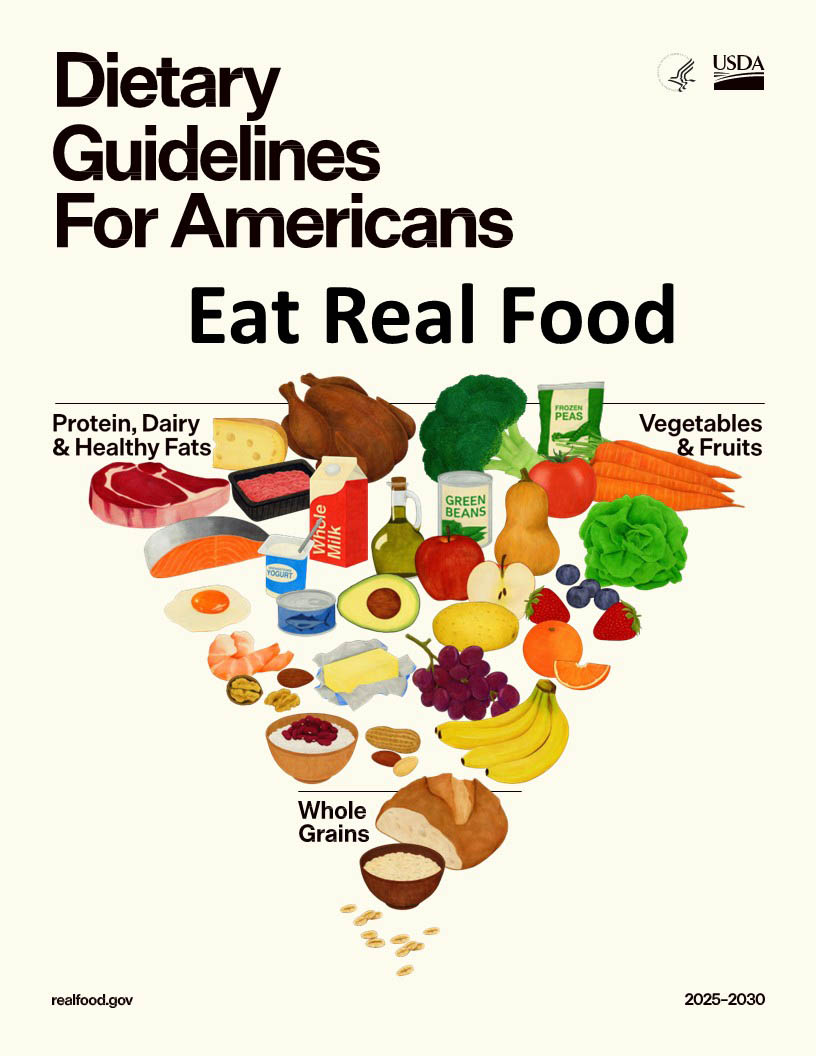
Unless you have cut yourself off from all outside media, you already know the USDA has just released new “Dietary Guidelines For Americans” and a new, upside down, food pyramid.

Both the AMA and AHA have endorsed the new guidelines with some reservations. But like everything else in today’s world they have become both political and controversial.

  • Some experts are saying, “The new guidelines are fantastic. They will make Americans much healthier. It’s about time the government caught up with the latest scientific advances.
  • Others are saying, “The new guidelines are terrible. They will set medicine back 20 years.”

As usual, the truth lies somewhere in the middle. I will explore that middle ground and discuss the pros and cons of the new dietary guidelines and food guide pyramid in this article.

But first we should start with something everyone can agree with, “What we are doing now isn’t working!” For example:

  • The percentage of Americans who are overweight or obese is approaching 70%.
  • The United States spends more on healthcare per person than any other country in the world. But we…
    • Rank 48th in life expectancy. We not only rank below every developed country, but we also rank below many 3rd world countries.
      • And we are losing ground. In 1990, we ranked 35th in life expectancy.
    • Rank 69th in health span (healthy life expectancy).
      • Again, we are losing ground. Our ranking was 42nd in 1990.
    • Rank dead last (183rd out of 183) in health span as a percentage of life expectancy.

In short, we are falling behind the rest of the world in terms of lifespan, health span, and percentage of healthy years.

And our deteriorating health is costly.

90% of our health care spending is for preventable diseases

A Brief History Of USDA Food Guides
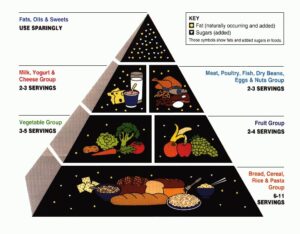
The USDA introduced the first food guide pyramid in 1992 based on the best nutrition science of the time. You probably remember the mantra:

  • 2-3 servings of dairy, preferably low fat.
  • 2-3 servings in the protein category (lean meats, fish, dry beans, eggs, and nuts).
  • 2-4 servings of fruits and 3-5 servings of vegetables.
  • 6-11 servings of grains (bread, cereals, rice, and pasta).
  • Fats, oils, and sweets were at the top of the pyramid with the caption, “Use Sparingly”.

This pyramid and the accompanying dietary guidelines were publicized so much that practically everyone knew them by heart.

Ten years later the USDA did a nutrition survey to see if their guidelines had changed American’s eating behavior. The answer was a clear, “No”. Only 5% of Americans ate according to the food guide pyramid.

The Geniuses at the USDA concluded that the food guide pyramid must be too difficult for the average American, so they introduced a simpler version, My Pyramid in 2005.

Guess what! Only 5% of Americans followed those recommendations, so they went to the super simple My Plate. By now you have probably guessed that only 5% of Americans followed the My Plate recommendations.

It turns out Americans weren’t confused by the recommendations. The recommendations were just too different from the way they were used to eating.

So, one change you will see in the new food guide pyramid is it includes some of Americans favorite foods, such as red meat, butter, and full fat dairy. Is that sacrilege or is it smart? Only time will tell.

With that in mind, let’s discuss the new “Dietary Guidelines For Americans”.

#1: Eat Real Food
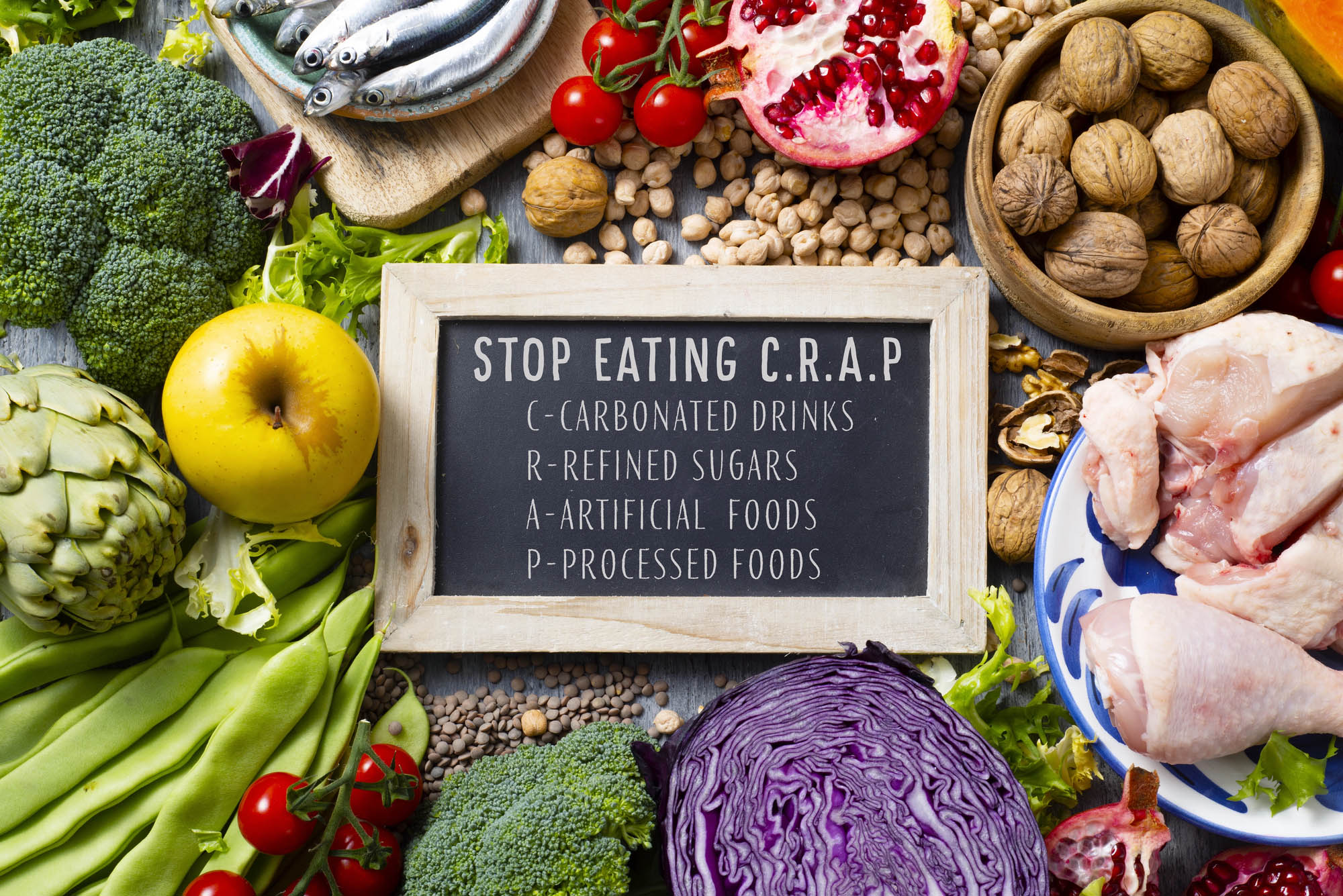
This is one recommendation that virtually everyone agrees with. The average American is getting 55% of their calories from highly processed foods. And the health consequences of that much processed food are devastating. Consumption of highly processed foods is linked to higher risk of:

  • Obesity.
  • Type 2 diabetes.
  • Heart attack.
  • Stroke.
  • Some cancers.
  • Depression and anxiety.
  • Dementia
  • Premature death.

If you are wondering how we got to this point, the answer is simple. It stems from the desire of Americans to eat a healthier diet without giving up their favorite foods and the willingness of Big Food Inc (the food industry) to give us exactly what we want. For example:

  • Some people want to eat a more plant-based diet, but don’t want to give up their favorite meats. Big Food Inc is only too happy to oblige. They mix some fat, salt, and a witch’s brew of chemicals to give us phony baloney, faken bacon, and everyone’s favorite, tofurkey.
  • Some people are convinced keto diets are healthy, but don’t want to give their favorite sweets. Again, Big Food Inc is only too happy to oblige. They mix up a witch’s brew of chemicals to give us keto cookies and keto pastries.

I’m being facetious, but you get my point.

Some representatives of Big Food Inc claim that the health risks of processed foods are unproven. They are lying!

If you would like to read my reviews of major studies showing the health risks of highly processed foods, just go to https://www.chaneyhealth.com/healthtips/ and put “processed foods” in the search box.

#2: Prioritize Protein Foods at Every Meal
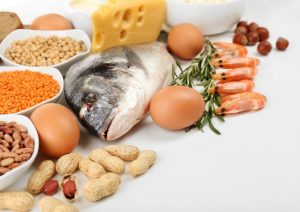
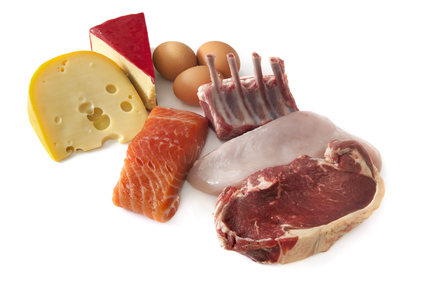
protein foodsThis is one of the more controversial recommendations of the new food guide pyramid. The new USDA dietary guidelines increase the protein recommendation by 50-100% compared to previous versions…

  • From 0.36 grams of protein per pound of body weight to…
  • Between 0.54 and 0.72 grams of protein per pound of body weight.

[Note: If these numbers seem different from what you have seen, that is because the official recommendations are in grams of protein per kilogram of body weight. Since most Americans have no idea what their body weight is in kilograms, those numbers are useless.]

The main criticisms about the new protein recommendations are:

#1: “There isn’t solid evidence that most people need this much protein.”

My response is that anyone who makes that claim hasn’t kept up with the last two decades of protein research.

The old 0.36/pound standard is probably OK for the average middle-aged couch potato, but higher protein intakes are needed for people who are:

  • Active, especially if they are trying to increase muscle mass, strength, or endurance.
  • Over 50 and are trying to maintain muscle mass, strength, and mobility.
  • Trying to lose weight without losing muscle, especially if they are using GLP-1 drugs.
  • Trying to reduce the risk of type 2 diabetes and other chronic diseases.

In short, almost everyone except the couch potatoes will benefit from higher protein intakes. And, yes, the latest science shows that it is best to get at least 20 grams of protein with each meal.

You can find more information about the science behind increased protein recommendations by going to https://www.chaneyhealth.com/healthtips/ and putting “protein” in the search box.
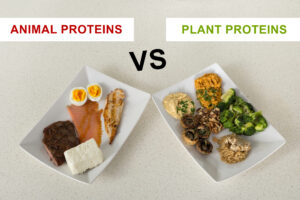
#2: “The new guidelines don’t steer people towards plant proteins”. This is a subtle distinction. The new USDA dietary guidelines include plant protein sources. But they do not recommend that they replace some of the animal proteins in the diet, as did previous versions. This allows people to choose between animal and plant proteins based on their preferences.

Those of you who have been following my “Health Tips From the Professor” blog know that I am an advocate of primarily plant-based diets. I am fully in the “replace some animal protein with vegetable protein” camp.

  • But I acknowledge that is not the way most Americans eat. Perhaps it is time to make dietary recommendations that align more closely with the way people eat if we want to get above 5% acceptance.
  • It would also be difficult to meet the new protein guidelines with plant protein alone unless you add commercially available plant protein supplements.

#3: “Higher protein intakes may be harmful for some people”. Recent research has shown that this concern is overblown for most Americans. However, there are some people who should probably check with their doctor before they increase their protein intake.

  • People who have been diagnosed with kidney disease.
  • People with genetic conditions or diseases that predispose to kidney disease. One example would be poorly controlled diabetes. [Note: I do not mean to imply that higher protein intake is likely to cause kidney disease in these situations. I included this category because people in these situations may have undiagnosed kidney disease.]

In most of these cases, you have probably been warned by your doctor to be careful about excess protein intake. But if you are uncertain about your risk for kidney disease, it never hurts to check with your doctor before increasing your protein intake.

What About Red Meat?
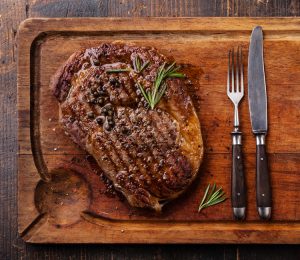
SteakThe new dietary guidelines have been criticized for emphasizing red meat. That criticism is inaccurate. It’s a “tempest in a teapot”.

In fact, red meat is pictured in both the original and the most recent versions of the food guide pyramid. And red meat is mentioned as one source of protein in both the original and the latest versions of dietary guidelines. It is given no special emphasis over other protein sources in either version of the dietary guidelines.

However, I would like to share my perspective on red meat.

  • Diet context matters. As I have said in previous issues of “Health Tips From The Professor”, fruits, vegetables, whole grains, and beans are the antidotes to all the bad aspects of red meat.” And if you look at the new food guide pyramid, red meat and other proteins are in the same neighborhood as fruits and vegetables.
  • Amount matters. Think of red meat as a garnish – for example, 2-3 ounces of red meat as part of a steak salad or stir fry with lots of veggies rather than an 8-ounce steak with fries.

#3: Consume Dairy
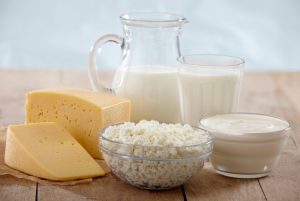
dairy foodsThe new dietary guidelines differ from previous versions in both the amount and kind of dairy foods consumed. For example:

  • The old guidelines recommended 2-3 servings of dairy foods per day.
    • The new guidelines recommend 3 servings per day as part of a 2,000-calorie dietary pattern.
    • Since most Americans consume 3,600 to 3,800 calories per day that recommendation translates to at least 5 servings per day.
  • The old guidelines recommended choosing low fat dairy foods.
    • The new guidelines say, “When consuming dairy, include full-fat dairy with no added sugars.”

Since the full-fat dairy recommendation is the most controversial change, I will address it first.

Let me start by saying that I have been a traditionalist with respect to dairy foods. I have recommended low-fat dairy foods for years. But a good scientist must be willing to change their recommendations based on the latest research findings.

And new findings have clearly challenged our perspective on full-fat dairy foods. Several large, well-designed studies over the past decade have shown that full-fat dairy foods are just as healthy as low-fat dairy foods. I will make two comments about these studies.

  • I suspect that the studies may be skewed because much of the data on full-fat dairy comes from countries where most of full-fat dairy foods are fermented – and we know that fermented dairy foods are very healthy.
    • Admittedly, I have no data to back up my suspicion, but I recommend fermented dairy foods as part of your dairy intake. That’s a recommendation everyone can agree with!
  • One recent study has suggested that diet context is important. Specifically, the study suggests that the benefits of full-fat dairy foods are greatest in the context of a healthy, primarily plant-based diet.
    • Similar observations have been made for egg consumption. That suggests that full-fat dairy and eggs provide some important nutrients that may be missing in a vegetarian diet. But in a diet that is already high in saturated fat and cholesterol, the “bad” effects of full-fat dairy and eggs may outweigh the benefits.

You can find more information about full-fat dairy by going to https://www.chaneyhealth.com/healthtips/ and putting “dairy” in the search box.

As for the amount of dairy foods you should consume, I wouldn’t get hung up on the number of servings per day. I interpret the new guidelines as saying, “Don’t be afraid of dairy. It can be an important part of your diet.”

However, the servings of dairy products are more frequently determined by lactose intolerance or sensitivity to milk protein than by dietary guidelines. Many people, including myself, can only consume small, occasional servings of dairy without experiencing digestive distress.

#4: Eat Vegetables & Fruits Throughout The Day
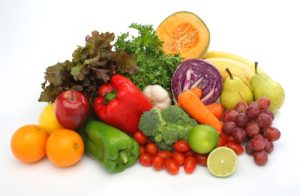
Colorful fruits and vegetablesThe dietary guidelines say, “Eat a variety of colorful, nutrient-dense vegetables and fruits. Specifically, the recommendation is:

  • 3 servings/day of vegetables and 2 servings/day of fruits each day.
    • Once again, the number of servings are based on a 2,000-calorie diet.
    • When you take into account the actual caloric intake of Americans, the recommendations become 3-5 servings/day of vegetables and 2-4 servings/day of fruits.

These recommendations are not controversial. They are universally accepted.

#5: Incorporate Healthy Fats

The new dietary guidelines are:

  • “Healthy fats are plentiful in many whole foods, such as meats, poultry, eggs, omega-3 rich seafood, nuts, seeds, full-fat dairy, olives, and avocados.”
    • This recommendation is not controversial.
  • “When cooking with or adding fats to meals, prioritize oils with essential fatty acids, such as olive oil. Other options can include butter or beef tallow.”
    • This is the most controversial portion of the new dietary guidelines. The usual comment is something like, “How dare they include butter and lard as healthy fats!”

I’m not a fan of lard but let me make a couple of observations about butter.

  • Butter is a whole food. Its ingredient list is typically cream, milk, and salt. If you buy the unsalted version, the ingredient list is even shorter. Margarine and butter substitutes have much longer ingredient lists, often including some questionable ingredients.
  • The frequency of butter use is important. Let me share a personal example. We eat a whole food, primarily plant-based diet. We substitute almond butter for butter on toast and muffins. But there are certain foods like potatoes, winter squash, and corn on the cob that just aren’t the same without real butter. We buy 4 sticks of butter at a time, cut it into pats of butter, and freeze it. Four sticks of butter lasts us a year.

Finally, the critics who say that the new guidelines should not include foods that are high in saturated fat are ignoring the fact that the guidelines say, “Saturated fat consumption should not exceed 10% of total daily calories.” This statement has remained constant since the first food guide pyramid in 1992.

So, the new guidelines are not recommending that we eat more saturated fat as many critics have claimed. They are saying, “A little bit of saturated fat is OK in the context of a whole food diet with lots of fruits, vegetables, and whole grains.

#6: Focus On Whole Grains
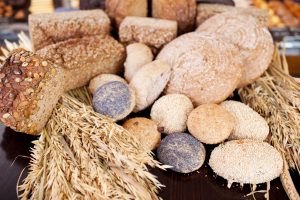
The new dietary guidelines are:

  • “Prioritize fiber-rich whole grains.”
  • “Significantly reduce the consumption of highly processed, refined carbohydrates.”

These guidelines are unchanged from previous versions of the guidelines.

What is new is that the guidelines now recommend only 2-4 servings of whole grains per day. That’s a big change from the 6-11 servings per day recommended in the original food guide pyramid.

  • If the 6-11 servings per day were whole grains, the new recommendation would represent a significant decrease in fiber intake. But that’s not how most Americans eat.
  • Since most of the grains in a typical American’s diet are highly processed and refined, reducing the recommended intake to 2-4 servings per day is a step in the right direction.

#7: Limit Highly Processed Foods, Added Sugars, & Refined Carbohydrates
fast foodI call this, “Avoid the bad stuff”. Specifically:

  • Avoid highly processed foods with added sugar and sodium.
  • Limit foods and beverages that include artificial flavors, colors, preservatives, and sweeteners
  • Avoid sugar-sweetened and artificially sweetened beverages.

These recommendations are accepted by almost everyone except the food industry.

However, I should point out that there is also a slight difference in emphasis from previous versions of the USDA dietary guidelines:

  • The new guidelines are more restrictive for added sugars than previous versions of the dietary guidelines. For example, they say:
    • One meal should contain no more than 10 grams of added sugars.
    • Children under the age of 10 should not be given foods with added sugars (previous versions of the dietary guidelines recommend avoiding added sugars for children under the age of 2).

Given the wealth of evidence that added sugars are linked to increased risk of obesity and chronic diseases, these stricter restrictions on added sugars make good sense – especially because the USDA dietary guidelines form the basis for school lunch programs.

But these guidelines are very different from how the average American eats. I’m not sure how many Americans will follow them.

#8: Limit Alcoholic Beverages

The guidelines:

  • Say, “Consume less alcohol for better overall health”.
  • List people who should completely avoid alcohol.

The only controversy about this recommendation is that it is less specific than the previous guidelines that recommended no more than 1 alcoholic drink/day for women and no more than 2/day for men.

I recognize the desire for specificity. But alcohol tolerance depends on several factors such as body weight, genetics, and medication usage.

What Does This Mean For You?

Questioning WomanThe USDA just released a new version of the Food Guide Pyramid and accompanying “Dietary Guidelines For Americans”, and they are very different from previous versions. What do these changes mean for you?

While the AMA and AHA have both endorsed the new guidelines, they have been controversial. In the article above, I have summarized the pros and cons of every recommendation. There are lots of recommendations, so it was a long article.

To help you make sense of the article let me summarize the recommendations and criticisms by dividing the recommendations into 4 categories:

#1: Recommendations that are accepted by almost everyone except the food industry. These are non-controversial.

  • Eat real food
  • Eat vegetables and fruits throughout the day.
  • Focus on whole grains.
  • Limit highly processed foods, added sugar, and refined carbohydrates.

#2: Changes in recommendations that reflect recent scientific advances. Critics of these changes simply haven’t kept up with scientific publications over the past couple of decades.

  • Increasing the daily protein recommendations.
  • Including full-fat dairy as a healthy dairy food.

#3: Tempests in a teapot: There is a kernel of truth in these criticisms, but the changes are much more modest than the critics would have you believe.

  • Including red meat in the protein recommendations.
  • Including some saturated fats in the “healthy fats” category.
  • Not including specific limits on alcohol consumption, as the previous version had done.

#4: What I would have liked to have seen:

  • More emphasis on plant proteins.
  • Elimination of lard from the “healthy fat” category.
  • Inclusion of high-quality vegetable oils in the “healthy fats” category.

The Bottom Line

The USDA just released a new version of the Food Guide Pyramid and accompanying “Dietary Guidelines For Americans”.

While the AMA and AHA have both endorsed the new guidelines, they have been controversial.

In this article I describe the pros and cons of each dietary guideline and divide them into ones for which:

  • They are clearly an improvement over the previous guideline.
  • They are accepted by almost everyone.
  • The criticism is a “tempest in a teapot”.
  • The criticism is at least partially accurate.

For more information on the pros and cons of the new “Dietary Guidelines For Americans” and how these guidelines apply to you, read the article above.

These statements have not been evaluated by the Food and Drug Administration. This information is not intended to diagnose, treat, cure or prevent any disease.

 _____________________________________________________________________________

My posts and “Health Tips From the Professor” articles carefully avoid claims about any brand of supplement or manufacturer of supplements. However, I am often asked by representatives of supplement companies if they can share them with their customers.

My answer is, “Yes, as long as you share only the article without any additions or alterations. In particular, you should avoid adding any mention of your company or your company’s products. If you were to do that, you could be making what the FTC and FDA consider a “misleading health claim” that could result in legal action against you and the company you represent.

For more detail about FTC regulations for health claims, see this link.

https://www.ftc.gov/business-guidance/resources/health-products-compliance-guidance

_______________________________________________________________________

About The Author 

Dr. Chaney has a BS in Chemistry from Duke University and a PhD in Biochemistry from UCLA. He is Professor Emeritus from the University of North Carolina where he taught biochemistry and nutrition to medical and dental students for 40 years.  Dr. Chaney won numerous teaching awards at UNC, including the Academy of Educators “Excellence in Teaching Lifetime Achievement Award”. Dr Chaney also ran an active cancer research program at UNC and published over 100 scientific articles and reviews in peer-reviewed scientific journals. In addition, he authored two chapters on nutrition in one of the leading Biochemistry textbooks for medical students.

Since retiring from the University of North Carolina, he has been writing a weekly health blog called “Health Tips From the Professor”. He has also written two best-selling books, “Slaying the Food Myths” and “Slaying the Supplement Myths”. And most recently he has created an online lifestyle change course, “Create Your Personal Health Zone”. For more information visit https://chaneyhealth.com.

For the past 55 years Dr. Chaney and his wife Suzanne have been helping people improve their health holistically through a combination of good diet, exercise, weight control and appropriate supplementation.



What Kind Of Protein Is Best For Strength?

What Kind Of Protein Is Best For You?

Author: Dr. Stephen Chaney 

Sport DrinkEvery bodybuilder “knows” that whey is the best protein for building strong muscles. After all, it:

  • Is absorbed more rapidly than some other proteins.
  • Contains all nine essential amino acids.
  • Is naturally rich in leucine, a branched chain amino acid that stimulates increased muscle mass.

However, as someone who is not a vegan but who follows the vegan literature, I frequently come across testimonials from bodybuilders and elite athletes who say they get all the strength and muscle mass they need from plant proteins.

I’ve always assumed they must have dietitians designing the perfect plant protein diet for them. But a recent study surprised me. It challenged that assumption.

Before I talk about this study, let me change our focus. Most of us will never be bodybuilders or elite athletes, but all of us face a common challenge. We all tend to lose muscle mass as we age, something referred to as sarcopenia. I have discussed this in a previous issue of “Health Tips From the Professor”.

Simply put, sarcopenia results in:

  • Loss of muscle strength. Even the simple act of picking up a grandchild or a bag of groceries can become problematic.
  • Increased risk of falls and fractures.
  • Lower quality of life.

Sarcopenia is a major health issue for those of us in our golden years. If you are younger, it is a concern for your parents or grandparents. Sarcopenia is a health issue that affects everyone.

In my previous article I discussed the role of adequate protein intake and exercise in preventing age-related sarcopenia. But I did not discuss what kind of protein was best for preventing muscle loss, and the frailty that comes with it, as we age.

The article (EA Struijk et al, Journal of Cachexia, Sarcopenia and Muscle, 13: 1752-1761, 2022) I will discuss today suggests that plant protein is best for preventing frailty in women as they age. It’s a surprising conclusion, so join me as I evaluate this study.

How Was This Study Done?

Clinical StudyThe data for this study came from the Nurses Health Study which started in 1976 with 121,700 women nurses and is still ongoing. This study followed 85, 871 female nurses for an average of 22 years starting when they were 60.

Food frequency questionnaires were administered to the participants in the study every four years starting in 1980. The questionnaires were used to calculate:

  • Total calories consumed.
  • Percent of calories from protein, carbohydrate, and fat.
  • Percent of calories from different kinds of protein.
  • The overall quality of the diet.
  • Saturated fat, polyunsaturated fat, cholesterol, and alcohol intake.

For this study the investigators used the cumulative average values from all questionnaires completed by participants in the study from age 60 until the onset of frailty.

Frailty was assessed every four years starting in 1992 using something called the FRAIL scale. The FRAIL scale defines frailty based on five self-reported criteria: fatigue, low strength, reduced aerobic capacity, having 5 or more chronic illnesses, and recent significant unintentional weight loss.

  • It is important to note that strength is only one of the five criteria used to identify frailty, although decreased muscle mass can contribute to lack of energy and reduced aerobic activity.
  • It is also worth pointing out that multiple studies have shown that primarily plant-based diets are associated with a decrease in chronic diseases.

I will come back to both of these points when I discuss the results of this study.

What Kind Of Protein Is Best For Strength? 

I will start with the “big picture” results from this study and then cover some of the important details.

Average intake of:

  • Total protein was 18.3% of calories consumed.
  • Animal protein was 13.3% of calories consumed.
  • Plant protein was 5.0% of calories consumed.
  • Dairy protein was 3.8% of calories consumed.

When protein intake was divided into quintiles (5 equal parts) and women consuming the most protein were compared to those consuming the least protein for an average of 22 years:

  • Those consuming the most total protein had a 7% increased risk of developing frailty.
  • Those consuming the most animal protein had a 7% increased risk of developing frailty. (It is perhaps not surprising that the results were essentially the same for total and animal protein since animal protein was 73% of the total protein consumed by women in this study.)
  • Those consuming the most plant protein had a 14% decreased risk of developing frailty.
  • Consumption of dairy protein did not affect frailty.

Substituting as little as 5% of calories of plant protein for:

  • Dairy protein decreased the risk of developing frailty by 32%.
  • Animal protein decreased the risk of developing frailty by 38%.
  • Non-dairy animal protein (meat, fish, and eggs) decreased the risk of developing frailty by 42%.

In addition, substituting as little as 5% of calories of dairy protein for non-dairy animal protein decreased the risk of developing frailty by 14%.

But, as I said above, the frailty scale used in this study included the criteria of developing 5 or more chronic illnesses, and long-term consumption of plant protein is known to reduce the risk of developing chronic illnesses. So, it is important to break the study down into its component parts. When that was done the statistically significant results were:

  • Those consuming the most total protein had a 7% increased risk of low strength and a 25% increased risk of developing 5 or more chronic diseases.
  • Those consuming the most animal protein had a 9% increased risk of low strength and a 35% increased risk of developing 5 or more chronic diseases.
  • Those consuming the most plant protein had an 18% decreased risk of low strength. (It is interesting to note that plant protein consumption did not have a statistically significant effect on the development of chronic diseases in this study. That suggests that the “protective” effect of plant protein may simply be due to the absence of animal protein from the diet.)
  • Consumption of dairy protein did not affect any of the frailty criteria.

Finally, prevention of strength loss due to age-related sarcopenia is known to require exercise as well as adequate protein intake.

So, it was somewhat surprising that no difference in the association between protein intake and frailty was seen in women with high physical activity compared with those with lower physical activity levels. However, this may be because the range in activity level between the women in this study was relatively small. There didn’t appear to be a significant number of “gym rats” among the women in this study.

What Kind Of Protein Is Best For You?

Questioning WomanOne take-away from this study is clear. If you are a woman and want to minimize sarcopenia (loss of muscle mass and strength as you age), plant protein is an excellent choice.

  • A variety of plant proteins is best, so you get all the essential amino acids.
  • You don’t need to become a vegan. This study showed that replacing as little as 5% of your calories from animal protein with plant protein can have a significant benefit. Any healthy primarily plant-based diet will do.
  • This study enrolled only women aged 60 or above, so we don’t know whether the results apply to men or to younger women.

We don’t know why plant protein is better than animal protein at preventing age-related sarcopenia.

  • It could be because primarily plant-based diets are anti-inflammatory, and inflammation plays a role in sarcopenia.
  • Or it could be because primarily plant-based diets reduced the risk of chronic diseases, and chronic diseases can lead to loss of strength.

To be clear, this is a study that focuses on the type of protein that is best for long-term health and strength as we age. This is not a study of the best protein for increasing muscle mass following a workout.

  • Multiple studies show that whey protein can be a good post-workout choice.
  • However, other studies show that plant protein can also be a good post-workout choice if extra leucine is added to make it equivalent to whey protein in terms of leucine content.

The Bottom Line

You have probably heard that it is all downhill after age 30. But it doesn’t have to be.

One of the downhill slopes we all face is something called sarcopenia (age-related muscle loss). The resulting loss of strength and agility can severely impact our quality of life in our golden years.

We can prevent sarcopenia with the combination of a high protein diet and resistance training (weight bearing exercise).

But what kind of protein is best? In this issue of “Health Tips From the Professor” I review a large, well-designed study that suggests plant protein is the best choice for women if they wish to reduce age-related muscle loss and the weakness that comes with it.

For more details about the study and what it means for you, read the article above.

These statements have not been evaluated by the Food and Drug Administration. This information is not intended to diagnose, treat, cure, or prevent any disease.

 ______________________________________________________________________________

My posts and “Health Tips From the Professor” articles carefully avoid claims about any brand of supplement or manufacturer of supplements. However, I am often asked by representatives of supplement companies if they can share them with their customers.

My answer is, “Yes, as long as you share only the article without any additions or alterations. In particular, you should avoid adding any mention of your company or your company’s products. If you were to do that, you could be making what the FTC and FDA consider a “misleading health claim” that could result in legal action against you and the company you represent.

For more detail about FTC regulations for health claims, see this link.

https://www.ftc.gov/business-guidance/resources/health-products-compliance-guidance

 _____________________________________________________________________

About The Author

Dr. Chaney has a BS in Chemistry from Duke University and a PhD in Biochemistry from UCLA. He is Professor Emeritus from the University of North Carolina where he taught biochemistry and nutrition to medical and dental students for 40 years.  Dr. Chaney won numerous teaching awards at UNC, including the Academy of Educators “Excellence in Teaching Lifetime Achievement Award”. Dr Chaney also ran an active cancer research program at UNC and published over 100 scientific articles and reviews in peer-reviewed scientific journals. In addition, he authored two chapters on nutrition in one of the leading biochemistry text books for medical students.

Since retiring from the University of North Carolina, he has been writing a weekly health blog called “Health Tips From the Professor”. He has also written two best-selling books, “Slaying the Food Myths” and “Slaying the Supplement Myths”. And most recently he has created an online lifestyle change course, “Create Your Personal Health Zone”. For more information visit https://chaneyhealth.com.

For the past 45 years Dr. Chaney and his wife Suzanne have been helping people improve their health holistically through a combination of good diet, exercise, weight control and appropriate supplementation.
Our Gut Bacteria Are What We Eat

We Grow What We Eat

Author: Dr. Stephen Chaney

BacteriaThe subtitle of this week’s “Health Tips From the Professor” is “We Grow What We Eat”.

No, this is not about each of us starting a backyard garden and literally growing what we eat – although that would probably be a good idea for most of us. I’m actually talking about the bacteria that we “grow” in our intestine.

Most of you probably already know about the concept of “good” and “bad” intestinal bacteria.

Evidence suggests that the “bad” bacteria and yeast in our intestine can cause all sorts of adverse health effects:

  • There is mounting evidence that they can compromise our immune system.
  • There is also evidence that they can create a “leaky gut” (you can think of this as knocking holes in our intestinal wall that allow partially digested foods to enter the circulation where they can trigger inflammation and auto-immune responses).
  • There is some evidence that they can affect brain function and our moods.
  • They appear to convert the foods that we eat into cancer causing chemicals which can be absorbed into the bloodstream.
  • Studies in mice even suggest that they can make us fat.

The list goes on and on…

The “good bacteria” are thought to crowd out the “bad” bacteria and prevent many of the health problems they cause.

In case you’re thinking that it seems a bit far-fetched to think that our intestinal bacteria could affect our health, let me remind you that we have about 100 trillion bacteria in our intestine compared to about 10 trillion cells in our body. They outnumber us 10 to 1.

For years we have thought of “bad” bacteria and yeast as originating from undercooked, spoiled or poorly washed foods that we eat and the “good” bacteria as originating from foods like yogurt and probiotic supplements.

But most of us have not thought that the kinds of foods we choose to eat on a daily basis can affect the kinds of bacteria we “grow” in our intestine – until now. You’ve heard for years that “We are what we eat”. Well it now appears that we also “grow what we eat”. I’m referring to a recent study by G. D. Wu et al (Science, 334: 105-108, 2011).

Our Gut Bacteria Are What We Eat

I’m going to get a bit technical here (Don’t worry. There won’t be a quiz). Scientists refer to the population of bacteria in our intestines as our “microbiome”. Previous studies have shown that people from all over the world tend to have one of two distinct microbiomes (populations of bacteria) in their intestines – Bacteroides or Prevotella. [Again, don’t let the specialized scientific terminology scare you. These are just the names scientists have given to these two distinctive populations of intestinal bacteria].

What this study showed was that people who habitually consumed high-fat/low-fiber diets (diets containing predominantly animal protein and saturated fats) tended to have the Bacteroides bacteria in their intestine, while people who habitually consumed low-fat/high-fiber diets (diets that are primarily plant based and are high in carbohydrate and low in meat and dairy) tended to have the Prevotella bacteria in their intestine. And surprisingly this appears to be independent of sex, weight and nationality.

Is This Important?

The research defining these two distinct microbiomes (populations of intestinal bacteria) and showing that they are influenced by what we eat is very new. At this point in time we know relatively little about the health benefits and risks associated with the Bacteroides and Prevotella microbiomes.

For example:

  • Most of the studies on the health effects of “bad intestinal bacteria” were based on the identification of one or two “bad bacteria” in the gut – not on the hundreds of bacterial species found in the Bacteroides microbiome. So we can’t say for sure that the Bacteriodes microbiome found in people with diets high in animal protein and saturated fats will cause the same health problems as the “bad bacteria”. Nor do we know for sure how important a role the Bacteriodes microbiome plays in the health consequences of consuming that kind of diet.
  • Similarly, many of studies on the health benefits of “good intestinal bacteria” have been based on probiotic supplements containing one or two bacterial species – not the hundreds of bacterial species found in the Prevotella microbiome. So we can’t really say if probiotics or even the Prevotella microbiome will convey the same health benefits seen in populations who consume vegetarian diets.

However, now that do we know that we “grow what we eat” there are numerous studies ongoing to define the benefits and risks associated with each type of bacterial population.

For example, I shared a study with you recently which shows that the intestinal bacteria in people who eat a lot of animal protein convert carnitine (which is also found in meat) to a compound called TMAO, which may increase the risk of heart attacks, and that the conversion of carnitine to TMAO does not occur in people who consume a vegetarian diet ( see “Does Carnitine Increase Heart Disease Risk”)

Stay tuned! I’ll keep you updated as more information becomes available.

The Bottom Line:

Most of the studies I report on are ones that you can act on right away. This one is different. This study introduces a whole new concept – one that raises as many questions as it answers. This makes us ask those “what if” questions.

1)     Previous studies have shown that most people have one of two different kinds of microbiomes (populations of bacteria) in their intestines. This study showed that diets high in animal protein and fat favored one kind of intestinal microbiome, while diets low in fat and high in fiber from fruits & vegetables favored another type of intestinal microbiome.

2)     With a few exceptions we don’t know yet how important a role these intestinal microbiomes play in determining the health consequences of different diets. However, because our intestinal bacteria outnumber the cells in our body by 10:1, it is tempting to ask “What if?”

3)     We also don’t yet know the extent to which probiotics (either from foods or supplements) can overcome the effects of a bad diet on our intestinal microbiome, but it is tempting to ask “What if?”

These statements have not been evaluated by the Food and Drug Administration. This information is not intended to diagnose, treat, cure or prevent any disease.

Do High Protein Diets Cause Cancer?

How Much Protein Should We Eat?

Author: Dr. Stephen Chaney

Animal Protein FoodsThe recent headlines suggesting that high protein diets may cause cancer, diabetes and premature death in middle aged Americans are downright scary. You are probably asking yourself:

  • “Is this new information?”
  • “Does this apply to me?”
  • “Should I radically change what I eat?”

In this issue of “Health Tips From the Professor” I will address each of these questions.

Do High Protein Diets Cause Cancer?

The study in question (Levine et al., Cell Metabolism, 19: 407-417, 2014) suggested that high protein diets were associated with increased risk of cancer, diabetes and premature death in Americans in the 50-65 age range. I will touch on all three of these observations, but it is the increased risk of cancer that generated the most headlines – and the most concern (The consequences of diabetes take years to manifest, and death seem to be a more distant concern for most people. Cancer is immediate and personal).

The study looked at 6,381 adults aged 50 and older (average age 65) from the NHANES III data base. (NHANES is a comprehensive database collected by the Centers for Disease Control and Prevention that consists of surveys and physical examinations and is designed to be representative of the health and nutritional status of the US population.)

The data collected consisted of a single diet questionnaire conducted when the subjects were enrolled in the study. Based on the diet questionnaire the authors of the study divided the group into those with low protein intake (<10% of calories), those with moderate protein intake (10-19% of calories) and those with high protein intake (>20% of calories). Overall death and mortality from various diseases over the next 18 years was obtained by linking the NHANES data with the National Death Index.

Based on preliminary data suggesting that the age of the population might influence the results (I won’t go into details here) the authors of the study decided to subdivide the dataset into people aged 50-65 and people over 65. When they did that, they came to the following conclusions:

1)     In the 50-65 age group diets high in animal protein were associated with a:

  • 45% increase in overall mortality
  • 4-fold increase in cancer death risk
  • 4-fold increase in diabetes death risk.

Diets with moderate protein intake were associated with intermediate increases in risk. Surprisingly, there was no increase in cardiovascular disease risk.

Protein Shakes2)     When they looked at people in the 50-65 age group consuming diets high in vegetable protein:

  • the increased overall mortality and increased in cancer mortality disappeared
  • the increased diabetes mortality was still seen.

3)     In the 65+ age group high protein diets were associated with a:

  • 28% decrease in overall mortality
  • 60% decrease in cancer mortality.

The increased risk of diabetes related deaths was still observed. The authors did not distinguish between animal and vegetable protein in the over 65 age group.

All of that may seem to be a bit too complicated. At the risk of gross oversimplification I would summarize their message as follows:

  • Diets high in animal protein may be bad for you if you are in the 50-65 age range, but might actually be good for you if you are over 65.
  • Diets high in vegetable protein appear to be good for anyone over age 50 (The study didn’t look at younger age groups).

Is This New Information?

Let’s start by assuming that the conclusions of the authors are correct (more about that below).

When you boil their message down to its simplest components, the information isn’t particularly novel.

  • The idea that vegetable proteins may be better for you than animal proteins has been around for decades. There are a number of studies suggesting that diets high in animal protein increase the risk of cancer, heart disease, diabetes and overall death – although it is still not clear whether it is the animal protein itself or some other characteristic of populations consuming mostly animal protein that is the culprit.
  • Evidence has been accumulating over the past decade or so that protein needs increase as we age, so it is not surprising that this study found high protein diets to be beneficial for those of us over age 65.

What Do Other Experts Say?

ScientistSince this study has been released it has been roundly criticized by other experts in the field. Let me sum up their four main criticisms and add one of my own.

1)     The protein intake data were based on a single dietary survey taken at the beginning of an 18 year study. The authors stated that a single dietary survey has been shown to be a pretty accurate indicator of what an individual is eating at the time of the survey. However, it is problematic to assume that everyone’s diet remained the same over an 18 year period.

2)     The choice of less than 10% of calories from protein is also problematic. According to the Institute of Medicine standards anything below 10% is defined as inadequate protein intake, which can have long term health consequences of its own.

More importantly, only 7% of the population being studied (437 individuals) fell into this group. This is the baseline group (or put another way, the denominator for all of the comparisons). The conclusions of this study were based on comparing the other two groups to this baseline, and there were too few individuals in this group to be confident that the baseline is accurate.

This does not necessarily invalidate the study, but it does decrease confidence in the size of the reported effect – so forget the reported numbers like 45% increase in mortality and 4-fold increase in cancer deaths. They probably aren’t accurate.

3)     The number of people in this study who died from diabetes was exceedingly small (68 total) and most of them already had diabetes when the study began. The experts concluded that the numbers were simply too low to draw any conclusions about protein intake and diabetes related deaths, and I agree with them.

4)     While the study controlled for fat intake and carbohydrate intake, it did not control for weight. That is a huge omission. Overweight is associated with increased risk of cancer, diabetes and death, and vegetarians tend to weigh less than non-vegetarians.

5)     I would add that there are many other differences between vegetarians and non- vegetarians that could account for most of the differences reported between diets high in animal and vegetable protein. For example:

  • Vegetarians tend to be more health conscious and thus they tend to exercise more, consume more fiber, consume more fruits and vegetables, consume less fried food, and consume less processed and convenience foods – all of which are associated with decreased risk of cancer, diabetes and death.

The Bottom Line:

This is not a particularly strong study. Nor is it particularly novel. In fact, when you strip away the scary headlines and focus on what the data really show, the conclusions aren’t that different from what nutrition experts have been saying for years.

1)     This study suggests that if you are in the 50-65 age range, diets high in animal protein may not be good for you (this study focused on increased risk of cancer death and overall mortality. Other studies have suggested that diets high in animal protein may increase the risk of cardiovascular death).

This is not a new idea. These data are consistent with a number of other studies. However, none of these studies adequately assess whether the increased risk is from the animal protein alone or from other characteristics of populations that consume a lot of animal protein.

2)     This study also suggests that diets high in vegetable protein do not increase either cancer risk or all cause mortality. That’s also not new information. We’ve known for years that people who consume primarily vegetable protein appear to be healthier. Once again, it is not clear whether it is the vegetable protein itself that is beneficial or whether the benefit is due to other characteristics of populations who consume a lot of vegetable protein.

3)     Does that mean that you need to become a vegetarian? It probably reflects my personal bias, but I am reminded of a Woody Allen Quote: “Vegetarians don’t live longer. It just seems that way”. I am also encouraged by studies suggesting that most of the health benefits of vegetarianism can be achieved by diets that consist of around 50% vegetable protein.

I would never discourage anyone from becoming a vegetarian, but if you aren’t ready for that, I would highly recommend that you aim for at least 50% vegetable protein in your diet.

4)     Finally, this study suggests that a high protein diet is beneficial for people over 65. This is also not a completely novel idea. It is consistent with a lot of recent research.

My advice to those of you who, like me, are over 65 is to pay attention to high protein foods and make sure that they are an important part of your diet. I’m not suggesting that you go for the double bacon cheeseburger just because you are over 65. I would still aim for a significant percentage of vegetable protein as a part of a healthy diet at any age.

These statements have not been evaluated by the Food and Drug Administration. This information is not intended to diagnose, treat, cure or prevent any disease.

Health Tips From The Professor