Eating Of The Green

Why Nitrates Are Good For You

Author: Dr. Stephen Chaney

You may be one of the millions of Americans who are celebrated St. Patrick’s Day today. If so, you may have sung the famous Irish folk song “The Wearing of the Green”. If you are Irish, that song has special meaning for you. However, when I hear that song, I think of “Eating of the Green.”

And when I think of eating green, I don’t mean that everything we eat should be green. I am thinking of whole fruits and vegetables in a variety of colors. We have known for years that fruits and vegetables are good for our health. Consumption of fruits and vegetables is associated with a lower risk of high blood pressure, heart disease, cancer, inflammatory diseases, and much more.

For today’s health tip, I am going to focus on heart health and an unexpected explanation for how fruits and vegetables reduce our risk of heart disease.

Why Nitrates Are Good For You

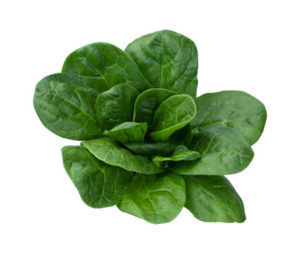
spinachWe have assumed that whole fruits and vegetables lower our risk of heart disease because they are low in saturated fats and provide heart-healthy nutrients, phytonutrients, and fiber. All of that is true. But could there be more?

Recent research has suggested that the nitrates found naturally in fruits and vegetables may also play a role in protecting our hearts. Here is what recent research shows:

  • The nitrates from fruits and vegetables are converted to nitrite by bacteria in our mouth and intestines.
    • Fruits and vegetables account for 80% of the nitrate in our diet. The rest comes from a variety of sources including the nitrate added as a preservative to processed meats.
    • Although all fruits and vegetables contain nitrates, the best sources are green leafy vegetables and beetroot. [Beet greens are delicious and also a good source of nitrate, but beetroot is the part of the beet we usually consume.]
  • Nitrite is absorbed from our intestine and converted to nitric oxide by a variety of enzymes in our tissues.
  • Both reactions require antioxidants like vitamin C, which are also found in fruits and vegetables.

Nitric oxide has several heart healthy benefits. For example:

  • It helps reduce inflammation in the lining of blood vessels. Inflammation stimulates atherosclerosis, blood clot formation, and is associated with an increased risk of heart disease.
  • It relaxes the smooth muscle cells that surround our blood vessels. This makes the blood vessels more flexible and helps reduce blood pressure.
  • It prevents smooth muscle cells from proliferating, which prevents them from invading and constricting our arteries. This, in turn, has the potential to reduce the risk of atherosclerosis.
  • It prevents platelet aggregation. This, in turn, has the potential to reduce the risk of heart attack and stroke due to blood clots that block the flow of blood to our heart or brain.

It is well established that nitrates from fruits and vegetables reduce blood pressure. More importantly, they can help slow the gradual increase in blood pressure as we age.

However, few studies have asked whether this reduction in blood pressure translates into improved cardiovascular outcomes. This study (CP Bondonno et al, European Journal of Epidemiology, 36: 813-825, 2021) was designed to answer that question.

How Was This Study Done?

clinical studyThis study made use of data from the Danish Diet, Cancer, and Health Program. That program enrolled 53,150 participants from Copenhagen and Aarhus between 1993 and 1997 and followed them for an average of 21 years. None of the participants had a diagnosis of cancer or heart disease at the beginning of the study.

Other characteristics of the participants at the time they were enrolled in the study were:

  • 46% male
  • Average age = 56
  • BMI = 26 (20% overweight)
  • Average systolic blood pressure = 140 mg Hg
  • Average diastolic blood pressure = 84 mg Hg

At the beginning of the study, participants filled out a 192-item food frequency questionnaire that assessed their average intake of various food and beverage items over the previous 12 months. The vegetable nitrate content of their diets was analyzed using a comprehensive database of the nitrate content of 178 vegetables. For those vegetables not consumed raw, the nitrate content was reduced by 50% to account for the nitrate loss during cooking.

Blood pressure was measured at the beginning of the study. Data on the incidence (first diagnosis) of heart disease during the study was obtained from the Danish National Patient Registry. Data were collected on diagnosis of the following heart health parameters:

  • Cardiovascular disease (all diseases of the circulatory system).
  • Ischemic heart disease (lack of sufficient blood flow to the heart). The symptoms of ischemic heart disease range from angina to myocardial infarction (heart attack).
  • Ischemic stroke (lack of sufficient blood flow to the brain).
  • Hemorrhagic stroke (bleeding in brain).
  • Heart failure.
  • Peripheral artery disease (lack of sufficient blood flow to the extremities).

Is Nitrate From Vegetables Good For Your Heart?

strong heartIntake of nitrate from vegetables ranged from 18 mg/day (<1/3 serving of nitrate-rich vegetables per day) to 168 mg (almost 3 servings of nitrate-rich vegetables per day). The participants were grouped into quintiles based on their vegetable nitrate intake. When the group with the highest vegetable nitrate intake was compared to the group with the lowest vegetable nitrate intake:

  • Systolic blood pressure was reduced by 2.58 mg Hg (1.8%).
  • Diastolic blood pressure was reduced by 1.38 mg Hg (1.6%).
  • Risk of cardiovascular disease was reduced by 14%.
  • Risk of ischemic heart disease (angina and heart attack) was reduced by 13%.
  • Risk of ischemic stroke (stroke caused by lack of blood flow to the brain) was reduced by 14%.
  • Risk of heart failure was reduced by 17%.
  • Risk of peripheral artery disease was reduced by 31%.
  • Risk of hemorrhagic stroke (bleeding in the brain) was not significantly reduced.

Two other observations were of interest:

  • Blood pressure and risk of peripheral artery disease decreased with increasing vegetable nitrate intake in a relatively linear fashion. However, the other parameters of heart disease plateaued at a modest intake of vegetable nitrate intake (around one cup of nitrate-rich vegetables per day). This suggests that as little as one serving of nitrate-rich vegetables a day is enough to provide some heart health benefits.
  • Only about 21.9% of the improvement in heart health could be explained by the decrease in blood pressure. This is not surprising when you consider the other beneficial effects of nitric oxide described above.

The authors concluded, “Consumption of at least ~60 mg/day of vegetable nitrate (~ one serving of green leafy vegetables or beets) may mitigate risk of cardiovascular disease.”

Are Nitrates Good For You Or Bad For You?

questionsYou are probably thinking, “Wait a minute. I thought nitrates and nitrites were supposed to be bad for me. Which is it? Are nitrates good for me or bad for me?”

It turns out that nitrates and nitrites are kind of like Dr. Jekyll and Mr. Hyde. They can be either good or bad. It depends on the food they are in and your overall diet.

Remember the beginning of this article when I said that the conversion of nitrates to nitric oxide depended on the presence of antioxidants? Vegetables are great sources of antioxidants. So, when we get our nitrate from vegetables, most of it is converted to nitric oxide. And, as I discussed above, nitric oxide is good for us.

However, when nitrates and nitrites are added to processed meats as a preservative, the story is much different. Processed meats have zero antioxidants. And the protein in the meats is broken down to amino acids in our intestine. The amino acids combine with nitrate to form nitrosamines, which are cancer-causing chemicals. Nitrosamines are bad for us.

Of course, we don’t eat individual foods by themselves. We eat them in the context of a meal. If you eat small amounts of nitrate-preserved processed meats in the context of a meal with antioxidant-rich fruits and vegetables, some of the nitrate will be converted to nitric oxide rather than nitrosamines. The processed meat won’t be as bad for you.

Eating Of The Green

Vegan FoodsYour mother was right. You should eat your fruits and vegetables!

  • The USDA recommends at least 3 servings of vegetables and 2 servings of fruit a day.
  • Based on this study, at least one of those servings should be nitrate-rich vegetables like green leafy vegetables and beets.
  • If you don’t like any of those, radishes, turnips, watercress, Bok choy, Chinese cabbage, kohlrabi, chicory leaf, onion, and fresh garlic are also excellent sources of nitrate.
  • The good news is that you may not need to eat green leafy vegetables and beets with every meal. If this study is correct, one serving per day may have heart health benefits. That means you can enjoy a wide variety of fresh fruits and vegetables as you try to meet the USDA recommendations.

Finally, if you don’t like any of those foods, you may be asking, “Can’t I just take a nitrate supplement?”

  • For blood pressure, there are dozens of clinical trials, and the answer seems to be yes – especially when the nitrate comes from vegetable sources and the supplement also contains an antioxidant like vitamin C.
  • For heart health benefits, the answer is likely to be yes, but clinical trials to confirm that would take decades. Double blind, placebo-controlled trials of that duration are not feasible, so we will never know for sure.
  • Moreover, you would not be getting all the other health benefits of a diet full of fresh fruits and vegetables. Supplementation has its benefits, but it is not meant to replace a healthy diet.

The Bottom Line 

We have known for years that fruits and vegetables are good for our hearts. We have assumed that it was because whole fruits and vegetables are low in saturated fats and provide heart-healthy nutrients, phytonutrients, and fiber. But could there be more?

It is well established that nitrates from fruits and vegetables reduce blood pressure. More importantly, they can help slow the gradual increase in blood pressure as we age.

However, few studies have asked whether this reduction in blood pressure translates into improved cardiovascular outcomes. A recent study was designed to answer that question.

When the study compared people with the highest vegetable nitrate intake to people with the lowest vegetable nitrate intake:

  • Blood pressure was significantly reduced.
  • The risk of cardiovascular disease was reduced by 14%.
  • Risk of ischemic heart disease (angina and heart attack) was reduced by 13%.
  • Risk of ischemic stroke (stroke caused by lack of blood flow to the brain) was reduced by 14%.
  • Risk of heart failure was reduced by 17%.
  • Risk of peripheral artery disease was reduced by 31%.
  • Blood pressure and risk of peripheral artery disease decreased with increasing vegetable nitrate intake in a relatively linear fashion.
  • However, the other parameters of heart disease plateaued at a modest intake of vegetable nitrate intake (around one cup of nitrate-rich vegetables per day). This suggests that as little as one serving of nitrate-rich vegetables a day is enough to provide some heart health benefits.

The authors concluded, “Consumption of at least ~60 mg/day of vegetable nitrate (~ one serving of green leafy vegetables or beets) may mitigate risk of cardiovascular disease.”

Of course, you may have heard that nitrates and nitrites are bad for you. I discuss that in the article above.

For more details about this study and what it means for you, read the article above.

These statements have not been evaluated by the Food and Drug Administration. This information is not intended to diagnose, treat, cure, or prevent any disease.

 _____________________________________________________________________________

My posts and “Health Tips From the Professor” articles carefully avoid claims about any brand of supplement or manufacturer of supplements. However, I am often asked by representatives of supplement companies if they can share them with their customers.

My answer is, “Yes, as long as you share only the article without any additions or alterations. In particular, you should avoid adding any mention of your company or your company’s products. If you were to do that, you could be making what the FTC and FDA consider a “misleading health claim” that could result in legal action against you and the company you represent.

For more detail about FTC regulations for health claims, see this link.

https://www.ftc.gov/business-guidance/resources/health-products-compliance-guidance

_____________________________________________________________________

About The Author 

Dr. Chaney has a BS in Chemistry from Duke University and a PhD in Biochemistry from UCLA. He is Professor Emeritus from the University of North Carolina where he taught biochemistry and nutrition to medical and dental students for 40 years.  Dr. Chaney won numerous teaching awards at UNC, including the Academy of Educators “Excellence in Teaching Lifetime Achievement Award”. Dr Chaney also ran an active cancer research program at UNC and published over 100 scientific articles and reviews in peer-reviewed scientific journals. In addition, he authored two chapters on nutrition in one of the leading Biochemistry textbooks for medical students.

Since retiring from the University of North Carolina, he has been writing a weekly health blog called “Health Tips From the Professor”. He has also written two best-selling books, “Slaying the Food Myths” and “Slaying the Supplement Myths”. And most recently he has created an online lifestyle change course, “Create Your Personal Health Zone”. For more information visit https://chaneyhealth.com.

For the past 54 years Dr. Chaney and his wife Suzanne have been helping people improve their health holistically through a combination of good diet, exercise, weight control and appropriate supplementation.




Which Diets Were Best In 2025?

Which Diet Should You Choose For Good Health?

Author: Dr. Stephen Chaney

Question MarkMany of you started 2026 with goals of losing weight and/or improving your health. In many cases, that involved choosing a new diet.

And for many of you the “bloom” has already gone off the new diet you started so enthusiastically January 1st.

  • Perhaps the diet isn’t working as well as advertised…
  • Perhaps the diet is too restrictive. You are finding it hard to stick with…
  • Perhaps you are always hungry or constantly fighting food cravings…
  • Perhaps you are starting to wonder whether there is a better diet than the one you chose January 1st
  • Perhaps you are wondering whether the diet you chose is the wrong one for you…

If you are rethinking your diet, you might want to know which diets the experts recommend. Unfortunately, that’s not as easy as it sounds. The diet world has become just as divided as the political world.

Fortunately, you have an impartial resource. For 15 consecutive years US News & World Report has invited a panel of experts with different points of view to evaluate popular diets. They then combined the input from all the experts into rankings of the diets in various categories.

They did not rank diets this year but said that little has changed since their last rankings in 2025.

If you are still searching for your ideal diet, I will summarize the US News & World Report’s “Best Diets In 2026”. For the full report, click on this link.

How Was This Report Created?

Scientists-ConversingUS News & World Report recruited panel of 69 nationally recognized experts in diet, nutrition, obesity, food psychology, diabetes, and heart disease to review the most popular diets. This year they reviewed 38 diets in 21 different categories based on the most common reasons for choosing a specific diet.

Of course, fad diets come and go. Each year they drop diets that are no longer popular and add ones that are either new or have recently surged in popularity.

The panel rated diets based on:

  • Nutritional Completeness: The best diets include a variety of nutrient-dense foods that provide essential carbohydrates, protein, healthy fats, vitamins, and minerals.
  • Health Benefits and Risks: These diets are evidenced-based, promote health benefits, reduce disease risks, and focus on high-fiber, nutrient-rich, and antioxidant-packed foods.
  • Proven and Sustainable: These diets are supported by a large body of evidence that they protect against chronic disease and promote a long, healthy life. These diets also provide clear guidelines on what to eat more of and what to eat less of while allowing flexibility to suit personal preferences, including flavors, cultural cuisines and budget. Because these diets are adaptable, they are more sustainable in the long run and less likely to promote a rigid eating approach.

US News & World Report converted the experts’ ratings to scores 5 (highest) to 1 (lowest). They then used these scores to construct 21 categories of Best Diets rankings. I have included the following 8 categories in this Health Tips Blog.

  • Best Diets Overall ranks diets on several different parameters, including whether all food groups are included in the diet, the availability of the foods needed to be on the diet and the use of additional vitamins or supplements.

They considered if the diet was evidence-based and adaptable to meet cultural, religious, or other personal preferences.

In addition, the criteria also included evaluation of the prep and planning time required for the diet and the effectiveness of the diet for someone who wants to get and stay healthy.

  • Best Plant-Based Diets used the same approach as Best Diets Overall to rank the plans emphasizing minimally processed foods from plants that were included in this year’s ratings.
  • Best Healthy Weight-Loss Diet ratings were generated by combining the safety of the weight loss program and the likelihood of the plan to result in successful long-term weight loss and maintenance of weight loss.
  • Best Fast Weight-Loss Diets were scored on their effectiveness for someone who wants to lose weight in three months or less.
  • Best Diabetes Diet ratings were calculated equally from the effectiveness of the diet for someone who wants to lower risk factors for diabetes, the nutritional quality of the diet, and research evidence-based support for the diet.
  • Best Heart-Healthy Diet ratings were calculated equally from the effectiveness of the diet for someone who wants to lower risk factors for hypertension and other forms of heart disease, the nutritional quality of the diet, and evidence-based support for the diet.
  • Best Diets for Inflammation were diets of whole, minimally processed foods like vegetables, fruits, whole grains, healthy fats, nuts, seeds, beans, fatty fish and lean proteins that have been shown to decrease inflammation. 
  • Easiest Diets to Follow represents panelists’ averaged scores for the relevant lifestyle questions, including whether all food groups are included and if the recommended foods are readily available at the average supermarket.

Which Diets Were Worst In 2025?

Emoticon-BadI did not include the worst diets in each category I listed below, but the US News & World Report article gave clear guidelines on what to avoid when choosing a healthy diet. In their words:

  • Avoid processed foods and sugary snacks: Sure, they taste great, but these can leave you with energy crashes and cravings that lead to overeating.
  • Watch out for “diet” foods: Just because something says “low-fat” or “diet” doesn’t mean it’s healthy. These foods often have added sugars or artificial ingredients. It is worth checking the label.
  • Skip extreme restrictions: Cutting out entire food groups or drastically slashing calories might work short term, but it’s hard to stick with and usually leads to burnout or regaining weight.
  • Focus on progress, not perfection: The best weight-loss strategies are about balance and flexibility, not rigid rules. Life happens, so it’s better to aim for consistency over time than to stick to an overly strict plan you can’t keep up with.
  • Focus on lifestyle change, not a quick fix: Healthy weight loss isn’t about quick fixes. It’s about building a lifestyle you enjoy and change sustain. Small changes, like adding more veggies to your meals or choosing water rather than sodas, may not seem like much, but they add up to lasting results over time.
  • Consistency over time beats perfection: An occasional slice of cake or pizza with friends won’t ruin your progress.

Which Diets Were Best In 2025?

Are you ready? If this were an awards program, I would be saying “Envelop please” and would open the envelop slowly to build suspense.

However, I am not going to do that. Below I have listed the top 5 diets in each of the 8 categories I have chosen (If your favorite diet is not on the list and you would like to see where it is ranked, you will need to subscribe to US News & World Report).

Finally, I have excluded commercial diets from this review. I have focused on whole food diets based on foods you can easily find in your local grocery store or farmer’s market.

Best Diets Overall

The best overall diets were:

#1: Mediterranean Diet. The Mediterranean diet has been ranked #1 for 10 consecutive years.

#2: DASH Diet (This diet was designed to keep blood pressure under control, but you can also think of it as an Americanized version of the Mediterranean diet.)

#3: Flexitarian Diet (A flexible semi-vegetarian diet).

#4: MIND Diet (A combination of the Mediterranean and DASH diets with foods selected that support brain health).

#5: The Mayo Clinic Diet (A 12-week program based on evidence-based behavioral science to establish life-long healthy eating habits).

Best Plant-Based Diets 

plant-based diets vegetablesThe top diets in this category were:

#1: Flexitarian Diet.

#2: Mediterranean Diet.

#3: Vegan Diet (a plant-based diet that eliminates all animal products).

#4: MIND Diet

#5: Ornish Diet (A low-fat, plant-based diet designed by Dr. Dean Ornish as part of a heart-healthy lifestyle program that has successfully reversed atherosclerotic buildup in some patients).

Best Healthy Weight-Loss Diets

The top diets in this category are proven. They are associated with lower weight and a reduced risk of chronic Weight Lossdiseases in long-term clinical studies. The top diets are:

#1: Mediterranean Diet

#2: Volumetrics Diet (A diet based on the caloric density (calories per serving) of foods).

#3: Mayo Clinic Diet (A diet designed to establish lifelong healthy eating habits).

#4: Flexitarian Diet.

#5: DASH Diet.

Best Fast Weight-Loss Diets

weight lossOnce again, the report emphasized the dangers of quick weight loss diets. If you choose one of these diets to achieve a quick weight loss goal, the authors recommend you use these diets as a stepping stone toward a healthier lifestyle rather than a final solution.

Here are the rapid weight loss ratings:

#1: Keto Diet (A very low carb, high fat diet designed to produce ketosis in your body).

#2: South Beach Diet (A low carb, high protein approach to weight loss).

#3 Atkins Diet (The grandfather of the keto diet).

#4: Volumetrics Diet.

#5: Keyto Diet (A low-carb version of the Mediterranean diet).

Best Diabetes Diets

The key criteria for the best diabetes diets were that they were well-balanced, healthy diets that were designed to Diabetes and healthy diekeep glucose levels within the normal range throughout the day.

They are whole food diets that cut back on added sugars and refined carbs. The top diets in this category are: 

#1: Mediterranean Diet

#2: Flexitarian Diet

#3: MIND Diet

#4: DASH Diet.

#5: Mayo Clinic Diet.

#7: Vegan Diet.

Best Heart-Healthy Diets

strong heartThe top diets in this category were:

#1: DASH Diet

#2: Mediterranean Diet

#3: MIND Diet.

#4: Vegan Diet.

#5: Flexitarian Diet.

#6: TLC Diet. (The TLC (Therapeutic Lifestyle Change) diet was designed by the NIH to lower LDL cholesterol levels naturally.

Best Diets for Inflammation

The top diets in this category are:Flames

#1: Mediterranean Diet.

#2: Dr. Weil’s Anti-Inflammatory Diet.

#3: Flexitarian Diet.

#4: DASH Diet.

#5: MIND Diet.

#7: Vegan Diet.

Easiest Diets to Follow

EasyThe authors of this report considered easy diets to be ones that:

  • Fit into your lifestyle, letting you enjoy indulgences while still being wholesome and nutritious – whether you’re eating out or at home. They focus on building long-term habits, not quick fixes, making them easier to stick with daily.
  • Focus on filling, tasty meals instead of strict restrictions.

They only listed four diets that were healthy, based on whole foods that were readily available, offered easy to follow recipes, and fit the criteria listed above.

#1: Mediterranean Diet (For those who enjoy Mediterranean foods).

#2: Flexitarian Diet (For those who enjoy flexible, semi-vegetarian meals).

#3: DASH Diet (For those who prefer American foods).

#4: MIND Diet (For those who could go either Mediterranean or American and are concerned with brain health).

Which Diet Should You Choose For Weight Loss?

1) If you are looking for rapid weight loss, any whole food restrictive diet will do.

  • In previous year’s evaluations both vegan and keto diets ranked near the top of the rapid weight loss category. Keto and vegan diets are both very restrictive, but they are polar opposites in terms of the foods they allow and restrict.
    • The keto diet is a meat heavy, very low carb diet. It restricts fruits, some vegetables, grains, and most legumes.
    • The vegan diet is a very low-fat diet that eliminates meat, dairy, eggs, and animal fats.
  • Whole food, very low carb diets like Atkins and keto are good for rapid weight loss, but they rank near the bottom of the list for every healthy diet category.
    • If you choose to lose weight on the Atkins or keto diets, switch to a healthier diet once you reach your desired weight loss.

2) If you are looking for healthy weight loss or just a healthy diet, the Mediterranean diet tops the list year after year, followed closely by the DASH, MIND, and flexitarian diets.

  • They are all whole food, primarily plant-based diets, that are backed by dozens of clinical studies showing that they are associated with a healthy weight and low risk of chronic disease long term.

Of course, GLP-1 drugs are the “elephant in the room” when we talk about weight loss. GLP-1 drugs work, but:

  • They are associated with concerning side effects such as:
    • Anxiety, depression, and suicidal thoughts. This is particularly concerning for anyone who has a tendency for anxiety or depression.
    • Muscle loss. This is particularly concerning for seniors who are already prone to age-related muscle loss.
    • Rarer side effects include increased risk of pancreatitis, kidney problems, and some cancers.
  • Unless they are coupled with dietary and lifestyle changes, their effects are temporary. The weight comes roaring back as soon as they are discontinued.
    • This is a concern because of their expense and side effects. Long-term use of these drugs:
      • Increases the cost of healthcare which increases health insurance costs for all of us (a topic which is in the news lately).
      • Increase the risk of side effects.

Which Diet Should You Choose For Good Health?

Food ChoicesWith rapid weight loss out of the way, let’s get back to the question, “Which Diet Should You Choose For Good Health?”

The Mediterranean diet tops the list year after year, followed closely by the DASH, MIND, and Flexitarian diets. But how do you choose between them? My recommendations are:

1) Choose a diet that fits your needs. That is one of the things I like best about the US News & World Report ratings. The diets are categorized. If your main concern is diabetes, choose one of the top diets in that category. If your main concern is heart health… You get the point.

2) Choose diets that are healthy and associated with long term weight loss. If that is your goal, you will notice that primarily plant-based diets top these lists. Meat-based, low carb diets like Atkins and keto are near the bottom of the lists.

3) Choose diets that are easy to follow. The less-restrictive primarily plant-based diets top this list – diets like Mediterranean, DASH, MIND, and flexitarian. They are also at or near the top of almost every diet category.

4) Choose diets that fit your lifestyle and dietary preferences. For example, if you don’t like fish and olive oil, you will probably do much better with the DASH or Flexitarian diet than with the Mediterranean diet.

4) Finally, focus on what you have to gain, rather than on foods you have to give up.

  • On the minus side, none of the diets include America’s favorite foods such as sodas, junk foods, and highly processed foods. These foods should go on your “No-No” list. Sweets should be occasional treats and only as part of a healthy meal. Meat, especially red meat, should become a garnish rather than a main course.
  • On the plus side, primarily plant-based diets offer a cornucopia of delicious plant foods you probably didn’t even know existed. Plus, for any of the top-rated plant-based diets, there are websites and books full of mouth-watering recipes. Be adventurous.

The Bottom Line

For many of you the “bloom” has gone off the new diet you started so enthusiastically in January. If you are rethinking your diet, you might want to know which diets the experts recommend. Unfortunately, that’s not as easy as it sounds. The diet world has become just as divided as the political world.

Fortunately, you have an impartial resource. Each year US News & World Report invites a panel of experts with different points of view to evaluate popular diets. They then combine the input from all the experts into rankings of the diets in various categories according to individual health goals. In the article above I summarize the US News & World Report’s “Best Diets In 2025”.

There are probably two questions at the top of your list.

#1: Which diets are best for weight loss? Here are 2 general principles:

  • If you are looking for rapid weight loss, any whole food restrictive diet will do. The Keto diet tops this list but ranks near the bottom of the healthy diet categories.
  • If you are looking for healthy, long-term weight loss the Mediterranean diets tops the list followed by the Volumetrics, Mayo Clinic, Flexitarian, and DASH diets.

#2: Which diet should you choose for good health? Once again, the Mediterranean diet tops the list followed by the DASH, Flexitarian, MIND, and Mayo Clinic diets. The Vegan diet is the top 10 of most healthy diet lists, while the keto diet is near the bottom.

For more details on 2026 US News & World Report on Best Diets and my advice on how to choose a healthy diet that is best for you, read the article above.

These statements have not been evaluated by the Food and Drug Administration. This information is not intended to diagnose, treat, cure or prevent any disease.

_______________________________________________________________________________

My posts and “Health Tips From the Professor” articles carefully avoid claims about any brand of supplement or manufacturer of supplements. However, I am often asked by representatives of supplement companies if they can share them with their customers.

My answer is, “Yes, as long as you share only the article without any additions or alterations. In particular, you should avoid adding any mention of your company or your company’s products. If you were to do that, you could be making what the FTC and FDA consider a “misleading health claim” that could result in legal action against you and the company you represent.

For more detail about FTC regulations for health claims, see this link.

https://www.ftc.gov/business-guidance/resources/health-products-compliance-guidance

 _______________________________________________________________________

About The Author 

Dr. Chaney has a BS in Chemistry from Duke University and a PhD in Biochemistry from UCLA. He is Professor Emeritus from the University of North Carolina where he taught biochemistry and nutrition to medical and dental students for 40 years.

Dr. Chaney won numerous teaching awards at UNC, including the Academy of Educators “Excellence in Teaching Lifetime Achievement Award”.

Dr Chaney also ran an active cancer research program at UNC and published over 100 scientific articles and reviews in peer-reviewed scientific journals. In addition, he authored two chapters on nutrition in one of the leading biochemistry text books for medical students.

Since retiring from the University of North Carolina, he has been writing a weekly health blog called “Health Tips From the Professor”. He has also written two best-selling books, “Slaying the Food Myths” and “Slaying the Supplement Myths”. And most recently he has created an online lifestyle change course, “Create Your Personal Health Zone”. For more information visit https://chaneyhealth.com.

For the past 54 years Dr. Chaney and his wife Suzanne have been helping people improve their health holistically through a combination of good diet, exercise, weight control and appropriate supplementation.


How To Live To 117

The Secrets To A Long And Healthy Life

Author: Dr. Stephen Chaney

SecretsToday’s “Health Tip” is a bit unusual. It’s not based on a clinical study with thousands of participants. It’s not even a clinical study based on dozens of people. It’s a case study of one individual.

The study was published in Cell Reports Medicine, but I learned about it in our local newspaper (Yes, the professor still reads the newspaper in addition to published clinical studies. I don’t rely on the internet for all my information.)

I chose this case study because it was so interesting. It is based on the life of a woman, Maria Branyas Morera, who lived in good health to the age of 117. In her later years she asked her physician, Dr. Manel Estellar – chair of genetics at University of Barcelona’s School of Medicine, to study her and see if he could find out why she lived so long.

The results were fascinating. And while it could be argued that the data from a single individual may be misleading, the conclusions from her doctor’s investigation were consistent with the results of the much larger “Blue Zone” study of centenarians living in regions where a high percentage of people lived to 100 and beyond. I will talk about that study below.

How To Live To 117 

Maria Branyas was born in San Francisco in 1907 of Spanish immigrant parents. Her father died when she was 8 and her mother moved back to Spain to be with her family. She married and had a son who died at age 52 and two daughters who are now 92 and 94.

Part of the reason for her longevity was that she took good care of herself:

  • She followed a Mediterranean diet.
  • She did not smoke or drink.
  • She walked an hour every day until her 90s. Eventually she had to cut back because of physical limitations but remained as active as possible. When walking became difficult she entered a nursing home.
  • She kept mentally active. For example, she played the piano every day until she was 112.

Part of the reason was socioeconomic.

  • She and her family lived in the same town.
  • She had a close circle of friends and family for emotional support.
  • And as her friends died, she made new ones.
    • This is something that is often not discussed in the aging literature. As you age and your friends die off, it is easy to become isolated, which increases the likelihood of depression and death. The decision to make new friends in your latter years is a choice.

And part of the reason was genetic.

  • In the words of her doctor, “She won the genetic lottery with respect to genetic variants that protect against risk factors like high cholesterol, dementia, heart disease, and cancer.”
    • However, we need to remember that genetics is not everything. Other members of her immediate family shared the same genetic traits, yet died prematurely from Alzheimer’s, cancer, tuberculosis, and heart disease.
    • I like to say, “Genetics loads the gun. Lifestyle pulls the trigger”. In short, both contribute to longevity.

The final part of the puzzle goes beyond genetics.

  • She had an immune system that was unusually strong for someone her age and inflammation that was unusually low for someone her age. Those were probably due to:
    • Epigenetic modifications to her DNA that are associated with younger individuals.
      • Quick review: Epigenetic modifications affect gene activity and are controlled by diet, lifestyle, and the environment.
      • We can never know exactly what caused her youthful epigenetics, but she did have a very healthy diet and lifestyle.
    • She had a microbiome associated with low inflammation.
      • Quick Review: The term microbiome refers to all the microorganisms in our gut and elsewhere on our body. Our microbiome is strongly affected by what we eat and other lifestyle factors such as body weight.
      • In her case, one example of her anti-inflammatory microbiome was a high abundance of Bifidobacteria, probably a direct result of the three yogurts she ate each day.

The Secrets To A Long And Healthy Life 

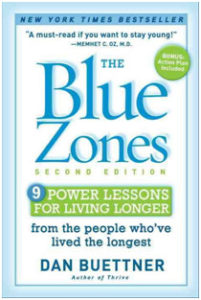
blue zonesThis brings me to the “Blue Zone” study. I have talked about it in a previous issue of “Health Tips From The Professor”. Let me give you the short version here.

Dan Buettner is a journalist who was fascinated by the topic of longevity. He identified five regions from around the world where an unusually high percentage of people lived into their 100s. He then put together a team of top scientists in the fields of demographics, social anthropology and statistics to study the characteristics of centenarians in each of these regions and got National Geographic to fund the study.

You can see his book on the left, and I will summarize the main conclusions of his study below. Of course, the most important question is how the information garnered from Maria Branyas compares with the conclusions of the “Blue Zone” study. I will indicate that below.

#1: They engage in moderate intensity exercise every day. The answer for Maria is a clear, “Yes”.

#2: They stop eating before they are full. We don’t know this for sure, but she did appear to be at ideal weight towards the end of her life.

#3: They eat a mostly plant-based diet. She ate a Mediterranean diet which qualifies.

#4: They have a libation with their meals. For Maria, this is a “No”.

#5: They have a purpose in their life. We have no information on this aspect of Maria’s life.

#6: They set aside time for relaxation with friends and family. Clearly, this was important for Maria. As old friends died off, she searched for new ones.

#7: They participate in a spiritual community. We have no information on this aspect of Maria’s life.

#8: They put family first. Clearly, family was very important to Maria.

#9: They surround themselves with communities that share their values. It also appears that this was important to Maria.

In short, in his study of Maria’s secrets to longevity Dr. Esteller approached the question of longevity from a different perspective than Dan Buettner. It is regrettable that he didn’t use the data accrued by the “Blue Zone” study as a starting point for his study. But it is clear that Maria epitomized many of the longevity characteristics identified in the “Blue Zone” study.

And, of course, Dr. Esteller’s expertise is human genetics, and he added important information about the importance of genetics, epigenetics, and our microbiome in influencing longevity.

The Bottom Line

The world’s oldest human recently died at age 117. Before she died, gave her doctor permission to study her and determine how she was able to live so long. In short, she asked her doctor to use her life to understand how to help other people live a long and healthy life.

That study has recently been published. The results showed:

  • Her lifestyle mirrored many of the lifestyle characteristics that were associated with longevity in the previous “Blue Zone” study of centenarians (people living to 100 and beyond).
  • This study also identified genetic, epigenetic, and microbiome factors associated with longevity

For more details about the study, read the article above.

These statements have not been evaluated by the Food and Drug Administration. This information is not intended to diagnose, treat, cure or prevent any disease.

_____________________________________________________________________________

My posts and “Health Tips From the Professor” articles carefully avoid claims about any brand of supplement or manufacturer of supplements. However, I am often asked by representatives of supplement companies if they can share them with their customers.

My answer is, “Yes, as long as you share only the article without any additions or alterations. In particular, you should avoid adding any mention of your company or your company’s products. If you were to do that, you could be making what the FTC and FDA consider a “misleading health claim” that could result in legal action against you and the company you represent.

For more detail about FTC regulations for health claims, see this link.

https://www.ftc.gov/business-guidance/resources/health-products-compliance-guidance

________________________________________________________________________

About The Author 

Dr. Chaney has a BS in Chemistry from Duke University and a PhD in Biochemistry from UCLA. He is Professor Emeritus from the University of North Carolina where he taught biochemistry and nutrition to medical and dental students for 40 years.

Dr. Chaney won numerous teaching awards at UNC, including the Academy of Educators “Excellence in Teaching Lifetime Achievement Award”.

Dr Chaney also ran an active cancer research program at UNC and published over 100 scientific articles and reviews in peer-reviewed scientific journals. In addition, he authored two chapters on nutrition in one of the leading biochemistry text books for medical students.

Since retiring from the University of North Carolina, he has been writing a weekly health blog called “Health Tips From the Professor”. He has also written two best-selling books, “Slaying the Food Myths” and “Slaying the Supplement Myths”. And most recently he has created an online lifestyle change course, “Create Your Personal Health Zone”. For more information visit https://chaneyhealth.com.

For the past 53 years Dr. Chaney and his wife Suzanne have been helping people improve their health holistically through a combination of good diet, exercise, weight control and appropriate supplementation.

 

What Diet Is Best For Healthy Aging?

What About Primarily Meat-Based Diets?

Author: Dr. Stephen Chaney

Pinochio

It’s so confusing. Everyone claims they have clinical proof that their diet is the best. You will be healthier and live longer.

But the diets are so different. They range from vegan to keto. They can’t all be equally healthy. What is the truth?

To answer that question, we first need to understand how the proponents of each diet can claim theirs is the perfect diet for health and longevity. It’s because they base their claims on:

  • Short-term studies. Most of their claims are based on studies that range from a few weeks to a few months. You need 20- or 30-year studies to measure the effects of a particular diet on health outcomes.
  • Biological markers (Things like cholesterol and triglyceride levels, blood sugar control, and/or inflammation). Biological markers can predict possible health outcomes. But without long-term studies on actual health outcomes, you don’t know whether those predictions are accurate.
  • Comparisons with the typical American diet. Any diet looks good compared with the American diet.
  • Elimination of highly processed foods. While these diets emphasize different foods, they are all whole food diets. Again, any diet that eliminates processed foods is an improvement.
    • It doesn’t matter whether you restrict calories, restrict certain foods or food groups, or restrict the time you allow yourself to eat. You unconsciously eat less.
    • And when you eat less, you lose weight.
    • And when you lose weight, your cholesterol and triglyceride levels fall, your blood sugar control improves, and inflammation decreases.
    • That’s why short-term weight loss and improvement in biological markers are virtually identical with vegan and keto diets. Those diets are as different as any two diets could be. But they are both highly restrictive diets.

The take-home lesson is clear. Don’t be confused by claims based on short-term studies. What you should look for is:

  • Long-term studies (20 years or more)…
  • that look at the effect of diet on health outcomes, and…
  • do not compare their diet with the typical American diet.

When I first reviewed this topic 8 years ago, I could only find a few studies that met these criteria:

  • One study showed that people consuming primarily plant-based diets weighed less than people who consumed primarily meat-based diets for 20 years or more.
  • Other studies showed that people consuming primarily plant-based diets had a reduced risk of diabetes and heart disease compared to people consuming primarily meat-based diets for 20 years or more.

These are valuable observations, but they are limited. That’s why I was so excited when I came across a recent 30-year study (A-J Tessier et al, Nature Medicine, volume 31, pages 1644-1652, 2025) looking at the effect of 9 different diets on longevity and health outcomes. In short, this study looked at the effect of different diets on healthy aging.

How Was This Study Done?

Clinical StudyThe authors of this study used data from 105,015 participants in the Nurses’ Health Study (NHS) and Health Professionals Follow Up Study (HPFS). Both studies enrolled participants in 1986 and followed them through 2016. In short, they were both 30-year studies. Participants with preexisting chronic diseases were excluded from the study.

  • Lifestyle factors and medical histories were assessed every two years.
  • A detailed dietary assessment was conducted every four years. The assessments measured the intake of 152 foods. Food intakes were averaged over the duration of the study for each participant.

[Note: This study did not measure how the diets of participants changed between 1986 and 2016, although that is an interesting question. Perhaps a future study is planned.]

Based on the foods eaten, the diets of the participants were evaluated for adherence to 9 dietary patterns, which I have described in more detail below.

[Note: To be clear, the participants were not trying to follow these diets. They ate what they ate, and the investigators subsequently compared their dietary pattern with various healthy diets.]

For each of the diets included in this study, participants were divided into quintiles based on how closely their food intake adhered to the recommendations for that diet. Then the highest quintile was compared to the lowest quintile to determine how well that diet predicted “healthy aging” after a 30-year follow-up.

The term “healthy aging” was based on 5 criteria:

  • Longevity – achieving an age of 70 or more.
  • Absence of the top 11 major chronic diseases (cancer, diabetes, myocardial infarction (heart attack), coronary artery disease, congestive heart failure, stroke, Parkinson’s disease, multiple sclerosis, and ALS).
  • No impairment of cognitive function.
  • No impairment of physical health.
  • No mental health issues.

In other words, these were not just individuals who survived 70 years or more. They survived and thrived. They were enjoying their golden years because they still had good health and excellent quality of life.

Diets Included In This Study

The diets included in this study were:

  • AHEI – Alternative Healthy Eating Index (A scoring system developed by Harvard researchers to measure overall diet quality based on its ability to predict lower risks of heart attacks, strokes, and diabetes).
  • aMed – Alternative Mediterranean Diet Index (The aMed diet index differs from the original Med index by separating fruits and nuts into different groups, eliminating dairy, emphasizing whole grains, and excluding red and processed meats in favor of chicken and fish).
  • DASH – Dietary Approaches to Stop Hypertension (The name speaks for itself. But I also sometimes refer to this diet as “the Americanized version of the Mediterranean diet’ because it features foods more familiar to Americans. For example, it allows more red meat options than most of the other diets in this list.
  • MIND – Mediterranean-Dash intervention for Neurogenerative Delay (It is a dietary pattern designed to reduce the risk of Alzheimer’s disease and other forms of dementia. It combines elements of the Mediterranean and DASH diets but differs from both by emphasizing berries as a major fruit source, among other things.)
  • hPDI – Healthy Plant-Based Diet Index (It is a scoring system that measures adherence to a diet rich in healthy plant-based foods and lower consumption of less-healthy plant foods and animal foods.)
  • PHDI – Planetary Health Diet Index (It emphasizes foods (primarily plant foods) that are healthy and are good for the environment. Of the diets on this list, it is the most restrictive and closest to a vegan diet)
  • EDIH – Empirical Dietary Index For Hyperinsulinemia (It is a scoring system that measures the potential of a diet to cause chronically high insulin levels, which is associated with type 2 diabetes and certain cancers.)
  • EDIP – Empirical Dietary Inflammation Pattern (It is a scoring system that measures the inflammatory potential of a diet.)
  • UPF – Consumption of Ultraprocessed Foods (Since recent studies have shown that most Americans get between 55 and 70% of their calories from ultraprocessed foods, this is fast becoming a measure of the typical American diet.)

Note: Except for the UPF diet, these are all whole food, primarily plant-based diets.

What Diet Is Best For Healthy Aging?

Here are the results of the study (drum roll, please):

  • Of the 105,015 participants in this study, only 9.3% achieved healthy aging.
  • Adherence to any of the 8 healthy diets improved the probability of achieving healthy aging.
  • The odds of achieving healthy aging ranged from 1.45 for the Healthy Plant-Based Diet to 1.86 for the Alternative Healthy Eating Index.
  • If you were to pick one winner, it would be the Alternative Healthy Eating Index. And if you were to define healthy aging as achieving an age of 75 or more with the other 4 criteria, the odds increase to 2.24 (more than double) for the Alternative Healthy Eating Index.
  • As you might expect, adherence to a diet high in ultraprocessed foods had the opposite effect. It decreased the odds of achieving healthy aging by 32%.

When you look at each of the criteria for healthy aging individually, the results were a bit more nuanced:

  • For survival to 70+ years, the Alternative Healthy Eating Index and the Planetary Health Diet Index were tied. Both increased the odds of survival by more than 2-fold.
  • The Alternative Healthy Eating Index and the Planetary Health Diet Index were also tied for surviving to 70 with intake cognitive health and intact physical function.
  • The Empirical Dietary Index For Hyperinsulinemia edged out the Alternative Healthy Eating Index for freedom from 11 chronic diseases.

The effect of healthy diets on the odds of achieving healthy aging is independent from BMI, smoking, and physical activity. This means that:

  • The effects of healthy diets on healthy aging were not because people consuming healthy diets weighed less, smoked less, or exercised more.
  • Even if some of your lifestyle choices are suboptimal, choosing a healthy diet will increase your odds of surviving and thriving.

Finally, the study looked at the effects of individual foods on healthy aging. The results were:

  • Higher intakes of fruits, vegetables, whole grains, unsaturated fats, nuts, legumes, and low-fat dairy products increase your odds of healthy aging.
  • Higher intakes of trans fats, sodium, sugary beverages, and red or processed meats decrease your odds of achieving healthy aging.

The effects of these foods on healthy aging aren’t novel. They are consistent with dozens of other studies that have looked at the effect of individual foods on long-term health outcomes. In fact, the diets included in this study were chosen because they included foods that positively affect health outcomes and minimize foods that negatively affect health outcomes.

What About Primarily Meat-Based Diets?

the paleo dietI have good friends who advocate for primarily meat-based diets such as keto, paleo, and carnivore. I’m sure they are going to say, “This study is a sham. It only included primarily plant-based diets, so, of course, it is only going to show benefits for primarily plant-based diets.” I can hear their their questions now:

  • Why didn’t this study include any of the primarily meat-based diets? My answer is: “All the popular meat-based diets exclude one or more of the food groups associated with health and longevity and emphasize one or more of the food groups associated with a shorter, less healthy life. And these food associations are consistent among multiple long-term studies looking at the effect of various foods on health outcomes. 

The authors could have constructed a similar index for each of the popular meat-based diets. But they would have been the inverse of the plant-based diet indices because the foods included and excluded from plant-based and meat-based diets are opposite. Therefore, just like the UPF index, they would have been associated with a decreased probability of achieving healthy aging.”

  • Why did the scientists designing this study ignore the proven health benefits of primarily meat-based diets? My answer is: “The “proven benefits” of primarily meat-based diets are based on short-term studies showing the effects of those diets on biological markers. Long-term studies looking at health outcomes are lacking.”
  • But modern primarily meat-based diets are a special case because they limit carbohydrates and cause ketosis. Why weren’t they included in the study? My answer is: “The Atkins diet limits carbohydrates and causes ketosis. It has been around for more than 50 years. And, to my knowledge, there are no studies showing it is beneficial long term. If the Atkins diet cannot be shown to have long-term health benefits, it is unlikely that modern diets that mimic it are healthy long term.

What Does This Study Mean For You?

confusionThe answer is clear. If you want to survive and thrive in your 70s and beyond, choose a whole food, primarily plant-based diet.

If you want the absolute best diet, follow the Alternative Healthy Eating Index recommendations. There are many online resources to guide you.

However, any whole food, primarily plant-based diet will do. The ones with the most online resources are the Mediterranean, DASH, and MIND diets. Choose the one that best fits your food preferences and lifestyle.

If you want to go more vegetarian, the Healthy Plant-Based Diet is a bit easier than a strict vegan diet.

If you are concerned about the environment, the Planetary Diet is best for you.

If you have specific health issues like hypertension, diabetes, or inflammation, there are diets designed just for you.

And if following structured diets is not your style, just:

  • Eat more fruits, vegetables, whole grains, unsaturated fats, nuts, legumes, and low-fat dairy products.
  • Eat less trans fats, sodium, sugary beverages, and red or processed meats, and ultraprocessed foods.

Finally, even if some of your lifestyle choices are suboptimal, this study shows choosing a healthy diet will increase your odds of surviving to your 70s and thriving.

The Bottom Line

A recent 30-year study looked at the effect of 8 whole food, primarily plant-based diets on healthy aging defined as:

  • Achieving an age of 70 or more.
  • The absence of the top 11 major chronic diseases.
  • No impairment of cognitive function.
  • No impairment of physical health.
  • No mental health issues.

The key findings were:

  • Adherence to any of 8 whole food, primarily plant-based diets improved the probability of achieving healthy aging.
  • The odds of achieving healthy aging ranged from 1.45 for the Healthy Plant-Based Diet to 1.86 for the Alternative Healthy Eating Index.

For more information on this study, why primarily meat-based diets were not considered healthy enough to be included in this study, and what this study means for you, read the article above.

These statements have not been evaluated by the Food and Drug Administration. This information is not intended to diagnose, treat, cure or prevent any disease.

 ____________________________________________________________________________

My posts and “Health Tips From the Professor” articles carefully avoid claims about any brand of supplement or manufacturer of supplements. However, I am often asked by representatives of supplement companies if they can share them with their customers.

My answer is, “Yes, as long as you share only the article without any additions or alterations. In particular, you should avoid adding any mention of your company or your company’s products. If you were to do that, you could be making what the FTC and FDA consider a “misleading health claim” that could result in legal action against you and the company you represent.

For more detail about FTC regulations for health claims, see this link.

https://www.ftc.gov/business-guidance/resources/health-products-compliance-guidance

 _______________________________________________________________________

About The Author 

Dr. Chaney has a BS in Chemistry from Duke University and a PhD in Biochemistry from UCLA. He is Professor Emeritus from the University of North Carolina where he taught biochemistry and nutrition to medical and dental students for 40 years.  Dr. Chaney won numerous teaching awards at UNC, including the Academy of Educators “Excellence in Teaching Lifetime Achievement Award”. Dr Chaney also ran an active cancer research program at UNC and published over 100 scientific articles and reviews in peer-reviewed scientific journals. In addition, he authored two chapters on nutrition in one of the leading Biochemistry textbooks for medical students.

Since retiring from the University of North Carolina, he has been writing a weekly health blog called “Health Tips From the Professor”. He has also written two best-selling books, “Slaying the Food Myths” and “Slaying the Supplement Myths”. And most recently he has created an online lifestyle change course, “Create Your Personal Health Zone”. For more information visit https://chaneyhealth.com.

For the past 53 years Dr. Chaney and his wife Suzanne have been helping people improve their health holistically through a combination of good diet, exercise, weight control and appropriate supplementation.



The Low Carb Myth

The “Goldilocks Effect”

Author: Dr. Stephen Chaney

low carb dietThe low carb wars rage on. Low carb enthusiasts claim that low-carb diets are healthy. And they claim the lower you go, the healthier you will be. Let me start with some definitions:

  • The typical American diet is high carb. It gets about 55% of its calories from carbohydrates. [Note: The Mediterranean and DASH diets also get about 55% of their calories from carbohydrates. I’ll talk more about that later.]
  • Moderate carb diets get 26-46% of their calories from carbohydrates. Examples include the low carb Mediterranean diet and the Paleo, South Beach, and Zone diets.
  • Low carb diets get <26% of their calories from carbohydrates. The Atkins diet is the classic example of a low carb diet.
  • Very low carb diets get <10% of their calories from carbohydrates. Examples are the Keto and Carnivore diets.

And I don’t need to tell you that the Keto and Carnivore diets are receiving a lot of favorable press lately.

But some health experts warn that low carb and very low carb diets may be dangerous. For example, several studies have reported that low carb diets increase the risk of mortality (shorten lifespan).

As a consumer you are probably confused by the conflicting claims. Are low carb diets healthy, or is this another myth? In this issue of “Health Tips From the Professor” I am going to discuss two very large studies that came to opposite conclusions.

Both were what we call meta-analysis studies. Simply put, that means they combine the data from several smaller studies to obtain more statistically reliable data. But as Mark Twain said, “There are lies. There are damn lies. And then there are statistics.”

The first study, called the Prospective Urban Rural Epidemiology (PURE) study, was published a few years ago. It included data from 135,335 participants from 18 countries across 5 continents. That’s a very large study, and normally we expect very large studies to be accurate.

It showed a linear relationship between carbohydrate intake and mortality. Simply put, the more carbohydrate people consumed, the greater their risk of premature death. The results from the PURE study had low carb enthusiasts doing a victory lap and claiming it was time to rewrite nutritional guidelines to favor low carb diets.

SkepticWhenever controversies like this arise, reputable scientists are motivated to take another look at the question. They understand that all studies have their weaknesses and biases. So, they look at previous studies very carefully and try to design a study that eliminates the weaknesses and biases of those studies. Their goal is to design a stronger study that reconciles the differences between the previous studies.

And this study had two glaring weaknesses.

  • The percent carbohydrate intake ranged from 40% to 80%. It showed that a moderate carbohydrate intake might be healthier than a high carbohydrate intake, but it provided no information about low carb or very low carb diets.
  • The data was primarily from Asian countries. It was not clear whether it was relevant to the kind of diets consumed in North America and Europe.

A second study published a year later (SB Seidelmann et al, The Lancet, doi.org/10.1016/S2468-2667(18)30135-X) eliminated these weaknesses and resolved the conflicting data.

How Was The Second Study Done?

clinical studyThis study was performed in two parts. This first part drew on data from the Atherosclerosis Risk in Communities (ARIC) study. That study enrolled 15,428 men and women, aged 45-64, from four US communities between 1987 and 1989. This group was followed for an average of 25 years, during which time 6283 people died.

Carbohydrate intake was calculated based on food frequency questionnaires administered when participants enrolled in the study and again 6 years later. The study evaluated the association between carbohydrate intake and mortality.

The second part was a meta-analysis that combined the data from the ARIC study with all major clinical studies since 2007 that measured carbohydrate intake and mortality and lasted 5 years or more. The total number of participants included in this meta-analysis was 432,179, and it included data from previous studies that claimed low carbohydrate intake was associated with decreased mortality.

The Low Carb Myth

The results from the ARIC study were:

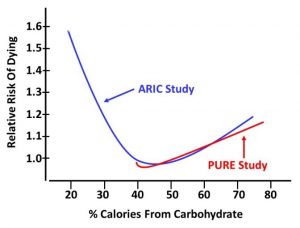
GravestoneThe relationship between mortality and carbohydrate intake was a U-shaped curve.

    • The lowest risk of death was observed with a moderate carbohydrate intake (50-55%). This is the intake recommended by current nutrition guidelines.
    • The highest risk of death was observed with a low carbohydrate intake (<20%).
    • The risk of death also increased with very high carbohydrate intake (>70%).
  • When the investigators used the mortality data to estimate life expectancy, they predicted a 50-year-old participant would have a projected life expectancy of:
    • 33.1 years if they had a moderate intake of carbohydrates.
    • 4 years less if they had a very low carbohydrate intake.
    • 1.1 year less if they had a very high carbohydrate intake.
  • And the risk associated with low carbohydrate intake was affected by what the carbohydrate was replaced with.
    • When carbohydrates were replaced with animal protein and animal fat there was an increased risk of mortality on a low-carb diet.

The animal-based low-carb diet contained more beef, pork, lamb, chicken, and fish. It was also higher in saturated fat.which low carb diets are healthy

    • When carbohydrates were replaced with plant protein and plant fats, there was a decreased risk of mortality on a low-carb diet. The plant-based low-carb diet contained more nuts, peanut butter, dark or whole grain breads, chocolate, and white bread. It was also higher in polyunsaturated fats.
  • The effect of carbohydrate intake on mortality was virtually the same for all-cause mortality, cardiovascular mortality, and non-cardiovascular mortality.
  • There was no significant effect of carbohydrate intake on long-term weight gain (another myth busted).

The results from the dueling meta-analyses were actually very similar in some respects. When the data from all studies were combined:

  • Very high carbohydrate diets were associated with increased mortality.
  • Meat-based low-carb diets increased mortality, and plant-based low-carb diets decreased mortality.
  • The results were the same for total mortality, cardiovascular mortality, and non-cardiovascular mortality.

The authors concluded: “Our findings suggest a negative long-term association between life-expectancy and both low carbohydrate and high carbohydrate diets…These data also provide further evidence that animal-based low carbohydrate diets should be discouraged.

Alternatively, when restricting carbohydrate intake, replacement of carbohydrates with predominantly plant-based fats and proteins could be considered as a long-term approach to healthy aging.”

Simply put, that means if a low carb diet works best for you, it is healthier to replace the carbs with plant-based fats and protein rather than animal-based fats and protein.

The “Goldilocks Effect”

Goldilocks EffectThis study also resolved the discrepancies between previous studies. The authors pointed out that the PURE study relied heavily on data from Asian and developing countries, and the average carbohydrate intake is very different in Europe and the US than in Asian and developing countries.

  • In the US and Europe mean carbohydrate intake is about 50% of calories and it ranges from 25% to 70% of calories. With that range of carbohydrate intake, it is possible to observe the increase in mortality associated with both very low and very high carbohydrate intakes.
  • The US and European countries are affluent, which means that low carb enthusiasts can also afford diets high in animal protein.
  • In contrast, white rice is a staple in Asian countries, and protein is a garnish rather than a main course. Consequently, overall carbohydrate intake is greater in Asian countries and very few Asians eat a truly low carbohydrate diet.
  • High protein foods tend to be more expensive than high carbohydrate foods. Thus, very few people in developing countries can afford to follow a very low carbohydrate diet, and overall carbohydrate intake also tends to be higher in those countries.

Therefore, in Asian and developing countries the average carbohydrate intake is greater (~61%) than in the US and Europe (~50%), and the range of carbohydrate intake is from 45% to 80% of calories instead of 25% to 70%. With this range of intake, it is only possible to see the increase in mortality associated with very high carbohydrate intake.ARIC Study

In fact, when the authors of the current study overlaid the data from the PURE study with their ARIC data, there was an almost perfect fit. The only difference was that their ARIC data covered both low and high carbohydrate intake while the PURE study touted by low carb enthusiasts only covered moderate to high carbohydrate intake.

[I have given you my rendition of the graph on the right. If you would like to see the data yourself, look at the paper.]

Basically, low carb advocates are telling you that diets with carbohydrate intakes of 26% or less are healthy based on studies that did not include carbohydrate intakes below 40%. That is misleading. The studies they quote are incapable of detecting the risks of low carbohydrate diets.

In short, the ARIC study finally answered the question, “How much carbohydrate should we be eating if we desire a long and healthy life?” The answer is “Enough”.

I call this “The Goldilocks Effect”. You may remember “Goldilocks And The Three Bears”. One bed was too hard. One bed was too soft. But one bed was “just right”. One bowl of porridge was too hot. One was two cold. But one was “just right”.

According to this study, the same is true for carbohydrate intake. High carbohydrate intake is unhealthy. Low carbohydrate intake is unhealthy. But moderate carbohydrate intake is “just right”.

What Does This Study Mean For You?

QuestionsThere are several important take-home lessons from this study:

1) All major studies agree that very high carbohydrate intake is unhealthy. In part, that reflects the fact that diets with high carbohydrate intake are likely to be high in sodas and sugary junk foods. It may also reflect the fact that diets which are high in carbohydrates are often low in plant protein or healthy fats or both.

2) All studies that cover the full range of carbohydrate intake agree that low and very low carbohydrate diets are also unhealthy. They shorten the life expectancy of a 50-year-old by about 4 years.

3) The studies quoted by low carb enthusiasts to support their claim that low-carb and very low carb diets are healthy don’t include carbohydrate intakes below 40%. That means their claims are misleading. The studies they quote are incapable of detecting the risks of low carbohydrate diets. Their claims are a myth.

4) Not all high carb diets are created equally. As I noted above, the Mediterranean and DASH diets are just as high in carbohydrates as the typical American diet, but their carbohydrates come from whole fruits and vegetables, whole grains, beans, nuts, and seeds. And multiple studies show that both diets are much healthier than the typical American diet.

5) Not all low carb diets are created equally. Meat-based low-carb diets decrease life expectancy compared to the typical American diets while plant-based low carb diets increase life expectancy.

6) The health risks of meat-based low-carb diets may be due to the saturated fat content or the heavy reliance on red meat. However, the risks are just as likely to be due to the foods these diets leave out – typically fruits, whole grains, legumes, and some vegetables.

7) Proponents of low-carb diets assume that you can make up for the missing nutrients by just taking multivitamins. However, each food group also provides a unique combination of phytonutrients and fibers. The fibers, in turn, influence your microbiome. Simply put, whenever you leave out whole food groups, you put your health at risk.

The Bottom Line

The low-carb wars are raging. Several studies have reported that low carb diets increase risk of mortality (shorten lifespan). However, a study published a few years ago came to the opposite conclusion. That study had low carb enthusiasts doing a victory lap and claiming it is time to rewrite nutritional guidelines to favor low-carb diets.

However, a study published a year later resolves the conflicting data and finally answers the question: “How much carbohydrate should we be eating if we desire a long and healthy life?” The answer is “Enough”.

I call this “The Goldilocks Effect”. According to this study, high carbohydrate intake is unhealthy. Low carbohydrate intake is unhealthy. But moderate carbohydrate intake is “just right”.

Specifically, this study reported:

  • Moderate carbohydrate intake (50-55%) is healthiest. This is the carbohydrate intake found in healthy diets like the Mediterranean and DASH diets, and is the intake recommended by current nutritional guidelines.
  • All major studies agree that very high carbohydrate intake (60-70%) is unhealthy. It shortens the life expectancy of a 50-year-old by about a year.
  • All studies that cover the full range of carbohydrate intake agree that low carbohydrate intake (<26%) is also unhealthy. It shortens the life expectancy of a 50-year-old by about 4 years.
  • The studies quoted by low carb enthusiasts to support their claim that low-carb diets are healthy don’t include carbohydrate intakes below 40%. That means their claims are misleading. The studies they quote are incapable of detecting the risks of low carbohydrate diets.
  • Meat-based low-carb diets decrease life expectancy while plant-based low carb diets increase life expectancy. This is consistent with the results of previous studies.

The authors concluded: “Our findings suggest a negative long-term association between life-expectancy and both low carbohydrate and high carbohydrate diets…These data also provide further evidence that animal-based low carbohydrate diets should be discouraged.”

Simply put, the latest study means that the supposed benefits of low carb diets are a myth.

For more details, read the article above.

These statements have not been evaluated by the Food and Drug Administration. This information is not intended to diagnose, treat, cure or prevent any disease.

___________________________________________________________________________

My posts and “Health Tips From the Professor” articles carefully avoid claims about any brand of supplement or manufacturer of supplements. However, I am often asked by representatives of supplement companies if they can share them with their customers.

My answer is, “Yes, as long as you share only the article without any additions or alterations. In particular, you should avoid adding any mention of your company or your company’s products. If you were to do that, you could be making what the FTC and FDA consider a “misleading health claim” that could result in legal action against you and the company you represent.

For more detail about FTC regulations for health claims, see this link.

https://www.ftc.gov/business-guidance/resources/health-products-compliance-guidance

 ______________________________________________________________________

About The Author 

Dr. Chaney has a BS in Chemistry from Duke University and a PhD in Biochemistry from UCLA. He is Professor Emeritus from the University of North Carolina where he taught biochemistry and nutrition to medical and dental students for 40 years.  Dr. Chaney won numerous teaching awards at UNC, including the Academy of Educators “Excellence in Teaching Lifetime Achievement Award”. Dr Chaney also ran an active cancer research program at UNC and published over 100 scientific articles and reviews in peer-reviewed scientific journals. In addition, he authored two chapters on nutrition in one of the leading biochemistry textbooks for medical students.

Since retiring from the University of North Carolina, he has been writing a weekly health blog called “Health Tips From the Professor”. He has also written two best-selling books, “Slaying the Food Myths” and “Slaying the Supplement Myths”. And most recently he has created an online lifestyle change course, “Create Your Personal Health Zone”. For more information visit https://chaneyhealth.com.

For the past 53 years Dr. Chaney and his wife Suzanne have been helping people improve their health holistically through a combination of good diet, exercise, weight control and appropriate supplementation.

Eating For A Healthy Heart

What Does This Mean For You?

Author: Dr. Stephen Chaney

You may remember the nursery rhyme, “Jack Sprat could eat no fat. His wife could eat no lean…” You may know people who fit these extremes. And in terms of diets these extremes might represent the vegan and keto diets in today’s world.

The nursery rhyme assures us that, “…between them they licked the platter clean.” But were their diets equally healthy? Which of them would have been more likely to live a long and healthy life?

And, since this is Heart Health Month, we might ask, “Which diet would have been better for their hearts?”

If you search Mr. Google – even with AI assist – you might be confused. That’s because AI bases its recommendations on the quantity of posts, not the accuracy of posts. And lots of media influencers recommend both diets, and just about every popular diet in between for heart health.

But what does good science say on the topic of heart healthy diets? Fortunately, a recent comprehensive review and meta-analysis (G. Riccardi et al, Cardiovascular Research, 118: 1118-1204, 2022) has answered that question.

How Was The Study Done?

clinical studyThe investigators reviewed 99 clinical studies with tens of thousands of participants that looked at the associations between foods or food groups and heart disease risk.

Most of the studies were “prospective cohort” studies in which:

  • Populations are divided into groups (cohorts) based on the foods they consume…
  • …and followed for a number of years (this is where the term “prospective” comes from)…
  • …and at the end of the study, the association between food and heart outcomes is measured.

However, the review also included several major randomized controlled clinical trials, including:

  • The DASH diet study.
  • The Lyon Diet Heart study.
  • The PREDIMED study.

Eating For A Healthy Heart

strong heartHere are the findings of the study. Most will sound very familiar. But you will note some subtle differences based on recent data.

The overall summary was that for a healthy adult population:

  • Low consumption of salt and foods of animal origin…
  • …and increased intake of plant foods…
  • …are associated with reduced heart disease risk.

Of course, we have known that for years. It’s when they broke the data down further that it became more interesting.

Foods Of Animal Origin:

  • Processed meats increase heart disease risk. A single serving of processed meat is associated with a 27% to 44% increased risk of heart disease. This is not new.
  • Unprocessed red meat is also associated with increased risk of heart disease, but this association is not as Steakconsistent as for processed meats. The authors noted that some of this may be due to differences in saturated fat content or cooking methods of the red meats included in individual studies.

But this analysis also showed that the effect of red meat on heart disease risk may be dose dependent. For example:

    • The studies they reviewed suggested that consuming ≥2 servings per day of red meat is associated with a 27% increased risk of heart disease. However, consuming <3 servings per week may not increase risk.
    • The idea that the effect of red meat on heart disease risk may be dose-dependent is novel. However, the authors said we also need to ask what replaces red meat in the diet. They postulated that when red meat consumption is decreased, it is often replaced with healthier protein sources.
  • White meat such as poultry does not appear to affect heart disease risk. This has been predicted by earlier reports, but this analysis strengthens those predictions.
  • Fish consumption decreases heart disease risk. This is not new. But this review added precision about recommended fish intake (2-4 servings/week) and a couple of caveats:
    • The heart benefits of fish may be due to their omega-3 content and may not apply equally to fish with lower omega-3 content.
    • The authors also expressed concerns about the sustainability of high-omega-3 fish populations. I would also add that our oceans are increasingly polluted, so contamination is another concern.
  • Egg consumption up to one egg/day does not appear to increase heart disease risk. This is consistent with the are eggs good for youcurrent American Heart Association recommendations.

However, the authors noted that the effect of eggs on serum cholesterol, and hence heart disease risk depends on several factors.

    • Genetics, obesity, and diabetes can make it more difficult to regulate serum cholesterol levels. For these individuals, eggs may need to be eaten only sparingly.
    • Diets low in saturated fat and high in fiber from plant foods help the body regulate serum cholesterol. Several studies suggest that eggs may decrease heart disease risk in the context of this type of diet.
  • Dairy: Neither low-fat nor high-fat dairy foods appear to influence heart disease risk. This is different from the standard recommendation to consume low-fat dairy foods. But it is in line with the trend of recent research studies on dairy and heart disease.

Once again, there were a couple of caveats:

    • There is increasing evidence that fermented dairy foods may decrease heart disease risk which may explain why certain high-fat cheeses and other high-fat fermented dairy foods appear to have a neutral or slightly beneficial effect on heart disease risk.
    • As with eggs the effect of high-fat dairy foods on heart disease risk may be influenced by genetics and diet context.

Foods Of Plant Origin: The effect of plant foods have been known for some time, and the most recent studies included in this analysis have not changed those conclusions.

  • Fruits and Vegetables consistently reduce heart disease risk in multiple studies. In each case, the optimal Vegan Foodsintake appears to be about 2 servings of each per day which provides an 18-21% risk reduction for vegetables and a 21-32% risk reduction for fruits.
  • Legumes (beans and peas) also consistently reduce heart disease risk in multiple studies. At the optimal intake of around 4 servings per week the risk reduction is around 14%.
  • Nuts also consistently reduce heart disease risk. At the optimal intake of around one serving (a handful) per day, the risk reduction is around 25%.
  • Cereals (grains) were divided into 3 categories:
    • Refined carbohydrates with a high glycemic index (e.g., white rice, white bread) are associated with increased heart disease risk in multiple studies probably due to their effect on blood sugar levels. And the increased risk is significant (Around 66% higher risk for every 2 servings).
    • Refined carbohydrates with a low glycemic index (e.g., pasta, corn tortillas) show an inconsistent effect on heart disease risk.
    • Whole grains are consistently associated with a lower heart disease risk. Two servings of whole grains per day are associated with a 25%-34% decreased risk.

Miscellaneous Foods:

  • Soft Drinks are associated with increased heart disease risk. One serving per day increases the risk by around 15-22% and recent evidence suggests that artificially sweetened soft drinks offer no heart health benefits compared to sugar sweetened soft drinks.
  • Coffee and Tea are both associated with decreased heart disease risk. For coffee the optimal benefit may occur at around 3 cups/day. Higher levels may have an adverse effect on heart disease risk.

Summary of Heart Health Recommendations

ScientistIf you are thinking that was a lot of information, the authors provided a numerical summary of their recommendations for a heart-healthy diet. They are:

  • Two servings per day of vegetables, fresh fruits, and whole grains.
  • One serving per day of nuts and seeds, low-glycemic index refined cereals, extra-virgin olive oil or non-tropical vegetable oils, and yogurt.
  • Four servings per week of legumes and fish.
  • No more than 3 servings per week of white meat, eggs, cheese, and milk.
  • No more than 2 servings per week of high-glycemic index refined starchy foods, red meat, and butter.
  • Only occasional consumption of processed meats.

What Does This Study Mean For You?

QuestionsOf course, nobody wants to follow a “diet by the numbers”. If you are like most of us, you want flexibility and you want to be able to eat some of your favorite foods. So, let me put these recommendations into a more “user friendly” form.

If you want a healthy heart:

  • Whole, unprocessed or minimally processed, plant foods are your friends.
  • Your heart-healthy foundation should be fruits, vegetables, whole grains, nuts and seeds, healthy plant oils, and legumes.
  • Your heart-healthy foundation can also include fermented dairy foods and low-glycemic index refined grains.
  • Your “go-to” beverages should be water, tea (both caffeinated and herbal teas), and coffee. You should avoid soft drinks and other sugar-sweetened or artificially sweetened beverages.
  • Once you have achieved a heart-healthy foundation you can add a few servings per week of white meat, eggs, cheese, and dairy, even high-fat dairy.
  • If you have good adherence to the heart-healthy foundation described above and no genetic or health issues that increase your risk of heart disease, you can probably eat more of these foods.
  • Conversely, if your adherence to the heart-healthy foundation is poor and/or you are at high risk of heart disease, you may wish to consume less of these foods.
  • If you have good adherence to the heart-healthy foundation, you can also add up to 1-2 servings of high-glycemic index refined carbohydrates, red meat, or butter per week. With red meat, you may want to consider it as a garnish that adds flavor to a plant-based meal rather than the centerpiece of the meal.
  • You should eat processed meats seldom or never.

The Bottom Line

A new comprehensive review and meta-analysis of 99 clinical studies with tens of thousands of participants has updated the correlation between foods and heart disease risk.

Many of the recommendations based on this analysis are identical to previous recommendations for a heart-healthy diet.

But there are some subtle changes to those recommendations based on the latest data.

For more details about this study and what a heart-healthy diet might look like for you, read the article above.

These statements have not been evaluated by the Food and Drug Administration. This information is not intended to diagnose, treat, cure, or prevent any disease.

_______________________________________________________________________________

My posts and “Health Tips From the Professor” articles carefully avoid claims about any brand of supplement or manufacturer of supplements. However, I am often asked by representatives of supplement companies if they can share them with their customers.

My answer is, “Yes, as long as you share only the article without any additions or alterations. In particular, you should avoid adding any mention of your company or your company’s products. If you were to do that, you could be making what the FTC and FDA consider a “misleading health claim” that could result in legal action against you and the company you represent.

For more detail about FTC regulations for health claims, see this link.

https://www.ftc.gov/business-guidance/resources/health-products-compliance-guidance

_______________________________________________________________________

About The Author 

Dr. Chaney has a BS in Chemistry from Duke University and a PhD in Biochemistry from UCLA. He is Professor Emeritus from the University of North Carolina where he taught biochemistry and nutrition to medical and dental students for 40 years.  Dr. Chaney won numerous teaching awards at UNC, including the Academy of Educators “Excellence in Teaching Lifetime Achievement Award”. Dr Chaney also ran an active cancer research program at UNC and published over 100 scientific articles and reviews in peer-reviewed scientific journals. In addition, he authored two chapters on nutrition in one of the leading biochemistry text books for medical students.

Since retiring from the University of North Carolina, he has been writing a weekly health blog called “Health Tips From the Professor”. He has also written two best-selling books, “Slaying the Food Myths” and “Slaying the Supplement Myths”. And most recently he has created an online lifestyle change course, “Create Your Personal Health Zone”. For more information visit https://chaneyhealth.com.

For the past 45 years Dr. Chaney and his wife Suzanne have been helping people improve their health holistically through a combination of good diet, exercise, weight control and appropriate supplementation.

600th Issue Celebration

Nutrition Advances Over The Last Two Years

Author: Dr. Stephen Chaney 

celebrationIn the nearly twelve years that I have been publishing “Health Tips From The Professor”, I have tried to go behind the headlines to provide you with accurate, unbiased health information that you can trust and apply to your everyday life.

The 600th issue of any publication is a major cause for celebration and reflection – and “Health Tips From The Professor” is no different.

I am dedicating this issue to reviewing some of the major stories I have covered in the past 100 issues. There are lots of topics I could have covered, but I have chosen to focus on three types of articles:

  • Articles that have debunked long-standing myths about nutrition and health.
  • Articles that have corrected some of the misinformation that seems to show up on the internet on an almost daily basis.
  • Articles about the issues that most directly affect your health.

Here are my picks from the last two years:

Weight Loss Diets

weight lossSince it is almost January, let’s start with a couple of articles about diet and weight loss (or weight gain). I have covered the effectiveness of the Paleo, Keto, Mediterranean, DASH, vegetarian, and Vegan diets for both short and long-term weight loss in my book “Slaying The Food Myths”, so I won’t repeat that information here. Instead, I will share a few updates from the past 100 issues.

Is Time-Restricted Eating Better Than Other Diets? Time-restricted eating is one of the latest fads. But is it really better than other diets for weight loss and improved health? In this article I reviewed two studies that compare time-restricted eating with diets that do not restrict time of eating but cut calories to the same extent. You may be surprised at the results.

Can You Lose Weight Without Dieting? In this article I share 8 tips for losing weight without going on a diet. The article is based on research by Dr. Brian Wansink, a behavioral psychologist who specializes in studying how external clues influence our eating patterns. As you might suspect his 8 tips for losing weight have nothing to do with counting calories or going on restrictive diets.

Healthy Diets

dairy foodsIs Whole Fat Dairy Healthy? For years dietary guidelines have been telling us to select low fat dairy foods. But some health gurus are telling you that isn’t true. They claim whole fat dairy is healthy. So, you are probably wondering, “What is the scoop (as in ice cream) on whole fat dairy?” In this article I look at the study behind the headlines and answer that question. But the answer is not a simple “Yes” or “No”. The answer is more nuanced. It turns out that whole fat dairy is healthier in some diets than in others. 

Are Low Carb Diets Healthy? Are low carb diets good for you or bad for you? It depends on which study you quote. Two major studies in recent years have come to opposite conclusions. In this article I help you sort through the conflicting studies and rephrase the question. Instead of, “Are low carb diets healthy”, the question should be, “Which low carb diets are healthy?”

Are All Plant-Based Diets Healthy? Plant-based diets have acquired a “health halo” in recent years. Your mama told you to eat your fruits and vegetables. And many health gurus have been telling you not to neglect your grains, legumes, nuts, and seeds as well. But some of these foods require a lot of food preparation.

Never fear! The food industry has come to your rescue with a wide variety of processed plant-based foods. No need for food prep. But are they as good for you as the unprocessed plant foods they replace? In this article I review a study that answers that question.

You probably know what that answer is, but the article is worth a read anyway. That is because the study also asks whether vegan and vegetarian diets are healthier than other primarily plant-based diets. And you may not know the answer to that question.

Diet And Heart Disease

egg confusionAre Eggs Bad For You? For years we were told that eggs are bad for us because they contain cholesterol. Then we were told that eggs in moderation may not increase our risk of heart disease. And recently studies have appeared claiming eggs may be good for our hearts. What is the truth about eggs and heart disease? In this article I review a recent study claiming eggs are bad for our heart and put that study into the context of other recent studies to clear up the “eggfusion”.

Which Diets Are Heart Healthy? Every popular diet claims to help you lose weight, reduce your risk of diabetes, and reduce your risk of heart disease. All these claims can’t be true. Which diets deliver on their promises, and which are just pretenders? In this article I review a recent study that answered that question for heart disease.

This study was a very large metanalysis of over 40 studies with 35,548 participants that looked at the effect of different diets on heart disease outcomes. The study identified two diets that significantly reduced the risk of heart disease. There are other diets that might reduce the risk of heart disease, but their benefits have not been proven by high quality clinical studies. They are merely pretenders.

The Dangers Of Processed Foods 

In previous issues of “Health Tips From the Professor” I have shared articles showing that diets high in processed foods are associated with an increased risk of obesity, diabetes, and heart disease. But the story keeps getting worse. Here are two articles on recent studies about processed foods that appeared in “Health Tips From The Professor” in the last two years.

Why Does Processed Food Make You Fat? We already know that eating a lot of highly processed food is likely to make us fat. But what is it about processed food that makes us fat? In this article I review a recent study that answers that question.

This study is interesting for two reasons.

  • It identifies the characteristics of processed foods that make us want to eat more.
  • It identifies some minimally processed foods that have the same characteristics and suggests we should choose minimally processed foods wisely. Simply put, knowledge is power. We may want to avoid minimally processed foods that have the same obesity-inducing characteristics as processed foods.

Do Processed Foods Cause Cancer? Previous studies have shown that processed food consumption is associated with a higher risk of obesity, diabetes, and heart disease. Can it get any worse? In this article I review a recent study that shows processed food consumption is associated with an increased risk of several kinds of cancer.

Maintaining Muscle Mass As We Age

As we age, we begin to lose muscle mass, a process called sarcopenia. Unless we actively resist loss of muscle mass it will eventually impact our quality of life and our health.

We can prevent this loss of muscle mass with resistance exercise, adequate protein intake, and adequate intake of the amino acid leucine. Previous studies have shown people over 50 need more of each of these to maintain muscle mass, but the amount they need has been uncertain until now. Three recent studies have given seniors better guidelines for maintaining muscle mass.

Can You Build Muscle In Your 80s? In this article I review a recent study that enrolled a group of octogenarians in a high-intensity exercise program to see if they could gain muscle mass. They were able to increase their muscle mass, but the intensity of the exercise required may surprise you.

Optimizing Protein Intake For Seniors. In this article I review two recent studies that looked at the amount, timing, and kind of protein needed for seniors in their 60s and 70s to maximize gain in muscle mass.

How Much Leucine Do Seniors Need? In this article I review a recent study that determined the amount of leucine seniors in their 70s need to optimize gains in muscle mass and strength.

The Benefits And Risks Of Supplementation

Omega-3s And Heart DiseaseIf you listen to Big Pharma or the medical profession, you hear a lot about the “risks” of supplementation and very little about the benefits. In “Health Tips From the Professor” I try to present a more balanced view of supplementation by sharing high-quality studies showing benefit from supplementation and studies that put the supposed risks into perspective.

The Good News About Omega-3s and Stroke. Multiple studies have shown that omega-3 supplementation reduces the risk of ischemic strokes (strokes caused by a blood clot). But it has been widely assumed they might increase the risk of hemorrhagic strokes (strokes caused by bleeding). In this article I review a meta-analysis of 29 clinical studies with 183,000 participants that tested that assumption.

How Much Omega-3s Are Best For Blood Pressure? Multiple studies have shown that omega-3 supplementation can reduce high blood pressure. But the doses used vary widely from one study to the next. In this article I review a meta-analysis of 71 double-blind, placebo-controlled clinical studies that determined the optimal dose of omega-3s for controlling blood pressure.

Omega-3 Supplements Are Safe. As I said above, it has been widely assumed that omega-3 supplementation increases the risk of bleeding and hemorrhagic stroke. In this article I review the definitive study on this topic. More importantly, it reveals which omega-3 supplements might increase bleeding risk and which do not.

Are Calcium Supplements Safe? Big Pharma and the medical profession have been warning us that calcium supplements may increase heart disease risk. In this article I review the definitive study on this topic.

Prenatal Supplements

prenatal dha supplementIf you are pregnant or thinking of becoming pregnant, your health professional has likely recommended a prenatal supplement. You probably assume that prenatal supplements provide everything you need for a healthy pregnancy. Unfortunately, recent research has shown that assumption is not correct.

Is Your Prenatal Supplement Adequate? In this article I review a study that should serve as a wakeup call for every expectant mother. It showed that most prenatal supplements were woefully inadequate for a healthy pregnancy.

What Nutrients Are Missing In Prenatal Supplements? In this article I review a study that identified additional nutrients that are missing in most prenatal supplements.

Prenatal Supplements Strike Out Again. In this article I review a study that looked at the diet of pregnant women to determine their needs and compared that to the nutrients found in prenatal supplements. Once again, most prenatal supplements were woefully inadequate. Is it, “Three strikes and you are out”?

Exercise

Walking FastWalking Your Way To Health. We have been told that walking is good for our health. But how many steps should you take, how fast should you walk, and does it matter whether these steps are part of your daily routine or on long hikes? In this article I review a study that answers all these questions.

Which Exercise Is Best For Reducing Blood Pressure? If you have high blood pressure, you have probably been told to exercise more. But which exercise is best? In this article I review a study that answers that question. And the answer may surprise you.

Did You Know? 

Question MarkIf you have been reading “Health Tips From the Professor” for a while, you probably know that I enjoy poking holes in popular myths. Here are two new ones I deflated in past two years.

Is Low Alcohol Consumption Healthy? You have probably heard that low alcohol intake (that proverbial glass of red wine) is good for you. But is that true? In this article I review a recent study that shows that myth was based on faulty interpretation of the data and provides a more nuanced interpretation of the data.

Is HDL Good For Your Heart? You have been told that increasing your HDL levels reduces your risk of heart disease so many times it must be true. But is it? In this article I review HDL metabolism and a recent study to provide a more nuanced interpretation of the relationship between HDL and heart disease risk.

How To Talk With Your Doctor About Cancer 

Because of my years in cancer research, I am often asked whether someone should follow their oncologist’s advice and go on a recommended chemotherapy or radiation regimen. Of course, it would be unethical for me to provide that kind of advice.

In this article I tell you the questions to ask your oncologist about the prescribed treatment regimen, so you can make an informed decision. However, I also recommend you only ask these questions if you can handle the answers.

The Bottom Line

I have just touched on a few of my most popular articles above. You may want to scroll through these articles to find ones of interest to you that you might have missed over the last two years. If you don’t see topics that you are looking for, just go to https://chaneyhealth.com/healthtips/ and type the appropriate term in the search box.

In the coming years, you can look for more articles debunking myths, exposing lies and providing balance to the debate about the health topics that affect you directly. As always, I pledge to provide you with scientifically accurate, balanced information that you can trust. I will continue to do my best to present this information in a clear and concise manner so that you can understand it and apply it to your life.

Final Comment: You may wish to share the valuable resources in this article with others. If you do, then copy the link at the top and bottom of this page into your email. If you just forward this email and the recipient unsubscribes, it will unsubscribe you as well.

These statements have not been evaluated by the Food and Drug Administration. This information is not intended to diagnose, treat, cure, or prevent any disease.

_______________________________________________________________________________

My posts and “Health Tips From the Professor” articles carefully avoid claims about any brand of supplement or manufacturer of supplements. However, I am often asked by representatives of supplement companies if they can share them with their customers.

My answer is, “Yes, as long as you share only the article without any additions or alterations. In particular, you should avoid adding any mention of your company or your company’s products. If you were to do that, you could be making what the FTC and FDA consider a “misleading health claim” that could result in legal action against you and the company you represent.

For more detail about FTC regulations for health claims, see this link.

https://www.ftc.gov/business-guidance/resources/health-products-compliance-guidance

 _______________________________________________________________________

About The Author 

Dr. Chaney has a BS in Chemistry from Duke University and a PhD in Biochemistry from UCLA. He is Professor Emeritus from the University of North Carolina where he taught biochemistry and nutrition to medical and dental students for 40 years.  Dr. Chaney won numerous teaching awards at UNC, including the Academy of Educators “Excellence in Teaching Lifetime Achievement Award”. Dr Chaney also ran an active cancer research program at UNC and published over 100 scientific articles and reviews in peer-reviewed scientific journals. In addition, he authored two chapters on nutrition in one of the leading biochemistry text books for medical students.

Since retiring from the University of North Carolina, he has been writing a weekly health blog called “Health Tips From the Professor”. He has also written two best-selling books, “Slaying the Food Myths” and “Slaying the Supplement Myths”. And most recently he has created an online lifestyle change course, “Create Your Personal Health Zone”. For more information visit https://chaneyhealth.com/lifestylechange/.

For the past 45 years Dr. Chaney and his wife Suzanne have been helping people improve their health holistically through a combination of good diet, exercise, weight control and appropriate supplementation.

Do Bad Genes Doom You To Bad Health?

The Influence Of Genetics And Diet On Type 2 Diabetes

Author: Dr. Stephen Chaney 

Does it ever feel like you have drawn the short straw?

Everyone in your family has succumbed to heart disease, diabetes, or cancer at a young age. Are you doomed to the same fate?

You ordered a DNA test. It sounded like fun. But when the gene report came back it said you had a “bad” genetic profile. You were told you are at high risk of diabetes, heart attack, stroke, cancer, or dementia. Are you doomed to a short and sickly life?

In both cases, you are probably wondering, “Is there anything I can do to improve my odds of a healthy life? What if I lost some of those extra pounds, exercised more, and ate a healthier diet? Would that make a difference?”

The study (J Merino et al, PLoS Medicine 19(4): e1003972, April 26, 2022) I will describe today was designed to answer these questions.

But before I describe the study, I should probably cover what I call Genetics 101: “How Genes Affect Your Health”.

Genetics 101: How Genes Affect Your Health

GeneticistIf you studied genetics in school, you probably learned about diseases like sickle cell anemia, which is caused by a single mutation in a single gene. If you get two copies of the “bad” gene, you will have sickle cell anemia. If you get one copy of the “bad” gene and one copy of the normal gene, you have sickle cell trait, which is much less severe.

Simply put, you either have the disease or you don’t. It’s dependent on your genetics, and you can’t do much about it.

If you know someone who has been treated for breast cancer, you are probably familiar with a more complex relationship between genetics and health. There are several “bad” genes that increase the risk of breast cancer. And knowing which gene is involved is important for selecting the best treatment regimen.

But most of the diseases that shorten our lives (like diabetes, heart disease, most cancers, and dementia) are what we call polygenetic diseases. Simply put, that means that there are dozens of genes that increase the risk of these diseases. Each gene makes a small contribution to the increased risk. So, we can only measure the genetic contribution to these diseases by measuring hundreds of mutations in dozens of genes, something called a polygenetic risk score.

The study I will be describing today looked at the relative effect of genetics (measured as the type 2 diabetes polygenic risk score) and diet quality (measured as the Alternative Healthy Eating Index (AHEI)) on the risk of developing type 2 diabetes.

How Was This Study Done?

clinical studyThe data for this study were obtained from 3 long-term clinical studies conducted in the United States – the Nurses’ Health Study (121,700 participants), the Nurses’ Health Study II (116,340 participants), and the Health Professionals Follow-Up Study (51,529 participants).

These studies measured lifestyle factors (including diet) every 4 years and correlated them with disease outcomes over 20+ years.

The study I will be discussing today was performed with 35,759 participants in these 3 studies for whom DNA sequencing data was available.

  • The DNA sequence data were used to generate a type 2 diabetes polygenic risk score for each participant in this study.
  • Food frequency questionnaires obtained every 4 years in these studies were used to calculate the Alternative Healthy Eating Index (AHEI) score for each participant.
    • The AHEI is based on higher intake of fruits, whole grains, vegetables, nuts and legumes, polyunsaturated fatty acids, long-chain omega-3 fatty acids, moderate intake of alcohol, and lower intake of red and processed meats, sugar sweetened drinks and fruit juice, sodium, and trans-fat).

The investigators used these measurements to estimate the relative effect of genetics and diet quality on the risk of developing type 2 diabetes.

The Influence Of Genetics And Diet On Type 2 Diabetes 

Genetic TestingThe participants were divided into low, intermediate, and high genetic risk based on their type 2 diabetes polygenic risk score.

Compared with low genetic risk:

  • Intermediate genetic risk increased the risk of developing type 2 diabetes by 26%.
  • High genetic risk increased the risk of developing type 2 diabetes by 75%.

Put another way, each 1 standard deviation increase in the polygenetic risk score:

  • Increased the risk of developing type 2 diabetes by 42%.

Simply put, bad genes can significantly increase your risk of developing type 2 diabetes. That’s the bad news. But that doesn’t mean you should think, “Diabetes is in my genes. There is nothing I can do.”

The investigators also divided the participants into those who had a high-quality diet, those who had an intermediate quality diet, and those who had a low-quality diet based on their AHEI (Alternative Healthy Eating Index) score.

Finally, they divided the participants into groups depending on their BMI, a measure of obesity.

Compared to an obese person consuming a low-quality diet, a lean person consuming a high-quality diet:

  • Reduced their risk of developing type 2 diabetes by around 43% for each category of genetic risk.
  • More specifically, a lean person consuming a high-quality diet reduced their risk of developing type 2 diabetes:
    • By 41% if they were at low genetic risk.
    • By 50% if they were at intermediate genetic risk.
    • By 38% if they were at high genetic risk.

The investigators then made a statistical adjustment to remove BMI from their calculations, so they could focus on Mediterranean Diet Foodsthe effect of diet alone on the risk of developing type 2 diabetes.

Compared to a low-quality diet, a high-quality diet:

  • Reduced the risk of developing type 2 diabetes by around 33% for each category of genetic risk.
  • More specifically, a high-quality diet reduced the risk of developing type 2 diabetes:
    • By 31% for those at low genetic risk.
    • By 39% for those at intermediate genetic risk.
    • By 29% for those at high genetic risk.

Looking at it another way:

  • When people at high genetic risk consumed a high-quality diet, their risk of developing type 2 diabetes was only 13% higher than people at intermediate genetic risk who consumed a low-quality diet (such as the typical American diet).
  • When people at intermediate genetic risk consumed a high-quality diet, their risk of developing type 2 diabetes was 5% less than people at low genetic risk who consumed a low-quality diet.

Simply put:

  • If you are at intermediate genetic risk, a high-quality diet may completely reverse your risk of developing type 2 diabetes.
  • If you are at high genetic risk, a high-quality diet can partially reverse your risk of developing type 2 diabetes.

In short, the good news is that bad genes do not doom you to type 2 diabetes.

  • The investigators did not provide similar information for the effect of an ideal weight on the risk of developing type 2 diabetes, but it is likely that the combination of diet plus weight management would result in an even more significant reduction in risk of developing type 2 diabetes for individuals in the even the highest risk category.

The authors concluded, “These data provide evidence for the independent associations of genetic risk and diet quality with incident type 2 diabetes and suggest that a healthy diet is associated with lower diabetes risk across all levels of genetic risk.”

Do Bad Genes Doom You To Bad Health?

Bad GenesAt the beginning of this article I posed the question, “Do bad genes doom you to bad health?”

Based on this study, the good news is that bad genes don’t doom you type 2 diabetes. And just because most of your relatives are diabetic doesn’t mean that must be your fate.

  • This study shows that a healthy diet significantly reduces your risk of developing type 2 diabetes at every genetic risk level.
  • And the study suggests that a healthy diet plus a healthy weight is even more beneficial at reducing your risk of type 2 diabetes.
  • While not included in this study, other studies have shown that exercise also plays a role in reducing type 2 diabetes risk.

None of this information is new. What is new is that a healthy diet is equally beneficial at reducing type 2 diabetes risk even in individuals with a high genetic risk of developing the disease. Simply put, you can reverse the effects of bad genes.

“And what is this magic diet?”, you might ask. In this study, it was based on AHEI score. Someone with a high AHEI score consumes:

  • Lots of fruits, whole grains, vegetables, nuts and legumes, polyunsaturated fatty acids, and long-chain omega-3 fatty acids.
  • Moderate or no amounts of alcohol.
  • Little or no red and processed meats, sugar sweetened drinks, fruit juices, sodium, and foods with trans-fat.

Any whole food, primarily plant-based diet from vegan to Mediterranean or DASH fits the bill.

Finally, while this study focused just on type 2 diabetes, other studies have come to similar conclusions for other diseases.

Should You Get Your DNA Tested?

If you are looking for guidance on how to reduce your risks, the answer is, “No”. In this study, the same diet and lifestyle changes lowered the risk of type diabetes at every genetic risk level. Despite what some charlatans may tell you, there is no special diet or magic potion for people with a high genetic risk for developing type 2 diabetes.

If you are looking for motivation, the answer may be, “Yes”. If knowing you are at high risk makes it more likely that you will make the diet and lifestyle changes needed to lower your risk of type 2 diabetes, a DNA test may be just what you need

The Bottom Line

If a serious disease runs in your family or if you have had your DNA tested and found out you are at high risk for some disease, you are probably wondering whether there is anything you can do or whether your bad genes have doomed you to a short and sickly life.

A recent study answered that question for type 2 diabetes. It showed a healthy diet significantly reduces the risk of type 2 diabetes even in people at high genetic risk of developing the disease.

Other studies have come to similar conclusions for other diseases. In short, bad genes don’t doom you to bad health.

For more details about the study and what it means for you, read the article above.

These statements have not been evaluated by the Food and Drug Administration. This information is not intended to diagnose, treat, cure, or prevent any disease.

_____________________________________________________________________________

My posts and “Health Tips From the Professor” articles carefully avoid claims about any brand of supplement or manufacturer of supplements. However, I am often asked by representatives of supplement companies if they can share them with their customers.

My answer is, “Yes, as long as you share only the article without any additions or alterations. In particular, you should avoid adding any mention of your company or your company’s products. If you were to do that, you could be making what the FTC and FDA consider a “misleading health claim” that could result in legal action against you and the company you represent.

For more detail about FTC regulations for health claims, see this link.

https://www.ftc.gov/business-guidance/resources/health-products-compliance-guidance

_______________________________________________________________________

About The Author 

Dr. Chaney has a BS in Chemistry from Duke University and a PhD in Biochemistry from UCLA. He is Professor Emeritus from the University of North Carolina where he taught biochemistry and nutrition to medical and dental students for 40 years.  Dr. Chaney won numerous teaching awards at UNC, including the Academy of Educators “Excellence in Teaching Lifetime Achievement Award”. Dr Chaney also ran an active cancer research program at UNC and published over 100 scientific articles and reviews in peer-reviewed scientific journals. In addition, he authored two chapters on nutrition in one of the leading biochemistry text books for medical students.

Since retiring from the University of North Carolina, he has been writing a weekly health blog called “Health Tips From the Professor”. He has also written two best-selling books, “Slaying the Food Myths” and “Slaying the Supplement Myths”. And most recently he has created an online lifestyle change course, “Create Your Personal Health Zone”. For more information visit https://chaneyhealth.com.

For the past 45 years Dr. Chaney and his wife Suzanne have been helping people improve their health holistically through a combination of good diet, exercise, weight control and appropriate supplementation.
Eat Green

Can Diet Affect The Health Of Our Planet? 

Author: Dr. Stephen Chaney

Earth DayEarth Day was yesterday. So, it is time for my annual reminder that what you eat affects a lot more than just your health. It affects the health of our planet. Once again, it’s time to ask yourself, “Is my diet destroying the planet?

This is not a new question, but a recent commission of international scientists has conducted a comprehensive study into our diet and its effect on our health and our environment. Their report (W. Willet et al, The Lancet, 393, issue 10170, 447-492, 2019) serves as a dire warning of what will happen if we don’t change our ways.

The commission carefully evaluated diet and food production methods and asked three questions:

  • Are they good for us?
  • Are they good for the planet?
  • Are they sustainable? Will they be able to meet the needs of the projected population of 10 billion people in 2050 without degrading our environment.

The commission described the typical American diet as a “lose-lose-lose diet”. It is bad for our health. It is bad for the planet. And it is not sustainable.

In its place they carefully designed their version of a primarily plant-based diet they called a “win-win-win diet”. It is good for our health. It is good for the planet. And it is sustainable.

In their publication they refer to their diet as the “universal healthy reference diet” (What else would you expect from a committee?). However, it has become popularly known as the “Planetary Diet”.

I have spoken before about the importance of a primarily plant-based diet for our health. In that context it is a personal choice. It is optional.

However, this report is a wake-up call. It puts a primarily plant-based diet in an entirely different context. It is essential for the survival of our planet. It is no longer optional.

If you care about our environment…If you care about saving our planet, there is no other choice.

How Was The Study Done?

The publication (W. Willet et al, The Lancet, 393, issue 10170, 447-492, 2019) was the report of the EAT-Lancet Commission on Healthy Diets from Sustainable Food Systems. This Commission convened 30 of the top experts from across the globe to prepare a science-based evaluation of the effect of diet on both health and sustainable food production through the year 2050. The Commission included world class experts on healthy diets, agricultural methods, climate change, and earth sciences. The Commission reviewed 356 published studies in preparing their report.

Can Diet Affect The Health Of Our Planet?

Factory FarmWhen they looked at the effect of food production on the environment, the Commission concluded:

  • “Strong evidence indicates that food production is among the largest drivers of global environmental change.” Specifically, the commission reported:
    • Agriculture occupies 40% of global land (58% of that is for pasture use).
    • Food production is responsible for 30% of global greenhouse gas emissions and 70% of freshwater use.
    • Conversion of natural ecosystems to croplands and pastures is the largest factor causing species to be threatened with extinction. Specifically, 80% of extinction threats to mammals and bird species are due to agricultural practices.
    • Overuse and misuse of nitrogen and phosphorous in fertilizers causes eutrophication. In case you are wondering, eutrophication is defined as the process by which a body of water becomes enriched in dissolved nutrients (such as phosphates from commercial fertilizer) that stimulate the growth of algae and other aquatic plant life, usually resulting in the depletion of dissolved oxygen. This creates dead zones in lakes and coastal regions where fish and other marine organisms cannot survive.
  • About 60% of world fish stocks are fully fished and more than 30% are overfished. Because of this, catch by global marine fisheries has been declining since 1996.
  • “Reaching the Paris Agreement of limiting global warming…is not possible by only decarbonizing the global energy systems. Transformation to healthy diets from sustainable food systems is essential to achieving the Paris Agreement.
  • The world’s population is expected to increase to 10 billion by 2050. The current system of food production is unsustainable.

Food ChoicesWhen they looked at the effect of the foods we eat on the environment, the Commission concluded:

  • Beef and lamb are the biggest contributors to greenhouse gas emissions and land use.
    • The concern about land use is obvious because of the large amount of pastureland required to raise cattle and sheep.
    • The concern about greenhouse gas emissions is because cattle and sheep are ruminants. They not only breathe out CO2, but they also release methane into the atmosphere from fermentation in their rumens of the food they eat. Methane is a potent greenhouse gas, and it persists in the atmosphere 25 times longer than CO2.

The single most important thing we can do as individuals to reduce greenhouse gas emissions is to eat less beef and lamb. [Note: grass fed cattle produce more greenhouse gas emissions than cattle raised on corn because they require 3 years to bring to market rather than 2 years.] 

    • In contrast, plant crops reduce greenhouse gas emissions by removing CO2 from the atmosphere.
  • In terms of energy use beef, lamb, pork, chicken, dairy, and eggs all require much more energy to produce than any of the plant foods.
  • In terms of eutrophication of our lakes and oceans, beef, lamb, and pork all cause much more eutrophication than any plant food. Dairy and eggs cause more eutrophication than any plant food except fruits.

Eat Green

Planetary DietIn the words of the Commission: “[The Planetary Diet] largely consists of vegetables, fruits, whole grains, legumes, nuts, and unsaturated oils. It includes a low to moderate amount of seafood, poultry, and eggs. It includes no or a very low amount of red meat, processed meat, sugar, refined grains, and starchy vegetables.”

When described in that fashion it sounds very much like other healthy diets such as semi-vegetarian, Mediterranean, DASH, and Flexitarian. However, what truly distinguishes it from the other diets is the restrictions placed on the non-plant portion of the diet to make it both environmentally friendly and sustainable. Here is a more detailed description of the diet:

  • It starts with a vegetarian diet. Vegetables, fruits, beans, nuts, soy foods, and whole grains are the foundation of the diet.
  • It allows the option of adding one serving of dairy a day (It turns out that cows produce much less greenhouse emissions per serving of dairy than per serving of beef. That’s because cows take several years to mature before they can be converted to meat, and they are emitting greenhouse gases the entire time).
  • It allows the option of adding one 3 oz serving of fish or poultry or one egg per day.
  • It allows the option of swapping seafood, poultry, or egg for a 3 oz serving of red meat no more than once a week. If you want a 12 oz steak, that would be no more than once a month.

This is obviously very different from the way most Americans currently eat. According to the Commission:

  • “This would require greater than 50% reduction in consumption of unhealthy foods, such as red meat and sugar, and greater than 100% increase in the consumption of healthy foods, such as nuts, fruits, vegetables, and legumes”.
  • “In addition to the benefits for the environment, “dietary changes from current diets to healthy diets are likely to substantially benefit human health, averting about 10.8-11.6 million deaths per year globally.”

What Else Did The Commission Recommend?

In addition to changes in our diets, the Commission also recommended several changes in the way food is produced. Here are a few of them.

  1. Reduce greenhouse gas emissions from the fuel used to transport food to market.

2) Reduce food losses and waste by at least 50%.

3) Make radical improvements in the efficiency of fertilizer and water use. In terms of fertilizer, the change would be two-fold:

    • In developed countries, reduce fertilizer use and put in place systems to capture runoff and recycle the phosphorous.
    • In third world countries, make fertilizer more available so that crop yields can be increased, something the Commission refer to as eliminating the “yield gap” between third world and developed countries.

4) Stop the expansion of new agricultural land use into natural ecosystems and put in place policies aimed at restoring and re-foresting degraded land.

5) Manage the world’s oceans effectively to ensure that fish stocks are used responsibly and global aquaculture (fish farm) production is expanded sustainability.

What we can do: While most of these are government level policies, we can contribute to the first three by reducing personal food waste and purchasing organic produce locally whenever possible.

What Does This Mean For You?

QuestionsIf you are a vegan, you are probably asking why the Commission did not recommend a completely plant-based diet. The answer is that a vegan diet is perfect for the health of our planet. However, the Commission wanted to make a diet that was as consumer friendly as possible and still meet their goals of a healthy, environmentally friendly, and sustainable diet.

If you are eating a typical American diet or one of the fad diets that encourage meat consumption, you are probably wondering how you can ever make such drastic changes to your diet. The answer is “one step at a time”. If you have read the Forward to my books “Slaying The Food Myths” or “Slaying the Supplement Myths”, you know that my wife and I did not change our diet overnight. Our diet evolved to something very close to the Planetary Diet over a period of years.

The Commission also purposely designed the Planetary Diet so that you “never have to say never” to your favorite foods. Three ounces of red meat a week does not sound like much, but it allows you a juicy steak once a month.

Sometimes you just need to develop a new mindset. As I shared in my books, my father prided himself on grilling the perfect steak. I love steaks, but I decided to set a few parameters. I don’t waste my red meat calories on anything besides filet mignon at a fine restaurant. It must be a special occasion, and someone else must be buying. That limits it to 2-3 times a year. I still get to enjoy good steak, and I stay well within the parameters of the Planetary diet.

Develop your strategy for enjoying some of your favorite foods within the parameters of the Planetary Diet and have fun with it.

The Bottom Line

Is your diet destroying the planet? This is not a new question, but a recent commission of international scientists has conducted a comprehensive study into our diet and its effect on our health and our environment. Their report serves as a dire warning of what will happen to us and our planet if we don’t change our ways.

The Commission carefully evaluated diet and food production methods and asked three questions:

  • Are they good for us?
  • Are they good for the planet?
  • Are they sustainable? Will they be able to meet the needs of the projected population of 10 billion people in 2050 without degrading our environment.

The Commission described the typical American diet as a “lose-lose-lose diet”. It is bad for our health. It is bad for the planet. And it is not sustainable.

In its place they carefully designed their version of a primarily plant-based diet they called a “win-win-win diet”. It is good for our health. It is good for the planet. And, it is sustainable.

In their publication they refer to their diet as the “universal healthy reference diet” (What else would you expect from a committee?). However, it has become popularly known as the “Planetary Diet”.

The Planetary Diet is similar to other healthy diets such as semi-vegetarian, Mediterranean, DASH, and Flexitarian. However, what truly distinguishes it from the other diets is the restrictions placed on the non-plant portion of the diet to make it both environmentally friendly and sustainable (for details, read the article above).

I have spoken before about the importance of a primarily plant-based diet for our health. In that context it is a personal choice. It is optional.

However, this report is a wake-up call. It puts a primarily plant-based diet in an entirely different context. It is essential for the survival of our planet. It is no longer optional.

If you care about global warming…If you care about saving our planet, there is no other choice.

For more details read the article above.

These statements have not been evaluated by the Food and Drug Administration. This information is not intended to diagnose, treat, cure or prevent any disease.

______________________________________________________________________________

My posts and “Health Tips From the Professor” articles carefully avoid claims about any brand of supplement or manufacturer of supplements. However, I am often asked by representatives of supplement companies if they can share them with their customers.

My answer is, “Yes, as long as you share only the article without any additions or alterations. In particular, you should avoid adding any mention of your company or your company’s products. If you were to do that, you could be making what the FTC and FDA consider a “misleading health claim” that could result in legal action against you and the company you represent.

For more detail about FTC regulations for health claims, see this link.

https://www.ftc.gov/business-guidance/resources/health-products-compliance-guidance

______________________________________________________________________

About The Author 

Dr. Chaney has a BS in Chemistry from Duke University and a PhD in Biochemistry from UCLA. He is Professor Emeritus from the University of North Carolina where he taught biochemistry and nutrition to medical and dental students for 40 years.  Dr. Chaney won numerous teaching awards at UNC, including the Academy of Educators “Excellence in Teaching Lifetime Achievement Award”.

Dr Chaney also ran an active cancer research program at UNC and published over 100 scientific articles and reviews in peer-reviewed scientific journals. In addition, he authored two chapters on nutrition in one of the leading biochemistry text books for medical students.

Since retiring from the University of North Carolina, he has been writing a weekly health blog called “Health Tips From the Professor”. He has also written two best-selling books, “Slaying the Food Myths” and “Slaying the Supplement Myths”. And most recently he has created an online lifestyle change course, “Create Your Personal Health Zone”. For more information visit https://chaneyhealth.com.

For the past 45 years Dr. Chaney and his wife Suzanne have been helping people improve their health holistically through a combination of good diet, exercise, weight control and appropriate supplementation.

Is The Blood Type Diet A Myth?

What Does This Study Mean For You? 

Author: Dr. Stephen Chaney 

Blood TypesIn 1997 Dr. Peter J. D’Adamo wrote a book about the blood type diet called “Eat Right 4 Your Type”. Dr. D’Adamo claims that people with different blood types process food differently, so their blood type determines the type of diet that is healthiest for them. Specifically, he claims that people with:

  • Blood group O are descended from hunters and should consume meat-oriented diets.
  • Blood group A are descended from farmers and should consume a near vegetarian diet – completely avoiding red meats.
  • Blood group B are descended from nomads. They have the most flexible digestive system and can eat the widest variety of foods – even dairy products, which he does not recommend for any of the other blood types.
  • Blood group AB is an enigma and are somewhere between blood group A and blood group B.

It’s an interesting concept. Dietary recommendations are made for populations and there is tremendous genetic variation for individuals in every population. Because of this genetic variation, there is no perfect diet for everyone. Every knowledgeable health expert will tell you that.

The question then becomes “How do you know what kind of diet is healthiest for you?”

The blood type diet is a very simple system. Your blood type is easy to determine. Once you know your blood type you know what to eat. There’s no guesswork.

Could it really be so simple? Over 7 million copies of Dr. D’Adamo’s book have been sold. Several celebrities swear by it. Millions of people believe in this concept. So, it is only fitting to ask, “Is it true?”

There is no doubt that blood type is related to some human genetic and physical traits, especially inflammation and immunity. It is also associated with disease risk.

  • Type A individuals are more likely to have elevated total and LDL cholesterol are slightly more likely to develop heart disease.
  • Type O individuals are slightly more likely to develop type 2 diabetes.

But the important question is whether blood type is related to the health outcomes of different diets – the central thesis of Dr. D’Adamo’s book.

In this article, I discuss a recent study (ND Barnard et al, Journal of the Academy of Nutrition and Dietetics, 121: 1080-1086, 2021) that asks whether the beneficial effects of a vegan diet (the ultimate vegetarian diet) are influenced by blood type. I will also reference previous studies with other diets that asked the same question.

How Was The Study Done? 

clinical studyThe investigators enrolled 244 people from the Washington DC area in a 16-week study to measure the metabolic effects of a low-fat vegan diet. Because of the resources necessary to support the study, the subjects were enrolled into 4 replications of the study with 60+ people each between January 2017 and December 2018.

During the second replication of the study (68 participants) blood typing was done to determine whether blood type had any influence on the results. A low-fat vegan diet is the ultimate vegetarian diet. It allows no meat, no dairy, and no animal fats. According to the Blood Type Diet, type A individuals should have much better results on a vegan diet than type O individuals.

The subjects were randomly divided into two groups. One group was assigned to follow a low-fat vegan diet for 16 weeks. The other group was told to follow their regular diet for 16 weeks. Subjects in both groups were advised to follow their usual level of physical activity.

The vegan diet group was instructed to avoid animal products; eat a variety of fruits, vegetables, grains, and legumes; and to limit added oils, nuts, and seeds. They were provided with a B12 supplement to assure none of them developed a B12 deficiency.

The vegan group attended weekly classes that provided dietary guidance and encouraged diet adherence. The classes were conducted by study physicians and registered dietitians. And participants were given handouts at each class to help them follow the diet.

Finally, compliance was assessed by a 3-day diet record interview conducted by trained experts at baseline and week 16.

Is The Blood Type Diet A Myth? 

SkepticThe baseline characteristics of study participants were:

  • 80% female
  • Average age = 54.
  • Average BMI = 32 (obese).
  • Average HbA1c = 5.6 (normal blood sugar control).
  • Total cholesterol = 195 mg/dL (at the high end of normal).
  • LDL cholesterol = 115 mg/dL (at the high end of normal).

And, as expected from previous studies, type A individuals had higher total and LDL cholesterol than other groups. They were borderline high in both categories.

Across all blood type groups, 16 weeks on a low-fat vegan diet significantly decreased:

  • Weight (14 pounds).
  • BMI (7%).
  • Fat mass (11%).
  • Belly fat (15%).
  • HbA1c (15%).
  • Total cholesterol (9%).
  • LDL cholesterol (11%).

But the important observations were that:

  • When type A individuals were compared with all non-type A individuals there were no significant differences for any of those parameters.
  • When type O individuals were compared with all non-type O individuals there were no significant differences for any of those parameters.
  • More importantly, no significant differences were observed between type A and type O individuals for any of these parameters.

The authors concluded, “These results indicate that blood type is not associated with the effect of a plant-based diet on body weight, body fat, plasma lipid [cholesterol] concentrations or glycemic [blood sugar] control.”

But the authors also said, “This does not discount the possibility that the effects of diet on health may be dependent on other genetic components.”

What Do Other Studies Show? 

Two previous studies have looked at the relationship between blood groups and the effect of diet and health parameters.

The Toronto Nutrigenomics and Health Study  (J Wang et al, PLoS One, 9(1):e84740, 2014) was a cross-sectional examination of young adults aged 20-29 to determine whether there was any association of blood type with the optimal diet of those individuals. It found:

  • Those with the closest adherence to a blood type A diet had lower BMI, waist circumference, serum cholesterol, serum triglycerids, and blood sugar control) regardless of which blood type they were.
  • Those with the closest adherence to a type O diet had lower serum triglycerides regardless of which blood type they were.

The Toronto Health Diet Study ( DJA Jenkins et al, Journal of the American College of Cardiology, 69: 1103-1112, 2017) was a 6-month intervention study that emphasized plant-derived foods but did not exclude meat and dairy. It found:

  • Those with best adherence to the prescribed diet had improved levels of several cardiometabolic risk factors (cholesterol, triglycerides, and blood sugar control) regardless of which blood type they were.

In other words, both previous studies showed that primarily plant-based diets significantly reduce multiple risk factors for heart disease and diabetes. They also showed that blood types had no effect on the correlation between diets and health.

The most recent study reinforced these conclusions because it was an intervention study utilized the most rigid form of a plant-based diet. If there were any effect of blood type on the optimal diet, the vegan diet should have produced radically different results in individuals with different blood types.

What Does This Study Mean For You? 

Questioning WomanFirst and foremost, the Blood Type Diet is a myth. It has now been proven to be false in multiple clinical studies. If you have a copy of Dr. D’Adamo’s book, my best advice is to throw it in the trash. Normally, I would favor recycling, but I would hate for a book that inaccurate to influence someone else.

And to my friends who have in the past said that they were blood type O and the type O (meat based) blood type diet worked for them, I would refer them to the words of the authors when they said, “This does not discount the possibility that the effects of diet on health may be dependent on other genetic components.”

In other words, there may be some people who do better on a meat-based diet. And that may be based on certain yet-unidentified genes. But it is not based on blood type.

But this study also brings the benefits of primarily plant-based diets into focus. As I have said in previous issues of “Health Tips From the Professor”:

  • Short term studies show that whole food, primarily plant-based diets reduce risk factors associated with multiple chronic disease.
  • Long term studies show that whole food, primarily plant-based diets reduce the risk of heart disease, diabetes, and some kinds of cancer.
  • A well designed and supplemented vegan diet is very healthy. However:
    • Vegan diets are rigid and hard for most Americans to maintain. That’s why only 4% of Americans follow a vegan diet on a regular basis.
  • Fortunately, you don’t have to go full vegan to reap the benefits of a plant-based diet. Diets ranging from semi-vegetarian to Mediterranean, DASH, and MIND provide similar benefits. For example, the diet used in the Toronto Health Study referenced above was very similar to the DASH diet.
  • Finally, clinical studies are based on averages. The current studies tell us that most Americans benefit from a primarily plant-based diet.
    • However, we cannot currently exclude the possibility that some people might benefit from a primarily meat-based diet. Unfortunately, we have no long-term studies that support that possibility.

The Bottom Line 

Dr. Peter J. D’Adamo wrote a book about the blood type diet called “Eat Right 4 Your Type”. Dr. D’Adamo claims that people’s blood type determines the type of diet that is healthiest for them. For example, he claims that blood type A individuals do best with a plant-based diet and blood type O individuals do best with a meat-based diet.

A recent study asked whether the beneficial effects of a vegan diet (the ultimate plant-based diet) are influenced by blood type. It found:

  • Individuals put on a vegan diet for 16 weeks had reduced weight, BMI, body fat, belly fat, cholesterol levels, and blood sugar control and those benefits were not affected by blood type.

The authors concluded, “These results indicate that blood type is not associated with the effect of a plant-based diet on body weight, body fat, plasma lipid [cholesterol] concentrations or glycemic [blood sugar] control.” These results are supported by two previous studies that reached the same conclusion using less rigid primarily plant-based diets.

But the authors also said, “This does not discount the possibility that the effects of diet on health may be dependent on other genetic components.”

For more information on this and previous studies and what they mean for you read the article above.

These statements have not been evaluated by the Food and Drug Administration. This information is not intended to diagnose, treat, cure or prevent any disease.

_____________________________________________________________________________

My posts and “Health Tips From the Professor” articles carefully avoid claims about any brand of supplement or manufacturer of supplements. However, I am often asked by representatives of supplement companies if they can share them with their customers.

My answer is, “Yes, as long as you share only the article without any additions or alterations. In particular, you should avoid adding any mention of your company or your company’s products. If you were to do that, you could be making what the FTC and FDA consider a “misleading health claim” that could result in legal action against you and the company you represent.

For more detail about FTC regulations for health claims, see this link.

https://www.ftc.gov/business-guidance/resources/health-products-compliance-guidance 

About The Author 

Dr. Chaney has a BS in Chemistry from Duke University and a PhD in Biochemistry from UCLA. He is Professor Emeritus from the University of North Carolina where he taught biochemistry and nutrition to medical and dental students for 40 years.  Dr. Chaney won numerous teaching awards at UNC, including the Academy of Educators “Excellence in Teaching Lifetime Achievement Award”.

Dr Chaney also ran an active cancer research program at UNC and published over 100 scientific articles and reviews in peer-reviewed scientific journals. In addition, he authored two chapters on nutrition in one of the leading biochemistry text books for medical students.

Since retiring from the University of North Carolina, he has been writing a weekly health blog called “Health Tips From the Professor”. He has also written two best-selling books, “Slaying the Food Myths” and “Slaying the Supplement Myths”. And most recently he has created an online lifestyle change course, “Create Your Personal Health Zone”. For more information visit https://chaneyhealth.com.

For the past 45 years Dr. Chaney and his wife Suzanne have been helping people improve their health holistically through a combination of good diet, exercise, weight control and appropriate supplementation.

Health Tips From The Professor