Are Peptide Stacks Safe?

Would You Like To Be A Guinea Pig?

Author: Dr. Stephen Chaney 

MagicPeptide stacks are all latest “magic” weight-loss potion. If you watch social media, the hype is hard to escape. If you believe the promises:

  • The weight will magically melt away.
  • Fat will disappear and be replaced with muscle.
  • You’ll have the energy to leap tall buildings in a single bound.
  • Aches & pains will disappear.

And that’s just the tip of the iceberg. What’s not to like?

Let’s start at the beginning. Peptide stacks are simply multiple peptide hormones with different benefits that are given as a single injection – usually once or twice a day.

To help you understand their benefits and risks, I will discuss:

  • Metabolism 101: How Do Peptide Hormones Work?
  • The Allure of Peptide Stacks.
  • GLP-1 Drugs: A Cautionary Tale
  • Are Peptide Stacks Safe?
  • Would You Like To Be A Guinea Pig?

Metabolism 101: How Do Peptide Hormones Work?

Peptide hormones are short chains of amino acids, usually 10 to 100 amino acids in length. You can think of them as short proteins. In fact, many peptide hormones start out as a larger precursor protein that is cleaved into several different peptide hormones.

  • Peptide hormones are released from specific cells in response to a physiological signal.
  • They bind to target tissues and produce an effect on metabolism, growth, or reproduction.
  • Once they have achieved the desired effect and the original physiological signal disappears, they are rapidly degraded and replaced by different peptide hormones that often have the opposite effect.

But that simplistic description just scratches the surface.

  • Sometimes they act like a cross between a “bucket brigade” and a spider web.
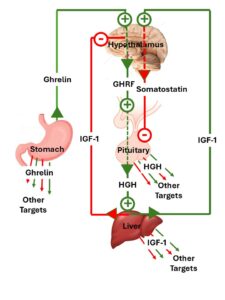
Regulation of human growth hormone (HGH) is an example.

  • Fasting caused the stomach to release the peptide hormone ghrelin, which stimulates the hypothalamus to release growth hormone releasing factor (HGRF). Low blood glucose, which is associated with fasting, also causes the hypothalamus to release HGRF.
  • Sleep, especially the early stages of deep sleep, also stimulates the hypothalamus to release HGRF.
  • HGRF binds to the pituitary and stimulates it to release HGH. HGH binds to nearly every tissue and organ in the body and has multiple effects. I’ll just mention a few of them here. For example,
  • HGH binds to the liver and causes it to release insulin-like growth factor-1 (IGF-1).
  • IGF-1 opposes the effect of insulin. It causes the liver to release glucose into the bloodstream and the liver and other tissues to release fat into the bloodstream. This helps the body get the energy it needs during the fasting state. It also provides the energy needed for growth.
  • It also stimulates the growth of muscle and bone. This is part of the growth response to HGH.
  • And, of course, all these responses support tissue repair, metabolism, and growth during sleep.

These effects of HGH are short-lived. HGH is meant to be released in short pulses as needed by the body. Once the desired effects of HGH have been realized, its production is stopped and it is rapidly degraded.

  • IGF-1 and/or high levels of blood glucose and fatty acids cause the hypothalamus to halt production of GHRF and release a peptide hormone called somatostatin instead.
  • Somatostatin binds to the pituitary and blocks the release of HGH.

This description is a simplistic view of the effects and regulation of HGH. Ghrelin, HGH and IGF-1 each have multiple other targets within the body. They influence multiple metabolic reactions. And both HGH and IGF-1 are regulated by other peptide hormones, each responding to different physiological stimuli.

So, you can see where my analogy of a bucket brigade and spider web came from.

  • The bucket brigade is: stomach → ghrelin → hypothalamus → GHRF → pituitary → HGH → liver → IGF-1
  • The spider web is the multiple other targets of ghrelin, HGH, and IGF-1 and the other peptide hormones that stimulate the release HGH and IGF-1.

But the analogy of a bucket brigade and spider web is a static representation. Each peptide hormone is constantly changing over time. Perhaps a better analogy would be an intricate dance, with dance partners constantly changing, disappearing, and reappearing.

When I look at the intricacies of metabolic regulation it seems inescapable that there must be a divine creator. This could not have happened by chance. And metabolic regulation is just one aspect of the amazing human body.

The Allure Of Peptide Stacks 

When I think of the allure of peptide stacks, the image that comes to mind is the sirens of Greek Mythology. They were variously described as bird-like or mermaid-like creatures who sat on the shoreline and sang such enchanting songs that they lured sailors to their deaths on the rocky shoals just off the coast.

In Homer’s Odyssey, he wrote about Ulysses putting earplugs in his crew and tying himself to the mast, so they could safely pass by the sirens without being lured to their death.

In this section, I will talk about the allure of peptide stacks. I’ll discuss the rocks later.

Perhaps the best way to talk about the allure of peptide stacks is to give specific examples of some of the most popular peptides included in the stacks.

Tesamorelin is a synthetic analog of growth hormone releasing factor (GHRF) that stimulates the pituitary to release growth hormone (HGH), which stimulates the liver to release insulin-like growth factor-1 (IGF-1).

  • It is associated with muscle growth and fat loss, especially abdominal fat.

Ipamorelin is a synthetic peptide that mimics the effects of ghrelin. In short, it stimulates the hypothalamus to release GHRF, which stimulates the pituitary to release HGH, which stimulates the liver to release IGF-1.

  • It is associated with muscle growth, fat loss, recovery and healing.

CJC-1295 is another synthetic analog of GHRH.

  • It is associated with muscle growth, fat loss, improved recovery and healing, increased energy, and better bone density.

AOD-9604 is a synthetic analog of HGH. However, it is only a portion of the HGH molecule. It promotes weight loss but does not increase muscle mass or help with blood sugar control.

BPC-157 is a synthetic analog of a peptide found in gastric juice.

  • It is associated with wound healing, gastrointestinal health, and reduced inflammation.

TB-500 is a synthetic analog of thymosin-beta-4, a peptide released by platelets, macrophages, and smooth muscle cells after injury.

  • It is associated with accelerated wound healing, reduced inflammation, increased flexibility and mobility, and muscle growth.

Tirzepatide is a synthetic analog of GLP-1. Like other GLP-1 it improves blood sugar control and suppresses appetite, which can lead to significant weight loss.

  • The FDA approved version of tirzepatide is sold under the trade names Mounjaro and Zepbound. However, the tirzepatide you find in peptide stacks is neither FDA approved nor FDA regulated. I will discuss what the FDA says about this below.

Of course, the “magic” of peptide stacks is that several of these peptides are combined in each injection, so you are maximizing the health “benefits”.

And when you look at the claimed health benefits – weight loss, fat loss, muscle growth, reduced inflammation, energy, improved flexibility, and much more – the allure of peptides stacks is easy to understand.

But is there a downside to peptide stacks? It’s time to examine the rocks along the shoreline. But first I should share a cautionary tale about GLP-1 drugs because that helps us understand the potential problems with peptide stacks.

GLP-1 Drugs – A Cautionary Tale 

GLP-1 is a peptide secreted by specialized cells in the intestine every time we have a meal.

  • It activates satiety cells in our brain to tell us we are full and don’t need to eat any more.
  • It also slows the emptying of our stomach and slows the transit time of food in our intestine. That helps us maximize the absorption of nutrients from our meal. It also prolongs the physical feeling of fullness.

But this effect only lasts an hour or two. Soon GLP-1 is broken down, and other peptide hormones take over to keep nutrient levels steady in the bloodstream and prepare us for the next meal. This is part of that “intricate dance” of peptide hormones that I described earlier.

Some bright scientists working for pharmaceutical companies hypothesized that if GLP-1 levels remained high for days rather than hours they could achieve long-term appetite suppression, which would help with weight loss. They created synthetic versions of GLP-1 drugs which were stable in the bloodstream for up to a week and injected them into patients at levels 10 to 100 times higher than found in nature.

Because these drugs were developed by pharmaceutical companies, they went through the complete FDA approval and inspection process. This involves:

  • Double-blind, placebo-controlled clinical studies with hundreds of patients establishing that the drugs are safe and effective. These studies are of the quality that they are published in peer-reviewed scientific journals.
  • Careful review of the clinical studies by the FDA as part of the approval process.
  • Regular inspection of the drug production facilities by the FDA to assure adherence to the highest quality and purity standards.
  • Post-Market monitoring after approval to identify any safety concerns that were missed in the approval process. Doctors and pharmaceutical companies are required to report any serious side effects to the FDA.
    • During the approval process the drugs are tested in hundreds of patients. After approval the drugs are often used by millions of patients. Also, some side effects are cumulative and do not appear until the drugs have been used for a long time. It is not unusual to identify serious side effects through this post-marketing monitoring process.

Some of the side effects were predictable and were discovered in the original clinical trials of these drugs.

  • Because the GLP-1 analogs are present at higher levels and for much longer than natural GLP-1, stomach emptying and transit times through the intestine were delayed much more than normal.
    • This results in side effects like nausea, vomiting, diarrhea, constipation, bloating, and stomach pain.

However, some of the most-concerning side effects were only discovered through the post-marketing review process. These include.

  • Increased anxiety, depression, and suicidal thoughts. These side effects, especially suicidal thoughts, are of concern to anyone who already experiences some degree of anxiety and/or depression.
  • Loss of muscle mass. This is of concern to adults over the age of 50 because many of them already suffer from sarcopenia (age-related muscle loss).

Why is this a cautionary tale, you might ask? It’s cautionary because the common side effects and the more serious side effects for GLP-1 drugs were only discovered because of the FDA drug approval and post-marketing review procedures. Spoiler alert: None of the peptide stacks have gone through this kind of review process.

Are Peptide Stacks Safe? 

danger symbolThe question I posed at the beginning of this article is, “Are peptide stacks safe?” The short answer is, “We don’t know but there are several reasons to be cautious”.

#1: Peptide hormones are not natural (And it’s not nice to fool around with Mother Nature).

Specifically, the dosage and timing of peptide stacks is not natural. In my overview of peptide hormones, I talked about the “intricate dance” peptide hormones undergo as they control human metabolism.

In short, peptide hormones are under tight control by our bodies. They are produced in the right amount, at the right time, and for the right duration (They are degraded as soon as they have completed their mission). None of this is true for peptide stacks.

  • They are injected on a fixed schedule – not when our bodies need them (not the right time).
  • They are injected at doses designed to create much higher blood levels than the body produces under normal circumstances (not the right amount).
  • They are injected with frequencies designed to achieve high blood levels far longer than seen under normal circumstances (not the right duration).

And if we have learned anything from GLP-1 drugs, it is that when we create synthetic peptide hormones and inject them at the wrong time, at the wrong amount, and for the wrong duration we create side effects and some of those side effects may have significant health consequences.

#2: We have no idea whether peptide stacks are effective and safe. These are not FDA approved treatments. That means:

  • No human clinical trials have been performed to assess efficacy and safety of peptide stacks.
  • There is no post-marketing monitoring. Simply put, that means there is no system in place to monitor the frequency and severity of side effects.

#3: We have no idea whether peptide stacks are pure and potent. They are typically produced by compounding pharmacies or overseas manufacturers who may not use good manufacturing practices and quality controls.

The FDA has recently released a warning about one of these synthetic peptide hormones (tirzepatide) produced by compounding pharmacies and overseas manufacturers and available online. Their findings were that some of the samples they evaluated:

  • Had inaccurate label information.
  • Contained too little, too much, or no active ingredient at all.
  • Contained the wrong ingredients.
  • Contained harmful contaminants.

While this report focused on a single peptide, there is no reason to suspect that compounding pharmacies and overseas manufacturers would do a better job of producing other synthetic peptide hormones.

In short, it is buyer beware in the online peptide stack marketplace.

Would You Like To Be A Guinea Pig? 

To sum up the previous section:

  • Peptide stacks are not natural. This may result in unexpected side effects.
  • There are no published human clinical studies on peptide stacks. That means:
  • We have no idea whether they are safe and effective. There is no evidence that the claimed benefits are true, and we don’t know what the side effects might be.
  • No one is monitoring the manufacturing practices and quality controls for peptide stacks. That means:
    • We have no idea whether they are pure and potent. We don’t know how much of each peptide hormone they contain and whether the hormones are pure.

In short, using the peptide stacks currently available online is like volunteering to be a guinea pig in a long-term clinical trial with an uncertain outcome.

Now I know many of you prefer to go outside of the medical system, and it may seem to you that I am taking the side of the FDA and pharmaceutical companies.

That is not the case. I do get regular checkups, but my doctor is fully aware that I prefer natural approaches whenever possible. I’m 81, use no medications, and am in excellent health.

I choose natural approaches that are proven to be safe and effective. Peptide stacks are not there yet. I choose not to be a guinea pig.

But if the allure of peptide stacks still tempts you, the best advice I have seen is to work with licensed health professionals.

  • They normally research their sources and know which companies use good manufacturing practices and perform rigorous quality controls on their products.
    • It’s your responsibility to ask them how they choose which products they recommend.
  • They normally monitor you for side effects.
    • It’s your responsibility to ask them how they want to monitor you for side effects and to report any side effects to them as soon as you notice them.

The Bottom Line 

Peptide stacks are the latest “magic” weight-loss potion. When I think of the allure of peptide stacks, the image that comes to mind is the sirens of Greek Mythology. They were variously described as bird-like or mermaid-like creatures who sat on the shoreline and sang such enchanting songs that they lured sailors to their deaths on the rocky shoals just off the coast.

In this article I describe their allure. I also describe the rocky shoals.

  • Peptide stacks are not natural. This may result in unexpected side effects.
  • There are no published human clinical studies on peptide stacks. That means:
    • We have no idea whether they are safe and effective. There is no evidence that the claimed benefits are true, and we don’t know what the side effects might be.
  • No one is monitoring the manufacturing practices and quality controls for peptide stacks. That means:
    • We have no idea whether they are pure and potent. We don’t know how much of each peptide hormone they contain and whether the hormones are pure.

In short, using the peptide stacks currently available online is like volunteering to be a guinea pig in a long-term clinical trial with an uncertain outcome.

For more information on peptide stacks and the best recommendations if you choose to use them, read the article above.

These statements have not been evaluated by the Food and Drug Administration. This information is not intended to diagnose, treat, cure or prevent any disease.

 _____________________________________________________________________________

My posts and “Health Tips From the Professor” articles carefully avoid claims about any brand of supplement or manufacturer of supplements. However, I am often asked by representatives of supplement companies if they can share them with their customers.

My answer is, “Yes, as long as you share only the article without any additions or alterations. In particular, you should avoid adding any mention of your company or your company’s products. If you were to do that, you could be making what the FTC and FDA consider a “misleading health claim” that could result in legal action against you and the company you represent.

For more detail about FTC regulations for health claims, see this link.

https://www.ftc.gov/business-guidance/resources/health-products-compliance-guidance 

About The Author 

Dr. Chaney has a BS in Chemistry from Duke University and a PhD in Biochemistry from UCLA. He is Professor Emeritus from the University of North Carolina where he taught biochemistry and nutrition to medical and dental students for 40 years.

Dr. Chaney won numerous teaching awards at UNC, including the Academy of Educators “Excellence in Teaching Lifetime Achievement Award”.

Dr Chaney also ran an active cancer research program at UNC and published over 100 scientific articles and reviews in peer-reviewed scientific journals. In addition, he authored two chapters on nutrition in one of the leading biochemistry text books for medical students.

Since retiring from the University of North Carolina, he has been writing a weekly health blog called “Health Tips From the Professor”. He has also written two best-selling books, “Slaying the Food Myths” and “Slaying the Supplement Myths”. And most recently he has created an online lifestyle change course, “Create Your Personal Health Zone”. For more information visit https://chaneyhealth.com.

For the past 54 years Dr. Chaney and his wife Suzanne have been helping people improve their health holistically through a combination of good diet, exercise, weight control and appropriate supplementation.



Can A Healthy Diet Help You Lose Weight?

What’s New About This Study?

Author: Dr. Stephen Chaney 

fad dietsNew Year’s resolutions are just around the corner. Some of you will resolve to lose weight, and some of you will resolve to eat healthier. But can you do both?

Any restrictive diet will give you short-term weight loss. And weight loss will give you improvement in blood parameters that might signal a reduced risk of heart disease, stroke, and diabetes.

The operative word here is “might”. Long-term studies are required to determine whether a diet actually reduces the risk of chronic diseases.

So, the important question becomes, “Can weight loss diets be healthy long term”. For some of them, the answer is a clear no. Others are unlikely to be healthy but have not been studied long term, so we don’t know whether they are healthy or not.

That’s the dilemma most of you face this January. If most weight loss diets are unhealthy long term, do you have to choose between weight loss and good health when you make your New Year’s resolutions?

Maybe not. What if you started from the opposite perspective? What if you asked, “Can a healthy diet help you lose weight?” The study (S Schutte et al, American Journal of Clinical Nutrition, 115: 1-18, 2022)) I will review this week suggests it can.

How Was This Study Done?

clinical studyThis was a randomized controlled trial, the gold standard of clinical studies. The investigators recruited 100 healthy, abdominally obese men and women aged 40-70. At the time of entry into the study none of the participants:

  • Had diabetes.
  • Smoked
  • Had a diagnosed medical condition.
  • Were on a medication that interfered with blood sugar control.
  • Were on a vegetarian diet.

The participants were randomly assigned to:

  • A high-nutrient quality diet that restricted calories by 25%.
  • A low-nutrient-quality diet that restricted calories by 25%.
  • A continuation of their habitual diet.

The study lasted 12 weeks. The participants met with a dietitian on a weekly basis. The dietitian gave them all the foods they needed for the next week and monitored their adherence to their assigned diet. They were advised not to change their exercise regimen during the study.

At the beginning and end of the study the participants were weighed, and cholesterol, triglycerides, and blood pressure were measured.

Can A Healthy Diet Help You Lose Weight?

Vegetarian DietThis study compared a healthy diet to an unhealthy diet with the same degree of caloric restriction. And it compared both diets to the habitual diet of people in that area. This study was performed in the Netherlands, so both weight loss diets were compared to the habitual Dutch diet.

To put this study into context, these were not healthy and unhealthy diets in the traditional sense.

  • Both were whole food diets.
  • Both included fruits, vegetables, low-fat dairy, and lean meats.
  • Both restricted calories by 25%.

The diets were designed so that the “high-nutrient quality” diet had significantly more plant protein (in the form of soy protein), fiber, healthy fats (monounsaturated and omega-3 fats), and significantly less added sugars than the “low-nutrient-quality” diet.

When the investigators measured weight loss at the end of 12 weeks:

  • Participants lost significant weight on both calorie-restricted diets compared to the group that continued to eat their habitual diet.
    • That is not surprising. Any diet that successfully restricts calories will result in weight loss.
  • Participants on the high-nutrient quality diet lost 33% more weight than participants on the low-nutrient-quality diet (18.5 pounds compared to 13.9 pounds).
  • Participants on the high-nutrient quality diet lost 50% more inches in waist circumference than participants on the low-nutrient-quality diet (1.8 inches compared to 1.2 inches).
    • Waist circumference is a direct measure of abdominal obesity.

When the investigators measured blood pressure, fasting total cholesterol levels, and triglyceride levels at 12 weeks:

Prescription for good health overhead with stethoscope, healthy fresh food and exercise equipment, with copy space.
  • These cardiovascular risk factors were significantly improved on both diets.
    • Again, this would be expected. Any diet that causes weight loss results in an improvement in these parameters.
  • However, the reduction in total serum cholesterol was 2.5-fold greater in the high-nutrient quality diet group than in the low-nutrient-quality diet group.
  • The reduction in triglycerides was 2-fold greater in the high-nutrient quality diet group than in the low-nutrient-quality diet group.
  • The reduction in systolic blood pressure was 2-fold greater and the reduction in diastolic blood pressure was 1.67-fold greater in the high-nutrient quality diet group than in the low-nutrient-quality diet group.

The authors concluded, “Our results demonstrate that the nutrient composition of an energy-restricted diet is of great importance for improvements of metabolic health in an overweight, middle-aged population. A high-nutrient quality energy-restricted diet enriched with soy protein, fiber, monounsaturated fats, omega-3 fats, and reduced in fructose and other added sugars provided additional health benefits over a low-nutrient quality energy-restricted diet, resulting in greater weight loss…and promoting an antiatherogenic blood lipid profile.”

In short, participants in this study lost more weight and had a better improvement in risk factors for heart disease on a high-nutrient-quality diet than on a low-nutrient-quality diet. Put another way, a healthy diet can help you lose weight. Healthy eating helped them lose more weight and gave them greater improvement in their health.

What’s New About This Study?

Simply put this study confirms that:

  • Caloric restriction leads to weight loss, and…
  • Weight loss leads to improvement in cardiovascular risk factors like total cholesterol, triglycerides, and blood pressure.
    • This is not new. It is true for any diet that results in caloric restriction.

However, this study breaks new ground in that it shows a high-nutrient quality diet results in significantly better…

  • Weight loss and…
  • Reduction in cardiovascular risk factors….

…compared to a low-nutrient quality diet with the same degree of caloric restriction.

What Does This Study Mean For You?

As I said above, the distinction between a “high-nutrient-quality” diet and a “low-nutrient-quality” diet may not be Questioning Womanwhat you might have expected.

  • Both diets were whole food diets. Neither diet allowed sodas, sweets, and highly processed foods.
  • Both included fruits, vegetables, grains, and lean meats.
  • Both reduced caloric intake by 25%.
    • If you want to get the most out of your weight loss diet, this is a good place to start.

However, in this study the investigators designed their “high-nutrient-quality” diet so that it contained:

  • More plant protein in the form of soy protein.
    • In this study they did not reduce the amount of animal protein in the “high-nutrient-quality” diet. They simply added soy protein foods to the diet. I would recommend substituting soy protein for some of the animal protein in your diet.
  • More fiber.
    • The additional fiber came from substituting whole grain breads and brown rice for refined grain breads and white rice, adding soy protein foods, and adding an additional serving of fruit.
  • More healthy fats (monounsaturated and omega-3 fats) in place of saturated fats.
    • The additional omega-3s came from adding a fish oil capsule providing 700mg of EPA and DHA.
  • Less added sugar.

All these changes make great sense if you are trying to lose weight. 

ProfessorI would group these changes into 7 recommendations.

1) Follow a whole food diet. Avoid sodas, sweets, and highly processed foods.

2) Include all 5 food groups in your weight loss diet. Fruits, vegetables, whole grains, dairy, and lean proteins all play an important role in your long-term health.

3) Eat a primarily plant-based diet. My recommendation is to substitute plant proteins for at least half of your high-fat animal proteins. And this study reminds us that soy protein foods are a convenient and effective way to achieve this goal.

4) Eat a diet high in natural fiber. Including fruits, vegetables, whole grains, beans, nuts, seeds, and soy foods in your diet is the best way to achieve this goal.

5)  Substitute healthy fats (monounsaturated and omega-3 fats) for unhealthy fats (saturated and trans fats) in your diet. And this study reminds us that it is hard to get enough omega-3s in your diet without an omega-3 supplement.

6) Reduce the amount of added sugar in your diet. This is best achieved by eliminating sodas, sweets, and highly processed foods from the diet.

7) Finally, I would like to remind you of the obvious. No diet, no matter how healthy, will help you lose weight unless you cut back on calories. Fad diets achieve that by restricting the foods you can eat or the time you are allowed to eat. In the case of a healthy diet, the best way to do it is to cut back on portion sizes and choose foods with low caloric density.

The Bottom Line 

A recent study asked, “Can a healthy diet help you lose weight?” This study was a randomized controlled study, the gold standard of clinical studies. The participants were randomly assigned to:

  • A high-nutrient quality diet that restricted calories by 25%.
  • A low-nutrient-quality diet that restricted calories by 25%.
  • Continue with their habitual diet.

These were not healthy and unhealthy diets in the traditional sense.

  • Both were whole food diets.
  • Both included fruits, vegetables, low-fat dairy, and lean meats.
  • Both restricted calories by 25%.

The diets were designed so that the “high-nutrient quality” diet had significantly more plant protein (in the form of soy protein), fiber, healthy fats (monounsaturated and omega-3 fats), and significantly less fructose and other added sugars than the “low-nutrient-quality” diet.

At the end of 12 weeks:

  • Participants on the high-nutrient quality diet lost 33% more weight and had better cardiovascular markers than participants on the low-nutrient-quality diet.

The authors concluded, “Our results demonstrate that the nutrient composition of an energy-restricted diet is of great importance for improvements of metabolic health in an overweight, middle-aged population. A high-nutrient quality energy-restricted diet enriched with soy protein, fiber, monounsaturated fats, omega-3 fats, and reduced in fructose and other added sugars provided additional health benefits over a low-nutrient quality energy-restricted diet, resulting in greater weight loss…and promoting an antiatherogenic blood lipid profile.”

In short, participants in this study lost more weight and had a better improvement in risk factors for heart disease on a high-nutrient-quality diet than on a low-nutrient-quality diet. Put another way, a healthy diet can help you lose weight. Healthy eating helped them lose more weight and gave them greater improvement in their heart health.

For more details on this study, what this study means for you, and my 7 recommendations for a healthy weight loss diet, read the article above.

These statements have not been evaluated by the Food and Drug Administration. This information is not intended to diagnose, treat, cure, or prevent any disease.

 _____________________________________________________________________________

My posts and “Health Tips From the Professor” articles carefully avoid claims about any brand of supplement or manufacturer of supplements. However, I am often asked by representatives of supplement companies if they can share them with their customers.

My answer is, “Yes, as long as you share only the article without any additions or alterations. In particular, you should avoid adding any mention of your company or your company’s products. If you were to do that, you could be making what the FTC and FDA consider a “misleading health claim” that could result in legal action against you and the company you represent.

For more detail about FTC regulations for health claims, see this link.

https://www.ftc.gov/business-guidance/resources/health-products-compliance-guidance

_______________________________________________________________________

About The Author 

Dr. Chaney has a BS in Chemistry from Duke University and a PhD in Biochemistry from UCLA. He is Professor Emeritus from the University of North Carolina where he taught biochemistry and nutrition to medical and dental students for 40 years.

Dr. Chaney won numerous teaching awards at UNC, including the Academy of Educators “Excellence in Teaching Lifetime Achievement Award”.

Dr Chaney also ran an active cancer research program at UNC and published over 100 scientific articles and reviews in peer-reviewed scientific journals. In addition, he authored two chapters on nutrition in one of the leading biochemistry text books for medical students.

Since retiring from the University of North Carolina, he has been writing a weekly health blog called “Health Tips From the Professor”. He has also written two best-selling books, “Slaying the Food Myths” and “Slaying the Supplement Myths”. And most recently he has created an online lifestyle change course, “Create Your Personal Health Zone”. For more information visit https://chaneyhealth.com.

For the past 45 years Dr. Chaney and his wife Suzanne have been helping people improve their health holistically through a combination of good diet, exercise, weight control and appropriate supplementation.

Is It Too Late For Weight Loss Goals?

What Does This Study Mean For You?

Author: Dr. Stephen Chaney

It’s almost the New Year. And with the New Year comes New Year’s resolutions. Weight loss is the second most popular New Year’s resolution, trailing only exercising more.

But if you are middle-aged and have been overweight most of your adult life, is it too late to lose weight? Has the damage to your health already been done? Has that ship already sailed?

There is good evidence that people who maintain an ideal weight throughout their adult years are healthier and live slightly longer than people who are overweight.

There is also good evidence that weight loss at any age provides short-term improvements to biomarkers of good health such as:

  • lower blood pressure.
  • lower cholesterol levels.
  • better blood sugar control.
  • reduction in chronic inflammation.

But surprisingly there are very few studies to show that weight loss results in long-term health benefits, especially for people who have been overweight through their 40s and 50s. To date there is only a single Chinese study of midlife weight loss, and that study suggested that health benefits were only apparent if the weight loss was maintained for 30 years or more.

The study (TE Strandberg et al, JAMA Network Open, 2025, 8(5); e2511825) I will describe today was designed to fill that gap.

How Was This Study Done?

Clinical StudyThe investigators used data from three large studies that followed healthy individuals in midlife for 10 years or more. None of these studies were designed as weight loss studies, but they measured weight, chronic disease incidence or mortality at multiple points during the study.

The first study was the Whitehall II Study (WHII). This study enrolled 10,308 British civil servants (Whitehall is the district where the British Civil Service is located) between 1985 and 1988 and is still ongoing. The data for this investigation was taken from clinical examinations that occurred around 1991 and 2013.

  • These exams provided information on weight and height, BMI, and risk factors like smoking, high blood pressure, high cholesterol, and insulin resistance and/or high blood sugar (indicative of prediabetes or diabetes).
  • The data set was linked to National Health Service records for diagnosed chronic diseases (type 2 diabetes, heart attack, stroke, cancer, asthma, and chronic obstructive pulmonary disease).

The study I am describing today included 4118 men and women aged 37-42 years (average = 39 years) from the WHII dara set who were free of chronic disease at the time of the 1991 clinical evaluation.

The second study was the Helsinki Businessmen Study (HBS). In this study 3490 White men, mostly businessmen and executives aged 38-45 years (average 42 years) underwent voluntary health checkups starting in 1964. Cardiovascular risk factors were assessed and the men received health education on diet, exercise, and weight control. Between 1974 and 1975 these men were offered a voluntary follow-up health checkup, and 2335 men completed both checkups.

  • In this study, BMI was measured at both health checkups and all-cause mortality data were obtained from the National Health Registry.

The third study was the Finnish Public Sector Study (FPS). In this study 77,111 men and women in public service were enrolled in 2,000. BMI was measured in 4-year intervals and health data were collected from the European Health Records. The data for this investigation used data from 16,696 men and women who were 34-43 (average age = 39) at the first assessment, had data from at least 3 consecutive assessments, and had no diagnosed chronic disease at the first assessment.

  • As with the WHII study, BMI and chronic disease were measured in at least 2 consecutive assessments.

The average follow-up for the three studies was 22.8 years between the first and last assessment.

In all three cases the study participants were divided into 4 groups:

  • Those who remain overweight (defined as a persistent BMI>25).
  • Those who gained weight – they went from a healthy weight to being overweight (defined as BMI<25 to BMI>25).
  • Those who lost weight – they went from overweight to a healthy weight (defined as BMI>25 to BMI<25).
    • The average weight loss was 11.5 pounds or 6.5% of body weight and was remarkably consistent in all 3 studies.
  • Those who remained at a healthy weight (defined as a persistent BMI<25).

In the WHII and FPS studies, weight differences were correlated with the diagnosis of a chronic disease between the first and last assessment.

In the HBS study, weight differences were correlated with all-cause mortality between the first and last assessment.

In all three cases, the data were corrected for major risk factors like smoking, high blood pressure, high cholesterol, and insulin resistance and/or high blood sugar.

In terms of the risk of developing a chronic disease (WHII and FPS studies) or risk of dying (HBS study) the always overweight group was assigned a risk of 1.0 and the other groups were compared to it.

The authors noted that all three studies were performed before surgical and pharmacological interventions were available. And people with pre-existing conditions were excluded from these studies, so disease-related weight loss was unlikely. Thus, the authors felt that the group who lost weight probably did so because of a conscious effort to change their diet and lifestyle, although this was not specifically measured in these studies.

Is It Too Late For A Weight Loss Goal?

If you remember the introduction, this question did not refer to short-term biomarkers of health. Multiple studies have shown that weight loss at any age will improve blood sugar control and lower blood pressure, cholesterol, and inflammation.

This study asked whether weight loss can be shown to have long-term health benefits – namely reduction in the risk of chronic diseases and increase in longevity.

And more specifically, it asked whether weight loss in middle age (the age of participants in these studies ranged from 39 to 42) can be shown to have long-term health benefits – even if they had been overweight for most of their adult life up to that point.

Or as the title of this segment suggested, “Is it too late to set a weight loss goal if you are middle aged.”

The answer from these studies was clear cut:

  • In the WHII study the risk of developing a chronic disease decreased by 48% compared to the always overweight group.
    • And when diabetes was excluded from the analysis the decreased risk was still significant (42%). This is important because diabetes is the most prevalent obesity related disease. The means that weight loss also significantly reduced the risk of the other chronic diseases measured in this study – such as cardiovascular disease and cancer.
  • In the FPS study the risk of developing a chronic disease decreased by 57% compared to the always overweight group.
  • Again, when diabetes was excluded from the analysis the decreased risk was still significant (45%).
  • Finally, in the HBS study, the risk of premature death decreased by 19% compared to the always overweight group.

In each of these studies:

  • The group that gained weight in their middle years did almost as poorly as the always overweight group.

The authors concluded, “Findings from 3 prospective cohort studies support maintaining a healthy weight (BMI<25) throughout life as the best option for overall health. [However] sustained midlife weight loss compared with persistent overweight was associated with a decreased risk of [diabetes and other chronic diseases] and decreased all-cause mortality.”

Simply put, this analysis of three long-term studies shows that weight loss can help you be healthier and live longer in your golden years – even if you waited until you were middle-aged to lose the weight.

What Does This Study Mean For You?

cruise shipAt the beginning of this article I posed the questions: If you are middle-aged and have been overweight most of your adult life, is it too late to set a weight loss goal this January? Has the damage to your health already been done? Has that ship already sailed?

This study shows that the answer to this question is clearly, No. It’s not too late. Sustained weight loss can still provide significant long-term benefits.

Three major studies show that sustained weight loss initiated by adults in their forties can reduce the risk of chronic disease by around 50% and reduce the risk of mortality by about 20% twenty years later. The authors of this study said that evidence from one of those studies suggests that the long-term health benefits are still apparent 30 years later.

Of course, these studies represent a single time point – weight loss initiated at age 40.

  • The benefits of sustained weight loss may wane if you delay longer, but we don’t know because those studies have not been done. However, it is likely that sustained weight loss at any age will have significant long-term health benefits.
  • The benefits of sustained weight loss may be even greater if you lose weight at a younger age. Again, we can’t predict how much greater the benefit will be because those studies also haven’t been done yet.
  • However, as the authors of this study said, “Maintaining a healthy weight throughout life is the best option for overall health.” That conclusion is supported by multiple studies.

There are a couple of other important points.

  • These benefits (a 50% reduction in chronic diseases and a 20% increase in longevity) do not require massive weight loss. The subjects in these studies only lost around 11-12 pounds (6.5% of their weight). You have previously heard that as little as 5% weight loss has significant short-term benefits. This study confirms that statement and indicates if the weight loss is sustained, it will significantly improve long-term health outcomes.
  • Weight loss has a bigger effect on quality of life (absence from chronic diseases) than it does on longevity. That is true of every healthy lifestyle improvement that has been studied. I’m sorry to say that losing weight will not help you live as long as Methuselah. But it will help you live your last years in good health.

Of course, losing weight is easy. There are many fad diets that can help you do that. But keeping the weight off is hard. This is where every diet eventually fails. Maintaining weight loss requires lifestyle change. It also requires a change in mindset. It requires that you change how you think about food and how you think about your ability to control what you eat.

This is why I created my online lifestyle change course, “Create Your Personal Health Zone”. If this is the year you have resolved to lose weight and keep it off, check out my course.

What About Weight Loss Surgery and GLP-1 Drugs? 

Weight loss surgery and GLP-1 drugs result in faster and greater weight loss than diet and lifestyle changes alone. For example, clinical trials show that GLP-1 drugs can result in 15-20% body weight loss within the first year. [Subsequent studies suggest that real-life weight loss is often much smaller because of drug discontinuation due to side effects or cost.]

But assuming the 15-20% number, the question becomes whether these interventions have the same or greater benefits than the 6.5% body weight loss due to diet and lifestyle change seen in these studies.

The short answer is that we don’t know because we don’t have any long-term studies of these interventions. However, the authors of this study were skeptical. They said, “It remains uncertain whether the long-term benefits observed in our study extend to these interventions, where greater weight loss may be accompanied by a concurrent and potentially significant loss of lean body mass, which could pose challenges over time.”

I have discussed the importance of muscle mass for health and longevity in a previous issue  of “Health Tips From the Professor”. This article shows why the accelerated loss of muscle mass seen with GLP-1 drugs is so concerning.

The Bottom Line 

The time to set your New Year’s goals is just a few weeks away. If you are middle-aged and have been overweight most of your adult life, is it too late to set a weight loss goal this January? Has the damage to your health already been done? Has that ship already sailed?

A recent study examined that question. The study used data from three earlier studies on the long-term effects of sustained weight loss (20 years or more). These studies show that sustained weight loss initiated by adults in their 40s reduces the risk of:

  • Chronic disease by around 50%.
  • Mortality by about 20%.
  • Data from one of those studies suggests that the long-term health benefits were still apparent 30 years later.

For more information on this study, what it means for you, and where weight loss surgery and GLP-1 drugs fit into the picture, read the article above.

These statements have not been evaluated by the Food and Drug Administration. This information is not intended to diagnose, treat, cure, or prevent any disease.

 ______________________________________________________________________________

My posts and “Health Tips From the Professor” articles carefully avoid claims about any brand of supplement or manufacturer of supplements. However, I am often asked by representatives of supplement companies if they can share them with their customers.

My answer is, “Yes, as long as you share only the article without any additions or alterations. In particular, you should avoid adding any mention of your company or your company’s products. If you were to do that, you could be making what the FTC and FDA consider a “misleading health claim” that could result in legal action against you and the company you represent.

For more detail about FTC regulations for health claims, see this link.

https://www.ftc.gov/business-guidance/resources/health-products-compliance-guidance

______________________________________________________________________

About The Author 

Dr. Chaney has a BS in Chemistry from Duke University and a PhD in Biochemistry from UCLA. He is Professor Emeritus from the University of North Carolina where he taught biochemistry and nutrition to medical and dental students for 40 years.  Dr. Chaney won numerous teaching awards at UNC, including the Academy of Educators “Excellence in Teaching Lifetime Achievement Award”. Dr Chaney also ran an active cancer research program at UNC and published over 100 scientific articles and reviews in peer-reviewed scientific journals. In addition, he authored two chapters on nutrition in one of the leading Biochemistry textbooks for medical students.

Since retiring from the University of North Carolina, he has been writing a weekly health blog called “Health Tips From the Professor”. He has also written two best-selling books, “Slaying the Food Myths” and “Slaying the Supplement Myths”. And most recently he has created an online lifestyle change course, “Create Your Personal Health Zone”. For more information visit https://chaneyhealth.com.

For the past 53 years Dr. Chaney and his wife Suzanne have been helping people improve their health holistically through a combination of good diet, exercise, weight control and appropriate supplementation.
The Breakfast Cereal Scandal

The Race To The Bottom Continues

Author: Dr. Stephen Chaney

Factory FarmBig Food Inc is not your friend. Big Food Inc follows the latest trends and is only too happy to give consumers what they want.

You want low-fat? No problem. You want low-carb, natural, organic, non-GMO, gluten-free, Paleo, Keto? No problem. However, their motive is a healthy bottom line, not your health.

They know humans are hardwired to desire sugar, salt, and fat. Foods with those ingredients sell. Convenience sells. At the end of the day, they are more interested in sales than they are in your health.

They don’t want you to buy whole foods and cook them from scratch. They don’t make money from whole foods. They want you to buy their pre-packaged convenience foods instead.

A prime example of how Big Food Inc of how Big Food takes a healthy food and turns it into a nutrition disaster is what I call “The Breakfast Cereal Scandal”.

The Great Breakfast Cereal Scandal 

It’s hard to believe that breakfast cereals started as health food, but they did. Dr. John Harvey Kellogg was a Seventh-day Adventist who took over the Western Reform Health Institute in 1877 and renamed it the Battle Creek Sanitarium.

It gained prominence as a health resort where people went to be healed through a combination of physical activity and healthy eating.

Dr. Kellogg invented Corn Flakes in 1878 as a healthier alternative to the high-fat breakfasts most Americans were consuming at that time. Corn Flakes had less than 5% sugar. It was a great idea for its time, but what happened next is nothing short of appalling.

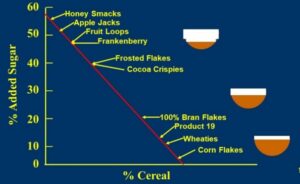
It is a perfect example of how Big Food Inc leads us astray. The graphic above that I created illustrates what the major food companies have done to breakfast cereals over the decades since then.

It all started with Corn Flakes. Then other food companies started bringing out competing products. Cereals like Wheaties and Rice Krispies were still pretty healthy, but they had a bit more sugar, which gave them better consumer appeal.

As soon as the food companies figured out that sugar increased their sales, the race was on. The percentage sugar increased to 40%, then to 50%, and now to almost 60%.

No sane parent would fill their child’s cereal bowl half full of sugar, but that is exactly what they are doing when they feed them some of today’s breakfast cereals. The food companies are hiding the outrageous sugar content of their cereals with slogans like “Just a touch of honey.”

Speaking of deception, can anyone tell me how you label a product with 20% sugar 100% Bran Flakes?

I created the graphic above in the 1990’s. At that time, I assumed breakfast cereals couldn’t get much worse. But I was wrong. Big Food’s “race to the bottom” continues.

A recent study (A Zhao et al, JAMA Network Open, 8(5): e2511699, 2025) examined the nutritional content of children’s cereals introduced to the US market between 2010 and 2023.

How Was This Study Done? 

Clinical StudyThe investigators used data from the Mintel Global New Products Database, which tracks new product launches for foods and beverages. From this database they identified 1,200 new children’s cereals introduced in the US market from 2010 through 2023.

Children’s cereals were defined as breakfast cereal products explicitly marketed (through packaging or branding) to children between 5 and 12 years old.

Using product label information, they compared the total fat, sodium, total carbohydrate, sugar, protein, and dietary fiber per serving and analyzed the trends between 2010 and 2023.

The Race To The Bottom Continues

If the previous decline in nutritional value of breakfast cereals between the 1870s and 1970s can be described can be described as “appalling”, the latest results can only be described as scandalous.

For newly introduced children’s breakfast cereals in the 13 years between 2010 and 2023,

  • Fat content increased 34%.
  • Sodium (salt) content increased 32%.
  • Sugar content increased by 11%.
  • Protein content decreased by 11%.
  • Fiber content decreased by 30%.

The authors of the study concluded, “Analysis of newly launched children’s RTE (ready to eat) cereals from 2010 to 2023 revealed concerning nutritional shifts: notable increases in fat, sodium, and sugar along decreases in protein and fiber.

Children’s cereals contain high levels of added sugar, with a single serving exceeding 45% of the American Heart Association’s daily recommended limit for children.

These trends suggest a potential prioritization of taste over nutritional quality in product development, contributing to childhood obesity and long-term cardiovascular health risks.”

In short, despite the American public’s increasing interest in a healthy diet, Big Food is still prioritizing sales over healthy foods. The race to the bottom continues.

What Does This Mean For You?

The take home lesson is clear. Don’t trust Big Food with your health. Their priority is sales, not your health.

Even when they claim their processed foods are healthy because they have removed fat or sugar, they have simply replaced them with a witch’s brew of chemicals so they look, taste, and smell delicious.

And breakfast cereals are just the tip of the iceberg. For most Americans 60-70% of their diet comes from highly processed foods.

If you value health, the choice is clear. Choose whole, unprocessed food whenever possible.

The Bottom Line

The dramatic decline in the nutritional quality of breakfast cereals between the 1870s and 1970s is well documented. By the turn of the century most breakfast cereals had gotten so bad, you might assume they couldn’t get any worse. You would be wrong. Big Food’s race to the bottom continues.

A recent study evaluated the nutritional value of newly introduced children’s breakfast cereals between 2010 and 2023. In those 13 years,

  • Fat content increased 34%.
  • Sodium (salt) content increased 32%.
  • Sugar content increased by 11%.
  • Protein content decreased by 11%.
  • Fiber content decreased by 30%.

The authors of the study said, “These trends suggest a potential prioritization of taste over nutritional quality in product development, contributing to childhood obesity and long-term cardiovascular health risks.”

I agree. And this is just the tip of the iceberg. For most Americans 60-70% of their diet comes from highly processed foods.

If you value health, the choice is clear. Choose whole, unprocessed food whenever possible.

For more details on this study and what it means for you, read the article above.

These statements have not been evaluated by the Food and Drug Administration. This information is not intended to diagnose, treat, cure or prevent any disease.

_____________________________________________________________________________

My posts and “Health Tips From the Professor” articles carefully avoid claims about any brand of supplement or manufacturer of supplements. However, I am often asked by representatives of supplement companies if they can share them with their customers.

My answer is, “Yes, as long as you share only the article without any additions or alterations. In particular, you should avoid adding any mention of your company or your company’s products. If you were to do that, you could be making what the FTC and FDA consider a “misleading health claim” that could result in legal action against you and the company you represent.

For more detail about FTC regulations for health claims, see this link.

https://www.ftc.gov/business-guidance/resources/health-products-compliance-guidance

 _______________________________________________________________________

About The Author 

Dr. Chaney has a BS in Chemistry from Duke University and a PhD in Biochemistry from UCLA. He is Professor Emeritus from the University of North Carolina where he taught biochemistry and nutrition to medical and dental students for 40 years.

Dr. Chaney won numerous teaching awards at UNC, including the Academy of Educators “Excellence in Teaching Lifetime Achievement Award”.

Dr Chaney also ran an active cancer research program at UNC and published over 100 scientific articles and reviews in peer-reviewed scientific journals. In addition, he authored two chapters on nutrition in one of the leading biochemistry text books for medical students.

Since retiring from the University of North Carolina, he has been writing a weekly health blog called “Health Tips From the Professor”. He has also written two best-selling books, “Slaying the Food Myths” and “Slaying the Supplement Myths”. And most recently he has created an online lifestyle change course, “Create Your Personal Health Zone”. For more information visit https://chaneyhealth.com.

For the past 53 years Dr. Chaney and his wife Suzanne have been helping people improve their health holistically through a combination of good diet, exercise, weight control and appropriate supplementation.

 

How To Live To 117

The Secrets To A Long And Healthy Life

Author: Dr. Stephen Chaney

SecretsToday’s “Health Tip” is a bit unusual. It’s not based on a clinical study with thousands of participants. It’s not even a clinical study based on dozens of people. It’s a case study of one individual.

The study was published in Cell Reports Medicine, but I learned about it in our local newspaper (Yes, the professor still reads the newspaper in addition to published clinical studies. I don’t rely on the internet for all my information.)

I chose this case study because it was so interesting. It is based on the life of a woman, Maria Branyas Morera, who lived in good health to the age of 117. In her later years she asked her physician, Dr. Manel Estellar – chair of genetics at University of Barcelona’s School of Medicine, to study her and see if he could find out why she lived so long.

The results were fascinating. And while it could be argued that the data from a single individual may be misleading, the conclusions from her doctor’s investigation were consistent with the results of the much larger “Blue Zone” study of centenarians living in regions where a high percentage of people lived to 100 and beyond. I will talk about that study below.

How To Live To 117 

Maria Branyas was born in San Francisco in 1907 of Spanish immigrant parents. Her father died when she was 8 and her mother moved back to Spain to be with her family. She married and had a son who died at age 52 and two daughters who are now 92 and 94.

Part of the reason for her longevity was that she took good care of herself:

  • She followed a Mediterranean diet.
  • She did not smoke or drink.
  • She walked an hour every day until her 90s. Eventually she had to cut back because of physical limitations but remained as active as possible. When walking became difficult she entered a nursing home.
  • She kept mentally active. For example, she played the piano every day until she was 112.

Part of the reason was socioeconomic.

  • She and her family lived in the same town.
  • She had a close circle of friends and family for emotional support.
  • And as her friends died, she made new ones.
    • This is something that is often not discussed in the aging literature. As you age and your friends die off, it is easy to become isolated, which increases the likelihood of depression and death. The decision to make new friends in your latter years is a choice.

And part of the reason was genetic.

  • In the words of her doctor, “She won the genetic lottery with respect to genetic variants that protect against risk factors like high cholesterol, dementia, heart disease, and cancer.”
    • However, we need to remember that genetics is not everything. Other members of her immediate family shared the same genetic traits, yet died prematurely from Alzheimer’s, cancer, tuberculosis, and heart disease.
    • I like to say, “Genetics loads the gun. Lifestyle pulls the trigger”. In short, both contribute to longevity.

The final part of the puzzle goes beyond genetics.

  • She had an immune system that was unusually strong for someone her age and inflammation that was unusually low for someone her age. Those were probably due to:
    • Epigenetic modifications to her DNA that are associated with younger individuals.
      • Quick review: Epigenetic modifications affect gene activity and are controlled by diet, lifestyle, and the environment.
      • We can never know exactly what caused her youthful epigenetics, but she did have a very healthy diet and lifestyle.
    • She had a microbiome associated with low inflammation.
      • Quick Review: The term microbiome refers to all the microorganisms in our gut and elsewhere on our body. Our microbiome is strongly affected by what we eat and other lifestyle factors such as body weight.
      • In her case, one example of her anti-inflammatory microbiome was a high abundance of Bifidobacteria, probably a direct result of the three yogurts she ate each day.

The Secrets To A Long And Healthy Life 

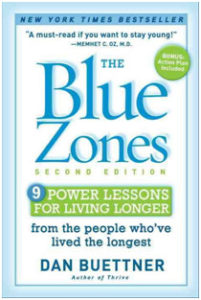
blue zonesThis brings me to the “Blue Zone” study. I have talked about it in a previous issue of “Health Tips From The Professor”. Let me give you the short version here.

Dan Buettner is a journalist who was fascinated by the topic of longevity. He identified five regions from around the world where an unusually high percentage of people lived into their 100s. He then put together a team of top scientists in the fields of demographics, social anthropology and statistics to study the characteristics of centenarians in each of these regions and got National Geographic to fund the study.

You can see his book on the left, and I will summarize the main conclusions of his study below. Of course, the most important question is how the information garnered from Maria Branyas compares with the conclusions of the “Blue Zone” study. I will indicate that below.

#1: They engage in moderate intensity exercise every day. The answer for Maria is a clear, “Yes”.

#2: They stop eating before they are full. We don’t know this for sure, but she did appear to be at ideal weight towards the end of her life.

#3: They eat a mostly plant-based diet. She ate a Mediterranean diet which qualifies.

#4: They have a libation with their meals. For Maria, this is a “No”.

#5: They have a purpose in their life. We have no information on this aspect of Maria’s life.

#6: They set aside time for relaxation with friends and family. Clearly, this was important for Maria. As old friends died off, she searched for new ones.

#7: They participate in a spiritual community. We have no information on this aspect of Maria’s life.

#8: They put family first. Clearly, family was very important to Maria.

#9: They surround themselves with communities that share their values. It also appears that this was important to Maria.

In short, in his study of Maria’s secrets to longevity Dr. Esteller approached the question of longevity from a different perspective than Dan Buettner. It is regrettable that he didn’t use the data accrued by the “Blue Zone” study as a starting point for his study. But it is clear that Maria epitomized many of the longevity characteristics identified in the “Blue Zone” study.

And, of course, Dr. Esteller’s expertise is human genetics, and he added important information about the importance of genetics, epigenetics, and our microbiome in influencing longevity.

The Bottom Line

The world’s oldest human recently died at age 117. Before she died, gave her doctor permission to study her and determine how she was able to live so long. In short, she asked her doctor to use her life to understand how to help other people live a long and healthy life.

That study has recently been published. The results showed:

  • Her lifestyle mirrored many of the lifestyle characteristics that were associated with longevity in the previous “Blue Zone” study of centenarians (people living to 100 and beyond).
  • This study also identified genetic, epigenetic, and microbiome factors associated with longevity

For more details about the study, read the article above.

These statements have not been evaluated by the Food and Drug Administration. This information is not intended to diagnose, treat, cure or prevent any disease.

_____________________________________________________________________________

My posts and “Health Tips From the Professor” articles carefully avoid claims about any brand of supplement or manufacturer of supplements. However, I am often asked by representatives of supplement companies if they can share them with their customers.

My answer is, “Yes, as long as you share only the article without any additions or alterations. In particular, you should avoid adding any mention of your company or your company’s products. If you were to do that, you could be making what the FTC and FDA consider a “misleading health claim” that could result in legal action against you and the company you represent.

For more detail about FTC regulations for health claims, see this link.

https://www.ftc.gov/business-guidance/resources/health-products-compliance-guidance

________________________________________________________________________

About The Author 

Dr. Chaney has a BS in Chemistry from Duke University and a PhD in Biochemistry from UCLA. He is Professor Emeritus from the University of North Carolina where he taught biochemistry and nutrition to medical and dental students for 40 years.

Dr. Chaney won numerous teaching awards at UNC, including the Academy of Educators “Excellence in Teaching Lifetime Achievement Award”.

Dr Chaney also ran an active cancer research program at UNC and published over 100 scientific articles and reviews in peer-reviewed scientific journals. In addition, he authored two chapters on nutrition in one of the leading biochemistry text books for medical students.

Since retiring from the University of North Carolina, he has been writing a weekly health blog called “Health Tips From the Professor”. He has also written two best-selling books, “Slaying the Food Myths” and “Slaying the Supplement Myths”. And most recently he has created an online lifestyle change course, “Create Your Personal Health Zone”. For more information visit https://chaneyhealth.com.

For the past 53 years Dr. Chaney and his wife Suzanne have been helping people improve their health holistically through a combination of good diet, exercise, weight control and appropriate supplementation.

 

Vitamin D Just Got More Complicated

The Hidden Flaws Of Vitamin D Studies

Author: Dr. Stephen Chaney

vitamin dIf I can paraphrase a famous saying, the question is, “To D or not to D.” On the one hand, you are told that vitamin D is a miracle supplement. It cures all your ailments. On the other hand, you are told that vitamin D supplements are worthless. They are a waste of money.

The problem is that vitamin D studies are all over the map. Some have shown beneficial effects of vitamin D supplementation. Others have come up empty. That allows “experts” to cherry pick the studies that support their bias. No wonder you are so confused.

If you have read my books or previous issues of “Health Tips From the Professor”, you know there is no such thing as a perfect clinical study. They all have their flaws. Sometimes the flaws are obvious. But sometimes we never know the flaws. We just know those studies are outliers.

So, let’s delve a little deeper into vitamin D metabolism and the hidden flaws that may have prevented some studies from showing the benefits of vitamin D supplementation. Then we will look at new data suggesting that vitamin D supplementation is more complicated than anyone imagined.

A Vitamin D Primer 

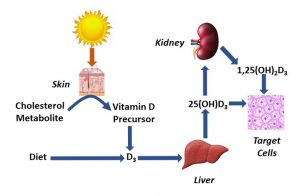
Vitamin D MetabolismLet’s start with a brief review of vitamin D metabolism.

  • Vitamin D metabolism starts in the skin when 7-dehydrocholesterol (a metabolite of cholesterol) is converted to cholecalciferol (vitamin D3) in a reaction requiring sunlight.
    • In this sense, vitamin D3 is a hormone produced by the body. It only became an essential nutrient (vitamin) when Homo sapiens migrated to Northern latitudes and started to spend most of their time indoors.
  • Vitamin D then travels to the liver where it is converted to 25-hydroxyvitamin D. This is the most abundant form of vitamin D in the blood.
  • 25-hydroxyvitamin D next travels to the kidney where it is converted to 1,25-dihydroxyvitamin D. This is the active form of vitamin D. It is the form that binds to the vitamin D receptor.

Vitamin D was first discovered as an essential nutrient that was needed for adequate bone mineralization. It prevented rickets in children and osteomalacia in adults.

  • The role of vitamin D in building strong bones is well established.

However, a few decades ago, it was discovered that vitamin D receptors were found in many other tissues including skin, immune system, heart, muscle, brain and nerves, and fat cells. This revolutionized our understanding of vitamin D’s role in the body.

  • This led to suggestions that vitamin D played a role in immunity and autoimmune diseases, brain function and mood, heart health, muscle and fat metabolism, and much more. Here is where it started to get confusing.
    • Some studies showed positive results. They found that vitamin D played an important role in each of these areas, and that vitamin D supplementation was beneficial
    • Other studies showed negative results. They found no benefit of vitamin D supplementation.

So, the question arose, “Were the negative studies flawed?” In some cases, the answer was a clear, “Yes”. The flaws were easy to identify. In other cases, no obvious flaw could be discovered.

However, that has changed dramatically in recent years when some “hidden flaws” were discovered that invalidated many of the negative studies. That’s the topic of my next section.

The Hidden Flaws Of Vitamin D Studies 

flawsMost previous studies simply measured vitamin D intake:

  • In dietary studies, vitamin D intake was measured using diet questionnaires.
  • In supplement studies, vitamin D intake was measured by tracking whether the participants took all the supplement pills they were provided.

It was assumed that a certain dose of vitamin D produced the same blood levels of 1,25-dihydroxyvitamin D in everyone.

Now we know that assumption was flawed. The absorption and conversion of vitamin D to 1,25-dihydroxyvitamin D varies widely from individual to individual.

That means that every vitamin D study that relied on vitamin D intake without measuring its effect on blood 1,25-dihydroxyvitamin D levels is flawed. Their conclusions may or may not be true. Their evidence is unreliable.

I’m willing to give the authors of these studies some grace. They didn’t purposely design a flawed study. At the time they designed their studies we didn’t know about individual variability in the conversion of vitamin D to 1,25-dihydroxyvitamin D.

However, there is another “hidden flaw” I’m less willing to excuse. There have been some recent papers that measured 1,25-dihydroxyvitamin D levels before and after supplementation and have concluded that vitamin D supplementation had no benefit.

However, they failed to mention that the group they were studying already had adequate 1,25-dihydroxyvitamin D levels in their blood prior to supplementation. Under those circumstances there is no reason to expect that vitamin D supplementation will have any significant benefit.

This is an obvious flaw. But I call it a “hidden flaw” because the authors hid it. They didn’t mention it in their abstract or conclusion.

That’s dishonest. Most people just read the abstract and conclusions, and that is the information that is shared in the media. Very few people read the study to see if the abstract and conclusions are accurate.

As if this weren’t complicated enough, our understanding of the effects of vitamin D just got a lot more complicated.

Vitamin D Just Got More Complicated

Clinical StudyTwo recent reports indicate that predicting who will benefit from vitamin D supplementation may be even more complicated than we thought.

Report #1 suggests that there is significant individual variability in how people respond to blood levels of 1,25-dihydroxyvitamin D. If true, this adds another level of complexity to studies of vitamin D supplementation.

  • Not only do the studies need to measure the 1,24-dihydroxyvitamin D levels before and after supplementation for everyone in the study.
  • But they would also need to measure the individual response to 1,25-dihydroxyvitamin D.

This report (C Carlberg and A Haq, Journal of Steroid Biochemistry & Molecular Biology, 175: 12-17, 2018) summarized the results of two clinical studies and used that information to develop what they called the, “Personal Vitamin D Response Index”.

  • The first study supplemented elderly men (average age = 71) for 5 months during the Finnish winter (when blood 1,25-dihydroxyvitamin D levels are lowest) with 0, 1600 IU, or 3200 IU per day.
  • The second study supplemented young (average age = 35) men and women with a single high dose of vitamin D (80,000 IU) and followed them for 30 days.

At the beginning and end of each study:

  • Blood levels of 1,25-dihydroxyvitamim D were measured.
  • The activity of 24 vitamin D-responsive genes was measured. (These are genes whose activity is controlled by a vitamin D receptor and whose activity was known to respond to vitamin D.)
  • In addition, more than 100 clinical and biochemical parameters that might be affected by vitamin D levels were measured. Of these, 12 were found to respond to vitamin D supplementation.

The authors of this report combined all 36 vitamin D-responsive biomarkers (24 genes and 12 biochemical parameters) into a single screening panel they called the “personal vitamin D response index” and correlated this index with the change in 25-dihydroxyvitamin D levels for each individual.

They discovered significant individual variability in how the subjects in these studies responded to increases in their 1,25-dihydroxyvitamin D levels. For example:

  • They were able to divide the study participants into low, mid, and high responders to an increase in 1,25-dihydroxyvitamin D levels.
    • In the first study 23.9% were low responders, 50.7% were mid responders, and 25.4% were high responders.
    • In the second study 28.6% were low responders, 31.4% were mid responders, and 40% were high responders.

This is a confounding variable for vitamin D studies because the authors of this report estimated:

  • Low responders might require 1,25-dihydroxyvitamin D blood levels of 75-100 nmol/L to see a benefit of supplementation. Most studies do not attain 1,25-dihydroxyvitamin D levels that high, so low responders would not appear to benefit from supplementation.
  • High responders may already experience optimal benefits of vitamin D at 1,25-dihydroxyvitamin D levels that are generally considered as inadequate. So, supplementation would offer no apparent benefit for this group either.
  • Only mid responders might be expected to show a clear benefit from vitamin D supplementation.

The authors concluded, “Individuals can be distinguished into high, mid, and low responders to vitamin D via measuring vitamin D sensitive molecular parameters…Thus, we suggest that the need for vitamin D supplementation depends on the vitamin D status relative to the personal vitamin D response index of an individual rather than on the vitamin D status alone.”

Report #2 (P Maissan and C Carlberg, Nutrients, 17, 1204, 2025) suggests that the benefits of vitamin D supplementation might vary depending on the time of day the supplement was taken.

This phenomenon is known as circadian rhythm, which describes how time influences physiological and behavioral processes. A little background information is in order.

  • We have a “biological clock” that is reset every day by sunlight exposure. Hormone levels rise and physiological processes increase and decrease during the day in response to this biological clock.
  • For the most part, you have no knowledge that this is going on in your body but let me share one example you are probably aware of.
    • Some people suffer from “seasonal affective disorder” (SAD). It is a type of depression associated with the winter months, especially in regions with short days and long nights. For these individuals, bright lights that mimic sunlight are often an effective therapy.
  • Some aspects of circadian rhythm are mediated by the pineal gland which produces melatonin. Others are affected by the hypothalamus.
  • Since vitamin D synthesis requires sunlight, it makes sense that some vitamin D-responsive genes would also display a circadian rhythm.

This report used the data from the single high-dose vitamin D study described above. They found that:

  • Of 361 known vitamin D responsive genes, 87 of them show a clear circadian rhythm.
  • For 14 of these genes, there was significant individual variability in the response to vitamin D supplementation.
    • Group 1 (36% of the population) had significantly higher expression of these genes following vitamin D supplementation than Group 2.

The authors concluded, “Overall, our findings emphasize the circadian nature of vitamin D target gene regulation and highlight interindividual variability in the…responses to vitamin D3 supplementation. These insights have important implications for personalized vitamin D3 supplementation strategies, suggesting that optimal dosing regimens may need to consider both circadian biology [the time of day the supplement is taken] and individual responsiveness to vitamin D.”

What Does This Mean For Clinical Studies?

Confusion Clinical StudiesThe latest reports explain why vitamin D studies are so confusing – why some studies show benefits of vitamin D supplementation and other studies come up empty. Simply put, it’s because vitamin D metabolism is so complicated. Let me walk you through the complications.

1) There is significant individual variability in the conversion of vitamin D to its active 1,25-dihydroxyvitamin D form.

  • If vitamin D supplementation does not increase 1,25-dihydroxyvitamin D levels into the adequate range, it is likely that the results will be negative – meaning no benefit of vitamin D supplementation will be observed.
  • If 1,25-dihydroxyvitamin D levels are already in the adequate range prior to supplementation, the results may also be negative.
  • Fortunately, it is easy to determine blood levels of 1,25-dihydroxyvitamin D in study participants, and most good vitamin D studies are starting to do that.

But vitamin D metabolism just got more complicated. If recent studies are correct:

2) There may be significant individual variability in the biological response to 1,25-dihydroxyvitamin D.

  • If someone is a low responder, supplementation at the usual levels of vitamin D is unlikely to result in high enough 1,25-dihydroxyvitamin D levels to give a response.
  • If someone is a high responder, they will probably have maxed out their response without supplementation, so adding a vitamin D supplement is unlikely to provide any benefit.
  • Sorting participants in clinical studies into low, mid, and high responders is possible, but not easy. Currently the process of sorting individuals into these categories is based on 26 biomarkers. There is no single biomarker that predicts the vitamin D response level for any individual.

3) There may be a circadian rhythm for some beneficial effects of vitamin D. If this observation is confirmed by future research, the time of day vitamin D supplements should be taken may be important.

What Does This Mean For You?

By this point, you are probably more confused than ever. So, let me sum it up for you.

  • Many benefits of vitamin D supplementation are unclear. Some studies show benefits. Others come up empty. “Experts” cherry pick studies that support their beliefs.
  • Vitamin D metabolism is complicated. And each new study appears to introduce a new layer of complexity onto our understanding of how vitamin D works.
  • Many of the negative vitamin D studies were done before we understood the complexities of vitamin D metabolism or did not take known complexities into account.
  • But just because many of the negative studies are flawed doesn’t mean all the claims for vitamin D supplementation are true. Every study has its flaws – both positive and negative studies.

So, here is my advice to you.

#1: Be a cautiously optimistic consumer.

  • If your doctor or some internet guru tells you vitamin D supplementation is worthless, don’t believe them. But also, don’t believe claims for miraculous cures with vitamin D supplements.
    • We have fairly strong evidence that vitamin D supports healthy bones, a strong immune system, strong muscles, and a healthy brain. If you discover any other benefits of vitamin D supplementation, consider them to be unexpected side benefits.

#2: Base your intake of vitamin D on your blood 1,25-dihydroxyvitamin D levels. The NIH says that 1,25-dihydroxyvitamin D levels of:

  • <30 nmol/L indicate vitamin D deficiency
  • 30 to <50 nmol/L indicate vitamin D insufficiency.
  • >50 nmol/L are adequate.
  • >125 nmol/L may be linked to adverse effects.

#3: Because you don’t know whether you are a low, mid, or high responder to 1,25-dihydroxyvitamin D, you may want to shoot for a 1,25-dihydroxyvitamin D level of somewhat greater than 50 nmol/L (the study said that low responders may need as much as 75-100 nmol/L).

  • Personally, I would aim for no more than 60-80 nmol/L because I would not want to risk vitamin D toxicity. I realize that 125 nmol/L is the lower limit set for toxicity, but I prefer to err on the side of caution.

#4: Be aware that there may be a circadian rhythm to the effectiveness of your vitamin D supplement.

  • Sunlight is required for synthesis of vitamin D. So, if there is a circadian rhythm to vitamin D effectiveness, vitamin D supplements might be more effective if taken in the morning than at night.

The Bottom Line

Why do so many studies on the benefits of vitamin D supplementation come up empty? Perhaps it’s because many investigators don’t understand the complexities of vitamin D metabolism. For example:

1) There is significant individual variability in the conversion of vitamin D to its active 1,25-dihydroxyvitamin D form.

  • This has been well characterized, and the best vitamin D studies are starting to incorporate 1,25-dihydroxyvitamin D measurements into their study design.

And recent studies have added to the complexity of vitamin D metabolism. Our understanding of vitamin D just got a lot more complicated. For example, these studies suggest that:

2) There may be significant individual variability in the biological response to 1,25-dihydroxyvitamin D levels.

3) There may be a circadian rhythm for some beneficial effects of vitamin D.

  • These observations have yet to be incorporated into clinical studies of vitamin D supplementation and may explain why some existing studies have failed to find beneficial effects of vitamin supplementation.

For more details on these studies and what they may mean for you, read the article above.

These statements have not been evaluated by the Food and Drug Administration. This information is not intended to diagnose, treat, cure or prevent any disease.

 _____________________________________________________________________________

My posts and “Health Tips From the Professor” articles carefully avoid claims about any brand of supplement or manufacturer of supplements. However, I am often asked by representatives of supplement companies if they can share them with their customers.

My answer is, “Yes, as long as you share only the article without any additions or alterations. In particular, you should avoid adding any mention of your company or your company’s products. If you were to do that, you could be making what the FTC and FDA consider a “misleading health claim” that could result in legal action against you and the company you represent.

For more detail about FTC regulations for health claims, see this link.

https://www.ftc.gov/business-guidance/resources/health-products-compliance-guidance

______________________________________________________________________

About The Author 

Dr. Chaney has a BS in Chemistry from Duke University and a PhD in Biochemistry from UCLA. He is Professor Emeritus from the University of North Carolina where he taught biochemistry and nutrition to medical and dental students for 40 years.

Dr. Chaney won numerous teaching awards at UNC, including the Academy of Educators “Excellence in Teaching Lifetime Achievement Award”.

Dr Chaney also ran an active cancer research program at UNC and published over 100 scientific articles and reviews in peer-reviewed scientific journals. In addition, he authored two chapters on nutrition in one of the leading biochemistry text books for medical students.

Since retiring from the University of North Carolina, he has been writing a weekly health blog called “Health Tips From the Professor”. He has also written two best-selling books, “Slaying the Food Myths” and “Slaying the Supplement Myths”. And most recently he has created an online lifestyle change course, “Create Your Personal Health Zone”. For more information visit https://chaneyhealth.com.

For the past 53 years Dr. Chaney and his wife Suzanne have been helping people improve their health holistically through a combination of good diet, exercise, weight control and appropriate supplementation.

 

Can Omega-3s Improve Weight Loss Diets?

The Unexpected Benefits of Omega-3s

Author: Dr. Stephen Chaney 

Weight LossOmega-3s have become the latest “super food”. Wherever you get your news, you are constantly seeing articles about the latest “miracle results” obtained by adding omega-3s to your diet.

There is good evidence that omega-3s:

  • Lower blood pressure.
  • Reduce triglycerides (fatty particles in your bloodstream).
  • Reduce chronic inflammation.
  • Slow the buildup of plaque in the arteries (which combined with lowering blood pressure, reducing triglycerides, and reducing inflammation likely lowers heart disease risk).
  • Reduce the risk of depression and anxiety.
  • Improve neurodevelopment (cognitive function, memory, and learning) in infants and children.
  • Reduce inflammation in joints.

In addition, omega-3s may:

  • Reduce the risk of cognitive decline and Alzheimer’s as we age.
  • Reduce the risk of arrhythmias (irregular heartbeats).
  • Protect against age-related macular degeneration.
  • Improve immune function.
  • Reduce the risk of certain cancers.
  • Improve blood sugar regulation.

Because obesity is associated with chronic inflammation and inflammation is associated with many of the health risks associated with obesity, the authors of the study I will be describing today (J Torres-Vanegas et al. Healthcare, 13:103, 2025) decided to look at the effect of supplementation with 1.8 grams of long-chain omega-3s (fish oil capsules) on the beneficial effects of a weight loss diet in a double-blind, placebo-controlled, 8 week study.

There were two interesting wrinkles to this study.

  • Previous studies have suggested that a 5:1 ratio of omega-6 fats to omega-3 fats is optimal for these effects, but the typical American has an omega-6 to omega-3 ratio of between 15:1 and 20:1. So, the authors designed their study so that participants achieved a 5:1 omega-6 to omega-3 ratio.
  • Because short-chain omega-3s (found in plant foods) have little effect on inflammation, they were used as the “active” placebo instead of omega-6 fats.
    • In short, both groups received an omega-3 supplement. The “intervention” group received long-chain omega-3s from fish oil, and the “placebo control” group received short-chain omega-3s from vegetable oils (chia and flaxseed oil).

[Note: Short-chain omega-3s have many health benefits. However, their conversion to long-chain omega-3s in the human body is very inefficient, and they do not have all the health benefits associated with long-chain omega-3s.]

How Was This Study Done?

clinical studyThe authors of this study enrolled 40 obese (BMI≥30) adults (40% females, 60% males), aged 30-50 in a randomized, active placebo-controlled, double-blind weight loss study for 8 weeks.

The estimated caloric expenditure was determined for each participant prior to the study. Based on that estimate calories were reduced by 200 calories/day for the first 4 weeks and 400 calories/day for weeks 5-8.

Dietitians designed a recipe book of 3 main meals and 2 snacks for each day. The diets were designed to achieve the caloric restriction described above and to achieve a 5:1 ratio of omega-6 to omega-3.

Participants completed a 3-day food frequency questionnaire including 2 weekdays and 1 weekend day at the start of the study and at week 8. Participants were guided in this by a dietitian using food models to help them assess portion sizes.

Half of the participants were given a long-chain omega-3 supplement containing 1080 mg of EPA plus 720 mg of DHA (1,800 mg total) from fish oil. The other half of the participants were given a short-chain omega-3 supplement consisting of 1,600 mg of ALA from chia and flaxseed oil. The dietary assessments showed that both groups were successful in achieving a 5:1 omega-6 to omega-3 ratio when the supplements were included in the calculation.

Can Omega-3s Improve Weight Loss Diets? 

InflammationBecause both groups had equal caloric restriction. Therefore, as expected, both groups experienced decreased:

  • Body weight.
  • BMI.
  • Percent body fat.
  • Total cholesterol.
  • Triglycerides.
  • VLDL.

However, when the scientists measured markers of inflammation, a different picture was observed.

  • IL-6 (Interleukin 6) and RvD1 (resolving D1) are inversely associated with inflammation (They increase when inflammation decreases).
    • IL-6 and RVD1 increased only in the group supplementing with long-chain omega-3s (EPA + DHA).
  • IL-10 and MCP-1 (monocyte chemoattractant protein-1) are directly associated with inflammation (They decrease when inflammation decreases).
    • IL-10 and MCP-1 decreased only in the group supplementing with long-chain omega-3s.
  • These differences were highly significant.

The authors concluded, “A diet supplemented with marine n-3 (long-chain omega-3s from fish oil) improves inflammatory markers by increasing systemic levels of Resolvin D1 and IL-10 and decreasing IL-6 and MCP-1.”

“These results could provide a guide for future nutritional intervention strategies aimed to…reduce chronic low-grade inflammation by considering the omega-6 to omega-3 ratio content as a necessary calculation for a proper diet.”

[I would note that both diets achieved an omega-6 to omega-3 ratio of 5:1, but only the diet containing long-chain omega-3s reduced inflammation. So, the author’s statement is only true for long-chain omega-3s.]

In short, weight loss is known to help reduce chronic inflammation. Both groups lost weight, but only the group supplementing with long-chain omega-3s had a significant improvement in inflammatory markers.

  • These data suggest that supplementation with long-chain omega-3s while on a weight loss diet greatly enhances the reduction in inflammation associated with weight loss.
  • These data also suggest that short-chain omega-3s do not significantly reduce inflammation.
  • Both findings are consistent with earlier studies.

The Unexpected Benefits Of Omega-3s 

The study also found that:

  • Abdominal obesity was reduced by 35% in the long-chain omega-3 group compared to 5.6% in the short-chain omega-3 group, and these differences were highly significant.
  • Weight loss for men in the long-chain omega-3 group was 9.25 pounds compared to 4.8 pounds in the short-chain omega-3 group, and these differences were significant.
  • Reductions in percent body fat and waist circumference were also greater for men in the long-chain omega-3 group, but these differences were not statistically significant in this small study.

In short, these data suggest that long-chain omega-3 supplementation may have enhanced weight loss. This is an intriguing finding that needs to be confirmed by future studies.

What Does This Study Mean For You? 

Question MarkThis study is a randomized, double-blind, placebo-controlled trial, which is the gold standard for clinical studies. But it is also a very small study, so we need to carefully consider the validity of the study.

It had three major findings.

#1: Omega-3s enhance the anti-inflammatory effect of weight loss diets.

#2: This effect is only seen for the long-chain omega-3s EPA and DHA found in fish oil. The short-chain omega-3 ALA found in vegetable oils and other plant foods had no significant effect on inflammation.

The anti-inflammatory effect of long-chain omega-3s and the lack of an effect of short-chain omega-3s on inflammation are consistent with many previous studies. The only novel aspect of this study was the finding that the same effects occurred when omega-3 supplementation was added to a weight loss diet.

That is an important consideration because many weight loss diets focus on plant foods or red meats. Fish are often missing from the diet plan and long-chain omega-3 supplementation is seldom recommended.

That’s unfortunate because chronic inflammation is associated with obesity. And chronic inflammation increases the risk of heart disease, diabetes, cancer, and all the “itis” diseases. Omega-3 supplementation should be an important part of any weight loss diet.

#3: This study also suggests that long-chain omega-3 supplementation may increase the effectiveness of weight loss diets.

At this point I consider this finding as possible, but not probable. Previous studies have reported conflicting results. Some studies have suggested omega-3s aid weight loss. Others have found no effect.

We need many more studies before I would be ready to recommend omega-3 supplementation as an aid to weight loss. However, omega-3s have many proven benefits. If they also happen to make weight loss diets more effective, this would be an unexpected benefit.

The Bottom Line 

A recent study looked at the effect of omega-3 supplementation during a weight loss diet. The study had three main findings.

#1: Omega-3 supplementation enhances the anti-inflammatory effect of weight loss diets.

#2: This effect is only seen for the long-chain omega-3s EPA and DHA found in fish oil. The short-chain omega-3 ALA found in vegetable oils and other plant foods had no significant effect on inflammation.

#3: This study also suggests that long-chain omega-3 supplementation may increase the effectiveness of weight loss diets.

For more information on this study and what it means for you, read the article above.

These statements have not been evaluated by the Food and Drug Administration. This information is not intended to diagnose, treat, cure or prevent any disease.

____________________________________________________________________________

My posts and “Health Tips From the Professor” articles carefully avoid claims about any brand of supplement or manufacturer of supplements. However, I am often asked by representatives of supplement companies if they can share them with their customers.

My answer is, “Yes, as long as you share only the article without any additions or alterations. In particular, you should avoid adding any mention of your company or your company’s products. If you were to do that, you could be making what the FTC and FDA consider a “misleading health claim” that could result in legal action against you and the company you represent.

For more detail about FTC regulations for health claims, see this link.

https://www.ftc.gov/business-guidance/resources/health-products-compliance-guidance

 ____________________________________________________________________

About The Author 

Dr. Chaney has a BS in Chemistry from Duke University and a PhD in Biochemistry from UCLA. He is Professor Emeritus from the University of North Carolina where he taught biochemistry and nutrition to medical and dental students for 40 years.

Dr. Chaney won numerous teaching awards at UNC, including the Academy of Educators “Excellence in Teaching Lifetime Achievement Award”.

Dr Chaney also ran an active cancer research program at UNC and published over 100 scientific articles and reviews in peer-reviewed scientific journals. In addition, he authored two chapters on nutrition in one of the leading biochemistry text books for medical students.

Since retiring from the University of North Carolina, he has been writing a weekly health blog called “Health Tips From the Professor”. He has also written two best-selling books, “Slaying the Food Myths” and “Slaying the Supplement Myths”. And most recently he has created an online lifestyle change course, “Create Your Personal Health Zone”. For more information visit https://chaneyhealth.com.

For the past 53 years Dr. Chaney and his wife Suzanne have been helping people improve their health holistically through a combination of good diet, exercise, weight control and appropriate supplementation.

 

Can Red Meat Be Good For You?

Everything You Wanted To Know About Red Meat 

Author: Dr. Stephen Chaney 

ArgumentNutrition is a bit like politics and religion. Everyone has an opinion, and there is not much grace for those with different opinions.

And everything is black or white. There is no middle ground. Red meat is a perfect example. Cardiologists tell us the saturated fat and cholesterol in red meat increases our risk of heart disease. Oncologists tell us red meat increases our risk of colon, breast, prostate, and pancreatic cancer.

The association with red meat consumption and colon cancer is so strong that the World Health Organization has classified red meat as a probable carcinogen.

  • Vegans and vegetarians tell you to avoid red meat at all costs and substitute plant proteins in its place.
  • Keto and carnivore diet enthusiasts tell you that red meat is healthy if you avoid any plant foods containing carbohydrates (which is most plant foods).

Who is right? Is red meat good for you or bad for you? As usual, the answer is somewhere in the middle. We also need to stop looking at individual foods and start looking at the overall diet. We need to ask how our overall diet alters the effect of red meat on our health.

But first, let’s explore:

  • Why red meat is good for us.
  • Why red meat is bad for us.
  • How diet can help us minimize the bad and maximize the good.

I call this section, “Everything You Wanted To Know About Red Meat”.

Everything You Wanted To Know About Red Meat

thumbs upWhy Red Meat Is Good For Us.

  • Red meat is an excellent source of protein, iron, and vitamin B12. Plus, the iron in red meat is primarily found in the heme molecule and heme iron is absorbed much more efficiently than other forms of iron.
  • Red meat contains creatine, which powers our muscles. You can think of creatine molecules as little power packs that are charged when we eat and release a burst of energy whenever we begin to exercise.
  • Red meat contains carnitine, which helps our muscles use fat as an energy source. This is particularly important for heart muscle.
  • But both creatine and carnitine also have a dark side, which I will discuss below.

Why Red Meat Is Bad For Us.thumbs down

When we think about heart disease:

  • The traditional view is that saturated fat and cholesterol are the problem, and we can reduce our risk of heart disease simply by choosing leaner cuts of meat.
  • Other experts feel the link between red meat and heart disease is more complicated. For example, some recent studies have suggested that the carnitine in red meat can be converted by gut bacteria to TMAO, and TMAO increases our risk of heart disease. I have discussed this in a previous issue of “Health Tips From the Professor”.

SteakWhen we think about cancer:

  • When fat and juices from the meat drip onto an open flame, carcinogenic polyaromatic hydrocarbons are formed that stick to the surface of the This can be reduced, but not eliminated, by lower fat meat choices.
  • When red meat is cooked at high temperatures, amino acids in the meat combine with creatine, which is found in all red meats, to form carcinogenic heterocyclic amines. This can be reduced, but not eliminated, by cooking the meat at lower
  • The nitrates and nitrites used as preservatives in many processed meats react with amino acids from the meat to form carcinogenic N-nitrosamines in our intestines.
  • Heme iron, which is found in all red meats, also combines with amino acids in the meat to form carcinogenic N-nitroso compounds in our intestines. This mechanism is inherent in all red meats and cannot be eliminated by choosing lower fat cuts or cooking at lower

Finally, diets high in red meat increase several markers of inflammation, and inflammation increases the risk of both heart disease and cancer.

How Can Diet Help Us Minimize The Bad And Maximize The Good?

Question MarkI’m going to start this section with a provocative statement: “Plant foods are the antidote to all the bad effects of red meat.” Let me explain.

Plant foods are an excellent source of:

  • Antioxidants
  • Polyphenols and other phytonutrients
  • Fiber
  • Plus, the fiber and phytonutrients found in plant foods support the growth of beneficial gut bacteria.

Here is where it gets very complex:

  • Beneficial gut bacteria convert some of the foods we eat into compounds that are absorbed into the bloodstream and improve blood sugar control, reduce cholesterol synthesis, and reduce inflammation.
  • Polyphenols support the growth of certain gut bacteria, and those gut bacteria can convert these polyphenols into compounds that can be absorbed from the intestine. This necessary for many polyphenols to exert their beneficial effects in the body.
  • And, as you might expect, the gut bacteria of meat eaters and vegetarians is very different.

With this in mind, let’s come back to the concept of plant foods being the antidote for red meat.

strong heartIn terms of heart health,

  • You may remember that I said above that the carnitine in red meat can be converted by gut bacteria into TMAO which increases the risk of heart disease. The operative wording here is “can be”. It turns out this only happens with the gut bacteria of habitual meat eaters. Here is the study that showed that:
    • When habitual meat eaters were fed an 8-ounce sirloin steak, both carnitine and TMAO increased in their blood and urine.
    • When vegans were fed the same 8-ounce steak, only carnitine increased. No TMAO was detected.
    • When the meat eaters were treated with an antibiotic that wiped out their gut bacteria prior to eating the steak, no TMAO was detected. This showed it was the gut bacteria in the meat eaters that were responsible for converting carnitine to TMAO.
  • Fiber from whole grains, fruits, and vegetables binds to cholesterol and flushes it out of the intestine, preventing its absorption into the bloodstream.
  • Plant-based diets are anti-inflammatory.

CancerIn terms of cancer,

  • The fiber found in fruits, vegetables and whole grains binds to polyaromatic hydrocarbons and heterocyclic amines and flushes them out through the intestines.
  • Polyaromatic hydrocarbons require activation by the liver before they become carcinogenic. Indoles and isothiocyanates found in broccoli, cabbage, and other cruciferous vegetables inhibit the enzymes that catalyze this activation.
  • Antioxidants found in fruits, vegetables and whole grains reduce the formation of N-nitroso compounds in the intestines.
  • A largely plant-based diet appears to favor a population of intestinal bacteria that is less likely to convert compounds in meat into cancer-causing chemicals. [Note: This is a new area of research, so the data supporting this mechanism of cancer prevention are less definitive than for the other three ]

These observations are based studies designed to identify the mechanisms by which plant-based diets negate the bad effects of red meat. For example, let me share a recent study (T Onali et al, Journal of Nutritional Biochemistry, 141, 109906, 2025) asking whether berries could negate the bad effects of adding red meat (pork) to a typical Finnish diet.

How Was This Study Done?

Clinical StudyThis study was conducted by a group of scientists at the University of Helsinki. They recruited 43 adults aged 20-68 and divided them into two groups. Each group was told to continue with their regular diet, except that consumption of any red meat or berries other than the foods they were provided with was prohibited.

  • Each group was given an extra 5 ounces of pork (minced pork, pulled pork, pork strips from fillet, cold cuts, sausages, and bacon) to eat each day.
  • One group was also given 1 cup of berries (bilberries, strawberries, cloudberries, raspberries, lingonberries, and blackcurrant) to eat each day.
    • Note: These are the foods most familiar to people from Finland in each category.
  • They were provided with these foods on a weekly basis.
  • This intervention portion of the study lasted four weeks.

Dietary intake was assessed in each group using 3-day food records (two weekdays and one weekend day) at the beginning and the end of the study.

Participants in the study collected stool samples on two consecutive days at the beginning and end of the study. These stool samples were analyzed in the following ways:

  • Bacterial DNA was extracted from the stool samples and used to determine which gut bacteria were present in the stools.
  • The stool samples were homogenized and filtered to:
    • Determine the polyphenols and polyphenol metabolites present in the stool samples.
    • Determine whether low molecular weight compounds present in the stool samples were able to inhibit the growth of human colon cancer cells in cell culture.

What Did The Study Show?

Questioning WomanThe dietary analysis found that total calories, protein, carbohydrate, fat, and saturated fat did not change significantly in either group. This indicates that the study participants likely substituted the pork they were given for other high-fat meats they were eating before the study.

However, in the group that was also given berries fiber, vitamin C, vitamin E, manganese, and several polyphenols increased significantly. This suggests that study participants likely substituted the berries for less healthy foods they were eating before the study.

The study found that:

  • In the red meat-only group the relative abundance of beneficial Roseburia and Fecalibacterium gut bacteria was decreased. This did not occur in the red meat + berries group.
  • In the red meat + berries group the concentration of several beneficial polyphenols and polyphenol metabolites was increased.
  • In the red meat + berries group, the filtrate obtained from stool samples inhibited the growth of several human colon cancer cell lines in cell culture experiments. These experiments did not identify which berry polyphenols were responsible for inhibiting the growth of cancer cells. It also did not determine whether the polyphenols came directly from the berries or were created when gut bacteria modified the polyphenol(s).

But these experiments did show that something from a high berry diet inhibited colon cancer cell growth.

The author’s concluded, “Berry supplementation to a diet high in red and processed meat led to berry-derived polyphenolic metabolites in the feces, beneficially modified gut microbiota, inhibited the viability of colon cancer cells, collectively suggesting potential in cancer prevention.

The difference seen in gut metabolism was probably induced by the higher intakes of dietary fiber, vitamin C and E, manganese, and polyphenols by the berry diet.”

Can Red Meat Be Good For You?

This study is one piece of the puzzle to help us understand the effect of diet on the benefits and risks of red meat consumption. Here is what I mean by that.

We can think of scientific investigations in terms of solving a large puzzle with lots of little pieces. If you are a puzzle enthusiast, you know the best way to solve a complicated puzzle is to put the edge pieces together first and then fill in the rest of the puzzle.

In this context, the studies showing that small amounts of red meat are not harmful in the context of healthy, primarily plant-based diets like the DASH and Mediterranean diets are the edge of the puzzle. Smaller studies that define the mechanisms of this effect and provide proof these mechanisms are accurate are the interior pieces that fill out the puzzle. This study is one of those interior pieces.

So, what does that mean for you? It means that diet context is important.

Most of the studies showing the bad effects of red meat have been done in the context of the typical American diet. That might consist of an 8 or 12-ounce steak with fries and either a soft drink or iced tea. Fruits and vegetables, if present at all, are minimal. Dessert usually consists of some sugary treats.

In this context, red meat is bad for you.

In contrast, consider the place red meat occupies in a primarily plant-based diet. Red meat becomes a condiment rather than the main course. Think of 2-3 ounces of red meat as part of a green salad or stir fry with a variety of greens and other vegetables. You might have beans, whole grains, or another vegetable to round out your plate. Dessert would be whatever fruit is in season. And your beverage might be water, milk, or herbal tea.

In this context, the bad effects of red meat disappear. In short, there are no bad foods, only bad diets.

I started this blog with the question, “Can red meat be good for you?”  You may be wondering if I have answered that question.

At the beginning of this article, I listed the good things about red meat, namely that it is a good source of protein, iron, vitamin B12, carnitine, and creatine.

If you remove the bad, only the good remains. So, the answer is, “Yes. In the right diet context red meat can be good for you”.

The Bottom Line

You have heard that red meat is bad for you. It increases your risk of heart disease and cancer. You should avoid it at all costs.

But is that true? In the article above I:

  • Describe both the benefits and risks of red meat.
  • Discuss how plant foods negate many of the bad effects of red meat.
  • Share a study providing proof of that concept.
  • Share how you can enjoy the benefits of red meat while avoiding the bad effects of red meat consumption.

For more details read the article above.

These statements have not been evaluated by the Food and Drug Administration. This information is not intended to diagnose, treat, cure or prevent any disease.

______________________________________________________________________________

My posts and “Health Tips From the Professor” articles carefully avoid claims about any brand of supplement or manufacturer of supplements. However, I am often asked by representatives of supplement companies if they can share them with their customers.

My answer is, “Yes, as long as you share only the article without any additions or alterations. In particular, you should avoid adding any mention of your company or your company’s products. If you were to do that, you could be making what the FTC and FDA consider a “misleading health claim” that could result in legal action against you and the company you represent.

For more detail about FTC regulations for health claims, see this link.

https://www.ftc.gov/business-guidance/resources/health-products-compliance-guidance

______________________________________________________________________

About The Author 

Dr. Chaney has a BS in Chemistry from Duke University and a PhD in Biochemistry from UCLA. He is Professor Emeritus from the University of North Carolina where he taught biochemistry and nutrition to medical and dental students for 40 years.

Dr. Chaney won numerous teaching awards at UNC, including the Academy of Educators “Excellence in Teaching Lifetime Achievement Award”.

Dr Chaney also ran an active cancer research program at UNC and published over 100 scientific articles and reviews in peer-reviewed scientific journals. In addition, he authored two chapters on nutrition in one of the leading biochemistry text books for medical students.

Since retiring from the University of North Carolina, he has been writing a weekly health blog called “Health Tips From the Professor”. He has also written two best-selling books, “Slaying the Food Myths” and “Slaying the Supplement Myths”. And most recently he has created an online lifestyle change course, “Create Your Personal Health Zone”. For more information visit https://chaneyhealth.com.

For the past 45 years Dr. Chaney and his wife Suzanne have been helping people improve their health holistically through a combination of good diet, exercise, weight control and appropriate supplementation.

The Estrogenic Myth

What Does Increase Breast Cancer Risk? 

Author: Dr. Stephen Chaney 

breaking newsIt seems like every time you turn around there are new headlines warning us that a particular food or supplement increases your risk of cancer. If you believe all those headlines, there would be little you could eat. You might starve to death trying to avoid eating anything that increases your risk of cancer.

So, it’s important to ask which of those warnings are true and which are just myths.

For example, a few days ago, a friend called me and said, “I just heard that resveratrol is estrogenic and causes breast cancer. Should I read the labels of the herbal supplements I take and avoid anything with resveratrol in it.”

I assured her that this was just a myth. The likelihood that resveratrol and related polyphenols cause breast cancer is very low. And if she was concerned about breast cancer, there were much more important things to worry about.

But as I started to explain why it was a myth, I realized the explanation was complex. I was able to explain it to my friend in a 20-minute discussion. But it was then I realized I needed to write a “Health Tips From the Professor” article to help explain it to the general public.

Why Are We Concerned?

Questioning WomanYou might be asking, “Why is this such a big deal? Why do we care if something has estrogenic properties?” Let me start at the beginning.

When I first started teaching medical students in 1972, hormone replacement therapy (a combination of estrogen and progesterone) was thought to be a safe and effective treatment for menopausal symptoms and post-menopausal bone loss, and it was very widely prescribed.

That practice came to a screeching halt in 2002 when the Woman’s Health Initiative study showed that it increased the risk of breast, endometrial, and ovarian cancer. Today,

  • The hormone composition of hormone replacement therapy has been changed.
  • It is only prescribed for severe menopausal symptoms. And drugs are the treatment of choice to reduce post-menopausal bone loss.
  • It is prescribed for the shortest possible time to limit exposure.

These simple changes in hormone replacement therapy represent the single most important intervention for reducing breast cancer risk in the past 50 years. Yes, you heard that right. These changes were more effective than any other medication or preventative strategy for reducing the number of women developing and dying from breast cancer.

This lesson made a big impression on the medical community. So, it is easy to understand why anything resembling estrogen is immediately suspected of increasing the risk of breast cancer. But the reality is far more complicated. So, it’s time for another of my “Biochemistry 101” segments.

Biochemistry 101: What Does Estrogenic Mean?

professor owlLet’s start at the beginning with what polyphenols are. They comprise a diverse group of compounds with these common features.

  • If you look at their structures, they contain multiple rings (A chemist would tell you they have more than one phenol group, hence the term polyphenol. But that terminology is only useful if you are a chemist).
  • They are found in plants. Specifically, they are found in fruits, vegetables, herbs, spices and beverages (coffee, tea, and cocoa, for example).
  • They have antioxidant properties.

Types of polyphenols include flavonoids, phenolic acids, lignans, and stilbenes. I mention this only because soy isoflavones, which I will talk about later, are flavonoids.

Some of these compounds have structures that resemble estrogen. If they bind to estrogen receptors and have the same effect as estrogen in cultured human cells, they are said to have “estrogenic properties”.

That’s why you see blogs warning about foods and herbal ingredients we should avoid because of their “estrogenic” properties. Some of these blogs are written by people with “Dr” on front of their name. But they aren’t biochemists and don’t know what biochemists know.

Let’s dig a little deeper. Here are some of the complexities that most bloggers either don’t know about or ignore.

  • There is more than one kind of estrogen receptor.
  • Different estrogen receptors have different effects in the cell. For example, some estrogen receptors activate pathways that increase cancer risk. Other receptors activate pathways that decrease cancer risk.
  • The same estrogen receptor can have different effects in different cell types. That’s why estrogen replacement therapy reduced menopausal symptoms and post-menopausal bone loss AND increased cancer risk in other tissues.

The Estrogenic Myth

breast cancerA couple of weeks ago I talked about “The Soy Myth”, specifically the myth that soy isoflavones increase breast cancer risk. That myth was based on the observation that soy isoflavones have estrogenic properties and a simplistic interpretation of what that means. But in fact, soy isoflavones:

  • Are found naturally in most soy foods unless they are highly processed.
  • Bind strongly to the estrogen receptors that decrease cancer risk.
  • Bind weakly to the estrogen receptors that increase breast cancer risk.

In contrast, estrogen:

  • Binds strongly to the estrogen receptors that increase breast cancer risk.
  • Binds weakly to the estrogen receptors that decrease breast cancer risk.
  • Soy isoflavones compete with estrogen for binding to the receptors that increase breast cancer risks. This helps protect breast cells from the cancer-promoting effects of estrogen.

So, it is true that soy isoflavones bind to estrogen receptors, but on the balance, you would predict that soy isoflavones decrease, rather than increase breast cancer risk.

The key word here is “predict” breast cancer risk. If you are a woman, you don’t want a prediction, you want to know one way or the other.

That’s why multiple human clinical studies have been conducted to determine the effect of soy foods on breast cancer risk. As I told you two weeks ago:

  • Some studies showed no effect of soy consumption on the risk of getting breast cancer or breast cancer recurrence if you have previously had breast cancer.
  • Other studies found that soy consumption reduced the risk of breast cancer occurrence and recurrence.
  • No studies found that soy consumption increased the risk of breast cancer occurrence or recurrence.

So, for soy the answers are clear.

  • Yes, soy isoflavones have estrogenic properties. That is a fact.
  • No, soy consumption is not associated with an increased risk of breast cancer. That is a myth.

grape polyphenolsThe situation with resveratrol is similar:

  • It is found naturally in grapes and many other fruits.
  • It has estrogenic properties.
  • Cell culture experiments show that it activates pathways that reduce cancer risk.
  • Animal studies predominantly show that it reduces cancer risk. The only exceptions are a few animal studies with very high doses of resveratrol.
  • The few clinical studies that have been done show that it either has no effect on breast cancer risk or reduces cancer risk.
  • No human clinical trials have shown that resveratrol increases cancer risk.

The take home lesson is clear. Knowing that a food or herbal ingredient has estrogenic properties is meaningless unless you have data from human clinical trials on cancer outcomes.

So, the next time you see headlines telling you that you should avoid a food or herbal ingredient because it has “estrogenic properties” treat them skeptically. Unless the claim is backed up by human clinical trials showing an increased cancer risk, the claim is probably a myth.

What Does Increase Breast Cancer Risk?

American Cancer SocietyThe take home lesson is clear. If you are concerned about your risk of breast cancer or any other form of cancer you should ignore the social media posts, podcasts, and blogs about the cancer risks of estrogenic foods and herbal ingredients.

Unless they are backed by human clinical trials showing they increase cancer risks, the claims are likely to be mythical rather than real.

If they have any effect on cancer risk, it is likely to be small. Instead, focus on the important risk factors.

According to the American Cancer Society, the top 5 risk factor for breast cancer, and most other cancers, are:

#1: Overweight and obesity. The American Cancer Society recommends that you get and stay at a healthy weight.

Let me put this in perspective for you. Even if things like soy and resveratrol increased your risk of breast cancer, their effect is very small compared to estrogen and you are only exposed to them briefly once or twice a day.

In contrast, fat cells produce estrogen, and if you are overweight, fat cells accumulate in your breasts. Those fat cells are bathing your breast cells in a bath of pure estrogen 24/7.

#2: Inactivity. The American Cancer Society recommends that adults get at least 150 to 300 minutes of moderate intensity or 75 to 150 minutes of vigorous intensity activity each week (or a combination of these), preferably spread throughout the week.

#3: Alcohol use. The American Cancer Society says it is best not to drink alcohol at all. For women who do drink, they should have no more than 1 alcoholic drink a day.

#4: Hormone use after menopause. The American Cancer Society recommends talking to your health care provider about non-hormonal options to treat menopausal symptoms.

#5: Poor diet. The American Cancer Society recommends a diet low in fat, processed and red meat, and sugary drinks, but high in fruits and vegetables.

The Bottom Line 

It seems like every day you hear about another food or supplement you should avoid because it has “estrogenic properties” and is likely to cause cancer. I call this the estrogenic myth because those claims are generally mythological rather than factual. In this article:

  • I discuss why these claims are myths rather than facts using soy isoflavones and resveratrol as examples.
  • Tell you what the American Cancer Society tells you to focus on if you want to decrease your risk of breast cancer and other cancers.

For more details on these studies and what they mean for you, read the article above.

These statements have not been evaluated by the Food and Drug Administration. This information is not intended to diagnose, treat, cure, or prevent any disease.

 ____________________________________________________________________________

My posts and “Health Tips From the Professor” articles carefully avoid claims about any brand of supplement or manufacturer of supplements. However, I am often asked by representatives of supplement companies if they can share them with their customers.

My answer is, “Yes, as long as you share only the article without any additions or alterations. In particular, you should avoid adding any mention of your company or your company’s products. If you were to do that, you could be making what the FTC and FDA consider a “misleading health claim” that could result in legal action against you and the company you represent.

For more detail about FTC regulations for health claims, see this link.

https://www.ftc.gov/business-guidance/resources/health-products-compliance-guidance

 ______________________________________________________________________

About The Author 

Dr. Chaney has a BS in Chemistry from Duke University and a PhD in Biochemistry from UCLA. He is Professor Emeritus from the University of North Carolina where he taught biochemistry and nutrition to medical and dental students for 40 years.  Dr. Chaney won numerous teaching awards at UNC, including the Academy of Educators “Excellence in Teaching Lifetime Achievement Award”. Dr Chaney also ran an active cancer research program at UNC and published over 100 scientific articles and reviews in peer-reviewed scientific journals. In addition, he authored two chapters on nutrition in one of the leading Biochemistry textbooks for medical students.

Since retiring from the University of North Carolina, he has been writing a weekly health blog called “Health Tips From the Professor”. He has also written two best-selling books, “Slaying the Food Myths” and “Slaying the Supplement Myths”. And most recently he has created an online lifestyle change course, “Create Your Personal Health Zone”. For more information visit https://chaneyhealth.com.

For the past 53 years Dr. Chaney and his wife Suzanne have been helping people improve their health holistically through a combination of good diet, exercise, weight control and appropriate supplementation.

Can Processed Foods Cause Dementia?

A Holistic Approach For Preventing Dementia

Author: Dr. Stephen Chaney

Cognitive-DeclineYou already know that processed foods are not your friend. In previous issues of “Health Tips From the Professor” I have covered the linkage between processed food consumption and obesity, diabetes, heart disease, cancer, stroke, and premature death.

I have also covered the linkage between processed food consumption and mood, particularly anxiety and depression.

If you want to read some of those articles, just go to https://chaneyhealth.com/healthtips/ and put processed foods in the search box.

But what if they also affect cognition? What if they increase your risk of dementia?

Of all the diseases associated with aging, dementia is perhaps the scariest. What use is it to reach your “golden years” if you can’t recognize friends and family, you lose your precious memories, and you cannot perform the most basic functions for yourself.

That’s why I found the study (H Li et al, Neurology, 99(10)e1056-e1066, 2022) I am discussing today so interesting. It looks at the association of ultraprocessed food consumption and dementia.

I realized that “ultraprocessed food” is not a familiar term for most of you. So, before I discuss the article, I will describe how scientists define ultraprocessed food.

What Are Ultraprocessed Foods? 

Before I proceed with describing the findings of this study, I should probably contrast the common definition of processed foods with the current scientific definition of ultraprocessed foods.

The scientific community has recently developed something called “The NOVA food classification system” to describe the various levels of food processing.

The NOVA system categorizes foods into four groups according to the extent of processing they have undergone:

#1: Unprocessed or minimally processed foods.

  • This category includes foods like fruit, vegetables, milk, and meat.

#2: Processed culinary ingredients.

  • This category includes foods you might find in restaurants or prepare yourself to which things like sugar, vegetable oils, butter, or cream were added in the preparation.

#3: Processed foods.

  • This category includes foods like canned vegetables, freshly made breads, and cheeses.

#4: Ultraprocessed foods.

  • This category includes foods like soft drinks, chips, packaged snacks, most breakfast cereals, chicken nuggets & fish sticks, fast food burgers, hot dogs, and other processed meats.

The actual list is much longer, but you get the idea. What we call processed foods; scientists call ultraprocessed foods. Since the term “ultraprocessed foods” has not yet entered the popular vocabulary, I will use the term “processed foods” in describing the results of this study because it is more understandable to the average reader.

How Was This Study Done? 

clinical studyThe authors used information from the UK Biobank Study. The UK Biobank Study enrolled 500,000 people from England, Scotland, and Wales between 2006-2010 and has followed them continuously until the present. The participants were aged 40-69 on enrollment. The UK Biobank study collects health, lifestyle, environmental, and biological data from participants and makes the data available for studies such as this one.

This study included 72,083 participants from the UK Biobank study who:

  • Were 55 years or older on enrollment.
  • Were free from dementia on enrollment.
  • Had completed at least two 24-hour dietary assessments during the study.

The participants were followed for an average of 10 years.

Newly diagnosed cases of dementia were obtained through electronic linkages to hospital and mortality records (Yes, Big Brother is watching, especially in countries like England).

Ultraprocessed food intake (defined as described above) was determined from the 24-hour dietary recalls. Participants were divided into quartiles (4 groups) based on the amount of ultraprocessed foods in their diet.

The study measured the association between ultraprocessed food consumption and dementia. The data were statistically corrected for other lifestyle factors that affect cognition, such as age, sex, family history, and obesity.

As I said above, since the term “ultraprocessed foods” has not yet entered the popular vocabulary, I will use the term “processed foods” in describing the results of this study because it is more understandable to the average reader.

Can Processed Foods Cause Dementia? 

Dementia-WomanThe results were striking:

For every 10% increase in calories from processed foods, the risk of:

  • Dementia from all causes increased by 25%.
  • Alzheimer’s disease increased by 14%.
  • Vascular dementia (dementia caused by a blood clot or brain bleed) increased by 29%.

When they compared those in the highest quartile of processed food consumption with those in the lowest quartile:

  • The risk of dementia from all causes increased by 51%.

The only good news from the study was that replacing 10% calories from processed food with an equal proportion of unprocessed or minimally processed foods decreased the risk of dementia by 19%.

The authors hypothesized that the increase in dementia caused by processed foods could be due to:

  • Displacement from the diet of whole, unprocessed foods that have been shown to decrease dementia risk.
  • The high sodium content of processed foods can cause hypertension, which decreases cerebral blood flow and has been shown to increase the risk of dementia.
  • Diets high in processed foods promote systemic inflammation, which accelerates neurodegeneration and increases the risk of dementia.
  • Processed foods contain food additives and molecules formed during processing which have been shown to have negative effects on cognition and memory.

The authors concluded, “[Our study shows]…higher consumption of ultraprocessed foods was associated with higher risk of dementia, and substituting unprocessed or minimally processed foods for ultraprocessed foods was associated with a lower risk of dementia.”

What Does This Study Mean For You?

QuestionsYou already know that a diet high in processed foods:

  • Is associated with obesity.
    • Increases your risk of:
    • Diabetes
    • Heart Disease
    • Cancer
    • High Blood Pressure
    • Stroke
    • Premature death
  • Can increase your risk of anxiety and depression.

Their effect on dementia is just one more reason to do away with processed foods and replace them with whole, unprocessed foods.

But that is a tall order for most Americans who get 55% of their calories from processed foods. It is difficult to make wholesale changes in your diet, so I will leave you a bit of good news.

The authors reported that even minor improvements in diet could have beneficial effects. For example:

  • Replacing as little as 50 grams of processed food with 50 grams of unprocessed foods (equivalent to half an apple, a serving of corn, or a bowl of bran cereal) decreases your risk of dementia by 3%.

That may not seem like much. But what if you make that change in month one? Then in month 2 replace another 50 grams of processed food with unprocessed food and keep repeating that process month after month. At the end of a year:

  • You would have decreased your risk of dementia by 36%.
  • You may have lost weight without going on a restrictive weight loss diet.
  • You would have significantly decreased your risk of diabetes, heart disease, cancer, and several other diseases.
  • You might even be calmer and happier.

A Holistic Approach For Preventing Dementia

Of course, for best results you want to do more than just avoid processed foods. A holistic approach is best.

  • Eat a healthy diet.
    • As the study suggested, replace processed foods with whole, unprocessed fruits, vegetables, fish, nuts, legumes, and low-fat dairy.
    • Red meats and unprocessed foods high in saturated fat are better than highly processed foods, but they are not optimal.
    • As for specific diets, the Mediterranean, DASH, and MIND diets are backed by clinical studies showing that they slow cognitive decline and reduce dementia risk.
  • Get plenty of omega-3 fatty acids.
    • Some of those omega-3s can come from fatty, cold-water fish, but most people will need an omega-3 supplement providing 500-1,000 mg of EPA and DHA.
    • Some studies claim DHA works best. Others report that EPA works best. I would recommend a supplement that provides both.
  • Exercise regularly.
    • Exercise improves blood flow to the brain, and that is a good thing.
  • Control your weight.
    • Obesity increases chronic inflammation and the risk of dementia.
    • You don’t need to become ‘twiggy”. Even small decreases in body weight help slow cognitive decline.
  • Socialize with friends and family.
    • Scientists don’t know how this works, but it does.
    • This requires physical interactions. Facebook friends don’t count.
  • Exercise your mind.
    • This can be things like crossword puzzles, sudoku, or new projects that require creativity.
    • Learn new things. It could be a new language, new dance step, or new skill.

The Bottom Line

You already knew that diets high in processed foods increase your risk of obesity, diabetes, heart disease and several other diseases. And diets high in processed foods may leave you feeling anxious and depressed.

A recent study added to the bad news about processed foods. It looked at the association of processed foods and dementia. It found that:

  • Diets high in processed foods increase the risk of dementia by as much as 51%.
  • The only good news from the study was that replacing 10% calories from processed food with an equal proportion of unprocessed or minimally processed foods decreased the risk of dementia by 19%.

For more details about the study, what it means for you, and a holistic approach for brain health read the article above.

These statements have not been evaluated by the Food and Drug Administration. This information is not intended to diagnose, treat, cure or prevent any disease.

____________________________________________________________________________

My posts and “Health Tips From the Professor” articles carefully avoid claims about any brand of supplement or manufacturer of supplements. However, I am often asked by representatives of supplement companies if they can share them with their customers.

My answer is, “Yes, as long as you share only the article without any additions or alterations. In particular, you should avoid adding any mention of your company or your company’s products. If you were to do that, you could be making what the FTC and FDA consider a “misleading health claim” that could result in legal action against you and the company you represent.

For more detail about FTC regulations for health claims, see this link.

https://www.ftc.gov/business-guidance/resources/health-products-compliance-guidance

 ______________________________________________________________________

About The Author 

Dr. Chaney has a BS in Chemistry from Duke University and a PhD in Biochemistry from UCLA. He is Professor Emeritus from the University of North Carolina where he taught biochemistry and nutrition to medical and dental students for 40 years.

Dr. Chaney won numerous teaching awards at UNC, including the Academy of Educators “Excellence in Teaching Lifetime Achievement Award”.

Dr Chaney also ran an active cancer research program at UNC and published over 100 scientific articles and reviews in peer-reviewed scientific journals. In addition, he authored two chapters on nutrition in one of the leading biochemistry text books for medical students.

Since retiring from the University of North Carolina, he has been writing a weekly health blog called “Health Tips From the Professor”. He has also written two best-selling books, “Slaying the Food Myths” and “Slaying the Supplement Myths”. And most recently he has created an online lifestyle change course, “Create Your Personal Health Zone”. For more information visit https://chaneyhealth.com.

For the past 53 years Dr. Chaney and his wife Suzanne have been helping people improve their health holistically through a combination of good diet, exercise, weight control and appropriate supplementation.

 

Health Tips From The Professor