Is The New Food Guide Pyramid Healthy?

A Brief History Of USDA Food Guides

Author: Dr. Stephen Chaney
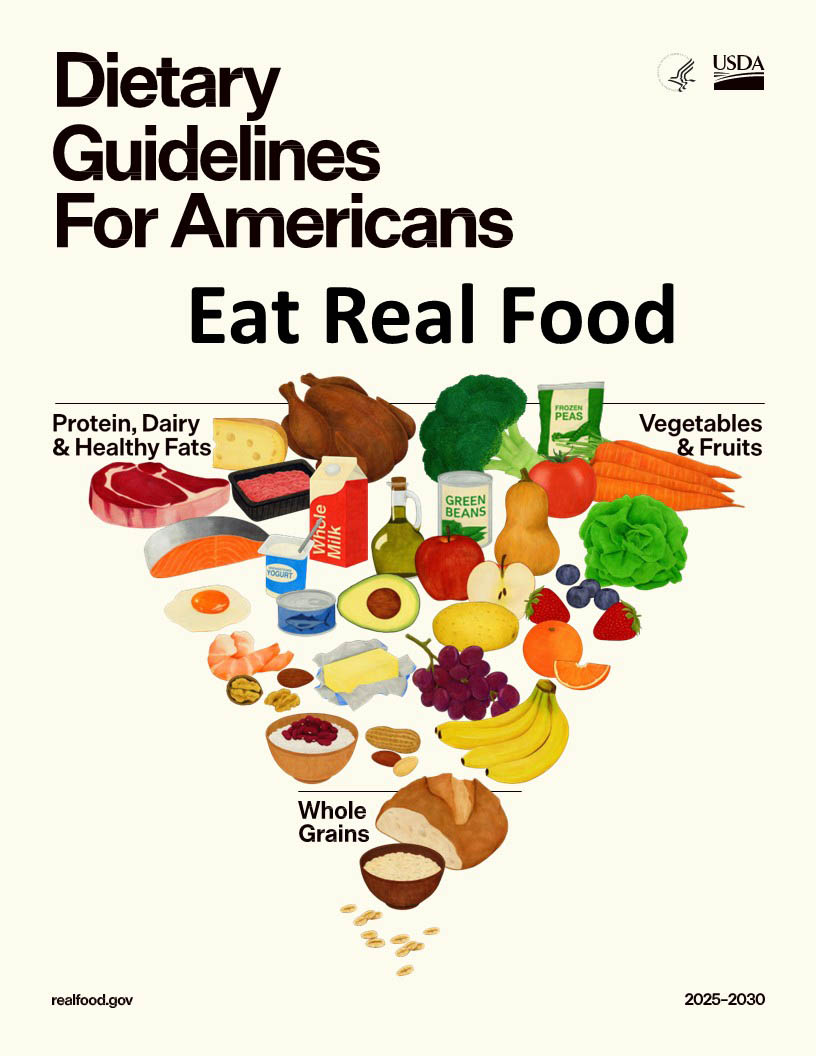
Unless you have cut yourself off from all outside media, you already know the USDA has just released new “Dietary Guidelines For Americans” and a new, upside down, food pyramid.

Both the AMA and AHA have endorsed the new guidelines with some reservations. But like everything else in today’s world they have become both political and controversial.

  • Some experts are saying, “The new guidelines are fantastic. They will make Americans much healthier. It’s about time the government caught up with the latest scientific advances.
  • Others are saying, “The new guidelines are terrible. They will set medicine back 20 years.”

As usual, the truth lies somewhere in the middle. I will explore that middle ground and discuss the pros and cons of the new dietary guidelines and food guide pyramid in this article.

But first we should start with something everyone can agree with, “What we are doing now isn’t working!” For example:

  • The percentage of Americans who are overweight or obese is approaching 70%.
  • The United States spends more on healthcare per person than any other country in the world. But we…
    • Rank 48th in life expectancy. We not only rank below every developed country, but we also rank below many 3rd world countries.
      • And we are losing ground. In 1990, we ranked 35th in life expectancy.
    • Rank 69th in health span (healthy life expectancy).
      • Again, we are losing ground. Our ranking was 42nd in 1990.
    • Rank dead last (183rd out of 183) in health span as a percentage of life expectancy.

In short, we are falling behind the rest of the world in terms of lifespan, health span, and percentage of healthy years.

And our deteriorating health is costly.

90% of our health care spending is for preventable diseases

A Brief History Of USDA Food Guides
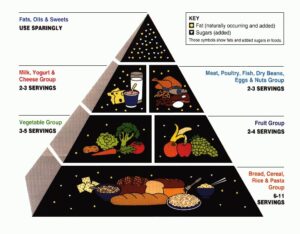
The USDA introduced the first food guide pyramid in 1992 based on the best nutrition science of the time. You probably remember the mantra:

  • 2-3 servings of dairy, preferably low fat.
  • 2-3 servings in the protein category (lean meats, fish, dry beans, eggs, and nuts).
  • 2-4 servings of fruits and 3-5 servings of vegetables.
  • 6-11 servings of grains (bread, cereals, rice, and pasta).
  • Fats, oils, and sweets were at the top of the pyramid with the caption, “Use Sparingly”.

This pyramid and the accompanying dietary guidelines were publicized so much that practically everyone knew them by heart.

Ten years later the USDA did a nutrition survey to see if their guidelines had changed American’s eating behavior. The answer was a clear, “No”. Only 5% of Americans ate according to the food guide pyramid.

The Geniuses at the USDA concluded that the food guide pyramid must be too difficult for the average American, so they introduced a simpler version, My Pyramid in 2005.

Guess what! Only 5% of Americans followed those recommendations, so they went to the super simple My Plate. By now you have probably guessed that only 5% of Americans followed the My Plate recommendations.

It turns out Americans weren’t confused by the recommendations. The recommendations were just too different from the way they were used to eating.

So, one change you will see in the new food guide pyramid is it includes some of Americans favorite foods, such as red meat, butter, and full fat dairy. Is that sacrilege or is it smart? Only time will tell.

With that in mind, let’s discuss the new “Dietary Guidelines For Americans”.

#1: Eat Real Food
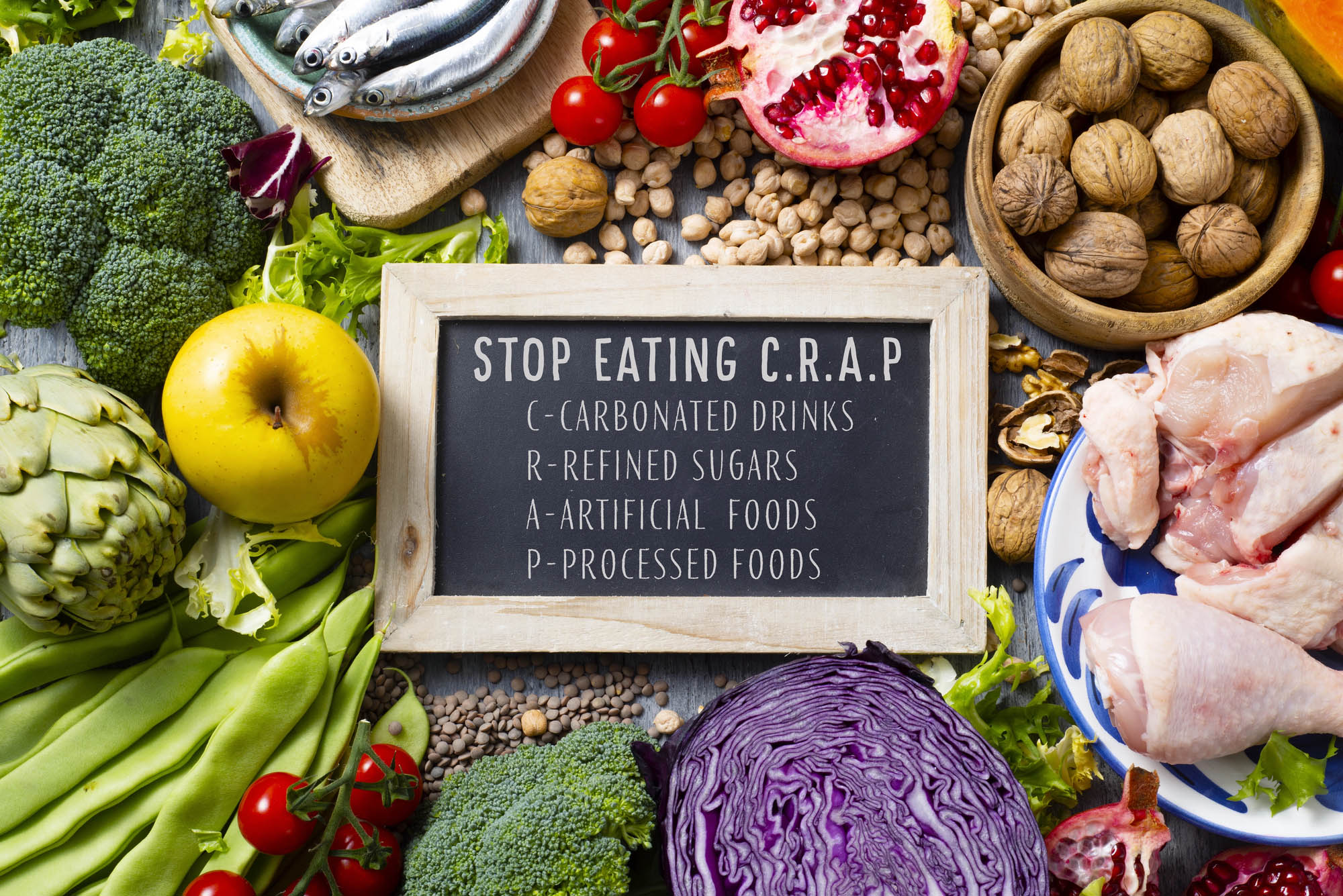
This is one recommendation that virtually everyone agrees with. The average American is getting 55% of their calories from highly processed foods. And the health consequences of that much processed food are devastating. Consumption of highly processed foods is linked to higher risk of:

  • Obesity.
  • Type 2 diabetes.
  • Heart attack.
  • Stroke.
  • Some cancers.
  • Depression and anxiety.
  • Dementia
  • Premature death.

If you are wondering how we got to this point, the answer is simple. It stems from the desire of Americans to eat a healthier diet without giving up their favorite foods and the willingness of Big Food Inc (the food industry) to give us exactly what we want. For example:

  • Some people want to eat a more plant-based diet, but don’t want to give up their favorite meats. Big Food Inc is only too happy to oblige. They mix some fat, salt, and a witch’s brew of chemicals to give us phony baloney, faken bacon, and everyone’s favorite, tofurkey.
  • Some people are convinced keto diets are healthy, but don’t want to give their favorite sweets. Again, Big Food Inc is only too happy to oblige. They mix up a witch’s brew of chemicals to give us keto cookies and keto pastries.

I’m being facetious, but you get my point.

Some representatives of Big Food Inc claim that the health risks of processed foods are unproven. They are lying!

If you would like to read my reviews of major studies showing the health risks of highly processed foods, just go to https://www.chaneyhealth.com/healthtips/ and put “processed foods” in the search box.

#2: Prioritize Protein Foods at Every Meal
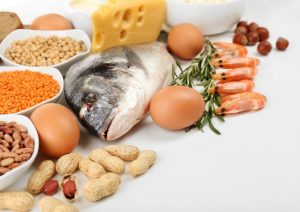
protein foodsThis is one of the more controversial recommendations of the new food guide pyramid. The new USDA dietary guidelines increase the protein recommendation by 50-100% compared to previous versions…

  • From 0.36 grams of protein per pound of body weight to…
  • Between 0.54 and 0.72 grams of protein per pound of body weight.

[Note: If these numbers seem different from what you have seen, that is because the official recommendations are in grams of protein per kilogram of body weight. Since most Americans have no idea what their body weight is in kilograms, those numbers are useless.]

The main criticisms about the new protein recommendations are:

#1: “There isn’t solid evidence that most people need this much protein.”

My response is that anyone who makes that claim hasn’t kept up with the last two decades of protein research.

The old 0.36/pound standard is probably OK for the average middle-aged couch potato, but higher protein intakes are needed for people who are:

  • Active, especially if they are trying to increase muscle mass, strength, or endurance.
  • Over 50 and are trying to maintain muscle mass, strength, and mobility.
  • Trying to lose weight without losing muscle, especially if they are using GLP-1 drugs.
  • Trying to reduce the risk of type 2 diabetes and other chronic diseases.

In short, almost everyone except the couch potatoes will benefit from higher protein intakes. And, yes, the latest science shows that it is best to get at least 20 grams of protein with each meal.

You can find more information about the science behind increased protein recommendations by going to https://www.chaneyhealth.com/healthtips/ and putting “protein” in the search box.
#2: “The new guidelines don’t steer people towards plant proteins”. This is a subtle distinction. The new USDA dietary guidelines include plant protein sources. But they do not recommend that they replace some of the animal proteins in the diet, as did previous versions. This allows people to choose between animal and plant proteins based on their preferences.

Those of you who have been following my “Health Tips From the Professor” blog know that I am an advocate of primarily plant-based diets. I am fully in the “replace some animal protein with vegetable protein” camp.

  • But I acknowledge that is not the way most Americans eat. Perhaps it is time to make dietary recommendations that align more closely with the way people eat if we want to get above 5% acceptance.
  • It would also be difficult to meet the new protein guidelines with plant protein alone unless you add commercially available plant protein supplements.

#3: “Higher protein intakes may be harmful for some people”. Recent research has shown that this concern is overblown for most Americans. However, there are some people who should probably check with their doctor before they increase their protein intake.

  • People who have been diagnosed with kidney disease.
  • People with genetic conditions or diseases that predispose to kidney disease. One example would be poorly controlled diabetes. [Note: I do not mean to imply that higher protein intake is likely to cause kidney disease in these situations. I included this category because people in these situations may have undiagnosed kidney disease.]

In most of these cases, you have probably been warned by your doctor to be careful about excess protein intake. But if you are uncertain about your risk for kidney disease, it never hurts to check with your doctor before increasing your protein intake.

What About Red Meat?

SteakThe new dietary guidelines have been criticized for emphasizing red meat. That criticism is inaccurate. It’s a “tempest in a teapot”.

In fact, red meat is pictured in both the original and the most recent versions of the food guide pyramid. And red meat is mentioned as one source of protein in both the original and the latest versions of dietary guidelines. It is given no special emphasis over other protein sources in either version of the dietary guidelines.

However, I would like to share my perspective on red meat.

  • Diet context matters. As I have said in previous issues of “Health Tips From The Professor”, fruits, vegetables, whole grains, and beans are the antidotes to all the bad aspects of red meat.” And if you look at the new food guide pyramid, red meat and other proteins are in the same neighborhood as fruits and vegetables.
  • Amount matters. Think of red meat as a garnish – for example, 2-3 ounces of red meat as part of a steak salad or stir fry with lots of veggies rather than an 8-ounce steak with fries.

#3: Consume Dairy
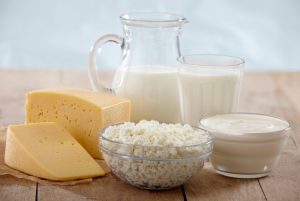
dairy foodsThe new dietary guidelines differ from previous versions in both the amount and kind of dairy foods consumed. For example:

  • The old guidelines recommended 2-3 servings of dairy foods per day.
    • The new guidelines recommend 3 servings per day as part of a 2,000-calorie dietary pattern.
    • Since most Americans consume 3,600 to 3,800 calories per day that recommendation translates to at least 5 servings per day.
  • The old guidelines recommended choosing low fat dairy foods.
    • The new guidelines say, “When consuming dairy, include full-fat dairy with no added sugars.”

Since the full-fat dairy recommendation is the most controversial change, I will address it first.

Let me start by saying that I have been a traditionalist with respect to dairy foods. I have recommended low-fat dairy foods for years. But a good scientist must be willing to change their recommendations based on the latest research findings.

And new findings have clearly challenged our perspective on full-fat dairy foods. Several large, well-designed studies over the past decade have shown that full-fat dairy foods are just as healthy as low-fat dairy foods. I will make two comments about these studies.

  • I suspect that the studies may be skewed because much of the data on full-fat dairy comes from countries where most of full-fat dairy foods are fermented – and we know that fermented dairy foods are very healthy.
    • Admittedly, I have no data to back up my suspicion, but I recommend fermented dairy foods as part of your dairy intake. That’s a recommendation everyone can agree with!
  • One recent study has suggested that diet context is important. Specifically, the study suggests that the benefits of full-fat dairy foods are greatest in the context of a healthy, primarily plant-based diet.
    • Similar observations have been made for egg consumption. That suggests that full-fat dairy and eggs provide some important nutrients that may be missing in a vegetarian diet. But in a diet that is already high in saturated fat and cholesterol, the “bad” effects of full-fat dairy and eggs may outweigh the benefits.

You can find more information about full-fat dairy by going to https://www.chaneyhealth.com/healthtips/ and putting “dairy” in the search box.

As for the amount of dairy foods you should consume, I wouldn’t get hung up on the number of servings per day. I interpret the new guidelines as saying, “Don’t be afraid of dairy. It can be an important part of your diet.”

However, the servings of dairy products are more frequently determined by lactose intolerance or sensitivity to milk protein than by dietary guidelines. Many people, including myself, can only consume small, occasional servings of dairy without experiencing digestive distress.

#4: Eat Vegetables & Fruits Throughout The Day
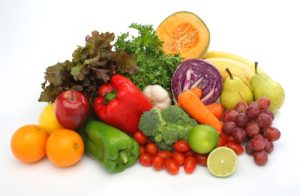
Colorful fruits and vegetablesThe dietary guidelines say, “Eat a variety of colorful, nutrient-dense vegetables and fruits. Specifically, the recommendation is:

  • 3 servings/day of vegetables and 2 servings/day of fruits each day.
    • Once again, the number of servings are based on a 2,000-calorie diet.
    • When you take into account the actual caloric intake of Americans, the recommendations become 3-5 servings/day of vegetables and 2-4 servings/day of fruits.

These recommendations are not controversial. They are universally accepted.

#5: Incorporate Healthy Fats

The new dietary guidelines are:

  • “Healthy fats are plentiful in many whole foods, such as meats, poultry, eggs, omega-3 rich seafood, nuts, seeds, full-fat dairy, olives, and avocados.”
    • This recommendation is not controversial.
  • “When cooking with or adding fats to meals, prioritize oils with essential fatty acids, such as olive oil. Other options can include butter or beef tallow.”
    • This is the most controversial portion of the new dietary guidelines. The usual comment is something like, “How dare they include butter and lard as healthy fats!”

I’m not a fan of lard but let me make a couple of observations about butter.

  • Butter is a whole food. Its ingredient list is typically cream, milk, and salt. If you buy the unsalted version, the ingredient list is even shorter. Margarine and butter substitutes have much longer ingredient lists, often including some questionable ingredients.
  • The frequency of butter use is important. Let me share a personal example. We eat a whole food, primarily plant-based diet. We substitute almond butter for butter on toast and muffins. But there are certain foods like potatoes, winter squash, and corn on the cob that just aren’t the same without real butter. We buy 4 sticks of butter at a time, cut it into pats of butter, and freeze it. Four sticks of butter lasts us a year.

Finally, the critics who say that the new guidelines should not include foods that are high in saturated fat are ignoring the fact that the guidelines say, “Saturated fat consumption should not exceed 10% of total daily calories.” This statement has remained constant since the first food guide pyramid in 1992.

So, the new guidelines are not recommending that we eat more saturated fat as many critics have claimed. They are saying, “A little bit of saturated fat is OK in the context of a whole food diet with lots of fruits, vegetables, and whole grains.

#6: Focus On Whole Grains

The new dietary guidelines are:

  • “Prioritize fiber-rich whole grains.”
  • “Significantly reduce the consumption of highly processed, refined carbohydrates.”

These guidelines are unchanged from previous versions of the guidelines.

What is new is that the guidelines now recommend only 2-4 servings of whole grains per day. That’s a big change from the 6-11 servings per day recommended in the original food guide pyramid.

  • If the 6-11 servings per day were whole grains, the new recommendation would represent a significant decrease in fiber intake. But that’s not how most Americans eat.
  • Since most of the grains in a typical American’s diet are highly processed and refined, reducing the recommended intake to 2-4 servings per day is a step in the right direction.

#7: Limit Highly Processed Foods, Added Sugars, & Refined Carbohydrates
fast foodI call this, “Avoid the bad stuff”. Specifically:

  • Avoid highly processed foods with added sugar and sodium.
  • Limit foods and beverages that include artificial flavors, colors, preservatives, and sweeteners
  • Avoid sugar-sweetened and artificially sweetened beverages.

These recommendations are accepted by almost everyone except the food industry.

However, I should point out that there is also a slight difference in emphasis from previous versions of the USDA dietary guidelines:

  • The new guidelines are more restrictive for added sugars than previous versions of the dietary guidelines. For example, they say:
    • One meal should contain no more than 10 grams of added sugars.
    • Children under the age of 10 should not be given foods with added sugars (previous versions of the dietary guidelines recommend avoiding added sugars for children under the age of 2).

Given the wealth of evidence that added sugars are linked to increased risk of obesity and chronic diseases, these stricter restrictions on added sugars make good sense – especially because the USDA dietary guidelines form the basis for school lunch programs.

But these guidelines are very different from how the average American eats. I’m not sure how many Americans will follow them.

#8: Limit Alcoholic Beverages

The guidelines:

  • Say, “Consume less alcohol for better overall health”.
  • List people who should completely avoid alcohol.

The only controversy about this recommendation is that it is less specific than the previous guidelines that recommended no more than 1 alcoholic drink/day for women and no more than 2/day for men.

I recognize the desire for specificity. But alcohol tolerance depends on several factors such as body weight, genetics, and medication usage.

What Does This Mean For You?

Questioning WomanThe USDA just released a new version of the Food Guide Pyramid and accompanying “Dietary Guidelines For Americans”, and they are very different from previous versions. What do these changes mean for you?

While the AMA and AHA have both endorsed the new guidelines, they have been controversial. In the article above, I have summarized the pros and cons of every recommendation. There are lots of recommendations, so it was a long article.

To help you make sense of the article let me summarize the recommendations and criticisms by dividing the recommendations into 4 categories:

#1: Recommendations that are accepted by almost everyone except the food industry. These are non-controversial.

  • Eat real food
  • Eat vegetables and fruits throughout the day.
  • Focus on whole grains.
  • Limit highly processed foods, added sugar, and refined carbohydrates.

#2: Changes in recommendations that reflect recent scientific advances. Critics of these changes simply haven’t kept up with scientific publications over the past couple of decades.

  • Increasing the daily protein recommendations.
  • Including full-fat dairy as a healthy dairy food.

#3: Tempests in a teapot: There is a kernel of truth in these criticisms, but the changes are much more modest than the critics would have you believe.

  • Including red meat in the protein recommendations.
  • Including some saturated fats in the “healthy fats” category.
  • Not including specific limits on alcohol consumption, as the previous version had done.

#4: What I would have liked to have seen:

  • More emphasis on plant proteins.
  • Elimination of lard from the “healthy fat” category.
  • Inclusion of high-quality vegetable oils in the “healthy fats” category.

The Bottom Line

The USDA just released a new version of the Food Guide Pyramid and accompanying “Dietary Guidelines For Americans”.

While the AMA and AHA have both endorsed the new guidelines, they have been controversial.

In this article I describe the pros and cons of each dietary guideline and divide them into ones for which:

  • They are clearly an improvement over the previous guideline.
  • They are accepted by almost everyone.
  • The criticism is a “tempest in a teapot”.
  • The criticism is at least partially accurate.

For more information on the pros and cons of the new “Dietary Guidelines For Americans” and how these guidelines apply to you, read the article above.

These statements have not been evaluated by the Food and Drug Administration. This information is not intended to diagnose, treat, cure or prevent any disease.

 _____________________________________________________________________________

My posts and “Health Tips From the Professor” articles carefully avoid claims about any brand of supplement or manufacturer of supplements. However, I am often asked by representatives of supplement companies if they can share them with their customers.

My answer is, “Yes, as long as you share only the article without any additions or alterations. In particular, you should avoid adding any mention of your company or your company’s products. If you were to do that, you could be making what the FTC and FDA consider a “misleading health claim” that could result in legal action against you and the company you represent.

For more detail about FTC regulations for health claims, see this link.

https://www.ftc.gov/business-guidance/resources/health-products-compliance-guidance

_______________________________________________________________________

About The Author 

Dr. Chaney has a BS in Chemistry from Duke University and a PhD in Biochemistry from UCLA. He is Professor Emeritus from the University of North Carolina where he taught biochemistry and nutrition to medical and dental students for 40 years.  Dr. Chaney won numerous teaching awards at UNC, including the Academy of Educators “Excellence in Teaching Lifetime Achievement Award”. Dr Chaney also ran an active cancer research program at UNC and published over 100 scientific articles and reviews in peer-reviewed scientific journals. In addition, he authored two chapters on nutrition in one of the leading Biochemistry textbooks for medical students.

Since retiring from the University of North Carolina, he has been writing a weekly health blog called “Health Tips From the Professor”. He has also written two best-selling books, “Slaying the Food Myths” and “Slaying the Supplement Myths”. And most recently he has created an online lifestyle change course, “Create Your Personal Health Zone”. For more information visit https://chaneyhealth.com.

For the past 55 years Dr. Chaney and his wife Suzanne have been helping people improve their health holistically through a combination of good diet, exercise, weight control and appropriate supplementation.



Do Artificial Food Colors Cause ADHD?

Is This Just The Tip Of The Iceberg?

Author: Dr. Stephen Chaney

Artificial colors are in the news again. And, unfortunately, what should solely be a health question has become political. Politics aside, most people fall into one of 3 camps:

  • Artificial colors are bad for us and should be removed from the food supply.
  • The fears about artificial colors are overblown.
  • What are artificial colors and why should I care?

Let me start with the third camp. Every nutrition expert worth their salt will tell you that whole, unprocessed foods are best for us. The problem is that they have a low profit margin.

The food industry makes most of their money from highly processed foods (50-60% profit from highly processed foods versus 8.5% for unprocessed foods).

And the market for highly processed foods is very competitive. Let me give you some metrics to help you understand just how competitive the market is:

  • In the average supermarket, unprocessed foods are located around the edge. The vast interior is mostly highly processed foods.
  • The most recent studies report that 60-70% of the foods Americans consume are highly processed.

With so much competition, the food industry needs to make their brand of processed foods stand out.

  • There are artificial preservatives to give processed foods long shelf life.
  • There are artificial flavors and flavor enhancers to make them taste yummy.
  • There are ingredients added to give them mouth appeal (how they feel in your mouth).
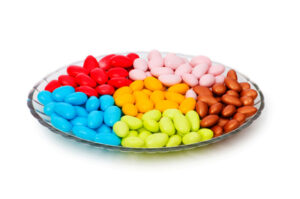
  • And finally, there are artificial colors (also known as synthetic food dyes) for eye appeal. Those are added to make them “pop” – to make them say “eat me”.

The seven most common food colors are Blue #1, Blue #2, Green #3, Red #3, Red #40, Yellow #5, and Yellow #6. They make processed foods look good.

But there are also health concerns associated with artificial food colors. The two most common are:

  • Cancer. Several studies have suggested that artificial food colors may increase the risk of cancer. However, because artificial food colors are added to foods of low nutritional value (candy, soft drinks, sugary cereals, etc.), it has been difficult to determine whether the increased cancer risk is due to the artificial colors or the foods they are found in.
  • ADHD. The studies are a bit stronger for this category. Because artificial colors can be hidden in chocolate cookies (when you mix all the colors together you get brown anyway), it has been possible to perform double-blind, placebo-controlled studies. And since both the food color and placebo groups are getting chocolate cookies, the only difference between the groups is whether the cookies contain artificial colors.

So, in today’s “Health Tips From the Professor” I will summarize what we know about artificial food colors and ADHD. But first, let’s start with a brief overview of ADHD.

A Brief Overview Of ADHD

adhd symptoms childrenWhat is ADHD? ADHD is a broad term that encompasses two types of behaviors.

  • The AD portion of ADHD stands for attention deficit.
    • Children with attention deficit have difficulty focusing and staying on task.
    • This can affect their learning in standard classroom settings. I underlined standard classroom settings for a reason, which I will come back to later.
  • The H portion of ADHD stands for hyperactivity.
    • Children with hyperactivity “bounce off walls” (I will define hyperactivity more precisely below.)
    • This can lead to problems at home, in the classroom, and in relationships.
  • Some children have both. If you are their parents, I can only say, “Lucky you”.
  • The final D stands for disorder, implying that these conditions are not normal.

The ADHD epidemic.

  • ADHD has increased by 89% in the United States in just 25 years (1997-2022).
  • In 2022 11.5% of US children aged 3-17 were diagnosed with ADHD. That’s 7.1 million children.

Some experts claim that’s because of better diagnosis. Let’s examine that claim.

How is ADHD diagnosed?

Child With ADHDThe American Psychiatric Society diagnoses attention deficit based on 3 or more of the following criteria:

  • Has problems staying focused.
  • Doesn’t pay attention to details.
  • Doesn’t seem to listen.
  • Doesn’t follow instructions.
  • Has problems organizing tasks.
  • Avoids sustained mental effort.
  • Is easily distracted.

For those of you who are parents or grandparents, I would simply ask, “Does any of this sound familiar? Doesn’t every child have some of these behaviors?”


The American Psychiatric Society diagnoses hyperactivity based on 3 or more of the following criteria:what causes adhd in kids

  • Fidgets, taps hands, squirms in seat.
  • Not able to stay seated.
  • Runs around where it is inappropriate.
  • Unable to play quietly.
  • Always “on the go”.
  • Talks too much.
  • Has difficulty waiting for their turn.
  • Interrupts or intrudes on others.

Again, for those of you who are parents or grandparents, I would simply ask, “Does any of this sound familiar?”

Even worse, the final diagnosis is based primarily on the subjective reporting of symptoms by teachers and parents. The psychiatric evaluation is done primarily to eliminate other mental or physical diseases as causes of the symptoms.

Is ADHD Overdiagnosed?

So. perhaps we should ask whether teachers and parents might be tempted to overestimate the severity of the symptoms.

For teachers,

  • Class sizes are large, and there aren’t enough teacher’s aides.
  • They don’t have the time to deal with a child that requires extra attention.
  • It is easier to request an ADHD assessment, so that child can be put on drugs.

But there are other options. There are schools in which children with ADHD thrive, and many public schools have programs set up for ADHD children.

For parents,

  • Parents don’t have the time they used to have to supervise their children.
    • In most cases, both parents are working.
    • Some are working from home. In theory that could give them flexibility to take care of their children. But remote work often involves online meetings and strict deadlines that leave little time for their children.
    • And then there is social media. In today’s world, many parents are glued to their phones 24/7.
  • It’s easier to request a hyperactivity assessment, so that child can be put on drugs.

Could the increase in ADHD diagnoses be real?

Most experts agree that the causes of ADHD are complex, with the top 4 causes being genetics, diet, family & social environment, and physical environment (environmental pollutants).

The simplest way to think about it is that genetics cocks the gun and one or more of the other causes pulls the trigger.

With that in mind, we need to ask ourselves, “Has diet, family and social environment, or our physical environment gotten worse over the past 25 years?” The answer is a clear yes for all three.

So, while part of the increase in ADHD could be due to overdiagnosis, part of it is likely to be real.

Why is the increase in ADHD diagnoses a concern?

drug side effectsThe answer is simple. The use of ADHD drugs has increased by 58% since 2012. Today over 50% of children diagnosed with ADHD are put on drugs. That’s a concern because:

  • Most of these drugs are stimulants.
  • Many are amphetamines.
  • They have serious side effects. For example:
    • Loss of appetite and weight loss.
    • Difficulty sleeping.
    • Upset stomach and nausea.
    • Feeling irritable, depressed, anxious, or tense.
  • Many children don’t like how the drugs make them feel.
  • They can be gateway drugs.
  • They lose effectiveness over time. So, unless you have figured out the cause of the problem, the symptoms will return.

Because of this many parents are searching for natural solutions. One approach is to change their child’s diet. In today’s “Health Tips From the Professor” I will discuss the effect of one dietary change – the removal of artificial food colors from the diet.

Do Artificial Food Colors Cause ADHD?

The idea that food additives – specifically artificial colors and preservatives – might be responsible for hyperactivity was first raised by Dr. Ben Feingold 50 years ago. He devised the Feingold Diet – a diet that was free of artificial food colors and preservatives.

Some small-scale clinical studies suggested that the diet might be successful, and millions of parents used the diet for their hyperactive children with great success.

But the medical authorities pooh-poohed the Feingold Diet. They pointed out that when parents are putting their child on a special diet, they are also giving that child more attention – and it might be the parent’s increased attention that decreased the child’s hyperactive behavior.

They also pointed out that when you eliminate food additives from the diet you are decreasing the “junk” food and increasing fresh fruits and vegetables – in short, the child’s diet is much healthier.

They did a double-blind, placebo-controlled study and reported only 5% of the children with an ADHD diagnosis benefited from removing artificial food colors and preservatives from the diet. They considered 5% to be an artifact – just random noise in the statistical analysis of the data. Headlines proclaimed, “The Feingold Diet doesn’t work.”

So eventually the Feingold Diet lost popularity – but the idea that artificial food colors & preservatives might trigger hyperactivity has refused to go away.

The first inkling that the Feingold hypothesis might hold some water came from studies looking at the 5% of children whose ADHD symptoms improved when artificial colors were removed. When these children were evaluated in a second double-blind, placebo-controlled study, over 85% of them showed improvement in symptoms when artificial food colors were removed from their diet.

In short, this told us that artificial food colors and preservatives do cause ADHD symptoms in some children. The percentage of children is small, but these children are true responders.

This has led to further studies designed to provide a better estimate of the percentage of children whose ADHD symptoms are triggered by artificial food colors.

In 2004 a meta-analysis of 15 double-blind, placebo-controlled studies (DW Schah et al, Journal of Developmental & Behavioral Pediatrics, 25: 423-434, 2004) estimated that 28% of children with ADHD benefited from removal of artificial colors from their diet.

A more recent meta-analysis (IT Nigg et al, Journal of the American Academy of Child and Adolescent Psychiatry, 51: 86-97, 2012) estimated that 8% of ADHD children benefited from removal of artificial food colors from their diet.

And a pilot study published three years ago (AE Kirkland et al, Nutritional Neuroscience, 25: 159-168, 2022) suggests the effect of artificial food colors on ADHD symptoms may not be limited to children. They found a similar effect of artificial food colors on college students with ADHD.

In summary, the current evidence suggests:

  • Artificial food colors (and other artificial ingredients) can trigger ADHD symptoms in both children and adults.
  • The percentage of children and adults with ADHD who will benefit from removing artificial food colors from their diet is small (5-28%) but reproducible.
  • If you or your child happen to be sensitive to artificial food colors, relief from ADHD symptoms could be as simple as eliminating artificial food colors from their diet.

Is This Just The Tip Of The Iceberg?

Earlier in this article I used the analogy that genetic predisposition to ADHD cocked the gun, but it was diet, family & social environment, and/or physical environment that pulled the trigger.

Then I summarized the evidence that artificial colors are one dietary component that “pulls the trigger” (causes ADHD) in sensitive individuals. But that leads to two questions:

  • Is that all there is, or is that just the “tip of the iceberg”?
  • Have there been other changes in our diet that might explain the rapid increase in ADHD cases?

Let’s examine the data:

  • In the 1970s when Dr. Feingold introduced his diet food additives were used sparingly.
    • Today over 50% of the foods in the American diet contain more than 3 food additives.
  • In the 1970s there were a few thousand food additives in the American food supply.
    • Today there are more than 10,000 additives, and less than 5% of them have been tested for their effects on brain development in children.
  • In the 1970s 10-15% of foods in the American diet were ultra-processed.
    • Today 60-70% of the foods Americans eat are ultra-processed.

In short, in 1975 Dr. Feingold showed that artificial food colors and a handful of other additives triggered ADHD symptoms in a small percentage of children. Today our children’s diets are far worse, and they are exposed to thousands of untested food additives that did not exist in the 1970s.

Is this a coincidence or is this deterioration in diet and explosion of food additives driving the ADHD epidemic. Nobody knows.

But Pediatrics Professor Dr. Herbert Needleman has been quoted as saying, “We are conducting a vast toxicologic experiment in our society, in which our children and our children’s children are the experimental subjects.”

What Does This Mean For You?

questionsIf you are the parent or grandparent of a child with ADHD, the simplest thing you can do is to remove foods with artificial colors and preservatives from their diet whenever possible. If the child is sensitive to food colors, that one simple change may reduce their symptoms dramatically.

But, as I said above, artificial food colors and preservatives may just be the tip of the iceberg. My recommendation is to switch to a whole, unprocessed food diet for the entire family. Everyone in the family will be healthier, and you will have an even better chance of reducing your child’s ADHD symptoms.

The Bottom Line 

ADHD cases are skyrocketing. Drugs work, but they have serious side effects. If you are the parent or grandparent of a child with ADHD, you may be searching for natural approaches to help that child control their ADHD symptoms. In this article, I discuss:

  • The causes of ADHD and how it is diagnosed.
  • Whether the rapid increase in ADHD cases is caused by overdiagnosis or the deterioration of our children’s diets.
  • The evidence that artificial food colors and preservatives trigger ADHD symptoms in sensitive children.
  • Other natural approaches that may reduce ADHD symptoms.

For more information on this topic and what it means for you, read the article above.

These statements have not been evaluated by the Food and Drug Administration. This information is not intended to diagnose, treat, cure, or prevent any disease.

 ____________________________________________________________________________

My posts and “Health Tips From the Professor” articles carefully avoid claims about any brand of supplement or manufacturer of supplements. However, I am often asked by representatives of supplement companies if they can share them with their customers.

My answer is, “Yes, as long as you share only the article without any additions or alterations. In particular, you should avoid adding any mention of your company or your company’s products. If you were to do that, you could be making what the FTC and FDA consider a “misleading health claim” that could result in legal action against you and the company you represent.

For more detail about FTC regulations for health claims, see this link.

https://www.ftc.gov/business-guidance/resources/health-products-compliance-guidance

 _______________________________________________________________________

About The Author 

Dr. Chaney has a BS in Chemistry from Duke University and a PhD in Biochemistry from UCLA. He is Professor Emeritus from the University of North Carolina where he taught biochemistry and nutrition to medical and dental students for 40 years.  Dr. Chaney won numerous teaching awards at UNC, including the Academy of Educators “Excellence in Teaching Lifetime Achievement Award”. Dr Chaney also ran an active cancer research program at UNC and published over 100 scientific articles and reviews in peer-reviewed scientific journals. In addition, he authored two chapters on nutrition in one of the leading Biochemistry textbooks for medical students.

Since retiring from the University of North Carolina, he has been writing a weekly health blog called “Health Tips From the Professor”. He has also written two best-selling books, “Slaying the Food Myths” and “Slaying the Supplement Myths”. And most recently he has created an online lifestyle change course, “Create Your Personal Health Zone”. For more information visit https://chaneyhealth.com.

For the past 53 years Dr. Chaney and his wife Suzanne have been helping people improve their health holistically through a combination of good diet, exercise, weight control and appropriate supplementation.



Natural Approaches For Controlling ADHD

Are Natural Approaches Better Than Drugs?

Author: Dr. Stephen Chaney 

diet for children with adhdSeveral years ago, I came across a headline in our local newspaper that said, “Try Nutrition, Not Drugs, for ADHD”. The article made claims like “No good evidence exists to support the ADHD disease hypothesis” and “…on numerous occasions we have seen ADHD symptoms completely disappear without medication”.

As a scientist, I am always a little skeptical about bold claims that run counter to established scientific wisdom. However, the authors of this article implied that their claims were based on a 2012 article in Pediatrics, which is a highly respected journal in its field, so I decided to investigate the article (Millichap and Yee, Pediatrics, 129: 1-8, 2012).

The article was written by two pediatricians with extensive experience treating children with ADHD. The article turned out to be a thorough review of the literature on nutritional approaches for controlling ADHD. It did not approach the rigor of a meta-analysis study. Rather, it is what I refer to as an “interpretive review”. By that I mean that the clinical studies were interpreted in part based on their clinical experience in treating children with ADHD.

Interpretive reviews can be either good or bad, depending on the objectiveness of the reviewers. In this case, I was familiar with many of the clinical studies they reviewed and found their interpretations to be accurate, so I decided to share their conclusions with you. But first I should probably talk about our ADHD epidemic and ask two important questions:

  1. Is ADHD over diagnosed?
  1. Are drugs always the best solution for controlling ADHD symptoms?

Are Natural Approaches Better Than Drugs? 

Increase The ADHD epidemic.

  • ADHD has increased by 89% in the United States in just 25 years (1997-2022).
  • In 2022 11.5% of US children aged 3-17 were diagnosed with ADHD. That’s 7.1 million children.

Some experts claim that’s because of better diagnosis. But let me point out what many experts miss.

Is ADHD Over Diagnosed?

Perhaps we should be asking whether teachers and parents might be tempted to overestimate the severity of the symptoms.

For parents,

  • Parents don’t have the time they used to have to supervise their kids.
    • In most cases, both parents are working.
    • Some are working from home. In theory that could give them flexibility to take care of their children. But remote work often involves online meetings and strict deadlines that leave little time for their children.
    • And then there is social media. In today’s world, many parents are glued to their phones 24/7.
  • It’s easier to request a hyperactivity assessment, so that child can be put on drugs.

For teachers,

  • Class sizes are large, and there aren’t enough teachers’ aides.
  • They don’t have the time to deal with a child that requires extra attention.
  • It is easier to request an ADHD assessment, so that child can be put on drugs.

But there are other options. There are schools in which children with ADHD thrive, and many public schools have programs set up for ADHD children.

Why is the increase in ADHD diagnoses a concern?

drug side effectsThe answer is simple. The use of ADHD drugs has increased by 58% since 2012. Today over 50% of children diagnosed with ADHD are put on drugs. That’s a concern because:

  • Most of these drugs are stimulants.
  • Many are amphetamines.
  • They have serious side effects. For example:
    • Loss of appetite and weight loss.
    • Difficulty sleeping.
    • Upset stomach and nausea.
  • Many children don’t like how the drugs make them feel. They make them feel irritable, depressed, anxious, or tense.
  • They can be gateway drugs.
  • They lose effectiveness over time. So, unless you have figured out the cause of the problem, the symptoms will return.

Because of this many parents are searching for natural solutions.

Natural Approaches For Controlling ADHD 

The pediatricians reviewed all the major nutritional approaches that have been used over the years to control ADHD. Let me start by saying that they are not wild-eyed proponents of “a nuts and berries diet cures all”. In fact, they use medications as the primary intervention for most of their ADHD patients. They advocate dietary approaches when:

  • Medicines fail or there are adverse reactions (side effects).
  • The parents or the patients prefer a more natural approach.
  • There are symptoms or signs of a mineral deficiency (more about that below).
  • There is a need to substitute an ADHD-free healthy diet for an ADHD-linked diet (Simply put, if the child’s diet is bad enough, there are multiple benefits from switching to a healthier diet – a possible reduction in ADHD symptoms is just one of them.)

I will summarize their key findings below: 

Omega-3 Fatty Acids

Child Raising HandThe authors reported that many studies have shown that children with ADHD tend to have low levels of essential fatty acids, especially the omega-3 fatty acids. They cite several studies which showed significant improvement in reading skills and reductions in ADHD symptoms when children with ADHD were given omega-3 supplements but also noted that other studies showed no effect. They postulated that some children may benefit more from omega-3 supplementation than others.

They routinely use doses of 300-600 mg of omega-3s with their ADHD patients. They find that this intervention reduces ADHD symptoms in many children but does not completely eliminate the need for medications.

My Two Cents: I have recently reported) on a study that strengthens the association between omega-3 supplementation and a reduction in ADHD symptoms. Whether omega-3 supplements will help your child is anyone’s guess. However, it is a natural approach with no side effects. It is certainly worth trying.

Food Additives

The current interest in food additives and ADHD originated with the Feingold diet. The Feingold diet eliminated

food additives, foods with salicylates (apples, grapes, luncheon meats, sausage, hot dogs and drinks containing artificial colors and flavors), and chemical preservatives (e.g. BHA and BHT).

It was popularized in the 1970s when some proponents claimed that it reduced ADHD symptoms in 50% of the children treated. After clinical studies showed that only a small percentage of children benefitted from this diet, it rapidly fell out of favor.

However, Millichap and Yee pointed out that more recent studies have shown that the subset of children who responded to the Feingold diet were not a “statistical blip”. A recent review of the literature reported that when children with suspected sensitivities to food additives were challenged with artificial food colors, 65–89% of them displayed ADHD symptoms.

My Two Cents: I have recently reported) on more recent studies documenting the effects of artificial food colors on ADHD. The studies I reviewed in that article reported that up to 28% of children with ADHD were sensitive to the amount of artificial food colors in the typical western diet and that removing those food colors resulted in a significant improvement in ADHD symptoms. Plus, those studies were just looking at food colors – not the hundreds of other food additives in the average American child’s diet.

I consider food additives to be problematic for many reasons. Even if removing them doesn’t reduce their ADHD symptoms, eliminating as many of those food additives as possible is probably a good idea. It doesn’t need to be complicated. Just replacing processed foods and sodas with fresh fruits and vegetables and with low fat milk and natural fruit juices diluted with water to reduce their sugar content might make a significant difference in your child’s ADHD symptoms.

Food Sensitivities

Even natural foods can be a problem for children with food sensitivity, and it appears that there may be a large percentage of hyperactive children with food sensitivities. Millichap and Yee reported that elimination diets (diets that eliminate all foods which could cause food sensitivity) improve behavior in 76-82% of hyperactive children.

Even though this approach can be very effective Millichap and Yee don’t normally recommend it for their patients because it is difficult and time-consuming. The elimination diet is very restrictive and needs to be followed for a few weeks. Then individual foods need to be added back one at a time until the offending food(s) are identified. (They reported that antigen testing is not a particularly effective way of identifying food sensitivities associated with hyperactivity)

My Two Cents: I have previously reported on the link between food sensitivities and hyperactivity. I agree with Millichap and Yee that elimination diets are difficult and view this as something to be tried after all other natural approaches have failed. However, if there is a particular food that causes hyperactivity in your child, identifying it and eliminating it from their diet could just be something that will benefit them for the rest of their life.

Sugar

sugar cubesThis is a particularly interesting topic. Many parents are absolutely convinced that sugary foods cause hyperactivity in their children, but the experts are saying that clinical studies have disproven that hypothesis. They claim that sugar has absolutely no effect on hyperactivity.

Millichap and Yee have an interesting perspective on the subject. They agree that clinical studies show that a sugar load does not affect behavior or cognitive function in small children, but they point to numerous clinical studies showing that the reactive hypoglycemia that occurs an hour or two after a sugar load adversely affects cognitive function in children, and that some children are more adversely affected than others.

My Two Cents: Reducing intake of refined sugars in your child’s diet makes sense for many reasons, especially considering the role of sugar intake in obesity. If your child has a tendency towards reactive hypoglycemia, it may also reduce ADHD symptoms.

Iron and Zinc Deficiency

Millichap and Yee reported some studies suggested that iron and zinc deficiencies may be associated with ADHD symptoms and recommend supplementation with an iron or zinc supplement when there is a documented deficiency.

My Two Cents: A simpler and less expensive approach would be a children’s multivitamin to prevent the possibility of iron or zinc deficiency. Of course, I would recommend that you choose one without artificial colors, preservatives and sweeteners.

A Healthy Diet

Millichap and Yee closed their review by discussing a recent study in Australia that reported a significant reduction in ADHD symptoms in children eating “Healthy” diets (fish, vegetables, tomato, fresh fruit, whole grains & low-fat dairy products) compared to children eating “Western” diets (Fast foods, red meat, processed meats, processed snacks, high fat dairy products & soft drinks). This is the dietary approach, along with omega-3 supplementation, that they recommend most frequently for their patients.

My Two Cents: I wholeheartedly agree. In fact, if you and your family were to follow a “Healthy” diet instead of a “Western” diet it would likely have numerous health benefits. Plus, you are automatically removing ADHD triggers like food additives and sugar from your child’s diet.

The Bottom Line

This review of natural approaches for controlling ADHD symptoms (Millichap and Yee, Pediatrics, 129: 1-8, 2012) is both good news and bad news. The good news is that there are multiple natural approaches that can significantly reduce ADHD symptoms. These include:

  • Use of omega-3 supplements. They recommended 300-600 mg/day.
  • Removal of food additives (particularly food colors) from the diet.
  • Identification of food sensitivities and removal of those foods from the diet.
  • Reducing the amount of simple sugars in the diet.
  • Elimination of iron and zinc deficiencies if they exist (Iron deficiency is relatively common in American children. Zinc deficiency is not.) Alternatively, I recommend a children’s multivitamin to prevent iron and zinc deficiencies in the first place.
  • Eating a healthy diet rather than a Western diet. This also has the benefit of reducing the amount of food additives and sugars in the diet.

The bad news is that each of these approaches seems to work only in a subset of children with ADHD.

  • If you are a parent who is interested in a natural alternative to ADHD stimulant medications this means you may need to be patient and try several natural approaches until you find the one(s) that work(s) best for your child. The benefit of making the effort is that all these approaches will also improve the health of your child in other important ways, and none of them have any side effects.
  • Unfortunately, physicians with only about 10 minutes to spend with each patient (which is increasingly the medical model in this country), may not have time to explore natural options. Medications are much easier to prescribe. You may need to be the one who takes the responsibility of exploring natural alternatives for your child.

These statements have not been evaluated by the Food and Drug Administration. This information is not intended to diagnose, treat, cure or prevent any disease.

 _____________________________________________________________________________

My posts and “Health Tips From the Professor” articles carefully avoid claims about any brand of supplement or manufacturer of supplements. However, I am often asked by representatives of supplement companies if they can share them with their customers.

My answer is, “Yes, as long as you share only the article without any additions or alterations. In particular, you should avoid adding any mention of your company or your company’s products. If you were to do that, you could be making what the FTC and FDA consider a “misleading health claim” that could result in legal action against you and the company you represent.

For more detail about FTC regulations for health claims, see this link.

https://www.ftc.gov/business-guidance/resources/health-products-compliance-guidance

______________________________________________________________________

About The Author 

Dr. Chaney has a BS in Chemistry from Duke University and a PhD in Biochemistry from UCLA. He is Professor Emeritus from the University of North Carolina where he taught biochemistry and nutrition to medical and dental students for 40 years.

Dr. Chaney won numerous teaching awards at UNC, including the Academy of Educators “Excellence in Teaching Lifetime Achievement Award”.

Dr Chaney also ran an active cancer research program at UNC and published over 100 scientific articles and reviews in peer-reviewed scientific journals. In addition, he authored two chapters on nutrition in one of the leading biochemistry text books for medical students.

Since retiring from the University of North Carolina, he has been writing a weekly health blog called “Health Tips From the Professor”. He has also written two best-selling books, “Slaying the Food Myths” and “Slaying the Supplement Myths”. And most recently he has created an online lifestyle change course, “Create Your Personal Health Zone”. For more information visit https://chaneyhealth.com.

For the past 53 years Dr. Chaney and his wife Suzanne have been helping people improve their health holistically through a combination of good diet, exercise, weight control and appropriate supplementation.



Is Erythritol Bad For Your Heart?

Who Should Be Concerned About Erythritol Intake?

Author: Dr. Stephen Chaney 

Everyone is searching for the perfect sweetener. And if you were in the marketing department of Big Food Inc, the perfect sweetener would be defined as:

  • Natural, meaning that it is found in fruits, vegetables, or other plant foods.
  • Low in calories. Of course, a perfect sweetener would have zero calories because it is not metabolized in our bodies.
  • Low glycemic, meaning that it would have a minimal effect on blood sugar levels. Once again, a perfect sweetener would have zero effect on blood sugar levels.
  • Safe, meaning that it has no adverse effects on our health.

Sugar alcohols appear to meet all these criteria, so they have become the sweetener of choice for lots of highly processed foods. This is especially true for the sugar alcohol, erythritol, since it is currently the least expensive of the sugar alcohols.

So, a recent study (M Witowski et al, Nature Medicine, 2023) suggesting that erythritol might increase the risk of heart disease was quite surprising.

This is the first study to suggest a link between erythritol and heart disease, and it was a flawed study (I will discuss the flaws below).

Reputable scientists don’t put much credence in a weak first study like this one. We generally consider the conclusions of a first study like this one to be an unproven hypothesis at this point.

But we are cautious. There will be many follow-up, better designed studies, to test this hypothesis. Once these studies have been published, the scientific community will look at all the evidence and either issue a warning or conclude that there is no reason for concern.

But that doesn’t stop the Dr. Strangeloves of the world from warning you of the “dangers” of erythritol and telling you to avoid it at all costs.

For that reason, I felt it was appropriate to address this issue. I will:

  • Describe the study and its flaws.
  • Put the study into the broader perspective of what we know about sweeteners.
  • Identify the two population groups who should be most concerned about erythritol.

How Was The Study Done And What Did It Show?

This study can be divided into three parts.

heart disease#1: An Association Between Erythritol Blood Levels And Heart Disease.

There were three separate experiments included in this section of the study. In each experiment patients were recruited after visiting cardiac clinics for diagnostic procedures. The average age of these patients was 67 and 45% of them already had experienced a non-fatal heart attack prior to the study. In other words, these were all older patients with pre-existing heart disease who were at high risk of heart attack or stroke in the near future.

The first study was a metabolomic study. In simple terms this means that high-tech equipment and computing were used to measure hundreds of metabolites in the blood of the patients and, in this case, correlate each of them with the occurrence of heart attacks and strokes over the next three years.

  • This study identified 16 sugar alcohols and related metabolites in the blood of these patients that were associated with an increased risk of heart attack and stroke. (I will discuss the significance of this observation in more detail later.)

Because erythritol was among the top 6 compounds in terms of association with increased heart attack and stroke risk, and erythritol is the most commonly used sugar alcohol in processed foods, the next two studies focused on the association between blood levels of erythritol and heart attack/stroke risk. Their results were predictable.

  • High blood levels of erythritol were associated with an increased risk of heart attack and stroke over the next three years.

Flaws In This Portion Of The Study:thumbs down symbol

  • As the authors of the study pointed out, these studies were done with older patients with pre-existing heart disease who were at high risk of heart attack or stroke. They acknowledged that it is not known whether these associations exist with younger, healthier patients.
  • As the authors also pointed out, these are associations. They do not prove cause and effect. In particular, the studies did not measure the diet, exercise habits, and other lifestyle factors of these patients that may have contributed to their increased risk of heart attack and stroke.
  • When you look closely at the data, it is clear that the association is only seen at the highest blood levels of erythritol. Specifically, the blood levels of erythritol in these patients were divided into quartiles. The risk of heart attack and stroke in the first three quartiles (low to moderate blood levels of erythritol) were identical to the control. However, the fourth quartile (highest blood levels of erythritol) was associated with a dramatically increased risk of heart attack and stroke. That raises three important questions:
    • “How much erythritol were patients in the fourth quartile consuming?”
      • The authors did not look at dietary intake of erythritol but did note a previous study estimated that Americans consume up to 30 grams of erythritol a day.
    • 30 grams of erythritol a day is a huge amount of erythritol. Where does that erythritol come from?
      • Much of it comes from erythritol-containing highly processed foods like zero calorie sugar substitutes (either erythritol alone or erythritol mixed with artificial sweeteners to improve the taste); reduced- and low calorie carbonated and non-carbonated beverages; hard candy and cough drops, cookies, cakes, pastries, and bars; puddings and pie fillings; soft candies; syrups and toppings; ready to eat cereals; fruit novelty snacks; and frozen desserts.
      • But it is also found in foods you might not suspect, such as plant-based “milk” substitutes; chocolate and flavored milks; barbecue and tomato sauce, fruit-based smoothies, the syrup used in canned fruits, yoghurt; low calorie salad dressings; and salty snacks.
      • In other words, the only way anyone can consume 30 grams of erythritol in a day is to consume large quantities of erythritol-containing highly processed foods (I will discuss the significance of this observation later).
    • “What else was different about patients in the fourth quartile?”
      • When you look carefully at the data, the patients in the fourth quartile were significantly older, with a higher incidence of diabetes, pre-existing coronary artery disease, previous non-fatal heart attacks, congestive heart failure, and greater triglycerides – all of which significantly increase their risk of heart attack and stroke.

#2: Mechanistic Studies:

Next the authors did in vitro and animal studies looking at the effect of high levels of erythritol on blood clotting.

  • These studies showed that high levels of erythritol promoted blood clotting both in vitro and in mice. The authors concluded that these studies provided a plausible mechanism for a link between high erythritol blood levels and increased risk of heart attack and stroke.

Flaws In This Portion Of The Study:thumbs down symbol

  • Other critics have pointed out that the assays used were not accurate models of blood clotting in humans. This particular critique is beyond my expertise, so I won’t comment further. However:
    • As someone who was involved in cancer drug development for over 30 years, I know that in vitro and animal models are poor indicators of how things work in humans.
    • And as a biochemist, I have two concerns:
      • The authors provided no mechanistic rationale for why erythritol would enhance blood clotting.
      • The authors made no effort to show that the effect of erythritol was unique. Would high levels of other sugar alcohols or other naturally occurring sugars have the same effect on blood clotting in their assays? We don’t know.

#3: Blood Levels Of Erythritol After Oral Intake.

Finally, the authors gave subjects 30 grams of erythritol and measured blood levels over the next several days.

  • This experiment showed that very high blood levels of erythritol were attained and maintained for at least two days before gradually decreasing to baseline. The authors concluded this experiment showed that it was feasible to attain and maintain high blood levels of erythritol for several days following a single ingestion of 30 grams of erythritol.

Flaws In This Portion Of The Study:thumbs down symbol

  • I have already pointed out that 30 grams per day is a huge amount of erythritol. However, erythritol in the diet will come from a variety of foods, some of which will contain components (fiber etc.) that slow the absorption of erythritol.
  • In contrast, the subjects in this experiment were given 300 ml of liquid containing 30 grams of erythritol and told to drink it in two minutes!
  • In other words, these subjects were consuming 30 grams of erythritol in 2 minutes rather than 24 hours, and they were consuming it in the most easily absorbable form. For a study like this, that makes the effective dose orders of magnitude greater than the amount of erythritol that anyone consumes from their diet over a 24-hour period. The study design was completely unrealistic.

Is Erythritol Bad For Your Heart?

Question MarkAs described above, this is the first study to suggest an association between erythritol and heart disease, and it was a highly flawed study.

It is also important to know that erythritol is not an artificial sweetener. It is found naturally in foods like grapes, peaches, pears, watermelons, and mushrooms. It is also found in some fermented foods like cheese, soy sauce, beer, sake, and wine.

It is also a byproduct of normal human metabolism, so we always have some of it circulating in our bloodstream. Our body knows how to handle low to moderate intakes of erythritol.

However, to help you really understand what this study means, I need to put it into the context of other studies. I will do this in story form (You will find more details about these studies in my book “Slaying The Food Myths”).

First, let’s look at highly processed food consumption:

  • Multiple recent studies have shown that high consumption of highly processed food is associated with increased risk of obesity, diabetes, heart disease, and premature death. We don’t know what it is about highly processed food consumption that is responsible for the increased risk, but it is unlikely to be just one thing.
  • As I pointed out above, the only way to achieve the high blood levels of erythritol associated with increased heart disease risk is to consume large quantities of erythritol-containing highly processed foods.

Next, let’s follow the history of sweeteners in highly processed foods.

  • When I was a young man, sucrose (table sugar) was added to most highly processed foods. Sucrose is foundsugar cubes naturally in many fruits and vegetables. Small to moderate intake of sucrose in unprocessed and minimally processed foods posed no problem. However, large intakes of sugar in highly processed foods were found to increase the risk of obesity, diabetes, heart disease, and premature death.
  • At that point, sucrose became a “sugar villain”, and Big Food, Inc substituted fructose and high fructose corn syrup (a mixture of fructose and glucose) for sugar in their highly processed foods. As with sucrose, fructose is found naturally in many foods, and small to moderate intakes of fructose and high fructose corn syrup posed no health risks. However, large intakes of fructose and high fructose corn syrup in highly processed foods were found to increase the risk of obesity, diabetes, heart disease, and premature death.
  • Fructose and high fructose corn syrup then became the sugar villains. And because high fructose corn syrup is chemically and biologically indistinguishable from natural sugars like honey, date sugar, coconut sugar, it is likely that high intakes of these sugars in highly processed foods would cause the same problem.
  • So Big Food, Inc started relying on artificial sweeteners in their highly processed foods. But guess what? Artificial SweetenersRecent studies have suggested that artificial sweeteners in highly processed foods are associated with obesity, diabetes, and heart disease.
  • That has caused Big Food, Inc to rely more on sugar alcohols in their highly processed foods, particularly erythritol because it is the least expensive of the sugar alcohols. Now the current study comes along and suggests that high intake of erythritol in highly processed foods may increase the risk of heart disease.
  • If this hypothesis is confirmed by better designed studies, it is not clear what Big Food, Inc will do next. The metabolomic study described above showed that high blood levels of several other sugar alcohols are associated with an increased risk of heart disease.

Hopefully, you are starting to see a pattern here. It’s time to ask the question, “Is it the sweetener, or is it the food?”

Clearly, it doesn’t matter what sweetener we are talking about. Large intake of any natural sweetener in the context of a diet rich in highly processed foods appears to have an adverse effect on our health. And we don’t know whether these adverse health effects are caused by the sweetener or some other component of the highly processed foods.

If you want to improve your health, the best solution is to decrease your intake of highly processed foods. That will automatically reduce your intake of sweeteners and other unhealthy components of highly processed foods and increase your intake of healthy components from the whole foods you will be eating instead.

Who Should Be Concerned About Erythritol Intake?

The authors of this study identified two groups who should be most concerned about erythritol consumption – diabetics and adherents of the keto diet.

  • Diabetics are at high risk because they are told to consume non-caloric sweeteners instead of sugars, and they are not told to avoid highly processed foods. Consequently, they consume much higher amounts of non-caloric sweeteners than the average American.
  • I must admit that I didn’t foresee keto adherents as a high-risk group. However, it appears that keto enthusiasts love their sweets as much as the rest of us, and the sweetener of choice for keto-friendly sweets is erythritol. The authors said that a single serving of keto ice cream contains 30 grams of erythritol. I can hardly imagine how much erythritol they must be getting in their diet.

And, once again, the best advice for both groups is to simply decrease the amount of highly processed food in their diet.

The Bottom Line 

Erythritol is not an artificial sweetener. It is found naturally in foods like grapes, peaches, pears, watermelons, and mushrooms. It is also found in some fermented foods like cheese, soy sauce, beer, sake, and wine.

It is also a byproduct of normal human metabolism, so we always have some of it circulating in our bloodstream. Our body knows how to handle erythritol.

That is why it was a surprise when a recent study claimed that high intake of erythritol is associated with an increased risk of heart attack and stroke. The Dr. Strangeloves of the world are already starting to tell you that erythritol is deadly and you should avoid it at all costs. But reputable scientists are saying, “Not so fast”.

This is the first study to suggest an association between erythritol and heart disease, and it was a highly flawed study.

In fact, the study showed that low to moderate intakes of erythritol had no effect on heart disease risk. It was only the highest intake of erythritol that was associated with increased risk of heart disease. And given the distribution of erythritol in the American diet, the only way someone could take in that much erythritol is to consume large amounts of erythritol-sweetened highly processed foods.

A brief review of the literature on sweeteners reveals that this is a common pattern for every natural sweetener tested. Low to moderate intake of these sweeteners has no adverse health effects. However, high intake of every sweetener tested in the context of a highly processed food diet is associated with an increased risk of obesity, diabetes, heart disease, and premature death.

That raises the question, “Is it the sweetener, or is it the food?”

Clearly, it doesn’t matter what sweetener we are talking about. Large intake of any natural sweetener in the context of a diet rich in highly processed foods is likely to have an adverse effect on our health. And we don’t know whether these adverse health effects are caused by the sweetener or some other component of a highly processed food diet.

If you want to improve your health, the best solution is to decrease your intake of highly processed foods. That will automatically reduce your intake of sweeteners and other unhealthy components of highly processed foods and increase your intake of healthy components from the whole foods you will be eating instead.

For more details on the study and information about which foods are likely to contain erythritol and the population groups who should be most concerned about erythritol consumption, read the article above.

These statements have not been evaluated by the Food and Drug Administration. This information is not intended to diagnose, treat, cure or prevent any disease

Can Artificial Sweeteners Make You Hungry?

Why Is There So Much Confusion About Artificial Sweeteners? 

Author: Dr. Stephen Chaney

Artificial SweetenersWhen artificial sweeteners were first introduced over 100 years ago, we were promised they would end obesity. We didn’t have to change our diets. We could just substitute calorie-free artificial sweeteners for sugar in all our favorite foods.

Since then, both consumption of artificial sweeteners and obesity have skyrocketed in this country. For example, in just the past 20 years:

  • The consumption of artificial sweeteners has increased by 54%, and…
  • The percentage of obese Americans has increased by 41%.

Today, over 40% of Americans are obese, and almost 10% of Americans are severely obese. That is a 4-fold increase since 1960!

Clearly, something isn’t working. Artificial sweeteners are not the magic solution we once thought they would be.

However, as I have told you before, association does not prove causation. Therefore, two important questions are:

  1. Are we consuming more artificially sweetened foods and drinks because more of us have become obese, or…

2) Do artificial sweeteners cause obesity?

Unfortunately, hundreds of clinical studies on this topic have not provided a definitive answer. For example, when we look at studies on diet sodas:

When the studies are tightly controlled by dietitians so that the people consuming diet sodas don’t add any extra calories to their diet, the results are exactly as expected. People consuming diet sodas lose weight compared to people drinking regular sodas.

However, the results are different in the real world where you don’t have a dietitian looking over your shoulder. In these studies, diet sodas are just as likely to cause weight gain as regular sodas.

As Barry Popkin, a colleague at the University of North Carolina, put it” “The problem is that we [Americans] areNo Fast Food using diet sodas to wash down our Big Macs and fries.” In short, people drinking diet sodas tend to increase their caloric intake by adding other foods to their diet. Even worse, the added foods aren’t usually fruits and vegetables. They are highly processed junk foods.

In other words, the suspicion is that artificial sweeteners may cause you to overeat. Various mechanisms for this effect have been proposed. For example, it has been proposed that artificial sweeteners may:

  • Increase your appetite.
  • Interfere with blood sugar control.
  • Increase your cravings for sweets.
  • Alter your gut bacteria.

Unfortunately, clinical studies designed to test these hypotheses have produced inconsistent results. So, we are left with the question:

3) Why are studies on artificial sweeteners so confusing? 

A recent clinical study (AG Yunker et al, JAMA Network Open, 4(9):e2126313, 2021) sheds light on all 3 of these important questions.

How Was This Study Done?

Clinical StudyThis study was called the “Brain Response to Sugar” study. It was designed to test the hypothesis that previous studies of artificial sweeteners may have provided misleading results because they didn’t account for the sex and BMI (a measure of obesity) of the study participants.

Many previous studies had primarily enrolled male, ideal weight participants. This study hypothesized that the response to artificial sweeteners might be different in female, overweight participants.

This study recruited 76 participants from the Southern California area between July 2016 and March 2020, when recruitment was halted because of the COVID-19 pandemic. The characteristics of the participants were:

  • 18-35 years old.
  • Weight stable for at least 3 months before the study.
  • Not taking medications and no history of eating disorders, diabetes, or other diseases.
  • 42% male and 58% female.
  • 37% healthy weight, 32% overweight, and 31% obese.
  • 40% included artificial sweeteners in their diet prior to the study, 60% did not.

The study was what is called a “within-participant randomized crossover trial”. Simply put, this means that each participant served as their own control. Here is how it worked:

  • Each participant came to the Dornsife Cognitive Neuroimaging Center three times. They arrived at the testing center at 8 AM after an overnight fast.
    • They drank either 75 grams of sucrose in 300 mL of water, enough sucralose in 300 mL of water to provide equivalent sweetness, or 300 mL of plain water at the beginning of each visit. The order in which the drinks were administered was randomized.
  • At 20 minutes after each drink, the participants were placed into an MRI machine shown various food and non-food images.
    • Four high-calorie food images (2 sweet and 2 savory), 4 low-calorie food images, and 4 non-food images were shown to the participants in random order.
    • As the images were shown, the MRI scanned the medial frontal cortex and orbitofrontal cortex, regions of the brain associated with appetite and hunger. Specifically, these are regions of the brain that affect:
      • Conditioned motivation to eat.
      • The reward value associated with food cues.
      • In addition, greater food cue reactivity in these regions of the brain has been shown to be associated with obesity.
  • At 125 minutes after each drink, the participants were allowed to select their meal from a buffet table, and the calories consumed was recorded.

Can Artificial Sweeteners Make You Hungry?

HungryHere are the results of the study:

  • There was no overall difference in brain activity in the regions of the brain associated with appetite, hunger, and desire for high-calorie foods following the sucralose and sucrose drinks. However:
    • For participants who were obese, high-calorie savory food images elicited greater brain activity in participants who had consumed sucralose than in participants who had consumed sucrose drinks. This difference was not seen in patients who were normal weight or overweight.
    • For female participants, high-calorie sweet and savory food images elicited greater brain activity in participants who had consumed sucralose than in participants who had consumed sucrose drinks. This difference was not seen in male patients.
    • These differences were not small. The effect of sucralose on brain activity in regions that control appetite and hunger was several-fold greater than the effect sucrose on brain activity in these regions.
    • And as you might expect, the different response to sucralose and sucrose was greatest for women who were obese.
  • Participants consumed more calories at the buffet table after the sucralose drink than after the sucrose drink.
    • There was no significant effect of weight on the differential response to sucralose and sucrose. However:
    • The differential response to sucralose and sucrose was larger for female participants than for the whole group.
  • These results are consistent with previous studies suggesting that appetite responses to food cues might be greater in females and individuals with obesity. However, this was the first study designed to directly test this hypothesis.

The authors concluded, “Our findings indicate that female individuals and those who are obese, and especially female individuals with obesity, might be particularly sensitive to greater neural responsivity elicited by sucralose compared to sucrose consumption. This study highlights the need to consider individual biologic factors in research studies and potentially dietary recommendations regarding the use and efficacy of non-nutritive sweeteners [artificial sweeteners] for body weight management.”

[Note: You may have noticed that the authors extrapolated from their data on sucralose to all artificial sweeteners. Is this extrapolation valid? The short answer is, “We don’t know”. Most of the mechanistic studies have been done with sucralose, but some studies suggest these same effects may be seen with other artificial sweeteners.]

Why Is There So Much Confusion About Artificial Sweeteners?

confusionIt seems like a “no brainer” that zero calorie drinks and reduced calorie foods would reduce weight gain and promote weight loss. But that just doesn’t seem to happen in the real world. Why is that?

  • Is it psychological? Do we feel so virtuous about consuming artificially sweetened foods and drinks that we allow ourselves to splurge on high-calorie junk foods?
  • Or is it physiological? Do artificial sweeteners increase our appetite for high-calorie junk foods?

Unfortunately, clinical studies have not been much help. Some studies suggest that artificial sweeteners increase our appetite for high-calorie foods, while others suggest they don’t. Clinical studies are supposed to resolve questions like these. Why have they been so confusing?

Part of the problem is that some of the studies on artificial sweeteners have been too small and/or too poorly designed to provide clear-cut answers. However, even well-designed clinical studies have two fundamental flaws:

  • Clinical studies are based on averages. They assume everyone is the same.
    • This study, and others like it, show the flaw in that assumption.
      • It appears that artificial sweeteners affect the appetite for high calorie foods more in individuals who are obese than in individuals who are normal weight or slightly overweight.
      • Artificial sweeteners also affect the appetite for high calorie foods more for females than for males.
      • What about age and ethnicity? Is the effect of artificial sweeteners on the appetite for high calorie foods affected by age or ethnicity? No one knows.
      • What about genetics? Is the effect of artificial sweeteners dependent on our genetic background? No one knows.
      • What about our microbiome? Again, no one knows.
  • Gold standard clinical studies only change one variable at a time. In studies of artificial sweeteners, the variable is artificial sweetener versus sugar. But we don’t eat just artificial sweeteners or sugar. We eat foods containing artificial sweeteners or sugar. Do the foods we eat alter the effect of the artificial sweeteners on appetite?
    • One recent study) suggests they might. It found that consumption of sucralose plus easily digested carbohydrate (such as might be found in artificially sweetened junk foods) may increase the craving for sweets more than consumption of either sucralose or sucrose alone.

What Does This Study Mean For You?

Simply put, the initial promise of artificial sweeteners as a solution to the obesity epidemic and the alarming increase in diabetes has not been borne out by either clinical studies or real-life experience.

And I have not addressed the potential risks of artificial sweeteners in this article. However, in my opinion, something that has potential risks, no matter how small, and no proven benefit is something to avoid.

But don’t take my word for it. As I reported in a previous “Health Tips From the Professor” article, an international consortium of scientists recently reviewed all the pertinent literature and published a position paper on whether artificially sweetened beverages were of value in responding to the global obesity crisis. They concluded:

  • “In summary, the available evidence…does not consistently demonstrate that artificially-sweetened beverages are effective for weight loss or preventing metabolic abnormalities [pre-diabetes and diabetes]. Evidence on the impact of artificially-sweetened beverages on child health is even more limited and inconclusive than in adults.”
  • “The absence of evidence to support the role of artificially sweetened beverages in preventing weight gain and the lack of studies on their long-term effects on health strengthen the position that artificially-sweetened beverages should not be promoted as part of a healthy diet.”

The Bottom Line

When artificial sweeteners were first introduced over 100 years ago, we were promised they would end obesity. We didn’t have to change our diets. We could just substitute calorie-free artificial sweeteners for sugar in all our favorite foods.

Since then, both consumption of artificial sweeteners and obesity have skyrocketed in this country. Clearly, something isn’t working. Artificial sweeteners are not the magic solution we once thought they would be.

In recent years some studies have suggested that the reason that artificial sweeteners have failed us is that they stimulate our appetite for high calorie foods. However, this idea has been controversial. Some studies have supported it. Others have not.

Why have the clinical studies been so confusing? The study I describe in this article was designed to test the hypothesis that previous studies of artificial sweeteners may have provided misleading results because they didn’t account for the sex and BMI (a measure of obesity) of the study participants.

Many previous studies had primarily enrolled male, ideal weight participants. This study hypothesized that the response to artificial sweeteners might be different in female, overweight participants. The study found:

  • There was no overall difference in brain activity in the regions of the brain associated with appetite, hunger, and desire for high-calorie foods following consumption of drinks containing sucralose or sucrose. However:
    • For participants who were obese, high-calorie savory food images elicited greater brain activity in participants who had consumed sucralose than in participants who had consumed sucrose drinks.
    • For female participants, high-calorie sweet and savory food images elicited greater brain activity in participants who had consumed sucralose than in participants who had consumed sucrose drinks.
    • These differences were not small. The effect of sucralose on brain activity in regions that control appetite and hunger was several-fold greater than the effect sucrose on brain activity in those regions.
  • Participants consumed more calories at the buffet table after the sucralose drink than after the sucrose drink.
    • The differential response to sucralose and sucrose was larger for female participants than for the whole group.
  • These results are consistent with previous studies suggesting that appetite responses to food cues might be greater in females and individuals with obesity. However, this was the first study designed to directly test this hypothesis.

The authors concluded, “Our findings indicate that female individuals and those who are obese, and especially female individuals with obesity, might be particularly sensitive to greater neural responsivity elicited by sucralose compared to sucrose consumption. This study highlights the need to consider individual biologic factors in research studies and potentially dietary recommendations regarding the use and efficacy of non-nutritive sweeteners [eg, artificial sweeteners] for body weight management.”

For more details about this study and what it means for you, read the article above.

These statements have not been evaluated by the Food and Drug Administration. This information is not intended to diagnose, treat, cure, or prevent any disease.

Health Tips From The Professor