Is It Too Late For Weight Loss Goals?

What Does This Study Mean For You?

Author: Dr. Stephen Chaney

It’s almost the New Year. And with the New Year comes New Year’s resolutions. Weight loss is the second most popular New Year’s resolution, trailing only exercising more.

But if you are middle-aged and have been overweight most of your adult life, is it too late to lose weight? Has the damage to your health already been done? Has that ship already sailed?

There is good evidence that people who maintain an ideal weight throughout their adult years are healthier and live slightly longer than people who are overweight.

There is also good evidence that weight loss at any age provides short-term improvements to biomarkers of good health such as:

  • lower blood pressure.
  • lower cholesterol levels.
  • better blood sugar control.
  • reduction in chronic inflammation.

But surprisingly there are very few studies to show that weight loss results in long-term health benefits, especially for people who have been overweight through their 40s and 50s. To date there is only a single Chinese study of midlife weight loss, and that study suggested that health benefits were only apparent if the weight loss was maintained for 30 years or more.

The study (TE Strandberg et al, JAMA Network Open, 2025, 8(5); e2511825) I will describe today was designed to fill that gap.

How Was This Study Done?

Clinical StudyThe investigators used data from three large studies that followed healthy individuals in midlife for 10 years or more. None of these studies were designed as weight loss studies, but they measured weight, chronic disease incidence or mortality at multiple points during the study.

The first study was the Whitehall II Study (WHII). This study enrolled 10,308 British civil servants (Whitehall is the district where the British Civil Service is located) between 1985 and 1988 and is still ongoing. The data for this investigation was taken from clinical examinations that occurred around 1991 and 2013.

  • These exams provided information on weight and height, BMI, and risk factors like smoking, high blood pressure, high cholesterol, and insulin resistance and/or high blood sugar (indicative of prediabetes or diabetes).
  • The data set was linked to National Health Service records for diagnosed chronic diseases (type 2 diabetes, heart attack, stroke, cancer, asthma, and chronic obstructive pulmonary disease).

The study I am describing today included 4118 men and women aged 37-42 years (average = 39 years) from the WHII dara set who were free of chronic disease at the time of the 1991 clinical evaluation.

The second study was the Helsinki Businessmen Study (HBS). In this study 3490 White men, mostly businessmen and executives aged 38-45 years (average 42 years) underwent voluntary health checkups starting in 1964. Cardiovascular risk factors were assessed and the men received health education on diet, exercise, and weight control. Between 1974 and 1975 these men were offered a voluntary follow-up health checkup, and 2335 men completed both checkups.

  • In this study, BMI was measured at both health checkups and all-cause mortality data were obtained from the National Health Registry.

The third study was the Finnish Public Sector Study (FPS). In this study 77,111 men and women in public service were enrolled in 2,000. BMI was measured in 4-year intervals and health data were collected from the European Health Records. The data for this investigation used data from 16,696 men and women who were 34-43 (average age = 39) at the first assessment, had data from at least 3 consecutive assessments, and had no diagnosed chronic disease at the first assessment.

  • As with the WHII study, BMI and chronic disease were measured in at least 2 consecutive assessments.

The average follow-up for the three studies was 22.8 years between the first and last assessment.

In all three cases the study participants were divided into 4 groups:

  • Those who remain overweight (defined as a persistent BMI>25).
  • Those who gained weight – they went from a healthy weight to being overweight (defined as BMI<25 to BMI>25).
  • Those who lost weight – they went from overweight to a healthy weight (defined as BMI>25 to BMI<25).
    • The average weight loss was 11.5 pounds or 6.5% of body weight and was remarkably consistent in all 3 studies.
  • Those who remained at a healthy weight (defined as a persistent BMI<25).

In the WHII and FPS studies, weight differences were correlated with the diagnosis of a chronic disease between the first and last assessment.

In the HBS study, weight differences were correlated with all-cause mortality between the first and last assessment.

In all three cases, the data were corrected for major risk factors like smoking, high blood pressure, high cholesterol, and insulin resistance and/or high blood sugar.

In terms of the risk of developing a chronic disease (WHII and FPS studies) or risk of dying (HBS study) the always overweight group was assigned a risk of 1.0 and the other groups were compared to it.

The authors noted that all three studies were performed before surgical and pharmacological interventions were available. And people with pre-existing conditions were excluded from these studies, so disease-related weight loss was unlikely. Thus, the authors felt that the group who lost weight probably did so because of a conscious effort to change their diet and lifestyle, although this was not specifically measured in these studies.

Is It Too Late For A Weight Loss Goal?

If you remember the introduction, this question did not refer to short-term biomarkers of health. Multiple studies have shown that weight loss at any age will improve blood sugar control and lower blood pressure, cholesterol, and inflammation.

This study asked whether weight loss can be shown to have long-term health benefits – namely reduction in the risk of chronic diseases and increase in longevity.

And more specifically, it asked whether weight loss in middle age (the age of participants in these studies ranged from 39 to 42) can be shown to have long-term health benefits – even if they had been overweight for most of their adult life up to that point.

Or as the title of this segment suggested, “Is it too late to set a weight loss goal if you are middle aged.”

The answer from these studies was clear cut:

  • In the WHII study the risk of developing a chronic disease decreased by 48% compared to the always overweight group.
    • And when diabetes was excluded from the analysis the decreased risk was still significant (42%). This is important because diabetes is the most prevalent obesity related disease. The means that weight loss also significantly reduced the risk of the other chronic diseases measured in this study – such as cardiovascular disease and cancer.
  • In the FPS study the risk of developing a chronic disease decreased by 57% compared to the always overweight group.
  • Again, when diabetes was excluded from the analysis the decreased risk was still significant (45%).
  • Finally, in the HBS study, the risk of premature death decreased by 19% compared to the always overweight group.

In each of these studies:

  • The group that gained weight in their middle years did almost as poorly as the always overweight group.

The authors concluded, “Findings from 3 prospective cohort studies support maintaining a healthy weight (BMI<25) throughout life as the best option for overall health. [However] sustained midlife weight loss compared with persistent overweight was associated with a decreased risk of [diabetes and other chronic diseases] and decreased all-cause mortality.”

Simply put, this analysis of three long-term studies shows that weight loss can help you be healthier and live longer in your golden years – even if you waited until you were middle-aged to lose the weight.

What Does This Study Mean For You?

cruise shipAt the beginning of this article I posed the questions: If you are middle-aged and have been overweight most of your adult life, is it too late to set a weight loss goal this January? Has the damage to your health already been done? Has that ship already sailed?

This study shows that the answer to this question is clearly, No. It’s not too late. Sustained weight loss can still provide significant long-term benefits.

Three major studies show that sustained weight loss initiated by adults in their forties can reduce the risk of chronic disease by around 50% and reduce the risk of mortality by about 20% twenty years later. The authors of this study said that evidence from one of those studies suggests that the long-term health benefits are still apparent 30 years later.

Of course, these studies represent a single time point – weight loss initiated at age 40.

  • The benefits of sustained weight loss may wane if you delay longer, but we don’t know because those studies have not been done. However, it is likely that sustained weight loss at any age will have significant long-term health benefits.
  • The benefits of sustained weight loss may be even greater if you lose weight at a younger age. Again, we can’t predict how much greater the benefit will be because those studies also haven’t been done yet.
  • However, as the authors of this study said, “Maintaining a healthy weight throughout life is the best option for overall health.” That conclusion is supported by multiple studies.

There are a couple of other important points.

  • These benefits (a 50% reduction in chronic diseases and a 20% increase in longevity) do not require massive weight loss. The subjects in these studies only lost around 11-12 pounds (6.5% of their weight). You have previously heard that as little as 5% weight loss has significant short-term benefits. This study confirms that statement and indicates if the weight loss is sustained, it will significantly improve long-term health outcomes.
  • Weight loss has a bigger effect on quality of life (absence from chronic diseases) than it does on longevity. That is true of every healthy lifestyle improvement that has been studied. I’m sorry to say that losing weight will not help you live as long as Methuselah. But it will help you live your last years in good health.

Of course, losing weight is easy. There are many fad diets that can help you do that. But keeping the weight off is hard. This is where every diet eventually fails. Maintaining weight loss requires lifestyle change. It also requires a change in mindset. It requires that you change how you think about food and how you think about your ability to control what you eat.

This is why I created my online lifestyle change course, “Create Your Personal Health Zone”. If this is the year you have resolved to lose weight and keep it off, check out my course.

What About Weight Loss Surgery and GLP-1 Drugs? 

Weight loss surgery and GLP-1 drugs result in faster and greater weight loss than diet and lifestyle changes alone. For example, clinical trials show that GLP-1 drugs can result in 15-20% body weight loss within the first year. [Subsequent studies suggest that real-life weight loss is often much smaller because of drug discontinuation due to side effects or cost.]

But assuming the 15-20% number, the question becomes whether these interventions have the same or greater benefits than the 6.5% body weight loss due to diet and lifestyle change seen in these studies.

The short answer is that we don’t know because we don’t have any long-term studies of these interventions. However, the authors of this study were skeptical. They said, “It remains uncertain whether the long-term benefits observed in our study extend to these interventions, where greater weight loss may be accompanied by a concurrent and potentially significant loss of lean body mass, which could pose challenges over time.”

I have discussed the importance of muscle mass for health and longevity in a previous issue  of “Health Tips From the Professor”. This article shows why the accelerated loss of muscle mass seen with GLP-1 drugs is so concerning.

The Bottom Line 

The time to set your New Year’s goals is just a few weeks away. If you are middle-aged and have been overweight most of your adult life, is it too late to set a weight loss goal this January? Has the damage to your health already been done? Has that ship already sailed?

A recent study examined that question. The study used data from three earlier studies on the long-term effects of sustained weight loss (20 years or more). These studies show that sustained weight loss initiated by adults in their 40s reduces the risk of:

  • Chronic disease by around 50%.
  • Mortality by about 20%.
  • Data from one of those studies suggests that the long-term health benefits were still apparent 30 years later.

For more information on this study, what it means for you, and where weight loss surgery and GLP-1 drugs fit into the picture, read the article above.

These statements have not been evaluated by the Food and Drug Administration. This information is not intended to diagnose, treat, cure, or prevent any disease.

 ______________________________________________________________________________

My posts and “Health Tips From the Professor” articles carefully avoid claims about any brand of supplement or manufacturer of supplements. However, I am often asked by representatives of supplement companies if they can share them with their customers.

My answer is, “Yes, as long as you share only the article without any additions or alterations. In particular, you should avoid adding any mention of your company or your company’s products. If you were to do that, you could be making what the FTC and FDA consider a “misleading health claim” that could result in legal action against you and the company you represent.

For more detail about FTC regulations for health claims, see this link.

https://www.ftc.gov/business-guidance/resources/health-products-compliance-guidance

______________________________________________________________________

About The Author 

Dr. Chaney has a BS in Chemistry from Duke University and a PhD in Biochemistry from UCLA. He is Professor Emeritus from the University of North Carolina where he taught biochemistry and nutrition to medical and dental students for 40 years.  Dr. Chaney won numerous teaching awards at UNC, including the Academy of Educators “Excellence in Teaching Lifetime Achievement Award”. Dr Chaney also ran an active cancer research program at UNC and published over 100 scientific articles and reviews in peer-reviewed scientific journals. In addition, he authored two chapters on nutrition in one of the leading Biochemistry textbooks for medical students.

Since retiring from the University of North Carolina, he has been writing a weekly health blog called “Health Tips From the Professor”. He has also written two best-selling books, “Slaying the Food Myths” and “Slaying the Supplement Myths”. And most recently he has created an online lifestyle change course, “Create Your Personal Health Zone”. For more information visit https://chaneyhealth.com.

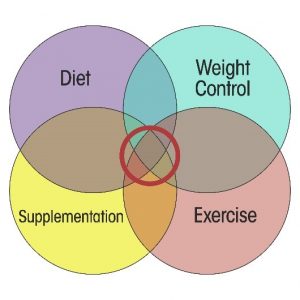
For the past 53 years Dr. Chaney and his wife Suzanne have been helping people improve their health holistically through a combination of good diet, exercise, weight control and appropriate supplementation.


How To Live To 117

The Secrets To A Long And Healthy Life

Author: Dr. Stephen Chaney

SecretsToday’s “Health Tip” is a bit unusual. It’s not based on a clinical study with thousands of participants. It’s not even a clinical study based on dozens of people. It’s a case study of one individual.

The study was published in Cell Reports Medicine, but I learned about it in our local newspaper (Yes, the professor still reads the newspaper in addition to published clinical studies. I don’t rely on the internet for all my information.)

I chose this case study because it was so interesting. It is based on the life of a woman, Maria Branyas Morera, who lived in good health to the age of 117. In her later years she asked her physician, Dr. Manel Estellar – chair of genetics at University of Barcelona’s School of Medicine, to study her and see if he could find out why she lived so long.

The results were fascinating. And while it could be argued that the data from a single individual may be misleading, the conclusions from her doctor’s investigation were consistent with the results of the much larger “Blue Zone” study of centenarians living in regions where a high percentage of people lived to 100 and beyond. I will talk about that study below.

How To Live To 117 

Maria Branyas was born in San Francisco in 1907 of Spanish immigrant parents. Her father died when she was 8 and her mother moved back to Spain to be with her family. She married and had a son who died at age 52 and two daughters who are now 92 and 94.

Part of the reason for her longevity was that she took good care of herself:

  • She followed a Mediterranean diet.
  • She did not smoke or drink.
  • She walked an hour every day until her 90s. Eventually she had to cut back because of physical limitations but remained as active as possible. When walking became difficult she entered a nursing home.
  • She kept mentally active. For example, she played the piano every day until she was 112.

Part of the reason was socioeconomic.

  • She and her family lived in the same town.
  • She had a close circle of friends and family for emotional support.
  • And as her friends died, she made new ones.
    • This is something that is often not discussed in the aging literature. As you age and your friends die off, it is easy to become isolated, which increases the likelihood of depression and death. The decision to make new friends in your latter years is a choice.

And part of the reason was genetic.

  • In the words of her doctor, “She won the genetic lottery with respect to genetic variants that protect against risk factors like high cholesterol, dementia, heart disease, and cancer.”
    • However, we need to remember that genetics is not everything. Other members of her immediate family shared the same genetic traits, yet died prematurely from Alzheimer’s, cancer, tuberculosis, and heart disease.
    • I like to say, “Genetics loads the gun. Lifestyle pulls the trigger”. In short, both contribute to longevity.

The final part of the puzzle goes beyond genetics.

  • She had an immune system that was unusually strong for someone her age and inflammation that was unusually low for someone her age. Those were probably due to:
    • Epigenetic modifications to her DNA that are associated with younger individuals.
      • Quick review: Epigenetic modifications affect gene activity and are controlled by diet, lifestyle, and the environment.
      • We can never know exactly what caused her youthful epigenetics, but she did have a very healthy diet and lifestyle.
    • She had a microbiome associated with low inflammation.
      • Quick Review: The term microbiome refers to all the microorganisms in our gut and elsewhere on our body. Our microbiome is strongly affected by what we eat and other lifestyle factors such as body weight.
      • In her case, one example of her anti-inflammatory microbiome was a high abundance of Bifidobacteria, probably a direct result of the three yogurts she ate each day.

The Secrets To A Long And Healthy Life 

blue zonesThis brings me to the “Blue Zone” study. I have talked about it in a previous issue of “Health Tips From The Professor”. Let me give you the short version here.

Dan Buettner is a journalist who was fascinated by the topic of longevity. He identified five regions from around the world where an unusually high percentage of people lived into their 100s. He then put together a team of top scientists in the fields of demographics, social anthropology and statistics to study the characteristics of centenarians in each of these regions and got National Geographic to fund the study.

You can see his book on the left, and I will summarize the main conclusions of his study below. Of course, the most important question is how the information garnered from Maria Branyas compares with the conclusions of the “Blue Zone” study. I will indicate that below.

#1: They engage in moderate intensity exercise every day. The answer for Maria is a clear, “Yes”.

#2: They stop eating before they are full. We don’t know this for sure, but she did appear to be at ideal weight towards the end of her life.

#3: They eat a mostly plant-based diet. She ate a Mediterranean diet which qualifies.

#4: They have a libation with their meals. For Maria, this is a “No”.

#5: They have a purpose in their life. We have no information on this aspect of Maria’s life.

#6: They set aside time for relaxation with friends and family. Clearly, this was important for Maria. As old friends died off, she searched for new ones.

#7: They participate in a spiritual community. We have no information on this aspect of Maria’s life.

#8: They put family first. Clearly, family was very important to Maria.

#9: They surround themselves with communities that share their values. It also appears that this was important to Maria.

In short, in his study of Maria’s secrets to longevity Dr. Esteller approached the question of longevity from a different perspective than Dan Buettner. It is regrettable that he didn’t use the data accrued by the “Blue Zone” study as a starting point for his study. But it is clear that Maria epitomized many of the longevity characteristics identified in the “Blue Zone” study.

And, of course, Dr. Esteller’s expertise is human genetics, and he added important information about the importance of genetics, epigenetics, and our microbiome in influencing longevity.

The Bottom Line

The world’s oldest human recently died at age 117. Before she died, gave her doctor permission to study her and determine how she was able to live so long. In short, she asked her doctor to use her life to understand how to help other people live a long and healthy life.

That study has recently been published. The results showed:

  • Her lifestyle mirrored many of the lifestyle characteristics that were associated with longevity in the previous “Blue Zone” study of centenarians (people living to 100 and beyond).
  • This study also identified genetic, epigenetic, and microbiome factors associated with longevity

For more details about the study, read the article above.

These statements have not been evaluated by the Food and Drug Administration. This information is not intended to diagnose, treat, cure or prevent any disease.

_____________________________________________________________________________

My posts and “Health Tips From the Professor” articles carefully avoid claims about any brand of supplement or manufacturer of supplements. However, I am often asked by representatives of supplement companies if they can share them with their customers.

My answer is, “Yes, as long as you share only the article without any additions or alterations. In particular, you should avoid adding any mention of your company or your company’s products. If you were to do that, you could be making what the FTC and FDA consider a “misleading health claim” that could result in legal action against you and the company you represent.

For more detail about FTC regulations for health claims, see this link.

https://www.ftc.gov/business-guidance/resources/health-products-compliance-guidance

________________________________________________________________________

About The Author 

Dr. Chaney has a BS in Chemistry from Duke University and a PhD in Biochemistry from UCLA. He is Professor Emeritus from the University of North Carolina where he taught biochemistry and nutrition to medical and dental students for 40 years.

Dr. Chaney won numerous teaching awards at UNC, including the Academy of Educators “Excellence in Teaching Lifetime Achievement Award”.

Dr Chaney also ran an active cancer research program at UNC and published over 100 scientific articles and reviews in peer-reviewed scientific journals. In addition, he authored two chapters on nutrition in one of the leading biochemistry text books for medical students.

Since retiring from the University of North Carolina, he has been writing a weekly health blog called “Health Tips From the Professor”. He has also written two best-selling books, “Slaying the Food Myths” and “Slaying the Supplement Myths”. And most recently he has created an online lifestyle change course, “Create Your Personal Health Zone”. For more information visit https://chaneyhealth.com.

For the past 53 years Dr. Chaney and his wife Suzanne have been helping people improve their health holistically through a combination of good diet, exercise, weight control and appropriate supplementation.

 

What Diet Is Best For Healthy Aging?

What About Primarily Meat-Based Diets?

Author: Dr. Stephen Chaney

Pinochio

It’s so confusing. Everyone claims they have clinical proof that their diet is the best. You will be healthier and live longer.

But the diets are so different. They range from vegan to keto. They can’t all be equally healthy. What is the truth?

To answer that question, we first need to understand how the proponents of each diet can claim theirs is the perfect diet for health and longevity. It’s because they base their claims on:

  • Short-term studies. Most of their claims are based on studies that range from a few weeks to a few months. You need 20- or 30-year studies to measure the effects of a particular diet on health outcomes.
  • Biological markers (Things like cholesterol and triglyceride levels, blood sugar control, and/or inflammation). Biological markers can predict possible health outcomes. But without long-term studies on actual health outcomes, you don’t know whether those predictions are accurate.
  • Comparisons with the typical American diet. Any diet looks good compared with the American diet.
  • Elimination of highly processed foods. While these diets emphasize different foods, they are all whole food diets. Again, any diet that eliminates processed foods is an improvement.
    • It doesn’t matter whether you restrict calories, restrict certain foods or food groups, or restrict the time you allow yourself to eat. You unconsciously eat less.
    • And when you eat less, you lose weight.
    • And when you lose weight, your cholesterol and triglyceride levels fall, your blood sugar control improves, and inflammation decreases.
    • That’s why short-term weight loss and improvement in biological markers are virtually identical with vegan and keto diets. Those diets are as different as any two diets could be. But they are both highly restrictive diets.

The take-home lesson is clear. Don’t be confused by claims based on short-term studies. What you should look for is:

  • Long-term studies (20 years or more)…
  • that look at the effect of diet on health outcomes, and…
  • do not compare their diet with the typical American diet.

When I first reviewed this topic 8 years ago, I could only find a few studies that met these criteria:

  • One study showed that people consuming primarily plant-based diets weighed less than people who consumed primarily meat-based diets for 20 years or more.
  • Other studies showed that people consuming primarily plant-based diets had a reduced risk of diabetes and heart disease compared to people consuming primarily meat-based diets for 20 years or more.

These are valuable observations, but they are limited. That’s why I was so excited when I came across a recent 30-year study (A-J Tessier et al, Nature Medicine, volume 31, pages 1644-1652, 2025) looking at the effect of 9 different diets on longevity and health outcomes. In short, this study looked at the effect of different diets on healthy aging.

How Was This Study Done?

Clinical StudyThe authors of this study used data from 105,015 participants in the Nurses’ Health Study (NHS) and Health Professionals Follow Up Study (HPFS). Both studies enrolled participants in 1986 and followed them through 2016. In short, they were both 30-year studies. Participants with preexisting chronic diseases were excluded from the study.

  • Lifestyle factors and medical histories were assessed every two years.
  • A detailed dietary assessment was conducted every four years. The assessments measured the intake of 152 foods. Food intakes were averaged over the duration of the study for each participant.

[Note: This study did not measure how the diets of participants changed between 1986 and 2016, although that is an interesting question. Perhaps a future study is planned.]

Based on the foods eaten, the diets of the participants were evaluated for adherence to 9 dietary patterns, which I have described in more detail below.

[Note: To be clear, the participants were not trying to follow these diets. They ate what they ate, and the investigators subsequently compared their dietary pattern with various healthy diets.]

For each of the diets included in this study, participants were divided into quintiles based on how closely their food intake adhered to the recommendations for that diet. Then the highest quintile was compared to the lowest quintile to determine how well that diet predicted “healthy aging” after a 30-year follow-up.

The term “healthy aging” was based on 5 criteria:

  • Longevity – achieving an age of 70 or more.
  • Absence of the top 11 major chronic diseases (cancer, diabetes, myocardial infarction (heart attack), coronary artery disease, congestive heart failure, stroke, Parkinson’s disease, multiple sclerosis, and ALS).
  • No impairment of cognitive function.
  • No impairment of physical health.
  • No mental health issues.

In other words, these were not just individuals who survived 70 years or more. They survived and thrived. They were enjoying their golden years because they still had good health and excellent quality of life.

Diets Included In This Study

The diets included in this study were:

  • AHEI – Alternative Healthy Eating Index (A scoring system developed by Harvard researchers to measure overall diet quality based on its ability to predict lower risks of heart attacks, strokes, and diabetes).
  • aMed – Alternative Mediterranean Diet Index (The aMed diet index differs from the original Med index by separating fruits and nuts into different groups, eliminating dairy, emphasizing whole grains, and excluding red and processed meats in favor of chicken and fish).
  • DASH – Dietary Approaches to Stop Hypertension (The name speaks for itself. But I also sometimes refer to this diet as “the Americanized version of the Mediterranean diet’ because it features foods more familiar to Americans. For example, it allows more red meat options than most of the other diets in this list.
  • MIND – Mediterranean-Dash intervention for Neurogenerative Delay (It is a dietary pattern designed to reduce the risk of Alzheimer’s disease and other forms of dementia. It combines elements of the Mediterranean and DASH diets but differs from both by emphasizing berries as a major fruit source, among other things.)
  • hPDI – Healthy Plant-Based Diet Index (It is a scoring system that measures adherence to a diet rich in healthy plant-based foods and lower consumption of less-healthy plant foods and animal foods.)
  • PHDI – Planetary Health Diet Index (It emphasizes foods (primarily plant foods) that are healthy and are good for the environment. Of the diets on this list, it is the most restrictive and closest to a vegan diet)
  • EDIH – Empirical Dietary Index For Hyperinsulinemia (It is a scoring system that measures the potential of a diet to cause chronically high insulin levels, which is associated with type 2 diabetes and certain cancers.)
  • EDIP – Empirical Dietary Inflammation Pattern (It is a scoring system that measures the inflammatory potential of a diet.)
  • UPF – Consumption of Ultraprocessed Foods (Since recent studies have shown that most Americans get between 55 and 70% of their calories from ultraprocessed foods, this is fast becoming a measure of the typical American diet.)

Note: Except for the UPF diet, these are all whole food, primarily plant-based diets.

What Diet Is Best For Healthy Aging?

Here are the results of the study (drum roll, please):

  • Of the 105,015 participants in this study, only 9.3% achieved healthy aging.
  • Adherence to any of the 8 healthy diets improved the probability of achieving healthy aging.
  • The odds of achieving healthy aging ranged from 1.45 for the Healthy Plant-Based Diet to 1.86 for the Alternative Healthy Eating Index.
  • If you were to pick one winner, it would be the Alternative Healthy Eating Index. And if you were to define healthy aging as achieving an age of 75 or more with the other 4 criteria, the odds increase to 2.24 (more than double) for the Alternative Healthy Eating Index.
  • As you might expect, adherence to a diet high in ultraprocessed foods had the opposite effect. It decreased the odds of achieving healthy aging by 32%.

When you look at each of the criteria for healthy aging individually, the results were a bit more nuanced:

  • For survival to 70+ years, the Alternative Healthy Eating Index and the Planetary Health Diet Index were tied. Both increased the odds of survival by more than 2-fold.
  • The Alternative Healthy Eating Index and the Planetary Health Diet Index were also tied for surviving to 70 with intake cognitive health and intact physical function.
  • The Empirical Dietary Index For Hyperinsulinemia edged out the Alternative Healthy Eating Index for freedom from 11 chronic diseases.

The effect of healthy diets on the odds of achieving healthy aging is independent from BMI, smoking, and physical activity. This means that:

  • The effects of healthy diets on healthy aging were not because people consuming healthy diets weighed less, smoked less, or exercised more.
  • Even if some of your lifestyle choices are suboptimal, choosing a healthy diet will increase your odds of surviving and thriving.

Finally, the study looked at the effects of individual foods on healthy aging. The results were:

  • Higher intakes of fruits, vegetables, whole grains, unsaturated fats, nuts, legumes, and low-fat dairy products increase your odds of healthy aging.
  • Higher intakes of trans fats, sodium, sugary beverages, and red or processed meats decrease your odds of achieving healthy aging.

The effects of these foods on healthy aging aren’t novel. They are consistent with dozens of other studies that have looked at the effect of individual foods on long-term health outcomes. In fact, the diets included in this study were chosen because they included foods that positively affect health outcomes and minimize foods that negatively affect health outcomes.

What About Primarily Meat-Based Diets?

the paleo dietI have good friends who advocate for primarily meat-based diets such as keto, paleo, and carnivore. I’m sure they are going to say, “This study is a sham. It only included primarily plant-based diets, so, of course, it is only going to show benefits for primarily plant-based diets.” I can hear their their questions now:

  • Why didn’t this study include any of the primarily meat-based diets? My answer is: “All the popular meat-based diets exclude one or more of the food groups associated with health and longevity and emphasize one or more of the food groups associated with a shorter, less healthy life. And these food associations are consistent among multiple long-term studies looking at the effect of various foods on health outcomes. 

The authors could have constructed a similar index for each of the popular meat-based diets. But they would have been the inverse of the plant-based diet indices because the foods included and excluded from plant-based and meat-based diets are opposite. Therefore, just like the UPF index, they would have been associated with a decreased probability of achieving healthy aging.”

  • Why did the scientists designing this study ignore the proven health benefits of primarily meat-based diets? My answer is: “The “proven benefits” of primarily meat-based diets are based on short-term studies showing the effects of those diets on biological markers. Long-term studies looking at health outcomes are lacking.”
  • But modern primarily meat-based diets are a special case because they limit carbohydrates and cause ketosis. Why weren’t they included in the study? My answer is: “The Atkins diet limits carbohydrates and causes ketosis. It has been around for more than 50 years. And, to my knowledge, there are no studies showing it is beneficial long term. If the Atkins diet cannot be shown to have long-term health benefits, it is unlikely that modern diets that mimic it are healthy long term.

What Does This Study Mean For You?

confusionThe answer is clear. If you want to survive and thrive in your 70s and beyond, choose a whole food, primarily plant-based diet.

If you want the absolute best diet, follow the Alternative Healthy Eating Index recommendations. There are many online resources to guide you.

However, any whole food, primarily plant-based diet will do. The ones with the most online resources are the Mediterranean, DASH, and MIND diets. Choose the one that best fits your food preferences and lifestyle.

If you want to go more vegetarian, the Healthy Plant-Based Diet is a bit easier than a strict vegan diet.

If you are concerned about the environment, the Planetary Diet is best for you.

If you have specific health issues like hypertension, diabetes, or inflammation, there are diets designed just for you.

And if following structured diets is not your style, just:

  • Eat more fruits, vegetables, whole grains, unsaturated fats, nuts, legumes, and low-fat dairy products.
  • Eat less trans fats, sodium, sugary beverages, and red or processed meats, and ultraprocessed foods.

Finally, even if some of your lifestyle choices are suboptimal, this study shows choosing a healthy diet will increase your odds of surviving to your 70s and thriving.

The Bottom Line

A recent 30-year study looked at the effect of 8 whole food, primarily plant-based diets on healthy aging defined as:

  • Achieving an age of 70 or more.
  • The absence of the top 11 major chronic diseases.
  • No impairment of cognitive function.
  • No impairment of physical health.
  • No mental health issues.

The key findings were:

  • Adherence to any of 8 whole food, primarily plant-based diets improved the probability of achieving healthy aging.
  • The odds of achieving healthy aging ranged from 1.45 for the Healthy Plant-Based Diet to 1.86 for the Alternative Healthy Eating Index.

For more information on this study, why primarily meat-based diets were not considered healthy enough to be included in this study, and what this study means for you, read the article above.

These statements have not been evaluated by the Food and Drug Administration. This information is not intended to diagnose, treat, cure or prevent any disease.

 ____________________________________________________________________________

My posts and “Health Tips From the Professor” articles carefully avoid claims about any brand of supplement or manufacturer of supplements. However, I am often asked by representatives of supplement companies if they can share them with their customers.

My answer is, “Yes, as long as you share only the article without any additions or alterations. In particular, you should avoid adding any mention of your company or your company’s products. If you were to do that, you could be making what the FTC and FDA consider a “misleading health claim” that could result in legal action against you and the company you represent.

For more detail about FTC regulations for health claims, see this link.

https://www.ftc.gov/business-guidance/resources/health-products-compliance-guidance

 _______________________________________________________________________

About The Author 

Dr. Chaney has a BS in Chemistry from Duke University and a PhD in Biochemistry from UCLA. He is Professor Emeritus from the University of North Carolina where he taught biochemistry and nutrition to medical and dental students for 40 years.  Dr. Chaney won numerous teaching awards at UNC, including the Academy of Educators “Excellence in Teaching Lifetime Achievement Award”. Dr Chaney also ran an active cancer research program at UNC and published over 100 scientific articles and reviews in peer-reviewed scientific journals. In addition, he authored two chapters on nutrition in one of the leading Biochemistry textbooks for medical students.

Since retiring from the University of North Carolina, he has been writing a weekly health blog called “Health Tips From the Professor”. He has also written two best-selling books, “Slaying the Food Myths” and “Slaying the Supplement Myths”. And most recently he has created an online lifestyle change course, “Create Your Personal Health Zone”. For more information visit https://chaneyhealth.com.

For the past 53 years Dr. Chaney and his wife Suzanne have been helping people improve their health holistically through a combination of good diet, exercise, weight control and appropriate supplementation.



The Low Carb Myth

The “Goldilocks Effect”

Author: Dr. Stephen Chaney

low carb dietThe low carb wars rage on. Low carb enthusiasts claim that low-carb diets are healthy. And they claim the lower you go, the healthier you will be. Let me start with some definitions:

  • The typical American diet is high carb. It gets about 55% of its calories from carbohydrates. [Note: The Mediterranean and DASH diets also get about 55% of their calories from carbohydrates. I’ll talk more about that later.]
  • Moderate carb diets get 26-46% of their calories from carbohydrates. Examples include the low carb Mediterranean diet and the Paleo, South Beach, and Zone diets.
  • Low carb diets get <26% of their calories from carbohydrates. The Atkins diet is the classic example of a low carb diet.
  • Very low carb diets get <10% of their calories from carbohydrates. Examples are the Keto and Carnivore diets.

And I don’t need to tell you that the Keto and Carnivore diets are receiving a lot of favorable press lately.

But some health experts warn that low carb and very low carb diets may be dangerous. For example, several studies have reported that low carb diets increase the risk of mortality (shorten lifespan).

As a consumer you are probably confused by the conflicting claims. Are low carb diets healthy, or is this another myth? In this issue of “Health Tips From the Professor” I am going to discuss two very large studies that came to opposite conclusions.

Both were what we call meta-analysis studies. Simply put, that means they combine the data from several smaller studies to obtain more statistically reliable data. But as Mark Twain said, “There are lies. There are damn lies. And then there are statistics.”

The first study, called the Prospective Urban Rural Epidemiology (PURE) study, was published a few years ago. It included data from 135,335 participants from 18 countries across 5 continents. That’s a very large study, and normally we expect very large studies to be accurate.

It showed a linear relationship between carbohydrate intake and mortality. Simply put, the more carbohydrate people consumed, the greater their risk of premature death. The results from the PURE study had low carb enthusiasts doing a victory lap and claiming it was time to rewrite nutritional guidelines to favor low carb diets.

SkepticWhenever controversies like this arise, reputable scientists are motivated to take another look at the question. They understand that all studies have their weaknesses and biases. So, they look at previous studies very carefully and try to design a study that eliminates the weaknesses and biases of those studies. Their goal is to design a stronger study that reconciles the differences between the previous studies.

And this study had two glaring weaknesses.

  • The percent carbohydrate intake ranged from 40% to 80%. It showed that a moderate carbohydrate intake might be healthier than a high carbohydrate intake, but it provided no information about low carb or very low carb diets.
  • The data was primarily from Asian countries. It was not clear whether it was relevant to the kind of diets consumed in North America and Europe.

A second study published a year later (SB Seidelmann et al, The Lancet, doi.org/10.1016/S2468-2667(18)30135-X) eliminated these weaknesses and resolved the conflicting data.

How Was The Second Study Done?

clinical studyThis study was performed in two parts. This first part drew on data from the Atherosclerosis Risk in Communities (ARIC) study. That study enrolled 15,428 men and women, aged 45-64, from four US communities between 1987 and 1989. This group was followed for an average of 25 years, during which time 6283 people died.

Carbohydrate intake was calculated based on food frequency questionnaires administered when participants enrolled in the study and again 6 years later. The study evaluated the association between carbohydrate intake and mortality.

The second part was a meta-analysis that combined the data from the ARIC study with all major clinical studies since 2007 that measured carbohydrate intake and mortality and lasted 5 years or more. The total number of participants included in this meta-analysis was 432,179, and it included data from previous studies that claimed low carbohydrate intake was associated with decreased mortality.

The Low Carb Myth

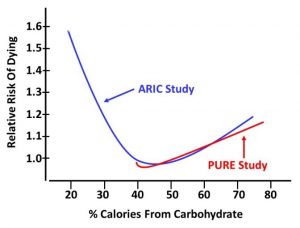
The results from the ARIC study were:

GravestoneThe relationship between mortality and carbohydrate intake was a U-shaped curve.

    • The lowest risk of death was observed with a moderate carbohydrate intake (50-55%). This is the intake recommended by current nutrition guidelines.
    • The highest risk of death was observed with a low carbohydrate intake (<20%).
    • The risk of death also increased with very high carbohydrate intake (>70%).
  • When the investigators used the mortality data to estimate life expectancy, they predicted a 50-year-old participant would have a projected life expectancy of:
    • 33.1 years if they had a moderate intake of carbohydrates.
    • 4 years less if they had a very low carbohydrate intake.
    • 1.1 year less if they had a very high carbohydrate intake.
  • And the risk associated with low carbohydrate intake was affected by what the carbohydrate was replaced with.
    • When carbohydrates were replaced with animal protein and animal fat there was an increased risk of mortality on a low-carb diet.

The animal-based low-carb diet contained more beef, pork, lamb, chicken, and fish. It was also higher in saturated fat.which low carb diets are healthy

    • When carbohydrates were replaced with plant protein and plant fats, there was a decreased risk of mortality on a low-carb diet. The plant-based low-carb diet contained more nuts, peanut butter, dark or whole grain breads, chocolate, and white bread. It was also higher in polyunsaturated fats.
  • The effect of carbohydrate intake on mortality was virtually the same for all-cause mortality, cardiovascular mortality, and non-cardiovascular mortality.
  • There was no significant effect of carbohydrate intake on long-term weight gain (another myth busted).

The results from the dueling meta-analyses were actually very similar in some respects. When the data from all studies were combined:

  • Very high carbohydrate diets were associated with increased mortality.
  • Meat-based low-carb diets increased mortality, and plant-based low-carb diets decreased mortality.
  • The results were the same for total mortality, cardiovascular mortality, and non-cardiovascular mortality.

The authors concluded: “Our findings suggest a negative long-term association between life-expectancy and both low carbohydrate and high carbohydrate diets…These data also provide further evidence that animal-based low carbohydrate diets should be discouraged.

Alternatively, when restricting carbohydrate intake, replacement of carbohydrates with predominantly plant-based fats and proteins could be considered as a long-term approach to healthy aging.”

Simply put, that means if a low carb diet works best for you, it is healthier to replace the carbs with plant-based fats and protein rather than animal-based fats and protein.

The “Goldilocks Effect”

Goldilocks EffectThis study also resolved the discrepancies between previous studies. The authors pointed out that the PURE study relied heavily on data from Asian and developing countries, and the average carbohydrate intake is very different in Europe and the US than in Asian and developing countries.

  • In the US and Europe mean carbohydrate intake is about 50% of calories and it ranges from 25% to 70% of calories. With that range of carbohydrate intake, it is possible to observe the increase in mortality associated with both very low and very high carbohydrate intakes.
  • The US and European countries are affluent, which means that low carb enthusiasts can also afford diets high in animal protein.
  • In contrast, white rice is a staple in Asian countries, and protein is a garnish rather than a main course. Consequently, overall carbohydrate intake is greater in Asian countries and very few Asians eat a truly low carbohydrate diet.
  • High protein foods tend to be more expensive than high carbohydrate foods. Thus, very few people in developing countries can afford to follow a very low carbohydrate diet, and overall carbohydrate intake also tends to be higher in those countries.

Therefore, in Asian and developing countries the average carbohydrate intake is greater (~61%) than in the US and Europe (~50%), and the range of carbohydrate intake is from 45% to 80% of calories instead of 25% to 70%. With this range of intake, it is only possible to see the increase in mortality associated with very high carbohydrate intake.ARIC Study

In fact, when the authors of the current study overlaid the data from the PURE study with their ARIC data, there was an almost perfect fit. The only difference was that their ARIC data covered both low and high carbohydrate intake while the PURE study touted by low carb enthusiasts only covered moderate to high carbohydrate intake.

[I have given you my rendition of the graph on the right. If you would like to see the data yourself, look at the paper.]

Basically, low carb advocates are telling you that diets with carbohydrate intakes of 26% or less are healthy based on studies that did not include carbohydrate intakes below 40%. That is misleading. The studies they quote are incapable of detecting the risks of low carbohydrate diets.

In short, the ARIC study finally answered the question, “How much carbohydrate should we be eating if we desire a long and healthy life?” The answer is “Enough”.

I call this “The Goldilocks Effect”. You may remember “Goldilocks And The Three Bears”. One bed was too hard. One bed was too soft. But one bed was “just right”. One bowl of porridge was too hot. One was two cold. But one was “just right”.

According to this study, the same is true for carbohydrate intake. High carbohydrate intake is unhealthy. Low carbohydrate intake is unhealthy. But moderate carbohydrate intake is “just right”.

What Does This Study Mean For You?

QuestionsThere are several important take-home lessons from this study:

1) All major studies agree that very high carbohydrate intake is unhealthy. In part, that reflects the fact that diets with high carbohydrate intake are likely to be high in sodas and sugary junk foods. It may also reflect the fact that diets which are high in carbohydrates are often low in plant protein or healthy fats or both.

2) All studies that cover the full range of carbohydrate intake agree that low and very low carbohydrate diets are also unhealthy. They shorten the life expectancy of a 50-year-old by about 4 years.

3) The studies quoted by low carb enthusiasts to support their claim that low-carb and very low carb diets are healthy don’t include carbohydrate intakes below 40%. That means their claims are misleading. The studies they quote are incapable of detecting the risks of low carbohydrate diets. Their claims are a myth.

4) Not all high carb diets are created equally. As I noted above, the Mediterranean and DASH diets are just as high in carbohydrates as the typical American diet, but their carbohydrates come from whole fruits and vegetables, whole grains, beans, nuts, and seeds. And multiple studies show that both diets are much healthier than the typical American diet.

5) Not all low carb diets are created equally. Meat-based low-carb diets decrease life expectancy compared to the typical American diets while plant-based low carb diets increase life expectancy.

6) The health risks of meat-based low-carb diets may be due to the saturated fat content or the heavy reliance on red meat. However, the risks are just as likely to be due to the foods these diets leave out – typically fruits, whole grains, legumes, and some vegetables.

7) Proponents of low-carb diets assume that you can make up for the missing nutrients by just taking multivitamins. However, each food group also provides a unique combination of phytonutrients and fibers. The fibers, in turn, influence your microbiome. Simply put, whenever you leave out whole food groups, you put your health at risk.

The Bottom Line

The low-carb wars are raging. Several studies have reported that low carb diets increase risk of mortality (shorten lifespan). However, a study published a few years ago came to the opposite conclusion. That study had low carb enthusiasts doing a victory lap and claiming it is time to rewrite nutritional guidelines to favor low-carb diets.

However, a study published a year later resolves the conflicting data and finally answers the question: “How much carbohydrate should we be eating if we desire a long and healthy life?” The answer is “Enough”.

I call this “The Goldilocks Effect”. According to this study, high carbohydrate intake is unhealthy. Low carbohydrate intake is unhealthy. But moderate carbohydrate intake is “just right”.

Specifically, this study reported:

  • Moderate carbohydrate intake (50-55%) is healthiest. This is the carbohydrate intake found in healthy diets like the Mediterranean and DASH diets, and is the intake recommended by current nutritional guidelines.
  • All major studies agree that very high carbohydrate intake (60-70%) is unhealthy. It shortens the life expectancy of a 50-year-old by about a year.
  • All studies that cover the full range of carbohydrate intake agree that low carbohydrate intake (<26%) is also unhealthy. It shortens the life expectancy of a 50-year-old by about 4 years.
  • The studies quoted by low carb enthusiasts to support their claim that low-carb diets are healthy don’t include carbohydrate intakes below 40%. That means their claims are misleading. The studies they quote are incapable of detecting the risks of low carbohydrate diets.
  • Meat-based low-carb diets decrease life expectancy while plant-based low carb diets increase life expectancy. This is consistent with the results of previous studies.

The authors concluded: “Our findings suggest a negative long-term association between life-expectancy and both low carbohydrate and high carbohydrate diets…These data also provide further evidence that animal-based low carbohydrate diets should be discouraged.”

Simply put, the latest study means that the supposed benefits of low carb diets are a myth.

For more details, read the article above.

These statements have not been evaluated by the Food and Drug Administration. This information is not intended to diagnose, treat, cure or prevent any disease.

___________________________________________________________________________

My posts and “Health Tips From the Professor” articles carefully avoid claims about any brand of supplement or manufacturer of supplements. However, I am often asked by representatives of supplement companies if they can share them with their customers.

My answer is, “Yes, as long as you share only the article without any additions or alterations. In particular, you should avoid adding any mention of your company or your company’s products. If you were to do that, you could be making what the FTC and FDA consider a “misleading health claim” that could result in legal action against you and the company you represent.

For more detail about FTC regulations for health claims, see this link.

https://www.ftc.gov/business-guidance/resources/health-products-compliance-guidance

 ______________________________________________________________________

About The Author 

Dr. Chaney has a BS in Chemistry from Duke University and a PhD in Biochemistry from UCLA. He is Professor Emeritus from the University of North Carolina where he taught biochemistry and nutrition to medical and dental students for 40 years.  Dr. Chaney won numerous teaching awards at UNC, including the Academy of Educators “Excellence in Teaching Lifetime Achievement Award”. Dr Chaney also ran an active cancer research program at UNC and published over 100 scientific articles and reviews in peer-reviewed scientific journals. In addition, he authored two chapters on nutrition in one of the leading biochemistry textbooks for medical students.

Since retiring from the University of North Carolina, he has been writing a weekly health blog called “Health Tips From the Professor”. He has also written two best-selling books, “Slaying the Food Myths” and “Slaying the Supplement Myths”. And most recently he has created an online lifestyle change course, “Create Your Personal Health Zone”. For more information visit https://chaneyhealth.com.

For the past 53 years Dr. Chaney and his wife Suzanne have been helping people improve their health holistically through a combination of good diet, exercise, weight control and appropriate supplementation.

The Alcohol Myth

How Were We Led Astray?

Author: Dr. Stephen Chaney 

You have probably heard that moderate alcohol consumption is healthier than complete abstinence from alcohol. It is certainly a popular viewpoint.

It is also a scientific paradigm. By that I mean:

  • It is supported by multiple clinical studies.
  • Elaborate metabolic explanations have been proposed to support this paradigm.
  • It is the official position of most medical societies, scientific organizations, and health information sites on the web.
  • It is the recommendation of most health professionals.
  • It has been repeated so often from so many trusted sources that everyone assumes it must be true.

But is it a myth? You may have been surprised when you saw recent headlines saying, “Having an alcoholic drink or two per day is not healthier than abstaining.”

Today I will review the study (J Zhao et al, JAMA Network Open, 6(3): e236185, 2023) behind the headlines and tell you what it means for you.

But first, I want to explain to you how the scientific method works. That’s because this study is a perfect example of the scientific method in action.

How Were We Led Astray?

I have described the scientific method in detail in my books “Slaying The Food Myths” and “Slaying The Supplement Myths”, which you will find here.

Today, I will just give you a brief synopsis of the scientific method.

1) Most scientific studies are designed to disprove existing scientific paradigms. This is such a study.

  • In the scientific world, there is no glory in being the 10th person to prove that a scientific paradigm is correct. The glory comes from being the first person to disprove a scientific paradigm and create a new paradigm in the process.
  • This constant testing of existing paradigms is one of the most important strengths of the scientific method.

2) There is no perfect study. Every study has its flaws.

  • “Confounding variables” are flaws that can be the Achilles Heel of any association study.

Now let me explain the significance of these statements in the context of the current study:

  • All the studies supporting the current paradigm were association studies. Association studies measure the association between a selected variable and an outcome. For these studies, the selected variable was alcohol consumption, and the outcome was increased mortality.
    • Association studies try to statistically correct for other variables known to affect the outcome. For example, diseases like heart disease, diabetes, and cancer increase the risk of premature death. These are known variables that would be corrected for in any well-designed study of alcohol consumption and mortality.
    • “Confounding variables” are unknown variables that also affect the outcome of the study. But since they are unknown, they are not corrected for.

Let me give you a simplistic example of a confounding variable. Let’s say you were doing a study of dietary habits, and you found an association between ice cream consumption and mortality. You might conclude that ice cream consumption is bad for you. It increases your risk of dying.

But then you might remember that ice cream consumption increases during the summer. And then you might reason that people swim more during the summer, and there is a correlation between swimming and drowning deaths.

Swimming could be a confounding variable. To make sure that your initial conclusion that ice cream increases the risk of dying was correct, you would need to correct your data for swimming deaths during the summer and see if you still found a correlation between ice cream consumption and mortality.

Could The Current Paradigm Be Incorrect?

SkepticYou might be thinking, “What does this have to do with studies on the correlation between alcohol consumption and increased mortality?” Let me explain.

The baseline group for these comparisons was the abstainers – the group consuming no alcohol. Previous studies have compared the mortality risk associated with various amounts of alcohol consumption with the mortality risk of the abstainer group. This sounds like a reasonable approach.

But the investigators challenging the current paradigm noted that the “abstainer group” in previous studies included both lifetime abstainers and former drinkers who had become abstainers. They hypothesized that the “former drinkers” group may have become abstainers because of health issues related to excess alcohol consumption.

In short, they hypothesized that the “former drinkers” group was a confounding variable that biased the results of the previous studies. They hypothesized that the “lifetime abstainers” group was a more appropriate baseline group for this kind of study. They then set out to prove their hypothesis.

How Was This Study Done?

clinical studyThe investigators searched the literature and found 107 studies with 4.8 million participants published between 1980 and July 21, 2021, that:

  • Assessed the correlation between alcohol consumption and mortality.
  • Had data that allowed the investigators to separate lifetime abstainers from former drinkers who had become abstainers.

The investigators divided alcohol consumption into low, moderate, high, and very high categories based on the ounces of alcohol consumed per day. Since ounces of alcohol is not an easy measure for most of us, I have converted ounces/day to drinks/day based on the CDC definition of a drink (a 12-ounce beer, 5-ounce glass of wine, or 1.5 ounces of a distilled spirit like gin or vodka). And to make it even simpler, I have rounded to the nearest whole number. With that said, here are the classifications.

  • Low alcohol intake = 1-2 drinks/day.
  • Moderate alcohol intake = 2-3 drinks/day.
  • High alcohol intake = 3-4 drinks/day.
  • Very high alcohol intake = >4 drinks/day.

The risk of death associated with each of these intake levels was compared the risk of death of their preferred baseline group, the “lifetime abstainers”.

Finally, the data were corrected for other variables known to influence the correlation between alcohol consumption and mortality, namely age, sex, heart health, social status, race, diet, exercise, BMI, and smoking status. [These are known confounding variables and had been adjusted for in most previous studies.]

The Alcohol Myth

Red WineWhen the investigators compared the mortality risk of former drinkers who had become abstainers with lifetime abstainers:

  • The former drinkers were 31% more likely to die, and this difference was highly significant.
  • This is consistent with their hypothesis that the “former drinkers” group was a confounding variable that may have biased the conclusions of previous studies.

When they compared the mortality risk of various levels of alcohol consumption with lifetime abstainers instead of all abstainers, they found:

  • The risk of mortality associated with low (1-2 drinks/day) and moderate (2-3 drinks/day) alcohol intake was statistically identical to the risk of mortality for lifetime abstainers.
  • The high alcohol intake group (3-4 drinks/day) was 24% more likely to die than the lifetime abstainers.
  • The very high alcohol intake group (>4 drinks/day) was 39% more likely to die than the lifetime abstainers.

In short, when lifetime abstainers were used as the baseline group, low to moderate alcohol intake did not reduce the risk of dying, as previous studies had suggested. This study suggests the idea that low to moderate alcohol consumption is good for us may not be accurate. It may be a myth.

Finally, there was a significant gender difference in the effect of alcohol consumption on mortality.

For women:

  • Even moderate alcohol consumption was associated with an increased risk of mortality. Only low alcohol consumption posed no increase in mortality.
  • The increased risk of mortality for women was significantly higher than for men with every level of alcohol consumption.

The authors concluded, “In this…meta-analysis, daily low or moderate alcohol intake was not significantly associated with all-cause mortality risk, while increased risk was evident at higher consumption levels, starting at lower levels for women than for men.”

Of course, this isn’t the end of the story. The scientific method will continue. Old paradigms don’t die easily. Other investigators will challenge the conclusions of this study. Stay tuned. I will give you updates as future studies are published.

What Does This Study Mean For You?

QuestionsIf you like to imbibe, there are two important takeaways from this study.

The bad news is that you can no longer claim that a drink or two a day is healthier than total abstinence from alcohol.

The good news is that this and every study preceding it have found that a drink or two a day is no less healthy than total abstinence. The studies found no increase in mortality associated with low to moderate alcohol intake.

[However, low to moderate alcohol intake may increase your risk of specific diseases. For example, many studies suggest that even low alcohol intake is associated with an increased risk of breast cancer.]

This study also agrees with previous studies that high alcohol intake increases your risk of death, and women are more susceptible to adverse effects of alcohol intake than men.

So, while this study challenges the existing paradigm that low to moderate alcohol intake is beneficial, it does not change the current recommendations on alcohol intake by most health organizations.

For example, the current CDC guidelines are:

  • Adults of legal drinking age should limit alcohol intake to 2 drinks or less per day for men and one drink or less per day for women.
  • Adults who do not drink alcohol should not start. [The current study strengthens this recommendation because it takes away the excuse that low to moderate alcohol consumption is healthier than abstinence.]
  • Drinking less is better than drinking more.

The CDC guidelines also note that the risk of some cancers increases even at very low levels of alcohol consumption.

Finally, the CDC recommends that some people never consume alcohol, including:

  • Women who are pregnant or might become pregnant.
  • Anyone younger than 21.
  • Anyone with medical conditions or medications that interact with alcohol.
  • Anyone recovering from an alcohol use disorder or who has trouble controlling the amount they drink.

The Bottom Line 

A recent study is a perfect example of the scientific method in action. Scientists are constantly challenging the existing scientific paradigms, and this is an important strength of the scientific method.

A group of scientists recently published a study challenging the paradigm that low to moderate alcohol intake is healthier than total abstinence from alcohol.

They hypothesized that previous studies supporting this paradigm had a common methodological flaw, corrected for the flaw, and reanalyzed the data from 104 studies with a total of 4.8 million participants.

The revised data showed no health benefit of low to moderate alcohol consumption compared to total abstinence. When you look at the data more closely, the current paradigm may be a myth.

  • This is a major change to the existing paradigm because it removes the justification for low to moderate alcohol consumption.

However, the revised data did not differ from previous studies in the following ways:

  • There is no health risk associated with low to moderate alcohol intake compared to total abstinence.
  • High alcohol intake (>3 drinks/day) is associated with increased mortality.
  • Women are more sensitive to the adverse effects of alcohol than men.

So, this study does not change current guidelines for alcohol consumption.

For more information on this study, what it means for you, and the CDC guidelines on alcohol consumption read the article above.

These statements have not been evaluated by the Food and Drug Administration. This information is not intended to diagnose, treat, cure, or prevent any disease.

______________________________________________________________________________

My posts and “Health Tips From the Professor” articles carefully avoid claims about any brand of supplement or manufacturer of supplements. However, I am often asked by representatives of supplement companies if they can share them with their customers.

My answer is, “Yes, as long as you share only the article without any additions or alterations. In particular, you should avoid adding any mention of your company or your company’s products. If you were to do that, you could be making what the FTC and FDA consider a “misleading health claim” that could result in legal action against you and the company you represent.

For more detail about FTC regulations for health claims, see this link.

https://www.ftc.gov/business-guidance/resources/health-products-compliance-guidance

______________________________________________________________________

About The Author 

Dr. Chaney has a BS in Chemistry from Duke University and a PhD in Biochemistry from UCLA. He is Professor Emeritus from the University of North Carolina where he taught biochemistry and nutrition to medical and dental students for 40 years.  Dr. Chaney won numerous teaching awards at UNC, including the Academy of Educators “Excellence in Teaching Lifetime Achievement Award”. Dr Chaney also ran an active cancer research program at UNC and published over 100 scientific articles and reviews in peer-reviewed scientific journals. In addition, he authored two chapters on nutrition in one of the leading Biochemistry textbooks for medical students.

Since retiring from the University of North Carolina, he has been writing a weekly health blog called “Health Tips From the Professor”. He has also written two best-selling books, “Slaying the Food Myths” and “Slaying the Supplement Myths”. And most recently he has created an online lifestyle change course, “Create Your Personal Health Zone”. For more information visit https://chaneyhealth.com.

For the past 53 years Dr. Chaney and his wife Suzanne have been helping people improve their health holistically through a combination of good diet, exercise, weight control and appropriate supplementation.

How Much Should You Walk?

Walking Your Way To Health 

Author: Dr. Stephen Chaney 

Overweight People ExercisingYou’ve made your New Year’s resolutions. And if you are like millions of Americans, you may already be making plans to join a gym, get a personal trainer, or join a spin class.

The problem is these are all expensive options. And a good portion of that money is wasted. To put it into perspective, let’s look at some statistics

  • Around 6 million Americans buy gym memberships every January.
    • 67% of those memberships are never used.
    • For those memberships used in January, another 50% are not in use 6 months later.
  • Americans spend about 1.6 billion dollars on unused gym memberships every year.
    • And that doesn’t include those gym memberships that are only occasionally used.

If you want to get fit and healthy in the new year, perhaps you should consider a less expensive option – like walking. Your only investments are a good pair of walking shoes and a device that keeps track of the number of steps you take (eg, Fitbit, smart watch, or smart phone).

You still may give up on your New Year’s goal of getting fitter at some point. But you won’t have wasted so much money.

Of course, you probably have some questions about the benefits of walking, such as:

1) Is walking enough to significantly improve my fitness and health?

2) How far (how many steps) should I walk?

3) How fast should I walk?

Fortunately, two recent studies (B del Pozo-Cruz et al, JAMA Internal Medicine, 182: 1139-1148, 2022) and (J del Pozo-Cruz et al, Diabetes Care, 45: 2156-2158, 2022) have answered all three questions.

How Were These Studies Done?

clinical studyThe first study (B del Pozo-Cruz et al, JAMA Internal Medicine, 182: 1139-1148, 2022) followed 78,500 participants (average age 61, 55% female, 97% white) enrolled in the UK Biobank study for an average of 7 years.

At the time of enrollment, each participant was given an accelerometer (a device that measures the number and frequency of steps) to wear on their dominant wrist for 24 hours/day for 7 days. The investigators used the accelerometer data to categorize several types of physical activity.

  • Daily step counts (the average number of steps per day for 7 days). These step counts were further subdivided into two categories:
    • Incidental steps (It was assumed that ˂40 steps/min represented steps taken that were incidental to normal daily activities).
    • Purposeful steps (It was assumed that ≥40 steps/min represented steps taken as part of planned exercise).
  • Stepping intensity (the highest frequency of steps/min averaged over 30 min intervals for all 7 days).

At the end of the study, each of these variables was correlated with the risk of premature deaths due to all causes, cancer, and heart disease.

The second study (J del Pozo-Cruz et al, Diabetes Care, 45: 2156-2158, 2022) was similar except that it:

  • Used data from 1687 adults (average age = 55, 56% male, with diabetes or prediabetes when the study began) in the 2005-2006 National Health and Nutrition Examination Survey in the US.
  • Followed participants for 9 years instead of 7.
  • Only measured total steps/day.
  • Correlated total steps per day with premature death for participants who already had prediabetes or diabetes when they entered the study.

Walking Your Way To Health

woman walking dogStudy 1 looked at the effect of walking on health outcomes in multiple ways.

#1: Increase in number of steps/day:

  • On average study participants took an average of 7200 steps per day, but this ranged from a low of 3,200 steps/day to a high of 12,200 steps/day.
  • Each increase of 2,000 steps/day was associated with a:
    • 8% decrease in all-cause mortality.
    • 11% decrease in cancer mortality.
    • 10% decrease in heart disease mortality.
  • Overall, increasing from 3,200 steps/day to 10,000 steps/day decreased all-cause, cancer, and heart disease mortality by around 36%.
  • There was no minimum threshold to this beneficial effect of walking on the risk of premature death.
  • The benefits of walking appeared to plateau at 10,000 steps/day.

#2: Increase in number of incidental steps/day (steps taken that are incidental to normal daily activities):

  • On average study participants took 3240 incidental steps/day, but this ranged from a low of 2,100 steps/day to a high of 4,400 steps/day.
  • Each 10% increase in incremental steps/day was associated with a:
    • 6% decrease in all-cause mortality.
    • 6% decrease in cancer mortality.
    • 10% decrease in heart disease mortality.

#3: Increase in number of purposeful steps/day (steps taken as part of planned exercise):

  • On average study participants took 4,600 purposeful steps/day, but this ranged from a low of 1,600 steps/day to a high of 8,600 steps/day.
  • Each 10% increase in purposeful steps/day was associated with a:
    • 7% decrease in all-cause mortality.
    • 8% decrease in cancer mortality.
    • 10% decrease in heart disease mortality.

#4: Increase in speed of walking or cadence. The measurement they used was “peak-30 cadence” – the Walking Fasthighest average steps/min during a 30-minute interval within a day:

  • On average study participants had a “peak-30 cadence” of 76 steps/min, but this ranged from a low of 47 steps/min to a high of 109 steps/min.
  • Each 10% increase in “peak-30 cadence” was associated with a:
    • 8% decrease in all-cause mortality.
    • 9% decrease in cancer mortality.
    • 14% decrease in heart disease mortality.
  • The benefits of walking rapidly (increase in “peak-30 cadence”) were in addition to the benefits seen by increasing the number of steps per day.
  • Overall, increasing from a “peak-30 cadence” of 47 steps/min to 109 steps/min decreased all-cause, cancer, and heart disease mortality by an additional 34%.
  • There was no minimum threshold to this beneficial effect of increasing “peak-30 cadence” (the speed of walking) on the risk of premature death.
  • The benefits of increasing “peak-30 cadence” appeared to plateau at 100 steps/min.

strong heart#5 Effect of walking on the prevention of heart disease and cancer: The investigators measured this by looking at the effect of walking on the “incidence” of heart disease and cancer (defined as new diagnoses of heart disease and cancer) during the study. They found.

  • Each 2,000-step increase in the total number of steps/day decreased the risk of developing heart disease and cancer by 4% during this 7-year study.
  • Each 10% increase in the number of purposeful steps/day decreased the risk of developing heart disease and cancer by 4% during this study.
  • Each 10% increase in “peak-30 cadence” decreased the risk of developing heart disease and cancer by 7% during this study.

The authors concluded, “The findings of this population-based…study of 78,500 individuals suggest that up to 10,000 steps/day may be associated with a lower risk of mortality and cancer and CVD incidence. Steps performed at a higher cadence may be associated with additional risk reduction, particularly for incident disease.”

Study 2 extended these findings to diabetes. They started with participants that had either prediabetes or diabetes diabetesand followed them for 9 years. They found that:

  • Study participants with prediabetes ranged from a low of 3,800 steps/day to a high of 10,700 steps/day.
    • Prediabetic participants walking 10,700 steps/day were 25% less likely to die during the study than participants walking only 3,800 steps/day.
  • Study participants with diabetes ranged from a low of 2,500 steps/day to a high of 10,200 steps/day.
    • Diabetic participants walking 10,200 steps/day were also 25% less likely to die during the study than participants walking only 2,500 steps/day.
  • Even small increases in the number of steps per day decreased the risk of premature death for both prediabetic and diabetic participants.
  • Once again, 10,000 steps/day appeared to be the optimal dose to lower the risk of premature death for both diabetic and prediabetic patients.

The authors of this study concluded, “Accumulating more steps/day up to ~10,000 steps/day may lower the risk of all-cause mortality of adults with prediabetes and diabetes.”

How Much Should You Walk?

Walking CoupleThat was a lot of information. You are probably wondering what it means for you. Let’s start with the big picture:

  • Going from couch potato to 10,000 steps per day may reduce your risk of premature death due to all causes, cancer, and heart disease by 36% (24% if you are already prediabetic or diabetic).
  • Increasing the speed with which you walk from 47 steps/min to 109 steps/min sustained for 30 minutes may reduce your risk of premature death by an additional 34%.

In other words, simply walking more and walking faster can have a significant effect on your health. I am not recommending walking as your only form of exercise. I’m just saying not to consider it inferior to other forms of exercise.

  • There is no lower limit to the benefits of walking. Even small increases in the number of steps/day you take and the speed with which you walk may have a beneficial effect on your health.

In other words, you don’t need to speed walk 10,000 steps/day to reap a benefit from walking. Even small increases are beneficial. That’s good news for those of you who may not be able to speed-walk long distances. It also means that if you are a couch potato, you don’t need to attempt 10,000 steps at high speed from day 1. You can work up to it gradually.

  • Incidental walking (walking that is incidental to your daily activities) is almost as beneficial as purposeful walking (walking as part of a planned exercise).

That’s good news for those of you who may not have time for long walks. It also means that advice like “park your car at the far end of the parking lot and walk” or “take the stairs rather than the elevator” can have a meaningful impact on your health.

  • The benefits of walking appear to max out at around 10,000 steps per day and a cadence of 100 steps/min sustained for 30 minutes.

That means once you get to those levels, it’s time to consider adding other kinds of exercise to your regimen. More and faster walking may offer little additional benefit.

Finally, in the words of the authors, “This information could be used to motivate the least active individuals to increase their steps and the more-active individuals to reach the 10,000-step target.”

The Bottom Line 

You’ve made your New Year’s resolutions. And if you are like millions of Americans, you may already be making plans to join a gym, get a personal trainer, or join a spin class.

If you want to get fit and healthy in the new year, perhaps you should also consider a less expensive option – like walking.

Of course, you probably have some questions about the benefits of walking, such as:

  1. Is walking enough to significantly improve my fitness and health?

2) How far (how many steps) should I walk?

3) How fast should I walk?

Fortunately, two recent studies have answered all three questions. They found:

  • Going from couch potato to 10,000 steps per day may reduce your risk of premature death due to all causes, cancer, and heart disease by 36% (24% if you are already prediabetic or diabetic).
  • Increasing the speed with which you walk from 47 steps/min to 109 steps/min sustained for 30 minutes may reduce your risk of premature death by an additional 34%.
  • There is no lower limit to the benefits of walking. Even small increases in the number of steps/day you take and the speed with which you walk may have a beneficial effect on your health.
  • Incidental walking (walking that is incidental to your daily activities) is almost as beneficial as purposeful walking (walking as part of a planned exercise).
  • The benefits of walking appear to max out at around 10,000 steps per day and a cadence of 100 steps/min sustained for 30 minutes.

In the words of the authors of these studies, “This information could be used to motivate the least active individuals to increase their steps and the more-active individuals to reach the 10,000-step target.”

For more details on these studies and what they mean for you, read the article above.

These statements have not been evaluated by the Food and Drug Administration. This information is not intended to diagnose, treat, cure, or prevent any disease.

 _____________________________________________________________________________

My posts and “Health Tips From the Professor” articles carefully avoid claims about any brand of supplement or manufacturer of supplements. However, I am often asked by representatives of supplement companies if they can share them with their customers.

My answer is, “Yes, as long as you share only the article without any additions or alterations. In particular, you should avoid adding any mention of your company or your company’s products. If you were to do that, you could be making what the FTC and FDA consider a “misleading health claim” that could result in legal action against you and the company you represent.

For more detail about FTC regulations for health claims, see this link.

https://www.ftc.gov/business-guidance/resources/health-products-compliance-guidance

 ______________________________________________________________________

About The Author 

Dr. Chaney has a BS in Chemistry from Duke University and a PhD in Biochemistry from UCLA. He is Professor Emeritus from the University of North Carolina where he taught biochemistry and nutrition to medical and dental students for 40 years.

Dr. Chaney won numerous teaching awards at UNC, including the Academy of Educators “Excellence in Teaching Lifetime Achievement Award”.

Dr Chaney also ran an active cancer research program at UNC and published over 100 scientific articles and reviews in peer-reviewed scientific journals. In addition, he authored two chapters on nutrition in one of the leading biochemistry text books for medical students.

Since retiring from the University of North Carolina, he has been writing a weekly health blog called “Health Tips From the Professor”. He has also written two best-selling books, “Slaying the Food Myths” and “Slaying the Supplement Myths”. And most recently he has created an online lifestyle change course, “Create Your Personal Health Zone”. For more information visit https://chaneyhealth.com.

For the past 45 years Dr. Chaney and his wife Suzanne have been helping people improve their health holistically through a combination of good diet, exercise, weight control and appropriate supplementation.

Do Optimists Live Longer?

What Does This Study Mean For You? 

Author: Dr. Stephen Chaney 

You have probably heard the statement that optimists live longer before. In fact, you have probably heard so many times you assume it must be true. But is it a myth or is it the truth?

This question is important because it can affect how people feel about themselves. If you are a natural optimist, statements like this support your feeling of self-worth. But if you are naturally pessimistic, statements like this provide one more reason to feel bad about yourself.

For example, a recent article on the topic in WebMD starts with the statement, “Want to live longer? You might want to try improving your outlook on life.” I am mostly optimistic, so I find this statement to be positive and encouraging.

But I am not sure I would feel about this statement if I were pessimistic or depressed and had tried for years to be more optimistic.

Because of this it is important to ask, “How good is the evidence supporting this claim?”

There are several published studies supporting this claim (For example). However,

  • Most of these studies have been performed with white, high-income participants. It is not clear whether these same results would apply to other racial and ethnic groups.
  • There is also the “chicken versus egg” conundrum. The studies claiming that optimists live longer are all association studies. Simply put, that means optimism is associated with longevity, but does not prove cause and effect. That is important because:
    • Some studies show that both a healthy diet and exercise improve mood.
    • Other studies show that optimists tend to take better care of themselves, and that includes both diet and exercise.
    • So, it’s hard to know which comes first – a healthy lifestyle, which creates optimism, or optimism, which creates a healthy lifestyle.
  • Because of this “chicken versus egg” conundrum, it is not clear whether it is a healthy lifestyle or optimism that is the primary cause of greater longevity.

The study (HK Koga et al, Journal of the American Geriatrics Society, 70: 2793-2804, 2022)) I will review today was designed to answer both questions. Specifically, this study was designed to ask:

  • Is higher optimism associated with a longer lifespan and exceptional longevity across diverse racial and ethnic groups?
  • To what extent do lifestyle factors influence this association?

How Was The Study Done?

clinical studyThe data for this study was obtained from the Women’s Health Initiative which enrolled 161,808 postmenopausal women of diverse racial and ethnic groups from 40 medical centers within the United States between 1993 and 1998. The women were aged 50-79 (average = 63.5) at enrollment and were followed for an average of 26 years.

Optimism was assessed at enrollment into the program using the 6-item Life Orientation Test Revised. For each item on the questionnaire, participants were asked to report the degree they agreed with each statement on a scale of 1 = “strongly agree” to 5 = “strongly disagree”. Their responses were summed to create scores ranging from 6 to 30, with 30 being the highest optimism rating.

Lifestyle was assessed on a questionnaire measuring diet quality, physical activity, BMI (a measure of obesity), smoking status, and alcohol consumption. If participants met predefined “healthy standards in each of these categories, they were given a score of 1. Otherwise, their score was 0. Scores from each category were summed to create a composite lifestyle score ranging from 0 (least healthy) to 5 (most healthy).

Longevity was based on survival compared to national averages using the National Death Index (Yes, “Big Brother” is watching you even when you die) to identify and confirm deaths. Deaths of participants were monitored through March 1, 2019. Exceptional longevity was defined as survival to age 90 or older. Overall, 64,301 women (40.3%) died over the 26 years of follow-up.

Finally, women who died within the first 2 years of follow-up were excluded from the data analysis “to mitigate concerns that health status might affect the reporting or experience of optimism levels.” In plain English, people who are within 2 years of dying are often very sick and feel lousy. Even the most optimistic individuals find it hard to maintain an optimistic outlook in those circumstances. This left 159,255 women in the database.

Do Optimists Live Longer?

When comparing women in the highest to women in the lowest quartile of optimism:

  • Longevity was increased by 5.4%, which corresponds to an additional 4.4 years. When this was broken down by race and ethnicity, longevity was increased by:
    • 1% for Non-Hispanic White women.
    • 6% for Black women.
    • 4% for Hispanic women.
    • 5% for Asian women. However, this may have been an underestimate because of the small sample size of this population in the Women’s Health Initiative database.
  • Exceptional longevity (survival ≥ 90 years) was increased 10%.

When the authors used a complex statistical method to assess the contribution of lifestyle to the increase in longevity, they found:

  • Lifestyle contributed to 24% of the increased longevity. When this was broken down by race and ethnicity, lifestyle contributed:
    • 25% for Non-Hispanic White women.
    • 10% for Black women.
    • 24% for Hispanic women.
    • 43% for Asian women.

The authors concluded, “We found that higher levels of optimism were associated with longer lifespan and greater likelihood of achieving exceptional longevity across racial and ethnic groups, suggesting the health benefits of optimism may hold across these groups.”

“The contribution of lifestyle to these associations was evident but modest.”

“As prior work has demonstrated that optimism is modifiable, it may be a novel target for interventions that aim to extend lifespan across diverse racial and ethnic groups.”

What Are The Strengths And Weaknesses Of This Study?

strengths and weaknessesThis is not the first study to suggest that optimists live longer. But it is the best study to date because:

  • It was larger (159,255 participants) than most previous studies.
  • It followed the participants far longer (26 years) than previous studies.
  • It included a more racially and ethnically diverse group of participants than previous studies.
  • It addressed the “elephant in the room” for studies of this type, namely that optimists tend to actively seek a healthier lifestyle, so the “benefits” of optimism could be due to a healthy lifestyle rather than a state of mind. The study employed statistics to estimate that a healthy lifestyle contributed around 25% to the longevity experienced by optimists.

However, the study did have some weaknesses. In my opinion, the most important weaknesses were:

  • Optimism and lifestyle were only assessed at the beginning of the study. No effort was made to determine whether either of these important variables changed during the 26-year study.
  • The relative influence of lifestyle and optimism on longevity was based on a complex statistical analysis. As Mark Twain said, “There are lies, damn lies, and statistics.” Simply put, statistics can sometimes give misleading answers. I would like to see this very important part of the study confirmed using a different method of analysis.

What Does This Study Mean For You?

Questioning WomanAs I shared above, I have some misgivings about this and other studies claiming that optimists live longer. But let’s assume this claim is true. What does that mean for you?

A 5.4% increase in lifespan might not sound like much, but it added 4.4 years to the lives of the women in the study. What would you do with an extra 4.4 years?

And, as the authors of the study pointed out, that’s equivalent to the gain in lifespan for adults engaged in a regular exercise program. Are those benefits addible? We don’t know, but it is possible that an optimist who exercised regularly and had a healthy diet might experience more than a 4-year gain in lifespan.

The authors said, “Although optimism is partly heritable (23-32%), experimental research has demonstrated that optimism is modifiable…”

Let me share a few things that have helped me maintain a more optimistic outlook:

  • Affirmations and visualizations of a positive future.
  • I start my daily prayers by listing the things I am grateful for. For others, a gratitude journal works equally well.
  • Accept positive input. You can accept compliments with humility by simply thanking the person for the compliment. But in your mind, use the compliment to overcome your inner doubts of self-worth.
  • Question negative input. Ask if each critic is the kind of person you want to become. If so, ask if what they said is really true.
  • Create a support network. These are family and friends who will support you when you need it and will give you a gentle kick in the …. when you need that.
  • Trust in a higher power. I know from experience that it is only God who can give me the “peace that passes all understanding” in my most difficult circumstances. And while I am Christian, I think this is a cornerstone of most religions.

Finally, I know that many people are predisposed to depression and pessimism, so I don’t want to be like the author of the WebMD article and tell you, “Want to live longer? You might want to try improving your outlook on life.”

We know that a healthy lifestyle is associated with longevity. And you don’t have to be an optimist to choose a healthy diet, exercise regularly, avoid smoking and excess alcohol intake, and get regular health check-ups.

We also know these things are associated with a longer healthspan which, simply put, is the number of years you live in good health.

So, whether you are a pessimist or an optimist you can live healthier longer.

The Bottom Line

You have probably heard that optimists live longer, but is it true? In the article above I describe the latest study on this topic. It is better than most previous studies on this topic because:

  • It was larger (159,255 participants) than most previous studies.
  • It followed the participants far longer (26 years) than previous studies.
  • It included a more racially and ethnically diverse group of participants than previous studies.
  • It addressed the “elephant in the room” for studies of this type, namely that optimists tend to actively seek a healthier lifestyle, so the “benefits” of optimism could be due to a healthy lifestyle rather than a state of mind. The study employed statistics to estimate that a healthy lifestyle contributed around 25% to the longevity experienced by optimists.

When the study compared women in the highest to women in the lowest quartile of optimism:

  • Longevity was increased by 5.4%, which corresponds to an additional 4.4 years.
  • Exceptional longevity (survival ≥ 90 years) was increased by 10%.
  • Lifestyle contributed to 24% of the increased longevity.

The authors concluded, “We found that higher levels of optimism were associated with longer lifespan and greater likelihood of achieving exceptional longevity across racial and ethnic groups, suggesting the health benefits of optimism may hold across these groups.”

“As prior work has demonstrated that optimism is modifiable, it may be a novel target for interventions that aim to extend lifespan across diverse racial and ethnic groups.”

For more details on this study and what it means for you, read the article above.

These statements have not been evaluated by the Food and Drug Administration. This information is not intended to diagnose, treat, cure or prevent any disease.

______________________________________________________________________________

My posts and “Health Tips From the Professor” articles carefully avoid claims about any brand of supplement or manufacturer of supplements. However, I am often asked by representatives of supplement companies if they can share them with their customers.

My answer is, “Yes, as long as you share only the article without any additions or alterations. In particular, you should avoid adding any mention of your company or your company’s products. If you were to do that, you could be making what the FTC and FDA consider a “misleading health claim” that could result in legal action against you and the company you represent.

For more detail about FTC regulations for health claims, see this link.

https://www.ftc.gov/business-guidance/resources/health-products-compliance-guidance

______________________________________________________________________

About The Author 

Dr. Chaney has a BS in Chemistry from Duke University and a PhD in Biochemistry from UCLA. He is Professor Emeritus from the University of North Carolina where he taught biochemistry and nutrition to medical and dental students for 40 years.

Dr. Chaney won numerous teaching awards at UNC, including the Academy of Educators “Excellence in Teaching Lifetime Achievement Award”.

Dr Chaney also ran an active cancer research program at UNC and published over 100 scientific articles and reviews in peer-reviewed scientific journals. In addition, he authored two chapters on nutrition in one of the leading biochemistry text books for medical students.

Since retiring from the University of North Carolina, he has been writing a weekly health blog called “Health Tips From the Professor”. He has also written two best-selling books, “Slaying the Food Myths” and “Slaying the Supplement Myths”. And most recently he has created an online lifestyle change course, “Create Your Personal Health Zone”. For more information visit https://chaneyhealth.com.

For the past 45 years Dr. Chaney and his wife Suzanne have been helping people improve their health holistically through a combination of good diet, exercise, weight control and appropriate supplementation.

Can Diet Add Years To Your Life?

Which Foods Have The Biggest Effect On Longevity? 

Author: Dr. Stephen Chaney

Fountain Of YouthEveryone over 50 is searching for the elusive “Fountain Of Youth”.

  • We want to look younger.
  • We want to feel younger.
  • We want the energy we had in our 20s.
  • We want to be rid of the diseases of aging.

The list goes on!

But how do we do that? Pills and potions abound that claim to reverse the aging process. Most just reverse your wallet.

  • Should we train for marathons or bodybuilding contests?
  • Should we meditate or do yoga to relieve stress?
  • Should we get serious about losing weight?
  • Should we get more sleep?
  • Is there some miracle diet that can slow the aging process?

All the above probably slow the aging process, but the evidence is best for the effect of diet on aging. Several recent meta-analyses have looked at the effect of diet on the risk of premature deaths. In this issue of “Health Tips From the Professor” I review a study (LT Fadnes et al, PLoS Medicine, February 8, 2022) that combines the best of these meta-analyses into a single database and provides a provocative insight into the effect of diet on longevity.

How Was This Study Done?

Clinical StudyThis study combined data from recent meta-analyses looking at the impact of various food groups on the risk of premature deaths with the Global Burden of Disease Study which provides population-level estimates of life years lost due to dietary risk factors.

The authors then developed a new algorithm that allowed them to estimate how different diets affect sex- and age-specific life expectancy.

They divided the population into three different diet categories based on their intake of whole grains, vegetables, fruits, nuts, legumes, fish, eggs, dairy, refined grains, red meat, processed meat, white meat, sugar-sweetened beverages, and added plant oils. The diet categories were:

  • Typical Western Diet (TW). This diet was based on average consumption data from the United States and Europe. This was their baseline.
  • Optimal diet (OD). This diet is similar to a vegan or semi-vegetarian diet. However, it was not a purely vegan diet nor a purely semi-vegetarian diet. Instead, it represented the best diet people in this study were consuming.
  • Feasibility diet (FA). This diet recognizes that few people are willing to make the kind of changes required to attain an optimal diet. It is halfway between the Typical Western Diet and the Optimal Diet.

To help you understand these diets based on the foods the study participants were eating, here are the comparisons in terms of daily servings:

Food TW Diet FA Diet OD Diet
Whole grains 1.5 servings 4.3 servings 7 servings
Vegetables 3 servings 4 servings 5 servings
Fruits 2.5 servings 3.75 servings 5 servings
Nuts 0 serving* 0.5 serving* 1 serving*
Legumes 0 serving** 0.5 serving** 1 serving**
Fish 0.25 serving 0.5 serving 1 serving
Eggs 1 egg 0.75 egg 0.5 egg
Dairy 1.5 servings 1.25 servings 1 serving
Refined grains 3 servings 2 servings 1 serving
Red meat 1 serving 0.5 serving 0 serving
Processed meat 2 servings 1 serving 0 serving
White meat 0.75 serving 0.6 serving 0 serving
Sugar-sweetened beverages 17 oz 8.5 oz 0 oz
Added plant oils 2 tsp 2 tsp 2 tsp

*1 serving = 1 handful of nuts

**1 serving = 1 cup of beans, lentils, or peas

Using their algorithm, the authors asked what the effect on longevity would be if people changed from a typical western diet to one of the other diets at age 20, 60, or 80 and maintained the new diet for at least 10 years. The 10-year requirement is based on previous studies showing that it takes around 10 years for dietary changes to affect the major killer diseases like heart disease, cancer, or diabetes.

Finally, the authors improved the accuracy of their estimates of the effect of diet on longevity by taking into account the quality of each study included in their analysis. I will discuss the importance of this below.

Can Diet Add Years To Your Life?

The results were impressive.

The authors estimated that if people in the United States were to change from a typical western diet to an “optimal diet” and maintain it for at least 10 years,

…starting at age 20, men would live 13 years longer and women would live 10.7 years longer.

…starting at age 60, men would live 8.8 years longer and women would live 8 years longer.

…starting at age 80, both men and women would live 3.4 years longer.

But what if you weren’t a vegan purist? What if you only made half the changes you would need to make to optimize your diet? The news was still good.

The authors estimated that people in the United States were to change from a typical western diet to a “feasibility diet” and maintain it for at least 10 years,

…starting at age 20, men would live 7.3 years longer and women would live 6.2 years longer.

…starting at age 60, men would live 4.8 years longer and women would live 4.5 years longer.

…starting at age 80, both men and women would live ~2 years longer.

The authors concluded, “A sustained dietary change may give substantial health gains for people of all ages for both optimized and feasible [diet] changes. [These health gains] could translate into an increase in life expectancy of more than 10 years. Gains are predicted to be larger the earlier the dietary changes are initiated in life.”

Which Foods Have The Biggest Effect On Longevity?

The algorithm the authors developed also allowed them to look at which foods have the biggest effect on longevity. The authors estimated when changing from a typical western diet to an optimal diet, the greatest gains in longevity were made by eating:

  • More legumes, whole grains, and nuts, and…
  • Less red and processed meat.

The authors concluded, “An increase in the intake of legumes, whole grains, and nuts, and a reduction in the intake of red meat and processed meats, contributed most to these gains [in longevity].”

However, this conclusion needs to be interpreted with caution. We also need to recognize that an “optimal diet” was defined as the best diet people in this study were eating. In addition, the effect of different foods on longevity depends on:

  • The quality of the individual studies with that food, and…
  • The difference in consumption of that food in going from a western diet to an optimal diet.

For example:

  • Legumes, whole grains, nuts, red & processed meat made the list because the quality of data was high and the difference in consumption between the typical western diet and optimal diet was significant.
  • The quality of data for an effect of fruits and vegetables was also high. For example, one major study concluded that consuming 10 servings a day of fruits and vegetables a day reduces premature death by 31% compared to consumption of less than 1 serving a day. However, the difference in consumption of fruits and vegetables between the western and optimal diets in this study was small, so fruits and vegetables didn’t make the list.
  • Eggs and white meat didn’t make the list because the quality of data was low for those foods. Simply put,  that means that there was a large variation in effect of those foods on longevity between studies.
  • Other foods didn’t make the list because the quality of data was only moderate and/or the difference in intake was small.

So, the best way to interpret this these data is:

  • This study suggests that consuming more legumes, whole grains, and nuts and less red & processed meats has a significant beneficial effect on health and longevity.
  • Consuming more fruits and vegetables is likely to have a significant benefit on health and longevity, but you would need to consume more than people did in this study to achieve these benefits. In the words of the authors, “Fruits and vegetables also have a positive health impact, but, for these food groups, the intake in a typical Western diet is closer to the optimal intake than for the other food groups.”
  • Other foods may impact health and longevity, but the data in this study are not good enough to be confident of an effect.

What Does This Study Mean For You?

This study is the best of many studies showing the benefit of a more plant-based diet on health and longevity. It particularly encouraging because it shows:

  • You can achieve significant benefit by switching to a more plant-based diet late in life. You get the biggest “bang for your buck” if you switch at age 20. But even making the switch at age 60 or 80 was beneficial.
  • You don’t need to be a “vegan purist”. While the biggest benefits were seen for people who came close to achieving a vegan or semi-vegetarian diet, people who only made half those changes saw significant benefits.

As I said above, this is a very strong study. However, the underlying data come from association studies, which can have confounding variables that influence the results.holistic approach

For example, people who eat more plant-based diets tend to weigh less and exercise more. And both of those variables can influence longevity. Each study attempted to statistically correct for those variables, but they still might have a slight influence on the results.

However, I don’t see that as a problem because, in my view, a holistic approach is always best. As illustrated on the right, we should be seeking a lifestyle that includes a healthy diet, weight control, and exercise.

As for supplementation, both the vegan and semi-vegetarian diets tend to leave out whole food groups. Unless you are married to a dietitian, that means your diet is likely to be missing important nutrients.

The Bottom Line

A recent study asked whether changing from the typical western diet to a healthier, more plant-based diet could influence longevity. The results were very encouraging. The study showed that:

  • Changing to a healthier diet could add up to a decade to your lifespan.
  • The improvement in lifespan was greatest for those whose diets approached a vegan or semi-vegetarian diet, but a significant improvement in lifespan was seen for people who made only half those dietary improvements.
  • The improvement in lifespan was greatest for those who switched to a healthier diet in their 20’s, but significant improvements in lifespan were seen for people who didn’t change their diet until their 60’s or 80’s.

In terms of the foods that have the biggest effect on longevity.

  • This study suggests that consuming more legumes, whole grains, and nuts and less red & processed meats has a significant beneficial effect on health and longevity.
  • Consuming more fruits and vegetables is likely to have a significant benefit on health and longevity, but you would need to consume more than people did in this study to achieve those benefits.
  • Other foods may impact health and longevity, but the data in this study are not good enough to be confident of an effect.

The authors concluded, “A sustained dietary change may give substantial health gains for people of all ages for both optimized and feasible [diet] changes. [These health gains] could translate into an increase in life expectancy of more than 10 years. Gains are predicted to be larger the earlier the dietary changes are initiated in life.

An increase in the intake of legumes, whole grains, and nuts, and a reduction in the intake of red meat and processed meats, contributed most to these gains. Fruits and vegetables also have a positive health impact, but, for these food groups, the intake in a typical Western diet is closer to the optimal intake than for the other food groups.”

For more details about this study and what it means for you, read the article above.

These statements have not been evaluated by the Food and Drug Administration. This information is not intended to diagnose, treat, cure, or prevent any disease.

Does Olive Oil Help You Live Longer?

Which Fat Is Healthiest?

Author: Dr. Stephen Chaney

If you believe the headlines, olive oil is a superfood. It is often described as the star of the Mediterranean diet. It is referred to as the healthiest of dietary fats. Is this true, or is it hype?

Olive oil’s resume is impressive:

  • It is rich in monounsaturated fatty acids, which…
    • Are less susceptible to oxidation than polyunsaturated oils.
    • Make our arteries more flexible, which lowers blood pressure.
    • Lower LDL-cholesterol levels, which reduces the risk of heart disease.
  • Extra-virgin olive oil contains phytonutrients and tocopherols (various forms of vitamin E), which…
    • Have anti-inflammatory properties.
    • Improve insulin sensitivity and blood sugar control.
  • Olive oil consumption is also associated with healthier gut bacteria, but it is not clear whether this is due to olive oil or to the fact that a Mediterranean diet is also richer in fresh fruits, vegetables, and whole grains.

Several recent studies have shown that olive oil consumption is associated with a lower risk of heart disease. However, these studies were conducted in Mediterranean countries where the average intake of olive oil (3 tablespoons/day) is much greater than in the United States (0.3 tablespoons/day).

The current study (M Guasch-Ferré et al, Journal of the American College of Cardiology, 79: 101-112, 2022) was designed to test whether:

  • The amount of olive oil Americans consume decreases the risk of heart disease.
  • Whether olive oil consumption had benefits beyond a reduction in heart disease risk.

How Was This Study Done? 

Clinical StudyThis study combined data from 60,582 women enrolled in the Nurses’ Health Study and 31,801 men enrolled in the Health Professionals Follow-Up Study). The participants:

  • Were free of heart disease and diabetes at the start of the study.
  • Were 56 at the start of the study with an average BMI of 25.6 (Individuals with BMIs in the 25-30 range are considered overweight, so they were at the lowest end of the overweight range).

The Nurses’ Health Study and Health Professional Follow-Up Study are both association studies, meaning they looked at the association between olive oil consumption and health outcomes. They cannot directly prove cause and effect. However, they are very strong association studies because:

  • Every 2 years, participants filled out a questionnaire that updated information on their body weight, smoking status, physical activity, medications, multivitamin use, and physician-diagnosed diseases.
  • Every 4 years, participants filled out a comprehensive food frequency questionnaire.
  • In other words, this study did not just rely on the participant’s lifestyle, dietary intake, and health at the beginning of the study, as so many association studies do. It tracked how each of these variables changed over time.

The participants were followed for an average of 28 years and their average olive oil intake over those 28 years was correlated with all-cause mortality and mortality due to specific diseases.

  • Deaths were identified from state vital statistics, the National Death index, reports by next of kin, or reports by postal authorities.
  • Causes of death were determined by physician review of medical records, medical reports, autopsy reports, or death certificates.

Does Olive Oil Help You Live Longer?

During the 28 years of this study:

  • Olive oil consumption in the United States increased from an average of ~1/3 teaspoon/day to ~1/3 tablespoon/day.
  • Margarine consumption decreased from 12 g/day to ~4 g/day.
  • The consumption of all other fats and oils remained about the same.

As I mentioned above, olive oil consumption was averaged over the life of the study for each individual. When the investigators compared people consuming the highest amount of olive oil (>0.5 tablespoon/day) with people consuming the least olive oil (0 to 1 teaspoon/day):

  • Mortality from all causes was decreased by 35% for the group consuming the most olive oil.

However, the group consuming the most olive oil also was more physically active, had a healthier diet, and consumed more fruits and vegetables than the group who consumed the least olive oil.

  • After correcting for all those factors, mortality from all causes was decreased by 19% for the group consuming the most olive oil.

The authors concluded, “We found that greater consumption of olive oil was associated with lower risk of total…mortality… Our results support current dietary recommendations to increase the intake of olive oil…to improve overall health and longevity.” (I will fill in the blanks in this statement once I have covered other aspects of this study)

The authors also said, “Of note, our study showed that benefits of olive oil can be observed even when consumed in lower amounts than in Mediterranean countries.”

Are There Other Benefits From Olive Oil Consumption?

Mediterranean dietThe study didn’t stop there. The investigators also looked at the effect of olive oil consumption on the major killer diseases in the United States and other developed countries. When they compared the effect of olive oil consumption on cause-specific mortality, they found that the group who consumed the most olive oil reduced their risk of dying from:

  • Cardiovascular disease by 19%.
  • Cancer by 17%
  • Respiratory disease by 18%.
  • Neurodegenerative disease (cognitive decline and Alzheimer’s disease) by 29%.
    • The reduction in neurodegenerative disease was much greater for women (34% decrease) than for men (19% decrease).

With this information I can fill in one of the blanks in the author’s conclusions: “We found that greater consumption of olive oil was associated with lower risk of total and cause-specific mortality… Our results support current dietary recommendations to increase the intake of olive oil…to improve overall health and longevity.”

Which Fats Are Healthiest?

Good Fat vs Bad FatThe sample size was large enough and the dietary information complete enough for the investigators to also estimate the effect of substituting olive oil for other dietary fats and oils.

They found that every ¾ tablespoon of olive oil substituted for an equivalent amount of:

  • Margarine decreased total mortality by 13%.
  • Butter decreased total mortality by 14%.
  • Mayonnaise deceased total mortality by 19%
  • Dairy fat decreased total mortality by 13%.
    • The same beneficial effects of substituting olive oil for other fats were seen for cause-specific mortality (cardiovascular disease, cancer, respiratory disease, and neurodegenerative disease).
    • There was a linear dose-response. This means that substituting twice as much olive oil for other dietary fats doubled the beneficial effects on total and cause-specific mortality.
  • However, substituting olive oil for polyunsaturated vegetable oils had no effect on total and cause-specific mortality.

Now I can fill in the remaining blanks in the author’s conclusion: “We found that greater consumption of olive oil was associated with lower risk of total and cause-specific mortality. Replacing other types of fat, such as margarine, butter, mayonnaise, and dairy fat, with olive oil was also associated with a lower risk of mortality. Our results support current dietary recommendations to increase the intake of olive oil and other unsaturated vegetable oils in place of other fats to improve overall health and longevity.”

What Does This Study Mean For Us?

ConfusionAs I said above, this is an association study, and association studies do not prove cause and effect. However:

1) This is a very strong association study because:

    • It is a very large study (92,383 participants).
    • It followed the participants over a long time (28 years).
    • It utilized a very precise dietary analysis.
    • Most importantly, it tracked the participant’s lifestyle, dietary intake, and health at regular intervals throughout the study. Most association studies only measure these variables at the beginning of the study. They have no idea how they change over time.

2) This study is consistent with several previous studies showing that olive oil consumption decreases the risk of dying from heart disease.

3) This study draws on its large population size and precise dietary analysis to strengthen and extend the previous studies. For example:

    • The study showed that increased olive oil consumption also reduced total mortality and mortality due to cancer, respiratory disease, and neurodegenerative disease.
    • The study measured the effect of substituting olive oil for other common dietary fats.
    • The study showed that increased olive oil consumption in the context of the American diet was beneficial.

I should point out that the headlines you have seen about this study may be misleading.

  • While the headlines may have depicted olive oil as a superfood, this study did not find evidence that olive oil was more beneficial than other unsaturated vegetable oils. Again, this is consistent with many previous studies showing that substituting vegetable oils for other dietary fats reduces the risk of multiple diseases.
  • The headlines focused on the benefits of increasing olive oil consumption. However, they neglected the data showing that increasing olive oil (and other vegetable oils) was even more beneficial (35% reduction in total mortality) in the context of a healthy diet – one with increased intake of fruits, vegetables, whole grains, nuts, legumes, and long-chain omega-3s and decreased intake of red & processed meats, sodium, and trans fats.

So, my recommendation is to follow a whole food, primarily plant-based diet and substitute extra-virgin olive oil and cold pressed vegetable oils for some of the animal fats in your diet.

Some vegan enthusiasts recommend a very low-fat whole food plant-based diet. They point to studies showing that such diets can actually reverse atherosclerosis. However:

  • Those studies are very small.
  • The overall diet used in those studies is a very healthy plant-based diet.
  • The studies did not include a control group following the same diet with olive oil or other vegetable oils added to it, so there is no comparison of a healthy vegan diet with and without vegetable oils.

If you have read my book, Slaying the Food Myths, you know that my recommendations encompass a variety of whole food, primarily plant-based diets ranging all the way from very-low fat vegan diets to Mediterranean and DASH diets. Choose the one that best fits your food preferences and the one you will be most able to stick with long term. You will be healthier, and you may live longer.

The Bottom Line

A recent study looked at the effect of olive oil consumption on the risk dying from all causes and from heart disease, cancer, respiratory disease, and neurodegenerative diseases. When the study compared people consuming the highest amount of olive oil (>0.5 tablespoon/day) with people consuming the least olive oil (0 to 1 teaspoon/day):

  • Mortality from all causes was decreased by 19% for the group consuming the most olive oil.

They also found that the group who consumed the most olive oil reduced their risk of dying from:

  • Cardiovascular disease by 19%.
  • Cancer by 17%
  • Respiratory disease by 18%.
  • Neurodegenerative disease (cognitive decline and Alzheimer’s disease) by 29%.

They also found that every ¾ tablespoon of olive oil substituted for an equivalent amount of:

  • Margarine decreased total mortality by 13%.
  • Butter decreased total mortality by 14%.
  • Mayonnaise deceased total mortality by 19%
  • Dairy fat decreased total mortality by 13%.
  • However, substituting olive oil for polyunsaturated vegetable oils had no effect on total and cause-specific mortality.

The authors concluded, “We found that greater consumption of olive oil was associated with lower risk of total and cause-specific mortality. Replacing other types of fat, such as margarine, butter, mayonnaise, and dairy fat, with olive oil was also associated with a lower risk of mortality. Our results support current dietary recommendations to increase the intake of olive oil and other unsaturated vegetable oils in place of other fats to improve overall health and longevity.”

For more details and a summary of what this study means for you, read the article above.

These statements have not been evaluated by the Food and Drug Administration. This information is not intended to diagnose, treat, cure or prevent any disease.

Do Omega-3s Add Years To Your Life?

Why Are Omega-3s So Controversial? 

Author: Dr. Stephen Chaney

ArgumentI don’t need to tell you that omega-3s are controversial. Some experts confidently tell you that omega-3s significantly reduce your risk of heart disease and may reduce your risk of cancer and other diseases. Other experts confidently tell you that omega-3s have no effect on heart disease or any other disease. They claim that omega-3 supplements are no better than “snake oil”.

The problem is that each camp of experts can cite published clinical studies to support their claims. How can that be? How can clinical studies come to opposite conclusions on such an important topic? The problem is that it is really difficult to do high quality clinical studies on omega-3s. I will discuss that in the next section.

The question of whether omega-3s affect life span has also been controversial. Heart disease and cancer are the top two causes of death in this country. So, if omega-3s actually reduced the risk of heart disease and cancer, you might expect that they would also help us live longer. Once again, there are studies on both sides of this issue, but they are poor quality studies.

We need more high-quality studies to clear up the controversies surrounding the health benefits of omega-3s. I will report on one such study in this issue of “Health Tips From The Professor”. But first let me go into more depth about why it is so difficult to do high-quality studies with omega-3 fatty acids.

Clinical Studies 101: Why Are Omega-3s So Controversial?

professor owlI have covered this topic in previous issues of “Health Tips From the Professor”, but here is a quick summary.

  1. Randomized, placebo controlled clinical trials (RCTs) are considered the gold standard for evidence-based medicine, but they ill-suited to measure the effect of omega-3s on health outcomes.
    • Heart disease and cancer take decades to develop. Most RCTs are too small and too short to show a meaningful effect of omega-3s on these diseases.
    • To make up for this shortcoming, some recent RCTs have started with older, sicker patients. This way enough patients die during the study that it can measure statistically significant outcomes. However, these patients are already on multiple medications that mimic many of the beneficial effects of omega-3s on heart disease.

These studies are no longer asking whether omega-3s reduce the risk of heart disease. They are really asking if omega-3s have any additional benefits for patients who are already taking multiple medications – with all their side effects. I don’t know about you, but that is not the question I am interested in.

    • Until recently, most RCTs did not measure circulating omega-3 levels before and after supplementation, so the investigators had no idea whether omega-3 supplementation increased circulating omega-3 levels by a significant amount.

And for the few studies where omega-3 levels were measured before and after supplementation, it turns out that for many of the participants, their baseline omega-3 levels were too high for omega-3 supplementation to have a meaningful effect. Only participants with low omega-3 levels at the beginning of the study benefited from omega-3 supplementation.Supplementation Perspective

These studies are often quoted as showing omega-3 supplementation doesn’t work. However, they are actually showing the true value of supplementation. Omega-3 supplementation isn’t for everyone. It is for people with poor diet, increased need, genetic predisposition, and/or pre-existing disease not already treated with multiple medications.

2) Prospective cohort studies eliminate many of the shortcomings of RCTs. They can start with a large group of individuals (a cohort) and follow them for many years to see how many of them die or develop a disease during that time (this is the prospective part of a prospective cohort trial). This means they can start with a healthy population that is not on medications.

This also means that these studies can answer the question on most people’s minds, “Are omega-3s associated with reduced risk of dying or developing heart disease?” However, these studies have two limitations.

    • They are association studies. They cannot measure cause and effect.
    • Ideally, omega-3 levels would be measured at the beginning of the study and at several intervals during the study to see if the participant’s diet had changed during the study. Unfortunately, most prospective cohort studies only measure omega-3 levels at the beginning of the study.

3) Finally, a meta-analysis combines data from multiple clinical studies.

    • The strength of a meta-analysis is that the number of participants is quite large. This increases the statistical power and allows it to accurately assess small effects.
    • The greatest weakness of meta-analyses is that the design of the individual studies included in the meta-analysis is often quite different. This introduces variations that decrease the reliability of the meta-analysis. It becomes a situation of “Garbage in. Garbage out”

The study (WS Harris et al, Nature Communications, Volume 12, Article number: 2329, 2021) I am discussing today is a meta-analysis of prospective cohort studies. It was designed to determine the association between blood omega-3 fatty acids and the risk of:

  • Death from all causes.
  • Death from heart disease.
  • Death from cancer.
  • Death from causes other than heart disease or cancer.

More importantly, it eliminated the major weakness of previous meta-analyses by only including studies with a similar design.

How Was This Study Done?

Clinical StudyThis study was a meta-analysis of 17 prospective cohort studies with a total of 42,466 individuals looking at the association between omega-3 fatty acid levels in the blood and premature death due to all causes, heart disease, cancer, and causes other than heart disease and cancer.

Participants in the 17 studies were followed for an average of 16 years, during which time 15,720 deaths occurred. This was a large enough number of deaths so that a very precise statistical analysis of the data could be performed.

The average age of participants at entry into the studies was 65, and 55% of the participants were women. Whites constituted 87% of the participants, so the results may not be applicable to other ethnic groups. None of the participants had heart disease or cancer when they entered the study.

Finally, the associations were corrected for a long list of variables that could have influenced the outcome (Read the publication for more details).

A strength of this meta-analysis is that all 17 studies were conducted as part of the FORCE (Fatty Acids & Outcomes Research Consortium) collaboration. The FORCE collaboration was established with the goal of understanding the relationships between fatty acids (as measured by blood levels of the omega-3 fatty acids) on premature death and chronic disease outcomes (cardiovascular disease, cancer, and other conditions).
Each study was designed using a standardized protocol, so that the data could be easily pooled for a meta-analysis. In the words of the FORCE collaboration founders:

  1. The larger sample sizes of [meta-analyses] will substantially increase statistical power to investigate associations…enabling the [meta-analyses] to discover important relationships not discernible in any individual study.

2) Standardization of variable definitions and modeling of associations will reduce variation and potential bias in estimates across cohorts.

3) Results will be far less susceptible to publication bias.

Do Omega-3s Add Years To Your Life?

Omega-3sThe meta-analysis divided participants into quintiles based on blood omega-3 levels. When comparing participants with the highest omega-3 levels with participants with the lowest omega-3 levels:

  • Premature death from all causes was decreased by 16%.
    • When looking at the effect of individual omega-3s, EPA > EPA+DHA > DHA.
  • Premature death from heart disease was decreased by 19%.
    • When looking at the effect of individual omega-3s, DHA > EPA+DHA > EPA.
  • Premature death from cancer was decreased by 15%.
    • When looking at the effect of individual omega-3s, EPA > DHA > EPA+DHA.
  • Premature death from causes other than heart disease and cancer was decreased by 18%.
    • When looking at the effect of individual omega-3s, EPA > EPA+DHA > DHA.
  • The differences between the effects of EPA, DHA, and EPA+DHA were small.
  • ALA, a short chain omega-3 found in plant foods, had no effect on any of these parameters.

In the words of the authors: “These findings suggest that higher circulating levels of long chain omega-3 fatty acids are associated with a lower risk of premature death. Similar relationships were seen for death from heart disease, cancer, and causes other than heart disease and cancer. No associations were seen with the short chain omega-3, ALA [which is found in plant foods]”.

What Does This Study Mean For You?

confusionIf you are thinking that 15-19% decreases in premature death from various causes don’t sound like much, let me do some simple calculations for you. The average lifespan in this country is 78 years.

  • A 16% decrease in death from all causes amounts to an extra 12.5 years. What would you do with an extra 12.5 years?
  • A 19% decrease in death from heart disease might not only allow you to live longer, but it has the potential to improve your quality of life by living an extra 15 years free of heart disease.
  • Similarly, a 15% decrease in death from cancer might help you live an extra 12 years cancer-free.
  • In other words, you may live longer, and you may also live healthier longer, sometimes referred to as “healthspan”.

Don’t misunderstand me. Omega-3s are not a magic wand. They aren’t the fictional “Fountain of Youth”.

  • There are many other factors that go into a healthy lifestyle. If you sit on your couch all day eating Big Macs and drinking beer, you may be adding the +12.5 years to a baseline of -30 years.
  • Clinical studies report average values and none of us are average. Omega-3s will help some people more than others.

I will understand if you are skeptical. It seems like every time one study comes along and tells you that omega-3s are beneficial, another study comes along and tells you they are worthless.

This was an extraordinarily well-designed study, but it is unlikely to be the final word in the omega-3 controversy. There are too many poor-quality studies published each year. Until everyone in the field agrees to some common standards like those in the FORCE collaboration, the omega-3 controversy will continue.

The Bottom Line 

A recent meta-analysis looked at the association between omega-3 fatty acid levels in the blood and premature death due to all causes, heart disease, cancer, and causes other than heart disease and cancer.

The meta-analysis divided participants into quintiles based on blood omega-3 levels. When comparing participants with the highest omega-3 levels with participants with the lowest omega-3 levels:

  • Premature death from all causes was decreased by 16%.
  • Premature death from heart disease was decreased by 19%.
  • Premature death from cancer was decreased by 15%.
  • Premature death from causes other than heart disease and cancer was decreased by 18%.

In the words of the authors: “These findings suggest that higher circulating levels of long chain omega-3 fatty acids are associated with a lower risk of premature death. Similar relationships were seen for death from heart disease, cancer, and causes other than heart disease and cancer.”

For more details about study and what this study means for you read the article above.

These statements have not been evaluated by the Food and Drug Administration. This information is not intended to diagnose, treat, cure, or prevent any disease.




Health Tips From The Professor