What Is The Truth About Meat?
Author: Dr. Stephen Chaney
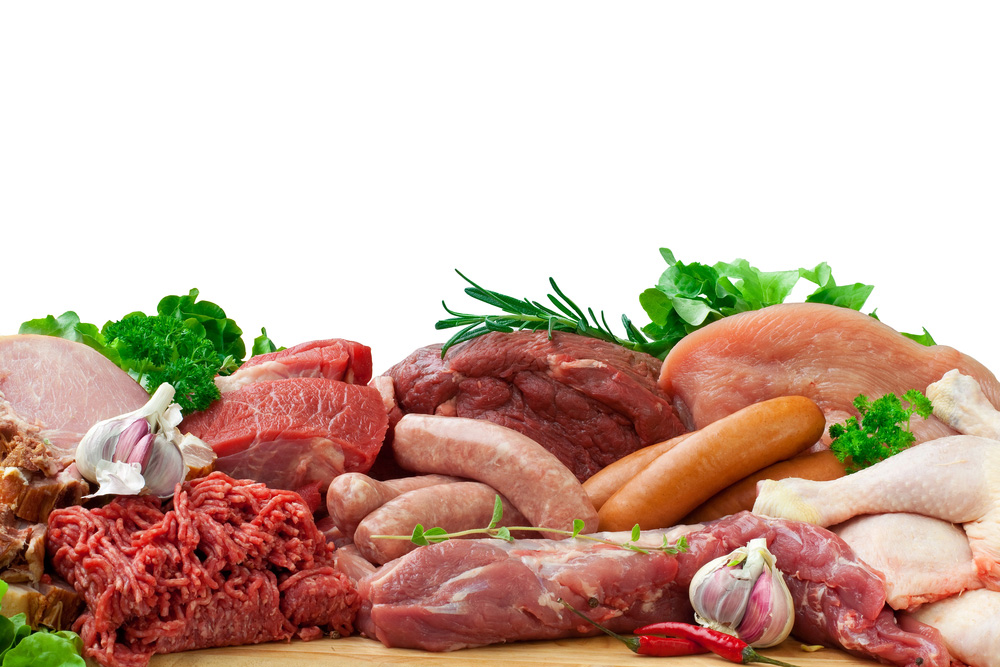 Vegans will tell you that any meat is bad for you. Keto enthusiasts haven’t found a meat they don’t like. To them grains and most fruits and vegetables are the problem.
But what about those of us who aren’t at either extreme? Which meat, if any, should be part of a healthy diet? And how much of them should we eat?
For years the paradigm had been clear:
- Fish was best, especially fish rich in omega-3s. They were good for your heart and your brain. And some studies suggested that high intake of omega-3-rich fish might help you live longer.
- Poultry and other white meats were neutral.
- Red meat was probably bad for you. It was high in saturated fat and cholesterol, and some studies linked it to an increased risk of heart disease. Plus, the International Agency for Research on Cancer (IARC), an agency of the WHO, listed it as a probable carcinogen. [Note: Recent studies have questioned concerns about red meat. I will discuss this below.]
- Processed meats were considered a “no-no” The IARC listed processed meat as a definite carcinogen for humans based on studies linking it to colon, stomach, lung, and pancreatic cancers. It is also linked to an increased risk of heart disease.
However, most of these studies were done in the United States. And our diet is very different from that of many other countries.
That’s why a recent study (R Iqbal et al, American Journal of Clinical Nutrition, 114:1049-1058, 2021) caught my eye. The study was designed to measure the association between unprocessed red meat & poultry and processed meat intake with the risk both mortality and major cardiovascular disease with cancer as a secondary end point. And the study used data from 21 countries around the world except the United States.
How Was This Study Done?
 The authors used data from the Prospective Urban Rural Epidemiology (PURE) study. The study is a large-scale (164,007 individuals), prospective (meaning it follows the individuals over time rather than taking measurements from them at a single time) study. The individuals in the study were aged 35-70 years and were followed for an average of 9.5 years.
The individuals came from 21 low-, middle-, and high-income countries.
- The low-income countries included Bangladesh, India, Pakistan, Tanzania, and Zimbabwe.
- The middle-income countries included Argentina, Brazil, Chile, China, Columbia, Iran, Poland, South Africa, and Turkey.
- The high-income countries included Canada, Saudi Arabia, Sweden, and the United Arab Emirates. [Note: The United States was not included in the study.]
At the beginning of the study and at 3, 6, and 9 years the following data were collected from everyone enrolled in the study.
- Demographic information (age, sex, location, education, wealth index, and smoking status).
- Lifestyle information (diet and physical activity).
- Health history.
- Medication use.
- Cardiovascular events and mortality.
Will Processed Meat Kill You?
 The authors compared high intake of processed meats (5 ounces per week, the equivalent of two sausages/week) with zero intake of processed meats. They reported that high intake of processed meats increased the risk of:
- Mortality by 51%.
- Major cardiovascular disease by 46%.
- Non-cardiovascular mortality by 50%
- Cancer by 84%.
- Heart attack by 62%.
- Stroke by 56%.
Furthermore, even as little as 1.5 ounces of processed meat per week significantly increased the risk of mortality.
For red meat and poultry, the authors compared high intake (9 ounces per week) with low intake (2 ounces per week). For both red meat and poultry they did not find any association between high weekly intake and any of the health outcomes.
[I would note however, that many Americans consume 4 ounces of chicken or an 8-ounce steak at dinner – that’s one meal on one day. The corresponding weekly intake would be 28 ounces of chicken or 56 ounces of red meat. That’s significantly higher than the highest weekly intake used in this study.]
The authors concluded, “We observed no significant association between the consumption of unprocessed red meat and poultry intake and health outcomes. And higher intake of processed meat was associated with higher risks of mortality and cardiovascular disease. These findings may indicate that limiting the intake of processed meat should be encouraged.”
In my opinion, there are so many studies linking the consumption of processed meat with heart disease, cancer, and premature death that the last sentence of their conclusion should have said, “These findings unambiguously confirm that limiting the intake of processed meats should be encouraged.”
What Is The Truth About Meat?
 Red Meat:
Yes, there is a lot of confusion about red meat. Many studies, like this one, find no adverse health effects associated with red meat consumption. That has led many experts to conclude that the dangers of red meat have been greatly exaggerated.
I think we should dig a little deeper. Most of the studies showing that red meat consumption increases the risk of heart disease, cancer, and mortality have been done in this country. So, perhaps we should be asking what is different about red meat consumption in our country.
There are several factors to consider:
- Cooking Methods: The authors of this article pointed out that we often grill our meat at high temperatures which causes the formation of cancer-causing chemicals, while many of the countries in the PURE database stew their red meat at much lower temperatures.
- Diet Context: As I have explained in a previous article of Health Tips From the Professor, fruits, vegetables, and whole grains are the antidotes to the cancer-causing chemicals formed when we cook red meat. And they bind to cholesterol in the intestine and flush it out of the body. Finally, they dilute the saturated fat in red meat with polyunsaturated fats, which helps create a healthier balance of fats.
In this country we often pair our steaks with French fries or a baked potato loaded with butter and sour cream. However, in low- and middle-income countries red meat is an expensive luxury and is often used as a garnish to dishes containing lots of vegetables and whole grains.
- Amount Consumed: As a mentioned above, the amount of red meat most Americans consume in a week far exceeds the highest weekly intake of red meat in this study. The highest weekly consumption of red meat in this study is more consistent with using red meat as a garnish than as a main course.
Poultry:
For poultry, there is no confusion. Studies done in this country also find no association between poultry consumption and cardiovascular disease, cancer, or mortality. That may be due to a healthier fat profile and the ways in which poultry is usually cooked.
Processed Meat:
For processed meat, there is also no confusion. Virtually every published study from across the world agrees that it increases the risk of cancer, heart disease, and premature death. And the effect is not trivial. This study suggests that just 2 sausages a week is enough to increase your risk of premature death by 50%! So, the answer to the question, “Will processed meat kill you?” appears to be, “Yes”.
The authors of this article pointed out that the saturated fat and cholesterol in processed meat and red meat were very similar. They didn’t mention it, but the cooking techniques are also similar. So, neither of these explain why processed meat is so bad for us.
However, the amounts of preservatives and food additives in processed and unprocessed meats differ greatly. Based on this, the authors of the study and many other experts postulate that it is the preservatives and food additives that are responsible for the health risks of processed meats.
What Does this Mean For You?
 This study agrees with many other studies showing that processed meats are bad for us. The authors recommend limiting your intake of processed meats.
However, their data show that as little as two strips of bacon, one hot dog, or half a large sausage per week significantly increases your risk of heart disease, cancer, and premature death. Based on that, my advice would be to avoid processed meats as much as possible.
As I described above, most experts feel that it is the preservatives and food additives that are responsible for the health risks associated with processed meats.
Some studies suggest that nitrates in processed meats may be the main culprit. Based on that belief, some food companies are offering nitrate-free processed meats as a healthier option.
However, there still may be some additives in nitrate-free processed meats (read the label carefully), and we have no clinical studies showing that the nitrate-free processed meats in the marketplace are good for us.
Red meat is more confusing. This study and others suggest it poses no health hazards. And many experts are telling you that the warnings about consuming red meat were overblown. They are telling you that red meat is good for you.
However, some studies suggest that red meat increases your risk of heart disease, cancer and premature death. When you examine the data behind the studies, I think that better advice would be that red meat can be good for you or bad for you depending on three factors:
- Portion size: We should think of red meat as a garnish rather than a main course – 3-4 ounces is a healthy portion size. 8-12 ounces may be too much.
- Cooking method: Many of the bad things associated with red meat are the result of high temperature cooking, especially over a flame or on a grill. Choose low temperature cooking methods whenever possible.
- Diet context: Whole fruits, vegetables and whole grains are the antidotes to all the bad things associated with red meat. 3-4 ounces of red meat in a vegetable stir fry or green salad is likely to be much better for you than an 8-ounce steak with French fries.
Also, red meat already has more than enough saturated fat and cholesterol. Adding foods or sauces high in fat and cholesterol may overload the body’s ability to safely process them. But adding vegetables or vegetable oils helps to restore a better balance between good and bad fats.
Finally, this and other studies agree that white meat is healthy. My only advice is:
- Avoid white meat that has been fried (especially by fast food restaurants that only change their oil every 20,000 miles) or cooked with fatty sauces.
- Think of the whole diet rather than just the protein source. White meat will be the healthiest as part of a whole food, primarily plant-based diet.
The Bottom Line
A recent study reported that eating as 5 ounces of processed foods per week increases your risk of heart disease, cancer, and premature death by 50%. That is equivalent to two sausages per week!) The authors of the study recommended that you limit your intake of processed meats.
However, the study showed that even as little as 1.5 ounces (2 strips of bacon, one hot dog, or half of a large sausage) per week significantly increases your risk of all three. Based on that data, my recommendation is to consider avoiding processed meat altogether.
The study reported that unprocessed red and white meat are not associated with increased health risks. I put those findings into the context of other published studies on the topic. I discuss my recommendations for unprocessed red and white meat in the article above.
For more information on this study and what it means for you, read the article above.
These statements have not been evaluated by the Food and Drug Administration. This information is not intended to diagnose, treat, cure or prevent any disease.
____________________________________________________________________________
My posts and “Health Tips From the Professor” articles carefully avoid claims about any brand of supplement or manufacturer of supplements. However, I am often asked by representatives of supplement companies if they can share them with their customers.
My answer is, “Yes, as long as you share only the article without any additions or alterations. In particular, you should avoid adding any mention of your company or your company’s products. If you were to do that, you could be making what the FTC and FDA consider a “misleading health claim” that could result in legal action against you and the company you represent.
For more detail about FTC regulations for health claims, see this link.
https://www.ftc.gov/business-guidance/resources/health-products-compliance-guidance
_____________________________________________________________________
About The Author
 Dr. Chaney has a BS in Chemistry from Duke University and a PhD in Biochemistry from UCLA. He is Professor Emeritus from the University of North Carolina where he taught biochemistry and nutrition to medical and dental students for 40 years.
Dr. Chaney won numerous teaching awards at UNC, including the Academy of Educators “Excellence in Teaching Lifetime Achievement Award”.
Dr Chaney also ran an active cancer research program at UNC and published over 100 scientific articles and reviews in peer-reviewed scientific journals. In addition, he authored two chapters on nutrition in one of the leading biochemistry text books for medical students.
Since retiring from the University of North Carolina, he has been writing a weekly health blog called “Health Tips From the Professor”. He has also written two best-selling books, “Slaying the Food Myths” and “Slaying the Supplement Myths”. And most recently he has created an online lifestyle change course, “Create Your Personal Health Zone”. For more information visit https://chaneyhealth.com.
For the past 54 years Dr. Chaney and his wife Suzanne have been helping people improve their health holistically through a combination of good diet, exercise, weight control and appropriate supplementation.