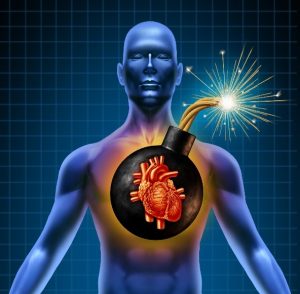
Can You Cut Your Risk Of Heart Disease By 90%?

The Effect Of Ultra-Processed Foods On Heart Disease Risk
 

Author: Dr. Stephen Chaney
strong heartHeart disease is a killer. It continues to be the leading cause of death – both worldwide and in industrialized countries like the United States and the European Union. When we look at heart disease trends, it is a good news – bad news situation.

  • The good news is that heart disease deaths are continuing to decline in adults over 70.
    • The decline among senior citizens is attributed to improved treatment of heart disease and more seniors following heart-healthy diets.
  • The bad news is that heart disease deaths are starting to increase in younger adults, something I reported in an earlier issue of “Health Tips From the Professor.”
    • The reason for the rise in heart disease deaths in young people is less clear. However, the obesity epidemic, junk and convenience foods, and the popularity of fad diets all likely play a role.

Everyone has a magic diet to reduce the risk of heart disease. The American Heart Association tells us to avoid fats, especially saturated fats. Vegans tell us to avoid animal protein. Paleo and Keto enthusiasts tell us carbs are the problem.

But what if we eliminated junk and convenience food AND switched to a really healthy diet? How much would that reduce heart disease risk? A recent study (Y Willett et al, The American Journal of Medicine, in press, 2026) looked at the first part of that question. It looked at the effect of ultra-processed food (what we call junk and convenience foods) consumption on the risk of developing heart disease.

How Was This Study Done?

Clinical StudyThe scientists analyzed data from 4787 participants in the most recently published (2021 to 2023) National Health and Nutrition Examination Survey (NHANES). The average age of participants in the survey was 55 years, with 56% of them being women.

All the participants in this study had completed a dietary survey of everything they ate over the last two days. They also reported whether they had ever experienced a heart attack or stroke.

Ultra-processed foods were defined as foods that are industrially modified and loaded with added fats, sugars, starches, salts, and chemical additives.

The percentage of ultra-processed foods in their diet was calculated, and the participants were divided into quartiles based on the percentage of ultra-processed foods they consumed.

Participants with the highest quartile of ultra-processed food consumption were compared to those in the lowest quartile with respect to the risk of cardiovascular disease (self-reported heart attack or stroke). The data were corrected for age, sex, race, ethnicity, smoking status, and income.

The Effect Of Ultra-Processed Foods On Heart Disease Risk

Fast Food DangersThe results were striking:

  • The participants in the highest quartile for ultra-processed food consumption had a 47% higher risk of heart disease compared to those in the lowest quartile for ultra-processed food consumption.

The authors concluded, “Adults who consumed the highest amount of ultra-processed foods had a statistically significant 47% increased risk of heart disease. Large scale randomized trials are needed, but in the meantime, health care providers should advise patients to decrease consumption of ultra-processed foods in addition to adopting other therapeutic lifestyle changes and adjunctive drug therapies of proven benefit.”

The authors recognized the difficulty of making those changes in a world where ultra-processed foods are ubiquitous and cheap.

However, they drew parallels to tobacco use in this country. They said, “Just as it took decades for the dangers of smoking to become widely accepted, reducing reliance on ultra-processed foods may take time. This is partly due to the influence of large multinational companies that dominate the food market. In addition, many people face limited access to healthier food options.”

They went on to say, “Addressing ultra-processed foods isn’t just about individual choices – it’s about creating environments where the healthy option is the easy option.”

Can You Cut Your Risk Of Heart Disease By 90%?

The short answer is, “probably not”. But you can reduce the risk of heart disease by a lot – and probably by a lot more than 47%.

That’s because this study did not look at what the participants were replacing the ultra-processed foods with. Some participants may have replaced them with whole food, primarily plant-based diets. Others may have replaced ultra-processed foods with whole food, meat-based diets high in saturated fats.

So, let’s look at the other side of the equation – how much you can reduce your risk of heart disease by eating a healthier diet. In a recent issue of “Health Tips From The Professor”, I reviewed a meta-analysis published in 2022 that looked at 99 clinical studies with tens of thousands of participants that measured the associations between foods or food groups and heart disease risk.

That study reported that:

  • Processed Meat: A single serving of processed meat increased heart disease risk by 27% to 44%.
  • Red Meat: Unprocessed red meat increased heart disease risk by as much as 27% – but only at ≥3 servings per day. The results with lower intakes were inconsistent – some studies showed increased risk, but others did not.
  • Poultry, Eggs, and Dairy Foods: They did not appear to affect heart disease risk.
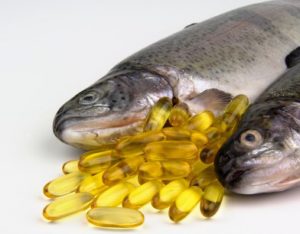
  • Fish: Two to four servings per week of fatty fish decreased heart disease risk by around 12%.
  • Fruit: Two servings per day of fruit reduced heart disease risk by 21-32%.Vegan Foods
  • Vegetables: Two servings of vegetables per day reduced heart disease risk by 18-21%.
  • Legumes (beans and peas): Four servings per week reduced the risk of heart disease by around 14%.
  • Nuts: One serving (a handful) per day reduced the risk of heart disease by around 25%. 
  • Whole Grains: Two servings of whole grains per day reduced the risk of heart disease by 25%-34%.
  • Overall: When heart-healthy foods were consumed as part of the Mediterranean diet heart disease risk was reduced by 47%. Similar overall reductions in heart disease risk are likely with other heart-healthy diets like DASH, MIND, Flexitarian (flexible semi-vegetarian), and vegan diets.

In summary:

  • The first study shows that eliminating ultra-processed foods (junk and convenience foods) from your diet can decrease heart disease risk by 47% – but doesn’t tell us what the ultra-processed foods were replaced with. And it would take a much larger study to determine which food swaps were most effective at reducing heart disease risk.
  • The second study was a meta-analysis that told us that eating more fish and plant foods in the context of a heart-healthy diet can decrease your risk of heart disease by 47% – but doesn’t tell us what those healthy foods were replacing. And many of the individual studies included in the meta-analysis were conducted when ultra-processed food consumption was much less than it is today.

It would be tempting to add 47% plus 47% and conclude that eliminating ultra-processed food consumption and replacing ultra-processed foods with heart-healthy foods could decrease your risk of heart disease by 94%. But it’s not that simple. There are too many unanswered questions from these studies.

But it is safe to say that if we eliminated ultra-processed foods AND replaced them with heart-healthy foods in the context of a heart-healthy diet, we should be able to reduce our heart disease risk by more than 47% – perhaps much more.

What Do These Studies Mean For You?

There are two important lessons from these studies:

#1: Eliminating ultra-processed foods from your diet will significantly decrease your risk of heart disease.

And it isn’t just heart disease. Other recent studies have shown that eliminating ultra-processed foods from your diet helps you:

  • Control your weight (It is perhaps the most important lifestyle change to make if you want to maintain GLP-1-aided weight loss).
  • Reduce your risk of cancer.
  • Reduce your risk of diabetes.
  • Reduce your risk of inflammatory diseases.
  • Reduce anxiety and depression.
  • Increase your healthspan (your healthy years).

In short, ultra-processed foods are killers.

#2: Replacing ultra-processed foods with heart-healthy foods (fruits, vegetables, legumes, nuts, whole grains, and fish) in the context of a healthy diet (Mediterranean, DASH, MIND, Flexitarian, and vegan, for example) is likely to decrease your risk of heart disease even more.

  • And if your diet consists of mostly heart-healthy foods, you can add moderate amounts of heart-neutral foods (poultry, eggs, and dairy).
  • And the latest evidence suggests that you can even add small amounts of red meat in the context of a heart-healthy diet (As I have said in previous issues of “Health Tips From the Professor”, plant foods contain the antidotes to all the bad things about red meat.)

Finally, you might ask why I emphasize both heart-healthy foods and heart-healthy diets. There are two reasons:

  • Most of us think in terms of foods rather than diets.
  • The food industry is only too happy to provide us with ultra-processed foods for “heart-healthy” diets like the vegan and Mediterranean diet.

The Bottom Line

Two recent studies have shown how each of us can dramatically reduce our risk of heart disease.

  • The first study showed that eliminating ultra-processed foods from our diet can significantly decrease our heart disease risk – but didn’t tell us what the ultra-processed foods were replaced with.
  • The second study showed that eating more heart-healthy foods in the context of a heart-healthy diet can significantly decrease our risk of heart disease – but didn’t tell us what those healthy foods were replacing.

Taken together, those studies show us a clear path for dramatically decreasing our heart disease risk.

For more details about these studies and what they mean for you, read the article above.

These statements have not been evaluated by the Food and Drug Administration. This information is not intended to diagnose, treat, cure or prevent any disease.

 _____________________________________________________________________________

My posts and “Health Tips From the Professor” articles carefully avoid claims about any brand of supplement or manufacturer of supplements. However, I am often asked by representatives of supplement companies if they can share them with their customers.

My answer is, “Yes, as long as you share only the article without any additions or alterations. In particular, you should avoid adding any mention of your company or your company’s products. If you were to do that, you could be making what the FTC and FDA consider a “misleading health claim” that could result in legal action against you and the company you represent.

For more detail about FTC regulations for health claims, see this link.

https://www.ftc.gov/business-guidance/resources/health-products-compliance-guidance

_______________________________________________________________________

About The Author 

Dr. Chaney has a BS in Chemistry from Duke University and a PhD in Biochemistry from UCLA. He is Professor Emeritus from the University of North Carolina where he taught biochemistry and nutrition to medical and dental students for 40 years.  Dr. Chaney won numerous teaching awards at UNC, including the Academy of Educators “Excellence in Teaching Lifetime Achievement Award”.

Dr Chaney also ran an active cancer research program at UNC and published over 100 scientific articles and reviews in peer-reviewed scientific journals. In addition, he authored two chapters on nutrition in one of the leading biochemistry text books for medical students.

Since retiring from the University of North Carolina, he has been writing a weekly health blog called “Health Tips From the Professor”. He has also written two best-selling books, “Slaying the Food Myths” and “Slaying the Supplement Myths”. And most recently he has created an online lifestyle change course, “Create Your Personal Health Zone”. For more information visit https://chaneyhealth.com.

For the past 45 years Dr. Chaney and his wife Suzanne have been helping people improve their health holistically through a combination of good diet, exercise, weight control and appropriate supplementation.
 

Is The New Food Guide Pyramid Healthy?

A Brief History Of USDA Food Guides

Author: Dr. Stephen Chaney

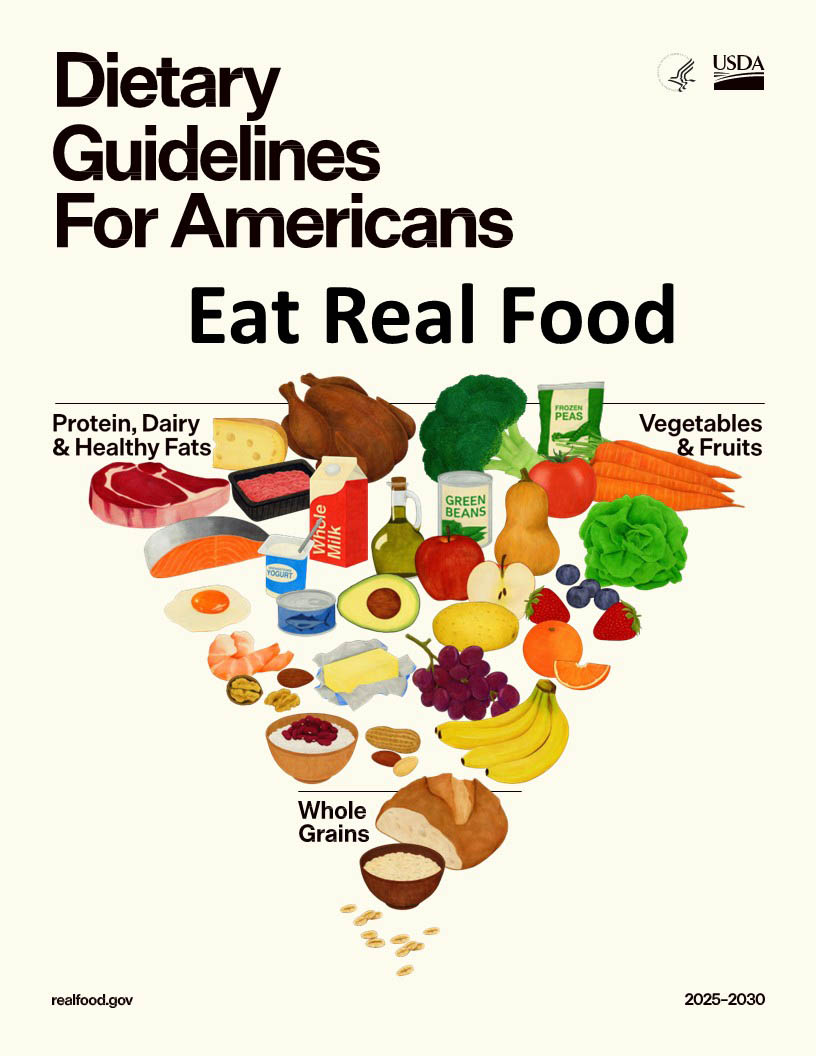
Unless you have cut yourself off from all outside media, you already know the USDA has just released new “Dietary Guidelines For Americans” and a new, upside down, food pyramid.

Both the AMA and AHA have endorsed the new guidelines with some reservations. But like everything else in today’s world they have become both political and controversial.

  • Some experts are saying, “The new guidelines are fantastic. They will make Americans much healthier. It’s about time the government caught up with the latest scientific advances.
  • Others are saying, “The new guidelines are terrible. They will set medicine back 20 years.”

As usual, the truth lies somewhere in the middle. I will explore that middle ground and discuss the pros and cons of the new dietary guidelines and food guide pyramid in this article.

But first we should start with something everyone can agree with, “What we are doing now isn’t working!” For example:

  • The percentage of Americans who are overweight or obese is approaching 70%.
  • The United States spends more on healthcare per person than any other country in the world. But we…
    • Rank 48th in life expectancy. We not only rank below every developed country, but we also rank below many 3rd world countries.
      • And we are losing ground. In 1990, we ranked 35th in life expectancy.
    • Rank 69th in health span (healthy life expectancy).
      • Again, we are losing ground. Our ranking was 42nd in 1990.
    • Rank dead last (183rd out of 183) in health span as a percentage of life expectancy.

In short, we are falling behind the rest of the world in terms of lifespan, health span, and percentage of healthy years.

And our deteriorating health is costly.

90% of our health care spending is for preventable diseases

A Brief History Of USDA Food Guides

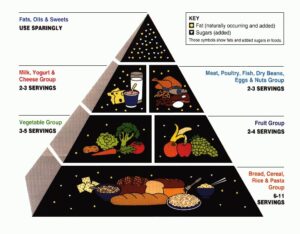
The USDA introduced the first food guide pyramid in 1992 based on the best nutrition science of the time. You probably remember the mantra:

  • 2-3 servings of dairy, preferably low fat.
  • 2-3 servings in the protein category (lean meats, fish, dry beans, eggs, and nuts).
  • 2-4 servings of fruits and 3-5 servings of vegetables.
  • 6-11 servings of grains (bread, cereals, rice, and pasta).
  • Fats, oils, and sweets were at the top of the pyramid with the caption, “Use Sparingly”.

This pyramid and the accompanying dietary guidelines were publicized so much that practically everyone knew them by heart.

Ten years later the USDA did a nutrition survey to see if their guidelines had changed American’s eating behavior. The answer was a clear, “No”. Only 5% of Americans ate according to the food guide pyramid.

The Geniuses at the USDA concluded that the food guide pyramid must be too difficult for the average American, so they introduced a simpler version, My Pyramid in 2005.

Guess what! Only 5% of Americans followed those recommendations, so they went to the super simple My Plate. By now you have probably guessed that only 5% of Americans followed the My Plate recommendations.

It turns out Americans weren’t confused by the recommendations. The recommendations were just too different from the way they were used to eating.

So, one change you will see in the new food guide pyramid is it includes some of Americans favorite foods, such as red meat, butter, and full fat dairy. Is that sacrilege or is it smart? Only time will tell.

With that in mind, let’s discuss the new “Dietary Guidelines For Americans”.

#1: Eat Real Food

This is one recommendation that virtually everyone agrees with. The average American is getting 55% of their calories from highly processed foods. And the health consequences of that much processed food are devastating. Consumption of highly processed foods is linked to higher risk of:

  • Obesity.
  • Type 2 diabetes.
  • Heart attack.
  • Stroke.
  • Some cancers.
  • Depression and anxiety.
  • Dementia
  • Premature death.

If you are wondering how we got to this point, the answer is simple. It stems from the desire of Americans to eat a healthier diet without giving up their favorite foods and the willingness of Big Food Inc (the food industry) to give us exactly what we want. For example:

  • Some people want to eat a more plant-based diet, but don’t want to give up their favorite meats. Big Food Inc is only too happy to oblige. They mix some fat, salt, and a witch’s brew of chemicals to give us phony baloney, faken bacon, and everyone’s favorite, tofurkey.
  • Some people are convinced keto diets are healthy, but don’t want to give their favorite sweets. Again, Big Food Inc is only too happy to oblige. They mix up a witch’s brew of chemicals to give us keto cookies and keto pastries.

I’m being facetious, but you get my point.

Some representatives of Big Food Inc claim that the health risks of processed foods are unproven. They are lying!

If you would like to read my reviews of major studies showing the health risks of highly processed foods, just go to https://www.chaneyhealth.com/healthtips/ and put “processed foods” in the search box.

#2: Prioritize Protein Foods at Every Meal

protein foodsThis is one of the more controversial recommendations of the new food guide pyramid. The new USDA dietary guidelines increase the protein recommendation by 50-100% compared to previous versions…

  • From 0.36 grams of protein per pound of body weight to…
  • Between 0.54 and 0.72 grams of protein per pound of body weight.

[Note: If these numbers seem different from what you have seen, that is because the official recommendations are in grams of protein per kilogram of body weight. Since most Americans have no idea what their body weight is in kilograms, those numbers are useless.]

The main criticisms about the new protein recommendations are:

#1: “There isn’t solid evidence that most people need this much protein.”

My response is that anyone who makes that claim hasn’t kept up with the last two decades of protein research.

The old 0.36/pound standard is probably OK for the average middle-aged couch potato, but higher protein intakes are needed for people who are:

  • Active, especially if they are trying to increase muscle mass, strength, or endurance.
  • Over 50 and are trying to maintain muscle mass, strength, and mobility.
  • Trying to lose weight without losing muscle, especially if they are using GLP-1 drugs.
  • Trying to reduce the risk of type 2 diabetes and other chronic diseases.

In short, almost everyone except the couch potatoes will benefit from higher protein intakes. And, yes, the latest science shows that it is best to get at least 20 grams of protein with each meal.

You can find more information about the science behind increased protein recommendations by going to https://www.chaneyhealth.com/healthtips/ and putting “protein” in the search box.

#2: “The new guidelines don’t steer people towards plant proteins”. This is a subtle distinction. The new USDA dietary guidelines include plant protein sources. But they do not recommend that they replace some of the animal proteins in the diet, as did previous versions. This allows people to choose between animal and plant proteins based on their preferences.

Those of you who have been following my “Health Tips From the Professor” blog know that I am an advocate of primarily plant-based diets. I am fully in the “replace some animal protein with vegetable protein” camp.

  • But I acknowledge that is not the way most Americans eat. Perhaps it is time to make dietary recommendations that align more closely with the way people eat if we want to get above 5% acceptance.
  • It would also be difficult to meet the new protein guidelines with plant protein alone unless you add commercially available plant protein supplements.

#3: “Higher protein intakes may be harmful for some people”. Recent research has shown that this concern is overblown for most Americans. However, there are some people who should probably check with their doctor before they increase their protein intake.

  • People who have been diagnosed with kidney disease.
  • People with genetic conditions or diseases that predispose to kidney disease. One example would be poorly controlled diabetes. [Note: I do not mean to imply that higher protein intake is likely to cause kidney disease in these situations. I included this category because people in these situations may have undiagnosed kidney disease.]

In most of these cases, you have probably been warned by your doctor to be careful about excess protein intake. But if you are uncertain about your risk for kidney disease, it never hurts to check with your doctor before increasing your protein intake.

What About Red Meat?

SteakThe new dietary guidelines have been criticized for emphasizing red meat. That criticism is inaccurate. It’s a “tempest in a teapot”.

In fact, red meat is pictured in both the original and the most recent versions of the food guide pyramid. And red meat is mentioned as one source of protein in both the original and the latest versions of dietary guidelines. It is given no special emphasis over other protein sources in either version of the dietary guidelines.

However, I would like to share my perspective on red meat.

  • Diet context matters. As I have said in previous issues of “Health Tips From The Professor”, fruits, vegetables, whole grains, and beans are the antidotes to all the bad aspects of red meat.” And if you look at the new food guide pyramid, red meat and other proteins are in the same neighborhood as fruits and vegetables.
  • Amount matters. Think of red meat as a garnish – for example, 2-3 ounces of red meat as part of a steak salad or stir fry with lots of veggies rather than an 8-ounce steak with fries.

#3: Consume Dairy

dairy foodsThe new dietary guidelines differ from previous versions in both the amount and kind of dairy foods consumed. For example:

  • The old guidelines recommended 2-3 servings of dairy foods per day.
    • The new guidelines recommend 3 servings per day as part of a 2,000-calorie dietary pattern.
    • Since most Americans consume 3,600 to 3,800 calories per day that recommendation translates to at least 5 servings per day.
  • The old guidelines recommended choosing low fat dairy foods.
    • The new guidelines say, “When consuming dairy, include full-fat dairy with no added sugars.”

Since the full-fat dairy recommendation is the most controversial change, I will address it first.

Let me start by saying that I have been a traditionalist with respect to dairy foods. I have recommended low-fat dairy foods for years. But a good scientist must be willing to change their recommendations based on the latest research findings.

And new findings have clearly challenged our perspective on full-fat dairy foods. Several large, well-designed studies over the past decade have shown that full-fat dairy foods are just as healthy as low-fat dairy foods. I will make two comments about these studies.

  • I suspect that the studies may be skewed because much of the data on full-fat dairy comes from countries where most of full-fat dairy foods are fermented – and we know that fermented dairy foods are very healthy.
    • Admittedly, I have no data to back up my suspicion, but I recommend fermented dairy foods as part of your dairy intake. That’s a recommendation everyone can agree with!
  • One recent study has suggested that diet context is important. Specifically, the study suggests that the benefits of full-fat dairy foods are greatest in the context of a healthy, primarily plant-based diet.
    • Similar observations have been made for egg consumption. That suggests that full-fat dairy and eggs provide some important nutrients that may be missing in a vegetarian diet. But in a diet that is already high in saturated fat and cholesterol, the “bad” effects of full-fat dairy and eggs may outweigh the benefits.

You can find more information about full-fat dairy by going to https://www.chaneyhealth.com/healthtips/ and putting “dairy” in the search box.

As for the amount of dairy foods you should consume, I wouldn’t get hung up on the number of servings per day. I interpret the new guidelines as saying, “Don’t be afraid of dairy. It can be an important part of your diet.”

However, the servings of dairy products are more frequently determined by lactose intolerance or sensitivity to milk protein than by dietary guidelines. Many people, including myself, can only consume small, occasional servings of dairy without experiencing digestive distress.

#4: Eat Vegetables & Fruits Throughout The Day

Colorful fruits and vegetablesThe dietary guidelines say, “Eat a variety of colorful, nutrient-dense vegetables and fruits. Specifically, the recommendation is:

  • 3 servings/day of vegetables and 2 servings/day of fruits each day.
    • Once again, the number of servings are based on a 2,000-calorie diet.
    • When you take into account the actual caloric intake of Americans, the recommendations become 3-5 servings/day of vegetables and 2-4 servings/day of fruits.

These recommendations are not controversial. They are universally accepted.

#5: Incorporate Healthy Fats

The new dietary guidelines are:

  • “Healthy fats are plentiful in many whole foods, such as meats, poultry, eggs, omega-3 rich seafood, nuts, seeds, full-fat dairy, olives, and avocados.”
    • This recommendation is not controversial.
  • “When cooking with or adding fats to meals, prioritize oils with essential fatty acids, such as olive oil. Other options can include butter or beef tallow.”
    • This is the most controversial portion of the new dietary guidelines. The usual comment is something like, “How dare they include butter and lard as healthy fats!”

I’m not a fan of lard but let me make a couple of observations about butter.

  • Butter is a whole food. Its ingredient list is typically cream, milk, and salt. If you buy the unsalted version, the ingredient list is even shorter. Margarine and butter substitutes have much longer ingredient lists, often including some questionable ingredients.
  • The frequency of butter use is important. Let me share a personal example. We eat a whole food, primarily plant-based diet. We substitute almond butter for butter on toast and muffins. But there are certain foods like potatoes, winter squash, and corn on the cob that just aren’t the same without real butter. We buy 4 sticks of butter at a time, cut it into pats of butter, and freeze it. Four sticks of butter lasts us a year.

Finally, the critics who say that the new guidelines should not include foods that are high in saturated fat are ignoring the fact that the guidelines say, “Saturated fat consumption should not exceed 10% of total daily calories.” This statement has remained constant since the first food guide pyramid in 1992.

So, the new guidelines are not recommending that we eat more saturated fat as many critics have claimed. They are saying, “A little bit of saturated fat is OK in the context of a whole food diet with lots of fruits, vegetables, and whole grains.

#6: Focus On Whole Grains

The new dietary guidelines are:

  • “Prioritize fiber-rich whole grains.”
  • “Significantly reduce the consumption of highly processed, refined carbohydrates.”

These guidelines are unchanged from previous versions of the guidelines.

What is new is that the guidelines now recommend only 2-4 servings of whole grains per day. That’s a big change from the 6-11 servings per day recommended in the original food guide pyramid.

  • If the 6-11 servings per day were whole grains, the new recommendation would represent a significant decrease in fiber intake. But that’s not how most Americans eat.
  • Since most of the grains in a typical American’s diet are highly processed and refined, reducing the recommended intake to 2-4 servings per day is a step in the right direction.

#7: Limit Highly Processed Foods, Added Sugars, & Refined Carbohydrates

fast foodI call this, “Avoid the bad stuff”. Specifically:

  • Avoid highly processed foods with added sugar and sodium.
  • Limit foods and beverages that include artificial flavors, colors, preservatives, and sweeteners
  • Avoid sugar-sweetened and artificially sweetened beverages.

These recommendations are accepted by almost everyone except the food industry.

However, I should point out that there is also a slight difference in emphasis from previous versions of the USDA dietary guidelines:

  • The new guidelines are more restrictive for added sugars than previous versions of the dietary guidelines. For example, they say:
    • One meal should contain no more than 10 grams of added sugars.
    • Children under the age of 10 should not be given foods with added sugars (previous versions of the dietary guidelines recommend avoiding added sugars for children under the age of 2).

Given the wealth of evidence that added sugars are linked to increased risk of obesity and chronic diseases, these stricter restrictions on added sugars make good sense – especially because the USDA dietary guidelines form the basis for school lunch programs.

But these guidelines are very different from how the average American eats. I’m not sure how many Americans will follow them.

#8: Limit Alcoholic Beverages

The guidelines:

  • Say, “Consume less alcohol for better overall health”.
  • List people who should completely avoid alcohol.

The only controversy about this recommendation is that it is less specific than the previous guidelines that recommended no more than 1 alcoholic drink/day for women and no more than 2/day for men.

I recognize the desire for specificity. But alcohol tolerance depends on several factors such as body weight, genetics, and medication usage.

What Does This Mean For You?

Questioning WomanThe USDA just released a new version of the Food Guide Pyramid and accompanying “Dietary Guidelines For Americans”, and they are very different from previous versions. What do these changes mean for you?

While the AMA and AHA have both endorsed the new guidelines, they have been controversial. In the article above, I have summarized the pros and cons of every recommendation. There are lots of recommendations, so it was a long article.

To help you make sense of the article let me summarize the recommendations and criticisms by dividing the recommendations into 4 categories:

#1: Recommendations that are accepted by almost everyone except the food industry. These are non-controversial.

  • Eat real food
  • Eat vegetables and fruits throughout the day.
  • Focus on whole grains.
  • Limit highly processed foods, added sugar, and refined carbohydrates.

#2: Changes in recommendations that reflect recent scientific advances. Critics of these changes simply haven’t kept up with scientific publications over the past couple of decades.

  • Increasing the daily protein recommendations.
  • Including full-fat dairy as a healthy dairy food.

#3: Tempests in a teapot: There is a kernel of truth in these criticisms, but the changes are much more modest than the critics would have you believe.

  • Including red meat in the protein recommendations.
  • Including some saturated fats in the “healthy fats” category.
  • Not including specific limits on alcohol consumption, as the previous version had done.

#4: What I would have liked to have seen:

  • More emphasis on plant proteins.
  • Elimination of lard from the “healthy fat” category.
  • Inclusion of high-quality vegetable oils in the “healthy fats” category.

The Bottom Line

The USDA just released a new version of the Food Guide Pyramid and accompanying “Dietary Guidelines For Americans”.

While the AMA and AHA have both endorsed the new guidelines, they have been controversial.

In this article I describe the pros and cons of each dietary guideline and divide them into ones for which:

  • They are clearly an improvement over the previous guideline.
  • They are accepted by almost everyone.
  • The criticism is a “tempest in a teapot”.
  • The criticism is at least partially accurate.

For more information on the pros and cons of the new “Dietary Guidelines For Americans” and how these guidelines apply to you, read the article above.

These statements have not been evaluated by the Food and Drug Administration. This information is not intended to diagnose, treat, cure or prevent any disease.

 _____________________________________________________________________________

My posts and “Health Tips From the Professor” articles carefully avoid claims about any brand of supplement or manufacturer of supplements. However, I am often asked by representatives of supplement companies if they can share them with their customers.

My answer is, “Yes, as long as you share only the article without any additions or alterations. In particular, you should avoid adding any mention of your company or your company’s products. If you were to do that, you could be making what the FTC and FDA consider a “misleading health claim” that could result in legal action against you and the company you represent.

For more detail about FTC regulations for health claims, see this link.

https://www.ftc.gov/business-guidance/resources/health-products-compliance-guidance

_______________________________________________________________________

About The Author 

Dr. Chaney has a BS in Chemistry from Duke University and a PhD in Biochemistry from UCLA. He is Professor Emeritus from the University of North Carolina where he taught biochemistry and nutrition to medical and dental students for 40 years.  Dr. Chaney won numerous teaching awards at UNC, including the Academy of Educators “Excellence in Teaching Lifetime Achievement Award”. Dr Chaney also ran an active cancer research program at UNC and published over 100 scientific articles and reviews in peer-reviewed scientific journals. In addition, he authored two chapters on nutrition in one of the leading Biochemistry textbooks for medical students.

Since retiring from the University of North Carolina, he has been writing a weekly health blog called “Health Tips From the Professor”. He has also written two best-selling books, “Slaying the Food Myths” and “Slaying the Supplement Myths”. And most recently he has created an online lifestyle change course, “Create Your Personal Health Zone”. For more information visit https://chaneyhealth.com.

For the past 55 years Dr. Chaney and his wife Suzanne have been helping people improve their health holistically through a combination of good diet, exercise, weight control and appropriate supplementation.


The Breakfast Cereal Scandal

The Race To The Bottom Continues

Author: Dr. Stephen Chaney

Factory FarmBig Food Inc is not your friend. Big Food Inc follows the latest trends and is only too happy to give consumers what they want.

You want low-fat? No problem. You want low-carb, natural, organic, non-GMO, gluten-free, Paleo, Keto? No problem. However, their motive is a healthy bottom line, not your health.

They know humans are hardwired to desire sugar, salt, and fat. Foods with those ingredients sell. Convenience sells. At the end of the day, they are more interested in sales than they are in your health.

They don’t want you to buy whole foods and cook them from scratch. They don’t make money from whole foods. They want you to buy their pre-packaged convenience foods instead.

A prime example of how Big Food Inc of how Big Food takes a healthy food and turns it into a nutrition disaster is what I call “The Breakfast Cereal Scandal”.

The Great Breakfast Cereal Scandal 

It’s hard to believe that breakfast cereals started as health food, but they did. Dr. John Harvey Kellogg was a Seventh-day Adventist who took over the Western Reform Health Institute in 1877 and renamed it the Battle Creek Sanitarium.

It gained prominence as a health resort where people went to be healed through a combination of physical activity and healthy eating.

Dr. Kellogg invented Corn Flakes in 1878 as a healthier alternative to the high-fat breakfasts most Americans were consuming at that time. Corn Flakes had less than 5% sugar. It was a great idea for its time, but what happened next is nothing short of appalling.

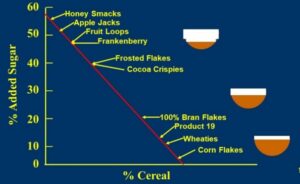
It is a perfect example of how Big Food Inc leads us astray. The graphic above that I created illustrates what the major food companies have done to breakfast cereals over the decades since then.

It all started with Corn Flakes. Then other food companies started bringing out competing products. Cereals like Wheaties and Rice Krispies were still pretty healthy, but they had a bit more sugar, which gave them better consumer appeal.

As soon as the food companies figured out that sugar increased their sales, the race was on. The percentage sugar increased to 40%, then to 50%, and now to almost 60%.

No sane parent would fill their child’s cereal bowl half full of sugar, but that is exactly what they are doing when they feed them some of today’s breakfast cereals. The food companies are hiding the outrageous sugar content of their cereals with slogans like “Just a touch of honey.”

Speaking of deception, can anyone tell me how you label a product with 20% sugar 100% Bran Flakes?

I created the graphic above in the 1990’s. At that time, I assumed breakfast cereals couldn’t get much worse. But I was wrong. Big Food’s “race to the bottom” continues.

A recent study (A Zhao et al, JAMA Network Open, 8(5): e2511699, 2025) examined the nutritional content of children’s cereals introduced to the US market between 2010 and 2023.

How Was This Study Done? 

Clinical StudyThe investigators used data from the Mintel Global New Products Database, which tracks new product launches for foods and beverages. From this database they identified 1,200 new children’s cereals introduced in the US market from 2010 through 2023.

Children’s cereals were defined as breakfast cereal products explicitly marketed (through packaging or branding) to children between 5 and 12 years old.

Using product label information, they compared the total fat, sodium, total carbohydrate, sugar, protein, and dietary fiber per serving and analyzed the trends between 2010 and 2023.

The Race To The Bottom Continues

If the previous decline in nutritional value of breakfast cereals between the 1870s and 1970s can be described can be described as “appalling”, the latest results can only be described as scandalous.

For newly introduced children’s breakfast cereals in the 13 years between 2010 and 2023,

  • Fat content increased 34%.
  • Sodium (salt) content increased 32%.
  • Sugar content increased by 11%.
  • Protein content decreased by 11%.
  • Fiber content decreased by 30%.

The authors of the study concluded, “Analysis of newly launched children’s RTE (ready to eat) cereals from 2010 to 2023 revealed concerning nutritional shifts: notable increases in fat, sodium, and sugar along decreases in protein and fiber.

Children’s cereals contain high levels of added sugar, with a single serving exceeding 45% of the American Heart Association’s daily recommended limit for children.

These trends suggest a potential prioritization of taste over nutritional quality in product development, contributing to childhood obesity and long-term cardiovascular health risks.”

In short, despite the American public’s increasing interest in a healthy diet, Big Food is still prioritizing sales over healthy foods. The race to the bottom continues.

What Does This Mean For You?

The take home lesson is clear. Don’t trust Big Food with your health. Their priority is sales, not your health.

Even when they claim their processed foods are healthy because they have removed fat or sugar, they have simply replaced them with a witch’s brew of chemicals so they look, taste, and smell delicious.

And breakfast cereals are just the tip of the iceberg. For most Americans 60-70% of their diet comes from highly processed foods.

If you value health, the choice is clear. Choose whole, unprocessed food whenever possible.

The Bottom Line

The dramatic decline in the nutritional quality of breakfast cereals between the 1870s and 1970s is well documented. By the turn of the century most breakfast cereals had gotten so bad, you might assume they couldn’t get any worse. You would be wrong. Big Food’s race to the bottom continues.

A recent study evaluated the nutritional value of newly introduced children’s breakfast cereals between 2010 and 2023. In those 13 years,

  • Fat content increased 34%.
  • Sodium (salt) content increased 32%.
  • Sugar content increased by 11%.
  • Protein content decreased by 11%.
  • Fiber content decreased by 30%.

The authors of the study said, “These trends suggest a potential prioritization of taste over nutritional quality in product development, contributing to childhood obesity and long-term cardiovascular health risks.”

I agree. And this is just the tip of the iceberg. For most Americans 60-70% of their diet comes from highly processed foods.

If you value health, the choice is clear. Choose whole, unprocessed food whenever possible.

For more details on this study and what it means for you, read the article above.

These statements have not been evaluated by the Food and Drug Administration. This information is not intended to diagnose, treat, cure or prevent any disease.

_____________________________________________________________________________

My posts and “Health Tips From the Professor” articles carefully avoid claims about any brand of supplement or manufacturer of supplements. However, I am often asked by representatives of supplement companies if they can share them with their customers.

My answer is, “Yes, as long as you share only the article without any additions or alterations. In particular, you should avoid adding any mention of your company or your company’s products. If you were to do that, you could be making what the FTC and FDA consider a “misleading health claim” that could result in legal action against you and the company you represent.

For more detail about FTC regulations for health claims, see this link.

https://www.ftc.gov/business-guidance/resources/health-products-compliance-guidance

 _______________________________________________________________________

About The Author 

Dr. Chaney has a BS in Chemistry from Duke University and a PhD in Biochemistry from UCLA. He is Professor Emeritus from the University of North Carolina where he taught biochemistry and nutrition to medical and dental students for 40 years.

Dr. Chaney won numerous teaching awards at UNC, including the Academy of Educators “Excellence in Teaching Lifetime Achievement Award”.

Dr Chaney also ran an active cancer research program at UNC and published over 100 scientific articles and reviews in peer-reviewed scientific journals. In addition, he authored two chapters on nutrition in one of the leading biochemistry text books for medical students.

Since retiring from the University of North Carolina, he has been writing a weekly health blog called “Health Tips From the Professor”. He has also written two best-selling books, “Slaying the Food Myths” and “Slaying the Supplement Myths”. And most recently he has created an online lifestyle change course, “Create Your Personal Health Zone”. For more information visit https://chaneyhealth.com.

For the past 53 years Dr. Chaney and his wife Suzanne have been helping people improve their health holistically through a combination of good diet, exercise, weight control and appropriate supplementation.
 

Can Processed Foods Cause Dementia?

A Holistic Approach For Preventing Dementia

Author: Dr. Stephen Chaney

Cognitive-DeclineYou already know that processed foods are not your friend. In previous issues of “Health Tips From the Professor” I have covered the linkage between processed food consumption and obesity, diabetes, heart disease, cancer, stroke, and premature death.

I have also covered the linkage between processed food consumption and mood, particularly anxiety and depression.

If you want to read some of those articles, just go to https://chaneyhealth.com/healthtips/ and put processed foods in the search box.

But what if they also affect cognition? What if they increase your risk of dementia?

Of all the diseases associated with aging, dementia is perhaps the scariest. What use is it to reach your “golden years” if you can’t recognize friends and family, you lose your precious memories, and you cannot perform the most basic functions for yourself.

That’s why I found the study (H Li et al, Neurology, 99(10)e1056-e1066, 2022) I am discussing today so interesting. It looks at the association of ultraprocessed food consumption and dementia.

I realized that “ultraprocessed food” is not a familiar term for most of you. So, before I discuss the article, I will describe how scientists define ultraprocessed food.

What Are Ultraprocessed Foods? 

Before I proceed with describing the findings of this study, I should probably contrast the common definition of processed foods with the current scientific definition of ultraprocessed foods.

The scientific community has recently developed something called “The NOVA food classification system” to describe the various levels of food processing.

The NOVA system categorizes foods into four groups according to the extent of processing they have undergone:

#1: Unprocessed or minimally processed foods.

  • This category includes foods like fruit, vegetables, milk, and meat.

#2: Processed culinary ingredients.

  • This category includes foods you might find in restaurants or prepare yourself to which things like sugar, vegetable oils, butter, or cream were added in the preparation.

#3: Processed foods.

  • This category includes foods like canned vegetables, freshly made breads, and cheeses.

#4: Ultraprocessed foods.

  • This category includes foods like soft drinks, chips, packaged snacks, most breakfast cereals, chicken nuggets & fish sticks, fast food burgers, hot dogs, and other processed meats.

The actual list is much longer, but you get the idea. What we call processed foods; scientists call ultraprocessed foods. Since the term “ultraprocessed foods” has not yet entered the popular vocabulary, I will use the term “processed foods” in describing the results of this study because it is more understandable to the average reader.

How Was This Study Done? 

clinical studyThe authors used information from the UK Biobank Study. The UK Biobank Study enrolled 500,000 people from England, Scotland, and Wales between 2006-2010 and has followed them continuously until the present. The participants were aged 40-69 on enrollment. The UK Biobank study collects health, lifestyle, environmental, and biological data from participants and makes the data available for studies such as this one.

This study included 72,083 participants from the UK Biobank study who:

  • Were 55 years or older on enrollment.
  • Were free from dementia on enrollment.
  • Had completed at least two 24-hour dietary assessments during the study.

The participants were followed for an average of 10 years.

Newly diagnosed cases of dementia were obtained through electronic linkages to hospital and mortality records (Yes, Big Brother is watching, especially in countries like England).

Ultraprocessed food intake (defined as described above) was determined from the 24-hour dietary recalls. Participants were divided into quartiles (4 groups) based on the amount of ultraprocessed foods in their diet.

The study measured the association between ultraprocessed food consumption and dementia. The data were statistically corrected for other lifestyle factors that affect cognition, such as age, sex, family history, and obesity.

As I said above, since the term “ultraprocessed foods” has not yet entered the popular vocabulary, I will use the term “processed foods” in describing the results of this study because it is more understandable to the average reader.

Can Processed Foods Cause Dementia? 

Dementia-WomanThe results were striking:

For every 10% increase in calories from processed foods, the risk of:

  • Dementia from all causes increased by 25%.
  • Alzheimer’s disease increased by 14%.
  • Vascular dementia (dementia caused by a blood clot or brain bleed) increased by 29%.

When they compared those in the highest quartile of processed food consumption with those in the lowest quartile:

  • The risk of dementia from all causes increased by 51%.

The only good news from the study was that replacing 10% calories from processed food with an equal proportion of unprocessed or minimally processed foods decreased the risk of dementia by 19%.

The authors hypothesized that the increase in dementia caused by processed foods could be due to:

  • Displacement from the diet of whole, unprocessed foods that have been shown to decrease dementia risk.
  • The high sodium content of processed foods can cause hypertension, which decreases cerebral blood flow and has been shown to increase the risk of dementia.
  • Diets high in processed foods promote systemic inflammation, which accelerates neurodegeneration and increases the risk of dementia.
  • Processed foods contain food additives and molecules formed during processing which have been shown to have negative effects on cognition and memory.

The authors concluded, “[Our study shows]…higher consumption of ultraprocessed foods was associated with higher risk of dementia, and substituting unprocessed or minimally processed foods for ultraprocessed foods was associated with a lower risk of dementia.”

What Does This Study Mean For You?

QuestionsYou already know that a diet high in processed foods:

  • Is associated with obesity.
    • Increases your risk of:
    • Diabetes
    • Heart Disease
    • Cancer
    • High Blood Pressure
    • Stroke
    • Premature death
  • Can increase your risk of anxiety and depression.

Their effect on dementia is just one more reason to do away with processed foods and replace them with whole, unprocessed foods.

But that is a tall order for most Americans who get 55% of their calories from processed foods. It is difficult to make wholesale changes in your diet, so I will leave you a bit of good news.

The authors reported that even minor improvements in diet could have beneficial effects. For example:

  • Replacing as little as 50 grams of processed food with 50 grams of unprocessed foods (equivalent to half an apple, a serving of corn, or a bowl of bran cereal) decreases your risk of dementia by 3%.

That may not seem like much. But what if you make that change in month one? Then in month 2 replace another 50 grams of processed food with unprocessed food and keep repeating that process month after month. At the end of a year:

  • You would have decreased your risk of dementia by 36%.
  • You may have lost weight without going on a restrictive weight loss diet.
  • You would have significantly decreased your risk of diabetes, heart disease, cancer, and several other diseases.
  • You might even be calmer and happier.

A Holistic Approach For Preventing Dementia

Of course, for best results you want to do more than just avoid processed foods. A holistic approach is best.

  • Eat a healthy diet.
    • As the study suggested, replace processed foods with whole, unprocessed fruits, vegetables, fish, nuts, legumes, and low-fat dairy.
    • Red meats and unprocessed foods high in saturated fat are better than highly processed foods, but they are not optimal.
    • As for specific diets, the Mediterranean, DASH, and MIND diets are backed by clinical studies showing that they slow cognitive decline and reduce dementia risk.
  • Get plenty of omega-3 fatty acids.
    • Some of those omega-3s can come from fatty, cold-water fish, but most people will need an omega-3 supplement providing 500-1,000 mg of EPA and DHA.
    • Some studies claim DHA works best. Others report that EPA works best. I would recommend a supplement that provides both.
  • Exercise regularly.
    • Exercise improves blood flow to the brain, and that is a good thing.
  • Control your weight.
    • Obesity increases chronic inflammation and the risk of dementia.
    • You don’t need to become ‘twiggy”. Even small decreases in body weight help slow cognitive decline.
  • Socialize with friends and family.
    • Scientists don’t know how this works, but it does.
    • This requires physical interactions. Facebook friends don’t count.
  • Exercise your mind.
    • This can be things like crossword puzzles, sudoku, or new projects that require creativity.
    • Learn new things. It could be a new language, new dance step, or new skill.

The Bottom Line

You already knew that diets high in processed foods increase your risk of obesity, diabetes, heart disease and several other diseases. And diets high in processed foods may leave you feeling anxious and depressed.

A recent study added to the bad news about processed foods. It looked at the association of processed foods and dementia. It found that:

  • Diets high in processed foods increase the risk of dementia by as much as 51%.
  • The only good news from the study was that replacing 10% calories from processed food with an equal proportion of unprocessed or minimally processed foods decreased the risk of dementia by 19%.

For more details about the study, what it means for you, and a holistic approach for brain health read the article above.

These statements have not been evaluated by the Food and Drug Administration. This information is not intended to diagnose, treat, cure or prevent any disease.

____________________________________________________________________________

My posts and “Health Tips From the Professor” articles carefully avoid claims about any brand of supplement or manufacturer of supplements. However, I am often asked by representatives of supplement companies if they can share them with their customers.

My answer is, “Yes, as long as you share only the article without any additions or alterations. In particular, you should avoid adding any mention of your company or your company’s products. If you were to do that, you could be making what the FTC and FDA consider a “misleading health claim” that could result in legal action against you and the company you represent.

For more detail about FTC regulations for health claims, see this link.

https://www.ftc.gov/business-guidance/resources/health-products-compliance-guidance

 ______________________________________________________________________

About The Author 

Dr. Chaney has a BS in Chemistry from Duke University and a PhD in Biochemistry from UCLA. He is Professor Emeritus from the University of North Carolina where he taught biochemistry and nutrition to medical and dental students for 40 years.

Dr. Chaney won numerous teaching awards at UNC, including the Academy of Educators “Excellence in Teaching Lifetime Achievement Award”.

Dr Chaney also ran an active cancer research program at UNC and published over 100 scientific articles and reviews in peer-reviewed scientific journals. In addition, he authored two chapters on nutrition in one of the leading biochemistry text books for medical students.

Since retiring from the University of North Carolina, he has been writing a weekly health blog called “Health Tips From the Professor”. He has also written two best-selling books, “Slaying the Food Myths” and “Slaying the Supplement Myths”. And most recently he has created an online lifestyle change course, “Create Your Personal Health Zone”. For more information visit https://chaneyhealth.com.

For the past 53 years Dr. Chaney and his wife Suzanne have been helping people improve their health holistically through a combination of good diet, exercise, weight control and appropriate supplementation.
 

600th Issue Celebration

Nutrition Advances Over The Last Two Years

Author: Dr. Stephen Chaney 

celebrationIn the nearly twelve years that I have been publishing “Health Tips From The Professor”, I have tried to go behind the headlines to provide you with accurate, unbiased health information that you can trust and apply to your everyday life.

The 600th issue of any publication is a major cause for celebration and reflection – and “Health Tips From The Professor” is no different.

I am dedicating this issue to reviewing some of the major stories I have covered in the past 100 issues. There are lots of topics I could have covered, but I have chosen to focus on three types of articles:

  • Articles that have debunked long-standing myths about nutrition and health.
  • Articles that have corrected some of the misinformation that seems to show up on the internet on an almost daily basis.
  • Articles about the issues that most directly affect your health.

Here are my picks from the last two years:

Weight Loss Diets

weight lossSince it is almost January, let’s start with a couple of articles about diet and weight loss (or weight gain). I have covered the effectiveness of the Paleo, Keto, Mediterranean, DASH, vegetarian, and Vegan diets for both short and long-term weight loss in my book “Slaying The Food Myths”, so I won’t repeat that information here. Instead, I will share a few updates from the past 100 issues.

Is Time-Restricted Eating Better Than Other Diets? Time-restricted eating is one of the latest fads. But is it really better than other diets for weight loss and improved health? In this article I reviewed two studies that compare time-restricted eating with diets that do not restrict time of eating but cut calories to the same extent. You may be surprised at the results.

Can You Lose Weight Without Dieting? In this article I share 8 tips for losing weight without going on a diet. The article is based on research by Dr. Brian Wansink, a behavioral psychologist who specializes in studying how external clues influence our eating patterns. As you might suspect his 8 tips for losing weight have nothing to do with counting calories or going on restrictive diets.

Healthy Diets

dairy foodsIs Whole Fat Dairy Healthy? For years dietary guidelines have been telling us to select low fat dairy foods. But some health gurus are telling you that isn’t true. They claim whole fat dairy is healthy. So, you are probably wondering, “What is the scoop (as in ice cream) on whole fat dairy?” In this article I look at the study behind the headlines and answer that question. But the answer is not a simple “Yes” or “No”. The answer is more nuanced. It turns out that whole fat dairy is healthier in some diets than in others. 

Are Low Carb Diets Healthy? Are low carb diets good for you or bad for you? It depends on which study you quote. Two major studies in recent years have come to opposite conclusions. In this article I help you sort through the conflicting studies and rephrase the question. Instead of, “Are low carb diets healthy”, the question should be, “Which low carb diets are healthy?”

Are All Plant-Based Diets Healthy? Plant-based diets have acquired a “health halo” in recent years. Your mama told you to eat your fruits and vegetables. And many health gurus have been telling you not to neglect your grains, legumes, nuts, and seeds as well. But some of these foods require a lot of food preparation.

Never fear! The food industry has come to your rescue with a wide variety of processed plant-based foods. No need for food prep. But are they as good for you as the unprocessed plant foods they replace? In this article I review a study that answers that question.

You probably know what that answer is, but the article is worth a read anyway. That is because the study also asks whether vegan and vegetarian diets are healthier than other primarily plant-based diets. And you may not know the answer to that question.

Diet And Heart Disease

egg confusionAre Eggs Bad For You? For years we were told that eggs are bad for us because they contain cholesterol. Then we were told that eggs in moderation may not increase our risk of heart disease. And recently studies have appeared claiming eggs may be good for our hearts. What is the truth about eggs and heart disease? In this article I review a recent study claiming eggs are bad for our heart and put that study into the context of other recent studies to clear up the “eggfusion”.

Which Diets Are Heart Healthy? Every popular diet claims to help you lose weight, reduce your risk of diabetes, and reduce your risk of heart disease. All these claims can’t be true. Which diets deliver on their promises, and which are just pretenders? In this article I review a recent study that answered that question for heart disease.

This study was a very large metanalysis of over 40 studies with 35,548 participants that looked at the effect of different diets on heart disease outcomes. The study identified two diets that significantly reduced the risk of heart disease. There are other diets that might reduce the risk of heart disease, but their benefits have not been proven by high quality clinical studies. They are merely pretenders.

The Dangers Of Processed Foods 

In previous issues of “Health Tips From the Professor” I have shared articles showing that diets high in processed foods are associated with an increased risk of obesity, diabetes, and heart disease. But the story keeps getting worse. Here are two articles on recent studies about processed foods that appeared in “Health Tips From The Professor” in the last two years.

Why Does Processed Food Make You Fat? We already know that eating a lot of highly processed food is likely to make us fat. But what is it about processed food that makes us fat? In this article I review a recent study that answers that question.

This study is interesting for two reasons.

  • It identifies the characteristics of processed foods that make us want to eat more.
  • It identifies some minimally processed foods that have the same characteristics and suggests we should choose minimally processed foods wisely. Simply put, knowledge is power. We may want to avoid minimally processed foods that have the same obesity-inducing characteristics as processed foods.

Do Processed Foods Cause Cancer? Previous studies have shown that processed food consumption is associated with a higher risk of obesity, diabetes, and heart disease. Can it get any worse? In this article I review a recent study that shows processed food consumption is associated with an increased risk of several kinds of cancer.

Maintaining Muscle Mass As We Age

As we age, we begin to lose muscle mass, a process called sarcopenia. Unless we actively resist loss of muscle mass it will eventually impact our quality of life and our health.

We can prevent this loss of muscle mass with resistance exercise, adequate protein intake, and adequate intake of the amino acid leucine. Previous studies have shown people over 50 need more of each of these to maintain muscle mass, but the amount they need has been uncertain until now. Three recent studies have given seniors better guidelines for maintaining muscle mass.

Can You Build Muscle In Your 80s? In this article I review a recent study that enrolled a group of octogenarians in a high-intensity exercise program to see if they could gain muscle mass. They were able to increase their muscle mass, but the intensity of the exercise required may surprise you.

Optimizing Protein Intake For Seniors. In this article I review two recent studies that looked at the amount, timing, and kind of protein needed for seniors in their 60s and 70s to maximize gain in muscle mass.

How Much Leucine Do Seniors Need? In this article I review a recent study that determined the amount of leucine seniors in their 70s need to optimize gains in muscle mass and strength.

The Benefits And Risks Of Supplementation

Omega-3s And Heart DiseaseIf you listen to Big Pharma or the medical profession, you hear a lot about the “risks” of supplementation and very little about the benefits. In “Health Tips From the Professor” I try to present a more balanced view of supplementation by sharing high-quality studies showing benefit from supplementation and studies that put the supposed risks into perspective.

The Good News About Omega-3s and Stroke. Multiple studies have shown that omega-3 supplementation reduces the risk of ischemic strokes (strokes caused by a blood clot). But it has been widely assumed they might increase the risk of hemorrhagic strokes (strokes caused by bleeding). In this article I review a meta-analysis of 29 clinical studies with 183,000 participants that tested that assumption.

How Much Omega-3s Are Best For Blood Pressure? Multiple studies have shown that omega-3 supplementation can reduce high blood pressure. But the doses used vary widely from one study to the next. In this article I review a meta-analysis of 71 double-blind, placebo-controlled clinical studies that determined the optimal dose of omega-3s for controlling blood pressure.

Omega-3 Supplements Are Safe. As I said above, it has been widely assumed that omega-3 supplementation increases the risk of bleeding and hemorrhagic stroke. In this article I review the definitive study on this topic. More importantly, it reveals which omega-3 supplements might increase bleeding risk and which do not.

Are Calcium Supplements Safe? Big Pharma and the medical profession have been warning us that calcium supplements may increase heart disease risk. In this article I review the definitive study on this topic.

Prenatal Supplements

prenatal dha supplementIf you are pregnant or thinking of becoming pregnant, your health professional has likely recommended a prenatal supplement. You probably assume that prenatal supplements provide everything you need for a healthy pregnancy. Unfortunately, recent research has shown that assumption is not correct.

Is Your Prenatal Supplement Adequate? In this article I review a study that should serve as a wakeup call for every expectant mother. It showed that most prenatal supplements were woefully inadequate for a healthy pregnancy.

What Nutrients Are Missing In Prenatal Supplements? In this article I review a study that identified additional nutrients that are missing in most prenatal supplements.

Prenatal Supplements Strike Out Again. In this article I review a study that looked at the diet of pregnant women to determine their needs and compared that to the nutrients found in prenatal supplements. Once again, most prenatal supplements were woefully inadequate. Is it, “Three strikes and you are out”?

Exercise

Walking FastWalking Your Way To Health. We have been told that walking is good for our health. But how many steps should you take, how fast should you walk, and does it matter whether these steps are part of your daily routine or on long hikes? In this article I review a study that answers all these questions.

Which Exercise Is Best For Reducing Blood Pressure? If you have high blood pressure, you have probably been told to exercise more. But which exercise is best? In this article I review a study that answers that question. And the answer may surprise you.

Did You Know? 

Question MarkIf you have been reading “Health Tips From the Professor” for a while, you probably know that I enjoy poking holes in popular myths. Here are two new ones I deflated in past two years.

Is Low Alcohol Consumption Healthy? You have probably heard that low alcohol intake (that proverbial glass of red wine) is good for you. But is that true? In this article I review a recent study that shows that myth was based on faulty interpretation of the data and provides a more nuanced interpretation of the data.

Is HDL Good For Your Heart? You have been told that increasing your HDL levels reduces your risk of heart disease so many times it must be true. But is it? In this article I review HDL metabolism and a recent study to provide a more nuanced interpretation of the relationship between HDL and heart disease risk.

How To Talk With Your Doctor About Cancer 

Because of my years in cancer research, I am often asked whether someone should follow their oncologist’s advice and go on a recommended chemotherapy or radiation regimen. Of course, it would be unethical for me to provide that kind of advice.

In this article I tell you the questions to ask your oncologist about the prescribed treatment regimen, so you can make an informed decision. However, I also recommend you only ask these questions if you can handle the answers.

The Bottom Line

I have just touched on a few of my most popular articles above. You may want to scroll through these articles to find ones of interest to you that you might have missed over the last two years. If you don’t see topics that you are looking for, just go to https://chaneyhealth.com/healthtips/ and type the appropriate term in the search box.

In the coming years, you can look for more articles debunking myths, exposing lies and providing balance to the debate about the health topics that affect you directly. As always, I pledge to provide you with scientifically accurate, balanced information that you can trust. I will continue to do my best to present this information in a clear and concise manner so that you can understand it and apply it to your life.

Final Comment: You may wish to share the valuable resources in this article with others. If you do, then copy the link at the top and bottom of this page into your email. If you just forward this email and the recipient unsubscribes, it will unsubscribe you as well.

These statements have not been evaluated by the Food and Drug Administration. This information is not intended to diagnose, treat, cure, or prevent any disease.

_______________________________________________________________________________

My posts and “Health Tips From the Professor” articles carefully avoid claims about any brand of supplement or manufacturer of supplements. However, I am often asked by representatives of supplement companies if they can share them with their customers.

My answer is, “Yes, as long as you share only the article without any additions or alterations. In particular, you should avoid adding any mention of your company or your company’s products. If you were to do that, you could be making what the FTC and FDA consider a “misleading health claim” that could result in legal action against you and the company you represent.

For more detail about FTC regulations for health claims, see this link.

https://www.ftc.gov/business-guidance/resources/health-products-compliance-guidance

 _______________________________________________________________________

About The Author 

Dr. Chaney has a BS in Chemistry from Duke University and a PhD in Biochemistry from UCLA. He is Professor Emeritus from the University of North Carolina where he taught biochemistry and nutrition to medical and dental students for 40 years.  Dr. Chaney won numerous teaching awards at UNC, including the Academy of Educators “Excellence in Teaching Lifetime Achievement Award”. Dr Chaney also ran an active cancer research program at UNC and published over 100 scientific articles and reviews in peer-reviewed scientific journals. In addition, he authored two chapters on nutrition in one of the leading biochemistry text books for medical students.

Since retiring from the University of North Carolina, he has been writing a weekly health blog called “Health Tips From the Professor”. He has also written two best-selling books, “Slaying the Food Myths” and “Slaying the Supplement Myths”. And most recently he has created an online lifestyle change course, “Create Your Personal Health Zone”. For more information visit https://chaneyhealth.com/lifestylechange/.

For the past 45 years Dr. Chaney and his wife Suzanne have been helping people improve their health holistically through a combination of good diet, exercise, weight control and appropriate supplementation.
Do Processed Foods Cause Cancer?

How Can You Reduce Your Cancer Risk?

Author: Dr. Stephen Chaney 

We are facing a food crisis in this country. Big Food Inc is taking over our diet. Currently, 73% of our food supply is processed. And because these are manufactured foods, not real foods, they are 52% cheaper than the whole unprocessed foods we should be eating.

And Big Food Inc has seduced us. They know our weaknesses. The foods they make are convenient and easy to prepare. They also know our bodies were created with an ingrained craving for sweet, salty, and fatty foods. These cravings served us well in prehistoric times, but in today’s world Big Food Inc has weaponized them. Their foods are designed to satisfy every craving. They have done their best to make their processed foods irresistible!

The result is no surprise. In 2018 (LG Baraldi et al, BMJ Open, 2018, 8(3) e020574 60% of the calories the Average American consumes came from processed foods, and the percentage has only increased since then.

This is alarming because higher consumption of processed foods has been linked to increased risk of obesity, diabetes, and all-cause mortality.

Some studies have suggested that higher consumption of processed foods may also be linked to increased risk of cancer. The authors of the current study (K Chang, eClinicalMedicine 2023;56: 101840) set out to test this hypothesis.

How Are Processed Foods Defined In This Study?

Before I proceed with describing the findings of this study, I should probably contrast the common definition of processed foods with the current scientific definition of processed foods. The scientific community has recently developed something called “The NOVA food classification system” to describe the various levels of food processing.

The NOVA system categorizes foods into four groups according to the extent of processing they have undergone:

  1. Unprocessed or minimally processed foods.
    • This category includes foods like fruit, vegetables, milk, and meat.

2) Processed culinary ingredients.

    • This category includes foods you might find in restaurants or prepare yourself to which things like sugar, vegetable oils, butter, or cream were added in the preparation.

3) Processed foods.

    • This category includes foods like canned vegetables, freshly made breads, and cheeses.

4) Ultra-processed foods.

    • This category includes foods like soft drinks, chips, packaged snacks, most breakfast cereals, chicken nuggets & fish sticks, fast food burgers, hot dogs, and other processed meats.

The actual list is much longer, but you get the idea. What we call processed foods, scientists call ultra-processed foods. Since the term “ultra-processed foods” has not yet entered the popular vocabulary, I will use the term “processed foods” in describing the results of this study because it is more understandable to the average reader.

How Was This Study Done?

clinical studyThe authors of this study started by using data from the UK Biobank study. The UK Biobank study is a long-term study in the United Kingdom that is investigating the contributions of genetics and environment to the contribution of disease.

The authors focused on 197,426 (54.6% women) participants in the study who completed up to five 24-hour dietary recalls between 2009 and 2012. The participants were age 58 (range 40 to 69) when they entered the study and were followed for an average of 9.8 years. None of the participants had been diagnosed with cancer at the time of their enrollment in the study.

The purpose of this study was to examine the correlation between percent of “processed food” in the participant’s diets and both the frequency of newly diagnosed cancer and the frequency of cancer deaths during the 9.8 years of follow-up.

More importantly, the size of this study allowed the authors to examine associations between processed food consumption and both the risk of cancer and cancer mortality for 34 site-specific cancers – something most previous studies were unable to do.

  • The percentage “processed food” in their diets was calculated from the 24-hour dietary recalls using the NOVA scoring system.
  • The frequency of newly diagnosed cancers and cancer deaths was obtained by linking the data in this study with the national cancer and mortality registries, provided by the National Health Service.

Do Processed Foods Cause Cancer?

CancerThe authors started by dividing participants into four equal quartiles based on their consumption of processed foods:

  • For quartile 1 processed foods made up between 0 and 13.4% of calories (average = 9.2%).
  • For quartile 2 processed foods made up between 13.5 and 20% of calories (average = 16.7%).
  • For quartile 3 processed foods made up between 20.1 and 29.4% of calories (average = 24.3%).
  • For quartile 4 processed foods made up between 29.5 and 100% of calories (average = 41.4%).

They started by looking at the risk of developing cancer during the 9.8-year follow-up period. A total of 15,921 participants developed cancer during that time. When the authors compared the group consuming the most processed foods with the group consuming the least processed foods:

  • The risk of overall cancer of any type increased by 7%.
  • The risk of lung cancer increased by 25%.
  • The risk of ovarian cancer increased by 45%.
  • The risk of diffuse large B-cell lymphoma increased by 63%.
  • The risk of brain cancer increased by 52%.

Furthermore, every 10% increase in processed food consumption was associated with:

  • A 2% increase in overall cancer incidence…and…
  • A 19% increase in ovarian cancer incidence.

A total of 4,009 participants died from cancer during that time. When the authors compared the group consuming the most processed foods with the group consuming the least processed foods:

  • Overall cancer mortality increased by 17%.
  • Lung cancer mortality increased by 38%.
  • Ovarian cancer mortality increased by 91%.

Furthermore, every 10% increase in processed food consumption was associated with:

  • A 6% increase in overall cancer mortality.
  • A 16% increase in breast cancer mortality.
  • A 30% increase in ovarian cancer mortality.

The authors concluded, “Our UK-based study suggests that higher [processed food] consumption may be linked to an increased [frequency] and mortality for overall and certain site-specific cancers especially ovarian cancer in women…These findings suggest that limiting [processed food] consumption may be beneficial to prevent and reduce the modifiable burdens of cancer.”

How Can You Reduce Your Cancer Risk?

American Cancer SocietyLet’s start with the American Cancer Society recommendations to limit cancer risk:

1) Avoid tobacco use. 

2) Get to and stay at a healthy weight.

If you are already at a healthy weight, stay there. If you are carrying extra pounds, try to lose some. Losing even a small amount of weight can reduce your risk of cancer and have other health benefits. It is a good place to start.

3) Be physically active and avoid time spent sitting.

Current recommendations are to get at least 150-300 minutes of moderate intensity or 75-150 minutes of vigorous intensity activity each week. Getting to or exceeding 300 minutes is ideal.

In addition, you should limit sedentary behavior such as sitting, lying down, watching TV, and other forms of screen-based entertainment. This is especially important if you spend most of your working day sitting.

4) Follow a healthy eating plan.

A healthy eating pattern includes a variety of vegetables, fiber-rich legumes (beans and peas), fruits in a variety of colors, and whole grains. It is best to avoid or limit red and processed meats, sugar-sweetened beverages, highly processed foods, and refined grain products. This will provide you with key nutrients in amounts that help you get to and stay at a healthy weight.

5) It is best not to drink alcohol.

It is best not to drink alcohol. People who choose to drink alcohol should limit their intake to no more than 2 drinks per day for men and 1 drink a day for women.

This study adds an exclamation point to the American Cancer Society’s recommendation to avoid or limit “processed meats, sugar-sweetened beverages, highly processed foods, and refined grain products”.

You may be asking, “What is so harmful about processed foods?” The most obvious harm is that they are replacing healthier foods that reduce cancer risk, such as “a variety of vegetables, fiber-rich legumes (beans and peas), fruits in a variety of colors, and whole grains” that the American Cancer Society recommends for reducing cancer risk.

But there are other reasons as well. In the words of the authors:

  • “Evidence has been accumulating on the strong obesity and type-2 diabetes-promoting potential of [processed foods], both of which are risk factors for many cancers including those of the digestive tract and some hormone-related cancers in women.
  • Emerging research has suggested other common properties of [processed foods] that may contribute to adverse cancer outcomes, including the use of controversial food additives, contaminants such as acrylamide that form during [food processing], and toxic contaminants such as phthalates and bisphenol-F that migrate from food packaging [into the food].”

The Bottom Line 

You probably know that processed foods are bad for you. But do processed foods cause cancer? A very large study (197,426 people followed for 9.8 years) suggests the answer to that question appears to be yes.

When the authors of the study compared the group consuming the most processed foods with the group consuming the least processed foods:

  • The risk of overall cancer of any type increased by 7%.
  • The risk of lung cancer increased by 25%.
  • The risk of ovarian cancer increased by 45%.
  • The risk of diffuse large B-cell lymphoma increased by 63%.
  • The risk of brain cancer increased by 52%.

And when they looked at cancer deaths and did the same comparison:

  • Overall cancer mortality increased by 17%.
  • Lung cancer mortality increased by 38%.
  • Ovarian cancer mortality increased by 91%.

The authors concluded, “Our study suggests that higher [processed food] consumption may be linked to an increased [frequency] and mortality for overall and certain site-specific cancers especially ovarian cancer in women…These findings suggest that limiting [processed food] consumption may be beneficial to prevent and reduce the modifiable burdens of cancer.”

These results are alarming because the most recent study shows that 60% of calories in the American diet comes from processed foods, and the percentage is increasing each year. We need to reverse this trend!

For more information on this study, why processed foods increase your risk of cancer, and what the American Cancer Society recommends to reduce your risk of cancer, read the article above.

These statements have not been evaluated by the Food and Drug Administration. This information is not intended to diagnose, treat, cure, or prevent any disease.

____________________________________________________________________________

My posts and “Health Tips From the Professor” articles carefully avoid claims about any brand of supplement or manufacturer of supplements. However, I am often asked by representatives of supplement companies if they can share them with their customers.

My answer is, “Yes, as long as you share only the article without any additions or alterations. In particular, you should avoid adding any mention of your company or your company’s products. If you were to do that, you could be making what the FTC and FDA consider a “misleading health claim” that could result in legal action against you and the company you represent.

For more detail about FTC regulations for health claims, see this link.

https://www.ftc.gov/business-guidance/resources/health-products-compliance-guidance


Are All Carbs Bad?

Are Low Carb Enthusiasts Right About The Dangers Of Carbohydrates?

Author: Dr. Stephen Chaney 

Low carb enthusiasts have been on the warpath against carbohydrates for years.

Almost everyone agrees that sugar-sweetened sodas and highly processed, refined foods with added sugar are bad for us. But low carb enthusiasts claim that we should also avoid fruits, grains, and starchy vegetables. Have they gone too far?

Several recent studies suggest they have. For example, both association studies and randomized controlled studies suggest that total carbohydrate intake is neither harmful nor beneficial for heart health.

In addition, recent studies suggest that free sugar intake is associated with both elevated triglyceride levels and an increase in heart disease risk.

But those studies have mostly looked at free sugar intake from sugar-sweetened sodas. The authors of this study (RK Kelley et al, BMC Medicine, 21:34, 2023) decided to look more carefully at the effect of all free sugars and other types of carbohydrates on triglyceride levels and heart disease risk.

How Was This Study Done?

clinical studyThe 110,497 people chosen for this study were a subgroup of participants in the UK Biobank Study, a large, long-term study looking at the contributions of genetic predisposition and environmental exposure (including diet) to the development of disease in England, Scotland, and Wales.

The participants in this study were aged between 37 and 73 (average age = 56) on enrollment and were followed for an average of 9.4 years. None of them had a history of heart disease or diabetes or were taking diabetic medications at the time of enrollment.

During the 9.4-year follow-up, five 24-hour dietary recalls were performed, so that usual dietary intake could be measured rather than dietary intake at a single time point. The people in this study participated in an average of 2.9 diet surveys, and none of them had less than two diet surveys.

The averaged data from the dietary recalls were analyzed for the amount and kinds of carbohydrate in the diet. With respect to the types of carbohydrate, the following definitions would be useful.

  • The term free sugars includes all monosaccharides and disaccharides added to foods by the manufacturer, cook, or consumer, plus sugars naturally present in honey, syrups, and unsweetened fruit juices.
  • The term non-free sugars includes all sugars not in the free sugar category, mostly sugars naturally occurring in fruits, vegetables, and dairy products.
  • The term refined grains includes white bread, white pasta, white rice, most crackers and cereals, pizza, and grain dishes with added fat.
  • The term whole grains includes wholegrain bread, wholegrain pasta, brown rice, bran cereal, wholegrain cereals, oat cereal, and muesli.

Finally, the study looked at the association of total carbohydrate and each class of carbohydrate defined above with all heart disease, heart attacks, stroke, and triglyceride levels.

Are All Carbs Bad?

Question MarkThe study looked at total carbohydrate intake, free sugar intake, and fiber intake. In each case, the study divided the participants into quartiles and compared those in the highest quartile with those in the lowest quartile.

Using this criterion:

  • Total carbohydrate intake was not associated with any cardiovascular outcome measured (total heart disease risk, heart attack risk, and stroke risk).
  • Free sugar intake was positively associated with all cardiovascular outcomes measured. Each 5% increase in caloric intake from free sugars was associated with a:
    • 7% increase in total heart disease risk.
    • 6% increase in heart attack risk.
    • 10% increase in stroke risk.
    • 3% increase in triglyceride levels.
  • Fiber intake was inversely associated with total heart disease risk. Specifically, each 5 gram/day increase in fiber was associated with a:
    • 4% decrease in total heart disease risk.

The investigators also looked at the effect of replacing less healthy carbohydrates with healthier carbohydrates. They found that:

  • Replacing 5% of caloric intake from refined grains with whole grains reduced both total heart disease risk and stroke risk by 6%.
  • Replacing 5% of caloric intake from free sugars (mostly sugar-sweetened beverages, fruit juices, and processed foods with added sugar) with non-free sugars (mostly fruits, vegetables, and dairy products) reduced total heart disease risk by 5% and stroke risk by 9%.

Are Low Carb Enthusiasts Right About The Dangers Of Carbohydrates?

With these data in mind let’s look at the claims of the low-carb enthusiasts.

Claim #1: Carbohydrates raise triglyceride levels. This study shows:

  • This claim is false with respect to total carbohydrate intake and high fiber carbohydrate intake (fruits, vegetables, and whole grains. This study did not measure intake of beans, nuts, and seeds, but they would likely be in the same category).
  • However, this claim is true with respect to foods high in free sugars (sugar-sweetened beverages, fruit juices, and processed foods with added sugar).

Claim #2: Carbohydrates increase heart disease risk. This study shows:

  • That claim is false with respect to total carbohydrate intake and high fiber carbohydrate intake.
  • However, this claim is true with respect to foods high in free sugars.

Claim #3: Carbohydrates cause weight gain [Note: Low carb enthusiasts usually word it differently. Their claim is that eliminating carbohydrates will help you lose weight. But that claim doesn’t make sense unless you believed eating carbohydrates caused you to gain weight.] This study shows:

  • This claim is false with respect to total carbohydrate intake and high fiber carbohydrate intake.
  • Once again, this claim is true with respect to foods high in free sugars.

The data with high fiber carbohydrates was particularly interesting. When the authors compared the group with the highest fiber intake to the group with the lowest fiber intake, the high-fiber group:

  • Consumed 33% more calories per day.
  • But had lower BMI and waste circumference (measures of obesity) than the low-carbohydrate group.

This suggests that you don’t need to starve yourself to lose weight. You just need to eat healthier foods.

And, in case you were wondering, the high fiber group ate:

  • 5 more servings of fruits and vegetables and…
  • 2 more servings of whole grain foods than the low fiber group.

This is consistent with several previous studies showing that diets containing a lot of fruits, vegetables, and whole grains are associated with a healthier weight.

The authors concluded, “Higher free sugar intake was associated with higher cardiovascular disease incidence and higher triglyceride concentrations…Higher fiber intake and replacement of refined grain starch and free sugars with wholegrain starch and non-free sugars, respectively, may be protective for incident heart disease.”

In short, with respect to heart disease, the type, not the amount of dietary carbohydrate is the important risk factor.

What Does This Mean For You?

Questioning WomanForget the low carb “mumbo jumbo”.

  • Carbohydrates aren’t the problem. The wrong kind of carbohydrates are the problem. Fruit juice, sugar-sweetened sodas, and processed foods with added sugar:
    • Increase triglyceride levels.
    • Are associated with weight gain.
    • Increase the risk for heart disease.
  • In other words, they are the villains. They are responsible for the bad effects that low carb enthusiasts ascribe to all carbohydrates.
  • Don’t fear whole fruits, vegetables, dairy, and whole grain foods. They are the good guys.
    • They have minimal effect on triglyceride levels.
    • They are associated with healthier weight.
    • They are associated with a lower risk of heart disease and diabetes.

So, the bottom line for you is simple. Not all carbs are created equal.

  • Your mother was right. Eat your fruits, vegetables, and whole grains.
  • Avoid fruit juice, sodas and other sugar-sweetened beverages, and processed foods with added sugar. [Note: Artificially sweetened beverages are no better than sugar-sweetened beverages, but that’s another story for another day.]

And, if you were wondering why low carb diets appear to work for weight loss, it’s because any restrictive diet works short term. As I have noted previously, keto and vegan diets work equally well for short-term weight loss.

The Bottom Line 

Low carb enthusiasts have been telling us for years to avoid all carbohydrates (including fruits, starchy vegetables, and whole grains) because carbohydrates:

  • Increase triglyceride levels.
  • Cause weight gain.
  • Increase our risk for heart disease.

A recent study has shown that these claims are only true for some carbohydrates, namely fruit juices, sodas and other sugar-sweetened beverages, and processed foods with added sugar.

Whole fruits, vegetables, and whole grain foods have the opposite effect. They:

  • Have a minimal effect on triglyceride levels.
  • Are associated with a healthier weight.
  • Are associated with a lower risk of heart disease and diabetes.

So, forget the low carb “mumbo jumbo” and be sure to eat your fruits, vegetables, and whole grains.

For more information on this study and what it means for you, read the article above.

These statements have not been evaluated by the Food and Drug Administration. This information is not intended to diagnose, treat, cure, or prevent any disease.

___________________________________________________________________________

My posts and “Health Tips From the Professor” articles carefully avoid claims about any brand of supplement or manufacturer of supplements. However, I am often asked by representatives of supplement companies if they can share them with their customers.

My answer is, “Yes, as long as you share only the article without any additions or alterations. In particular, you should avoid adding any mention of your company or your company’s products. If you were to do that, you could be making what the FTC and FDA consider a “misleading health claim” that could result in legal action against you and the company you represent.

For more detail about FTC regulations for health claims, see this link.

https://www.ftc.gov/business-guidance/resources/health-products-compliance-guidance

Is Erythritol Bad For Your Heart?

Who Should Be Concerned About Erythritol Intake?

Author: Dr. Stephen Chaney 

Everyone is searching for the perfect sweetener. And if you were in the marketing department of Big Food Inc, the perfect sweetener would be defined as:

  • Natural, meaning that it is found in fruits, vegetables, or other plant foods.
  • Low in calories. Of course, a perfect sweetener would have zero calories because it is not metabolized in our bodies.
  • Low glycemic, meaning that it would have a minimal effect on blood sugar levels. Once again, a perfect sweetener would have zero effect on blood sugar levels.
  • Safe, meaning that it has no adverse effects on our health.

Sugar alcohols appear to meet all these criteria, so they have become the sweetener of choice for lots of highly processed foods. This is especially true for the sugar alcohol, erythritol, since it is currently the least expensive of the sugar alcohols.

So, a recent study (M Witowski et al, Nature Medicine, 2023) suggesting that erythritol might increase the risk of heart disease was quite surprising.

This is the first study to suggest a link between erythritol and heart disease, and it was a flawed study (I will discuss the flaws below).

Reputable scientists don’t put much credence in a weak first study like this one. We generally consider the conclusions of a first study like this one to be an unproven hypothesis at this point.

But we are cautious. There will be many follow-up, better designed studies, to test this hypothesis. Once these studies have been published, the scientific community will look at all the evidence and either issue a warning or conclude that there is no reason for concern.

But that doesn’t stop the Dr. Strangeloves of the world from warning you of the “dangers” of erythritol and telling you to avoid it at all costs.

For that reason, I felt it was appropriate to address this issue. I will:

  • Describe the study and its flaws.
  • Put the study into the broader perspective of what we know about sweeteners.
  • Identify the two population groups who should be most concerned about erythritol.

How Was The Study Done And What Did It Show?

This study can be divided into three parts.

heart disease#1: An Association Between Erythritol Blood Levels And Heart Disease.

There were three separate experiments included in this section of the study. In each experiment patients were recruited after visiting cardiac clinics for diagnostic procedures. The average age of these patients was 67 and 45% of them already had experienced a non-fatal heart attack prior to the study. In other words, these were all older patients with pre-existing heart disease who were at high risk of heart attack or stroke in the near future.

The first study was a metabolomic study. In simple terms this means that high-tech equipment and computing were used to measure hundreds of metabolites in the blood of the patients and, in this case, correlate each of them with the occurrence of heart attacks and strokes over the next three years.

  • This study identified 16 sugar alcohols and related metabolites in the blood of these patients that were associated with an increased risk of heart attack and stroke. (I will discuss the significance of this observation in more detail later.)

Because erythritol was among the top 6 compounds in terms of association with increased heart attack and stroke risk, and erythritol is the most commonly used sugar alcohol in processed foods, the next two studies focused on the association between blood levels of erythritol and heart attack/stroke risk. Their results were predictable.

  • High blood levels of erythritol were associated with an increased risk of heart attack and stroke over the next three years.

Flaws In This Portion Of The Study:thumbs down symbol

  • As the authors of the study pointed out, these studies were done with older patients with pre-existing heart disease who were at high risk of heart attack or stroke. They acknowledged that it is not known whether these associations exist with younger, healthier patients.
  • As the authors also pointed out, these are associations. They do not prove cause and effect. In particular, the studies did not measure the diet, exercise habits, and other lifestyle factors of these patients that may have contributed to their increased risk of heart attack and stroke.
  • When you look closely at the data, it is clear that the association is only seen at the highest blood levels of erythritol. Specifically, the blood levels of erythritol in these patients were divided into quartiles. The risk of heart attack and stroke in the first three quartiles (low to moderate blood levels of erythritol) were identical to the control. However, the fourth quartile (highest blood levels of erythritol) was associated with a dramatically increased risk of heart attack and stroke. That raises three important questions:
    • “How much erythritol were patients in the fourth quartile consuming?”
      • The authors did not look at dietary intake of erythritol but did note a previous study estimated that Americans consume up to 30 grams of erythritol a day.
    • 30 grams of erythritol a day is a huge amount of erythritol. Where does that erythritol come from?
      • Much of it comes from erythritol-containing highly processed foods like zero calorie sugar substitutes (either erythritol alone or erythritol mixed with artificial sweeteners to improve the taste); reduced- and low calorie carbonated and non-carbonated beverages; hard candy and cough drops, cookies, cakes, pastries, and bars; puddings and pie fillings; soft candies; syrups and toppings; ready to eat cereals; fruit novelty snacks; and frozen desserts.
      • But it is also found in foods you might not suspect, such as plant-based “milk” substitutes; chocolate and flavored milks; barbecue and tomato sauce, fruit-based smoothies, the syrup used in canned fruits, yoghurt; low calorie salad dressings; and salty snacks.
      • In other words, the only way anyone can consume 30 grams of erythritol in a day is to consume large quantities of erythritol-containing highly processed foods (I will discuss the significance of this observation later).
    • “What else was different about patients in the fourth quartile?”
      • When you look carefully at the data, the patients in the fourth quartile were significantly older, with a higher incidence of diabetes, pre-existing coronary artery disease, previous non-fatal heart attacks, congestive heart failure, and greater triglycerides – all of which significantly increase their risk of heart attack and stroke.

#2: Mechanistic Studies:

Next the authors did in vitro and animal studies looking at the effect of high levels of erythritol on blood clotting.

  • These studies showed that high levels of erythritol promoted blood clotting both in vitro and in mice. The authors concluded that these studies provided a plausible mechanism for a link between high erythritol blood levels and increased risk of heart attack and stroke.

Flaws In This Portion Of The Study:thumbs down symbol

  • Other critics have pointed out that the assays used were not accurate models of blood clotting in humans. This particular critique is beyond my expertise, so I won’t comment further. However:
    • As someone who was involved in cancer drug development for over 30 years, I know that in vitro and animal models are poor indicators of how things work in humans.
    • And as a biochemist, I have two concerns:
      • The authors provided no mechanistic rationale for why erythritol would enhance blood clotting.
      • The authors made no effort to show that the effect of erythritol was unique. Would high levels of other sugar alcohols or other naturally occurring sugars have the same effect on blood clotting in their assays? We don’t know.

#3: Blood Levels Of Erythritol After Oral Intake.

Finally, the authors gave subjects 30 grams of erythritol and measured blood levels over the next several days.

  • This experiment showed that very high blood levels of erythritol were attained and maintained for at least two days before gradually decreasing to baseline. The authors concluded this experiment showed that it was feasible to attain and maintain high blood levels of erythritol for several days following a single ingestion of 30 grams of erythritol.

Flaws In This Portion Of The Study:thumbs down symbol

  • I have already pointed out that 30 grams per day is a huge amount of erythritol. However, erythritol in the diet will come from a variety of foods, some of which will contain components (fiber etc.) that slow the absorption of erythritol.
  • In contrast, the subjects in this experiment were given 300 ml of liquid containing 30 grams of erythritol and told to drink it in two minutes!
  • In other words, these subjects were consuming 30 grams of erythritol in 2 minutes rather than 24 hours, and they were consuming it in the most easily absorbable form. For a study like this, that makes the effective dose orders of magnitude greater than the amount of erythritol that anyone consumes from their diet over a 24-hour period. The study design was completely unrealistic.

Is Erythritol Bad For Your Heart?

Question MarkAs described above, this is the first study to suggest an association between erythritol and heart disease, and it was a highly flawed study.

It is also important to know that erythritol is not an artificial sweetener. It is found naturally in foods like grapes, peaches, pears, watermelons, and mushrooms. It is also found in some fermented foods like cheese, soy sauce, beer, sake, and wine.

It is also a byproduct of normal human metabolism, so we always have some of it circulating in our bloodstream. Our body knows how to handle low to moderate intakes of erythritol.

However, to help you really understand what this study means, I need to put it into the context of other studies. I will do this in story form (You will find more details about these studies in my book “Slaying The Food Myths”).

First, let’s look at highly processed food consumption:

  • Multiple recent studies have shown that high consumption of highly processed food is associated with increased risk of obesity, diabetes, heart disease, and premature death. We don’t know what it is about highly processed food consumption that is responsible for the increased risk, but it is unlikely to be just one thing.
  • As I pointed out above, the only way to achieve the high blood levels of erythritol associated with increased heart disease risk is to consume large quantities of erythritol-containing highly processed foods.

Next, let’s follow the history of sweeteners in highly processed foods.

  • When I was a young man, sucrose (table sugar) was added to most highly processed foods. Sucrose is foundsugar cubes naturally in many fruits and vegetables. Small to moderate intake of sucrose in unprocessed and minimally processed foods posed no problem. However, large intakes of sugar in highly processed foods were found to increase the risk of obesity, diabetes, heart disease, and premature death.
  • At that point, sucrose became a “sugar villain”, and Big Food, Inc substituted fructose and high fructose corn syrup (a mixture of fructose and glucose) for sugar in their highly processed foods. As with sucrose, fructose is found naturally in many foods, and small to moderate intakes of fructose and high fructose corn syrup posed no health risks. However, large intakes of fructose and high fructose corn syrup in highly processed foods were found to increase the risk of obesity, diabetes, heart disease, and premature death.
  • Fructose and high fructose corn syrup then became the sugar villains. And because high fructose corn syrup is chemically and biologically indistinguishable from natural sugars like honey, date sugar, coconut sugar, it is likely that high intakes of these sugars in highly processed foods would cause the same problem.
  • So Big Food, Inc started relying on artificial sweeteners in their highly processed foods. But guess what? Artificial SweetenersRecent studies have suggested that artificial sweeteners in highly processed foods are associated with obesity, diabetes, and heart disease.
  • That has caused Big Food, Inc to rely more on sugar alcohols in their highly processed foods, particularly erythritol because it is the least expensive of the sugar alcohols. Now the current study comes along and suggests that high intake of erythritol in highly processed foods may increase the risk of heart disease.
  • If this hypothesis is confirmed by better designed studies, it is not clear what Big Food, Inc will do next. The metabolomic study described above showed that high blood levels of several other sugar alcohols are associated with an increased risk of heart disease.

Hopefully, you are starting to see a pattern here. It’s time to ask the question, “Is it the sweetener, or is it the food?”

Clearly, it doesn’t matter what sweetener we are talking about. Large intake of any natural sweetener in the context of a diet rich in highly processed foods appears to have an adverse effect on our health. And we don’t know whether these adverse health effects are caused by the sweetener or some other component of the highly processed foods.

If you want to improve your health, the best solution is to decrease your intake of highly processed foods. That will automatically reduce your intake of sweeteners and other unhealthy components of highly processed foods and increase your intake of healthy components from the whole foods you will be eating instead.

Who Should Be Concerned About Erythritol Intake?

The authors of this study identified two groups who should be most concerned about erythritol consumption – diabetics and adherents of the keto diet.

  • Diabetics are at high risk because they are told to consume non-caloric sweeteners instead of sugars, and they are not told to avoid highly processed foods. Consequently, they consume much higher amounts of non-caloric sweeteners than the average American.
  • I must admit that I didn’t foresee keto adherents as a high-risk group. However, it appears that keto enthusiasts love their sweets as much as the rest of us, and the sweetener of choice for keto-friendly sweets is erythritol. The authors said that a single serving of keto ice cream contains 30 grams of erythritol. I can hardly imagine how much erythritol they must be getting in their diet.

And, once again, the best advice for both groups is to simply decrease the amount of highly processed food in their diet.

The Bottom Line 

Erythritol is not an artificial sweetener. It is found naturally in foods like grapes, peaches, pears, watermelons, and mushrooms. It is also found in some fermented foods like cheese, soy sauce, beer, sake, and wine.

It is also a byproduct of normal human metabolism, so we always have some of it circulating in our bloodstream. Our body knows how to handle erythritol.

That is why it was a surprise when a recent study claimed that high intake of erythritol is associated with an increased risk of heart attack and stroke. The Dr. Strangeloves of the world are already starting to tell you that erythritol is deadly and you should avoid it at all costs. But reputable scientists are saying, “Not so fast”.

This is the first study to suggest an association between erythritol and heart disease, and it was a highly flawed study.

In fact, the study showed that low to moderate intakes of erythritol had no effect on heart disease risk. It was only the highest intake of erythritol that was associated with increased risk of heart disease. And given the distribution of erythritol in the American diet, the only way someone could take in that much erythritol is to consume large amounts of erythritol-sweetened highly processed foods.

A brief review of the literature on sweeteners reveals that this is a common pattern for every natural sweetener tested. Low to moderate intake of these sweeteners has no adverse health effects. However, high intake of every sweetener tested in the context of a highly processed food diet is associated with an increased risk of obesity, diabetes, heart disease, and premature death.

That raises the question, “Is it the sweetener, or is it the food?”

Clearly, it doesn’t matter what sweetener we are talking about. Large intake of any natural sweetener in the context of a diet rich in highly processed foods is likely to have an adverse effect on our health. And we don’t know whether these adverse health effects are caused by the sweetener or some other component of a highly processed food diet.

If you want to improve your health, the best solution is to decrease your intake of highly processed foods. That will automatically reduce your intake of sweeteners and other unhealthy components of highly processed foods and increase your intake of healthy components from the whole foods you will be eating instead.

For more details on the study and information about which foods are likely to contain erythritol and the population groups who should be most concerned about erythritol consumption, read the article above.

These statements have not been evaluated by the Food and Drug Administration. This information is not intended to diagnose, treat, cure or prevent any disease

Can Unhealthy Eating Give You Colon Cancer?

What Are Ultra-Processed Foods, And Why Might They Cause Colon Cancer? 

Author: Dr. Stephen Chaney 

The new year is almost here. If you are like millions of Americans, you may already be making a list of potential New Year’s resolutions and “checking it twice”. If weight loss and a healthier diet are important to you, you may want to put cutting back on ultra-processed foods at the top of your list.

And that’s not easy to do. We love our junk foods and our convenience foods.

  • It’s so easy to just stop by the nearest drive-through to pick up a quick meal. And we are hardwired to desire sweet, salty, and fatty foods. That’s why we love the taste of junk foods.
  • We lead busy lives. It’s easier and quicker to pop prepackaged foods into the microwave or oven than prepare a meal from scratch.
  • Even when we go on a diet to lose weight or improve our health, we want quick and easy. And “Big Food Inc” is only too happy to grant us our wish. They offer ultra-processed meals for every weight loss plan and diet program.
  • Many of us are second or third generation junk and convenience food lovers. Junk and convenience foods have become normal. Ultra-processed foods now make up 57% of the daily calories consumed by most Americans.
    • For example, my mother believed in a balanced diet as long as the foods came from a can or a box. That was normal for me growing up. If my wife had not been brought up very differently, I would not be nearly as healthy as I am today.

Unfortunately, it is becoming increasingly clear that ultra-processed foods are bad for us. In recent issues of “Health Tips From the Professor” I have shared studies suggesting that ultra-processed foods make us fat, increase our risk of diabetes, and increase our risk of cancer. And if that weren’t bad enough, ultra-processed foods give us gas.

The cancer study referenced above showed that ultra-processed foods increased the risk of overall cancer and breast cancer but did not break it down into other kinds of cancer.

Colon cancer ranks third in overall cancers and second in cancer deaths for both men and women. And foods like processed meats are thought to increase the risk of colon cancer. This inspired the authors of a recent study to ask whether ultra-processed foods increased the risk of colon cancer.

What Are Ultra-processed Foods, And Why Might They Cause Colon Cancer?

Fast Food ExamplesUltra-processed foods:

  • Usually go through several physical and chemical processes, such as extruding, molding, prefrying, and hydrogenation that can lead to the formation of toxic carcinogens that may increase the risk of colon cancer.
    • One example you may have heard about recently would be acrylamide in French fries. Another example would be nitrosamines in processed meats.
  • Are usually high in added sugar, fat, and refined starch which contribute to increased weight gain and obesity, an established risk factor for colon cancer.
  • Are usually low in phytonutrients, fiber, calcium, and vitamin D, which are known to reduce the risk of colon cancer
  • Typically contain ingredients of little or no nutritive value, such as refined sugar, hydrogenated oils, emulsifiers, artificial sweeteners, thickening agents, and artificial colors. Some of these ingredients, such as emulsifiers and artificial sweeteners, have been suggested to cause inflammation in the intestine, which is known to increase the risk of colon cancer.
  • Have long shelf-lives because of added preservatives. This allows migration of carcinogens such as bisphenol A from the packaging materials into the food.

Examples of ultra-processed foods include:

  • Sodas
  • Chips
  • Candy and packages of cookies or crackers
  • Most breakfast cereals
  • Boxed cake, cookie, and pancake mix
  • Chicken nuggets and fish sticks
  • Fast food burgers
  • Hot dogs and other processed meat
  • Infant formula
  • Instant noodles
  • Most store-bought ice cream
  • Flavored yogurt

How Was This Study Done?

clinical studyThis study used data collected from:

  • The Nurses’ Health Study (NHS) which enrolled 121,700 female nurses aged 30-55 in 1976 and followed them for 28 years.
  • The Nurses’ Health Study II (NHS II) which enrolled 116,429 female nurses aged 25-42 in 1989 and followed them for 24 years.
  • The Health Professions’ Follow-up Study (HPFS) which enrolled 51,529 male health professionals aged 40-75 in 1986 and followed them for 28 years.

After excluding participants who had incomplete data or a previous cancer diagnosis, the investigators running the study ended up with 67,425 women from NHS, 92,482 women from NHS II, and 46,341 men from HPFS for analysis.

Ultra-processed food consumption was scored as follows:

  • The dietary intake of each participant in the studies was assessed with a food frequency questionnaire every four years.
  • Each questionnaire was scored for the percentage of ultra-processed foods.
  • Then each participant in the study was ranked in terms of the percent ultra-processed foods in their diet averaged over the entire time they were enrolled in the study.
  • The participants were then divided into 5 groups based on the number of servings of ultra-processed foods/day they consumed, ranging from a high of 9 servings/day to a low of 3 servings/day.

Every two years the participants were asked to report any cancer diagnosis in the previous two years. Study physicians reviewed the medical records and pathology reports to confirm a diagnosis of colon cancer. If the patient had died, death certificates and medical records were used to confirm a diagnosis of colon cancer.

The investigators then compared the incidence of colon cancer in the group consuming the most ultra-processed foods to the group consuming the least ultra-processed foods.

  • These comparisons were adjusted for compounding factors like race, family history of cancer, history of endoscopy, physical activity, smoking status, alcohol use, aspirin use, menopausal status, and post-menopausal hormone use.
  • The comparisons were also adjusted for obesity and a healthy diet score called AHEI. I will explain the significance of these adjustments below.
  • Finally, the investigators looked at how various categories of ultra-processed food influenced the results.

Can Unhealthy Eating Give You Colon Cancer?

colon cancerHere is what the study found:

  • Men in the highest fifth of ultra-processed food consumption had a 29% higher risk of developing colon cancer than those in the lowest fifth.
  • No association between ultra-processed food consumption and risk of developing colon cancer was seen for women.

When they looked at subgroups of ultra-processed foods again comparing the top fifth in consumption with the lowest fifth:

  • Consumption of ultra-processed ready to eat products containing meat, poultry, or seafood increased the risk of colon cancer by 44% in men and 14% in women.
  • Consumption of sugar-sweetened beverages increased the risk of colon cancer by 21% in men but did not significantly affect risk of colon cancer in women.
  • Consumption of ultra-processed ready to eat mixed dishes increased the risk of colon cancer by 17% in women but did not significantly affect risk of colon cancer in men.
  • Consumption of ultra-processed dairy products decreased the risk of colon cancer by 17% in women but did not significantly affect risk of colon cancer in men.

The reason for the differing effect of poor diet on the risk of colon cancer in men and women is not clear, but it has been observed in previous studies.

The investigators concluded, “…high consumption of total ultra-processed foods in men and certain subgroups of ultra-processed foods in men and women was associated with an increased risk of colorectal cancer. Further studies are needed to better understand the potential attributes of ultra-processed foods that contribute to colorectal carcinogenesis.”

What Does This Study Mean For You?

There are several take-home lessons from this study:

1: The 29% increase in colon cancer risk reported for men probably underestimates the true risk. I say that because:

  • Ultra-processed food consumption increases the likelihood that you will gain weight, and obesity is a known risk factor for colon cancer. However, the 29% number was obtained after adjusting the data for obesity. Without that adjustment the increased risk would have been greater
  • Ultra-processed foods are low in the protective phytonutrients and fiber provided by fruits, vegetables, and whole grains. However, the 29% number was obtained after adjusting the data for a healthy eating index (which includes the amounts of fruits, vegetables, and whole grains in the diet). Without that adjustment the increased risk would have been greater.

2: While we don’t know the mechanism(s) for the increased risk of colon cancer reported in this study, we can make some informed guesses. I say that because:

  • Once you have removed obesity and fruits, vegetables, and whole grains from consideration, you are left with:
    • The effect of ultra-processed foods on your gut bacteria.
    • The additives, preservatives, and other potentially carcinogenic chemicals in ultra-processed foods.

3: Finally, don’t think you are off the hook if you are a woman.

  • As I mentioned in the introduction, ultra-processed foods also increase your risk of obesity, diabetes, and breast cancer.

And that brings us back to what I said at the beginning of this article, “If you are like millions of Americans, you may already be making a list of New Year’s resolutions and “checking it twice”. If weight loss and a healthier diet are important to you, you may want to put cutting back on ultra-processed foods at the top of your list.”

The Bottom Line 

A recent study showed that ultra-processed food consumption increased the risk of colon cancer in men, but not in women. The reason for the differing effect of ultra-processed foods on the risk of colon cancer in men and women is not clear, but it has been observed in previous studies on the effect of poor diet on colon cancer risk.

However, don’t think you are off the hook if you are a woman. Previous studies have shown that ultra-processed food consumption increased the risk of obesity, diabetes, and total cancers in both men and women and the risk of breast cancer in women.

The investigators concluded, “…high consumption of total ultra-processed foods in men and certain subgroups of ultra-processed foods in men and women was associated with an increased risk of colorectal cancer.”

That brings me to my recommendation. “If you are like millions of Americans, you may already be making a list of potential New Year’s resolutions and “checking it twice”. If weight loss and a healthier diet are important to you, you may want to put cutting back on ultra-processed foods at the top of your list.”

For more details on this study and what it means for you, read the article above.

These statements have not been evaluated by the Food and Drug Administration. This information is not intended to diagnose, treat, cure, or prevent any disease.


500th Issue Celebration

Nutrition Breakthroughs Over The Last Two Years

Author: Dr. Stephen Chaney 

celebrationIn the nearly ten years that I have been publishing “Health Tips From The Professor”, I have tried to go behind the headlines to provide you with accurate, unbiased health information that you can trust and apply to your everyday life.

The 500th issue of any publication is a major cause for celebration and reflection – and “Health Tips From The Professor” is no different.

I am dedicating this issue to reviewing some of the major stories I have covered in the past 100 issues. There are lots of topics I could have covered, but I have chosen to focus on three types of articles:

  • Articles that have debunked long-standing myths about nutrition and health.
  • Articles that have corrected some of the misinformation that seems to show up on the internet on an almost daily basis.
  • Articles about the issues that most directly affect your health.

Best Ways To Lose Weight

weight lossSince it is almost January, let’s start with a couple of articles about diet and weight loss (or weight gain). I have covered the effectiveness of the Paleo, Keto, Mediterranean, DASH, vegetarian, and Vegan diets for both short and long-term weight loss in my book Slaying The Food Myths, so I won’t repeat that information here. Instead, I will share a few updates from the past 100 issues.

My Tips On The Best Approach For Losing Weight: Every health guru has a favorite diet they like to promote. I am different. My book, Slaying the Food Myths, is probably the first “anti-diet” diet book ever written. Based on my years of research I can tell you that we are all different. There is no single diet that is best for everyone. In this article I have summarized my tips for selecting the weight loss diet that is best for you.

The US News & World Report’s Recommendation For the Best Diets: Each year US News & World Report assembles some of the top nutrition experts in the country and asks them to review popular diets and rank them for effectiveness and safety. In this article I summarize their ratings for 2022.

Does Intermittent Fasting Have A Downside? In previous articles in “Health Tips From the Professor” I have reported on studies showing that intermittent fasting is no more effective for weight loss than any other diet that restricts calories to the same extent. But does intermittent fasting have a downside? In this article I reported on a study that suggests it does.

Can A Healthy Diet Help You Lose Weight? Most investigators simply compare their favorite diet to the standard American diet. And any diet looks good compared to the standard American diet. In this article I reported on a study that compared two whole food diets that restricted calories by 25% to the standard American diet. One calorie-restricted diet was more plant-based and the other more meat-based. You may be surprised at the results.

Omega-3s

Omega-3s continue to be an active area of research. Here are just a few of the top studies over the past two years.omega3s

Do Omega-3s Oil Your Joints? In this article I reviewed the latest information on omega-3s and arthritis.

Do Omega-3s Add Years To Your Life? In this article I discussed a study that looks at the effect of omega-3s on longevity.

The Omega-3 Pendulum: In this article I discuss why omega-3 studies are so confusing. One day the headlines say they are miracle cures. A few weeks later the headlines say they are worthless. I discuss the flaws in many omega-3 studies and how to identify the high-quality omega-3 studies you can believe.

Do Omega-3s Reduce Congestive Heart Failure? In this article I review a recent study on omega-3s and congestive heart failure and discuss who is most likely to benefit from omega-3 supplementation.

Plant-Based Diets

Vegan FoodsWill Plant-Based Proteins Help You Live Longer? In this article  I review a study that looks at the effect of swapping plant proteins for animal proteins on longevity.

Can Diet Add Years To Your Life? In this article  I review a study that takes a broader view and asks which foods add years to your life.

Is A Vegan Diet The Secret To Weight Loss? This is an update of my previous articles on vegan diets. This article asked whether simply changing from a typical American diet to a vegan diet could influence weight loss and health parameters in as little as 16 weeks. The answer may surprise you.

Is A Vegan Diet Bad For Your Bones? No diet is perfect. This article looks at one of the possible downsides to a vegan diet. I also discuss how you can follow a vegan diet AND have strong bones. It’s not that difficult.

Anti-Inflammatory Diets

What Is An Anti-Inflammatory Diet? In this article  I discuss the science behind anti-inflammatory diets Inflammationand what an anti-inflammatory diet looks like.

Can Diet Cause You To Lose Your Mind? In this article  I discuss a study looking at the effect of an inflammatory diet on dementia. The study also looks at which foods protect your mind and which ones attack your mind.

Do Whole Grains Reduce Inflammation? You have been told that grains cause inflammation. Refined grains might, but this study shows that whole grains reduce inflammation.

Nutrition And Pregnancy

pregnant women taking vitaminsHere are the latest advances in nutrition for a healthy pregnancy.

The Perils Of Iodine Deficiency For Women. In this article I reviewed the latest data showing that iodine is essential for a healthy pregnancy and discuss where you can get the iodine you need.

Do Omega-3s Reduce The Risk Of Pre-Term Births? You seldom hear experts saying that the data are so definitive that no further studies are needed. In this article I reviewed a study that said just that about omega-3s and pre-term births.

Does Maternal Vitamin D Affect ADHD? In this article I reviewed the evidence that adequate vitamin D status during pregnancy may reduce the risk of ADHD in the offspring.

How Much DHA Should You Take During Pregnancy? In this article I reviewed current guidelines for DHA intake during pregnancy and a recent study suggesting even higher levels might be optimal.

Is Your Prenatal Supplement Adequate? In this article I reviewed two studies that found most prenatal supplements on the market are not adequate for pregnant women or their unborn babies.

Children’s Nutrition

Here are the latest insights into children’s nutrition.Obese Child

Are We Killing Our Children With Kindness? In this article I reviewed a recent study documenting the increase in ultra-processed food consumption by American children and the effect it is having on their health. I then ask, is it really kindness when we let our children eat all the sugar and ultra-processed food they want?

Is Diabetes Increasing In Our Children? In this article I reviewed a study documenting the dramatic increase in diabetes among American children and its relationship to ultra-processed food consumption and lack of exercise.

How Much Omega-3s Do Children Need? In this article I reviewed an study that attempts to define how much omega-3s are optimal for cognition (ability to learn) in our children.

Diabetes

diabetesHere are some insights into nutrition and diabetes that may cause you to rethink your diet.

Does An Apple A Day Keep Diabetes Away? You may have been told to avoid fruits if you are diabetic. In this article I reviewed a study showing that fruit consumption actually decreases your risk of diabetes. Of course, we are all different. If you have diabetes you need to figure out which fruits are your friends and which are your foes.

Do Whole Grains Keep Diabetes Away? You may have also been told to avoid grains if you are diabetic. In this article I reviewed a study showing that whole grain consumption actually decreases your risk of diabetes. Once again, we are all different. If you have diabetes you need to figure out which grains are your friends and which are your foes.

Heart Disease

Here is an interesting insight into nutrition and heart disease that may cause you to rethink your diet.

Is Dairy Bad For Your Heart? You have been told that dairy is bad for your heart AND that it is good for your heart. Which is correct? In this article I discuss some recent studies on the topic and conclude the answer is, “It depends”. It depends on your overall diet, your weight, your lifestyle, and your overall health.

Breast Cancer

Here are some facts about breast cancer every woman should know.breast cancer

The Best Way To Reduce Your Risk Of Breast Cancer In this article I review two major studies and the American Cancer Guidelines to give you 6 tips for reducing your risk of breast cancer.

The Truth About Soy And Breast Cancer You have been told that soy causes breast cancer, and you should avoid it. In this article I review the science and tell you the truth about soy and breast cancer.

Supplementation

Vitamin SupplementsSome “experts” claim everyone should take almost every supplement on the market. Others claim supplementation is worthless. What is the truth about supplementation?

What Do The 2020-2025 Dietary Guidelines Say About Supplements? Every 5 years the USDA updates their Dietary Guidelines for foods and supplements. In this article I discuss what the 2020-2025 Dietary Guidelines say about supplements. Yes, the USDA does recommend supplements for some people.

Who Benefits Most From Supplementation? Not everyone benefits equally from supplementation. In this article I discuss who benefits the most from supplementation.


Should Cancer Patients Take Supplements? Doctors routinely tell their cancer patients not to take supplements. Is that the best advice? In this article I review a study that answers that question.

Can You Trust Supplements Marketed on Amazon? Amazon’s business model is to sell products at the lowest possible price. But do they check the quality of the products marketed on their site? In this article  I review a study that answers that question.

Is Your Prenatal Supplement Adequate? In this article I reviewed two studies that found most prenatal supplements on the market are not adequate for pregnant women or their unborn babies.

The Bottom Line 

I have just touched on a few of my most popular articles above. You may want to scroll through these articles to find ones of interest to you that you might have missed over the last two years. If you don’t see topics that you are looking for, just go to https://www.chaneyhealth.com/healthtips/ and type the appropriate term in the search box.

In the coming years, you can look for more articles debunking myths, exposing lies and providing balance to the debate about the health topics that affect you directly. As always, I pledge to provide you with scientifically accurate, balanced information that you can trust. I will continue to do my best to present this information in a clear and concise manner so that you can understand it and apply it to your life.

Final Comment: You may wish to share the valuable resources in this article with others. If you do, then copy the link at the top and bottom of this page into your email. If you just forward this email and the recipient unsubscribes, it will unsubscribe you as well.

These statements have not been evaluated by the Food and Drug Administration. This information is not intended to diagnose, treat, cure, or prevent any disease.


 

Health Tips From The Professor