What Diet Is Best For Healthy Aging?

What About Primarily Meat-Based Diets?

Author: Dr. Stephen Chaney

Pinochio

It’s so confusing. Everyone claims they have clinical proof that their diet is the best. You will be healthier and live longer.

But the diets are so different. They range from vegan to keto. They can’t all be equally healthy. What is the truth?

To answer that question, we first need to understand how the proponents of each diet can claim theirs is the perfect diet for health and longevity. It’s because they base their claims on:

  • Short-term studies. Most of their claims are based on studies that range from a few weeks to a few months. You need 20- or 30-year studies to measure the effects of a particular diet on health outcomes.
  • Biological markers (Things like cholesterol and triglyceride levels, blood sugar control, and/or inflammation). Biological markers can predict possible health outcomes. But without long-term studies on actual health outcomes, you don’t know whether those predictions are accurate.
  • Comparisons with the typical American diet. Any diet looks good compared with the American diet.
  • Elimination of highly processed foods. While these diets emphasize different foods, they are all whole food diets. Again, any diet that eliminates processed foods is an improvement.
    • It doesn’t matter whether you restrict calories, restrict certain foods or food groups, or restrict the time you allow yourself to eat. You unconsciously eat less.
    • And when you eat less, you lose weight.
    • And when you lose weight, your cholesterol and triglyceride levels fall, your blood sugar control improves, and inflammation decreases.
    • That’s why short-term weight loss and improvement in biological markers are virtually identical with vegan and keto diets. Those diets are as different as any two diets could be. But they are both highly restrictive diets.

The take-home lesson is clear. Don’t be confused by claims based on short-term studies. What you should look for is:

  • Long-term studies (20 years or more)…
  • that look at the effect of diet on health outcomes, and…
  • do not compare their diet with the typical American diet.

When I first reviewed this topic 8 years ago, I could only find a few studies that met these criteria:

  • One study showed that people consuming primarily plant-based diets weighed less than people who consumed primarily meat-based diets for 20 years or more.
  • Other studies showed that people consuming primarily plant-based diets had a reduced risk of diabetes and heart disease compared to people consuming primarily meat-based diets for 20 years or more.

These are valuable observations, but they are limited. That’s why I was so excited when I came across a recent 30-year study (A-J Tessier et al, Nature Medicine, volume 31, pages 1644-1652, 2025) looking at the effect of 9 different diets on longevity and health outcomes. In short, this study looked at the effect of different diets on healthy aging.

How Was This Study Done?

Clinical StudyThe authors of this study used data from 105,015 participants in the Nurses’ Health Study (NHS) and Health Professionals Follow Up Study (HPFS). Both studies enrolled participants in 1986 and followed them through 2016. In short, they were both 30-year studies. Participants with preexisting chronic diseases were excluded from the study.

  • Lifestyle factors and medical histories were assessed every two years.
  • A detailed dietary assessment was conducted every four years. The assessments measured the intake of 152 foods. Food intakes were averaged over the duration of the study for each participant.

[Note: This study did not measure how the diets of participants changed between 1986 and 2016, although that is an interesting question. Perhaps a future study is planned.]

Based on the foods eaten, the diets of the participants were evaluated for adherence to 9 dietary patterns, which I have described in more detail below.

[Note: To be clear, the participants were not trying to follow these diets. They ate what they ate, and the investigators subsequently compared their dietary pattern with various healthy diets.]

For each of the diets included in this study, participants were divided into quintiles based on how closely their food intake adhered to the recommendations for that diet. Then the highest quintile was compared to the lowest quintile to determine how well that diet predicted “healthy aging” after a 30-year follow-up.

The term “healthy aging” was based on 5 criteria:

  • Longevity – achieving an age of 70 or more.
  • Absence of the top 11 major chronic diseases (cancer, diabetes, myocardial infarction (heart attack), coronary artery disease, congestive heart failure, stroke, Parkinson’s disease, multiple sclerosis, and ALS).
  • No impairment of cognitive function.
  • No impairment of physical health.
  • No mental health issues.

In other words, these were not just individuals who survived 70 years or more. They survived and thrived. They were enjoying their golden years because they still had good health and excellent quality of life.

Diets Included In This Study

The diets included in this study were:

  • AHEI – Alternative Healthy Eating Index (A scoring system developed by Harvard researchers to measure overall diet quality based on its ability to predict lower risks of heart attacks, strokes, and diabetes).
  • aMed – Alternative Mediterranean Diet Index (The aMed diet index differs from the original Med index by separating fruits and nuts into different groups, eliminating dairy, emphasizing whole grains, and excluding red and processed meats in favor of chicken and fish).
  • DASH – Dietary Approaches to Stop Hypertension (The name speaks for itself. But I also sometimes refer to this diet as “the Americanized version of the Mediterranean diet’ because it features foods more familiar to Americans. For example, it allows more red meat options than most of the other diets in this list.
  • MIND – Mediterranean-Dash intervention for Neurogenerative Delay (It is a dietary pattern designed to reduce the risk of Alzheimer’s disease and other forms of dementia. It combines elements of the Mediterranean and DASH diets but differs from both by emphasizing berries as a major fruit source, among other things.)
  • hPDI – Healthy Plant-Based Diet Index (It is a scoring system that measures adherence to a diet rich in healthy plant-based foods and lower consumption of less-healthy plant foods and animal foods.)
  • PHDI – Planetary Health Diet Index (It emphasizes foods (primarily plant foods) that are healthy and are good for the environment. Of the diets on this list, it is the most restrictive and closest to a vegan diet)
  • EDIH – Empirical Dietary Index For Hyperinsulinemia (It is a scoring system that measures the potential of a diet to cause chronically high insulin levels, which is associated with type 2 diabetes and certain cancers.)
  • EDIP – Empirical Dietary Inflammation Pattern (It is a scoring system that measures the inflammatory potential of a diet.)
  • UPF – Consumption of Ultraprocessed Foods (Since recent studies have shown that most Americans get between 55 and 70% of their calories from ultraprocessed foods, this is fast becoming a measure of the typical American diet.)

Note: Except for the UPF diet, these are all whole food, primarily plant-based diets.

What Diet Is Best For Healthy Aging?

Here are the results of the study (drum roll, please):

  • Of the 105,015 participants in this study, only 9.3% achieved healthy aging.
  • Adherence to any of the 8 healthy diets improved the probability of achieving healthy aging.
  • The odds of achieving healthy aging ranged from 1.45 for the Healthy Plant-Based Diet to 1.86 for the Alternative Healthy Eating Index.
  • If you were to pick one winner, it would be the Alternative Healthy Eating Index. And if you were to define healthy aging as achieving an age of 75 or more with the other 4 criteria, the odds increase to 2.24 (more than double) for the Alternative Healthy Eating Index.
  • As you might expect, adherence to a diet high in ultraprocessed foods had the opposite effect. It decreased the odds of achieving healthy aging by 32%.

When you look at each of the criteria for healthy aging individually, the results were a bit more nuanced:

  • For survival to 70+ years, the Alternative Healthy Eating Index and the Planetary Health Diet Index were tied. Both increased the odds of survival by more than 2-fold.
  • The Alternative Healthy Eating Index and the Planetary Health Diet Index were also tied for surviving to 70 with intake cognitive health and intact physical function.
  • The Empirical Dietary Index For Hyperinsulinemia edged out the Alternative Healthy Eating Index for freedom from 11 chronic diseases.

The effect of healthy diets on the odds of achieving healthy aging is independent from BMI, smoking, and physical activity. This means that:

  • The effects of healthy diets on healthy aging were not because people consuming healthy diets weighed less, smoked less, or exercised more.
  • Even if some of your lifestyle choices are suboptimal, choosing a healthy diet will increase your odds of surviving and thriving.

Finally, the study looked at the effects of individual foods on healthy aging. The results were:

  • Higher intakes of fruits, vegetables, whole grains, unsaturated fats, nuts, legumes, and low-fat dairy products increase your odds of healthy aging.
  • Higher intakes of trans fats, sodium, sugary beverages, and red or processed meats decrease your odds of achieving healthy aging.

The effects of these foods on healthy aging aren’t novel. They are consistent with dozens of other studies that have looked at the effect of individual foods on long-term health outcomes. In fact, the diets included in this study were chosen because they included foods that positively affect health outcomes and minimize foods that negatively affect health outcomes.

What About Primarily Meat-Based Diets?

the paleo dietI have good friends who advocate for primarily meat-based diets such as keto, paleo, and carnivore. I’m sure they are going to say, “This study is a sham. It only included primarily plant-based diets, so, of course, it is only going to show benefits for primarily plant-based diets.” I can hear their their questions now:

  • Why didn’t this study include any of the primarily meat-based diets? My answer is: “All the popular meat-based diets exclude one or more of the food groups associated with health and longevity and emphasize one or more of the food groups associated with a shorter, less healthy life. And these food associations are consistent among multiple long-term studies looking at the effect of various foods on health outcomes. 

The authors could have constructed a similar index for each of the popular meat-based diets. But they would have been the inverse of the plant-based diet indices because the foods included and excluded from plant-based and meat-based diets are opposite. Therefore, just like the UPF index, they would have been associated with a decreased probability of achieving healthy aging.”

  • Why did the scientists designing this study ignore the proven health benefits of primarily meat-based diets? My answer is: “The “proven benefits” of primarily meat-based diets are based on short-term studies showing the effects of those diets on biological markers. Long-term studies looking at health outcomes are lacking.”
  • But modern primarily meat-based diets are a special case because they limit carbohydrates and cause ketosis. Why weren’t they included in the study? My answer is: “The Atkins diet limits carbohydrates and causes ketosis. It has been around for more than 50 years. And, to my knowledge, there are no studies showing it is beneficial long term. If the Atkins diet cannot be shown to have long-term health benefits, it is unlikely that modern diets that mimic it are healthy long term.

What Does This Study Mean For You?

confusionThe answer is clear. If you want to survive and thrive in your 70s and beyond, choose a whole food, primarily plant-based diet.

If you want the absolute best diet, follow the Alternative Healthy Eating Index recommendations. There are many online resources to guide you.

However, any whole food, primarily plant-based diet will do. The ones with the most online resources are the Mediterranean, DASH, and MIND diets. Choose the one that best fits your food preferences and lifestyle.

If you want to go more vegetarian, the Healthy Plant-Based Diet is a bit easier than a strict vegan diet.

If you are concerned about the environment, the Planetary Diet is best for you.

If you have specific health issues like hypertension, diabetes, or inflammation, there are diets designed just for you.

And if following structured diets is not your style, just:

  • Eat more fruits, vegetables, whole grains, unsaturated fats, nuts, legumes, and low-fat dairy products.
  • Eat less trans fats, sodium, sugary beverages, and red or processed meats, and ultraprocessed foods.

Finally, even if some of your lifestyle choices are suboptimal, this study shows choosing a healthy diet will increase your odds of surviving to your 70s and thriving.

The Bottom Line

A recent 30-year study looked at the effect of 8 whole food, primarily plant-based diets on healthy aging defined as:

  • Achieving an age of 70 or more.
  • The absence of the top 11 major chronic diseases.
  • No impairment of cognitive function.
  • No impairment of physical health.
  • No mental health issues.

The key findings were:

  • Adherence to any of 8 whole food, primarily plant-based diets improved the probability of achieving healthy aging.
  • The odds of achieving healthy aging ranged from 1.45 for the Healthy Plant-Based Diet to 1.86 for the Alternative Healthy Eating Index.

For more information on this study, why primarily meat-based diets were not considered healthy enough to be included in this study, and what this study means for you, read the article above.

These statements have not been evaluated by the Food and Drug Administration. This information is not intended to diagnose, treat, cure or prevent any disease.

 ____________________________________________________________________________

My posts and “Health Tips From the Professor” articles carefully avoid claims about any brand of supplement or manufacturer of supplements. However, I am often asked by representatives of supplement companies if they can share them with their customers.

My answer is, “Yes, as long as you share only the article without any additions or alterations. In particular, you should avoid adding any mention of your company or your company’s products. If you were to do that, you could be making what the FTC and FDA consider a “misleading health claim” that could result in legal action against you and the company you represent.

For more detail about FTC regulations for health claims, see this link.

https://www.ftc.gov/business-guidance/resources/health-products-compliance-guidance

 _______________________________________________________________________

About The Author 

Dr. Chaney has a BS in Chemistry from Duke University and a PhD in Biochemistry from UCLA. He is Professor Emeritus from the University of North Carolina where he taught biochemistry and nutrition to medical and dental students for 40 years.  Dr. Chaney won numerous teaching awards at UNC, including the Academy of Educators “Excellence in Teaching Lifetime Achievement Award”. Dr Chaney also ran an active cancer research program at UNC and published over 100 scientific articles and reviews in peer-reviewed scientific journals. In addition, he authored two chapters on nutrition in one of the leading Biochemistry textbooks for medical students.

Since retiring from the University of North Carolina, he has been writing a weekly health blog called “Health Tips From the Professor”. He has also written two best-selling books, “Slaying the Food Myths” and “Slaying the Supplement Myths”. And most recently he has created an online lifestyle change course, “Create Your Personal Health Zone”. For more information visit https://chaneyhealth.com.

For the past 53 years Dr. Chaney and his wife Suzanne have been helping people improve their health holistically through a combination of good diet, exercise, weight control and appropriate supplementation.




Which Diets Are Heart Healthy?

What Does A Heart Healthy Diet Look Like?

Author: Dr. Stephen Chaney 

heart attacksHeart disease is a big deal. According to the CDC, “Heart disease is the leading cause of death for men, women, and people of most racial and ethnic groups in the United States. One person dies every 33 seconds in the United States from cardiovascular disease. About 695,000 people in the United States died from heart disease in 2021 – that’s 1 in every 5 deaths”.

This doesn’t have to happen. According to the Cleveland Clinic, “90 percent of heart disease is preventable through healthier diet, regular exercise, and not smoking”. For this issue of “Health Tips From the Professor”, I will focus on the role of diet on heart health.

The problem is many Americans are confused. They don’t know what a heart-healthy diet is. There is so much conflicting information on the internet.

Fortunately, the American Heart Association has stepped in to clear up the confusion.

In 2021 they reviewed hundreds of clinical studies and published “Evidence-Based Dietary Guidance to Promote Cardiovascular Health”.

And recently they have published a comprehensive review (CD Gardner et al, Circulation, 147: 1715-1730, 2023) of how well popular diets align with their 2021 dietary guidelines.

I will cover both publications below. But first I want to address why Americans are so confused about which diets reduce heart disease risk.

Why Are Americans Confused About Diet And Heart Disease Risk?

I should start by addressing the “elephant in the room”.

  • As I discussed in last week’s “Health Tips From the Professor” article, Big Food Inc has seduced us. They have developed an unending supply of highly processed foods that are cheap, convenient, easy to prepare, and fulfill all our cravings. These foods are not heart-healthy, but they make up 73% of our food supply.

The Institute of Medicine, the scientific body that sets dietary standards, states that a wide range of macronutrient intakes are consistent with healthy diets. Specifically, they recommend carbohydrate intake at 45% to 65%, fat intake at 20% to 35%, and protein intake at 10% to 35% of total calories. (Of course, they are referring to healthy carbohydrates, fats, and proteins.)

The authors of this article pointed to several reasons why Americans have been misled about heart-healthy diets.

  • Many of the most popular diets fall outside of the “Acceptable Macronutrient Range”.
  • Many popular diets exclude heart-healthy food groups.

And, the words of the authors,

  • “Further contributing to consumer misunderstanding is the proliferation of diet books, [and] blogs [by] clinicians with limited understanding of what the dietary patterns entail and the evidence base for promoting cardiometabolic health.” I call these the Dr. Strangeloves of our world.

What Does A Heart Healthy Diet Look Like?

Let me start by sharing the American Heart Association’s 10 “Evidence-Based Dietary Guidelines to Promote Cardiovascular Health.

#1: Adjust energy intake and expenditure to achieve and maintain a healthy body weight
#2: Eat plenty of vegetables and fruits; choose a wide variety
#3: Choose foods made mostly with whole grains rather than refined grains
#4: Choose healthy sources of protein
Mostly from plants (beans, other legumes, and nuts)
Fish and seafood
Low-fat or fat-free dairy products instead of full-fat dairy products
If meat or poultry are desired, choose lean cuts and avoid processed forms
#5. Use liquid plant oils (olive, safflower, corn) rather than animal fats (butter and lard) and tropical oils (coconut and palm kernel)
#6. Use minimally processed foods instead of highly processed foods
#7: Minimize intake of beverages and foods with added sugars
#8: Choose and prepare foods with little or no salt
#9: If you do not drink alcohol, do not start; if you choose to drink alcohol, limit intake
#10: Adhere to this guidance regardless of where food is prepared or consumed

Here are my comments on these guidelines:

  • If you have been reading my “Health Tips From the Professor” blog for a while, you probably realize that these aren’t just guidelines to promote heart health. These guidelines also reduce the risk of diabetes, cancer, inflammatory diseases, and much more.
  • If you have read my post on coconut oil, you will know that I have a minor disagreement with the AHA recommendation to avoid it. There is no long-term evidence that coconut oil is bad for the heart. But there is also no long-term evidence that it is good for the heart. My recommendation is to use it sparingly.
  • And you probably know there has been considerable discussion recently about whether full fat dairy is actually bad for the heart. In my most recent review of the topic, I concluded that if full fat dairy is heart healthy, it is only in the context of a primarily plant-based diet and may only be true for fermented dairy foods like unpasteurized yogurt and kefir.
  • Finally, guideline 10 may need some translation. Basically, this guideline is just asking how easy it is to follow the diet when you are away from home.
Which Diets Are Heart Healthy?

confusionIn evaluating how well diets adhered to the American Heart Association guidelines the authors ignored item 1 (energy intake) because most of the diets they evaluated did not provide any guidelines on how many calories should be consumed.

Each diet was given a score between 0 (Fail) and 1 (A+) for each of the other 9 guidelines by a panel of experts. The points for all 9 guidelines were added up, giving each diet a rating of 0 (worst) to 9 (best). Finally, a score of 9 was assigned 100%, so each diet could be given a percentage score for adherence to heart-healthy guidelines.

Here are the results:

Tier 1 diets (the most heart healthy diets) received scores of 86% to 100%. Going from highest (100%) to lowest (86%), these diets were:

  • DASH, Nordic, Mediterranean, Pescetarian (vegetarian diets that allow fish), and Ovo-Lacto Vegetarian (vegetarian diets that allow dairy, eggs, or both).
  • You will notice that these are all primarily plant-based diets.

Tier 2 diets were Vegan and other low-fat diets (TLC, Volumetrics). They both received scores of 78%.

  • The Vegan diet received 0 points for category 10 (ease of following the diet when eating out). It was also downgraded in category 7 for not having clear guidance for the use of salt when preparing foods.
  • The other low-fat diets were downgraded in categories 7, 10, and 5 (use of tropical oils).

Tier 3 diets received scores of 64% to 72%. They included very-low fat diets (<10% fat, very strict vegan diets) and low-carb diets (Zone, South Beach, Low-Glycemic Index).

  • They received 0 points for category 10 and were downgraded for eliminating heart-healthy food groups (liquid plant oils for the very low-fat diets, and fruits, vegetables, whole grains, and plant proteins for the low-carb diets).

Tier 4 diets (the least heart healthy diets) were the Paleo diet with a score of 53% and very low-carb diets (Atkins and Ketogenic) with a score of 31%.

  • The Paleo diet received 0 points for categories 10, 3 (choose whole grains), and 5 (using liquid plant oils rather than animal fats or tropical oils). It was also downgraded for lack of healthy plant-based protein sources.
  • The very low-carb diets were the least heart healthy. They received 0 points for categories 2 (eat plenty of fruits and vegetables), 3 (choose whole grains), 3 (healthy protein sources), 5 (use liquid plant oils instead of animal fats), 7 (minimize salt consumption), and 10 (ease of following the diet away from home).

The authors concluded, “Numerous [dietary] patterns [are] strongly aligned with 2021 American Heart Association Dietary Guidance (ie, Mediterranean, DASH, pescetarian, vegetarian) [and] can be adopted to reflect personal and cultural preferences and budgetary constraints.

Thus, optimal cardiovascular health would be best supported by developing a food environment that supports adherence to these patterns wherever food is prepared or consumed.”

Given our current food environment that last statement is wildly optimistic. But at least you have the information needed to make the best food choices for you and your family

The Bottom Line 

In 2021 the American Heart Association published 10 guidelines for evaluating heart-healthy diets. A recent study looked at how well popular diets adhered to those guidelines. The authors separated the diets into four categories (tiers) based on how heart-healthy they were. The results were not surprising:

  • Tier 1 diets (the most heart healthy diets) were DASH, Nordic, Mediterranean, Pescetarian (vegetarian diets that allow fish), and Ovo-Lacto Vegetarian (vegetarian diets that allow dairy, eggs, or both).
  • Tier 2 diets were Vegan and other low-fat diets (TLC, Volumetrics).
  • Tier 3 diets included very-low fat diets (<10% fat, very strict vegan diets) and low-carb diets (Zone, South Beach, Low-Glycemic Index).
  • Tier 4 diets (the least heart healthy diets) were the Paleo diet and very low-carb diets (Atkins and Ketogenic).

The authors concluded, “Numerous [dietary] patterns [are] strongly aligned with 2021 American Heart Association Dietary Guidance (ie, Mediterranean, DASH, pescetarian, vegetarian) [and] can be adopted to reflect personal and cultural preferences and budgetary constraints.

Thus, optimal cardiovascular health would be best supported by developing a food environment that supports adherence to these patterns wherever food is prepared or consumed.”

Given our current food environment that last statement is wildly optimistic. But at least you have the information needed to make the best food choices for you and your family.

For more information on this study, read the article above.

These statements have not been evaluated by the Food and Drug Administration. This information is not intended to diagnose, treat, cure, or prevent any disease.

____________________________________________________________________________

My posts and “Health Tips From the Professor” articles carefully avoid claims about any brand of supplement or manufacturer of supplements. However, I am often asked by representatives of supplement companies if they can share them with their customers.

My answer is, “Yes, as long as you share only the article without any additions or alterations. In particular, you should avoid adding any mention of your company or your company’s products. If you were to do that, you could be making what the FTC and FDA consider a “misleading health claim” that could result in legal action against you and the company you represent.

For more detail about FTC regulations for health claims, see this link.

https://www.ftc.gov/business-guidance/resources/health-products-compliance-guidance

Are Low Carb Diets Healthier?

The “Goldilocks Effect”

Author: Dr. Stephen Chaney

Goldilocks EffectThe low-carb wars rage on. Low-carb enthusiasts claim that low-carb diets are healthy. Many health experts warn about the dangers of low-carb diets. Several studies have reported that low-carb diets increase risk of mortality (shorten lifespan).

However, two recent studies have come to the opposite conclusion. Those studies reported that high carbohydrate intake increased mortality, and low carbohydrate intake was associated with the lowest mortality.
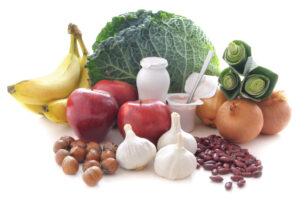
One of those studies, called the Prospective Urban Rural Epidemiology (PURE) study was published a few years ago. It included data from 135,335 participants from 18 countries across 5 continents. That’s a very large study, and normally we expect very large studies to be accurate. The results from the PURE study had low-carb enthusiasts doing a victory lap and claiming it was time to rewrite nutritional guidelines to favor low-carb diets.

Whenever controversies like this arise, reputable scientists are motivated to take another look at the question. They understand that all studies have their weaknesses and biases. So, they look at previous studies very carefully and try to design a study that eliminates the weaknesses and biases of those studies. Their goal is to design a stronger study that reconciles the differences between the previous studies.

A third study published a year later (SB Seidelmann et al, The Lancet, doi.org/10.1016/S2468-2667(18)30135-X was such a study. This study resolved the conflicting data and finally answered the question: “How much carbohydrate should we be eating if we desire a long and healthy life?” The answer is “Enough”.

I call this “The Goldilocks Effect”. You may remember “Goldilocks And The Three Bears”. One bed was too hard. One bed was too soft. But one bed was “just right”. One bowl of porridge was too hot. One was two cold. But one was “just right”. According to this study, the same is true for carbohydrate intake. High carbohydrate intake is unhealthy. Low carbohydrate intake is unhealthy. But moderate carbohydrate intake is “just right”.

How Was The Study Done?

clinical studyThis study was performed in two parts. This first part drew on data from the Atherosclerosis Risk in Communities (ARIC) study. That study enrolled 15,428 men and women, aged 45-64, from four US communities between 1987 and 1989. This group was followed for an average of 25 years, during which time 6283 people died. Carbohydrate intake was calculated based on food frequency questionnaires administered when participants enrolled in the study and again 6 years later. The study evaluated the association between carbohydrate intake and mortality.

The second part was a meta-analysis that combined the data from the ARIC study with all major clinical studies since 2007 that measured carbohydrate intake and mortality and lasted 5 years or more. The total number of participants included in this meta-analysis was 432,179, and it included data from previous studies that claimed low-carbohydrate intake was associated with decreased mortality.

Are Low Carb Diets Healthier?

GravestoneThe results from the ARIC study were:

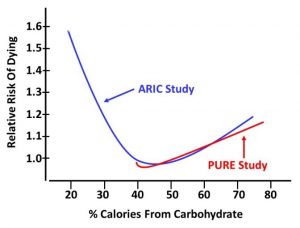
  • The relationship between mortality and carbohydrate intake was a U-shaped curve.
    • The lowest risk of death was observed with a moderate carbohydrate intake (50-55%). This is the intake recommended by current nutrition guidelines.
    • The highest risk of death was observed with a low carbohydrate intake (<40%).
    • The risk of death also increased with very high carbohydrate intake (>70%).
  • When the investigators used the mortality data to estimate life expectancy, they predicted a 50-year old participant would have a projected life expectancy of:
    • 33.1 years if they had a moderate intake of carbohydrates.
    • 4 years less if they had a low carbohydrate intake.
    • 1.1 year less if they had a very high carbohydrate intake.
  • The risk associated with low carbohydrate intake was affected by what the carbohydrate was replaced with.
    • When carbohydrates were replaced with animal protein and animal fat there was an increased risk of mortality on a low-carb diet. The animal-based low-carb diet contained more beef, pork, lamb, chicken, and fish. It was also higher in saturated fat.Beans and Nuts
    • When carbohydrates were replaced with plant protein and plant fats, there was a decreased risk of mortality on a low-carb diet. The plant-based low-carb diet contained more nuts, peanut butter, dark or whole grain breads, chocolate, and white bread. It was also higher in polyunsaturated fats.
  • The effect of carbohydrate intake on mortality was virtually the same for all-cause mortality, cardiovascular mortality, and non-cardiovascular mortality.
  • There was no significant effect of carbohydrate intake on long-term weight gain (another myth busted).

The results from the dueling meta-analyses were actually very similar. When the data from all studies were combined:

  • Both very low carbohydrate diets and very high carbohydrate diets were associated with increased mortality.
  • Meat-based low-carb diets increased mortality, and plant-based low-carb diets decreased mortality.
  • Once again, the results were the same for total mortality, cardiovascular mortality, and non-cardiovascular mortality.

The authors concluded: “Our findings suggest a negative long-term association between life-expectancy and both low carbohydrate and high carbohydrate diets…These data also provide further evidence that animal-based low carbohydrate diets should be discouraged. Alternatively, when restricting carbohydrate intake, replacement of carbohydrates with predominantly plant-based fats and proteins could be considered as a long-term approach to healthy aging.”

Simply put, that means if a low carb diet works best for you, it is healthier to replace the carbs with plant-based fats and protein rather than animal-based fats and protein.
The “Goldilocks Effect”

low carb dietThis study also resolved the discrepancies between previous studies. The authors pointed out that the average carbohydrate intake is very different in Europe and the US than in Asian countries and low-income countries.

In the US and Europe mean carbohydrate intake is about 50% of calories and it ranges from 25% to 70% of calories. With that range of carbohydrate intake, it is possible to observe the increase in mortality associated with both very low and very high carbohydrate intakes.

The US and European countries are affluent, which means that low-carb enthusiasts can afford diets high in animal protein.

White rice is a staple in Asian countries, and protein is a garnish rather than a main course. Consequently, overall carbohydrate intake is greater in Asian countries and very few Asians eat a truly low carbohydrate diet. High protein foods tend to be more expensive than high carbohydrate foods. Thus, very few people in developing countries can afford to follow a very low carbohydrate diet, and overall carbohydrate intake also tends to be higher.

Therefore, in Asian and developing countries the average carbohydrate intake is greater (~61%) than in the US and Europe, and the range of carbohydrate intake is from 45% to 80% of calories. With that range of intake, it is only possible to see the increase in mortality associated with very high carbohydrate intake.

Both the studies that low-carb enthusiasts quote to support their claim that low-carb diets are healthy relied heavily on data from Asian and developing countries.ARIC Study

In fact, when the authors of the current study overlaid the data from the PURE study with their ARIC data, there was an almost perfect fit. The only difference was that their ARIC data covered both low and high carbohydrate intake while the PURE study touted by low-carb enthusiasts only covered moderate to high carbohydrate intake.

[I have given you my rendition of the graph on the right. If you would like to see the data yourself, look at the paper.]

Basically, low-carb advocates are telling you that diets with carbohydrate intakes of 30% or less are healthy based on studies that did not include carbohydrate intakes below 40%. That is misleading. The studies they quote are incapable of detecting the risks of low carbohydrate diets.

What Does This Study Mean For You?

QuestionsThere are several important take-home lessons from this study:

  • All major studies agree that very high carbohydrate intake is unhealthy. In part, that reflects the fact that diets with high carbohydrate intake are likely to be high in sodas and sugary junk foods. It may also reflect the fact that diets which are high in carbohydrate are often low in plant protein or healthy fats or both.
  • All studies that cover the full range of carbohydrate intake agree that very low carbohydrate intake is also unhealthy. It shortens the life expectancy of a 50-year-old by about 4 years.
  • The studies quoted by low carb enthusiasts to support their claim that low-carb diets are healthy don’t include carbohydrate intakes below 40%. That means their claims are misleading. The studies they quote are incapable of detecting the risks of low carbohydrate diets.
  • Meat-based low-carb diets decrease life expectancy while plant-based low carb diets increase life expectancy. This is consistent with previous studies. For more details on those studies, see my article, “Are Any Low-Carb Diets Healthy?”, in “Health Tips From The Professor” or my book, “Slaying The Food Myths”.

The health risks of meat-based low-carb diets may be due to the saturated fat content or the heavy reliance on red meat. However, the risks are just as likely to be due to the foods these diets leave out – typically fruits, whole grains, legumes, and some vegetables.

Proponents of low-carb diets assume that you can make up for the missing nutrients by just taking multivitamins. However, each food group also provides a unique combination of phytonutrients and fibers. The fibers, in turn, influence your microbiome. Simply put, whenever you leave out whole food groups, you put your health at risk.

The Bottom Line

The low-carb wars are raging. Several studies have reported that low-carb diets increase risk of mortality (shorten lifespan). However, two studies published a few years ago have come to the opposite conclusion. Those studies have low-carb enthusiasts doing a victory lap and claiming it is time to rewrite nutritional guidelines to favor low-carb diets.

However, a study published a year later resolves the conflicting data and finally answers the question: “How much carbohydrate should we be eating if we desire a long and healthy life?” The answer is “Enough”.

I call this “The Goldilocks Effect”. According to this study, high carbohydrate intake is unhealthy. Low carbohydrate intake is unhealthy. But, moderate carbohydrate intake is “just right”.

Specifically, this study reported:

  1. Moderate carbohydrate intake (50-55%) is healthiest. This is also the carbohydrate intake recommended by current nutritional guidelines.

2) All major studies agree that very high carbohydrate intake (60-70%) is unhealthy. It shortens life expectancy of a 50-year old by about a year.

3) All studies that cover the full range of carbohydrate intake agree that low carbohydrate intake (<40%) is also unhealthy. It shortens life expectancy of a 50-year old by about 4 years.

4) The studies quoted by low carb enthusiasts to support their claim that low-carb diets are healthy don’t include carbohydrate intakes below 40%. That means their claims are misleading. The studies they quote are incapable of detecting the risks of low carbohydrate diets.

5) Meat-based low-carb diets decrease life expectancy while plant-based low carb diets increase life expectancy. This is consistent with the results of previous studies.

The authors concluded: “Our findings suggest a negative long-term association between life-expectancy and both low carbohydrate and high carbohydrate diets…These data also provide further evidence that animal-based low carbohydrate diets should be discouraged. Alternatively, when restricting carbohydrate intake, replacement of carbohydrates with predominantly plant-based fats and proteins could be considered as a long-term approach to healthy aging.”

Simply put, that means if a low carb diet works best for you, it is healthier to replace the carbs with plant-based fats and protein rather than animal-based fats and protein.

For more details, read the article above.

These statements have not been evaluated by the Food and Drug Administration. This information is not intended to diagnose, treat, cure or prevent any disease.

Which Diets Are Best In 2022?

Which Diet Should You Choose?

Author: Dr. Stephen Chaney

Emoticon-BadMany of you started 2022 with goals of losing weight and/or improving your health. In many cases, that involved choosing a new diet. That was only a month ago, but it probably feels like an eternity.

For many of you the “bloom” has gone off the new diet you started so enthusiastically in January.

  • Perhaps the diet isn’t working as well as advertised…
  • Perhaps the diet is too restrictive. You are finding it hard to stick with…
  • Perhaps you are always hungry or constantly fighting food cravings…
  • Perhaps you are starting to wonder whether there is a better diet than the one you chose in January…
  • Perhaps you are wondering whether the diet you chose is the wrong one for you…

If you are rethinking your diet, you might want to know which diets the experts recommend. Unfortunately, that’s not as easy as it sounds. The diet world has become just as divided as the political world.

Fortunately, you have an impartial resource. Each year US News & World Report invites a panel of experts with different points of view to evaluate popular diets. They then combine the input from all the experts into rankings of the diets in various categories.

If you are still searching for your ideal diet, I will summarize the US News & World Report’s “Best Diets In 2022”. For the full report, click on this link.

How Was This Report Created?

Expert PanelUS News & World Report recruited panel of 27 nationally recognized experts in diet, nutrition, obesity, food psychology, diabetes, and heart disease to review the 40 most popular diets.  The panel is not the same each year. Some experts are rotated off the panel, and others are added. The experts rate each diet in seven categories:

  • How easy it is to follow.
  • Its ability to produce short-term weight loss.
  • Its ability to produce long-term weight loss.
  • its nutritional completeness.
  • Its safety.
  • Its potential for preventing and managing diabetes.


  • Its potential for preventing and managing heart disease.

They converted the experts’ ratings to scores 5 (highest) to 1 (lowest). They then used these scores to construct nine sets of Best Diets rankings:

  • Best Diets Overall combines panelists’ ratings in all seven categories. However, all categories were not equally weighted. Short-term and long-term weight loss were combined, with long-term ratings getting twice the weight. Why? A diet’s true test is whether it can be sustained for years. And safety was double counted because no diet should be dangerous.
  • Best Commercial Diets uses the same approach to rank 15 structured diet programs that require a participation fee or promote the use of branded food or nutritional products.
  • Best Weight-Loss Diets was generated by combining short-term and long-term weight-loss ratings, weighting both equally. Some dieters want to drop pounds fast, while others, looking years ahead, are aiming for slow and steady. Equal weighting accepts both goals as worthy.
  • Best Diabetes Diets is based on averaged diabetes ratings.
  • Best Heart-Healthy Diets uses averaged heart-health ratings.
  • Best Diets for Healthy Eating combines nutritional completeness and safety ratings, giving twice the weight to safety. A healthy diet should provide sufficient calories and not fall seriously short on important nutrients or entire food groups.
  • Easiest Diets to Follow represents panelists’ averaged judgments about each diet’s taste appeal, ease of initial adjustment, ability to keep dieters from feeling hungry and imposition of special requirements.
  • Best Plant-Based Diets uses the same approach as Best Diets Overall to rank 12 plans that emphasize minimally processed foods from plants.
  • Best Fast Weight-Loss Diets is based on short-term weight-loss ratings.

Which Diets Are Best In 2022?

Are you ready? If this were an awards program I would be saying “Envelop please” and would open the envelop slowly to build suspense.

However, I am not going to do that. Here are the top 5 and bottom 5 diets in each category (If you would like to see where your favorite diet ranked, click on this link). [Note: I excluded commercial diets from this review.]

Best Diets Overall 

The Top 5: 

#1: Mediterranean Diet. The Mediterranean diet has been ranked #1 for 5 consecutive years.

#2: DASH Diet (This diet was designed to keep blood pressure under control, but you can also think of it as an Americanized version of the Mediterranean diet.)

#3: Flexitarian Diet (A flexible semi-vegetarian diet).

#4: MIND Diet (This diet is a combination of Mediterranean and DASH but is specifically designed to reduce cognitive decline as we age.)

#5: The TLC Diet (This diet was designed by the NIH to promote heart health.)

The Bottom 5: 

#36: Whole 30 Diet (A whole food, restrictive diet, designed for a 30-day jump start to weight loss. It was not designed for long-term use).

#37: Modified Keto Diet (A slightly less restrictive version of the Keto Diet).

#38: Keto Diet (A high protein, high fat, very low carb diet designed to achieve ketosis).

#39: Dukan Diet (High protein, low carb, low fat diet).

#40: GAPS Diet (A diet designed to improve gut health).

Best Weight-Loss Diets

The Top 5: Weight Loss

#1: Flexitarian Diet

#2: Volumetrics Diet (A diet based on the caloric density of foods).

#3: Vegan Diet (A diet that only allows plant foods).

#4: Mayo Clinic Diet (A diet designed to establish lifelong healthy eating habits).

#5: Ornish Diet (A whole food, semi-vegetarian diet designed to promote heart health).

The Bottom 5: 

#36: Fertility Diet (A diet designed to improve fertility, but the experts were skeptical that it would increase your chances of becoming pregnant)

#37: Whole 30 Diet

#38: Alkaline Diet (A diet designed to make your blood more alkaline, but the experts were skeptical about that claim)

#39: AIP Diet (A diet designed for people with autoimmune diseases)

#40: GAPS Diet

Best Diabetes Diets

The Top 5: 

#1: Mediterranean Diet

#2: Flexitarian Diet

#3: Vegan Diet

#4: Mayo Clinic Diet

#5: DASH Diet

The Bottom 5: 

#36: Alkaline Diet

#37: Dukan Diet

#38: GAPS Diet

#39: Sirtfood Diet (a very low calorie, fad diet that emphasizes plant foods rich in sirtuins)

#40: Whole 30 Diet

Best Heart-Healthy Diets 

strong heartThe Top 5: 

#1: Mediterranean Diet

#2: Ornish Diet

#3: DASH Diet

#4: Flexitarian Diet

#5: TLC Diet

#6: Vegan Diet

The Bottom 5: 

#36: Keto Diet

#37: AIP Diet

#38: Whole 30 Diet

#39: Modified Keto Diet

#40: Dukan Diet

Best Diets for Healthy Eating

The Top 5: 

#1: Mediterranean Diet

#2: DASH Diet

#3: Flexitarian Diet

#4: MIND Diet

#5: TLC Diet

The Bottom 5: 

#36: Raw Food Diet

#37: Atkins Diet

#38: Dukan Diet

#39: Modified Keto Diet

#40: Keto Diet 

Easiest Diets to Follow

The Top 5: Easy

#1: Mediterranean Diet

#2: Flexitarian Diet

#3: Fertility Diet

#4: MIND Diet

#5: DASH Diet

The Bottom 5: 

#36: Modified Keto Diet

#37: Keto Diet

#38: Whole 30 Diet

#39: GAPS Diet

#40: Raw Foods Diet 

Best Fast Weight-Loss Diets

The Top 5 (Excluding Commercial Diets): 

#1: Atkins Diet

#2: Biggest Loser Diet

#3: Keto Diet

#4: Raw Food Diet

#5: Vegan Diet

The Bottom 5 

#36: Dr. Weil’s Anti-Inflammatory Diet

#37: The Fertility Diet

#38: AIP Diet

#39: Alkaline Diet

#40: Gaps Diet

Which Diets Are Best For Rapid Weight Loss?

Happy woman on scaleThere are 3 take-home lessons from the rapid weight loss category:

1) If you are looking for rapid weight loss, any whole food restrictive diet will do. The top 5 diets are very different. For example, the keto and vegan diets are polar opposites, yet they both are in the top 5 for rapid weight loss.

  • The Atkins and keto diets are meat heavy, low carb diets. They restrict fruits, some vegetables, grains, and most legumes.
  • The Biggest Loser diet relies on restrictive meal plan and exercise programs.
  • The restrictions of the raw food diet are obvious.
  • The vegan diet is a very low-fat diet that eliminates meat, dairy, eggs, and animal fats.
  • I did not include commercial diets that rated high on this list, but they are all restrictive in one way or another.

2) We should ask what happens when we get tired of restrictive diets and add back some of your favorite foods.

  • If you lose weight on a vegan diet and add back some of your favorite foods, you might end up with a semi-vegetarian diet. This is a healthy diet that can help you maintain your weight loss.
  • If you lose weight on the Atkins or keto diets and add back some of your favorite foods, you end up with the typical American diet – one that is high in both fat and carbs. This is not a recipe for long-term success.

3) Don’t pay too much attention to the bottom 5 diets. None of them were designed with weight loss in mind.

Which Diet Should You Choose?

Food ChoicesWith rapid weight loss out of the way, let’s get back to the question, “Which Diet Should You Choose?” My recommendations are:

1) Choose a diet that fits your needs. That is one of the things I like best about the US News & World Report ratings. The diets are categorized. If your main concern is diabetes, choose one of the top diets in that category. If your main concern is heart health… You get the point.

2) Choose diets that are healthy and associated with long term weight loss. If that is your goal, you will notice that primarily plant-based diets top these lists. Meat-based, low carb diets like Atkins and keto are near the bottom of the lists.

3) Choose diets that are easy to follow. The less-restrictive primarily plant-based diets top this list – diets like Mediterranean, DASH, MIND, and flexitarian.

4) Choose diets that fit your lifestyle and dietary preferences. For example, if you don’t like fish and olive oil, you will probably do much better with the DASH or flexitarian diet than with the Mediterranean diet.

5) In case you were wondering, intermittent fasting ranked 26-30 and the Paleo diet ranked 26-33 on most of the list – not the worst diets, but a long way from the best. If you have a favorite diet I didn’t mention, check the US News website to find where it is ranked.

6) Finally, focus on what you have to gain, rather than on foods you have to give up.

  • On the minus side, none of the diets include sodas, junk foods, and highly processed foods. These foods should go on your “No-No” list. Sweets should be occasional treats and only as part of a healthy meal. Meat, especially red meat, should become a garnish rather than a main course.
  • On the plus side, primarily plant-based diets offer a cornucopia of delicious plant foods you probably didn’t even know existed. Plus, for any of the top-rated plant-based diets, there are websites and books full of mouth-watering recipes. Be adventurous.

The Bottom Line 

For many of you the “bloom” has gone off the new diet you started so enthusiastically in January. If you are rethinking your diet, you might want to know which diets the experts recommend. Unfortunately, that’s not as easy as it sounds. The diet world has become just as divided as the political world.

Fortunately, you have an impartial resource. Each year US News & World Report invites a panel of experts with different points of view to evaluate popular diets. They then combine the input from all the experts into rankings of the diets in various categories. In the article above I summarize the US News & World Report’s “Best Diets In 2022”.

There are probably two questions at the top of your list.

#1: Which diets are best for rapid weight loss? Here are some general principles:

  • If you are looking for rapid weight loss, any whole food restrictive diet will do.
  • We should ask what happens when we get tired of restrictive diets and add back some of our favorite foods.
  • Long term weight loss is possible if you transition to a healthy diet after you have lost the weight.

#2: Which diet should you choose? Here the principles are:

  • Choose a diet that fits your needs.
  • Choose diets that are healthy and associated with long term weight loss.
  • Choose diets that are easy to follow.
  • Choose diets that fit your lifestyle and dietary preferences.
  • Finally, focus on what you have to gain, rather than on foods you have to give up.

For more details on the diet that is best for you, read the article above.

These statements have not been evaluated by the Food and Drug Administration. This information is not intended to diagnose, treat, cure, or prevent any disease.

Can You Lose Weight Without Going On A Diet?

8 Tips For Eating Less

Author: Dr. Stephen Chaney 

New Year DietYou have just made your New Year’s resolutions, and weight loss is probably near the top of the list. You may be considering the latest new diet fad – never mind that you’ve tried lots of diets in the past and have always regained the weight you lost.

Perhaps the very thought of going on a diet terrifies you. You are tired of struggling to follow strict “rules” and forgoing all your favorite foods. You are tired of constantly being hungry.

What if you could lose weight without going on a diet? What if you could learn just a few tricks that would help you eat less every day? Would that be of interest to you? Do you think it might help you lose some weight and keep it off?

This week I’m going to share 8 tips for eating less every single day from Professor Brian Wansink of Cornell University. He is Director of their Food and Brand Lab. He has devoted his career to studying how external clues influence our eating patterns. He is the author of the best-selling books “Mindless Eating” and “Slim by Design”. He is the world expert on this topic.

A few years ago, I had the pleasure of attending a seminar he gave. Here’s a quick summary of what I learned.

8 Tips For Eating Less

Tip #1: The Size Of The Container Matters

Popcorn bagsIn one of his research studies he gave moviegoers who had just eaten dinner either a big bag or a small bag of stale popcorn. Those given the big bag ate 34% more. Think about that for a minute. The subjects in his study weren’t hungry. They had just eaten dinner. The popcorn wasn’t particularly tasty. It was stale. Yet they ate 34% more based solely on the size of the bag!

The take home lesson is always to choose the smallest container when given a choice. This is also why you want to serve your meals on small plates and drink your beverages in small glasses or cups. If you want to snack while you watch TV, place your snack food in a very small container and store the rest out of sight.

Tip #2: Don’t Fall For Marketing Hype

He was asked to consult for a cafeteria serving health food because they weren’t attracting enough customers. He just advised them to change the names of their menu items (e.g. “Succulent Tuscany Pasta” instead of “Italian Pasta”). Sales increased by 27%.

The take home lesson is not to fall for the marketing hype. Restaurants and food manufacturers know all the tricks. They know how to make even ordinary foods sound delicious. Make your food choices based on the ingredients of the food, not on the marketing description.

Tip #3: Make Junk Food InconvenientCandy Dish

In another study he put clear glass dishes of candy either on a secretary’s desk or 6 feet away on a cabinet. The secretaries consumed 125 more calories/day from candy when it was on their desk. Think about that for a minute. 125 excess calories/day could amount to around one pound of weight gain/month, 12 pound/year, 60 pounds every 5 years, and a whopping 120 pounds over 10 years!

The take home lesson is to make high calorie snacks and junk foods inconvenient. Put them in the back of your refrigerator, on the top shelf of your cabinets, or other out of the way places. Even better, don’t bring them home in the first place.

Tip #4: Watch The Refills.

When he used a refillable soup bowl (it never goes below half full) people ate 73% more soup than those given a regular bowl of soup. When he asked the people with the refillable bowl if they were full, they replied “How could I be? I only ate half a bowl of soup”.

Of course, most of us will never experience a refillable soup bowl. However, if you are having a meal with friends and enjoying the conversation, it is easy to ignore the refills – either from your waiter at a restaurant or your favorite aunt at a family gathering.

Tip #5: Low Fat Doesn’t Mean “Eat More”

lowfatWhen he took a batch of trail mix and labeled some as “low fat” and some as “regular” people ate 21% to 46% more calories of the “low fat” trail mix. This was not an idle exercise. In fact, many low fat foods aren’t low calorie, but people assume that they are and use that as an excuse to eat more.

The take home lesson is to not assume you can eat more just because a food is labeled low fat, gluten free or some other healthy sounding description. In many cases, it has just as many calories as the full fat version. Even if it is, in fact, lower in calories, the only way you benefit from the reduced calories is when you consume the same portion size as you would for the full fat food it replaces.

Tip #6: Health Foods Are Not Necessarily Healthy

When he showed people an Italian sandwich and told them that it was from either “Jim’s Hearty Sandwich Shop” or from “Good Karma Healthy Foods”, people estimated the calories as 24% lower if they thought it came from Good Karma.

The take home lesson is that health foods are not necessarily healthier. Food manufactures know that health food is in, and they market their products accordingly. If you walk down the aisles of your favorite health food store, you will find “health” foods that are just as high in sugar, fat and calories as the junk food you can buy at the convenience store down the street. They may contain “natural” fats and sugars, but those have just as many calories as the “unhealthy” fats and sugars in the junk foods. You still need to read labels and choose unprocessed fruits, vegetables and whole grains whenever possible.

Tip #7: Don’t Call It ExerciseNature Walk

When he took students on a walk around a lake before dinner, they ate more calories at dinner if they were told that it was an exercise walk than if they were told that it was a sight-seeing walk – and most of the extra calories came from dessert. Think about that for a minute. It is a human tendency to reward ourselves for virtuous behavior, but when that reward involves eating, it becomes self-defeating.

The take home lesson is two-fold.

  • Reframe our virtuous behavior. If we call it exercise or a work-out, it implies that we have done something virtuous and deserve a reward. If we call it a nature walk or think of it as a sport, it becomes its own reward. If we think of substituting a salad for a dinner of fried chicken and mashed potatoes with gravy as virtuous behavior, we may think we deserve a dessert as a reward. If we think of the salad as a gourmet experience, it can become a reward in its own right.
  • Rethink our rewards. The reward doesn’t need to be food related. It could involve reading a book, watching a show, or whatever you favorite activity might be.

Tip #8: Knowing This Stuff Isn’t Enough.

The fascinating thing is that his research shows it doesn’t matter how intelligent or well informed you are.

He did a study with 60 graduate students. Just before winter break, he gave them a lecture on external eating cues in which he specifically told them that they would eat more from a big bowl of Chex Mix than from a small bowl. The students then spent 90 minutes in small group exercises designed to show them how to overcome external eating cues.

After winter break he invited those same students to a Super Bowl party in which he divided them into two rooms and gave them, you guessed it, either large or small bowls of Chex Mix. The ones given the large bowls ate 53% more!

He later gave the same lecture to a meeting of The American Diabetes Association (Those are the experts) and then repeated the same experiment with them – and they still ate more from the large bowls.

Can You Lose Weight Without Going On A Diet?

Question MarkThat brings us back to the original question, “Can you lose weight without going on a diet?” You can start by decreasing the amount of food you eat.

Dr. Wansink’s research clearly shows that overeating is mindlessly dependent on external eating cues, AND that you can’t avoid being influenced by those external clues even if you are intelligent and motivated! So what can you do?

Dr. Wansink recommends planning ahead. For example:

  • Serve your food on small plates and don’t leave food lying around where you can see it or get to it easily.
  • If you bring home a box or bag of snack food (hopefully healthy snack food), divide it up into healthy portion sizes as soon as you bring it home.
  • Put the healthy food choices in the front of your refrigerator or cupboard where you will see them easily and hide the unhealthy foods in the back (or don’t bring them home to begin with).

However, the most important thing is to realize most of this behavior is mindless. It is not enough to simply understand these external eating cues at an intellectual level. We need to be constantly vigilant for external eating cues, or we will find ourselves overeating without really understanding why.

Hopefully, these tips will help you eat less and attain a healthier weight next year than you did this year. However, these 8 tips are just the tip of the iceberg. If this article has piqued your interest and you’d like to learn more, I recommend you read one of Dr. Wansink’s books.

Finally, for best results I recommend that you also:

  • Make healthier food choices.
    • Whole unprocessed or minimally processed foods have a lower caloric density than the highly processed foods most of us eat.
    • People eating whole food, primarily plant-based diets generally weigh less than people eating the typical American diet or meat-based low carb diets.
    • Don’t overwhelm yourself. Simply substitute one healthy food choice for one unhealthy food choice every week or so. There are no “rules”. You choose which substitutions you want to make and how often you want to make them.
  • Exercise more.
    • Just don’t call it exercise. If you look forward to your sport, dance, etc., you are more likely to keep doing it.

The Bottom Line

If you are like most people. You want to lose weight but dread going on another diet. What if you could lose weight without going on a diet? What if you could learn just a few tricks that would help you eat less every day?

  • Brian Wansink’s research has shown that overeating, to a large extent, is mindlessly dependent on external eating cues, and that you can’t necessarily avoid being influenced by those external clues even if you are intelligent and motivated!
  • I have distilled his research into 8 simple tips to help you eat less and attain a healthier weight next year than you did this year.

For more information and other suggestions for losing weight without going on a diet, read the article above.

These statements have not been evaluated by the Food and Drug Administration. This information is not intended to diagnose, treat, cure or prevent any disease.


Is Dairy Bad For Your Heart?

Is Dairy Right For You? 

Author: Dr. Stephen Chaney

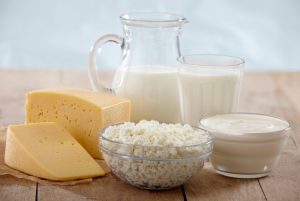
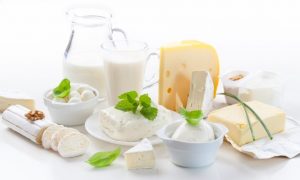
dairy foodsWe have been told for years that dairy foods are good for us. They are part of the USDA five food groups. In fact, they are part of the dietary recommendations of every government and most health organizations across the world.

And dairy foods are nutritious. They are excellent sources of calcium, potassium, protein, and vitamins A and B12. And if they are fortified, they are also an excellent source of vitamin D. Many health experts consider them essential for healthy bones. So, you might be saying, “Case closed. We should all be eating more dairy foods”.

But, not so fast. Many dairy foods are high in saturated fats. In fact, 65% of the fat in dairy foods is saturated. We have known for years that when saturated fats replace polyunsaturated fats in the diet, LDL cholesterol levels increase. And, as I reported in a previous issue of “Health Tips From the Professor” there is excellent evidence that replacing polyunsaturated fats with saturated fats substantially increases the risk of dying from heart attack, stroke, and other forms of heart disease.

The widely accepted message from these studies is that saturated fats raise LDL cholesterol levels and increases our risk of dying from heart disease. If we accept this message, it poses a dilemma. Dairy foods are nutritious. But they are high in saturated fat. What should we do?

The answer from the American Heart Association and most other health organizations is simple. We should eat low-fat dairy foods.

But this is where it gets really confusing. Dairy foods are composed of much more than saturated fats. And you have probably seen the claims that full fat dairy foods don’t increase the risk of heart disease.

So, what is the truth about full-fat dairy foods and heart health? In this issue of “Health Tips From The Professor” I review three recent studies and the recommendations of the Heart Foundation because they shed light on this question.

Is Dairy Bad For Your Heart?

dairy products and heart disease cheeseBefore I answer this question, I should point out that there are two ways of looking at it.

  • As I said above, the studies proving that saturated fats increase the risk of heart disease, substituted saturated fats for polyunsaturated fats and controlled every other aspect of the diet. That has led the American Heart Association and other organizations to recommend that we eat low-fat dairy foods.
  • However, when most people hear that recommendation, they simply substitute low-fat dairy for full-fat dairy foods without changing any other aspect of their diet or lifestyle. The first two studies were designed to see if that approach was effective for reducing heart disease risk.

The first study (KA Schmidt et al, American Journal of Clinical Nutrition, 114: 882-892, 2021) was a randomized controlled trial that compared the effect of low-fat dairy foods and full-fat dairy foods on heart health parameters.

The participants in this study were:

  • Average age = 62
  • 56% male
  • 75% white
  • Average weight = 214 pounds
  • All of them were prediabetic

All participants were told to stick with their usual diets (probably typical American diets) except for the amount and type of dairy foods added to their diet. During the first four weeks they restricted dairy consumption to 3 servings of nonfat dairy/week so they would all be starting with the same amount of dairy consumption. Then they were divided into 3 groups for the 12-week study:

  • Group 1 continued with 3 servings of nonfat dairy/week.
  • Group 2 added 3 servings of low-fat dairy/day to their usual diet.
  • Group 3 added 3 servings of high-fat dairy/day to their usual diet.

At the beginning of the study and again at the end of the 12-week study LDL cholesterol, HDL cholesterol, triglycerides, free fatty acids, and blood pressure were measured. The results were:

  • There was no difference in LDL cholesterol, HDL cholesterol, triglycerides, free fatty acids, or blood pressure in the three groups at the end of 12 weeks.
  • There was no also significant change in LDL cholesterol, HDL cholesterol, triglycerides, free fatty acids, or blood pressure during the study in any of the three groups.

The authors concluded, “A diet rich in full-fat dairy had no effect on fasting lipid profile or blood pressure compared with diets limited in dairy or rich in low-fat dairy. Therefore, dairy fat, when consumed as part of complex whole foods does not adversely affect these classic cardiovascular disease risk factors.”

[Note: The last sentence is key. Remember the “proof” that saturated fats increase LDL levels and increase the risk of heart disease come from studies in which saturated fats were substituted for polyunsaturated fats and every other aspect of the diet was carefully controlled.

In this study, and others like it, the effects of saturated fats are studied in a complex food (dairy) in the presence of an even more complex diet containing many foods that influence the risk of heart disease.]

The second study (J Guo et al, European Journal of Epidemiology 32: 269-287, 2017) was a meta-analysis of Healthy Heart29 studies with 938,465 participants looking at the association of full-fat dairy consumption with the risk of dying from heart disease.

Seven of the 29 studies were conducted in the United States. Of the remaining studies 3 were from Japan and Taiwan, 2 were from Australia, and 17 were from Europe.

The results of the study were:

  • There was no association between full-fat dairy, low-fat dairy, and total dairy consumption and risk of dying from heart disease.

When the results were broken down into individual dairy foods.

  • There was no association between milk consumption and risk of dying from heart disease.
  • Consumption of one serving/day of fermented dairy foods was associated with a 2% decreased risk of dying from heart disease.

The authors concluded, “The current meta-analysis of 29 prospective cohort studies suggested no association of total, high and low-fat dairy and milk with risk of cardiovascular disease. In addition, a possible role of fermented dairy was found in cardiovascular disease prevention, but the result was driven by a single study.” [I would add that this effect, if confirmed by subsequent studies, is extremely small (2%).]

The first two studies do not say that full-fat dairy foods are heart healthy for everyone, as some headlines would have you believe. Instead, these studies show fairly convincingly that simply switching from full-fat to low-fat dairy foods, without changing any other aspect of your diet and lifestyle, is not as effective at decreasing your risk of heart disease as some experts would have you believe.

balance scaleThe third publication (WC Willett and DS Ludwig, New England Journal of Medicine 382: 644-654, 2020) was a review of the effect of dairy foods on our health. One of the authors, Walter C Willett, is one of the top experts in the field. The review covered many topics, but I will focus on the section dealing with the effect of dairy foods on heart health.

This review took a more nuanced look at full-fat dairy foods and examined the effect of substituting full-fat dairy for other protein foods.

The review concludes, “The association of milk with the risk of cardiovascular disease depends on the comparison foods. In most cohort studies [such as the studies described above], no specific comparison was made; by default, the comparison was everything else in the diet – typically large amounts of refined grains, potato products, sugar, and meat.”

The review went on to say that previous studies have shown:

  • “Both full-fat and low-fat dairy foods…were associated with a lower risk [of cardiovascular disease and stroke] than…the same number of servings of red meat but with a higher risk than seen with the same number of servings of fish or nuts.”
  • “Dairy fat…was associated with a higher risk of cardiovascular disease than was polyunsaturated or vegetable fat.”
  • “For persons living in low-income countries where diets are very high in starch, moderate intake of dairy foods may reduce cardiovascular disease by providing nutritional value and reducing glycemic load [the amount of easily digestible carbohydrate in the diet].”

Is Dairy Right For You?

dairy products and heart disease questionsNow I am ready to answer the question posed at the beginning of this article, “Is dairy bad for your heart?” The answer is, “It depends”.

  • As described above, the effect of dairy on heart health depends on our overall diet. It also depends on our lifestyle, our weight, and our health.
  • In addition, clinical studies report averages, and none of us are average. We all have unique diets, lifestyles, health status, and genetic makeup.

So, what does this mean for you? Perhaps it is best summed up by the recommendations of Australia’s Heart Foundation which take health status, lifestyle, and genetic differences into account:

  • A heart healthy diet can include dairy, but it is not essential [with careful planning and/or supplementation you can get your calcium and protein elsewhere].
  • Milk, yogurt, and cheese are considered neutral for heart health, meaning they neither increase nor decrease the risk of heart disease for the average person. However, the recommendations vary depending on health status, genetics, and lifestyle:
    • Low-fat milk, yogurt, and cheese are recommended for people with heart disease or high cholesterol because the fat in dairy foods can raise cholesterol more for these people. [Note: If cholesterol is elevated, it usually means that individual has a hard time regulating blood cholesterol levels because of obesity, genetics, or pre-existing disease. For these individuals, diets high in saturated fat are more likely to increase LDL cholesterol and risk of heart disease.]
    • Full-fat milk, yogurt, and cheese can be part of a heart healthy diet for healthy people provided most of the fat in the diet comes from fish, nuts, seeds, and healthy oils. [Note: Overall diet is important.]
  • Choosing unflavored milk, yogurt, and cheese helps limit the amount of sugar in your diet.
  • Ice cream, cream, and dairy desserts should be eaten only sometimes and in small amounts because they have more sugar and fat, and less protein, vitamins, and minerals than other dairy foods.
  • Butter raises LDL cholesterol levels, especially in people who already have elevated cholesterol.
    • There is no evidence that butter can be part of a heart healthy diet, so you should consider healthier options such as olive oil, avocado, nut butters, and spreads made with healthier oils, such as olive oil.

The Bottom Line

We have been told for years that dairy foods are good for us. They are part of the USDA five food groups. In fact, they are part of the dietary recommendations of every government and most health organizations across the world.

However, dairy foods have been controversial in recent years. Some experts claim that only low-fat dairy products can be heart healthy. Others claim that full-fat dairy foods are just as healthy as low-fat dairy foods.

I shared three recent publications and dietary recommendations from The Heart Foundation that shed light on these controversies.

The first study found that full-fat dairy foods did not increase LDL cholesterol, triglycerides, and other heart disease risk factors.

The second study was a meta-analysis of 29 clinical studies with almost one million people. It found that full-fat dairy foods did not increase the risk of dying from heart disease.

“Case closed”, you might say. However, these studies do not say that full-fat dairy foods are heart healthy for everyone, as some headlines would have you believe. Instead, these studies show fairly convincingly that simply switching from full-fat to low-fat dairy foods, without changing any other aspect of your diet and lifestyle, is not as effective at decreasing your risk of heart disease as some experts would have you believe.

Moreover, these studies do not account for the effect of overall diet, lifestyle, health status, and genetics on the risk of heart disease.

That is why I included the third study in my review. It took the overall diet into account and concluded the effect of full-fat dairy foods on heart disease risk depends on the overall diet.

  • For some diets full-fat dairy increases heart disease risk.
  • For other diets full-fat dairy has no effect on heart disease risk.
  • And for some diets full-fat dairy may even decrease heart disease risk.

Finally, I included recommendations of the Australian Heart Foundation because they included the effect of health status, lifestyle, and genetics in their recommendations.

For more details on the findings of the third study and the recommendations of the Heart Foundation, read the article above.

These statements have not been evaluated by the Food and Drug Administration. This information is not intended to diagnose, treat, cure, or prevent any disease.

Are We Killing Our Children With Kindness?

The Danger Of Ultraprocessed Foods 

Author: Dr. Stephen Chaney

fast foodIt breaks my heart when I see a mom and her children in the checkout line of a supermarket with a cart filled with sodas, sweets, and convenience foods and devoid of fresh fruits and vegetables – or when I see fast food restaurants packed with parents and their children.

I get it. Our kids love these foods. It seems like an act of kindness to give them the foods they crave. But are we killing our children with kindness?

Let me explain. The human brain is hardwired to crave sweets, salt, and fat. In prehistoric times each of these cravings had a survival benefit. For example:

  • Mother’s milk is naturally sweet. It only makes sense that babies should crave the nutrition source that is essential for their early growth and development.
  • Fruits provide a cornucopia of vitamins, minerals, and phytonutrients. But fruits were scarce and seasonal in prehistoric times. Their sweetness provided an incentive for early man to seek them out.
  • Some salt is essential for life. Yet in early history it was scare. It was worth its weight in gold.
  • In prehistoric times it was feast or famine. The human body has an unlimited capacity to store fat in times of plenty, and those fat stores carried early man through times of famine.

Today most Americans live in a time of food abundance. There are fast food restaurants on almost every street corner and in every shopping mall. We think of famine as the days we skipped lunch because we were busy.

Yet these cravings remain, and the food industry has weaponized them. They are churning out an endless supply highly processed foods and beverages. These foods are not being designed to improve their nutritional value. They are designed to satisfy our cravings and lure us and our children into consuming more of them every year.

Scientists have developed a classification system that assigns foods in the American diet to different groups based on the degree of processing of that food. As you might expect, the best classification is unprocessed foods. The worst classification is called “ultraprocessed foods”. [I will describe this classification system in more detail in the next section.]

It is time we asked how much ultraprocessed foods our children are eating and what it is doing to their health. That is the topic of the study (L Wang et al, JAMA, 326: 519-530, 2021) I will discuss today.

How Was This Study Done?

Clinical StudyThe data for this study were obtained from NHANES (National Health and Nutrition Examination Survey) dietary data collected from 33,795 American children (ages 2-19, average age = 10) between 1999 and 2018.

NHANES is a program conducted by the CDC to survey the health and nutritional status of adults and children in the United States. The survey has been conducted on a continuous, yearly basis since 1999.

The dietary data are collected via 24-hour dietary recalls conducted by trained interviewers, with a second recall administered over the phone 3-10 days later to improve the accuracy of the data.

  • Children aged 12-19 completed the dietary survey on their own.
  • For children aged 6-11, a parent or guardian assisted them in filling out the survey.
  • For children aged 2-5, a parent or guardian filled out the survey for them.

The foods and beverages consumed by the children were divided into 4 major groups based on the extent of processing using a well-established classification system called NOVA. The 4 groups are:

1) Unprocessed Or Minimally Processed Foods.

  • This includes whole foods and foods that are minimally processed without the addition of oils, fats, sugar, salt, or other ingredients to the food.
  • Examples of minimally processed foods include things like oatmeal, nut butters, dried fruit, frozen fruits or vegetables, and dried beans.

2) Processed Culinary Ingredients.

  • This includes recipes from restaurants or in-home cooking that add small amounts of oils, fats, sugar, salt, and seasonings to whole foods.

3) Processed Foods

  • This includes foods made in factories by the addition of salt, sugar, oil, or other substances added to whole or minimally processed foods.
  • Examples include tomato paste, canned fruits packed in sugar syrup, cheese, smoked or cured meat.

4) Ultraprocessed Foods

  • These are industrial formulations created in factories mostly or entirely from substances extracted from foods (oils, fats, sugar, starch, and proteins), derived from food constituents (hydrogenated fats and modified starch), or synthesized in laboratories (flavor enhancers, colors, and food additives).
  • Examples include sugar sweetened beverages; sweet or savory packaged snacks; chocolates and candies; burgers, hot dogs, and sausages; poultry and fish nuggets, pastries, cakes, and cake mixes.

Are We Killing Our Children With Kindness?

Obese ChildAs I said above, the important question is, “Are we killing our children with kindness when we give them the sugary drinks, sweets, convenience foods, and fast foods they crave?” After all, the foods we give them when they are young are the ones they are most likely to select when they get older.

Let’s start by looking at how pervasive these foods have become. That was the purpose of the study I am discussing today, and the results of this study are alarming. When they looked at the changes in food consumption by our children between 1999 and 2018:

  • The percentage of calories from ultraprocessed foods increased from 61.4% to 67%. That means:
    • Today, more than 2/3 of the calories our children consume daily come from ultraprocessed foods!
  • The percentage of calories from unprocessed and minimally processed foods decreased from 28.8% to 23.5%. That means:
    • In the span of just 19 years the diets of our children have gone from bad to worse!
  • Ultraprocessed foods were more likely to be consumed away from home and at fast food restaurants.

When the investigators looked at individual categories of ultraprocessed foods:

  • The percentage of calories coming from ready to heat and eat dishes like frozen pizzas and other frozen meals or snacks increased from 2.2% to 11.2%.
  • The percentage of calories coming from sweet snacks and desserts increased from 10.7% to 12.9%.
  • The percentage of calories coming from sugar sweetened beverages decreased from 10.8% to 5.3%.
    • This is potentially the only good news from this study.

The authors concluded. “Based on NHANES data from 1999 to 2018, the estimated energy intake from consumption of ultraprocessed foods has increased among youths in the US and has consistently comprised the majority of their total energy intake.”

“These results suggest that food processing may need to be considered as a food dimension in addition to nutrients and food groups in future dietary recommendations and food policies.”

The Danger Of Ultraprocessed Foods

Fast Food DangersThis study clearly shows that ultraprocessed foods have become the mainstay of our children’s diets. Forget a balanced diet! Forget “Eat your fruits and vegetables”! Our children’s diets have been fundamentally transformed by “Big Food, Inc”.

You might be saying to yourself, “So, they are eating their favorite processed foods. What’s the big deal? How bad can it be?” My answer is, “Pretty Bad”. I chose the title, “Are we killing our children with kindness”, for a reason.

When you look at what happens to children who eat a diet that is mostly ultraprocessed foods:

#1: Their nutrition suffers. When the investigators divided the children into 5 groups based on the percentage of calories coming from ultraprocessed foods, the children consuming the most ultraprocessed food had:

  • Significantly higher intakes of carbohydrates (mostly refined carbohydrates); total fats; polyunsaturated fats (mostly highly processed omega-6-rich vegetable oils); and added sugars.
  • Significantly lower intakes of fiber; protein; omega-3 polyunsaturated fatty acids; calcium; magnesium; potassium; zinc; vitamins A, C, D, and folate.
    • The low intake of fiber means our children will be less likely to have health-promoting friendly bacteria and more likely to have disease-promoting bad bacteria in their guts.
    • The low intake of calcium, magnesium, and vitamin D means they will be less likely to achieve maximum bone density as young adults and will be more likely to suffer from osteoporosis as they age.

#2: They are more likely to become obese. Remember, these are foods that are made in a factory, not grown on a farm.

  • They are high in fat, sugar, and refined carbohydrates. That means they have a high caloric density. Each bite has 2-3 times the calories found in a bite of fresh fruits and vegetables.
  • As I said earlier, the food industry has weaponized our natural cravings for sweet, salty, and fatty foods. They feed their prototypes to a series of consumer tasting panels until they find the perfect blend of sugar, salt, and fat to create maximum craving.
  • And if that weren’t enough, they add additives to create the perfect flavor and “mouth appeal”.
    • It is no wonder that clinical studies have found a strong correlation between high intake of ultraprocessed food and obesity in both children and adults.
    • It is also no wonder that the rate of childhood obesity has almost quadrupled (5% to 18.5%) in the last 40 years.

#3: They are more likely to become sick as adults and die prematurely.

  • Obesity; high intake of fat, sugar, and refined carbohydrates; and low intake of fiber, omega-3s, and essential nutrients all contribute to an increased risk of diabetes, heart disease, and some cancers.
    • It is no wonder that clinical studies have found a strong correlation between high intake of ultraprocessed food and increased risk of diabetes, heart disease, some cancers, and premature death in adults.
    • It is also no wonder a recent study found that type 2 diabetes in children has almost doubled between 2001 and 2017.

The data are clear. When we allow our children to subsist on a diet mostly made up of the ultraprocessed foods they crave, we may be giving them, not love, but a lifetime of obesity and declining health instead. And yes, we may be killing them with kindness.

Instead, my recommendations are:

  • expose your children to a variety of fresh fruits, vegetables, and minimally processed foods at an early age.
  • They will reject some of them, and that’s OK. Introduce others until you find whole, minimally processed foods they like. Reintroduce them to some of the foods they initially rejected as they get older.
  • Don’t keep tempting ultraprocessed foods in your house.
  • You may just succeed in putting your children on the path to a healthier diet and a healthier, longer life.

The Bottom Line

It breaks my heart when I see a mom and her children in the checkout line of a supermarket with a cart filled with sodas, sweets, and convenience foods and devoid of fresh fruits and vegetables – or when I see fast food restaurants packed with parents and their children.

I get it. Our kids love these foods. It seems like an act of kindness to give them the foods they crave. But are we killing our children with kindness?

It is time we asked how much ultraprocessed foods our children are eating and what it is doing to their health. A recent study did just that. When they looked at the changes in food consumption by our children between 1999 and 2018:

  • The percentage of calories from ultraprocessed foods increased from 61.4% to 67%. That means:
    • Today, more than 2/3 of the calories our children consume daily come from ultraprocessed foods!
  • The percentage of calories from unprocessed and minimally processed foods decreased from 28.8% to 23.5%. That means:
    • In the span of just 19 years the diets of our children have gone from bad to worse!

This study clearly shows that ultraprocessed foods have become the mainstay of our children’s diets. Forget a balanced diet! Forget “Eat your fruits and vegetables”! Our children’s diets have been fundamentally transformed by “Big Food, Inc”.

You might be saying to yourself, “So, they are eating their favorite processed foods. What’s the big deal? How bad can it be?” My answer is, “Pretty Bad”. I chose the title, “Are we killing our children with kindness”, for a reason.

When you look at what happens to children who eat a diet that is mostly ultraprocessed foods:

  • Their nutrition suffers.
  • They are more likely to become obese.
  • They are more likely to become sick as adults and die prematurely.

For more details about this study, read the article above.

These statements have not been evaluated by the Food and Drug Administration. This information is not intended to diagnose, treat, cure, or prevent any disease.

How Diet And Gut Bacteria Affect Our Health

Why Is Your Microbiome Important? 

Author: Dr. Stephen Chaney

Vegan FoodsWe have known for years that primarily plant-based diets are healthy. As I have shared in my book, “Slaying The Food Myths”, people who consume primarily plant-based diets have lower risk of heart disease, diabetes, and some cancers and live longer than people who consume the typical American diet.

But why is that?

  • Is it the nutrients, phytonutrients, and fiber plant foods provide?
  • Is it because plant foods are lower in saturated fats and are good sources of healthier monounsaturated and polyunsaturated fats?
  • Or is it because plant foods have a low caloric density, which makes it easier to maintain a healthy weight?

The answer, of course, is that all the above are important. But is there something else? Is there a “missing link” we don’t talk about much? Many experts think our microbiome (our gut bacteria) is that missing link.

You have heard the saying, “We are what we eat”. You might be scratching your head and saying, “I could eat cabbages all day long, but I am never going to become a cabbage.” It seems like a crazy saying.

But for our microbiome that saying is true. What we call fiber, our gut bacteria call food. Consequently, microbiomevegetarians and meat eaters have very different populations of gut bacteria in their microbiome. The question, of course, is whether these differences influence our health. This central question has spurred multiple research studies on our microbiome in recent years.

Two central themes have emerged from these studies:

  • There are certain populations of gut bacteria that are associated with healthy outcomes (lower risk of obesity, diabetes, heart disease, and some cancers). We can think of these as “good bacteria”.
    • There are certain populations of gut bacteria that are associated with unhealthy outcomes (increased risk of obesity, diabetes, heart disease, and some cancers). We can think of these as “bad bacteria”.
  • People consuming primarily plant-based diets tend to have more of the “good bacteria” and less of the “bad bacteria” in their gut microbiome.

However, most of these studies have been small and have looked at individual foods rather than the effect of the overall diet.

The study (KK Koponen et al, American Journal Of Clinical Nutrition, 2021; doi.org/10.1093/ajcn/nqab077 I will describe today was designed to overcome those limitations.

Metabolism 101: What Are Short Chain Fatty Acids And Why Are They Important?

professor owlTo fully understand the findings of this study, you need to understand what short chain fatty acids are and why they are important. Simply put, short chain fatty acids are the end products of fiber digestion by some species of gut bacteria in our intestines. The major short chain fatty acids in our intestines are acetate (2 carbons), propionate (3 carbons), and butyrate (4 carbons).

There are the key facts about short chain fatty acids you should know:

  1. They are formed by anaerobic fermentation of dietary fiber by our gut bacteria. However:
    • Not all gut bacteria can produce short chain fatty acids.
    • The amount and type(s) of dietary fiber determine whether the gut bacteria that can produce short chain fatty acids are present.

2) Acetate is readily absorbed into the bloodstream and is utilized for fat production and other biosynthetic pathways.

3) Short chain fatty acids, especially butyrate, are the primary energy source for cells lining the colon. Because of this, they have several important health benefits.

    • They support the immune cells that line our intestine. This helps strengthen our immune system.
    • They help maintain the integrity of the intestinal wall. This helps protect against leaky gut syndrome.
    • They reduce inflammation. This reduces the risk of inflammatory bowel diseases like ulcerative colitis and Crohn’s disease.
    • They reduce the risk of colon cancer.

4) In addition, small amounts of propionate and butyrate can be absorbed into the bloodstream. Butyrate is of particular interest because it has the potential to regulate gene expression.

    • There is some evidence that short chain fatty acid production in the intestine is correlated with reduced risk of inflammatory diseases, obesity, type 2 diabetes, and heart disease, but these studies remain controversial.

How Was This Study Done?

Clinical StudyThis study made use of data from the FINRISK Study. This study was conducted by the Finnish Institute of Health and Welfare every 5 years between 1972 and 2012 to assess risk factors for noncommunicable diseases, health behavior, and their changes in adult Finns.

This study included 4930 individuals from the 2002 FINRISK assessment. The characteristics of the group were:

  • 53% female, 47% male.
  • Average age = 48.
  • Average BMI = 26.9 (slightly overweight).

Upon entry into the study, the participants were asked to fill out a food frequency questionnaire.

  • The data from this questionnaire were used to calculate a Healthy Food Choices (HFC) score based on the Nordic Nutrition Dietary Guidelines for a healthy diet.
    • The HFC score ranged from 9-745 and was based on the consumption of fiber-rich breads; vegetables (including beans and lentils); fruits; berries; fresh, non- sweetened berry and fruit juices; fish; poultry; low-fat cheeses; salad dressings and oils; nuts; and seeds.
    • In the words of the authors, “A high HFC score effectively acts as an indicator of a healthy omnivorous Nordic diet rich in plants, fiber, and polyunsaturated fatty acids.”
  • The data were also used to calculate a total dietary fiber score.

The participants were also asked to provide a stool sample. DNA was extracted from the stool sample and sequenced to determine the number and types of bacteria in their gut microbiome. These data were analyzed for:

  • Bacterial diversity (greater bacterial diversity is associated with better health outcomes).
  • Species of gut bacteria known to be associated with better health outcomes.
  • Species of bacteria known to produce short chain fatty acids.

How Diet And Gut Bacteria Affect Our Health

MicrobiomeMicrobiome research is complex. But here is a description of the results in simple terms.

Both the Healthy Food Choice (HFC) and fiber scores correlated positively with:

  • Bacterial diversity (greater bacterial diversity is associated with better health outcomes).
  • Species of gut bacteria known to be associated with better health outcomes.
  • Species of bacteria known to produce short chain fatty acids that are associated with better health outcomes.

Simply put, a healthy, primarily plant-based Nordic diet produces the kind of gut microbiome that is associated with better health outcomes.

When the authors analyzed the contribution of individual components of the diet to a healthy microbiome:

  • Vegetables; berries; fruits; fiber-rich breads; salad dressings and oils; low-fat cheeses; poultry; fresh, unsweetened juices; and fish were all positively associated with a healthy microbiome.
    • Each of these foods supported the growth of different gut bacteria that contributed to the healthy microbiome.
    • Simply put, none of these foods was sufficient by itself. It was a healthy diet with all these foods that resulted in a healthy microbiome.
  • Nuts and seeds did not affect the microbiome. This may have been because there was too little of them in the diet to have a significant effect.
  • Red and processed meats were negatively associated with a healthy microbiome.

The authors concluded, “Our results from a large, population-based survey confirm and extend the findings of other, smaller-scale studies that plant- and fiber-rich dietary choices are associated with a more diverse and compositionally distinct microbiome with a greater potential to produce short chain fatty acids.”

The authors also said, “The associated between red and processed meat products and the gut microbiome cannot be ignored either…[Our data] indicate that increased usage of red and processed meat is associated with the microbiome composition in an opposite manner to that of a healthy diet.”

Why Is Your Microbiome Important?

happy gut bacteriaThe most important message from this and previous studies is that your gut microbiome is the “missing link” between a healthy diet and a healthy body.

Simply put,    healthy diet →→→healthy microbiome→→→healthy body

However, I also need to acknowledge microbiome research is in its infancy. That is because our microbiome is very complex:

  • We have around 38 trillion microorganisms (give or take a few trillion) in our intestine. That means we have slightly more microorganisms than we do cells in our body.
  • Each of us have more than 1,000 different species of bacteria in our intestine.
  • Collectively, these bacteria have around 750,000 genes. That is 30 times more than the number of genes in our DNA.
  • Finally, we all have different species of bacteria in our intestines. We are all unique.

The only simplifying principle is that these bacteria exist in communities that generally group together. Unraveling the complexities and identifying the communities of bacteria in our intestines requires high throughput DNA sequencing and supercomputers to analyze the data.

Studies like this one can identify the associations between diet and distinct communities of bacteria. They can even identify which foods in the diet support the growth of these bacterial communities. Other studies can identify the association between distinct communities of bacteria and healthy outcomes.

The strength of this study is that it identifies the kind of diet and the kinds of food that support the communities of bacteria associated with healthy outcomes. However, these are just associations. They don’t tell us why these associations occur. Specifically:

  • We don’t know why certain diets are associated with different communities of gut bacteria. However, we do know several things.
    • High fiber diets are a major driving force in creating a healthy gut microbiome. This is because what we call fiber, our gut bacteria call food.High Fiber Foods
    • The diet should contain a variety of high fiber foods. This is because different kinds of fiber support the growth of different kinds of gut bacteria, and the diversity of our gut microbiome is associated with healthy outcomes. As I have said before, “We have 5 food groups for a reason”.
    • However, the type of fat and the type of protein in the diet also influence the type of bacteria that thrive in our intestines. We know less about why that is.
  • We also don’t know why certain communities of gut bacteria are associated with healthy outcomes.
    • The exception is communities of bacteria that produce short chain fatty acids. We do have a good idea why short chain fatty acids are associated with gut health.

However, the fact we don’t know why these associations occur, doesn’t detract from the strength of these associations.

  • The associations between a healthy, primarily plant-based diet and a healthy microbiome are not based on this study alone. The same associations have been seen in multiple studies.
  • The associations between a healthy microbiome and better health outcomes have also been seen in multiple studies.

The evidence for these associations is too strong to ignore.

What Does This Study Mean For You?

Questioning WomanThis study shows that a healthy Nordic diet is associated with a healthy microbiome. “But what is a healthy Nordic diet?”, you might ask. Simply put, it is a whole food, omnivorous, primarily plant-based diet with Scandinavian food preferences.

And, if pickled herring, potato pancakes, and meatballs aren’t your favorite foods, never fear. You have lots of other options:

  • The Mediterranean diet is essentially the same diet with Mediterranean food preferences.
  • The DASH diet is essentially the same diet with American food preferences.
  • You can start with a semi-vegetarian diet and tailor it to your food preferences. Of course, some common sense is required here. You will need to primarily include whole, unprocessed food preferences in your diet.

Let me close with some simple advice I have shared before:

  • We are what we eat. Our microbiome (gut bacteria) reflects what we eat.
  • What we call fiber, our gut bacteria call food. A primarily plant-based diet is best because our friendly gut bacteria thrive on the fiber it provides.
  • We have 5 food groups for a reason. Each plant food group provides different kinds of fiber and feeds different families of friendly gut bacteria. We eliminate plant food groups at our peril.
  • We should think of red meat as a condiment, not a main course. Plants contain antidotes to many of the harmful ingredients in red meat. Two to three ounces of steak as part of a green salad or stir fry is much healthier than an 8-ounce steak and fries.

The Bottom Line

Most previous studies on the effect of diet on our microbiome have been small and have looked at individual foods rather than the effect of the overall diet. In this week’s “Health Tips From the Professor” I report on a large, well-designed study that examined the effect of a healthy Nordic diet on our microbiome.

In case you were wondering, the investigators defined a healthy Nordic diet as a whole food diet that:

  • Includes lots of fruits, vegetables, and whole grains and is, therefore, high in fiber.
  • Uses fish, poultry, and low-fat cheeses as its primary protein source.
  • Minimizes red and processed meats.
  • Has more polyunsaturated oils than saturated fats.
  • Reflects Scandinavian food preferences.

This study found that a healthy Nordic diet correlated positively with:

  • Bacterial diversity (greater bacterial diversity is associated with better health outcomes).
  • Species of gut bacteria known to be associated with better health outcomes.
  • Species of bacteria known to produce short chain fatty acids that are associated with better gut health outcomes.

Simply put, a healthy, primarily plant-based Nordic diet produces the kind of gut microbiome that is associated with better health outcomes. To put this into perspective, a healthy Nordic diet is similar to a healthy Mediterranean diet or a healthy DASH diet except that the Mediterranean diet reflects Mediterranean food preferences, and the Dash diet reflects American food preferences.

The most important message from this and previous studies is that your gut microbiome is the “missing link” between a healthy diet and a healthy body.

Simply put,    healthy diet →→→healthy microbiome→→→healthy body

I summed up the article with some simple advice I have shared before:

  • We are what we eat. Our microbiome (gut bacteria) reflects what we eat.
  • What we call fiber, our gut bacteria call food. A primarily plant-based diet is best because our friendly gut bacteria thrive on the fiber it provides.
  • We have 5 food groups for a reason. Each plant food group provides different kinds of fiber and feeds different families of friendly gut bacteria. We eliminate plant food groups at our peril.
  • We should think of red meat as a condiment, not a main course. Plants contain antidotes to many of the harmful ingredients in red meat. Two to three ounces of steak as part of a green salad or stir fry is much healthier than an 8-ounce steak and fries.

For more details about this study and what it means for you, read the article above.

These statements have not been evaluated by the Food and Drug Administration. This information is not intended to diagnose, treat, cure, or prevent any disease.


What Is An Anti-Inflammatory Diet?

Can Diet Douse The Flames?

Author: Dr. Stephen Chaney

InflammationIf you have arthritis, colitis, bursitis, or any of the other “itis” diseases, you already know that inflammation is the enemy. Chronic, low level inflammation is also a contributing factor to heart disease, cancer, and many other diseases. Clearly, inflammation is a bad actor. It is something we want to avoid.

Obesity and diabetes are two of the biggest contributors to inflammation, but does diet also play a role? With all the anti-inflammation diets circulating on the internet, you would certainly think so. How good is the evidence that certain foods influence inflammation, and what does an anti-inflammatory diet look like?

The Science Behind Anti-Inflammatory Diets

ScientistLet me start by saying that the science behind anti-inflammatory diets is nowhere near as strong as it is for the effect of primarily plant-based diets on heart disease and diabetes. The studies on anti-inflammatory diets are mostly small, short duration studies. However, the biggest problem is that there is no standard way of measuring inflammation.

There are multiple markers of inflammation, and they do not change together. That means that in every study some markers of inflammation are altered, while others are not. There is no consistent pattern from one study to another.

In spite of these methodological difficulties, the studies generally point in the same direction. Let’s start with the strongest evidence and work our way down to the weakest evidence. 

Omega-3 fats are anti-inflammatory (I. Reinders et al, European Journal of Clinical Nutrition, 66: 736-741, 2011). The evidence is strongest for the long chain omega-3s found in fish and fish oil, but the shorter chain omega-3s found in foods like walnuts, flaxseeds, chia seeds and flaxseed oil, soybean oil, and canola oil also appear to be anti-inflammatory. 

Inflammation is directly correlated with glycemic index (L. Qi and F.B. Lu, Current Opinion in Lipidology, 18: 3-8, 2007). This has a couple of important implications.

The most straightforward is that refined carbohydrates and sugars (sodas, pastries, and desserts), which have a high glycemic index, increase inflammation. In contrast, complex carbohydrates (whole grains, most fruits and vegetables) decrease inflammation. No surprise there. The second implication is that it is the glycemic index, not the sugar, that is driving the inflammatory response.

That means we need to look more closely at foods than at sugars. Sodas, pastries and desserts are likely to cause inflammation, but sugar-containing foods with a low glycemic index are unlikely to be inflammatory. 

Fruits and vegetables are anti-inflammatory. This has been shown in multiple studies. At this point most of the research is centered on identifying the nutrients and phytonutrients from fruits and vegetables that are responsible for the reduction in inflammation. I suspect the investigators are hoping to design an anti-inflammatory supplement and make lots of money. I will stick with the fresh fruits and vegetables. 

Saturated fats are inflammatory. At face value, the data on saturated fats appear to be contradictory. Some Fatty Foodsstudies say that saturated fats increase inflammation, while others say they do not. However, similar to my earlier discussion on saturated fats and heart disease), the outcome of the study depends on what the saturated fats are replaced with.

When saturated fats are replaced with refined carbohydrates, sugar and highly processed foods (the standard American low-fat diet), inflammation doesn’t change. This doesn’t mean that a diet high in saturated fat is healthy. It just means that both diets are bad for you. Both are inflammatory.

However, when saturated fat is replaced with omega-3 polyunsaturated fats (J.A. Paniagua et al, Atherosclerosis, 218: 443-450, 2011) or monounsaturated fats (B. Vessby et al, Diabetologia, 44: 312-319, 2001), markers of inflammation decrease. Clearly, saturated fats are not the best fat choice if you wish to keep inflammation in check.

I would be remiss if I did not address the claims by the low-carb diet proponents that saturated fats do not increase inflammation in the context of a low-carb diet. I want to remind you of two things we have discussed previously:

  • The comparisons in those studies are generally with people consuming a diet high in simple carbohydrates and sugars.
  • These studies have mostly been done in the short-term when the participants are losing weight on the low-carb diets. Weight loss decreases inflammation, so the reduction in inflammation on the low-carb diet could be coming from the weight loss.

The one study (M. Miller et al, Journal of the American Dietetic Association, 109: 713-717, 2009) I have found that compares a low-carb diet (the Atkins diet) with a good diet (the Ornish diet, which is a low-fat, lacto-ovo vegetarian diet) during weight maintenance found that the meat based, low-carb Atkins diet caused greater inflammation than the healthy low-fat Ornish diet.

Red meat is probably pro-inflammatory. Most, but not all, studies suggest that red meat consumption is associated with increased inflammation. If it is pro-inflammatory, the inflammation is most likely associated with its saturated fat, its heme iron content, or the advanced glycation end products formed during cooking.

What Is An Anti-Inflammatory Diet?

Colorful fruits and vegetablesAnti-inflammatory diets have become so mainstream that they now appear on many reputable health organization websites such as Harvard Health, WebMD, the Mayo Clinic, and the Cleveland Clinic. Each have slightly different features, but there is a tremendous amount of agreement. 

Foods an anti-inflammatory diet includes: In a nutshell, an anti-inflammatory diet includes fruits and vegetables, whole grains, plant-based proteins (like beans and nuts), fatty fish, and fresh herbs and spices. Specifically, your diet should emphasize:

  • Colorful fruits and vegetables. Not only do they help fight inflammation, but they are a great source of antioxidants and other nutrients important for your health.
  • Whole grains. They have a low glycemic index. They are also a good source of fiber, and fiber helps flush inflammatory toxins out of the body.
  • Beans and other legumes. They should be your primary source of protein. They are high in fiber and contain antioxidants and other anti-inflammatory nutrients.
  • Nuts, olive oil, and avocados. They are good sources of healthy monounsaturated fats, which fight inflammation.
  • Fatty fish. Salmon, tuna, and sardines are all great sources of long chain omega-3 fatty acids, which are fish and fish oilincorporated into our cell membranes. Those long chain omega-3s in cell membranes are, in turn, used to create compounds that are powerful inflammation fighters.

Walnuts, flaxseeds, and chia seeds are good sources of short chain omega-3s. The efficiency of their conversion to long chain omega-3s that can be incorporated into cell membranes is only around 2-5%. If they fight inflammation, it is probably because they replace some of the saturated fats and omega-6 fats you might otherwise be eating.

  • Herbs and spices. They add antioxidants and other phytonutrients that fight inflammation.

Foods an anti-inflammatory diet excludes: In a nutshell, an anti-inflammatory diet should exclude highly processed, overly greasy, or super sweet foods, especially sodas and other sweet drinks. Specifically, your diet should exclude:

  • Refined carbohydrates, sodas and sugary foods. They have a high glycemic index, which is associated with inflammation. They can also lead to weight gain and high blood sugar, both of which cause inflammation.
  • Foods high in saturated fats. This includes fatty and processed meats, butter, and high fat dairy products.
  • Foods high in trans fats. This includes margarine, coffee creamers, and any processed food containing partly hydrogenated vegetable oils. Trans fats are very pro-inflammatory.
  • French fries, fried chicken, and other fried foods. They used to be fried in saturated fat and/or trans fat. Nowadays, they are generally fried in omega-6 vegetable oils. A little omega-6 in the diet is OK, but Americans get too much omega-6 fatty acids in their diet. Most studies show that a high ratio of omega-6 to omega-3 fatty acids is pro-inflammatory.
  • Foods you are allergic or sensitive to. Eating any food that you are sensitive to can cause inflammation. This comes up most often with respect to gluten and dairy because so many people are sensitive to one or both. However, if you are not sensitive to them, there is no reason to exclude whole grain gluten-containing foods or low-fat dairy foods from your diet.

Can Diet Douse The Flames?

FlamesIn case you didn’t notice, the recommendations for an anti-inflammatory diet closely match the other healthy diets I have discussed previously. It should come as no surprise then that both the Mediterranean (L. Gallard, Nutrition in Clinical Practice, 25: 634-640, 2010; L. Schwingshackl and G. Hoffmann, Nutrition Metabolism and Cardiovascular Diseases, 24: 929-939, 2014) and DASH (D.E. King et al, Archives of Internal Medicine, 167: 502-506, 2007) diets are anti-inflammatory.

Vegan and vegetarian diets also appear to be anti-inflammatory as well. The anti-inflammatory nature of these diets undoubtedly contributes to their association with a lower risk of heart disease, diabetes, and cancer.

As for the low-carb diets, the jury is out. There are no long-term studies to support the claims of low-carb proponents that their diets reduce inflammation. The few long-term studies that are available suggest that low-carb diets are only likely to be anti-inflammatory if vegetable proteins and oils replace the animal proteins and fats that are currently recommended.

What does this mean for you if you have severe arthritis or other inflammatory diseases? An anti-inflammatory diet is unlikely to “cure” your symptoms by itself. However, it should definitely be a companion to everything else you are doing to reduce inflammation.

The Bottom Line 

If you have arthritis, colitis, bursitis, or any of the other “itis” diseases, you already know that inflammation is the enemy. Chronic, low level inflammation is also a contributing factor to heart disease, cancer, and many other diseases. Clearly, inflammation is a bad actor. It’s something we want to avoid.

Obesity and diabetes are two of the biggest contributors to inflammation, but does diet also play a role? With all the anti-inflammation diets circulating on the internet, you would certainly think so. In this article I review the evidence that certain foods influence inflammation and describe what an anti-inflammatory diet looks like.

For more details read the article above.

These statements have not been evaluated by the Food and Drug Administration. This information is not intended to diagnose, treat, cure, or prevent any disease.

Which Diets Are Best In 2021?

Which Diet Should You Choose?

Emoticon-BadMany of you started 2021 with goals of losing weight and/or improving your health. In many cases, that involved choosing a new diet. That was only 2 months ago, but it probably feels like an eternity.

For many of you the “bloom” has gone off the new diet you started so enthusiastically in January.

  • Perhaps the diet isn’t working as well as advertised…
  • Perhaps the diet is too restrictive. You are finding it hard to stick with…
  • Perhaps you are always hungry or constantly fighting food cravings…
  • Perhaps you are starting to wonder whether there is a better diet than the one you chose in January…
  • Perhaps you are wondering whether the diet you chose is the wrong one for you…

If you are rethinking your diet, you might want to know which diets the experts recommend. Unfortunately, that’s not as easy as it sounds. The diet world has become just as divided as the political world.

Fortunately, you have an impartial resource. Each year US News & World Report invites a panel of experts with different points of view to evaluate popular diets. They then combine the input from all the experts into rankings of the diets in various categories.

If you are still searching for your ideal diet, I will summarize the US News & World Report’s “Best Diets In 2021”. For the full report, click on this link.

How Was This Report Created?

Expert PanelUS News & World Report recruited panel of 25 nationally recognized experts in diet, nutrition, obesity, food psychology, diabetes, and heart disease to review the 39 most popular diets.  They rated each diet in seven categories:

  • How easy it is to follow.
  • Its ability to produce short-term weight loss.
  • Its ability to produce long-term weight loss.
  • its nutritional completeness.
  • Its safety.
  • Its potential for preventing and managing diabetes.
  • Its potential for preventing and managing heart disease.

They converted the experts’ ratings to scores 5 (highest) to 1 (lowest). They then used these scores to construct nine sets of Best Diets rankings:

  • Best Diets Overall combines panelists’ ratings in all seven categories. However, all categories were not equally weighted. Short-term and long-term weight loss were combined, with long-term ratings getting twice the weight. Why? A diet’s true test is whether it can be sustained for years. And safety was double counted because no diet should be dangerous.
  • Best Commercial Diets uses the same approach to rank 15 structured diet programs that require a participation fee or promote the use of branded food or nutritional products.
  • Best Weight-Loss Diets was generated by combining short-term and long-term weight-loss ratings, weighting both equally. Some dieters want to drop pounds fast, while others, looking years ahead, are aiming for slow and steady. Equal weighting accepts both goals as worthy.
  • Best Diabetes Diets is based on averaged diabetes ratings.
  • Best Heart-Healthy Diets uses averaged heart-health ratings.
  • Best Diets for Healthy Eating combines nutritional completeness and safety ratings, giving twice the weight to safety. A healthy diet should provide sufficient calories and not fall seriously short on important nutrients or entire food groups.
  • Easiest Diets to Follow represents panelists’ averaged judgments about each diet’s taste appeal, ease of initial adjustment, ability to keep dieters from feeling hungry and imposition of special requirements.
  • Best Plant-Based Diets uses the same approach as Best Diets Overall to rank 12 plans that emphasize minimally processed foods from plants.
  • Best Fast Weight-Loss Diets is based on short-term weight-loss ratings.

Which Diets Are Best In 2021?

The word WInner in white letters surrounded by a burst of colorful stars in 3d

Are you ready? If this were an awards program I would be saying “Envelop please” and would open the envelop slowly to build suspense.

However, I am not going to do that. Here are the top 5 and bottom 5 diets in each category (If you would like to see where your favorite diet ranked, click on this link). [Note: I excluded commercial diets from this review.]

Best Diets Overall 

The Top 5: 

#1: Mediterranean Diet

#2: DASH Diet (This diet was designed to keep blood pressure under control, but you can also think of it as an Americanized version of the Mediterranean diet.)

#3: Flexitarian Diet (A flexible semi-vegetarian diet).

#4: Mayo Clinic Diet

#5: MIND Diet (This diet is a combination of Mediterranean and DASH but is specifically designed to reduce cognitive decline as we age.)

The Bottom 5: 

#35: Modified Keto Diet

#36: Whole 30 Diet

#37: GAPS Diet (A diet designed to improve gut health).

#38: Keto Diet

#39: Dukan Diet

Best Weight-Loss DietsWeight Loss

The Top 5: 

#1: Flexitarian Diet

#2: Vegan Diet

#3: Volumetrics Diet (A diet based on the caloric density of foods).

#4: Mayo Clinic Diet

#5: Ornish Diet

The Bottom 5: 

#35: Fertility Diet

#36: Whole 30 Diet

#37: Alkaline Diet

#38: AIP Diet (A diet designed for people with autoimmune diseases)

#39: GAPS Diet

Best Diabetes Diets

The Top 5: 

#1: Flexitarian Diet

#2: Mediterranean Diet

#3: DASH Diet

#4: Mayo Clinic Diet

#5: Vegan Diet

The Bottom 5: 

#35: The Fast Diet

#36: AIP Diet

#37: GAPS Diet

#38: Whole 30 Diet (A diet designed for people with autoimmune diseases)

#39: Dukan Diet

strong heartBest Heart-Healthy Diets 

The Top 5: 

#1: DASH Diet

#2: Mediterranean Diet

#3: Ornish Diet (A diet based on the caloric density of foods).

#4: Flexitarian Diet

#5: Vegan Diet

The Bottom 5: 

#35: Keto Diet

#36: AIP Diet

#37: Whole 30 Diet

#38: Modified Keto Diet

#39: GAPS Diet

Best Diets for Healthy Eating

The Top 5: 

#1: DASH Diet

#2: Mediterranean Diet

#3: Flexitarian Diet

#4: TLC Diet (A diet designed to promote heart health)

#5: MIND Diet

The Bottom 5: 

#35: Atkins Diet

#36: Raw Food Diet

#37: Modified Keto Diet

#38: Dukan Diet

#39: Keto Diet 

Easiest Diets to FollowEasy

The Top 5: 

#1: Mediterranean Diet

#2: Flexitarian Diet

#3: MIND Diet

#4: DASH Diet

#5: Fertility Diet

The Bottom 5: 

#35: Keto Diet and Modified Keto Diet (tie)

#36: Whole 30 Diet

#37: Dukan Diet

#38: GAPS Diet

#39: Raw Foods Diet 

Best Fast Weight-Loss Diets

The Top 5 (Excluding Commercial Diets): 

#1: Atkins Diet

#2: Biggest Loser Diet

#3: Keto Diet

#4: Raw Food Diet

#5: Volumetrics Diet

Which Diets Are Best For Rapid Weight Loss?

Happy woman on scaleLet me start with some general principles:

#1: If you are looking for rapid weight loss, any whole food restrictive diet will do.

  • The Atkins and keto diets are meat heavy, low carb diets. They restrict fruits, some vegetables, grains, and most legumes.
  • The Biggest Loser diet relies on restrictive meal plan and exercise programs.
  • The restrictions of the raw food diet are obvious.
  • The volumetrics diet restricts foods with high caloric density.
  • The vegan diet, which ranks #7 on this list, is a very low fat diet that eliminates meat, dairy, eggs, and animal fats.
  • I did not include commercial diets that rated high on this list, but they are all restrictive in one way or another.

#2: Restrictive diets ultimately fail.

  • The truth is 90-95% of people who lose weight quickly on a restrictive diet regain most of that weight in the next two years. The pounds come back and often bring their friends along as well. Many people regain more weight than they lost. This is the famous “Yo-Yo Effect”.
  • If dieters paid for one of the commercial diets, they may as well have burned their money.
  • When I talk with people about weight loss, many of them tell me the Atkins diet is the only one they can lose weight on. That would be impressive if they were at a healthy weight, but most are not. They are overweight. I am starting to see the same thing from overweight people who have used the keto diet to lose weight and have regained their weight.

#3: We should ask what happens when we get tired of restrictive diets and add back some of your favorite foods.

  • If you lose weight on a vegan diet and add back some of your favorite foods, you might end up with a semi-vegetarian diet. This is a healthy diet that can help you maintain your weight loss.
  • If you lose weight on the Atkins or keto diets and add back some of your favorite foods, you end up with the typical American diet – one that is high in both fat and carbs. This is not a recipe for long-term success.
  • Long term weight loss is possible if you transition to a healthy diet after you have lost the weight. In a recent article in “Health Tips From The Professor” I wrote about an organization called the National Weight Control Registry. These are people who have been successful at keeping the weight off. For purposes of this discussion, two points are important.
  • They lost weight on every possible diet.
  • They kept the weight off by following a healthy reduced calorie, low fat diet. (For what else they did, click here).

Which Diet Should You Choose?

Which Diet Is BestWith rapid weight loss out of the way, let’s get back to the question, “Which Diet Should You Choose?” My recommendations are:

  • Choose a diet that fits your needs. That is one of the things I like best about the US News & World Report ratings. The diets are categorized. If your main concern is diabetes, choose one of the top diets in that category. If your main concern is heart health… You get the point.
  • Choose diets that are healthy and associated with long term weight loss. If that is your goal, you will notice that primarily plant-based diets top these lists. Meat-based, low carb diets like Atkins and keto are near the bottom of the lists.
  • Choose diets that are easy to follow. The less-restrictive primarily plant-based diets top this list – diets like Mediterranean, DASH, MIND, and flexitarian.
  • Choose diets that fit your lifestyle and dietary preferences. For example, if you don’t like fish and olive oil, you will probably do much better with the DASH or flexitarian diet than with the Mediterranean diet.
  • Finally, focus on what you have to gain, rather than on foods you have to give up.
    • On the minus side, none of the diets include sodas, junk foods, and highly processed foods. Teose foods should go on your “No-No” list. Sweets should be occasional treats and only as part of a healthy meal. Meat, especially red meat, should become a garnish rather than a main course.
    • On the plus side, primarily plant-based diets offer a cornucopia of delicious plant foods you probably didn’t even know existed. Plus, for any of the top-rated plant-based diets, there are websites and books full of mouth-watering recipes. Be adventurous.

The Bottom Line 

For many of you the “bloom” has gone off the new diet you started so enthusiastically in January. If you are rethinking your diet, you might want to know which diets the experts recommend. Unfortunately, that’s not as easy as it sounds. The diet world has become just as divided as the political world.

Fortunately, you have an impartial resource. Each year US News & World Report invites a panel of experts with different points of view to evaluate popular diets. They then combine the input from all the experts into rankings of the diets in various categories. In the article above I summarize the US News & World Report’s “Best Diets In 2021”.

There are probably two questions at the top of your list.

#1: Which diets are best for rapid weight loss? Here are some general principles:

  • If you are looking for rapid weight loss, any whole food restrictive diet will do.
  • Restrictive diets ultimately fail.
  • We should ask what happens when we get tired of restrictive diets and add back some of our favorite foods.
  • Long term weight loss is possible if you transition to a healthy diet after you have lost the weight.

#2: Which diet should you choose? Here the principles are:

  • Choose a diet that fits your needs.
  • Choose diets that are healthy and associated with long term weight loss.
  • Choose diets that are easy to follow.
  • Choose diets that fit your lifestyle and dietary preferences.
  • Finally, focus on what you have to gain, rather than on foods you have to give up.

For more details on the diet that is best for you, read the article above.

These statements have not been evaluated by the Food and Drug Administration. This information is not intended to diagnose, treat, cure, or prevent any disease.

Health Tips From The Professor