Can You Cut Your Risk Of Heart Disease By 90%?

The Effect Of Ultra-Processed Foods On Heart Disease Risk
 

Author: Dr. Stephen Chaney

strong heartHeart disease is a killer. It continues to be the leading cause of death – both worldwide and in industrialized countries like the United States and the European Union. When we look at heart disease trends, it is a good news – bad news situation.

  • The good news is that heart disease deaths are continuing to decline in adults over 70.
    • The decline among senior citizens is attributed to improved treatment of heart disease and more seniors following heart-healthy diets.
  • The bad news is that heart disease deaths are starting to increase in younger adults, something I reported in an earlier issue of “Health Tips From the Professor.”
    • The reason for the rise in heart disease deaths in young people is less clear. However, the obesity epidemic, junk and convenience foods, and the popularity of fad diets all likely play a role.

Everyone has a magic diet to reduce the risk of heart disease. The American Heart Association tells us to avoid fats, especially saturated fats. Vegans tell us to avoid animal protein. Paleo and Keto enthusiasts tell us carbs are the problem.

But what if we eliminated junk and convenience food AND switched to a really healthy diet? How much would that reduce heart disease risk? A recent study (Y Willett et al, The American Journal of Medicine, in press, 2026) looked at the first part of that question. It looked at the effect of ultra-processed food (what we call junk and convenience foods) consumption on the risk of developing heart disease.

How Was This Study Done?

Clinical StudyThe scientists analyzed data from 4787 participants in the most recently published (2021 to 2023) National Health and Nutrition Examination Survey (NHANES). The average age of participants in the survey was 55 years, with 56% of them being women.

All the participants in this study had completed a dietary survey of everything they ate over the last two days. They also reported whether they had ever experienced a heart attack or stroke.

Ultra-processed foods were defined as foods that are industrially modified and loaded with added fats, sugars, starches, salts, and chemical additives.

The percentage of ultra-processed foods in their diet was calculated, and the participants were divided into quartiles based on the percentage of ultra-processed foods they consumed.

Participants with the highest quartile of ultra-processed food consumption were compared to those in the lowest quartile with respect to the risk of cardiovascular disease (self-reported heart attack or stroke). The data were corrected for age, sex, race, ethnicity, smoking status, and income.

The Effect Of Ultra-Processed Foods On Heart Disease Risk

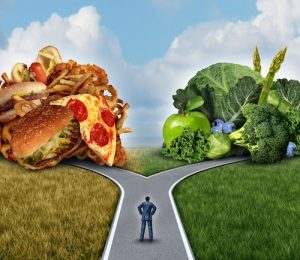
Fast Food DangersThe results were striking:

  • The participants in the highest quartile for ultra-processed food consumption had a 47% higher risk of heart disease compared to those in the lowest quartile for ultra-processed food consumption.

The authors concluded, “Adults who consumed the highest amount of ultra-processed foods had a statistically significant 47% increased risk of heart disease. Large scale randomized trials are needed, but in the meantime, health care providers should advise patients to decrease consumption of ultra-processed foods in addition to adopting other therapeutic lifestyle changes and adjunctive drug therapies of proven benefit.”

The authors recognized the difficulty of making those changes in a world where ultra-processed foods are ubiquitous and cheap.

However, they drew parallels to tobacco use in this country. They said, “Just as it took decades for the dangers of smoking to become widely accepted, reducing reliance on ultra-processed foods may take time. This is partly due to the influence of large multinational companies that dominate the food market. In addition, many people face limited access to healthier food options.”

They went on to say, “Addressing ultra-processed foods isn’t just about individual choices – it’s about creating environments where the healthy option is the easy option.”

Can You Cut Your Risk Of Heart Disease By 90%?

The short answer is, “probably not”. But you can reduce the risk of heart disease by a lot – and probably by a lot more than 47%.

That’s because this study did not look at what the participants were replacing the ultra-processed foods with. Some participants may have replaced them with whole food, primarily plant-based diets. Others may have replaced ultra-processed foods with whole food, meat-based diets high in saturated fats.

So, let’s look at the other side of the equation – how much you can reduce your risk of heart disease by eating a healthier diet. In a recent issue of “Health Tips From The Professor”, I reviewed a meta-analysis published in 2022 that looked at 99 clinical studies with tens of thousands of participants that measured the associations between foods or food groups and heart disease risk.

That study reported that:

  • Processed Meat: A single serving of processed meat increased heart disease risk by 27% to 44%.
  • Red Meat: Unprocessed red meat increased heart disease risk by as much as 27% – but only at ≥3 servings per day. The results with lower intakes were inconsistent – some studies showed increased risk, but others did not.
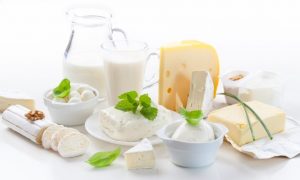
  • Poultry, Eggs, and Dairy Foods: They did not appear to affect heart disease risk.
  • Fish: Two to four servings per week of fatty fish decreased heart disease risk by around 12%.
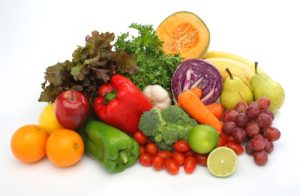
  • Fruit: Two servings per day of fruit reduced heart disease risk by 21-32%.Vegan Foods
  • Vegetables: Two servings of vegetables per day reduced heart disease risk by 18-21%.
  • Legumes (beans and peas): Four servings per week reduced the risk of heart disease by around 14%.
  • Nuts: One serving (a handful) per day reduced the risk of heart disease by around 25%. 
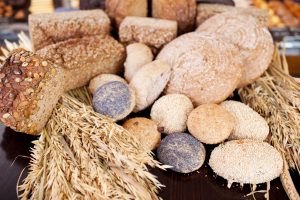
  • Whole Grains: Two servings of whole grains per day reduced the risk of heart disease by 25%-34%.
  • Overall: When heart-healthy foods were consumed as part of the Mediterranean diet heart disease risk was reduced by 47%. Similar overall reductions in heart disease risk are likely with other heart-healthy diets like DASH, MIND, Flexitarian (flexible semi-vegetarian), and vegan diets.

In summary:

  • The first study shows that eliminating ultra-processed foods (junk and convenience foods) from your diet can decrease heart disease risk by 47% – but doesn’t tell us what the ultra-processed foods were replaced with. And it would take a much larger study to determine which food swaps were most effective at reducing heart disease risk.
  • The second study was a meta-analysis that told us that eating more fish and plant foods in the context of a heart-healthy diet can decrease your risk of heart disease by 47% – but doesn’t tell us what those healthy foods were replacing. And many of the individual studies included in the meta-analysis were conducted when ultra-processed food consumption was much less than it is today.

It would be tempting to add 47% plus 47% and conclude that eliminating ultra-processed food consumption and replacing ultra-processed foods with heart-healthy foods could decrease your risk of heart disease by 94%. But it’s not that simple. There are too many unanswered questions from these studies.

But it is safe to say that if we eliminated ultra-processed foods AND replaced them with heart-healthy foods in the context of a heart-healthy diet, we should be able to reduce our heart disease risk by more than 47% – perhaps much more.

What Do These Studies Mean For You?

There are two important lessons from these studies:

#1: Eliminating ultra-processed foods from your diet will significantly decrease your risk of heart disease.

And it isn’t just heart disease. Other recent studies have shown that eliminating ultra-processed foods from your diet helps you:

  • Control your weight (It is perhaps the most important lifestyle change to make if you want to maintain GLP-1-aided weight loss).
  • Reduce your risk of cancer.
  • Reduce your risk of diabetes.
  • Reduce your risk of inflammatory diseases.
  • Reduce anxiety and depression.
  • Increase your healthspan (your healthy years).

In short, ultra-processed foods are killers.

#2: Replacing ultra-processed foods with heart-healthy foods (fruits, vegetables, legumes, nuts, whole grains, and fish) in the context of a healthy diet (Mediterranean, DASH, MIND, Flexitarian, and vegan, for example) is likely to decrease your risk of heart disease even more.

  • And if your diet consists of mostly heart-healthy foods, you can add moderate amounts of heart-neutral foods (poultry, eggs, and dairy).
  • And the latest evidence suggests that you can even add small amounts of red meat in the context of a heart-healthy diet (As I have said in previous issues of “Health Tips From the Professor”, plant foods contain the antidotes to all the bad things about red meat.)

Finally, you might ask why I emphasize both heart-healthy foods and heart-healthy diets. There are two reasons:

  • Most of us think in terms of foods rather than diets.
  • The food industry is only too happy to provide us with ultra-processed foods for “heart-healthy” diets like the vegan and Mediterranean diet.

The Bottom Line

Two recent studies have shown how each of us can dramatically reduce our risk of heart disease.

  • The first study showed that eliminating ultra-processed foods from our diet can significantly decrease our heart disease risk – but didn’t tell us what the ultra-processed foods were replaced with.
  • The second study showed that eating more heart-healthy foods in the context of a heart-healthy diet can significantly decrease our risk of heart disease – but didn’t tell us what those healthy foods were replacing.

Taken together, those studies show us a clear path for dramatically decreasing our heart disease risk.

For more details about these studies and what they mean for you, read the article above.

These statements have not been evaluated by the Food and Drug Administration. This information is not intended to diagnose, treat, cure or prevent any disease.

 _____________________________________________________________________________

My posts and “Health Tips From the Professor” articles carefully avoid claims about any brand of supplement or manufacturer of supplements. However, I am often asked by representatives of supplement companies if they can share them with their customers.

My answer is, “Yes, as long as you share only the article without any additions or alterations. In particular, you should avoid adding any mention of your company or your company’s products. If you were to do that, you could be making what the FTC and FDA consider a “misleading health claim” that could result in legal action against you and the company you represent.

For more detail about FTC regulations for health claims, see this link.

https://www.ftc.gov/business-guidance/resources/health-products-compliance-guidance

_______________________________________________________________________

About The Author 

Dr. Chaney has a BS in Chemistry from Duke University and a PhD in Biochemistry from UCLA. He is Professor Emeritus from the University of North Carolina where he taught biochemistry and nutrition to medical and dental students for 40 years.  Dr. Chaney won numerous teaching awards at UNC, including the Academy of Educators “Excellence in Teaching Lifetime Achievement Award”.

Dr Chaney also ran an active cancer research program at UNC and published over 100 scientific articles and reviews in peer-reviewed scientific journals. In addition, he authored two chapters on nutrition in one of the leading biochemistry text books for medical students.

Since retiring from the University of North Carolina, he has been writing a weekly health blog called “Health Tips From the Professor”. He has also written two best-selling books, “Slaying the Food Myths” and “Slaying the Supplement Myths”. And most recently he has created an online lifestyle change course, “Create Your Personal Health Zone”. For more information visit https://chaneyhealth.com.

For the past 45 years Dr. Chaney and his wife Suzanne have been helping people improve their health holistically through a combination of good diet, exercise, weight control and appropriate supplementation.


 

Give Your Heart A Valentine

How Can You Give Your Heart A Valentine?

Author: Dr. Stephen Chaney

Happy valentines day

Valentine’s Day is just around the corner. You have probably already selected Valentine Day cards and gifts for those nearest and dearest to you. But what about your heart. It’s your most trusted companion. Doesn’t it deserve a valentine?

The best Valentine’s gift you could give your heart would be a heart healthy diet. But what is a heart-healthy diet?

You may remember the nursery rhyme, “Jack Sprat could eat no fat. His wife could eat no lean…” You may know people who fit these extremes. And in terms of diets these extremes might represent the vegan and keto diets in today’s world.

The nursery rhyme assures us that, “…between them they licked the platter clean.” But were their diets equally heart-healthy? Which of them would have been more likely to live a long and healthy life, free of heart disease?

If you search Mr. Google – even with AI assist – you might be confused. That’s because AI bases its recommendations on the quantity of posts, not the accuracy of posts. And lots of media influencers recommend both diets, and just about every popular diet in between for heart health.

But what does good science say on the topic of heart healthy diets? Fortunately, a recent comprehensive review and meta-analysis (G. Riccardi et al, Cardiovascular Research, 118: 1118-1204, 2022) has answered that question.

How Was The Study Done?

clinical studyThe investigators reviewed 99 clinical studies with tens of thousands of participants that looked at the associations between foods or food groups and heart disease risk.

Most of the studies were “prospective cohort” studies in which:

  • Populations are divided into groups (cohorts) based on the foods they consume…
  • …and followed for a number of years (this is where the term “prospective” comes from)…
  • …and at the end of the study, the association between food and heart outcomes is measured.

However, the review also included several major randomized controlled clinical trials, including:

  • The DASH diet study.
  • The Lyon Diet Heart study.
  • The PREDIMED study.

Give Your Heart A Valentine

What is a heart-healthy diet? Here are the findings of the study. Most will sound very familiar. But you will note strong heartsome subtle differences based on recent data.

The overall summary was that for a healthy adult population:

  • Low consumption of salt and foods of animal origin…
  • …and increased intake of plant foods…
  • …are associated with reduced heart disease risk.

Of course, we have known that for years. It’s when they broke the data down further that it became more interesting.

Foods Of Animal Origin:

  • Processed meats increase heart disease risk. A single serving of processed meat is associated with a 27% to 44% increased risk of heart disease. This is not new.
  • Unprocessed red meat is also associated with increased risk of heart disease, but this association is not as consistent as for processed meats. The authors noted that some of this may be due to differences in saturated fat content or cooking methods of the red meats included in individual studies.

But this analysis also showed that the effect of red meat on heart disease risk may be dose dependent. For example:

    • The studies they reviewed suggested that consuming ≥3 servings per day of red meat is associated with a 27% increased risk of heart disease. However, consuming <3 servings per week may not increase risk, especially when consumed in the context of an otherwise heart-healthy diet.
  • White meat such as poultry does not appear to affect heart disease risk. This has been predicted by earlier reports, but this analysis strengthens those predictions.
  • Fish consumption decreases heart disease risk. This is not new. But this review added precision about recommended fish intake (2-4 servings/week) and a couple of caveats:
    • The heart benefits of fish may be due to their omega-3 content and may not apply equally to fish with lower omega-3 content.
    • The authors also expressed concerns about the sustainability of high-omega-3 fish populations. I would also add that our oceans are increasingly polluted, so contamination is another concern.
  • Egg consumption up to one egg/day does not appear to increase heart disease risk. This is consistent with the current American Heart Association recommendations.

However, the authors noted that the effect of eggs on serum cholesterol, and hence heart disease risk depends on several factors.

    • Genetics, obesity, and diabetes can make it more difficult to regulate serum cholesterol levels. For these individuals, eggs may need to be eaten only sparingly.
    • Diets low in saturated fat and high in fiber from plant foods help the body regulate serum cholesterol. Several studies suggest that eggs may decrease heart disease risk in the context of this type of a heart-healthy diet.
  • Dairy: Neither low-fat nor high-fat dairy foods appear to influence heart disease risk. This is different from the standard recommendation to consume low-fat dairy foods. But it is in line with the trend of recent research studies on dairy and heart disease.

Once again, there were a couple of caveats:

    • There is increasing evidence that fermented dairy foods may decrease heart disease risk which may explain why certain high-fat cheeses and other high-fat fermented dairy foods appear to have a neutral or slightly beneficial effect on heart disease risk.
    • As with eggs, the effect of high-fat dairy foods on heart disease risk may be influenced by genetics and diet context.

Vegan FoodsFoods Of Plant Origin: The effects of plant foods on heart health have been known for some time, and the most recent studies included in this analysis have not changed those conclusions.

  • Fruits and Vegetables consistently reduce heart disease risk in multiple studies. In each case, the optimal intake appears to be about 2 servings of each per day which provides an 18-21% risk reduction for vegetables and a 21-32% risk reduction for fruits.
  • Legumes (beans and peas) also consistently reduce heart disease risk in multiple studies. At the optimal intake of around 4 servings per week the risk reduction is around 14%.
  • Nuts also consistently reduce heart disease risk. At the optimal intake of around one serving (a handful) per day, the risk reduction is around 25%.
  • Cereals (grains) were divided into 3 categories:
    • Refined carbohydrates with a high glycemic index (e.g., white rice, white bread) are associated with increased heart disease risk in multiple studies probably due to their effect on blood sugar levels. And the increased risk is significant (Around 66% higher risk for every 2 servings).
    • Refined carbohydrates with a low glycemic index (e.g., pasta, corn tortillas) show an inconsistent effect on heart disease risk.
    • Whole grains are consistently associated with a lower heart disease risk. Two servings of whole grains per day are associated with a 25%-34% decreased risk.

Miscellaneous Foods:

  • Soft Drinks are associated with increased heart disease risk. One serving per day increases the risk by around 15-22% and recent evidence suggests that artificially sweetened soft drinks offer no heart health benefits compared to sugar sweetened soft drinks.
  • Coffee and Tea are both associated with decreased heart disease risk. For coffee the optimal benefit may occur at around 3 cups/day. Higher levels may have an adverse effect on heart disease risk.

Summary of Heart Health Recommendations

ScientistIf you think that was a lot of information, the authors provided a numerical summary of their recommendations for a heart-healthy diet. They are:

  • Two servings per day of vegetables, fresh fruits, and whole grains.
  • One serving per day of nuts and seeds, low-glycemic index refined cereals, extra-virgin olive oil or non-tropical vegetable oils, and yogurt.
  • Four servings per week of legumes and fish.
  • No more than 3 servings per week of white meat, eggs, cheese, and milk.
  • No more than 2 servings per week of high-glycemic index refined starchy foods, red meat, and butter.
  • Only occasional consumption of processed meats.

How Can You Give Your Heart A Valentine?

Of course, nobody wants to follow a “diet by the numbers”. If you are like most of us, you want flexibility and you Questionswant to be able to eat some of your favorite foods. So, let me put these recommendations into a more “user friendly” form.

If you want to give your heart a valentine:

  • Whole, unprocessed or minimally processed, plant foods are your heart’s best friends.
  • Your heart-healthy foundation should be fruits, vegetables, whole grains, nuts and seeds, healthy plant oils, and legumes.
    • Your heart-healthy foundation can also include fermented dairy foods and low-glycemic index refined grains.
    • Your “go-to” beverages should be water, tea (both caffeinated and herbal teas), and coffee. You should avoid soft drinks and other sugar-sweetened or artificially sweetened beverages.
  • Once you have achieved a heart-healthy foundation you can add a few servings per week of white meat, eggs, cheese, and dairy, even high-fat dairy.
    • If you have good adherence to the heart-healthy foundation described above and no genetic or health issues that increase your risk of heart disease, you can probably eat more of these foods.
    • Conversely, if your adherence to the heart-healthy foundation is poor and/or you are at high risk of heart disease, you may wish to consume less of these foods.
  • If you have good adherence to the heart-healthy foundation, you can also add up to 1-2 servings of high-glycemic index refined carbohydrates, red meat, or butter per week. With red meat, you may want to consider it as a garnish that adds flavor to a plant-based meal rather than the centerpiece of the meal.
    • You should eat processed meats seldom or never.

This would be the best Valentine’s gift you could possibly give your heart.

The Bottom Line

For those of you who might want to give your heart a valentine, a new comprehensive review and meta-analysis of 99 clinical studies with tens of thousands of participants has updated the correlation between foods and heart disease risk.

Many of the recommendations based on this analysis are identical to previous recommendations for a heart-healthy diet.

But there are some subtle changes to those recommendations based on the latest data.

For more details about this study and what a heart-healthy diet might look like for you, read the article above.

These statements have not been evaluated by the Food and Drug Administration. This information is not intended to diagnose, treat, cure or prevent any disease.

______________________________________________________________________________

My posts and “Health Tips From the Professor” articles carefully avoid claims about any brand of supplement or manufacturer of supplements. However, I am often asked by representatives of supplement companies if they can share them with their customers.

My answer is, “Yes, as long as you share only the article without any additions or alterations. In particular, you should avoid adding any mention of your company or your company’s products. If you were to do that, you could be making what the FTC and FDA consider a “misleading health claim” that could result in legal action against you and the company you represent.

For more detail about FTC regulations for health claims, see this link.

https://www.ftc.gov/business-guidance/resources/health-products-compliance-guidance

______________________________________________________________________

About The Author 

Dr. Chaney has a BS in Chemistry from Duke University and a PhD in Biochemistry from UCLA. He is Professor Emeritus from the University of North Carolina where he taught biochemistry and nutrition to medical and dental students for 40 years.

Dr. Chaney won numerous teaching awards at UNC, including the Academy of Educators “Excellence in Teaching Lifetime Achievement Award”.

Dr Chaney also ran an active cancer research program at UNC and published over 100 scientific articles and reviews in peer-reviewed scientific journals. In addition, he authored two chapters on nutrition in one of the leading biochemistry text books for medical students.

Since retiring from the University of North Carolina, he has been writing a weekly health blog called “Health Tips From the Professor”. He has also written two best-selling books, “Slaying the Food Myths” and “Slaying the Supplement Myths”. And most recently he has created an online lifestyle change course, “Create Your Personal Health Zone”. For more information visit https://chaneyhealth.com.

For the past 54 years Dr. Chaney and his wife Suzanne have been helping people improve their health holistically through a combination of good diet, exercise, weight control and appropriate supplementation.



Is The New Food Guide Pyramid Healthy?

A Brief History Of USDA Food Guides

Author: Dr. Stephen Chaney

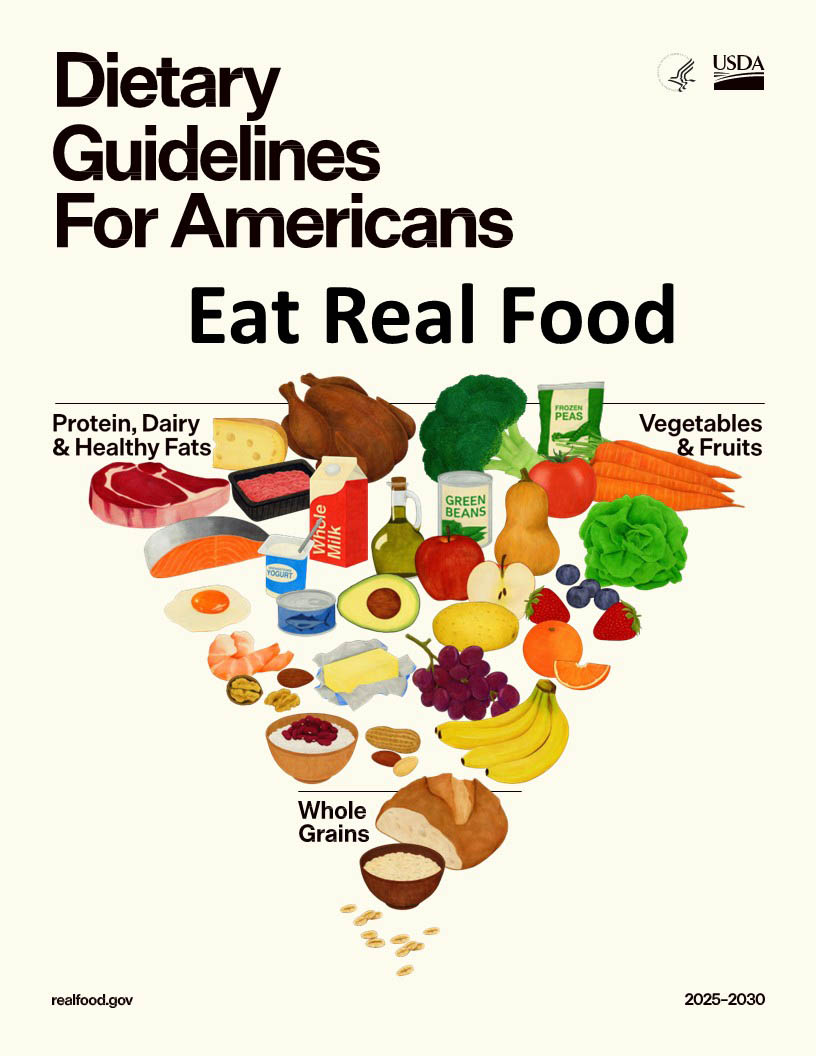
Unless you have cut yourself off from all outside media, you already know the USDA has just released new “Dietary Guidelines For Americans” and a new, upside down, food pyramid.

Both the AMA and AHA have endorsed the new guidelines with some reservations. But like everything else in today’s world they have become both political and controversial.

  • Some experts are saying, “The new guidelines are fantastic. They will make Americans much healthier. It’s about time the government caught up with the latest scientific advances.
  • Others are saying, “The new guidelines are terrible. They will set medicine back 20 years.”

As usual, the truth lies somewhere in the middle. I will explore that middle ground and discuss the pros and cons of the new dietary guidelines and food guide pyramid in this article.

But first we should start with something everyone can agree with, “What we are doing now isn’t working!” For example:

  • The percentage of Americans who are overweight or obese is approaching 70%.
  • The United States spends more on healthcare per person than any other country in the world. But we…
    • Rank 48th in life expectancy. We not only rank below every developed country, but we also rank below many 3rd world countries.
      • And we are losing ground. In 1990, we ranked 35th in life expectancy.
    • Rank 69th in health span (healthy life expectancy).
      • Again, we are losing ground. Our ranking was 42nd in 1990.
    • Rank dead last (183rd out of 183) in health span as a percentage of life expectancy.

In short, we are falling behind the rest of the world in terms of lifespan, health span, and percentage of healthy years.

And our deteriorating health is costly.

90% of our health care spending is for preventable diseases

A Brief History Of USDA Food Guides

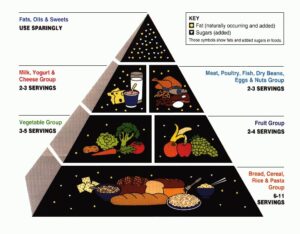
The USDA introduced the first food guide pyramid in 1992 based on the best nutrition science of the time. You probably remember the mantra:

  • 2-3 servings of dairy, preferably low fat.
  • 2-3 servings in the protein category (lean meats, fish, dry beans, eggs, and nuts).
  • 2-4 servings of fruits and 3-5 servings of vegetables.
  • 6-11 servings of grains (bread, cereals, rice, and pasta).
  • Fats, oils, and sweets were at the top of the pyramid with the caption, “Use Sparingly”.

This pyramid and the accompanying dietary guidelines were publicized so much that practically everyone knew them by heart.

Ten years later the USDA did a nutrition survey to see if their guidelines had changed American’s eating behavior. The answer was a clear, “No”. Only 5% of Americans ate according to the food guide pyramid.

The Geniuses at the USDA concluded that the food guide pyramid must be too difficult for the average American, so they introduced a simpler version, My Pyramid in 2005.

Guess what! Only 5% of Americans followed those recommendations, so they went to the super simple My Plate. By now you have probably guessed that only 5% of Americans followed the My Plate recommendations.

It turns out Americans weren’t confused by the recommendations. The recommendations were just too different from the way they were used to eating.

So, one change you will see in the new food guide pyramid is it includes some of Americans favorite foods, such as red meat, butter, and full fat dairy. Is that sacrilege or is it smart? Only time will tell.

With that in mind, let’s discuss the new “Dietary Guidelines For Americans”.

#1: Eat Real Food

This is one recommendation that virtually everyone agrees with. The average American is getting 55% of their calories from highly processed foods. And the health consequences of that much processed food are devastating. Consumption of highly processed foods is linked to higher risk of:

  • Obesity.
  • Type 2 diabetes.
  • Heart attack.
  • Stroke.
  • Some cancers.
  • Depression and anxiety.
  • Dementia
  • Premature death.

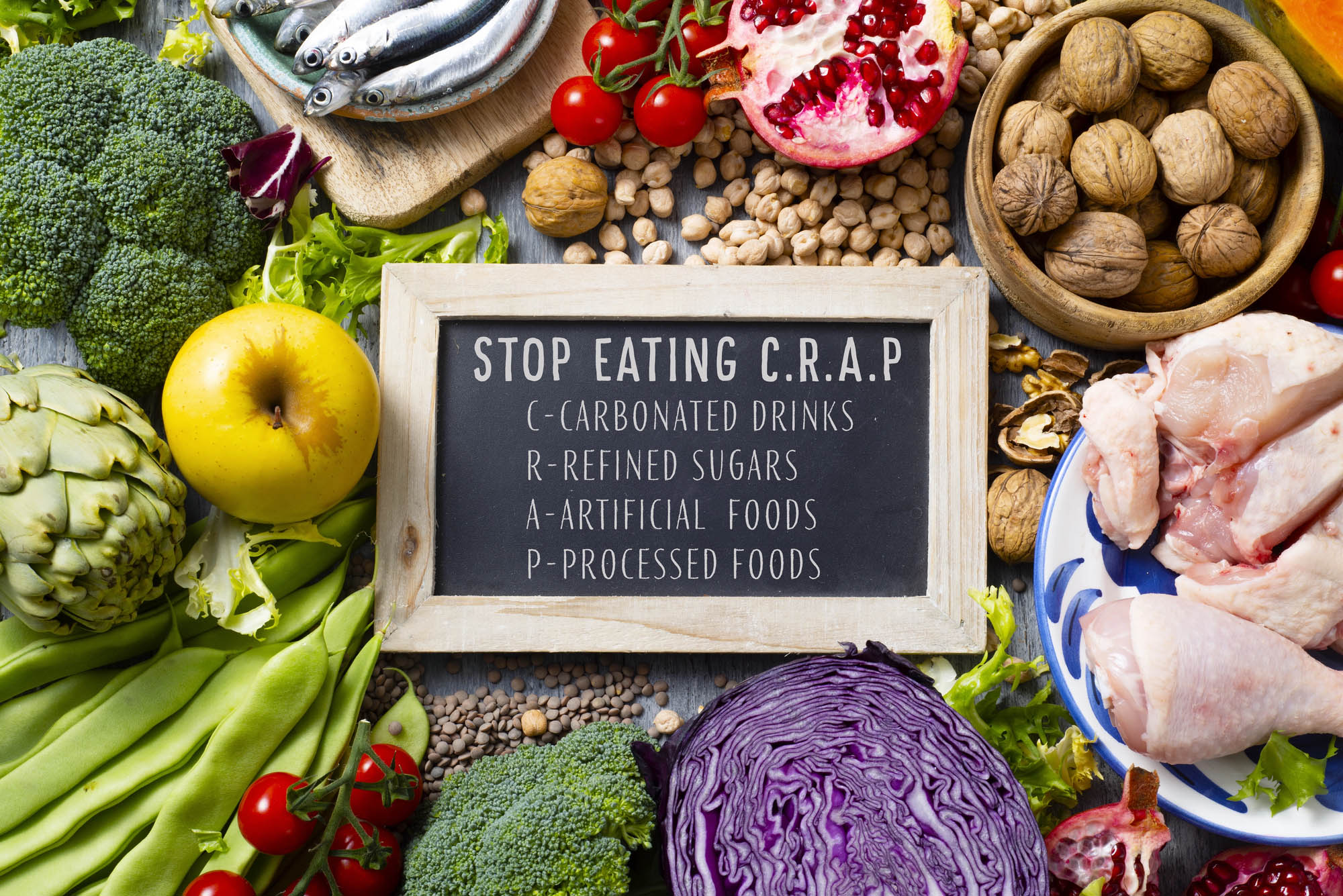
If you are wondering how we got to this point, the answer is simple. It stems from the desire of Americans to eat a healthier diet without giving up their favorite foods and the willingness of Big Food Inc (the food industry) to give us exactly what we want. For example:

  • Some people want to eat a more plant-based diet, but don’t want to give up their favorite meats. Big Food Inc is only too happy to oblige. They mix some fat, salt, and a witch’s brew of chemicals to give us phony baloney, faken bacon, and everyone’s favorite, tofurkey.
  • Some people are convinced keto diets are healthy, but don’t want to give their favorite sweets. Again, Big Food Inc is only too happy to oblige. They mix up a witch’s brew of chemicals to give us keto cookies and keto pastries.

I’m being facetious, but you get my point.

Some representatives of Big Food Inc claim that the health risks of processed foods are unproven. They are lying!

If you would like to read my reviews of major studies showing the health risks of highly processed foods, just go to https://www.chaneyhealth.com/healthtips/ and put “processed foods” in the search box.

#2: Prioritize Protein Foods at Every Meal

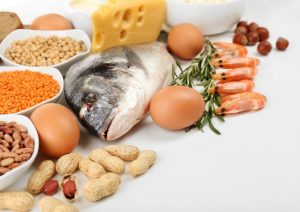
protein foodsThis is one of the more controversial recommendations of the new food guide pyramid. The new USDA dietary guidelines increase the protein recommendation by 50-100% compared to previous versions…

  • From 0.36 grams of protein per pound of body weight to…
  • Between 0.54 and 0.72 grams of protein per pound of body weight.

[Note: If these numbers seem different from what you have seen, that is because the official recommendations are in grams of protein per kilogram of body weight. Since most Americans have no idea what their body weight is in kilograms, those numbers are useless.]

The main criticisms about the new protein recommendations are:

#1: “There isn’t solid evidence that most people need this much protein.”

My response is that anyone who makes that claim hasn’t kept up with the last two decades of protein research.

The old 0.36/pound standard is probably OK for the average middle-aged couch potato, but higher protein intakes are needed for people who are:

  • Active, especially if they are trying to increase muscle mass, strength, or endurance.
  • Over 50 and are trying to maintain muscle mass, strength, and mobility.
  • Trying to lose weight without losing muscle, especially if they are using GLP-1 drugs.
  • Trying to reduce the risk of type 2 diabetes and other chronic diseases.

In short, almost everyone except the couch potatoes will benefit from higher protein intakes. And, yes, the latest science shows that it is best to get at least 20 grams of protein with each meal.

You can find more information about the science behind increased protein recommendations by going to https://www.chaneyhealth.com/healthtips/ and putting “protein” in the search box.

#2: “The new guidelines don’t steer people towards plant proteins”. This is a subtle distinction. The new USDA dietary guidelines include plant protein sources. But they do not recommend that they replace some of the animal proteins in the diet, as did previous versions. This allows people to choose between animal and plant proteins based on their preferences.

Those of you who have been following my “Health Tips From the Professor” blog know that I am an advocate of primarily plant-based diets. I am fully in the “replace some animal protein with vegetable protein” camp.

  • But I acknowledge that is not the way most Americans eat. Perhaps it is time to make dietary recommendations that align more closely with the way people eat if we want to get above 5% acceptance.
  • It would also be difficult to meet the new protein guidelines with plant protein alone unless you add commercially available plant protein supplements.

#3: “Higher protein intakes may be harmful for some people”. Recent research has shown that this concern is overblown for most Americans. However, there are some people who should probably check with their doctor before they increase their protein intake.

  • People who have been diagnosed with kidney disease.
  • People with genetic conditions or diseases that predispose to kidney disease. One example would be poorly controlled diabetes. [Note: I do not mean to imply that higher protein intake is likely to cause kidney disease in these situations. I included this category because people in these situations may have undiagnosed kidney disease.]

In most of these cases, you have probably been warned by your doctor to be careful about excess protein intake. But if you are uncertain about your risk for kidney disease, it never hurts to check with your doctor before increasing your protein intake.

What About Red Meat?

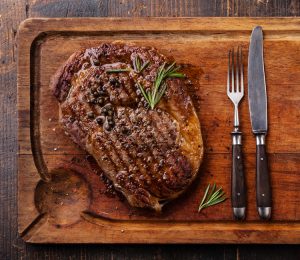
SteakThe new dietary guidelines have been criticized for emphasizing red meat. That criticism is inaccurate. It’s a “tempest in a teapot”.

In fact, red meat is pictured in both the original and the most recent versions of the food guide pyramid. And red meat is mentioned as one source of protein in both the original and the latest versions of dietary guidelines. It is given no special emphasis over other protein sources in either version of the dietary guidelines.

However, I would like to share my perspective on red meat.

  • Diet context matters. As I have said in previous issues of “Health Tips From The Professor”, fruits, vegetables, whole grains, and beans are the antidotes to all the bad aspects of red meat.” And if you look at the new food guide pyramid, red meat and other proteins are in the same neighborhood as fruits and vegetables.
  • Amount matters. Think of red meat as a garnish – for example, 2-3 ounces of red meat as part of a steak salad or stir fry with lots of veggies rather than an 8-ounce steak with fries.

#3: Consume Dairy

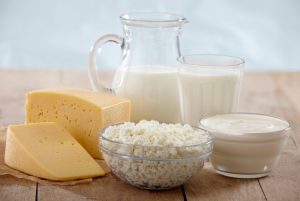
dairy foodsThe new dietary guidelines differ from previous versions in both the amount and kind of dairy foods consumed. For example:

  • The old guidelines recommended 2-3 servings of dairy foods per day.
    • The new guidelines recommend 3 servings per day as part of a 2,000-calorie dietary pattern.
    • Since most Americans consume 3,600 to 3,800 calories per day that recommendation translates to at least 5 servings per day.
  • The old guidelines recommended choosing low fat dairy foods.
    • The new guidelines say, “When consuming dairy, include full-fat dairy with no added sugars.”

Since the full-fat dairy recommendation is the most controversial change, I will address it first.

Let me start by saying that I have been a traditionalist with respect to dairy foods. I have recommended low-fat dairy foods for years. But a good scientist must be willing to change their recommendations based on the latest research findings.

And new findings have clearly challenged our perspective on full-fat dairy foods. Several large, well-designed studies over the past decade have shown that full-fat dairy foods are just as healthy as low-fat dairy foods. I will make two comments about these studies.

  • I suspect that the studies may be skewed because much of the data on full-fat dairy comes from countries where most of full-fat dairy foods are fermented – and we know that fermented dairy foods are very healthy.
    • Admittedly, I have no data to back up my suspicion, but I recommend fermented dairy foods as part of your dairy intake. That’s a recommendation everyone can agree with!
  • One recent study has suggested that diet context is important. Specifically, the study suggests that the benefits of full-fat dairy foods are greatest in the context of a healthy, primarily plant-based diet.
    • Similar observations have been made for egg consumption. That suggests that full-fat dairy and eggs provide some important nutrients that may be missing in a vegetarian diet. But in a diet that is already high in saturated fat and cholesterol, the “bad” effects of full-fat dairy and eggs may outweigh the benefits.

You can find more information about full-fat dairy by going to https://www.chaneyhealth.com/healthtips/ and putting “dairy” in the search box.

As for the amount of dairy foods you should consume, I wouldn’t get hung up on the number of servings per day. I interpret the new guidelines as saying, “Don’t be afraid of dairy. It can be an important part of your diet.”

However, the servings of dairy products are more frequently determined by lactose intolerance or sensitivity to milk protein than by dietary guidelines. Many people, including myself, can only consume small, occasional servings of dairy without experiencing digestive distress.

#4: Eat Vegetables & Fruits Throughout The Day

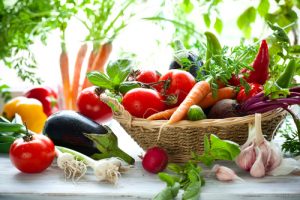
Colorful fruits and vegetablesThe dietary guidelines say, “Eat a variety of colorful, nutrient-dense vegetables and fruits. Specifically, the recommendation is:

  • 3 servings/day of vegetables and 2 servings/day of fruits each day.
    • Once again, the number of servings are based on a 2,000-calorie diet.
    • When you take into account the actual caloric intake of Americans, the recommendations become 3-5 servings/day of vegetables and 2-4 servings/day of fruits.

These recommendations are not controversial. They are universally accepted.

#5: Incorporate Healthy Fats

The new dietary guidelines are:

  • “Healthy fats are plentiful in many whole foods, such as meats, poultry, eggs, omega-3 rich seafood, nuts, seeds, full-fat dairy, olives, and avocados.”
    • This recommendation is not controversial.
  • “When cooking with or adding fats to meals, prioritize oils with essential fatty acids, such as olive oil. Other options can include butter or beef tallow.”
    • This is the most controversial portion of the new dietary guidelines. The usual comment is something like, “How dare they include butter and lard as healthy fats!”

I’m not a fan of lard but let me make a couple of observations about butter.

  • Butter is a whole food. Its ingredient list is typically cream, milk, and salt. If you buy the unsalted version, the ingredient list is even shorter. Margarine and butter substitutes have much longer ingredient lists, often including some questionable ingredients.
  • The frequency of butter use is important. Let me share a personal example. We eat a whole food, primarily plant-based diet. We substitute almond butter for butter on toast and muffins. But there are certain foods like potatoes, winter squash, and corn on the cob that just aren’t the same without real butter. We buy 4 sticks of butter at a time, cut it into pats of butter, and freeze it. Four sticks of butter lasts us a year.

Finally, the critics who say that the new guidelines should not include foods that are high in saturated fat are ignoring the fact that the guidelines say, “Saturated fat consumption should not exceed 10% of total daily calories.” This statement has remained constant since the first food guide pyramid in 1992.

So, the new guidelines are not recommending that we eat more saturated fat as many critics have claimed. They are saying, “A little bit of saturated fat is OK in the context of a whole food diet with lots of fruits, vegetables, and whole grains.

#6: Focus On Whole Grains

The new dietary guidelines are:

  • “Prioritize fiber-rich whole grains.”
  • “Significantly reduce the consumption of highly processed, refined carbohydrates.”

These guidelines are unchanged from previous versions of the guidelines.

What is new is that the guidelines now recommend only 2-4 servings of whole grains per day. That’s a big change from the 6-11 servings per day recommended in the original food guide pyramid.

  • If the 6-11 servings per day were whole grains, the new recommendation would represent a significant decrease in fiber intake. But that’s not how most Americans eat.
  • Since most of the grains in a typical American’s diet are highly processed and refined, reducing the recommended intake to 2-4 servings per day is a step in the right direction.

#7: Limit Highly Processed Foods, Added Sugars, & Refined Carbohydrates

fast foodI call this, “Avoid the bad stuff”. Specifically:

  • Avoid highly processed foods with added sugar and sodium.
  • Limit foods and beverages that include artificial flavors, colors, preservatives, and sweeteners
  • Avoid sugar-sweetened and artificially sweetened beverages.

These recommendations are accepted by almost everyone except the food industry.

However, I should point out that there is also a slight difference in emphasis from previous versions of the USDA dietary guidelines:

  • The new guidelines are more restrictive for added sugars than previous versions of the dietary guidelines. For example, they say:
    • One meal should contain no more than 10 grams of added sugars.
    • Children under the age of 10 should not be given foods with added sugars (previous versions of the dietary guidelines recommend avoiding added sugars for children under the age of 2).

Given the wealth of evidence that added sugars are linked to increased risk of obesity and chronic diseases, these stricter restrictions on added sugars make good sense – especially because the USDA dietary guidelines form the basis for school lunch programs.

But these guidelines are very different from how the average American eats. I’m not sure how many Americans will follow them.

#8: Limit Alcoholic Beverages

The guidelines:

  • Say, “Consume less alcohol for better overall health”.
  • List people who should completely avoid alcohol.

The only controversy about this recommendation is that it is less specific than the previous guidelines that recommended no more than 1 alcoholic drink/day for women and no more than 2/day for men.

I recognize the desire for specificity. But alcohol tolerance depends on several factors such as body weight, genetics, and medication usage.

What Does This Mean For You?

Questioning WomanThe USDA just released a new version of the Food Guide Pyramid and accompanying “Dietary Guidelines For Americans”, and they are very different from previous versions. What do these changes mean for you?

While the AMA and AHA have both endorsed the new guidelines, they have been controversial. In the article above, I have summarized the pros and cons of every recommendation. There are lots of recommendations, so it was a long article.

To help you make sense of the article let me summarize the recommendations and criticisms by dividing the recommendations into 4 categories:

#1: Recommendations that are accepted by almost everyone except the food industry. These are non-controversial.

  • Eat real food
  • Eat vegetables and fruits throughout the day.
  • Focus on whole grains.
  • Limit highly processed foods, added sugar, and refined carbohydrates.

#2: Changes in recommendations that reflect recent scientific advances. Critics of these changes simply haven’t kept up with scientific publications over the past couple of decades.

  • Increasing the daily protein recommendations.
  • Including full-fat dairy as a healthy dairy food.

#3: Tempests in a teapot: There is a kernel of truth in these criticisms, but the changes are much more modest than the critics would have you believe.

  • Including red meat in the protein recommendations.
  • Including some saturated fats in the “healthy fats” category.
  • Not including specific limits on alcohol consumption, as the previous version had done.

#4: What I would have liked to have seen:

  • More emphasis on plant proteins.
  • Elimination of lard from the “healthy fat” category.
  • Inclusion of high-quality vegetable oils in the “healthy fats” category.

The Bottom Line

The USDA just released a new version of the Food Guide Pyramid and accompanying “Dietary Guidelines For Americans”.

While the AMA and AHA have both endorsed the new guidelines, they have been controversial.

In this article I describe the pros and cons of each dietary guideline and divide them into ones for which:

  • They are clearly an improvement over the previous guideline.
  • They are accepted by almost everyone.
  • The criticism is a “tempest in a teapot”.
  • The criticism is at least partially accurate.

For more information on the pros and cons of the new “Dietary Guidelines For Americans” and how these guidelines apply to you, read the article above.

These statements have not been evaluated by the Food and Drug Administration. This information is not intended to diagnose, treat, cure or prevent any disease.

 _____________________________________________________________________________

My posts and “Health Tips From the Professor” articles carefully avoid claims about any brand of supplement or manufacturer of supplements. However, I am often asked by representatives of supplement companies if they can share them with their customers.

My answer is, “Yes, as long as you share only the article without any additions or alterations. In particular, you should avoid adding any mention of your company or your company’s products. If you were to do that, you could be making what the FTC and FDA consider a “misleading health claim” that could result in legal action against you and the company you represent.

For more detail about FTC regulations for health claims, see this link.

https://www.ftc.gov/business-guidance/resources/health-products-compliance-guidance

_______________________________________________________________________

About The Author 

Dr. Chaney has a BS in Chemistry from Duke University and a PhD in Biochemistry from UCLA. He is Professor Emeritus from the University of North Carolina where he taught biochemistry and nutrition to medical and dental students for 40 years.  Dr. Chaney won numerous teaching awards at UNC, including the Academy of Educators “Excellence in Teaching Lifetime Achievement Award”. Dr Chaney also ran an active cancer research program at UNC and published over 100 scientific articles and reviews in peer-reviewed scientific journals. In addition, he authored two chapters on nutrition in one of the leading Biochemistry textbooks for medical students.

Since retiring from the University of North Carolina, he has been writing a weekly health blog called “Health Tips From the Professor”. He has also written two best-selling books, “Slaying the Food Myths” and “Slaying the Supplement Myths”. And most recently he has created an online lifestyle change course, “Create Your Personal Health Zone”. For more information visit https://chaneyhealth.com.

For the past 55 years Dr. Chaney and his wife Suzanne have been helping people improve their health holistically through a combination of good diet, exercise, weight control and appropriate supplementation.



Is Whole Fat Dairy Healthy?

Is It Dairy Or Diet?

Author: Dr. Stephen Chaney 

CheesesFor years we have been told to select low fat dairy foods. But recent headlines claim, “That’s nonsense. Whole fat dairy foods are healthy.” Are those headlines true?

In previous issues of “Health Tips From the Professor” I have kept you abreast of recent studies suggesting that whole fat dairy foods may not be as bad for us as we thought. I also cautioned you that the headlines may not have accurately represented the studies they described.

Headlines have to be simple. But truth is often more nuanced. If we believed the current headlines, we might be asking ourselves questions like, “Should we ditch the current health guidelines recommending low-fat dairy foods? Are foods like ice cream, sour cream, and cheddar cheese actually be good for us?

To answer these questions, I will look at the study (A Mente et al, European Heart Journal, 44, 2560-2579, 2023) behind the current headlines and put the study into perspective.

Spoiler alert: If I could summarize the study findings in two sentences, they would be, “Whole fat dairy can be part of a healthy diet. But can it be part of an unhealthy diet?”

Stay tuned. I will discuss the science behind that statement below.

How Was This Study Done?

clinical studyThis study started with data collected from the Prospective Urban Rural Epidemiology (PURE) study. The PURE study is an ongoing study correlating diet, lifestyle, and environmental effects on health outcomes. It has enrolled 166,762 individuals, age 35-70, from 21 low-, middle-, and high-income countries on 5 continents.

Habitual food intake was determined using country-specific food frequency questionnaires at the time participants joined the study. Participants (166,762) from the PURE study who had complete dietary information were included in this study and were followed for an average of 9.3 years.

Based on preliminary analysis of data from the PURE study, the authors developed their version of a healthy diet, which they call the PURE diet. Like most other healthy diets, the PURE diet emphasizes fruits, vegetables, legumes, nuts, and fish. However:

  • Based on studies suggesting that whole fat dairy foods can be part of a healthy diet, the PURE diet includes whole fat dairy foods.

This is different from most other healthy diet recommendations.

They went on to develop what they referred to as the PURE healthy diet score by:

  • Determining the median intake for each of the 6 food groups included in their PURE diet (fruits, vegetables, legumes, nuts, fish, and whole fat dairy).
  • Assigning each participant in the study a score of 0 or 1 depending on whether their intake for that food group was below or above the median intake.
  • Adding up the points. Since 6 food groups were included in the PURE diet, this means that each participant in the study was assigned a PURE diet score ranging from 0-6.

Once they had developed a PURE diet score, they expanded their data by including five additional large independent studies that included people from 70 countries. The combined data from all six studies amounted to 245,597 people from 80 countries. Of the people included in the data analysis:

  • 21% came from high income countries.
  • 60% came from middle income countries.
  • 19% came from low-income countries.

This is very similar to the global population distribution. This is a strength of this study because it allowed them to ask whether the PURE diet score worked as well in low-income countries as in high-income countries.

Finally, they correlated the PURE diet score with outcomes like all-cause mortality, heart attack, and stroke.

Is Whole Fat Dairy Healthy?

QuestionsThe authors of this study divided the participants of all 6 studies into quintiles based on their PURE diet score and compared those in the highest quintile (PURE score of ≥ 5) with those in the lowest quintile (PURE score of ≤ 1).

The people in the highest quintile were eating on average 5 servings/day of fruits and vegetables, 0.5 servings/day of legumes, 1.2 servings/day of nuts, 0.3 servings/day of fish, 2 servings/day of dairy (of which 1.4 servings/day was whole fat dairy), 0.5 servings/day of unprocessed red meat, and 0.3 servings/day of poultry.


The people in the lowest quintile ate significantly less fruits, vegetables, nuts, fish, and dairy; and slightly less legumes, unprocessed red meat, and poultry than those in the highest quintile.

However, they consumed significantly more refined wheat foods and white rice. This study did not track consumption of highly processed foods, but the high consumption of white flour leads me to suspect they ate a lot more highly processed food.

With that in mind, when the authors compared people with the highest PURE diet scores to those with the lowest PURE diet scores:

  • All-cause mortality was reduced by 30%.
  • Cardiovascular disease was reduced by 18%.
  • Heart attacks were reduced by 14%.
  • Strokes were reduced by 19%.
  • The PURE healthy eating score was slightly better at predicting health outcomes than the Mediterranean, DASH, and HEI (Healthy Eating Index) scores. But the differences were small. So, I still recommend choosing the healthy diet that best fits your preferred foods and your lifestyle.
  • The PURE healthy eating score was significantly better at predicting health outcomes than the Planetary diet score. I will discuss the nutritional inadequacy of “sustainable diets” like the Planetary diet in next week’s “Health Tips From the Professor” article.

Because of the size and design of this study, they were able to make three interesting observations.

  1. The PURE, Mediterranean, DASH, and HEI diet scores were predictive of health outcomes in every country across the globe. You no longer have to wonder if what works in the United States will work in low-income countries and in countries with very different food preferences. Previous studies have not been able to make that claim.

2) You don’t have to be perfect.

    • A 20% increase (one quintile) in PURE score was associated with a 6% lower risk of major cardiovascular events and an 8% lower risk of mortality. In other words, even small improvements in your diet may improve your health outcomes.
    • The health benefits of the PURE diet started to plateau at a score of 3 (with 6 being the highest score). The authors concluded that most of the health benefits were associated with a modestly higher consumption of healthy foods compared to little or no consumption of healthy foods.

Simply put, that means the health benefits gained by going from a moderately healthy diet to a very healthy diet are not as great as the health benefits gained by going from a poor diet to a moderately healthy diet.

[Note: There are still improvements in health outcomes when you go from a moderately healthy diet to a very healthy diet.  My recommendation: “You don’t need to achieve perfection, but you shouldn’t accept mediocrity”.]

3) The PURE diet score was more predictive of health outcomes in some countries than in others.

    • The PURE diet score was more predictive of health outcomes in low-income countries. The authors felt that was because low-income countries started with average PURE scores of 2.1, whereas higher-income countries started with average PURE scores of 3.5.

The authors felt this was another example getting more “bang for the buck” by going from a poor diet to a moderately healthy diet than from a moderately healthy diet to a very healthy diet. (Remember, the health benefits associated with improving PURE diet scores start to plateau at a PURE score of 3.

    • The difference in benefits for low-income countries compared to high-income countries was observed for the Mediterranean, DASH, and HEI diet scores. So, it is probably safe to say for any healthy diet you don’t need to be perfect. You just need to be better.

The authors concluded, “A diet composed of higher amounts of fruit, vegetables, nuts, legumes, fish, and whole fat dairy is associated with a lower risk of cardiovascular disease and mortality in all world regions, especially in countries with lower income where consumption of these foods is low.”

Is It Dairy Or Diet?

CheesesThe headlines are telling us that recommendations to choose low-fat dairy products are out of date. They say there is no reason to fear whole fat dairy foods. They are good for you. Bring on the ice cream, sour cream, cream cheese, and high fat hard cheeses!

As usual, there is a kernel of truth in the headlines, but headlines have to be simple. And the latest headlines are an oversimplification of what the studies actually show. Let me provide perspective to the headlines by asking two questions.

#1: Is it dairy or diet? A major weakness of this and similar studies is that they fail to consider diet context. What do I mean by that? Let’s dig a little deeper into this study.

  • Let’s start with a description of the PURE diet. It is a diet that emphasizes fruits, vegetables, legumes, nuts, and fish. In other words, it is a primarily plant-based diet.
  • Although the authors keep referring to the diet as one that includes whole fat dairy. It would be more accurate to say that it includes dairy, which was 30% low-fat and 70% whole fat.
  • The authors said that removal of any one food group from this combination reduced the predictive power of the PURE diet. In other words, the beneficial effect of 70% whole fat dairy is best seen in the context of a primarily plant-based diet.
  • The PURE diet was most effective at predicting health outcomes in low-income countries where a significant percent of the population consumes a primarily plant-based diet because meats are expensive.

So, a more accurate description of this study would be it shows that a mixture of low-fat and whole-fat dairy foods are a healthy addition to a primarily plant-based diet. But that is too complicated for a headline.

#2: If whole fat dairy can be part of a healthy diet, can it also be part of an unhealthy diet?

To answer that question let’s compare the potential effects of whole fat dairy on a primarily plant-based diet compared to the typical American or European diet.

  • Milk and other dairy foods are excellent sources of calcium, vitamin B12, and iodine and good sources of protein, vitamin D, choline, zinc, and selenium – nutrients that are often low or missing in plant-based diet. And this is true whether the dairy foods are low-fat or whole fat.
  • Primarily plant-based diets tend to be low in saturated fat, so the potential negative effects of adding a small amount of saturated fat to the diet may be outweighed by the beneficial effects of the nutrients dairy foods provide.

On the other hand,

  • The typical American or European diet provides plenty of protein and vitamin B12 and significantly more choline, vitamin D, iodine, and zinc than a plant-based diet. The added nutrients from adding dairy foods to this kind of diet is still beneficial, but the benefits are not as great as adding dairy foods to a primarily plant-based diet.
  • If you read the American Heart Association statement on saturated fats, it does not say that any amount of saturated fat is bad for you. In fact, small amounts of saturated fats play some beneficial roles in our bodies. The American Heart Association says, “Eating too much saturated fat can raise the level of LDL cholesterol in your blood…[which] increases your risk of heart disease and stroke.”
  • Here is where the problem lies. The typical American or European diet already contains too much saturated fat. Whole fat dairy just adds to that excess.

So, the most accurate description of this study would be it shows that a mixture of low-fat and whole-fat dairy foods are a healthy addition to a primarily plant-based diet but may not be a healthy addition to the typical American diet. But that is way too complicated for a headline.

You are probably wondering what this means for you. Here are my recommendations.

If you eat like most Americans, you should continue to follow the current health guidelines to choose low-fat dairy foods.

If you happen to be among the few Americans who eat a primarily plant-based diet, you will probably benefit by adding a mixture of low-fat and whole fat dairy foods to your diet.

The Bottom Line 

Once again, the headlines are telling us that recommendations to choose low-fat dairy products are out of date. The articles say there is no reason to fear whole fat dairy foods. They are good for you. Bring on the ice cream, sour cream, cream cheese, and high fat hard cheeses!

As usual, there is a kernel of truth in the headlines, but headlines have to be simple. And the latest headlines are an oversimplification of what the studies actually show. In this post I looked at the study behind the most recent headlines and provided perspective to the headlines by asking two questions.

#1: Is it dairy or diet? A major weakness of this and similar studies is that they fail to consider diet context.

When you consider diet context a more accurate description of this study would be it shows that a mixture of low-fat and whole-fat dairy foods are a healthy addition to a primarily plant-based diet. But that is too complicated for a headline.

#2: If whole fat dairy can be part of a healthy diet, can it also be part of an unhealthy diet?

When you consider that question the most accurate description of this study would be it shows that a mixture of low-fat and whole-fat dairy foods are a healthy addition to a primarily plant-based diet but may not be a healthy addition to the typical American diet. But that is way too complicated for a headline.

You are probably wondering what this means for you. Here are my recommendations.

If you eat like most Americans, you should continue to follow the current health guidelines to choose low-fat dairy foods.

If you happen to be among the few Americans who eat a primarily plant-based diet, you will probably benefit by adding a mixture of low-fat and whole fat dairy foods to your diet.

For more information on this study, and the science behind my summary of the study, read the article above.

These statements have not been evaluated by the Food and Drug Administration. This information is not intended to diagnose, treat, cure, or prevent any disease.

_________________________________________________________________________

My posts and “Health Tips From the Professor” articles carefully avoid claims about any brand of supplement or manufacturer of supplements. However, I am often asked by representatives of supplement companies if they can share them with their customers.

My answer is, “Yes, as long as you share only the article without any additions or alterations. In particular, you should avoid adding any mention of your company or your company’s products. If you were to do that, you could be making what the FTC and FDA consider a “misleading health claim” that could result in legal action against you and the company you represent.

For more detail about FTC regulations for health claims, see this link.

https://www.ftc.gov/business-guidance/resources/health-products-compliance-guidance

Is Dairy Bad For Your Heart?

Is Dairy Right For You? 

Author: Dr. Stephen Chaney

dairy foodsWe have been told for years that dairy foods are good for us. They are part of the USDA five food groups. In fact, they are part of the dietary recommendations of every government and most health organizations across the world.

And dairy foods are nutritious. They are excellent sources of calcium, potassium, protein, and vitamins A and B12. And if they are fortified, they are also an excellent source of vitamin D. Many health experts consider them essential for healthy bones. So, you might be saying, “Case closed. We should all be eating more dairy foods”.

But, not so fast. Many dairy foods are high in saturated fats. In fact, 65% of the fat in dairy foods is saturated. We have known for years that when saturated fats replace polyunsaturated fats in the diet, LDL cholesterol levels increase. And, as I reported in a previous issue of “Health Tips From the Professor” there is excellent evidence that replacing polyunsaturated fats with saturated fats substantially increases the risk of dying from heart attack, stroke, and other forms of heart disease.

The widely accepted message from these studies is that saturated fats raise LDL cholesterol levels and increases our risk of dying from heart disease. If we accept this message, it poses a dilemma. Dairy foods are nutritious. But they are high in saturated fat. What should we do?

The answer from the American Heart Association and most other health organizations is simple. We should eat low-fat dairy foods.

But this is where it gets really confusing. Dairy foods are composed of much more than saturated fats. And you have probably seen the claims that full fat dairy foods don’t increase the risk of heart disease.

So, what is the truth about full-fat dairy foods and heart health? In this issue of “Health Tips From The Professor” I review three recent studies and the recommendations of the Heart Foundation because they shed light on this question.

Is Dairy Bad For Your Heart?

dairy products and heart disease cheeseBefore I answer this question, I should point out that there are two ways of looking at it.

  • As I said above, the studies proving that saturated fats increase the risk of heart disease, substituted saturated fats for polyunsaturated fats and controlled every other aspect of the diet. That has led the American Heart Association and other organizations to recommend that we eat low-fat dairy foods.
  • However, when most people hear that recommendation, they simply substitute low-fat dairy for full-fat dairy foods without changing any other aspect of their diet or lifestyle. The first two studies were designed to see if that approach was effective for reducing heart disease risk.

The first study (KA Schmidt et al, American Journal of Clinical Nutrition, 114: 882-892, 2021) was a randomized controlled trial that compared the effect of low-fat dairy foods and full-fat dairy foods on heart health parameters.

The participants in this study were:

  • Average age = 62
  • 56% male
  • 75% white
  • Average weight = 214 pounds
  • All of them were prediabetic

All participants were told to stick with their usual diets (probably typical American diets) except for the amount and type of dairy foods added to their diet. During the first four weeks they restricted dairy consumption to 3 servings of nonfat dairy/week so they would all be starting with the same amount of dairy consumption. Then they were divided into 3 groups for the 12-week study:

  • Group 1 continued with 3 servings of nonfat dairy/week.
  • Group 2 added 3 servings of low-fat dairy/day to their usual diet.
  • Group 3 added 3 servings of high-fat dairy/day to their usual diet.

At the beginning of the study and again at the end of the 12-week study LDL cholesterol, HDL cholesterol, triglycerides, free fatty acids, and blood pressure were measured. The results were:

  • There was no difference in LDL cholesterol, HDL cholesterol, triglycerides, free fatty acids, or blood pressure in the three groups at the end of 12 weeks.
  • There was no also significant change in LDL cholesterol, HDL cholesterol, triglycerides, free fatty acids, or blood pressure during the study in any of the three groups.

The authors concluded, “A diet rich in full-fat dairy had no effect on fasting lipid profile or blood pressure compared with diets limited in dairy or rich in low-fat dairy. Therefore, dairy fat, when consumed as part of complex whole foods does not adversely affect these classic cardiovascular disease risk factors.”

[Note: The last sentence is key. Remember the “proof” that saturated fats increase LDL levels and increase the risk of heart disease come from studies in which saturated fats were substituted for polyunsaturated fats and every other aspect of the diet was carefully controlled.

In this study, and others like it, the effects of saturated fats are studied in a complex food (dairy) in the presence of an even more complex diet containing many foods that influence the risk of heart disease.]

The second study (J Guo et al, European Journal of Epidemiology 32: 269-287, 2017) was a meta-analysis of Healthy Heart29 studies with 938,465 participants looking at the association of full-fat dairy consumption with the risk of dying from heart disease.

Seven of the 29 studies were conducted in the United States. Of the remaining studies 3 were from Japan and Taiwan, 2 were from Australia, and 17 were from Europe.

The results of the study were:

  • There was no association between full-fat dairy, low-fat dairy, and total dairy consumption and risk of dying from heart disease.

When the results were broken down into individual dairy foods.

  • There was no association between milk consumption and risk of dying from heart disease.
  • Consumption of one serving/day of fermented dairy foods was associated with a 2% decreased risk of dying from heart disease.

The authors concluded, “The current meta-analysis of 29 prospective cohort studies suggested no association of total, high and low-fat dairy and milk with risk of cardiovascular disease. In addition, a possible role of fermented dairy was found in cardiovascular disease prevention, but the result was driven by a single study.” [I would add that this effect, if confirmed by subsequent studies, is extremely small (2%).]

The first two studies do not say that full-fat dairy foods are heart healthy for everyone, as some headlines would have you believe. Instead, these studies show fairly convincingly that simply switching from full-fat to low-fat dairy foods, without changing any other aspect of your diet and lifestyle, is not as effective at decreasing your risk of heart disease as some experts would have you believe.

balance scaleThe third publication (WC Willett and DS Ludwig, New England Journal of Medicine 382: 644-654, 2020) was a review of the effect of dairy foods on our health. One of the authors, Walter C Willett, is one of the top experts in the field. The review covered many topics, but I will focus on the section dealing with the effect of dairy foods on heart health.

This review took a more nuanced look at full-fat dairy foods and examined the effect of substituting full-fat dairy for other protein foods.

The review concludes, “The association of milk with the risk of cardiovascular disease depends on the comparison foods. In most cohort studies [such as the studies described above], no specific comparison was made; by default, the comparison was everything else in the diet – typically large amounts of refined grains, potato products, sugar, and meat.”

The review went on to say that previous studies have shown:

  • “Both full-fat and low-fat dairy foods…were associated with a lower risk [of cardiovascular disease and stroke] than…the same number of servings of red meat but with a higher risk than seen with the same number of servings of fish or nuts.”
  • “Dairy fat…was associated with a higher risk of cardiovascular disease than was polyunsaturated or vegetable fat.”
  • “For persons living in low-income countries where diets are very high in starch, moderate intake of dairy foods may reduce cardiovascular disease by providing nutritional value and reducing glycemic load [the amount of easily digestible carbohydrate in the diet].”

Is Dairy Right For You?

dairy products and heart disease questionsNow I am ready to answer the question posed at the beginning of this article, “Is dairy bad for your heart?” The answer is, “It depends”.

  • As described above, the effect of dairy on heart health depends on our overall diet. It also depends on our lifestyle, our weight, and our health.
  • In addition, clinical studies report averages, and none of us are average. We all have unique diets, lifestyles, health status, and genetic makeup.

So, what does this mean for you? Perhaps it is best summed up by the recommendations of Australia’s Heart Foundation which take health status, lifestyle, and genetic differences into account:

  • A heart healthy diet can include dairy, but it is not essential [with careful planning and/or supplementation you can get your calcium and protein elsewhere].
  • Milk, yogurt, and cheese are considered neutral for heart health, meaning they neither increase nor decrease the risk of heart disease for the average person. However, the recommendations vary depending on health status, genetics, and lifestyle:
    • Low-fat milk, yogurt, and cheese are recommended for people with heart disease or high cholesterol because the fat in dairy foods can raise cholesterol more for these people. [Note: If cholesterol is elevated, it usually means that individual has a hard time regulating blood cholesterol levels because of obesity, genetics, or pre-existing disease. For these individuals, diets high in saturated fat are more likely to increase LDL cholesterol and risk of heart disease.]
    • Full-fat milk, yogurt, and cheese can be part of a heart healthy diet for healthy people provided most of the fat in the diet comes from fish, nuts, seeds, and healthy oils. [Note: Overall diet is important.]
  • Choosing unflavored milk, yogurt, and cheese helps limit the amount of sugar in your diet.
  • Ice cream, cream, and dairy desserts should be eaten only sometimes and in small amounts because they have more sugar and fat, and less protein, vitamins, and minerals than other dairy foods.
  • Butter raises LDL cholesterol levels, especially in people who already have elevated cholesterol.
    • There is no evidence that butter can be part of a heart healthy diet, so you should consider healthier options such as olive oil, avocado, nut butters, and spreads made with healthier oils, such as olive oil.

The Bottom Line

We have been told for years that dairy foods are good for us. They are part of the USDA five food groups. In fact, they are part of the dietary recommendations of every government and most health organizations across the world.

However, dairy foods have been controversial in recent years. Some experts claim that only low-fat dairy products can be heart healthy. Others claim that full-fat dairy foods are just as healthy as low-fat dairy foods.

I shared three recent publications and dietary recommendations from The Heart Foundation that shed light on these controversies.

The first study found that full-fat dairy foods did not increase LDL cholesterol, triglycerides, and other heart disease risk factors.

The second study was a meta-analysis of 29 clinical studies with almost one million people. It found that full-fat dairy foods did not increase the risk of dying from heart disease.

“Case closed”, you might say. However, these studies do not say that full-fat dairy foods are heart healthy for everyone, as some headlines would have you believe. Instead, these studies show fairly convincingly that simply switching from full-fat to low-fat dairy foods, without changing any other aspect of your diet and lifestyle, is not as effective at decreasing your risk of heart disease as some experts would have you believe.

Moreover, these studies do not account for the effect of overall diet, lifestyle, health status, and genetics on the risk of heart disease.

That is why I included the third study in my review. It took the overall diet into account and concluded the effect of full-fat dairy foods on heart disease risk depends on the overall diet.

  • For some diets full-fat dairy increases heart disease risk.
  • For other diets full-fat dairy has no effect on heart disease risk.
  • And for some diets full-fat dairy may even decrease heart disease risk.

Finally, I included recommendations of the Australian Heart Foundation because they included the effect of health status, lifestyle, and genetics in their recommendations.

For more details on the findings of the third study and the recommendations of the Heart Foundation, read the article above.

These statements have not been evaluated by the Food and Drug Administration. This information is not intended to diagnose, treat, cure, or prevent any disease.

Do Calcium And Magnesium Reduce Migraines?

Avoiding Migraines

Author: Dr. Stephen Chaney

headacheMigraines can be agonizing. They can upend your life. Drugs provide some relief, but they have side effects. I am often asked about natural approaches for preventing migraines.

My simple answer is that there is no single thing that can eliminate migraines. As the saying goes, “It takes a village”. There is no “magic” supplement or herb you can take. It requires a holistic approach to defeat migraines.

I will discuss the holistic approach for migraines in more detail below. But first I would like to describe a recent study (SH Meng et al, Frontiers in Nutrition, doi.org/10.3389/fnut.2021.653765) that suggests calcium and magnesium should be part of that holistic approach.

How Was This Study Done?

Clinical StudyThis study used data from the CDC’s most recent National Health and Nutrition Examination Survey (NHANES). The CDC has been doing these surveys since 1960, but the most recent NHANES study began in 1999.

Briefly, data collection for the current NHANES began in early 1999 and remains a continuous annual survey. Each year approximately 7,000 randomly selected residents across the United States are given the opportunity to participate in the NHANES survey.

The NHANES survey provides information on demographics, physical examinations, laboratory tests, diet surveys, and other health-related questions.

This study used data from 10,798 NHANES participants between 1999 and 2004 who completed a questionnaire asking if they suffered from severe headaches or migraines.

[Based on previous studies they considered self-reported severe headaches as likely migraines and grouped the two together. Accordingly, I will simply refer to them as migraines in this review.]

Here are a few important characteristics of the participants:

  • Gender was 51% male and 49% female.
  • Average age was 51.
  • Average intake was low for both calcium (70% of the RDA) and magnesium (62% of the RDA).
  • Only 20% suffered from migraines. However, the gender discrepancy was significant.
    • Women (64%) were much more likely to suffer from migraines than men (36%). This is consistent with previous studies.

Do Calcium And Magnesium Reduce Migraines?

dairy foodsThe investigators divided intake of both calcium and magnesium into quintiles and compared the frequency of migraines of those in the highest quintile with those in the lowest quintile.

  • For calcium, the highest quintile was ≥1,149 mg/day, and the lowest quintile was ≤378 mg/day.
    • For comparison, the RDA for calcium is 1,200 mg/day for women between 50 and 70 and 1,000 mg/day for men between 50 and 70.
  • For magnesium, the highest quintile was ≥371 mg/day, and the lowest quintile was ≤161 mg/day.
    • For comparison, the RDA for magnesium is 320 mg/day for women over 30 and 420 mg/day for men over 30.

For women:

  • Those with the highest intake of calcium were 28% less likely to suffer from migraines than those with the lowest intake of calcium.
  • Those with the highest intake of magnesium were 38% less likely to suffer from migraines than those with the lowest intake of magnesium.

For men:

  • Those with the highest intake of calcium were 29% less likely to suffer from migraines than those with the lowest intake of calcium.
  • Those with the highest intake of magnesium were 20% less likely to suffer from migraines than those with the lowest intake of magnesium, but this result was not statistically significant.

The authors concluded, “Our study found that high dietary intake of calcium and magnesium…were inversely associated with migraines in women. For men, high dietary calcium intake was inversely associated with migraines. People should pay more attention to dietary calcium and magnesium, which may be an effective way to prevent migraines.”

Avoiding Migraines

headacheThis study showed that RDA levels of both calcium and magnesium are effective at reducing the risk of developing migraines. However, if you suffer from migraines, you are probably looking for more than a 28-38% reduction in migraines. You want them to be gone. That is why a holistic approach is best.

What does a holistic approach for migraines look like? In fact, it is very individualistic. Different things work for different people. Here are a few suggestions.

  • In addition to calcium and magnesium, make sure you are getting enough omega-3 fatty acids, vitamin D, coenzyme Q10, riboflavin, and vitamin B12 in your diet.
  • Avoid “trigger foods”. Different foods trigger migraines in different people, but here are a few of the most common.
    • Nitrate-containing processed meats.
    • Cheeses containing tyramine such as blue, feta, cheddar, Parmesan, and Swiss.
    • Alcohol, especially red wine.
    • Chocolate and foods containing caffeine.
    • Processed foods.
  • Some evidence suggests that a plant-based diet may reduce migraines, but only if it includes adequate amounts of the nutrients listed above.
  • Stay hydrated. Drink pure water rather than other beverages.
  • If overweight, shed some pounds. Obesity is linked to migraines.
  • Get adequate rest.
  • Try stress reduction techniques like yoga or meditation.

This is not a comprehensive list. If you have migraines, I probably left some of your favorite approaches off my list. The bottom line is that there are many natural approaches for reducing migraines. None is a “magic bullet” by itself but keep searching for the ones that help you the most.

What Does This Study Mean For You?

calcium supplementsGetting back to magnesium and calcium, this study shows that RDA levels of both calcium and magnesium are sufficient to significantly reduce your risk of migraines. The problem is that many Americans are not getting RDA levels of calcium and magnesium from their diets. Why is that?

  • Dairy foods are the biggest source of calcium in the American diet. However, many Americans don’t get enough dairy foods in their diet because:
    • Restrictive diets like Vegan and Paleo exclude dairy foods.
    • They are trying to avoid saturated fats.
    • They are lactose intolerant or have milk allergies.
    • They have a malabsorption disease or have undergone gastric bypass surgery.
  • Magnesium is found in lots of whole foods. The problem is that most Americans are eating highly processed foods instead of whole foods.

If you are not getting enough calcium and magnesium in your diet, supplementation is a viable option. However, you don’t want megadoses of either one. You just want to reach RDA levels. Here are some tips:

Calcium:

  • Start by estimating how much calcium you are getting from your diet. My rule of thumb is to estimate 250 mg of calcium from each serving of dairy and an additional 200 mg of calcium from a typical diet. Subtract that from 1,200 mg, and you have the amount of supplemental calcium you need to match the highest quintile of calcium intake in this study.
  • The calcium supplement should also contain vitamin D because vitamin D is needed for calcium absorption.
  • Take no more than 500 mg of supplemental calcium at a time. Higher amounts are absorbed less efficiently.
  • It is generally better to take calcium supplements between meals than with meals. That is because many components of the typical diet interfere with calcium absorption. For example,
    • Phytates in some high fiber foods.
    • Oxalic acid in spinach and some other leafy greens.
    • Saturated fats.

Magnesium:

  • The amount of magnesium in your diet is more difficult to calculate. However, 200 mg of magnesium will take you from the lowest quintile to the highest quintile in this study. And if you are already at the highest quintile, an extra 200 mg will not be excessive.
  • Magnesium can cause diarrhea, so I suggest a slow-release magnesium supplement.

The Bottom Line 

Migraines can be agonizing. They can upend your life. Drugs provide some relief, but they have side effects. I am often asked about natural approaches for preventing migraines.

My simple answer is that there is no single thing that can eliminate migraines. As the saying goes, “It takes a village”. There is no “magic” supplement or herb you can take. It requires a holistic approach to defeat migraines.

A recent study reported that calcium and magnesium should be part of a holistic approach to reduce migraines.

The study found that:

For women:

  • Those with the highest intake of calcium were 28% less likely to suffer from migraines than those with the lowest intake of calcium.
  • Those with the highest intake of magnesium were 38% less likely to suffer from migraines than those with the lowest intake of magnesium.

For men:

  • Those with the highest intake of calcium were 29% less likely to suffer from migraines than those with the lowest intake of calcium.
  • Those with the highest intake of magnesium were 20% less likely to suffer from migraines than those with the lowest intake of magnesium, but this result was not statistically significant.

The authors concluded, “Our study found that high dietary intake of calcium and magnesium…were inversely associated with migraines in women. For men, high dietary calcium intake was inversely associated with migraines. People should pay more attention to dietary calcium and magnesium, which may be an effective way to prevent migraines.”

For more details about other components of a holistic approach and my recommendations for calcium and magnesium supplementation read the article above.

These statements have not been evaluated by the Food and Drug Administration. This information is not intended to diagnose, treat, cure, or prevent any disease.

Diet And Cancer Risk

What Can You Do To Reduce Your Risk Of Cancer?

Magic WandIt seems like everyone has a magic pill, essential oil, food, or diet that prevents cancer. It doesn’t take a genius to figure out that all the claims can’t be true. No wonder you are confused. You want to know:

  • Which of these claims are true?
  • What can you do to reduce your risk of cancer?

These aren’t trivial questions.

  • Cancer is the second leading cause of death in this country, and some experts predict it will surpass heart disease as the leading cause of death in the near future.
  • While cancer treatments have become much more effective in the past few decades, these treatment successes are often associated with severe side-effects, enormous expense, or both.

That is why I was intrigued by a recent study (FF Zhang et al, JNCI Cancer Spectrum (2019) 3(2): pkz034) on diet and cancer that came from the prestigious Friedman School of Nutrition and Public Policy at Tufts University. This study asked two important questions:

  • How many newly diagnosed cancer cases could have been prevented by changes in the American diet? This is something the authors referred to as the “preventable cancer burden associated with poor diet”.
  • Which foods increased or decreased the risk of cancer? This, of course, is the most useful information for you and me.

Diet And Cancer Risk

Diet And CancerThis study estimated that 80,110 new cancer cases among US adults 20 and older could be primarily attributed to poor diet. While poor diet contributes to many more cancers, the authors of this study felt 80,110 represented the number of cancer cases that were clearly preventable by some simple dietary changes.

While all cancers were affected by diet to some degree, the cancers most affected by poor diet were:

  • Colon cancer (65% of cases)
  • Mouth and throat cancer (18% of cases)
  • Endometrial cancer (4.0% of cases)
  • Breast cancer (3.8% of cases)

When the diet was broken down into individual food groups:

  • Low intake of whole grains was associated with the largest number of preventable cancer cases (35% of cases). This was followed by.
  • Low intake of dairy foods (22% of cases).
  • High intake of processed meats (18% of cases).
  • Low intake of vegetables (16% of cases).
  • Low intake of fruits (10% of cases).
  • High intake of red meat (7.1% of cases).
  • High intake of sugar sweetened beverages (4.0% of cases).

Of the diet-associated cancer cases, the scientists who lead the study estimated that 84% of them represented a direct effect of diet on cancer risk. The dietary factors most likely to directly increase the risk of cancer were:

  • Low intake of whole grains.
  • Low intake of dairy foods.
  • High intake of processed meats.

The scientists estimated that 16% of diet-associated cancer cases were “mediated by obesity”. In layman’s terms, this means that diet increased the risk of obesity and obesity increased the risk of cancer. The dietary factors most likely to increase the risk of obesity-mediated cancers were:

  • High intake of sugar sweetened beverages.
  • Low intake of fruits.

The authors concluded: “More than 80,000 new cancer cases [per year] are estimated to be associated with suboptimal diet among US adults…Our findings underscore the need for reducing cancer burden in the United States by improving the intake of key food groups and nutrients of Americans.”

What Does This Mean For You?

Questioning ManThese findings aren’t novel. Many previous studies have come to the same conclusions. However, many people find these recommendations to be confusing. Should they increase their intake of certain foods? Should they follow some sort of magic diet?

Perhaps we need to get away from the magic food concept. We need to understand that every time we increase one food in our diet, we exclude other foods. We need to step back and look at the overall diet.

Let me break down the recommendations from this study into three categories: foods we should eliminate from our diet, foods we should include in our diet, and foods we should balance in our diet.

Foods we should eliminate from our diet:

  • Sugar Sweetened Beverages. They provide no nutritional benefit, and the sugar in most beverages rushes into our bloodstream and overwhelms our body’s ability to utilize it in a healthy way. This leads to obesity, diabetes, and a host of other health issues.
    • Public enemy number one is sodas. However, this category also includes fruit juices, sweetened teas and energy drinks, and sugary processed foods.
    • This category also includes diet sodas. For reasons we don’t completely understand, diet sodas appear to be just as likely to lead to obesity, diabetes, and heart disease as sugar sweetened sodas. I have discussed the proposed explanations of this phenomenon in a recent issue of “Health Tips From the Professor”.
    • Sugar, however, is not the enemy. Sugar found naturally in fruits and other whole foods enters the bloodstream slowly and is metabolized in healthy ways by the body. I have discussed this in another issue  of “Health Tips From the Professor”. This is what I mean by restoring balance in our diet. Decreasing the sugar intake from sugar sweetened beverages and increasing sugar intake from fruits is associated with a decreased risk of obesity and obesity-related cancers.
  • Processed Meats. The evidence is overwhelming at this point that processed meats directly increase the risk of cancer.
    • If you have trouble completely eliminating processed meats from your diet, my advice is to minimize them and consume them only in the context of an overall healthy diet. Personally, I still consume bacon occasionally as flavoring for a healthy green salad.

Whole GrainsFoods we should include in our diet. I put these in a separate category because Dr. Strangelove and his colleagues have been telling us to eliminate them from our diet, and many Americans are following those recommendations:

  • Whole grains. We can think of whole grains as the underserving victim of the low-carb craze. The low-carb craze is on the mark when it comes to eliminating added sugars and refined grains from the diet. However, eliminating whole grains from the diet may be doing more harm than good. In fact, this and other studies suggest that whole grains are the most effective foods for reducing cancer risk. Why is that?
    • If we assume whole grains are just a good source of fiber and a few vitamins and minerals, it is hard to grasp their importance. We could easily get those nutrients elsewhere.
    • However, we are beginning to realize that whole grains play a unique role in supporting certain species of gut bacteria that are very beneficial to our health. In short, whole grains may be essential for a healthy gut.
  • Dairy Foods. This is another food that has been treated as a villain by Dr. Strangelove and his many colleagues. However, for reasons we don’t completely understand, dairy foods appear to decrease the risk of heart disease and cancer.

Foods we should balance in our diet.

  • Red Meat. Diets high in red meat are consistently associated with a slight increase in cancer risk. The World Health Organization lists red meat as a probable carcinogen, but that has proven to be controversial.
    • Much of the research has centered on why red meat causes cancer. Several mechanisms have been proposed, but none of them have been proven.
    • In contrast, very little consideration has been given to what red meat is displacing from the diet. Diets high in red meat are often low in whole grains, fruits and/or vegetables.
    • Perhaps instead of eliminating red meat from our diets we should be talking about balancing red meat in our diets by consuming less red meat and more whole grains, fruits, and vegetables.

What Can You Do To Reduce Cancer Risk?

American Cancer SocietyYou may have been thinking that 80,110 cases/year represents a small percentage of new cancer cases. That’s because diet is only one component of a holistic cancer prevention strategy. Here is what the American Cancer Society recommends for reducing cancer risk:

  • Avoid tobacco.
  • Limit sun exposure.
  • Achieve and maintain a healthy weight.
  • Eat a healthy diet, with an emphasis on plant foods (Their recommendations are in line with this study).
  • Be physically active.
  • Limit alcohol use.
  • Get vaccinated against HPV.
  • Get regular medical checkups.

Doing any of these things will reduce your cancer risk. But the more of these you can incorporate into your lifestyle, the lower your risk.

The Bottom Line

A recent study looked at diet and cancer risk. The authors reported that 80,110 new cancer cases among US adults 20 and older could be primarily attributed to poor diet.

When the diet was broken down into individual food groups:

  • Low intake of whole grains was associated with the largest number of preventable cancer cases. This was followed in descending order by.
  • Low intake of dairy foods.
  • High intake of processed meats.
  • Low intake of vegetables.
  • Low intake of fruits.
  • High intake of red meat.
  • High intake of sugar sweetened beverages.

The authors concluded: “More than 80,000 new cancer cases [per year] are estimated to be associated with suboptimal diet among US adults…Our findings underscore the need for reducing cancer burden in the United States by improving the intake of key food groups and nutrients of Americans.”

For more details, read the article above. For example, I discuss which foods we should eliminate, which foods we should eat more of, and which foods we should balance in our diet. To add a more holistic perspective, I also discuss the American Cancer Society’s recommendations for reducing cancer risk.

These statements have not been evaluated by the Food and Drug Administration. This information is not intended to diagnose, treat, cure or prevent any disease.
Which Foods Affect Stroke Risk?

Why Is Diet And Stroke Risk So Confusing?

strokeOne day we are told vegetarian diets reduce our stroke risk. The next day we are told they increase stroke risk. It’s the same with red meat, dairy, and eggs. We keep getting mixed messages. It’s enough to make your head spin. Why is diet and stroke risk so confusing?

Part of the problem is that there are two distinct types of stroke. The technical names for them are ischemic stroke and hemorrhagic stroke.

An ischemic stroke occurs when an artery in the brain becomes blocked, shutting off blood flow and damaging part of the brain. This is usually caused by the gradual buildup of fatty deposits and cholesterol plaques in the arteries. When a blood clot forms and lodges in one of the narrowed arteries leading to the brain, an ischemic stroke occurs.

  • Ischemic strokes account for 87% of all strokes.
  • Ischemic strokes are associated with obesity, elevated cholesterol, diabetes, high blood pressure, and smoking.

A hemorrhagic stroke occurs when a weakened blood vessel bursts and bleeds into the surrounding region of the brain. Because our brains are surrounded by a protective skull, that blood has nowhere to go. Pressure from the buildup of blood damages brain cells in the vicinity of the bleed.

  • Hemorrhagic strokes account for only for only 15% of strokes but are responsible for 40% of stroke deaths.
  • The most common cause of a hemorrhagic stroke is the localized enlargement of a blood vessel due to chronic high blood pressure. This weakens the wall of the blood vessel, making it prone to rupturing.

Part of the confusion about diet and stroke risk is because many earlier studies did not distinguish between the two types of stroke.

  • If the studies just measured the incidence of stroke, the data were dominated by ischemic strokes (87% of strokes are ischemic).
  • However, if the studies focused on stroke deaths, hemorrhagic stroke made a larger contribution to the data set (40% of stroke deaths are hemorrhagic).

Fortunately, recent studies have started to focus on the effect of diet on ischemic and hemorrhagic strokes separately. However, many of those studies have been too small to accurately assess the effects of diet on hemorrhagic stroke.

The latest study (TYN Tong et al, European Heart Journal, ehaa007, published February 24, 2020) is one of the largest studies to look at the effect of diet on both kinds of stroke. It has enough patients in the hemorrhagic group to get an accurate estimate of the effect of diet on hemorrhagic stroke.

How Was The Study Done?

Clinical StudyThis study analyzed data on diet and stroke from 418,329 participants in the EPIC (European Prospective Investigation into Cancer and Nutrition). Although the study has cancer in the title, it actually investigated the effect of nutrition on multiple diseases (Presumably, the study title was chosen because EPIC is a more appealing acronym than EPID (European Prospective Investigation into Diseases and Nutrition)).

The participants were recruited from 9 European countries (Denmark, Germany, Greece, Italy, the Netherlands, Norway, Spain, Sweden, and the UK). The average age of participants was 50, and they were followed for an average of 12.7 years.

At the beginning of the study participants completed country-specific dietary and lifestyle questionnaires.

The dietary assessment was a food frequency questionnaire that asked participants about their dietary intake for the year prior to enrollment in the study. The food frequency data were used to estimate daily intake of red meat, processed meat, poultry, fish, dairy products, eggs, grains, fruits, vegetables, legumes, nuts, seeds, and dietary fiber (It measured total fiber and fiber from grains, fruits and vegetables individually).

The outcome measured was the incidence of ischemic and hemorrhagic strokes during the 12.7-year follow-up.

Which Foods Affect Stroke Risk?

Heart Healthy DietFor ischemic stroke:

  • Each 200 gram/day increase in consumption of fruits and vegetables decreased ischemic stroke risk by 13% (200 grams roughly corresponds to one large apple or one large orange without the skin).
  • Each 10 gram/day increase in consumption of fiber decreased ischemic stroke risk by 23%. Most of this decreased stroke risk was due to fiber from whole grains, fruits, and vegetables.
    • Each 4 gram/day increase in fiber from whole grains decreased ischemic stroke risk by 10%.
    • Each 4 gram/day increase in fiber from fruits and vegetables decreased ischemic stroke risk by 12%.
  • Dairy foods decreased ischemic stroke risk with the following breakdown:
    • Each cup of milk decreased ischemic stroke risk by 5%.
    • Each half cup of yogurt decreased ischemic stroke risk by 9%.
    • Each ounce of cheese decreased ischemic stroke risk by 12%.
  • Each 50 grams/day (2 ounces) of red meat increased ischemic stroke risk by 14%.
    • However, red meat was only half as likely to increase risk of ischemic stroke when the diet was also rich in fruits, vegetables, whole grains, and legumes.

For hemorrhagic stroke:

  • Each 20 gram/day increase in consumption of eggs increased hemorrhagic stroke risk by 25% (20 grams roughly corresponds to about 1/2 of a small egg or 1/3 of a jumbo egg).
  • This study did not measure the effect of salt intake on hemorrhagic stroke risk.

No other foods measured in this study had a significant effect on hemorrhagic stroke risk.

high blood pressureHowever, hemorrhagic stroke is highly associated with high blood pressure. When we look at the influence of foods on high blood pressure, here are the Harvard School of Medicine recommendations for keeping blood pressure low:

  • Eat more fish, nuts and beans in place of high-fat meats.
  • Choose fruits and vegetables instead of sugary, salty snacks and desserts.
  • Select whole grains rather than refined grains.Eat fruit instead of drinking fruit juice.
  • Use unsaturated fats like olive, canola, soybean, peanut, corn or safflower oils instead of butter, coconut oil, or palm-kernel oil.
  • Use herbs, spices, vinegar, and other low-sodium flavorings instead of salt; Choose low-sodium foods whenever possible.

Why Is Diet And Stroke Risk So Confusing?

egg confusionAs I mentioned at the start of this article, part of the reason that the headlines about diet and stroke risk are so confusing is:

  • Many studies did not distinguish between the two types of stroke.
  • Other studies were too small to reliably estimate the effect of food on hemorrhagic stroke risk.

However, there are still some unexplained inconsistencies among recently published studies. It is these inconsistencies I would like to address. For example:

1) In a recent issue of Health Tips From the Professor I reported on a major study (500,000 people followed for 8.9 years) in China. That study came to the opposite conclusion about eggs and risk of hemorrhagic than the EPIC study I discussed above. It found:

  • People consuming one egg per day had a 26% decrease in hemorrhagic stroke risk and a 28% decrease in hemorrhagic stroke deaths compared to people who never or rarely consumed eggs.

In other words, the two studies came to opposite conclusions. In the China study eggs decreased risk of hemorrhagic stroke. In the European study (EPIC) eggs increased risk of hemorrhagic stroke. The reason for this discrepancy is not clear, but one can speculate it might be explained by differences in the underlying diets of the two countries:

  • In China the diet is primarily plant-based. The addition of an egg/day may provide needed protein, fat, and cholesterol (Some cholesterol is essential. We just overdo it in this country).
  • In Europe the diet is already high in protein, saturated fat, and cholesterol. Getting more of them from eggs may not be such a good thing.

In short, if your diet is primarily plant-based, the addition of an egg/day may be a good thing. However, if your diet is already high in meat, saturated fat, and cholesterol, the addition of an egg/day may not be a good thing.

Vegan Foods2) In another recent issue of Health Tips From the Professor I reported on the EPIC-Oxford study that claimed vegetarians had 20% increased risk of hemorrhagic stroke compared to meat eaters.

Interestingly, the EPIC-Oxford study represented a very small portion (~10%) of the overall EPIC study and differed from the rest of the EPIC study in two important ways.

  • It looked at the effect of diets rather than foods on stroke risk.
  • Oxford was the only one of the 22 research centers involved in the EPIC study to invite people following a vegetarian diet to enroll in the study, so it had a much higher proportion of vegetarians than other centers that participated in the study.

The current study did not find any evidence that fruits, vegetables, nuts, seeds, beans, or whole grains influenced the risk of hemorrhagic stroke. In other words, in this much larger data set there was no evidence that the foods associated with a vegetarian diet increased hemorrhagic stroke risk.

However, most of the participants in larger EPIC study were also eating meats. They were not following a pure vegetarian diet.

As I said previously, “If the data on hemorrhagic stroke risk in the EPIC-Oxford study are true, it suggests it may not be a good idea to completely eliminate meat from our diet. However, you don’t need to add much meat to a vegetarian diet. The fish eaters in this study were consuming 1.4 ounces of fish per day. That was enough to eliminate the increased risk of hemorrhagic stroke.”

What Does This Mean For You?

Questioning WomanFor ischemic stroke (blockage of blood flow to the brain), which is the most common form of stroke, the data are clear cut:

  • Fruits, vegetables, whole grains and dairy foods are good for you. (Your mother was right.)
  • Red meat is not so good for you. However, the bad effect of red meat on ischemic stroke risk can be reduced by including plenty of fruits, vegetables, and whole grains in your diet.
  • These conclusions are consistent with multiple previous studies, and the mechanisms of these effects are well established.

For hemorrhagic stroke (bleeding from a weakened blood vessel in the brain) the data are not as clear cut.

  • If you are consuming a primarily plant-based diet, eggs appear to reduce your risk of hemorrhagic stroke.
  • If you are consuming a diet with lots of meat, saturated fat, and cholesterol, adding eggs may increase your risk of hemorrhagic stroke.
  • A vegetarian diet may increase your risk of hemorrhagic stroke. But you don’t need to add much meat to a vegetarian diet. Consuming 1.4 ounces of fish per day appears to be enough to eliminate the increased risk of hemorrhagic stroke.
  • The mechanisms of these effects of food on hemorrhagic stroke are unclear, so these conclusions may be modified by subsequent studies.

In terms of an overall take-home lesson on diet and stroke risk, my advice is: “A primarily plant-based diet is a good idea, but you don’t need to become a vegan purist. Nor do you want to follow fad diets that eliminate whole food groups. We have 5 food groups for a reason. Eliminating any of them may not be a good idea.”

The Bottom Line

A recent study examined the effect of various foods on the risk of the two major forms of stroke.

For ischemic stroke (blockage of blood flow to the brain), which is the most common form of stroke, the data are clear cut:

  • Fruits, vegetables, whole grains and dairy foods are good for you. (Your mother was right.)
  • Red meat is not so good for you. However, the bad effect of red meat on ischemic stroke risk can be reduced by including plenty of fruits, vegetables, and whole grains in your diet.
  • These conclusions are consistent with multiple previous studies, and the mechanisms of these effects are well established.

For hemorrhagic stroke (bleeding from a weakened blood vessel in the brain) the data are not as clear cut.

  • If you are consuming a primarily plant-based diet, eggs appear to reduce your risk of hemorrhagic stroke.
  • If you are consuming a diet with lots of meat, saturated fat, and cholesterol, adding eggs may increase your risk of hemorrhagic stroke.
  • A vegetarian diet may increase your risk of hemorrhagic stroke. But you don’t need to add much meat to a vegetarian diet. Consuming 1.4 ounces of fish per day appears to be enough to eliminate the increased risk of hemorrhagic stroke.
  • The mechanisms of these effects of food on hemorrhagic stroke are unclear, so these conclusions may be modified by subsequent studies.

In terms of an overall take-home lesson on diet and stroke risk, my advice is: “A primarily plant-based diet is a good idea, but you don’t need to become a vegan purist. Nor do you want to follow fad diets that eliminate whole food groups. We have 5 food groups for a reason. Eliminating any of them may not be a good idea.”

For more details, read the article above.

These statements have not been evaluated by the Food and Drug Administration. This information is not intended to diagnose, treat, cure or prevent any disease.
 

Health Tips From The Professor