Is The New Food Guide Pyramid Healthy?

A Brief History Of USDA Food Guides

Author: Dr. Stephen Chaney
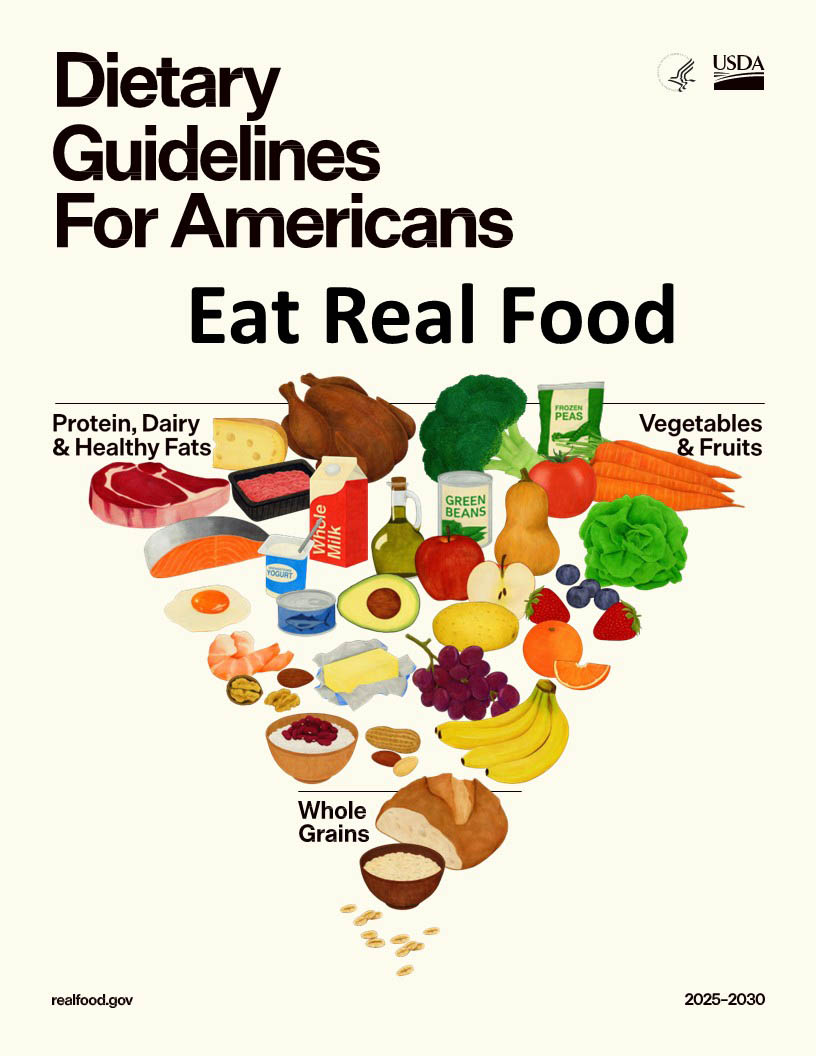
Unless you have cut yourself off from all outside media, you already know the USDA has just released new “Dietary Guidelines For Americans” and a new, upside down, food pyramid.

Both the AMA and AHA have endorsed the new guidelines with some reservations. But like everything else in today’s world they have become both political and controversial.

  • Some experts are saying, “The new guidelines are fantastic. They will make Americans much healthier. It’s about time the government caught up with the latest scientific advances.
  • Others are saying, “The new guidelines are terrible. They will set medicine back 20 years.”

As usual, the truth lies somewhere in the middle. I will explore that middle ground and discuss the pros and cons of the new dietary guidelines and food guide pyramid in this article.

But first we should start with something everyone can agree with, “What we are doing now isn’t working!” For example:

  • The percentage of Americans who are overweight or obese is approaching 70%.
  • The United States spends more on healthcare per person than any other country in the world. But we…
    • Rank 48th in life expectancy. We not only rank below every developed country, but we also rank below many 3rd world countries.
      • And we are losing ground. In 1990, we ranked 35th in life expectancy.
    • Rank 69th in health span (healthy life expectancy).
      • Again, we are losing ground. Our ranking was 42nd in 1990.
    • Rank dead last (183rd out of 183) in health span as a percentage of life expectancy.

In short, we are falling behind the rest of the world in terms of lifespan, health span, and percentage of healthy years.

And our deteriorating health is costly.

90% of our health care spending is for preventable diseases

A Brief History Of USDA Food Guides
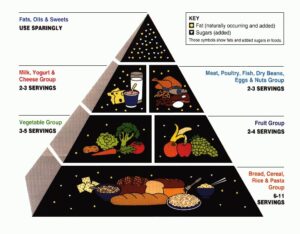
The USDA introduced the first food guide pyramid in 1992 based on the best nutrition science of the time. You probably remember the mantra:

  • 2-3 servings of dairy, preferably low fat.
  • 2-3 servings in the protein category (lean meats, fish, dry beans, eggs, and nuts).
  • 2-4 servings of fruits and 3-5 servings of vegetables.
  • 6-11 servings of grains (bread, cereals, rice, and pasta).
  • Fats, oils, and sweets were at the top of the pyramid with the caption, “Use Sparingly”.

This pyramid and the accompanying dietary guidelines were publicized so much that practically everyone knew them by heart.

Ten years later the USDA did a nutrition survey to see if their guidelines had changed American’s eating behavior. The answer was a clear, “No”. Only 5% of Americans ate according to the food guide pyramid.

The Geniuses at the USDA concluded that the food guide pyramid must be too difficult for the average American, so they introduced a simpler version, My Pyramid in 2005.

Guess what! Only 5% of Americans followed those recommendations, so they went to the super simple My Plate. By now you have probably guessed that only 5% of Americans followed the My Plate recommendations.

It turns out Americans weren’t confused by the recommendations. The recommendations were just too different from the way they were used to eating.

So, one change you will see in the new food guide pyramid is it includes some of Americans favorite foods, such as red meat, butter, and full fat dairy. Is that sacrilege or is it smart? Only time will tell.

With that in mind, let’s discuss the new “Dietary Guidelines For Americans”.

#1: Eat Real Food
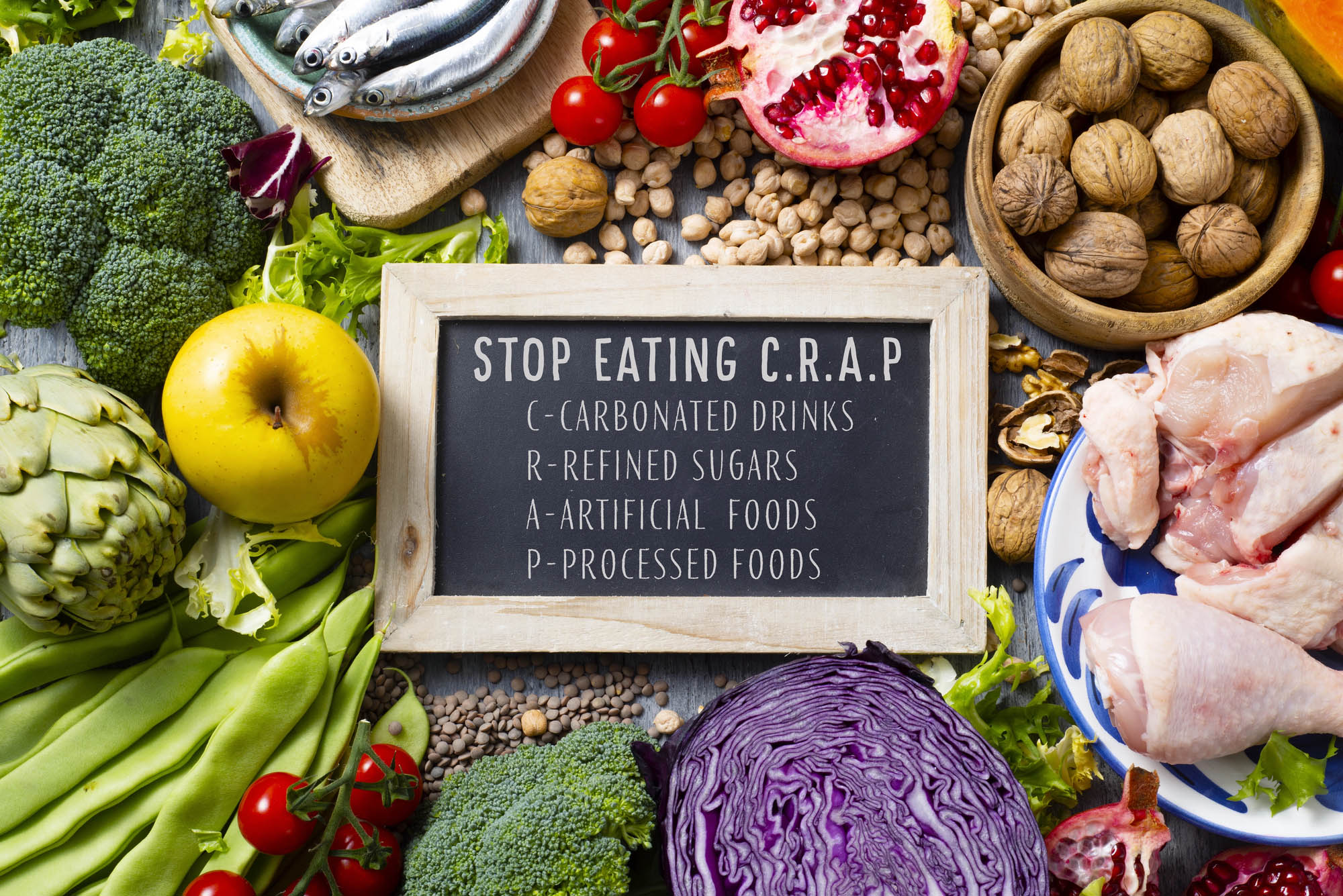
This is one recommendation that virtually everyone agrees with. The average American is getting 55% of their calories from highly processed foods. And the health consequences of that much processed food are devastating. Consumption of highly processed foods is linked to higher risk of:

  • Obesity.
  • Type 2 diabetes.
  • Heart attack.
  • Stroke.
  • Some cancers.
  • Depression and anxiety.
  • Dementia
  • Premature death.

If you are wondering how we got to this point, the answer is simple. It stems from the desire of Americans to eat a healthier diet without giving up their favorite foods and the willingness of Big Food Inc (the food industry) to give us exactly what we want. For example:

  • Some people want to eat a more plant-based diet, but don’t want to give up their favorite meats. Big Food Inc is only too happy to oblige. They mix some fat, salt, and a witch’s brew of chemicals to give us phony baloney, faken bacon, and everyone’s favorite, tofurkey.
  • Some people are convinced keto diets are healthy, but don’t want to give their favorite sweets. Again, Big Food Inc is only too happy to oblige. They mix up a witch’s brew of chemicals to give us keto cookies and keto pastries.

I’m being facetious, but you get my point.

Some representatives of Big Food Inc claim that the health risks of processed foods are unproven. They are lying!

If you would like to read my reviews of major studies showing the health risks of highly processed foods, just go to https://www.chaneyhealth.com/healthtips/ and put “processed foods” in the search box.

#2: Prioritize Protein Foods at Every Meal
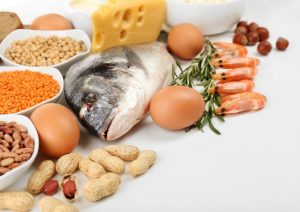
protein foodsThis is one of the more controversial recommendations of the new food guide pyramid. The new USDA dietary guidelines increase the protein recommendation by 50-100% compared to previous versions…

  • From 0.36 grams of protein per pound of body weight to…
  • Between 0.54 and 0.72 grams of protein per pound of body weight.

[Note: If these numbers seem different from what you have seen, that is because the official recommendations are in grams of protein per kilogram of body weight. Since most Americans have no idea what their body weight is in kilograms, those numbers are useless.]

The main criticisms about the new protein recommendations are:

#1: “There isn’t solid evidence that most people need this much protein.”

My response is that anyone who makes that claim hasn’t kept up with the last two decades of protein research.

The old 0.36/pound standard is probably OK for the average middle-aged couch potato, but higher protein intakes are needed for people who are:

  • Active, especially if they are trying to increase muscle mass, strength, or endurance.
  • Over 50 and are trying to maintain muscle mass, strength, and mobility.
  • Trying to lose weight without losing muscle, especially if they are using GLP-1 drugs.
  • Trying to reduce the risk of type 2 diabetes and other chronic diseases.

In short, almost everyone except the couch potatoes will benefit from higher protein intakes. And, yes, the latest science shows that it is best to get at least 20 grams of protein with each meal.

You can find more information about the science behind increased protein recommendations by going to https://www.chaneyhealth.com/healthtips/ and putting “protein” in the search box.
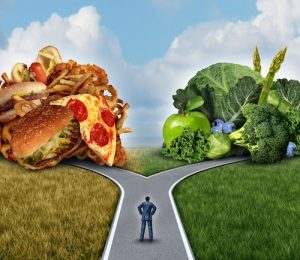
#2: “The new guidelines don’t steer people towards plant proteins”. This is a subtle distinction. The new USDA dietary guidelines include plant protein sources. But they do not recommend that they replace some of the animal proteins in the diet, as did previous versions. This allows people to choose between animal and plant proteins based on their preferences.

Those of you who have been following my “Health Tips From the Professor” blog know that I am an advocate of primarily plant-based diets. I am fully in the “replace some animal protein with vegetable protein” camp.

  • But I acknowledge that is not the way most Americans eat. Perhaps it is time to make dietary recommendations that align more closely with the way people eat if we want to get above 5% acceptance.
  • It would also be difficult to meet the new protein guidelines with plant protein alone unless you add commercially available plant protein supplements.

#3: “Higher protein intakes may be harmful for some people”. Recent research has shown that this concern is overblown for most Americans. However, there are some people who should probably check with their doctor before they increase their protein intake.

  • People who have been diagnosed with kidney disease.
  • People with genetic conditions or diseases that predispose to kidney disease. One example would be poorly controlled diabetes. [Note: I do not mean to imply that higher protein intake is likely to cause kidney disease in these situations. I included this category because people in these situations may have undiagnosed kidney disease.]

In most of these cases, you have probably been warned by your doctor to be careful about excess protein intake. But if you are uncertain about your risk for kidney disease, it never hurts to check with your doctor before increasing your protein intake.

What About Red Meat?

SteakThe new dietary guidelines have been criticized for emphasizing red meat. That criticism is inaccurate. It’s a “tempest in a teapot”.

In fact, red meat is pictured in both the original and the most recent versions of the food guide pyramid. And red meat is mentioned as one source of protein in both the original and the latest versions of dietary guidelines. It is given no special emphasis over other protein sources in either version of the dietary guidelines.

However, I would like to share my perspective on red meat.

  • Diet context matters. As I have said in previous issues of “Health Tips From The Professor”, fruits, vegetables, whole grains, and beans are the antidotes to all the bad aspects of red meat.” And if you look at the new food guide pyramid, red meat and other proteins are in the same neighborhood as fruits and vegetables.
  • Amount matters. Think of red meat as a garnish – for example, 2-3 ounces of red meat as part of a steak salad or stir fry with lots of veggies rather than an 8-ounce steak with fries.

#3: Consume Dairy
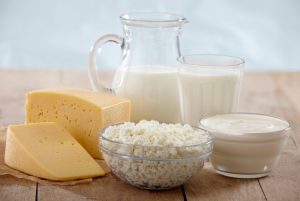
dairy foodsThe new dietary guidelines differ from previous versions in both the amount and kind of dairy foods consumed. For example:

  • The old guidelines recommended 2-3 servings of dairy foods per day.
    • The new guidelines recommend 3 servings per day as part of a 2,000-calorie dietary pattern.
    • Since most Americans consume 3,600 to 3,800 calories per day that recommendation translates to at least 5 servings per day.
  • The old guidelines recommended choosing low fat dairy foods.
    • The new guidelines say, “When consuming dairy, include full-fat dairy with no added sugars.”

Since the full-fat dairy recommendation is the most controversial change, I will address it first.

Let me start by saying that I have been a traditionalist with respect to dairy foods. I have recommended low-fat dairy foods for years. But a good scientist must be willing to change their recommendations based on the latest research findings.

And new findings have clearly challenged our perspective on full-fat dairy foods. Several large, well-designed studies over the past decade have shown that full-fat dairy foods are just as healthy as low-fat dairy foods. I will make two comments about these studies.

  • I suspect that the studies may be skewed because much of the data on full-fat dairy comes from countries where most of full-fat dairy foods are fermented – and we know that fermented dairy foods are very healthy.
    • Admittedly, I have no data to back up my suspicion, but I recommend fermented dairy foods as part of your dairy intake. That’s a recommendation everyone can agree with!
  • One recent study has suggested that diet context is important. Specifically, the study suggests that the benefits of full-fat dairy foods are greatest in the context of a healthy, primarily plant-based diet.
    • Similar observations have been made for egg consumption. That suggests that full-fat dairy and eggs provide some important nutrients that may be missing in a vegetarian diet. But in a diet that is already high in saturated fat and cholesterol, the “bad” effects of full-fat dairy and eggs may outweigh the benefits.

You can find more information about full-fat dairy by going to https://www.chaneyhealth.com/healthtips/ and putting “dairy” in the search box.

As for the amount of dairy foods you should consume, I wouldn’t get hung up on the number of servings per day. I interpret the new guidelines as saying, “Don’t be afraid of dairy. It can be an important part of your diet.”

However, the servings of dairy products are more frequently determined by lactose intolerance or sensitivity to milk protein than by dietary guidelines. Many people, including myself, can only consume small, occasional servings of dairy without experiencing digestive distress.

#4: Eat Vegetables & Fruits Throughout The Day
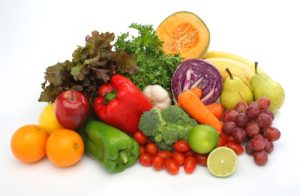
Colorful fruits and vegetablesThe dietary guidelines say, “Eat a variety of colorful, nutrient-dense vegetables and fruits. Specifically, the recommendation is:

  • 3 servings/day of vegetables and 2 servings/day of fruits each day.
    • Once again, the number of servings are based on a 2,000-calorie diet.
    • When you take into account the actual caloric intake of Americans, the recommendations become 3-5 servings/day of vegetables and 2-4 servings/day of fruits.

These recommendations are not controversial. They are universally accepted.

#5: Incorporate Healthy Fats

The new dietary guidelines are:

  • “Healthy fats are plentiful in many whole foods, such as meats, poultry, eggs, omega-3 rich seafood, nuts, seeds, full-fat dairy, olives, and avocados.”
    • This recommendation is not controversial.
  • “When cooking with or adding fats to meals, prioritize oils with essential fatty acids, such as olive oil. Other options can include butter or beef tallow.”
    • This is the most controversial portion of the new dietary guidelines. The usual comment is something like, “How dare they include butter and lard as healthy fats!”

I’m not a fan of lard but let me make a couple of observations about butter.

  • Butter is a whole food. Its ingredient list is typically cream, milk, and salt. If you buy the unsalted version, the ingredient list is even shorter. Margarine and butter substitutes have much longer ingredient lists, often including some questionable ingredients.
  • The frequency of butter use is important. Let me share a personal example. We eat a whole food, primarily plant-based diet. We substitute almond butter for butter on toast and muffins. But there are certain foods like potatoes, winter squash, and corn on the cob that just aren’t the same without real butter. We buy 4 sticks of butter at a time, cut it into pats of butter, and freeze it. Four sticks of butter lasts us a year.

Finally, the critics who say that the new guidelines should not include foods that are high in saturated fat are ignoring the fact that the guidelines say, “Saturated fat consumption should not exceed 10% of total daily calories.” This statement has remained constant since the first food guide pyramid in 1992.

So, the new guidelines are not recommending that we eat more saturated fat as many critics have claimed. They are saying, “A little bit of saturated fat is OK in the context of a whole food diet with lots of fruits, vegetables, and whole grains.

#6: Focus On Whole Grains

The new dietary guidelines are:

  • “Prioritize fiber-rich whole grains.”
  • “Significantly reduce the consumption of highly processed, refined carbohydrates.”

These guidelines are unchanged from previous versions of the guidelines.

What is new is that the guidelines now recommend only 2-4 servings of whole grains per day. That’s a big change from the 6-11 servings per day recommended in the original food guide pyramid.

  • If the 6-11 servings per day were whole grains, the new recommendation would represent a significant decrease in fiber intake. But that’s not how most Americans eat.
  • Since most of the grains in a typical American’s diet are highly processed and refined, reducing the recommended intake to 2-4 servings per day is a step in the right direction.

#7: Limit Highly Processed Foods, Added Sugars, & Refined Carbohydrates
fast foodI call this, “Avoid the bad stuff”. Specifically:

  • Avoid highly processed foods with added sugar and sodium.
  • Limit foods and beverages that include artificial flavors, colors, preservatives, and sweeteners
  • Avoid sugar-sweetened and artificially sweetened beverages.

These recommendations are accepted by almost everyone except the food industry.

However, I should point out that there is also a slight difference in emphasis from previous versions of the USDA dietary guidelines:

  • The new guidelines are more restrictive for added sugars than previous versions of the dietary guidelines. For example, they say:
    • One meal should contain no more than 10 grams of added sugars.
    • Children under the age of 10 should not be given foods with added sugars (previous versions of the dietary guidelines recommend avoiding added sugars for children under the age of 2).

Given the wealth of evidence that added sugars are linked to increased risk of obesity and chronic diseases, these stricter restrictions on added sugars make good sense – especially because the USDA dietary guidelines form the basis for school lunch programs.

But these guidelines are very different from how the average American eats. I’m not sure how many Americans will follow them.

#8: Limit Alcoholic Beverages

The guidelines:

  • Say, “Consume less alcohol for better overall health”.
  • List people who should completely avoid alcohol.

The only controversy about this recommendation is that it is less specific than the previous guidelines that recommended no more than 1 alcoholic drink/day for women and no more than 2/day for men.

I recognize the desire for specificity. But alcohol tolerance depends on several factors such as body weight, genetics, and medication usage.

What Does This Mean For You?

Questioning WomanThe USDA just released a new version of the Food Guide Pyramid and accompanying “Dietary Guidelines For Americans”, and they are very different from previous versions. What do these changes mean for you?

While the AMA and AHA have both endorsed the new guidelines, they have been controversial. In the article above, I have summarized the pros and cons of every recommendation. There are lots of recommendations, so it was a long article.

To help you make sense of the article let me summarize the recommendations and criticisms by dividing the recommendations into 4 categories:

#1: Recommendations that are accepted by almost everyone except the food industry. These are non-controversial.

  • Eat real food
  • Eat vegetables and fruits throughout the day.
  • Focus on whole grains.
  • Limit highly processed foods, added sugar, and refined carbohydrates.

#2: Changes in recommendations that reflect recent scientific advances. Critics of these changes simply haven’t kept up with scientific publications over the past couple of decades.

  • Increasing the daily protein recommendations.
  • Including full-fat dairy as a healthy dairy food.

#3: Tempests in a teapot: There is a kernel of truth in these criticisms, but the changes are much more modest than the critics would have you believe.

  • Including red meat in the protein recommendations.
  • Including some saturated fats in the “healthy fats” category.
  • Not including specific limits on alcohol consumption, as the previous version had done.

#4: What I would have liked to have seen:

  • More emphasis on plant proteins.
  • Elimination of lard from the “healthy fat” category.
  • Inclusion of high-quality vegetable oils in the “healthy fats” category.

The Bottom Line

The USDA just released a new version of the Food Guide Pyramid and accompanying “Dietary Guidelines For Americans”.

While the AMA and AHA have both endorsed the new guidelines, they have been controversial.

In this article I describe the pros and cons of each dietary guideline and divide them into ones for which:

  • They are clearly an improvement over the previous guideline.
  • They are accepted by almost everyone.
  • The criticism is a “tempest in a teapot”.
  • The criticism is at least partially accurate.

For more information on the pros and cons of the new “Dietary Guidelines For Americans” and how these guidelines apply to you, read the article above.

These statements have not been evaluated by the Food and Drug Administration. This information is not intended to diagnose, treat, cure or prevent any disease.

 _____________________________________________________________________________

My posts and “Health Tips From the Professor” articles carefully avoid claims about any brand of supplement or manufacturer of supplements. However, I am often asked by representatives of supplement companies if they can share them with their customers.

My answer is, “Yes, as long as you share only the article without any additions or alterations. In particular, you should avoid adding any mention of your company or your company’s products. If you were to do that, you could be making what the FTC and FDA consider a “misleading health claim” that could result in legal action against you and the company you represent.

For more detail about FTC regulations for health claims, see this link.

https://www.ftc.gov/business-guidance/resources/health-products-compliance-guidance

_______________________________________________________________________

About The Author 

Dr. Chaney has a BS in Chemistry from Duke University and a PhD in Biochemistry from UCLA. He is Professor Emeritus from the University of North Carolina where he taught biochemistry and nutrition to medical and dental students for 40 years.  Dr. Chaney won numerous teaching awards at UNC, including the Academy of Educators “Excellence in Teaching Lifetime Achievement Award”. Dr Chaney also ran an active cancer research program at UNC and published over 100 scientific articles and reviews in peer-reviewed scientific journals. In addition, he authored two chapters on nutrition in one of the leading Biochemistry textbooks for medical students.

Since retiring from the University of North Carolina, he has been writing a weekly health blog called “Health Tips From the Professor”. He has also written two best-selling books, “Slaying the Food Myths” and “Slaying the Supplement Myths”. And most recently he has created an online lifestyle change course, “Create Your Personal Health Zone”. For more information visit https://chaneyhealth.com.

For the past 55 years Dr. Chaney and his wife Suzanne have been helping people improve their health holistically through a combination of good diet, exercise, weight control and appropriate supplementation.



Is Creatine Good For The Brain?

Creatine And Energy Metabolism

Author: Dr. Stephen Chaney

Creatine has developed a reputation as the “go to” supplement for athletes.

  • In a recent survey of NCAA Division I athletes, 48% of male athletes use creatine on a regular basis.
  • Over 80% of professional athletes in power sports like football use it.

But you may have seen recent reports that creatine is also good for the brain. You may be wondering:

  • Are those reports true?
  • If you are not an athlete, should you be taking creatine for a healthy brain?
  • If so, how much should you be taking?
  • Is regular creatine use safe?

I will review a couple of recent studies and answer these questions below. But first, it is time for my favorite topic: Metabolism 101. This week’s Metabolism 101 topic is, “Creatine And Energy Metabolism”.

Metabolism 101: Creatine And Energy Metabolism

Energy Metabolism: Before discussing the role of creatine in the body, I should start at the beginning by describing the basics of energy metabolism in our body. As you have probably heard, ATP is the energy currency of the cell.

Our cells generate energy in two ways:

  • Anaerobic (without oxygen) metabolism can generate ATP quickly but can only sustain high-intensity work for a few minutes.
  • Aerobic (with oxygen) metabolism requires oxygen and organelles called mitochondria to generate ATP. Aerobic metabolism can provide enough ATP to sustain moderate to low intensity work for hours.

Our cells don’t store ATP. They use it as fast as it is produced to:

  • Synthesize protein and many other components of the cell.
  • Synthesize DNA and fuel cell division.
  • Repair and regenerate cell membranes and cellular organelles.
  • Pump nutrients in and out of the cells and transport them to where they are needed within the cell.

And this is just the tip of the iceberg. Thousands of cellular reactions require ATP.

The Role Of Creatine In Cellular Energy Metabolism: Let’s start with the basics:

We can think of creatine as an energy bank.

  • When the cell has plenty of ATP, it makes a deposit into its energy bank by converting creatine into creatine-phosphate.
  • When the cell needs energy quickly it makes a withdrawal from its energy by converting creatine phosphate to creatine and generating ATP.

Creatine is found primarily in high energy tissues (muscle, brain, and testes) – No, I’m not going to talk about creatine and fertility today.

Every time the creatine-creatine-phosphate cycle occurs in high energy tissues, a small amount of creatine is converted to creatinine and filtered through the kidneys. There are two important consequences of this fact:

#1: The faster the phosphocreatine/creatine cycle turns, the more rapidly creatine will be converted to creatinine and drained from the body.

#2: Our body needs to constantly replenish its creatine stores. It does this in two ways:

  • Creatine is synthesized by the liver, kidneys, and pancreas. But it is not stored there. It is released into the bloodstream for use by high energy tissues. It is also synthesized by the brain. But creatine synthesized in the brain can only be used by the brain. It is not released into the bloodstream.
  • Creatine can come from muscle-containing foods – primarily red meat, chicken, and fish. Plant foods provide no creatine.
  • Creatine can also come from supplements – the topic of this article.
  • High-energy tissues have transporters that allow them to take up creatine from the bloodstream.

Creatine plays slightly different roles in muscle and brain.

Creatine Supplementation For Optimizing Muscle Function

Creatine in the muscle is primarily used for high-intensity short duration exercise. In muscle you can think of creatine as being used to “jump-start” high intensity exercise.

  • It takes a few seconds for anaerobic metabolism to go into overdrive. Creatine-phosphate stores fill that gap.
  • Muscle creatine-phosphate stores can fuel high-intensity exercise for 8-15 seconds (average = 10 seconds).

Creatine supplementation is well accepted for sports requiring short, intense bursts of power, speed, and strength, such as football, basketball, hockey, soccer, wrestling, bodybuilding, and sprinting. It is supported by dozens of published clinical studies.

The rationale is not hard to understand.

  • Muscle normally contains enough creatine-phosphate to support around 10 seconds of high-intensity exercise.
  • Creatine-phosphate supplementation increases muscle creatine stores by 20-40%. That supports another 2-4 seconds of exercise.
  • That may not sound like much. But anaerobic metabolism does not kick in until creatine-phosphate stores are exhausted, so the total amount of high-intensity power attained during each rep of a workout is increased by 2-4 seconds.
  • Over a period of weeks or months that extra 2-4 seconds of high intensity exercise during each rep of training translates into real gains in lean muscle mass, muscle strength, and exercise performance.
  • Of course, creatine supplementation provides little benefit for athletes involved in endurance sports.

Here are some other notable points about creatine supplementation for athletes:

  • Creatine supplementation benefits most athletes involved in high-intensity sports, but it appears to be particularly useful for vegans and vegetarians who may not be getting creatine from their diet.
  • Clinical studies and real-life experience have shown that creatine is safe when used properly. (I will discuss mild side effects and cautions below).
  • The doses used most frequently are:
    • Around 20 grams/day for quick results. For optimal absorption, it is best to divide it into 4 daily servings of 5 grams.
    • Around 5 grams/day for maintenance and for general use.
    • The eventual amount of muscle creatine is the same with 20- and 5-gram doses. The only difference is the speed at which optimal creatine levels are attained.
  • Creatine is best utilized when taken with food or smoothies containing both carbohydrate and protein.
  • Adequate hydration is important (more about that below).

Creatine Supplementation And Brain Health

Brain HealthBrain is different from muscle in that it depends on aerobic metabolism and is always using ATP at a high rate. Brain accounts for 20% of our body’s energy demand. In brain we can think of creatine as a buffer or reserve.

  • Brain creatine-phosphate stores are used in situations where the brain needs to increase its energy use over baseline (more about that below).

The initial excitement about creatine supplementation optimizing brain health came from mouse studies. However, we need to remember that mice aren’t humans. In this case the difference is clear.

  • Creatine supplementation increases brain creatine levels by 50% in mice, but only around 5-10% on average in humans.

So, it is not clear whether the results obtained with mice also apply to humans. The results of clinical trials with humans are mixed. They are promising, but not definitive.

Is Creatine Good For The Brain?

To answer that question I will share two recent reports with you as examples of where the creatine and brain health hypothesis stands at present.

Study #1: Creatine Supplementation And Alzheimer’s Disease.

Memory loss due to Dementia and Alzheimer’s disease with the medical icon of a tree in the shape of a human head and brain losing leaves.

This study (AN Smith et al, Alzheimer’s & Dementia, 11270101, 2025) was designed to test the hypothesis that creatine supplementation might be beneficial for Alzheimer’s patients. It was a pilot study – designed to determine whether there was enough evidence to justify a larger clinical trial.

How Was This Study Done? Twenty participants, 60-90 years old (average = 73), were enrolled in this study. They had been previously diagnosed with Alzheimer’s disease and had been taking Alzheimer’s medication for at least 30 days. Each participant had a partner (spouse, family member, or friend) to support them and aid in accurate participation and reporting.

  • Participants consumed 20 grams of creatine, split into two 10-gram doses for 8 weeks.
    • Participants and their partners were given compliance trackers with two boxes to be checked each day to measure adherence to the supplementation protocol. Adherence was 90%.
  • Blood creatine levels were measured at baseline, 4 weeks, and 8 weeks as another measure of adherence.
  • Two measures of cognitive health were administered at baseline and at 8 weeks.
    • MMSE (a 30-item cognitive test).
    • The NIH Toolbox Cognitive Battery, which measures attention, category switching, episodic memory, working memory, speed of processing, written language, and auditory language.
  • Brain creatine levels were measured using nuclear magnetic resonance (NMR) spectroscopic imaging.

What Did The Study Show?Question Mark

  • Participants and their partners reported 13 incidences of mild side effects, which included cramping/muscle pain, diarrhea, constipation, nausea, facial flushing, and sleep disturbances.
  • Blood creatine levels increased 23-fold in 4 weeks and remained elevated at 8 weeks.
  • Brain creatine levels increased by 11% at 8 weeks.
  • When assessed with the NIH Toolbox Cognitive Battery, creatine supplementation (20 grams/day) improved:
    • Total cognition by 4%.
    • Fluid cognition by 7%.
    • List sorting working memory by 11%.
    • Oral reading recognition by 5%.
    • Attention by 7%.
  • There were no significant changes in the 5 other cognition categories in the NIH Toolbox Cognitive Battery.

The authors concluded, “Our study provides the first evidence in humans that creatine supplementation is feasible and may increase brain creatine and offer cognitive benefits to patients with Alzheimer’s Disease.”

These results are preliminary and suggest that future efficacy trials comparing creatine to placebo are needed to generate evidence that can be compared to other Alzheimer’s Disease clinical trials.”

“Should creatine provide benefit, the public health implications may be substantial given Alzheimer’s Disease cases are anticipated to rise and creatine is cost-effective with a good safety profile.”

Why Did I Include This Study? You may be wondering why I included such a preliminary study in my review. The answer is simple: It provides a graphical view of individual variability.

Every study mentions individual variability, but because this study has only 20 participants, the authors were able to graphically show the response of every individual in the study. And the results were informative.

  • In terms of brain creatine levels:
    • Some individuals had increases in the 25-30% range.
    • Others had increases of around 2-5%.
  • Similar variability was seen with each individual measure of cognition.

However, the most interesting result was that several measures of cognition were highly correlated with the changes in brain creatine levels. This suggests that the limiting factor in the brain health benefits of creatine may be the ability of creatine supplementation to influence brain creatine levels.

Study #2: Creatine Supplementation And Brain Health.

This study (H Roschel et al, Nutrients, 13, 586, 2021) is a review of 16 studies looking at the effect of creatine supplementation on various aspects of brain health.

  • All the studies were small.
  • They used different measures of cognitive health.
  • Most of the studies were short (2-15 days).
  • They used different measures of brain creatine levels (Creatine levels vary according to the region of the brain that is scanned).

While emphasizing the weaknesses and inconsistencies of published studies, the authors said:

  • “Creatine supplementation may positively influence some aspects of cognition under stressful conditions such as:
    • Hypoxia (reduced oxygen flow to the brain caused by chronic conditions like atherosclerotic narrowing of the carotid arteries, asthma, and COPD.
    • Sleep deprivation, especially when combined with exercise.”
  • They also discussed the theory that creatine supplementation may be beneficial for conditions associated with reduced brain creatinine levels such as:
    • Alzheimer’s disease, cognitive decline in general, mild traumatic brain injury, and depression.

They put particular emphasis on the potential benefits of creatine supplementation for mild traumatic brain injury, saying:

“Collectively, despite limited data, creatine supplementation seems potentially beneficial in reducing severity of or enhancing recovery from mild traumatic brain injury (mTBI), warranting further studies on its role not only as a post-injury therapy but also as a neuroprotective agent in populations at high risk of mTBI”

“Encouraging supplementation to reduce damage from or enhance recovery from mTBI…would ordinarily be considered premature. However, in this instance, given the devastating effects of mTBI, combined with the large body of safety and efficacy creatine supplementation data, encouraging supplementation for populations who are at high risk for mTBI might be considered more prudent.”

Finally, the authors concluded,

“There is a potential for creatine supplementation to improve cognitive processing, especially in conditions characterized by brain creatine deficits, which could be induced by acute stressors (e.g., exercise, sleep deprivation) or chronic, pathologic conditions (e.g., mTBI, cognitive decline, Alzheimer’s disease, depression).”

What Does This Study Mean For You?

Questioning WomanIf you are interested in creatine to support any kind of high intensity, short duration activity, the data are clear. Creatine supplementation in the 5-20 gm/day range with adequate hydration is both safe and effective.

Creatine offers little benefit for endurance events. But if you engage in any kind of high intensity training to build muscle mass in preparation for endurance events, creatine is likely to be of benefit.

However, we are at the early stages of understanding the effects of creatine supplementation on brain health and cognitive function. Most of the results are promising, but preliminary.

Here is a brief summary:

  • The effectiveness of creatine supplementation at increasing brain creatine levels and improving brain function is highly variable.
    • For some individuals, creatine supplementation results in a 25-30% increase in brain creatine levels. Those individuals are likely to experience brain health benefits.
    • For other individuals, creatine supplementation results in 2-5% increase in brain creatine levels. These individuals may not experience noticeable brain health benefits.
  • These reason for this variability in the effect of creatine supplementation is unknown at present.

This reminds me of my last decade (2002-2012) of cancer research at the University of North Carolina. At the beginning of the decade, here were certain cancer drugs that were considered unproven because their effectiveness was variable. They appeared to help some cancer patients, but were ineffective for others.

The we started to look at the genetic mutations that caused individual cancers. By the end of the decade we had discovered those drugs were amazingly effective for cancers with certain genetic backgrounds. Those drugs went from being “duds” to being “stars”.

Creatine supplementation for brain health is where those cancer drugs were in 2002. Until we can predict which individuals will experience a significant increase in brain creatine levels with supplementation, clinical studies will continue to be inconsistent, and the scientific community will continue to consider creatine supplementation for brain health to be “unproven”.

  • But the good news is that, with adequate hydration, creatine supplementation is safe. So, you can take it for its muscle benefits. And, if you also experience brain health benefits, consider it an added benefit.

And there are certain situations where even the medical profession often recommends creatine supplementation for brain health. For example:

  • Studies suggest that creatine supplementation may improve brain function for people with sleep deprivation, mild traumatic brain injury, cognitive decline, conditions that restrict blood flow to the brain, Alzheimer’s disease, and depression.
    • For example, it is often recommended for mild traumatic brain injury because the health consequences of untreated traumatic brain injury are severe and the risks of creatine supplementation are low.

Finally, the optimal dosage and duration of creatine supplementation for brain health benefits is unknown.

  • Most studies use 20 grams/day divided into two or three smaller doses.
  • But the effect of body weight on dosage recommendations has not been studied. People in the sports medicine field tell me that female gymnasts use significantly less creatine than male football players. If your body weight is low, you might want to aim for 10-15 grams/day.

Creatine Supplementation Cautions 

While the safety of creatine supplementation is well established, there are some cautions you should be aware of:

  • Creatinine, the breakdown product of creatine metabolism, puts some stress on the kidneys.
    • While this is not a problem if your kidneys are healthy, you should consult with your health professional about taking creatine if you have any indications of impaired kidney function.
    • Even if your kidneys are perfectly healthy, creatine supplementation may increase blood creatinine levels. If your health professional is using creatinine levels to measure kidney health, you should let them know that you are supplementing with creatine.
  • Adequate hydration (preferably with water) is important because creatine pulls water with it as it enters your muscle cells.
    • This plumps up your muscles, which is great if you are a body builder.
    • This dehydrates you, which can cause side effects like muscle cramps, headaches, nausea, stomach cramps, and diarrhea.
    • These side effects are usually transitory and can be avoided or reduced by adequate hydration. If symptoms continue despite adequate hydration, you should lower the dose or discontinue creatine supplementation.

The Bottom Line 

If you are interested in creatine to support any kind of high intensity, short duration activity, the data are clear. Creatine supplementation in the 5-20 gm/day range with adequate hydration is both safe and effective.

However, we are at the early stages of understanding the effects of creatine supplementation on brain health and cognitive function. Most of the results are promising, but preliminary.

I discussed two studies on creatine supplementation and brain health in this article. Here is a brief summary of their findings:

  • Creatine supplementation may improve brain function for people with sleep deprivation, mild traumatic brain injury, cognitive decline, conditions that restrict blood flow to the brain, Alzheimer’s disease, and depression).
    • Although the effectiveness of creatine supplementation on brain function is uncertain at present, many experts recommend it if you fall into one of the categories listed above because creatine supplementation has been shown to be safe by decades of sports medicine studies.
  • The effectiveness of creatine supplementation at increasing brain creatine levels and improving brain function is highly variable.
    • For some individuals, creatine supplementation results in a 25-30% increase in brain creatine levels. Those individuals are likely to experience brain health benefits.
    • For other individuals, creatine supplementation results in 2-5% increase in brain creatine levels. These individuals may not experience noticeable brain health benefits.
  • But the good news is that, with adequate hydration, creatine supplementation is safe. So, you can take it for its muscle benefits. And, if you also experience brain health benefits, consider it an added benefit.

For more information on this study, what it means for you, and cautions about using creatine supplements, read the article above.

These statements have not been evaluated by the Food and Drug Administration. This information is not intended to diagnose, treat, cure, or prevent any disease.

 _____________________________________________________________________________

My posts and “Health Tips From the Professor” articles carefully avoid claims about any brand of supplement or manufacturer of supplements. However, I am often asked by representatives of supplement companies if they can share them with their customers.

My answer is, “Yes, as long as you share only the article without any additions or alterations. In particular, you should avoid adding any mention of your company or your company’s products. If you were to do that, you could be making what the FTC and FDA consider a “misleading health claim” that could result in legal action against you and the company you represent.

For more detail about FTC regulations for health claims, see this link.

https://www.ftc.gov/business-guidance/resources/health-products-compliance-guidance 

_____________________________________________________________________________

About The Author 

Dr. Chaney has a BS in Chemistry from Duke University and a PhD in Biochemistry from UCLA. He is Professor Emeritus from the University of North Carolina where he taught biochemistry and nutrition to medical and dental students for 40 years.  Dr. Chaney won numerous teaching awards at UNC, including the Academy of Educators “Excellence in Teaching Lifetime Achievement Award”. Dr Chaney also ran an active cancer research program at UNC and published over 100 scientific articles and reviews in peer-reviewed scientific journals. In addition, he authored two chapters on nutrition in one of the leading Biochemistry textbooks for medical students.

Since retiring from the University of North Carolina, he has been writing a weekly health blog called “Health Tips From the Professor”. He has also written two best-selling books, “Slaying the Food Myths” and “Slaying the Supplement Myths”. And most recently he has created an online lifestyle change course, “Create Your Personal Health Zone”. For more information visit https://chaneyhealth.com.

For the past 53 years Dr. Chaney and his wife Suzanne have been helping people improve their health holistically through a combination of good diet, exercise, weight control and appropriate supplementation.



Which Diets Were Best In 2025?

Which Diet Should You Choose For Good Health?

Author: Dr. Stephen Chaney

Question MarkMany of you started 2026 with goals of losing weight and/or improving your health. In many cases, that involved choosing a new diet.

And for many of you the “bloom” has already gone off the new diet you started so enthusiastically January 1st.

  • Perhaps the diet isn’t working as well as advertised…
  • Perhaps the diet is too restrictive. You are finding it hard to stick with…
  • Perhaps you are always hungry or constantly fighting food cravings…
  • Perhaps you are starting to wonder whether there is a better diet than the one you chose January 1st
  • Perhaps you are wondering whether the diet you chose is the wrong one for you…

If you are rethinking your diet, you might want to know which diets the experts recommend. Unfortunately, that’s not as easy as it sounds. The diet world has become just as divided as the political world.

Fortunately, you have an impartial resource. For 15 consecutive years US News & World Report has invited a panel of experts with different points of view to evaluate popular diets. They then combined the input from all the experts into rankings of the diets in various categories.

They did not rank diets this year but said that little has changed since their last rankings in 2025.

If you are still searching for your ideal diet, I will summarize the US News & World Report’s “Best Diets In 2026”. For the full report, click on this link.

How Was This Report Created?

Scientists-ConversingUS News & World Report recruited panel of 69 nationally recognized experts in diet, nutrition, obesity, food psychology, diabetes, and heart disease to review the most popular diets. This year they reviewed 38 diets in 21 different categories based on the most common reasons for choosing a specific diet.

Of course, fad diets come and go. Each year they drop diets that are no longer popular and add ones that are either new or have recently surged in popularity.

The panel rated diets based on:

  • Nutritional Completeness: The best diets include a variety of nutrient-dense foods that provide essential carbohydrates, protein, healthy fats, vitamins, and minerals.
  • Health Benefits and Risks: These diets are evidenced-based, promote health benefits, reduce disease risks, and focus on high-fiber, nutrient-rich, and antioxidant-packed foods.
  • Proven and Sustainable: These diets are supported by a large body of evidence that they protect against chronic disease and promote a long, healthy life. These diets also provide clear guidelines on what to eat more of and what to eat less of while allowing flexibility to suit personal preferences, including flavors, cultural cuisines and budget. Because these diets are adaptable, they are more sustainable in the long run and less likely to promote a rigid eating approach.

US News & World Report converted the experts’ ratings to scores 5 (highest) to 1 (lowest). They then used these scores to construct 21 categories of Best Diets rankings. I have included the following 8 categories in this Health Tips Blog.

  • Best Diets Overall ranks diets on several different parameters, including whether all food groups are included in the diet, the availability of the foods needed to be on the diet and the use of additional vitamins or supplements.

They considered if the diet was evidence-based and adaptable to meet cultural, religious, or other personal preferences.

In addition, the criteria also included evaluation of the prep and planning time required for the diet and the effectiveness of the diet for someone who wants to get and stay healthy.

  • Best Plant-Based Diets used the same approach as Best Diets Overall to rank the plans emphasizing minimally processed foods from plants that were included in this year’s ratings.
  • Best Healthy Weight-Loss Diet ratings were generated by combining the safety of the weight loss program and the likelihood of the plan to result in successful long-term weight loss and maintenance of weight loss.
  • Best Fast Weight-Loss Diets were scored on their effectiveness for someone who wants to lose weight in three months or less.
  • Best Diabetes Diet ratings were calculated equally from the effectiveness of the diet for someone who wants to lower risk factors for diabetes, the nutritional quality of the diet, and research evidence-based support for the diet.
  • Best Heart-Healthy Diet ratings were calculated equally from the effectiveness of the diet for someone who wants to lower risk factors for hypertension and other forms of heart disease, the nutritional quality of the diet, and evidence-based support for the diet.
  • Best Diets for Inflammation were diets of whole, minimally processed foods like vegetables, fruits, whole grains, healthy fats, nuts, seeds, beans, fatty fish and lean proteins that have been shown to decrease inflammation. 
  • Easiest Diets to Follow represents panelists’ averaged scores for the relevant lifestyle questions, including whether all food groups are included and if the recommended foods are readily available at the average supermarket.

Which Diets Were Worst In 2025?

Emoticon-BadI did not include the worst diets in each category I listed below, but the US News & World Report article gave clear guidelines on what to avoid when choosing a healthy diet. In their words:

  • Avoid processed foods and sugary snacks: Sure, they taste great, but these can leave you with energy crashes and cravings that lead to overeating.
  • Watch out for “diet” foods: Just because something says “low-fat” or “diet” doesn’t mean it’s healthy. These foods often have added sugars or artificial ingredients. It is worth checking the label.
  • Skip extreme restrictions: Cutting out entire food groups or drastically slashing calories might work short term, but it’s hard to stick with and usually leads to burnout or regaining weight.
  • Focus on progress, not perfection: The best weight-loss strategies are about balance and flexibility, not rigid rules. Life happens, so it’s better to aim for consistency over time than to stick to an overly strict plan you can’t keep up with.
  • Focus on lifestyle change, not a quick fix: Healthy weight loss isn’t about quick fixes. It’s about building a lifestyle you enjoy and change sustain. Small changes, like adding more veggies to your meals or choosing water rather than sodas, may not seem like much, but they add up to lasting results over time.
  • Consistency over time beats perfection: An occasional slice of cake or pizza with friends won’t ruin your progress.

Which Diets Were Best In 2025?

Are you ready? If this were an awards program, I would be saying “Envelop please” and would open the envelop slowly to build suspense.

However, I am not going to do that. Below I have listed the top 5 diets in each of the 8 categories I have chosen (If your favorite diet is not on the list and you would like to see where it is ranked, you will need to subscribe to US News & World Report).

Finally, I have excluded commercial diets from this review. I have focused on whole food diets based on foods you can easily find in your local grocery store or farmer’s market.

Best Diets Overall

The best overall diets were:

#1: Mediterranean Diet. The Mediterranean diet has been ranked #1 for 10 consecutive years.

#2: DASH Diet (This diet was designed to keep blood pressure under control, but you can also think of it as an Americanized version of the Mediterranean diet.)

#3: Flexitarian Diet (A flexible semi-vegetarian diet).

#4: MIND Diet (A combination of the Mediterranean and DASH diets with foods selected that support brain health).

#5: The Mayo Clinic Diet (A 12-week program based on evidence-based behavioral science to establish life-long healthy eating habits).

Best Plant-Based Diets 

plant-based diets vegetablesThe top diets in this category were:

#1: Flexitarian Diet.

#2: Mediterranean Diet.

#3: Vegan Diet (a plant-based diet that eliminates all animal products).

#4: MIND Diet

#5: Ornish Diet (A low-fat, plant-based diet designed by Dr. Dean Ornish as part of a heart-healthy lifestyle program that has successfully reversed atherosclerotic buildup in some patients).

Best Healthy Weight-Loss Diets

The top diets in this category are proven. They are associated with lower weight and a reduced risk of chronic Weight Lossdiseases in long-term clinical studies. The top diets are:

#1: Mediterranean Diet

#2: Volumetrics Diet (A diet based on the caloric density (calories per serving) of foods).

#3: Mayo Clinic Diet (A diet designed to establish lifelong healthy eating habits).

#4: Flexitarian Diet.

#5: DASH Diet.

Best Fast Weight-Loss Diets

weight lossOnce again, the report emphasized the dangers of quick weight loss diets. If you choose one of these diets to achieve a quick weight loss goal, the authors recommend you use these diets as a stepping stone toward a healthier lifestyle rather than a final solution.

Here are the rapid weight loss ratings:

#1: Keto Diet (A very low carb, high fat diet designed to produce ketosis in your body).

#2: South Beach Diet (A low carb, high protein approach to weight loss).

#3 Atkins Diet (The grandfather of the keto diet).

#4: Volumetrics Diet.

#5: Keyto Diet (A low-carb version of the Mediterranean diet).

Best Diabetes Diets

The key criteria for the best diabetes diets were that they were well-balanced, healthy diets that were designed to Diabetes and healthy diekeep glucose levels within the normal range throughout the day.

They are whole food diets that cut back on added sugars and refined carbs. The top diets in this category are: 

#1: Mediterranean Diet

#2: Flexitarian Diet

#3: MIND Diet

#4: DASH Diet.

#5: Mayo Clinic Diet.

#7: Vegan Diet.

Best Heart-Healthy Diets

strong heartThe top diets in this category were:

#1: DASH Diet

#2: Mediterranean Diet

#3: MIND Diet.

#4: Vegan Diet.

#5: Flexitarian Diet.

#6: TLC Diet. (The TLC (Therapeutic Lifestyle Change) diet was designed by the NIH to lower LDL cholesterol levels naturally.

Best Diets for Inflammation

The top diets in this category are:Flames

#1: Mediterranean Diet.

#2: Dr. Weil’s Anti-Inflammatory Diet.

#3: Flexitarian Diet.

#4: DASH Diet.

#5: MIND Diet.

#7: Vegan Diet.

Easiest Diets to Follow

EasyThe authors of this report considered easy diets to be ones that:

  • Fit into your lifestyle, letting you enjoy indulgences while still being wholesome and nutritious – whether you’re eating out or at home. They focus on building long-term habits, not quick fixes, making them easier to stick with daily.
  • Focus on filling, tasty meals instead of strict restrictions.

They only listed four diets that were healthy, based on whole foods that were readily available, offered easy to follow recipes, and fit the criteria listed above.

#1: Mediterranean Diet (For those who enjoy Mediterranean foods).

#2: Flexitarian Diet (For those who enjoy flexible, semi-vegetarian meals).

#3: DASH Diet (For those who prefer American foods).

#4: MIND Diet (For those who could go either Mediterranean or American and are concerned with brain health).

Which Diet Should You Choose For Weight Loss?

1) If you are looking for rapid weight loss, any whole food restrictive diet will do.

  • In previous year’s evaluations both vegan and keto diets ranked near the top of the rapid weight loss category. Keto and vegan diets are both very restrictive, but they are polar opposites in terms of the foods they allow and restrict.
    • The keto diet is a meat heavy, very low carb diet. It restricts fruits, some vegetables, grains, and most legumes.
    • The vegan diet is a very low-fat diet that eliminates meat, dairy, eggs, and animal fats.
  • Whole food, very low carb diets like Atkins and keto are good for rapid weight loss, but they rank near the bottom of the list for every healthy diet category.
    • If you choose to lose weight on the Atkins or keto diets, switch to a healthier diet once you reach your desired weight loss.

2) If you are looking for healthy weight loss or just a healthy diet, the Mediterranean diet tops the list year after year, followed closely by the DASH, MIND, and flexitarian diets.

  • They are all whole food, primarily plant-based diets, that are backed by dozens of clinical studies showing that they are associated with a healthy weight and low risk of chronic disease long term.

Of course, GLP-1 drugs are the “elephant in the room” when we talk about weight loss. GLP-1 drugs work, but:

  • They are associated with concerning side effects such as:
    • Anxiety, depression, and suicidal thoughts. This is particularly concerning for anyone who has a tendency for anxiety or depression.
    • Muscle loss. This is particularly concerning for seniors who are already prone to age-related muscle loss.
    • Rarer side effects include increased risk of pancreatitis, kidney problems, and some cancers.
  • Unless they are coupled with dietary and lifestyle changes, their effects are temporary. The weight comes roaring back as soon as they are discontinued.
    • This is a concern because of their expense and side effects. Long-term use of these drugs:
      • Increases the cost of healthcare which increases health insurance costs for all of us (a topic which is in the news lately).
      • Increase the risk of side effects.

Which Diet Should You Choose For Good Health?

Food ChoicesWith rapid weight loss out of the way, let’s get back to the question, “Which Diet Should You Choose For Good Health?”

The Mediterranean diet tops the list year after year, followed closely by the DASH, MIND, and Flexitarian diets. But how do you choose between them? My recommendations are:

1) Choose a diet that fits your needs. That is one of the things I like best about the US News & World Report ratings. The diets are categorized. If your main concern is diabetes, choose one of the top diets in that category. If your main concern is heart health… You get the point.

2) Choose diets that are healthy and associated with long term weight loss. If that is your goal, you will notice that primarily plant-based diets top these lists. Meat-based, low carb diets like Atkins and keto are near the bottom of the lists.

3) Choose diets that are easy to follow. The less-restrictive primarily plant-based diets top this list – diets like Mediterranean, DASH, MIND, and flexitarian. They are also at or near the top of almost every diet category.

4) Choose diets that fit your lifestyle and dietary preferences. For example, if you don’t like fish and olive oil, you will probably do much better with the DASH or Flexitarian diet than with the Mediterranean diet.

4) Finally, focus on what you have to gain, rather than on foods you have to give up.

  • On the minus side, none of the diets include America’s favorite foods such as sodas, junk foods, and highly processed foods. These foods should go on your “No-No” list. Sweets should be occasional treats and only as part of a healthy meal. Meat, especially red meat, should become a garnish rather than a main course.
  • On the plus side, primarily plant-based diets offer a cornucopia of delicious plant foods you probably didn’t even know existed. Plus, for any of the top-rated plant-based diets, there are websites and books full of mouth-watering recipes. Be adventurous.

The Bottom Line

For many of you the “bloom” has gone off the new diet you started so enthusiastically in January. If you are rethinking your diet, you might want to know which diets the experts recommend. Unfortunately, that’s not as easy as it sounds. The diet world has become just as divided as the political world.

Fortunately, you have an impartial resource. Each year US News & World Report invites a panel of experts with different points of view to evaluate popular diets. They then combine the input from all the experts into rankings of the diets in various categories according to individual health goals. In the article above I summarize the US News & World Report’s “Best Diets In 2025”.

There are probably two questions at the top of your list.

#1: Which diets are best for weight loss? Here are 2 general principles:

  • If you are looking for rapid weight loss, any whole food restrictive diet will do. The Keto diet tops this list but ranks near the bottom of the healthy diet categories.
  • If you are looking for healthy, long-term weight loss the Mediterranean diets tops the list followed by the Volumetrics, Mayo Clinic, Flexitarian, and DASH diets.

#2: Which diet should you choose for good health? Once again, the Mediterranean diet tops the list followed by the DASH, Flexitarian, MIND, and Mayo Clinic diets. The Vegan diet is the top 10 of most healthy diet lists, while the keto diet is near the bottom.

For more details on 2026 US News & World Report on Best Diets and my advice on how to choose a healthy diet that is best for you, read the article above.

These statements have not been evaluated by the Food and Drug Administration. This information is not intended to diagnose, treat, cure or prevent any disease.

_______________________________________________________________________________

My posts and “Health Tips From the Professor” articles carefully avoid claims about any brand of supplement or manufacturer of supplements. However, I am often asked by representatives of supplement companies if they can share them with their customers.

My answer is, “Yes, as long as you share only the article without any additions or alterations. In particular, you should avoid adding any mention of your company or your company’s products. If you were to do that, you could be making what the FTC and FDA consider a “misleading health claim” that could result in legal action against you and the company you represent.

For more detail about FTC regulations for health claims, see this link.

https://www.ftc.gov/business-guidance/resources/health-products-compliance-guidance

 _______________________________________________________________________

About The Author 

Dr. Chaney has a BS in Chemistry from Duke University and a PhD in Biochemistry from UCLA. He is Professor Emeritus from the University of North Carolina where he taught biochemistry and nutrition to medical and dental students for 40 years.

Dr. Chaney won numerous teaching awards at UNC, including the Academy of Educators “Excellence in Teaching Lifetime Achievement Award”.

Dr Chaney also ran an active cancer research program at UNC and published over 100 scientific articles and reviews in peer-reviewed scientific journals. In addition, he authored two chapters on nutrition in one of the leading biochemistry text books for medical students.

Since retiring from the University of North Carolina, he has been writing a weekly health blog called “Health Tips From the Professor”. He has also written two best-selling books, “Slaying the Food Myths” and “Slaying the Supplement Myths”. And most recently he has created an online lifestyle change course, “Create Your Personal Health Zone”. For more information visit https://chaneyhealth.com.

For the past 54 years Dr. Chaney and his wife Suzanne have been helping people improve their health holistically through a combination of good diet, exercise, weight control and appropriate supplementation.



Are Peptide Stacks Safe?

Would You Like To Be A Guinea Pig?

Author: Dr. Stephen Chaney 

MagicPeptide stacks are all latest “magic” weight-loss potion. If you watch social media, the hype is hard to escape. If you believe the promises:

  • The weight will magically melt away.
  • Fat will disappear and be replaced with muscle.
  • You’ll have the energy to leap tall buildings in a single bound.
  • Aches & pains will disappear.

And that’s just the tip of the iceberg. What’s not to like?

Let’s start at the beginning. Peptide stacks are simply multiple peptide hormones with different benefits that are given as a single injection – usually once or twice a day.

To help you understand their benefits and risks, I will discuss:

  • Metabolism 101: How Do Peptide Hormones Work?
  • The Allure of Peptide Stacks.
  • GLP-1 Drugs: A Cautionary Tale
  • Are Peptide Stacks Safe?
  • Would You Like To Be A Guinea Pig?

Metabolism 101: How Do Peptide Hormones Work?

Peptide hormones are short chains of amino acids, usually 10 to 100 amino acids in length. You can think of them as short proteins. In fact, many peptide hormones start out as a larger precursor protein that is cleaved into several different peptide hormones.

  • Peptide hormones are released from specific cells in response to a physiological signal.
  • They bind to target tissues and produce an effect on metabolism, growth, or reproduction.
  • Once they have achieved the desired effect and the original physiological signal disappears, they are rapidly degraded and replaced by different peptide hormones that often have the opposite effect.

But that simplistic description just scratches the surface.

  • Sometimes they act like a cross between a “bucket brigade” and a spider web.

Regulation of human growth hormone (HGH) is an example.

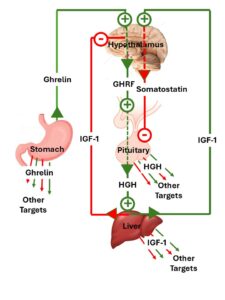
  • Fasting caused the stomach to release the peptide hormone ghrelin, which stimulates the hypothalamus to release growth hormone releasing factor (HGRF). Low blood glucose, which is associated with fasting, also causes the hypothalamus to release HGRF.
  • Sleep, especially the early stages of deep sleep, also stimulates the hypothalamus to release HGRF.
  • HGRF binds to the pituitary and stimulates it to release HGH. HGH binds to nearly every tissue and organ in the body and has multiple effects. I’ll just mention a few of them here. For example,
  • HGH binds to the liver and causes it to release insulin-like growth factor-1 (IGF-1).
  • IGF-1 opposes the effect of insulin. It causes the liver to release glucose into the bloodstream and the liver and other tissues to release fat into the bloodstream. This helps the body get the energy it needs during the fasting state. It also provides the energy needed for growth.
  • It also stimulates the growth of muscle and bone. This is part of the growth response to HGH.
  • And, of course, all these responses support tissue repair, metabolism, and growth during sleep.

These effects of HGH are short-lived. HGH is meant to be released in short pulses as needed by the body. Once the desired effects of HGH have been realized, its production is stopped and it is rapidly degraded.

  • IGF-1 and/or high levels of blood glucose and fatty acids cause the hypothalamus to halt production of GHRF and release a peptide hormone called somatostatin instead.
  • Somatostatin binds to the pituitary and blocks the release of HGH.

This description is a simplistic view of the effects and regulation of HGH. Ghrelin, HGH and IGF-1 each have multiple other targets within the body. They influence multiple metabolic reactions. And both HGH and IGF-1 are regulated by other peptide hormones, each responding to different physiological stimuli.

So, you can see where my analogy of a bucket brigade and spider web came from.

  • The bucket brigade is: stomach → ghrelin → hypothalamus → GHRF → pituitary → HGH → liver → IGF-1
  • The spider web is the multiple other targets of ghrelin, HGH, and IGF-1 and the other peptide hormones that stimulate the release HGH and IGF-1.

But the analogy of a bucket brigade and spider web is a static representation. Each peptide hormone is constantly changing over time. Perhaps a better analogy would be an intricate dance, with dance partners constantly changing, disappearing, and reappearing.

When I look at the intricacies of metabolic regulation it seems inescapable that there must be a divine creator. This could not have happened by chance. And metabolic regulation is just one aspect of the amazing human body.

The Allure Of Peptide Stacks 

When I think of the allure of peptide stacks, the image that comes to mind is the sirens of Greek Mythology. They were variously described as bird-like or mermaid-like creatures who sat on the shoreline and sang such enchanting songs that they lured sailors to their deaths on the rocky shoals just off the coast.

In Homer’s Odyssey, he wrote about Ulysses putting earplugs in his crew and tying himself to the mast, so they could safely pass by the sirens without being lured to their death.

In this section, I will talk about the allure of peptide stacks. I’ll discuss the rocks later.

Perhaps the best way to talk about the allure of peptide stacks is to give specific examples of some of the most popular peptides included in the stacks.

Tesamorelin is a synthetic analog of growth hormone releasing factor (GHRF) that stimulates the pituitary to release growth hormone (HGH), which stimulates the liver to release insulin-like growth factor-1 (IGF-1).

  • It is associated with muscle growth and fat loss, especially abdominal fat.

Ipamorelin is a synthetic peptide that mimics the effects of ghrelin. In short, it stimulates the hypothalamus to release GHRF, which stimulates the pituitary to release HGH, which stimulates the liver to release IGF-1.

  • It is associated with muscle growth, fat loss, recovery and healing.

CJC-1295 is another synthetic analog of GHRH.

  • It is associated with muscle growth, fat loss, improved recovery and healing, increased energy, and better bone density.

AOD-9604 is a synthetic analog of HGH. However, it is only a portion of the HGH molecule. It promotes weight loss but does not increase muscle mass or help with blood sugar control.

BPC-157 is a synthetic analog of a peptide found in gastric juice.

  • It is associated with wound healing, gastrointestinal health, and reduced inflammation.

TB-500 is a synthetic analog of thymosin-beta-4, a peptide released by platelets, macrophages, and smooth muscle cells after injury.

  • It is associated with accelerated wound healing, reduced inflammation, increased flexibility and mobility, and muscle growth.

Tirzepatide is a synthetic analog of GLP-1. Like other GLP-1 it improves blood sugar control and suppresses appetite, which can lead to significant weight loss.

  • The FDA approved version of tirzepatide is sold under the trade names Mounjaro and Zepbound. However, the tirzepatide you find in peptide stacks is neither FDA approved nor FDA regulated. I will discuss what the FDA says about this below.

Of course, the “magic” of peptide stacks is that several of these peptides are combined in each injection, so you are maximizing the health “benefits”.

And when you look at the claimed health benefits – weight loss, fat loss, muscle growth, reduced inflammation, energy, improved flexibility, and much more – the allure of peptides stacks is easy to understand.

But is there a downside to peptide stacks? It’s time to examine the rocks along the shoreline. But first I should share a cautionary tale about GLP-1 drugs because that helps us understand the potential problems with peptide stacks.

GLP-1 Drugs – A Cautionary Tale 

GLP-1 is a peptide secreted by specialized cells in the intestine every time we have a meal.

  • It activates satiety cells in our brain to tell us we are full and don’t need to eat any more.
  • It also slows the emptying of our stomach and slows the transit time of food in our intestine. That helps us maximize the absorption of nutrients from our meal. It also prolongs the physical feeling of fullness.

But this effect only lasts an hour or two. Soon GLP-1 is broken down, and other peptide hormones take over to keep nutrient levels steady in the bloodstream and prepare us for the next meal. This is part of that “intricate dance” of peptide hormones that I described earlier.

Some bright scientists working for pharmaceutical companies hypothesized that if GLP-1 levels remained high for days rather than hours they could achieve long-term appetite suppression, which would help with weight loss. They created synthetic versions of GLP-1 drugs which were stable in the bloodstream for up to a week and injected them into patients at levels 10 to 100 times higher than found in nature.

Because these drugs were developed by pharmaceutical companies, they went through the complete FDA approval and inspection process. This involves:

  • Double-blind, placebo-controlled clinical studies with hundreds of patients establishing that the drugs are safe and effective. These studies are of the quality that they are published in peer-reviewed scientific journals.
  • Careful review of the clinical studies by the FDA as part of the approval process.
  • Regular inspection of the drug production facilities by the FDA to assure adherence to the highest quality and purity standards.
  • Post-Market monitoring after approval to identify any safety concerns that were missed in the approval process. Doctors and pharmaceutical companies are required to report any serious side effects to the FDA.
    • During the approval process the drugs are tested in hundreds of patients. After approval the drugs are often used by millions of patients. Also, some side effects are cumulative and do not appear until the drugs have been used for a long time. It is not unusual to identify serious side effects through this post-marketing monitoring process.

Some of the side effects were predictable and were discovered in the original clinical trials of these drugs.

  • Because the GLP-1 analogs are present at higher levels and for much longer than natural GLP-1, stomach emptying and transit times through the intestine were delayed much more than normal.
    • This results in side effects like nausea, vomiting, diarrhea, constipation, bloating, and stomach pain.

However, some of the most-concerning side effects were only discovered through the post-marketing review process. These include.

  • Increased anxiety, depression, and suicidal thoughts. These side effects, especially suicidal thoughts, are of concern to anyone who already experiences some degree of anxiety and/or depression.
  • Loss of muscle mass. This is of concern to adults over the age of 50 because many of them already suffer from sarcopenia (age-related muscle loss).

Why is this a cautionary tale, you might ask? It’s cautionary because the common side effects and the more serious side effects for GLP-1 drugs were only discovered because of the FDA drug approval and post-marketing review procedures. Spoiler alert: None of the peptide stacks have gone through this kind of review process.

Are Peptide Stacks Safe? 

danger symbolThe question I posed at the beginning of this article is, “Are peptide stacks safe?” The short answer is, “We don’t know but there are several reasons to be cautious”.

#1: Peptide hormones are not natural (And it’s not nice to fool around with Mother Nature).

Specifically, the dosage and timing of peptide stacks is not natural. In my overview of peptide hormones, I talked about the “intricate dance” peptide hormones undergo as they control human metabolism.

In short, peptide hormones are under tight control by our bodies. They are produced in the right amount, at the right time, and for the right duration (They are degraded as soon as they have completed their mission). None of this is true for peptide stacks.

  • They are injected on a fixed schedule – not when our bodies need them (not the right time).
  • They are injected at doses designed to create much higher blood levels than the body produces under normal circumstances (not the right amount).
  • They are injected with frequencies designed to achieve high blood levels far longer than seen under normal circumstances (not the right duration).

And if we have learned anything from GLP-1 drugs, it is that when we create synthetic peptide hormones and inject them at the wrong time, at the wrong amount, and for the wrong duration we create side effects and some of those side effects may have significant health consequences.

#2: We have no idea whether peptide stacks are effective and safe. These are not FDA approved treatments. That means:

  • No human clinical trials have been performed to assess efficacy and safety of peptide stacks.
  • There is no post-marketing monitoring. Simply put, that means there is no system in place to monitor the frequency and severity of side effects.

#3: We have no idea whether peptide stacks are pure and potent. They are typically produced by compounding pharmacies or overseas manufacturers who may not use good manufacturing practices and quality controls.

The FDA has recently released a warning about one of these synthetic peptide hormones (tirzepatide) produced by compounding pharmacies and overseas manufacturers and available online. Their findings were that some of the samples they evaluated:

  • Had inaccurate label information.
  • Contained too little, too much, or no active ingredient at all.
  • Contained the wrong ingredients.
  • Contained harmful contaminants.

While this report focused on a single peptide, there is no reason to suspect that compounding pharmacies and overseas manufacturers would do a better job of producing other synthetic peptide hormones.

In short, it is buyer beware in the online peptide stack marketplace.

Would You Like To Be A Guinea Pig? 

To sum up the previous section:

  • Peptide stacks are not natural. This may result in unexpected side effects.
  • There are no published human clinical studies on peptide stacks. That means:
  • We have no idea whether they are safe and effective. There is no evidence that the claimed benefits are true, and we don’t know what the side effects might be.
  • No one is monitoring the manufacturing practices and quality controls for peptide stacks. That means:
    • We have no idea whether they are pure and potent. We don’t know how much of each peptide hormone they contain and whether the hormones are pure.

In short, using the peptide stacks currently available online is like volunteering to be a guinea pig in a long-term clinical trial with an uncertain outcome.

Now I know many of you prefer to go outside of the medical system, and it may seem to you that I am taking the side of the FDA and pharmaceutical companies.

That is not the case. I do get regular checkups, but my doctor is fully aware that I prefer natural approaches whenever possible. I’m 81, use no medications, and am in excellent health.

I choose natural approaches that are proven to be safe and effective. Peptide stacks are not there yet. I choose not to be a guinea pig.

But if the allure of peptide stacks still tempts you, the best advice I have seen is to work with licensed health professionals.

  • They normally research their sources and know which companies use good manufacturing practices and perform rigorous quality controls on their products.
    • It’s your responsibility to ask them how they choose which products they recommend.
  • They normally monitor you for side effects.
    • It’s your responsibility to ask them how they want to monitor you for side effects and to report any side effects to them as soon as you notice them.

The Bottom Line 

Peptide stacks are the latest “magic” weight-loss potion. When I think of the allure of peptide stacks, the image that comes to mind is the sirens of Greek Mythology. They were variously described as bird-like or mermaid-like creatures who sat on the shoreline and sang such enchanting songs that they lured sailors to their deaths on the rocky shoals just off the coast.

In this article I describe their allure. I also describe the rocky shoals.

  • Peptide stacks are not natural. This may result in unexpected side effects.
  • There are no published human clinical studies on peptide stacks. That means:
    • We have no idea whether they are safe and effective. There is no evidence that the claimed benefits are true, and we don’t know what the side effects might be.
  • No one is monitoring the manufacturing practices and quality controls for peptide stacks. That means:
    • We have no idea whether they are pure and potent. We don’t know how much of each peptide hormone they contain and whether the hormones are pure.

In short, using the peptide stacks currently available online is like volunteering to be a guinea pig in a long-term clinical trial with an uncertain outcome.

For more information on peptide stacks and the best recommendations if you choose to use them, read the article above.

These statements have not been evaluated by the Food and Drug Administration. This information is not intended to diagnose, treat, cure or prevent any disease.

 _____________________________________________________________________________

My posts and “Health Tips From the Professor” articles carefully avoid claims about any brand of supplement or manufacturer of supplements. However, I am often asked by representatives of supplement companies if they can share them with their customers.

My answer is, “Yes, as long as you share only the article without any additions or alterations. In particular, you should avoid adding any mention of your company or your company’s products. If you were to do that, you could be making what the FTC and FDA consider a “misleading health claim” that could result in legal action against you and the company you represent.

For more detail about FTC regulations for health claims, see this link.

https://www.ftc.gov/business-guidance/resources/health-products-compliance-guidance 

About The Author 

Dr. Chaney has a BS in Chemistry from Duke University and a PhD in Biochemistry from UCLA. He is Professor Emeritus from the University of North Carolina where he taught biochemistry and nutrition to medical and dental students for 40 years.

Dr. Chaney won numerous teaching awards at UNC, including the Academy of Educators “Excellence in Teaching Lifetime Achievement Award”.

Dr Chaney also ran an active cancer research program at UNC and published over 100 scientific articles and reviews in peer-reviewed scientific journals. In addition, he authored two chapters on nutrition in one of the leading biochemistry text books for medical students.

Since retiring from the University of North Carolina, he has been writing a weekly health blog called “Health Tips From the Professor”. He has also written two best-selling books, “Slaying the Food Myths” and “Slaying the Supplement Myths”. And most recently he has created an online lifestyle change course, “Create Your Personal Health Zone”. For more information visit https://chaneyhealth.com.

For the past 54 years Dr. Chaney and his wife Suzanne have been helping people improve their health holistically through a combination of good diet, exercise, weight control and appropriate supplementation.



Can A Healthy Diet Help You Lose Weight?

What’s New About This Study?

Author: Dr. Stephen Chaney 

fad dietsNew Year’s resolutions are just around the corner. Some of you will resolve to lose weight, and some of you will resolve to eat healthier. But can you do both?

Any restrictive diet will give you short-term weight loss. And weight loss will give you improvement in blood parameters that might signal a reduced risk of heart disease, stroke, and diabetes.

The operative word here is “might”. Long-term studies are required to determine whether a diet actually reduces the risk of chronic diseases.

So, the important question becomes, “Can weight loss diets be healthy long term”. For some of them, the answer is a clear no. Others are unlikely to be healthy but have not been studied long term, so we don’t know whether they are healthy or not.

That’s the dilemma most of you face this January. If most weight loss diets are unhealthy long term, do you have to choose between weight loss and good health when you make your New Year’s resolutions?

Maybe not. What if you started from the opposite perspective? What if you asked, “Can a healthy diet help you lose weight?” The study (S Schutte et al, American Journal of Clinical Nutrition, 115: 1-18, 2022)) I will review this week suggests it can.

How Was This Study Done?

clinical studyThis was a randomized controlled trial, the gold standard of clinical studies. The investigators recruited 100 healthy, abdominally obese men and women aged 40-70. At the time of entry into the study none of the participants:

  • Had diabetes.
  • Smoked
  • Had a diagnosed medical condition.
  • Were on a medication that interfered with blood sugar control.
  • Were on a vegetarian diet.

The participants were randomly assigned to:

  • A high-nutrient quality diet that restricted calories by 25%.
  • A low-nutrient-quality diet that restricted calories by 25%.
  • A continuation of their habitual diet.

The study lasted 12 weeks. The participants met with a dietitian on a weekly basis. The dietitian gave them all the foods they needed for the next week and monitored their adherence to their assigned diet. They were advised not to change their exercise regimen during the study.

At the beginning and end of the study the participants were weighed, and cholesterol, triglycerides, and blood pressure were measured.

Can A Healthy Diet Help You Lose Weight?

Vegetarian DietThis study compared a healthy diet to an unhealthy diet with the same degree of caloric restriction. And it compared both diets to the habitual diet of people in that area. This study was performed in the Netherlands, so both weight loss diets were compared to the habitual Dutch diet.

To put this study into context, these were not healthy and unhealthy diets in the traditional sense.

  • Both were whole food diets.
  • Both included fruits, vegetables, low-fat dairy, and lean meats.
  • Both restricted calories by 25%.

The diets were designed so that the “high-nutrient quality” diet had significantly more plant protein (in the form of soy protein), fiber, healthy fats (monounsaturated and omega-3 fats), and significantly less added sugars than the “low-nutrient-quality” diet.

When the investigators measured weight loss at the end of 12 weeks:

  • Participants lost significant weight on both calorie-restricted diets compared to the group that continued to eat their habitual diet.
    • That is not surprising. Any diet that successfully restricts calories will result in weight loss.
  • Participants on the high-nutrient quality diet lost 33% more weight than participants on the low-nutrient-quality diet (18.5 pounds compared to 13.9 pounds).
  • Participants on the high-nutrient quality diet lost 50% more inches in waist circumference than participants on the low-nutrient-quality diet (1.8 inches compared to 1.2 inches).
    • Waist circumference is a direct measure of abdominal obesity.

When the investigators measured blood pressure, fasting total cholesterol levels, and triglyceride levels at 12 weeks:

Prescription for good health overhead with stethoscope, healthy fresh food and exercise equipment, with copy space.
  • These cardiovascular risk factors were significantly improved on both diets.
    • Again, this would be expected. Any diet that causes weight loss results in an improvement in these parameters.
  • However, the reduction in total serum cholesterol was 2.5-fold greater in the high-nutrient quality diet group than in the low-nutrient-quality diet group.
  • The reduction in triglycerides was 2-fold greater in the high-nutrient quality diet group than in the low-nutrient-quality diet group.
  • The reduction in systolic blood pressure was 2-fold greater and the reduction in diastolic blood pressure was 1.67-fold greater in the high-nutrient quality diet group than in the low-nutrient-quality diet group.

The authors concluded, “Our results demonstrate that the nutrient composition of an energy-restricted diet is of great importance for improvements of metabolic health in an overweight, middle-aged population. A high-nutrient quality energy-restricted diet enriched with soy protein, fiber, monounsaturated fats, omega-3 fats, and reduced in fructose and other added sugars provided additional health benefits over a low-nutrient quality energy-restricted diet, resulting in greater weight loss…and promoting an antiatherogenic blood lipid profile.”

In short, participants in this study lost more weight and had a better improvement in risk factors for heart disease on a high-nutrient-quality diet than on a low-nutrient-quality diet. Put another way, a healthy diet can help you lose weight. Healthy eating helped them lose more weight and gave them greater improvement in their health.

What’s New About This Study?

Simply put this study confirms that:

  • Caloric restriction leads to weight loss, and…
  • Weight loss leads to improvement in cardiovascular risk factors like total cholesterol, triglycerides, and blood pressure.
    • This is not new. It is true for any diet that results in caloric restriction.

However, this study breaks new ground in that it shows a high-nutrient quality diet results in significantly better…

  • Weight loss and…
  • Reduction in cardiovascular risk factors….

…compared to a low-nutrient quality diet with the same degree of caloric restriction.

What Does This Study Mean For You?

As I said above, the distinction between a “high-nutrient-quality” diet and a “low-nutrient-quality” diet may not be Questioning Womanwhat you might have expected.

  • Both diets were whole food diets. Neither diet allowed sodas, sweets, and highly processed foods.
  • Both included fruits, vegetables, grains, and lean meats.
  • Both reduced caloric intake by 25%.
    • If you want to get the most out of your weight loss diet, this is a good place to start.

However, in this study the investigators designed their “high-nutrient-quality” diet so that it contained:

  • More plant protein in the form of soy protein.
    • In this study they did not reduce the amount of animal protein in the “high-nutrient-quality” diet. They simply added soy protein foods to the diet. I would recommend substituting soy protein for some of the animal protein in your diet.
  • More fiber.
    • The additional fiber came from substituting whole grain breads and brown rice for refined grain breads and white rice, adding soy protein foods, and adding an additional serving of fruit.
  • More healthy fats (monounsaturated and omega-3 fats) in place of saturated fats.
    • The additional omega-3s came from adding a fish oil capsule providing 700mg of EPA and DHA.
  • Less added sugar.

All these changes make great sense if you are trying to lose weight. 

ProfessorI would group these changes into 7 recommendations.

1) Follow a whole food diet. Avoid sodas, sweets, and highly processed foods.

2) Include all 5 food groups in your weight loss diet. Fruits, vegetables, whole grains, dairy, and lean proteins all play an important role in your long-term health.

3) Eat a primarily plant-based diet. My recommendation is to substitute plant proteins for at least half of your high-fat animal proteins. And this study reminds us that soy protein foods are a convenient and effective way to achieve this goal.

4) Eat a diet high in natural fiber. Including fruits, vegetables, whole grains, beans, nuts, seeds, and soy foods in your diet is the best way to achieve this goal.

5)  Substitute healthy fats (monounsaturated and omega-3 fats) for unhealthy fats (saturated and trans fats) in your diet. And this study reminds us that it is hard to get enough omega-3s in your diet without an omega-3 supplement.

6) Reduce the amount of added sugar in your diet. This is best achieved by eliminating sodas, sweets, and highly processed foods from the diet.

7) Finally, I would like to remind you of the obvious. No diet, no matter how healthy, will help you lose weight unless you cut back on calories. Fad diets achieve that by restricting the foods you can eat or the time you are allowed to eat. In the case of a healthy diet, the best way to do it is to cut back on portion sizes and choose foods with low caloric density.

The Bottom Line 

A recent study asked, “Can a healthy diet help you lose weight?” This study was a randomized controlled study, the gold standard of clinical studies. The participants were randomly assigned to:

  • A high-nutrient quality diet that restricted calories by 25%.
  • A low-nutrient-quality diet that restricted calories by 25%.
  • Continue with their habitual diet.

These were not healthy and unhealthy diets in the traditional sense.

  • Both were whole food diets.
  • Both included fruits, vegetables, low-fat dairy, and lean meats.
  • Both restricted calories by 25%.

The diets were designed so that the “high-nutrient quality” diet had significantly more plant protein (in the form of soy protein), fiber, healthy fats (monounsaturated and omega-3 fats), and significantly less fructose and other added sugars than the “low-nutrient-quality” diet.

At the end of 12 weeks:

  • Participants on the high-nutrient quality diet lost 33% more weight and had better cardiovascular markers than participants on the low-nutrient-quality diet.

The authors concluded, “Our results demonstrate that the nutrient composition of an energy-restricted diet is of great importance for improvements of metabolic health in an overweight, middle-aged population. A high-nutrient quality energy-restricted diet enriched with soy protein, fiber, monounsaturated fats, omega-3 fats, and reduced in fructose and other added sugars provided additional health benefits over a low-nutrient quality energy-restricted diet, resulting in greater weight loss…and promoting an antiatherogenic blood lipid profile.”

In short, participants in this study lost more weight and had a better improvement in risk factors for heart disease on a high-nutrient-quality diet than on a low-nutrient-quality diet. Put another way, a healthy diet can help you lose weight. Healthy eating helped them lose more weight and gave them greater improvement in their heart health.

For more details on this study, what this study means for you, and my 7 recommendations for a healthy weight loss diet, read the article above.

These statements have not been evaluated by the Food and Drug Administration. This information is not intended to diagnose, treat, cure, or prevent any disease.

 _____________________________________________________________________________

My posts and “Health Tips From the Professor” articles carefully avoid claims about any brand of supplement or manufacturer of supplements. However, I am often asked by representatives of supplement companies if they can share them with their customers.

My answer is, “Yes, as long as you share only the article without any additions or alterations. In particular, you should avoid adding any mention of your company or your company’s products. If you were to do that, you could be making what the FTC and FDA consider a “misleading health claim” that could result in legal action against you and the company you represent.

For more detail about FTC regulations for health claims, see this link.

https://www.ftc.gov/business-guidance/resources/health-products-compliance-guidance

_______________________________________________________________________

About The Author 

Dr. Chaney has a BS in Chemistry from Duke University and a PhD in Biochemistry from UCLA. He is Professor Emeritus from the University of North Carolina where he taught biochemistry and nutrition to medical and dental students for 40 years.

Dr. Chaney won numerous teaching awards at UNC, including the Academy of Educators “Excellence in Teaching Lifetime Achievement Award”.

Dr Chaney also ran an active cancer research program at UNC and published over 100 scientific articles and reviews in peer-reviewed scientific journals. In addition, he authored two chapters on nutrition in one of the leading biochemistry text books for medical students.

Since retiring from the University of North Carolina, he has been writing a weekly health blog called “Health Tips From the Professor”. He has also written two best-selling books, “Slaying the Food Myths” and “Slaying the Supplement Myths”. And most recently he has created an online lifestyle change course, “Create Your Personal Health Zone”. For more information visit https://chaneyhealth.com.

For the past 45 years Dr. Chaney and his wife Suzanne have been helping people improve their health holistically through a combination of good diet, exercise, weight control and appropriate supplementation.

Is It Too Late For Weight Loss Goals?

What Does This Study Mean For You?

Author: Dr. Stephen Chaney

It’s almost the New Year. And with the New Year comes New Year’s resolutions. Weight loss is the second most popular New Year’s resolution, trailing only exercising more.

But if you are middle-aged and have been overweight most of your adult life, is it too late to lose weight? Has the damage to your health already been done? Has that ship already sailed?

There is good evidence that people who maintain an ideal weight throughout their adult years are healthier and live slightly longer than people who are overweight.

There is also good evidence that weight loss at any age provides short-term improvements to biomarkers of good health such as:

  • lower blood pressure.
  • lower cholesterol levels.
  • better blood sugar control.
  • reduction in chronic inflammation.

But surprisingly there are very few studies to show that weight loss results in long-term health benefits, especially for people who have been overweight through their 40s and 50s. To date there is only a single Chinese study of midlife weight loss, and that study suggested that health benefits were only apparent if the weight loss was maintained for 30 years or more.

The study (TE Strandberg et al, JAMA Network Open, 2025, 8(5); e2511825) I will describe today was designed to fill that gap.

How Was This Study Done?

Clinical StudyThe investigators used data from three large studies that followed healthy individuals in midlife for 10 years or more. None of these studies were designed as weight loss studies, but they measured weight, chronic disease incidence or mortality at multiple points during the study.

The first study was the Whitehall II Study (WHII). This study enrolled 10,308 British civil servants (Whitehall is the district where the British Civil Service is located) between 1985 and 1988 and is still ongoing. The data for this investigation was taken from clinical examinations that occurred around 1991 and 2013.

  • These exams provided information on weight and height, BMI, and risk factors like smoking, high blood pressure, high cholesterol, and insulin resistance and/or high blood sugar (indicative of prediabetes or diabetes).
  • The data set was linked to National Health Service records for diagnosed chronic diseases (type 2 diabetes, heart attack, stroke, cancer, asthma, and chronic obstructive pulmonary disease).

The study I am describing today included 4118 men and women aged 37-42 years (average = 39 years) from the WHII dara set who were free of chronic disease at the time of the 1991 clinical evaluation.

The second study was the Helsinki Businessmen Study (HBS). In this study 3490 White men, mostly businessmen and executives aged 38-45 years (average 42 years) underwent voluntary health checkups starting in 1964. Cardiovascular risk factors were assessed and the men received health education on diet, exercise, and weight control. Between 1974 and 1975 these men were offered a voluntary follow-up health checkup, and 2335 men completed both checkups.

  • In this study, BMI was measured at both health checkups and all-cause mortality data were obtained from the National Health Registry.

The third study was the Finnish Public Sector Study (FPS). In this study 77,111 men and women in public service were enrolled in 2,000. BMI was measured in 4-year intervals and health data were collected from the European Health Records. The data for this investigation used data from 16,696 men and women who were 34-43 (average age = 39) at the first assessment, had data from at least 3 consecutive assessments, and had no diagnosed chronic disease at the first assessment.

  • As with the WHII study, BMI and chronic disease were measured in at least 2 consecutive assessments.

The average follow-up for the three studies was 22.8 years between the first and last assessment.

In all three cases the study participants were divided into 4 groups:

  • Those who remain overweight (defined as a persistent BMI>25).
  • Those who gained weight – they went from a healthy weight to being overweight (defined as BMI<25 to BMI>25).
  • Those who lost weight – they went from overweight to a healthy weight (defined as BMI>25 to BMI<25).
    • The average weight loss was 11.5 pounds or 6.5% of body weight and was remarkably consistent in all 3 studies.
  • Those who remained at a healthy weight (defined as a persistent BMI<25).

In the WHII and FPS studies, weight differences were correlated with the diagnosis of a chronic disease between the first and last assessment.

In the HBS study, weight differences were correlated with all-cause mortality between the first and last assessment.

In all three cases, the data were corrected for major risk factors like smoking, high blood pressure, high cholesterol, and insulin resistance and/or high blood sugar.

In terms of the risk of developing a chronic disease (WHII and FPS studies) or risk of dying (HBS study) the always overweight group was assigned a risk of 1.0 and the other groups were compared to it.

The authors noted that all three studies were performed before surgical and pharmacological interventions were available. And people with pre-existing conditions were excluded from these studies, so disease-related weight loss was unlikely. Thus, the authors felt that the group who lost weight probably did so because of a conscious effort to change their diet and lifestyle, although this was not specifically measured in these studies.

Is It Too Late For A Weight Loss Goal?

If you remember the introduction, this question did not refer to short-term biomarkers of health. Multiple studies have shown that weight loss at any age will improve blood sugar control and lower blood pressure, cholesterol, and inflammation.

This study asked whether weight loss can be shown to have long-term health benefits – namely reduction in the risk of chronic diseases and increase in longevity.

And more specifically, it asked whether weight loss in middle age (the age of participants in these studies ranged from 39 to 42) can be shown to have long-term health benefits – even if they had been overweight for most of their adult life up to that point.

Or as the title of this segment suggested, “Is it too late to set a weight loss goal if you are middle aged.”

The answer from these studies was clear cut:

  • In the WHII study the risk of developing a chronic disease decreased by 48% compared to the always overweight group.
    • And when diabetes was excluded from the analysis the decreased risk was still significant (42%). This is important because diabetes is the most prevalent obesity related disease. The means that weight loss also significantly reduced the risk of the other chronic diseases measured in this study – such as cardiovascular disease and cancer.
  • In the FPS study the risk of developing a chronic disease decreased by 57% compared to the always overweight group.
  • Again, when diabetes was excluded from the analysis the decreased risk was still significant (45%).
  • Finally, in the HBS study, the risk of premature death decreased by 19% compared to the always overweight group.

In each of these studies:

  • The group that gained weight in their middle years did almost as poorly as the always overweight group.

The authors concluded, “Findings from 3 prospective cohort studies support maintaining a healthy weight (BMI<25) throughout life as the best option for overall health. [However] sustained midlife weight loss compared with persistent overweight was associated with a decreased risk of [diabetes and other chronic diseases] and decreased all-cause mortality.”

Simply put, this analysis of three long-term studies shows that weight loss can help you be healthier and live longer in your golden years – even if you waited until you were middle-aged to lose the weight.

What Does This Study Mean For You?

cruise shipAt the beginning of this article I posed the questions: If you are middle-aged and have been overweight most of your adult life, is it too late to set a weight loss goal this January? Has the damage to your health already been done? Has that ship already sailed?

This study shows that the answer to this question is clearly, No. It’s not too late. Sustained weight loss can still provide significant long-term benefits.

Three major studies show that sustained weight loss initiated by adults in their forties can reduce the risk of chronic disease by around 50% and reduce the risk of mortality by about 20% twenty years later. The authors of this study said that evidence from one of those studies suggests that the long-term health benefits are still apparent 30 years later.

Of course, these studies represent a single time point – weight loss initiated at age 40.

  • The benefits of sustained weight loss may wane if you delay longer, but we don’t know because those studies have not been done. However, it is likely that sustained weight loss at any age will have significant long-term health benefits.
  • The benefits of sustained weight loss may be even greater if you lose weight at a younger age. Again, we can’t predict how much greater the benefit will be because those studies also haven’t been done yet.
  • However, as the authors of this study said, “Maintaining a healthy weight throughout life is the best option for overall health.” That conclusion is supported by multiple studies.

There are a couple of other important points.

  • These benefits (a 50% reduction in chronic diseases and a 20% increase in longevity) do not require massive weight loss. The subjects in these studies only lost around 11-12 pounds (6.5% of their weight). You have previously heard that as little as 5% weight loss has significant short-term benefits. This study confirms that statement and indicates if the weight loss is sustained, it will significantly improve long-term health outcomes.
  • Weight loss has a bigger effect on quality of life (absence from chronic diseases) than it does on longevity. That is true of every healthy lifestyle improvement that has been studied. I’m sorry to say that losing weight will not help you live as long as Methuselah. But it will help you live your last years in good health.

Of course, losing weight is easy. There are many fad diets that can help you do that. But keeping the weight off is hard. This is where every diet eventually fails. Maintaining weight loss requires lifestyle change. It also requires a change in mindset. It requires that you change how you think about food and how you think about your ability to control what you eat.

This is why I created my online lifestyle change course, “Create Your Personal Health Zone”. If this is the year you have resolved to lose weight and keep it off, check out my course.

What About Weight Loss Surgery and GLP-1 Drugs? 

Weight loss surgery and GLP-1 drugs result in faster and greater weight loss than diet and lifestyle changes alone. For example, clinical trials show that GLP-1 drugs can result in 15-20% body weight loss within the first year. [Subsequent studies suggest that real-life weight loss is often much smaller because of drug discontinuation due to side effects or cost.]

But assuming the 15-20% number, the question becomes whether these interventions have the same or greater benefits than the 6.5% body weight loss due to diet and lifestyle change seen in these studies.

The short answer is that we don’t know because we don’t have any long-term studies of these interventions. However, the authors of this study were skeptical. They said, “It remains uncertain whether the long-term benefits observed in our study extend to these interventions, where greater weight loss may be accompanied by a concurrent and potentially significant loss of lean body mass, which could pose challenges over time.”

I have discussed the importance of muscle mass for health and longevity in a previous issue  of “Health Tips From the Professor”. This article shows why the accelerated loss of muscle mass seen with GLP-1 drugs is so concerning.

The Bottom Line 

The time to set your New Year’s goals is just a few weeks away. If you are middle-aged and have been overweight most of your adult life, is it too late to set a weight loss goal this January? Has the damage to your health already been done? Has that ship already sailed?

A recent study examined that question. The study used data from three earlier studies on the long-term effects of sustained weight loss (20 years or more). These studies show that sustained weight loss initiated by adults in their 40s reduces the risk of:

  • Chronic disease by around 50%.
  • Mortality by about 20%.
  • Data from one of those studies suggests that the long-term health benefits were still apparent 30 years later.

For more information on this study, what it means for you, and where weight loss surgery and GLP-1 drugs fit into the picture, read the article above.

These statements have not been evaluated by the Food and Drug Administration. This information is not intended to diagnose, treat, cure, or prevent any disease.

 ______________________________________________________________________________

My posts and “Health Tips From the Professor” articles carefully avoid claims about any brand of supplement or manufacturer of supplements. However, I am often asked by representatives of supplement companies if they can share them with their customers.

My answer is, “Yes, as long as you share only the article without any additions or alterations. In particular, you should avoid adding any mention of your company or your company’s products. If you were to do that, you could be making what the FTC and FDA consider a “misleading health claim” that could result in legal action against you and the company you represent.

For more detail about FTC regulations for health claims, see this link.

https://www.ftc.gov/business-guidance/resources/health-products-compliance-guidance

______________________________________________________________________

About The Author 

Dr. Chaney has a BS in Chemistry from Duke University and a PhD in Biochemistry from UCLA. He is Professor Emeritus from the University of North Carolina where he taught biochemistry and nutrition to medical and dental students for 40 years.  Dr. Chaney won numerous teaching awards at UNC, including the Academy of Educators “Excellence in Teaching Lifetime Achievement Award”. Dr Chaney also ran an active cancer research program at UNC and published over 100 scientific articles and reviews in peer-reviewed scientific journals. In addition, he authored two chapters on nutrition in one of the leading Biochemistry textbooks for medical students.

Since retiring from the University of North Carolina, he has been writing a weekly health blog called “Health Tips From the Professor”. He has also written two best-selling books, “Slaying the Food Myths” and “Slaying the Supplement Myths”. And most recently he has created an online lifestyle change course, “Create Your Personal Health Zone”. For more information visit https://chaneyhealth.com.

For the past 53 years Dr. Chaney and his wife Suzanne have been helping people improve their health holistically through a combination of good diet, exercise, weight control and appropriate supplementation.

The Breakfast Cereal Scandal

The Race To The Bottom Continues

Author: Dr. Stephen Chaney

Factory FarmBig Food Inc is not your friend. Big Food Inc follows the latest trends and is only too happy to give consumers what they want.

You want low-fat? No problem. You want low-carb, natural, organic, non-GMO, gluten-free, Paleo, Keto? No problem. However, their motive is a healthy bottom line, not your health.

They know humans are hardwired to desire sugar, salt, and fat. Foods with those ingredients sell. Convenience sells. At the end of the day, they are more interested in sales than they are in your health.

They don’t want you to buy whole foods and cook them from scratch. They don’t make money from whole foods. They want you to buy their pre-packaged convenience foods instead.

A prime example of how Big Food Inc of how Big Food takes a healthy food and turns it into a nutrition disaster is what I call “The Breakfast Cereal Scandal”.

The Great Breakfast Cereal Scandal 

It’s hard to believe that breakfast cereals started as health food, but they did. Dr. John Harvey Kellogg was a Seventh-day Adventist who took over the Western Reform Health Institute in 1877 and renamed it the Battle Creek Sanitarium.

It gained prominence as a health resort where people went to be healed through a combination of physical activity and healthy eating.

Dr. Kellogg invented Corn Flakes in 1878 as a healthier alternative to the high-fat breakfasts most Americans were consuming at that time. Corn Flakes had less than 5% sugar. It was a great idea for its time, but what happened next is nothing short of appalling.

It is a perfect example of how Big Food Inc leads us astray. The graphic above that I created illustrates what the major food companies have done to breakfast cereals over the decades since then.

It all started with Corn Flakes. Then other food companies started bringing out competing products. Cereals like Wheaties and Rice Krispies were still pretty healthy, but they had a bit more sugar, which gave them better consumer appeal.

As soon as the food companies figured out that sugar increased their sales, the race was on. The percentage sugar increased to 40%, then to 50%, and now to almost 60%.

No sane parent would fill their child’s cereal bowl half full of sugar, but that is exactly what they are doing when they feed them some of today’s breakfast cereals. The food companies are hiding the outrageous sugar content of their cereals with slogans like “Just a touch of honey.”

Speaking of deception, can anyone tell me how you label a product with 20% sugar 100% Bran Flakes?

I created the graphic above in the 1990’s. At that time, I assumed breakfast cereals couldn’t get much worse. But I was wrong. Big Food’s “race to the bottom” continues.

A recent study (A Zhao et al, JAMA Network Open, 8(5): e2511699, 2025) examined the nutritional content of children’s cereals introduced to the US market between 2010 and 2023.

How Was This Study Done? 

Clinical StudyThe investigators used data from the Mintel Global New Products Database, which tracks new product launches for foods and beverages. From this database they identified 1,200 new children’s cereals introduced in the US market from 2010 through 2023.

Children’s cereals were defined as breakfast cereal products explicitly marketed (through packaging or branding) to children between 5 and 12 years old.

Using product label information, they compared the total fat, sodium, total carbohydrate, sugar, protein, and dietary fiber per serving and analyzed the trends between 2010 and 2023.

The Race To The Bottom Continues

If the previous decline in nutritional value of breakfast cereals between the 1870s and 1970s can be described can be described as “appalling”, the latest results can only be described as scandalous.

For newly introduced children’s breakfast cereals in the 13 years between 2010 and 2023,

  • Fat content increased 34%.
  • Sodium (salt) content increased 32%.
  • Sugar content increased by 11%.
  • Protein content decreased by 11%.
  • Fiber content decreased by 30%.

The authors of the study concluded, “Analysis of newly launched children’s RTE (ready to eat) cereals from 2010 to 2023 revealed concerning nutritional shifts: notable increases in fat, sodium, and sugar along decreases in protein and fiber.

Children’s cereals contain high levels of added sugar, with a single serving exceeding 45% of the American Heart Association’s daily recommended limit for children.

These trends suggest a potential prioritization of taste over nutritional quality in product development, contributing to childhood obesity and long-term cardiovascular health risks.”

In short, despite the American public’s increasing interest in a healthy diet, Big Food is still prioritizing sales over healthy foods. The race to the bottom continues.

What Does This Mean For You?

The take home lesson is clear. Don’t trust Big Food with your health. Their priority is sales, not your health.

Even when they claim their processed foods are healthy because they have removed fat or sugar, they have simply replaced them with a witch’s brew of chemicals so they look, taste, and smell delicious.

And breakfast cereals are just the tip of the iceberg. For most Americans 60-70% of their diet comes from highly processed foods.

If you value health, the choice is clear. Choose whole, unprocessed food whenever possible.

The Bottom Line

The dramatic decline in the nutritional quality of breakfast cereals between the 1870s and 1970s is well documented. By the turn of the century most breakfast cereals had gotten so bad, you might assume they couldn’t get any worse. You would be wrong. Big Food’s race to the bottom continues.

A recent study evaluated the nutritional value of newly introduced children’s breakfast cereals between 2010 and 2023. In those 13 years,

  • Fat content increased 34%.
  • Sodium (salt) content increased 32%.
  • Sugar content increased by 11%.
  • Protein content decreased by 11%.
  • Fiber content decreased by 30%.

The authors of the study said, “These trends suggest a potential prioritization of taste over nutritional quality in product development, contributing to childhood obesity and long-term cardiovascular health risks.”

I agree. And this is just the tip of the iceberg. For most Americans 60-70% of their diet comes from highly processed foods.

If you value health, the choice is clear. Choose whole, unprocessed food whenever possible.

For more details on this study and what it means for you, read the article above.

These statements have not been evaluated by the Food and Drug Administration. This information is not intended to diagnose, treat, cure or prevent any disease.

_____________________________________________________________________________

My posts and “Health Tips From the Professor” articles carefully avoid claims about any brand of supplement or manufacturer of supplements. However, I am often asked by representatives of supplement companies if they can share them with their customers.

My answer is, “Yes, as long as you share only the article without any additions or alterations. In particular, you should avoid adding any mention of your company or your company’s products. If you were to do that, you could be making what the FTC and FDA consider a “misleading health claim” that could result in legal action against you and the company you represent.

For more detail about FTC regulations for health claims, see this link.

https://www.ftc.gov/business-guidance/resources/health-products-compliance-guidance

 _______________________________________________________________________

About The Author 

Dr. Chaney has a BS in Chemistry from Duke University and a PhD in Biochemistry from UCLA. He is Professor Emeritus from the University of North Carolina where he taught biochemistry and nutrition to medical and dental students for 40 years.

Dr. Chaney won numerous teaching awards at UNC, including the Academy of Educators “Excellence in Teaching Lifetime Achievement Award”.

Dr Chaney also ran an active cancer research program at UNC and published over 100 scientific articles and reviews in peer-reviewed scientific journals. In addition, he authored two chapters on nutrition in one of the leading biochemistry text books for medical students.

Since retiring from the University of North Carolina, he has been writing a weekly health blog called “Health Tips From the Professor”. He has also written two best-selling books, “Slaying the Food Myths” and “Slaying the Supplement Myths”. And most recently he has created an online lifestyle change course, “Create Your Personal Health Zone”. For more information visit https://chaneyhealth.com.

For the past 53 years Dr. Chaney and his wife Suzanne have been helping people improve their health holistically through a combination of good diet, exercise, weight control and appropriate supplementation.

 

How To Live To 117

The Secrets To A Long And Healthy Life

Author: Dr. Stephen Chaney

SecretsToday’s “Health Tip” is a bit unusual. It’s not based on a clinical study with thousands of participants. It’s not even a clinical study based on dozens of people. It’s a case study of one individual.

The study was published in Cell Reports Medicine, but I learned about it in our local newspaper (Yes, the professor still reads the newspaper in addition to published clinical studies. I don’t rely on the internet for all my information.)

I chose this case study because it was so interesting. It is based on the life of a woman, Maria Branyas Morera, who lived in good health to the age of 117. In her later years she asked her physician, Dr. Manel Estellar – chair of genetics at University of Barcelona’s School of Medicine, to study her and see if he could find out why she lived so long.

The results were fascinating. And while it could be argued that the data from a single individual may be misleading, the conclusions from her doctor’s investigation were consistent with the results of the much larger “Blue Zone” study of centenarians living in regions where a high percentage of people lived to 100 and beyond. I will talk about that study below.

How To Live To 117 

Maria Branyas was born in San Francisco in 1907 of Spanish immigrant parents. Her father died when she was 8 and her mother moved back to Spain to be with her family. She married and had a son who died at age 52 and two daughters who are now 92 and 94.

Part of the reason for her longevity was that she took good care of herself:

  • She followed a Mediterranean diet.
  • She did not smoke or drink.
  • She walked an hour every day until her 90s. Eventually she had to cut back because of physical limitations but remained as active as possible. When walking became difficult she entered a nursing home.
  • She kept mentally active. For example, she played the piano every day until she was 112.

Part of the reason was socioeconomic.

  • She and her family lived in the same town.
  • She had a close circle of friends and family for emotional support.
  • And as her friends died, she made new ones.
    • This is something that is often not discussed in the aging literature. As you age and your friends die off, it is easy to become isolated, which increases the likelihood of depression and death. The decision to make new friends in your latter years is a choice.

And part of the reason was genetic.

  • In the words of her doctor, “She won the genetic lottery with respect to genetic variants that protect against risk factors like high cholesterol, dementia, heart disease, and cancer.”
    • However, we need to remember that genetics is not everything. Other members of her immediate family shared the same genetic traits, yet died prematurely from Alzheimer’s, cancer, tuberculosis, and heart disease.
    • I like to say, “Genetics loads the gun. Lifestyle pulls the trigger”. In short, both contribute to longevity.

The final part of the puzzle goes beyond genetics.

  • She had an immune system that was unusually strong for someone her age and inflammation that was unusually low for someone her age. Those were probably due to:
    • Epigenetic modifications to her DNA that are associated with younger individuals.
      • Quick review: Epigenetic modifications affect gene activity and are controlled by diet, lifestyle, and the environment.
      • We can never know exactly what caused her youthful epigenetics, but she did have a very healthy diet and lifestyle.
    • She had a microbiome associated with low inflammation.
      • Quick Review: The term microbiome refers to all the microorganisms in our gut and elsewhere on our body. Our microbiome is strongly affected by what we eat and other lifestyle factors such as body weight.
      • In her case, one example of her anti-inflammatory microbiome was a high abundance of Bifidobacteria, probably a direct result of the three yogurts she ate each day.

The Secrets To A Long And Healthy Life 

blue zonesThis brings me to the “Blue Zone” study. I have talked about it in a previous issue of “Health Tips From The Professor”. Let me give you the short version here.

Dan Buettner is a journalist who was fascinated by the topic of longevity. He identified five regions from around the world where an unusually high percentage of people lived into their 100s. He then put together a team of top scientists in the fields of demographics, social anthropology and statistics to study the characteristics of centenarians in each of these regions and got National Geographic to fund the study.

You can see his book on the left, and I will summarize the main conclusions of his study below. Of course, the most important question is how the information garnered from Maria Branyas compares with the conclusions of the “Blue Zone” study. I will indicate that below.

#1: They engage in moderate intensity exercise every day. The answer for Maria is a clear, “Yes”.

#2: They stop eating before they are full. We don’t know this for sure, but she did appear to be at ideal weight towards the end of her life.

#3: They eat a mostly plant-based diet. She ate a Mediterranean diet which qualifies.

#4: They have a libation with their meals. For Maria, this is a “No”.

#5: They have a purpose in their life. We have no information on this aspect of Maria’s life.

#6: They set aside time for relaxation with friends and family. Clearly, this was important for Maria. As old friends died off, she searched for new ones.

#7: They participate in a spiritual community. We have no information on this aspect of Maria’s life.

#8: They put family first. Clearly, family was very important to Maria.

#9: They surround themselves with communities that share their values. It also appears that this was important to Maria.

In short, in his study of Maria’s secrets to longevity Dr. Esteller approached the question of longevity from a different perspective than Dan Buettner. It is regrettable that he didn’t use the data accrued by the “Blue Zone” study as a starting point for his study. But it is clear that Maria epitomized many of the longevity characteristics identified in the “Blue Zone” study.

And, of course, Dr. Esteller’s expertise is human genetics, and he added important information about the importance of genetics, epigenetics, and our microbiome in influencing longevity.

The Bottom Line

The world’s oldest human recently died at age 117. Before she died, gave her doctor permission to study her and determine how she was able to live so long. In short, she asked her doctor to use her life to understand how to help other people live a long and healthy life.

That study has recently been published. The results showed:

  • Her lifestyle mirrored many of the lifestyle characteristics that were associated with longevity in the previous “Blue Zone” study of centenarians (people living to 100 and beyond).
  • This study also identified genetic, epigenetic, and microbiome factors associated with longevity

For more details about the study, read the article above.

These statements have not been evaluated by the Food and Drug Administration. This information is not intended to diagnose, treat, cure or prevent any disease.

_____________________________________________________________________________

My posts and “Health Tips From the Professor” articles carefully avoid claims about any brand of supplement or manufacturer of supplements. However, I am often asked by representatives of supplement companies if they can share them with their customers.

My answer is, “Yes, as long as you share only the article without any additions or alterations. In particular, you should avoid adding any mention of your company or your company’s products. If you were to do that, you could be making what the FTC and FDA consider a “misleading health claim” that could result in legal action against you and the company you represent.

For more detail about FTC regulations for health claims, see this link.

https://www.ftc.gov/business-guidance/resources/health-products-compliance-guidance

________________________________________________________________________

About The Author 

Dr. Chaney has a BS in Chemistry from Duke University and a PhD in Biochemistry from UCLA. He is Professor Emeritus from the University of North Carolina where he taught biochemistry and nutrition to medical and dental students for 40 years.

Dr. Chaney won numerous teaching awards at UNC, including the Academy of Educators “Excellence in Teaching Lifetime Achievement Award”.

Dr Chaney also ran an active cancer research program at UNC and published over 100 scientific articles and reviews in peer-reviewed scientific journals. In addition, he authored two chapters on nutrition in one of the leading biochemistry text books for medical students.

Since retiring from the University of North Carolina, he has been writing a weekly health blog called “Health Tips From the Professor”. He has also written two best-selling books, “Slaying the Food Myths” and “Slaying the Supplement Myths”. And most recently he has created an online lifestyle change course, “Create Your Personal Health Zone”. For more information visit https://chaneyhealth.com.

For the past 53 years Dr. Chaney and his wife Suzanne have been helping people improve their health holistically through a combination of good diet, exercise, weight control and appropriate supplementation.

 

Vitamin D Just Got More Complicated

The Hidden Flaws Of Vitamin D Studies

Author: Dr. Stephen Chaney

vitamin dIf I can paraphrase a famous saying, the question is, “To D or not to D.” On the one hand, you are told that vitamin D is a miracle supplement. It cures all your ailments. On the other hand, you are told that vitamin D supplements are worthless. They are a waste of money.

The problem is that vitamin D studies are all over the map. Some have shown beneficial effects of vitamin D supplementation. Others have come up empty. That allows “experts” to cherry pick the studies that support their bias. No wonder you are so confused.

If you have read my books or previous issues of “Health Tips From the Professor”, you know there is no such thing as a perfect clinical study. They all have their flaws. Sometimes the flaws are obvious. But sometimes we never know the flaws. We just know those studies are outliers.

So, let’s delve a little deeper into vitamin D metabolism and the hidden flaws that may have prevented some studies from showing the benefits of vitamin D supplementation. Then we will look at new data suggesting that vitamin D supplementation is more complicated than anyone imagined.

A Vitamin D Primer 

Vitamin D MetabolismLet’s start with a brief review of vitamin D metabolism.

  • Vitamin D metabolism starts in the skin when 7-dehydrocholesterol (a metabolite of cholesterol) is converted to cholecalciferol (vitamin D3) in a reaction requiring sunlight.
    • In this sense, vitamin D3 is a hormone produced by the body. It only became an essential nutrient (vitamin) when Homo sapiens migrated to Northern latitudes and started to spend most of their time indoors.
  • Vitamin D then travels to the liver where it is converted to 25-hydroxyvitamin D. This is the most abundant form of vitamin D in the blood.
  • 25-hydroxyvitamin D next travels to the kidney where it is converted to 1,25-dihydroxyvitamin D. This is the active form of vitamin D. It is the form that binds to the vitamin D receptor.

Vitamin D was first discovered as an essential nutrient that was needed for adequate bone mineralization. It prevented rickets in children and osteomalacia in adults.

  • The role of vitamin D in building strong bones is well established.

However, a few decades ago, it was discovered that vitamin D receptors were found in many other tissues including skin, immune system, heart, muscle, brain and nerves, and fat cells. This revolutionized our understanding of vitamin D’s role in the body.

  • This led to suggestions that vitamin D played a role in immunity and autoimmune diseases, brain function and mood, heart health, muscle and fat metabolism, and much more. Here is where it started to get confusing.
    • Some studies showed positive results. They found that vitamin D played an important role in each of these areas, and that vitamin D supplementation was beneficial
    • Other studies showed negative results. They found no benefit of vitamin D supplementation.

So, the question arose, “Were the negative studies flawed?” In some cases, the answer was a clear, “Yes”. The flaws were easy to identify. In other cases, no obvious flaw could be discovered.

However, that has changed dramatically in recent years when some “hidden flaws” were discovered that invalidated many of the negative studies. That’s the topic of my next section.

The Hidden Flaws Of Vitamin D Studies 

flawsMost previous studies simply measured vitamin D intake:

  • In dietary studies, vitamin D intake was measured using diet questionnaires.
  • In supplement studies, vitamin D intake was measured by tracking whether the participants took all the supplement pills they were provided.

It was assumed that a certain dose of vitamin D produced the same blood levels of 1,25-dihydroxyvitamin D in everyone.

Now we know that assumption was flawed. The absorption and conversion of vitamin D to 1,25-dihydroxyvitamin D varies widely from individual to individual.

That means that every vitamin D study that relied on vitamin D intake without measuring its effect on blood 1,25-dihydroxyvitamin D levels is flawed. Their conclusions may or may not be true. Their evidence is unreliable.

I’m willing to give the authors of these studies some grace. They didn’t purposely design a flawed study. At the time they designed their studies we didn’t know about individual variability in the conversion of vitamin D to 1,25-dihydroxyvitamin D.

However, there is another “hidden flaw” I’m less willing to excuse. There have been some recent papers that measured 1,25-dihydroxyvitamin D levels before and after supplementation and have concluded that vitamin D supplementation had no benefit.

However, they failed to mention that the group they were studying already had adequate 1,25-dihydroxyvitamin D levels in their blood prior to supplementation. Under those circumstances there is no reason to expect that vitamin D supplementation will have any significant benefit.

This is an obvious flaw. But I call it a “hidden flaw” because the authors hid it. They didn’t mention it in their abstract or conclusion.

That’s dishonest. Most people just read the abstract and conclusions, and that is the information that is shared in the media. Very few people read the study to see if the abstract and conclusions are accurate.

As if this weren’t complicated enough, our understanding of the effects of vitamin D just got a lot more complicated.

Vitamin D Just Got More Complicated

Clinical StudyTwo recent reports indicate that predicting who will benefit from vitamin D supplementation may be even more complicated than we thought.

Report #1 suggests that there is significant individual variability in how people respond to blood levels of 1,25-dihydroxyvitamin D. If true, this adds another level of complexity to studies of vitamin D supplementation.

  • Not only do the studies need to measure the 1,24-dihydroxyvitamin D levels before and after supplementation for everyone in the study.
  • But they would also need to measure the individual response to 1,25-dihydroxyvitamin D.

This report (C Carlberg and A Haq, Journal of Steroid Biochemistry & Molecular Biology, 175: 12-17, 2018) summarized the results of two clinical studies and used that information to develop what they called the, “Personal Vitamin D Response Index”.

  • The first study supplemented elderly men (average age = 71) for 5 months during the Finnish winter (when blood 1,25-dihydroxyvitamin D levels are lowest) with 0, 1600 IU, or 3200 IU per day.
  • The second study supplemented young (average age = 35) men and women with a single high dose of vitamin D (80,000 IU) and followed them for 30 days.

At the beginning and end of each study:

  • Blood levels of 1,25-dihydroxyvitamim D were measured.
  • The activity of 24 vitamin D-responsive genes was measured. (These are genes whose activity is controlled by a vitamin D receptor and whose activity was known to respond to vitamin D.)
  • In addition, more than 100 clinical and biochemical parameters that might be affected by vitamin D levels were measured. Of these, 12 were found to respond to vitamin D supplementation.

The authors of this report combined all 36 vitamin D-responsive biomarkers (24 genes and 12 biochemical parameters) into a single screening panel they called the “personal vitamin D response index” and correlated this index with the change in 25-dihydroxyvitamin D levels for each individual.

They discovered significant individual variability in how the subjects in these studies responded to increases in their 1,25-dihydroxyvitamin D levels. For example:

  • They were able to divide the study participants into low, mid, and high responders to an increase in 1,25-dihydroxyvitamin D levels.
    • In the first study 23.9% were low responders, 50.7% were mid responders, and 25.4% were high responders.
    • In the second study 28.6% were low responders, 31.4% were mid responders, and 40% were high responders.

This is a confounding variable for vitamin D studies because the authors of this report estimated:

  • Low responders might require 1,25-dihydroxyvitamin D blood levels of 75-100 nmol/L to see a benefit of supplementation. Most studies do not attain 1,25-dihydroxyvitamin D levels that high, so low responders would not appear to benefit from supplementation.
  • High responders may already experience optimal benefits of vitamin D at 1,25-dihydroxyvitamin D levels that are generally considered as inadequate. So, supplementation would offer no apparent benefit for this group either.
  • Only mid responders might be expected to show a clear benefit from vitamin D supplementation.

The authors concluded, “Individuals can be distinguished into high, mid, and low responders to vitamin D via measuring vitamin D sensitive molecular parameters…Thus, we suggest that the need for vitamin D supplementation depends on the vitamin D status relative to the personal vitamin D response index of an individual rather than on the vitamin D status alone.”

Report #2 (P Maissan and C Carlberg, Nutrients, 17, 1204, 2025) suggests that the benefits of vitamin D supplementation might vary depending on the time of day the supplement was taken.

This phenomenon is known as circadian rhythm, which describes how time influences physiological and behavioral processes. A little background information is in order.

  • We have a “biological clock” that is reset every day by sunlight exposure. Hormone levels rise and physiological processes increase and decrease during the day in response to this biological clock.
  • For the most part, you have no knowledge that this is going on in your body but let me share one example you are probably aware of.
    • Some people suffer from “seasonal affective disorder” (SAD). It is a type of depression associated with the winter months, especially in regions with short days and long nights. For these individuals, bright lights that mimic sunlight are often an effective therapy.
  • Some aspects of circadian rhythm are mediated by the pineal gland which produces melatonin. Others are affected by the hypothalamus.
  • Since vitamin D synthesis requires sunlight, it makes sense that some vitamin D-responsive genes would also display a circadian rhythm.

This report used the data from the single high-dose vitamin D study described above. They found that:

  • Of 361 known vitamin D responsive genes, 87 of them show a clear circadian rhythm.
  • For 14 of these genes, there was significant individual variability in the response to vitamin D supplementation.
    • Group 1 (36% of the population) had significantly higher expression of these genes following vitamin D supplementation than Group 2.

The authors concluded, “Overall, our findings emphasize the circadian nature of vitamin D target gene regulation and highlight interindividual variability in the…responses to vitamin D3 supplementation. These insights have important implications for personalized vitamin D3 supplementation strategies, suggesting that optimal dosing regimens may need to consider both circadian biology [the time of day the supplement is taken] and individual responsiveness to vitamin D.”

What Does This Mean For Clinical Studies?

Confusion Clinical StudiesThe latest reports explain why vitamin D studies are so confusing – why some studies show benefits of vitamin D supplementation and other studies come up empty. Simply put, it’s because vitamin D metabolism is so complicated. Let me walk you through the complications.

1) There is significant individual variability in the conversion of vitamin D to its active 1,25-dihydroxyvitamin D form.

  • If vitamin D supplementation does not increase 1,25-dihydroxyvitamin D levels into the adequate range, it is likely that the results will be negative – meaning no benefit of vitamin D supplementation will be observed.
  • If 1,25-dihydroxyvitamin D levels are already in the adequate range prior to supplementation, the results may also be negative.
  • Fortunately, it is easy to determine blood levels of 1,25-dihydroxyvitamin D in study participants, and most good vitamin D studies are starting to do that.

But vitamin D metabolism just got more complicated. If recent studies are correct:

2) There may be significant individual variability in the biological response to 1,25-dihydroxyvitamin D.

  • If someone is a low responder, supplementation at the usual levels of vitamin D is unlikely to result in high enough 1,25-dihydroxyvitamin D levels to give a response.
  • If someone is a high responder, they will probably have maxed out their response without supplementation, so adding a vitamin D supplement is unlikely to provide any benefit.
  • Sorting participants in clinical studies into low, mid, and high responders is possible, but not easy. Currently the process of sorting individuals into these categories is based on 26 biomarkers. There is no single biomarker that predicts the vitamin D response level for any individual.

3) There may be a circadian rhythm for some beneficial effects of vitamin D. If this observation is confirmed by future research, the time of day vitamin D supplements should be taken may be important.

What Does This Mean For You?

By this point, you are probably more confused than ever. So, let me sum it up for you.

  • Many benefits of vitamin D supplementation are unclear. Some studies show benefits. Others come up empty. “Experts” cherry pick studies that support their beliefs.
  • Vitamin D metabolism is complicated. And each new study appears to introduce a new layer of complexity onto our understanding of how vitamin D works.
  • Many of the negative vitamin D studies were done before we understood the complexities of vitamin D metabolism or did not take known complexities into account.
  • But just because many of the negative studies are flawed doesn’t mean all the claims for vitamin D supplementation are true. Every study has its flaws – both positive and negative studies.

So, here is my advice to you.

#1: Be a cautiously optimistic consumer.

  • If your doctor or some internet guru tells you vitamin D supplementation is worthless, don’t believe them. But also, don’t believe claims for miraculous cures with vitamin D supplements.
    • We have fairly strong evidence that vitamin D supports healthy bones, a strong immune system, strong muscles, and a healthy brain. If you discover any other benefits of vitamin D supplementation, consider them to be unexpected side benefits.

#2: Base your intake of vitamin D on your blood 1,25-dihydroxyvitamin D levels. The NIH says that 1,25-dihydroxyvitamin D levels of:

  • <30 nmol/L indicate vitamin D deficiency
  • 30 to <50 nmol/L indicate vitamin D insufficiency.
  • >50 nmol/L are adequate.
  • >125 nmol/L may be linked to adverse effects.

#3: Because you don’t know whether you are a low, mid, or high responder to 1,25-dihydroxyvitamin D, you may want to shoot for a 1,25-dihydroxyvitamin D level of somewhat greater than 50 nmol/L (the study said that low responders may need as much as 75-100 nmol/L).

  • Personally, I would aim for no more than 60-80 nmol/L because I would not want to risk vitamin D toxicity. I realize that 125 nmol/L is the lower limit set for toxicity, but I prefer to err on the side of caution.

#4: Be aware that there may be a circadian rhythm to the effectiveness of your vitamin D supplement.

  • Sunlight is required for synthesis of vitamin D. So, if there is a circadian rhythm to vitamin D effectiveness, vitamin D supplements might be more effective if taken in the morning than at night.

The Bottom Line

Why do so many studies on the benefits of vitamin D supplementation come up empty? Perhaps it’s because many investigators don’t understand the complexities of vitamin D metabolism. For example:

1) There is significant individual variability in the conversion of vitamin D to its active 1,25-dihydroxyvitamin D form.

  • This has been well characterized, and the best vitamin D studies are starting to incorporate 1,25-dihydroxyvitamin D measurements into their study design.

And recent studies have added to the complexity of vitamin D metabolism. Our understanding of vitamin D just got a lot more complicated. For example, these studies suggest that:

2) There may be significant individual variability in the biological response to 1,25-dihydroxyvitamin D levels.

3) There may be a circadian rhythm for some beneficial effects of vitamin D.

  • These observations have yet to be incorporated into clinical studies of vitamin D supplementation and may explain why some existing studies have failed to find beneficial effects of vitamin supplementation.

For more details on these studies and what they may mean for you, read the article above.

These statements have not been evaluated by the Food and Drug Administration. This information is not intended to diagnose, treat, cure or prevent any disease.

 _____________________________________________________________________________

My posts and “Health Tips From the Professor” articles carefully avoid claims about any brand of supplement or manufacturer of supplements. However, I am often asked by representatives of supplement companies if they can share them with their customers.

My answer is, “Yes, as long as you share only the article without any additions or alterations. In particular, you should avoid adding any mention of your company or your company’s products. If you were to do that, you could be making what the FTC and FDA consider a “misleading health claim” that could result in legal action against you and the company you represent.

For more detail about FTC regulations for health claims, see this link.

https://www.ftc.gov/business-guidance/resources/health-products-compliance-guidance

______________________________________________________________________

About The Author 

Dr. Chaney has a BS in Chemistry from Duke University and a PhD in Biochemistry from UCLA. He is Professor Emeritus from the University of North Carolina where he taught biochemistry and nutrition to medical and dental students for 40 years.

Dr. Chaney won numerous teaching awards at UNC, including the Academy of Educators “Excellence in Teaching Lifetime Achievement Award”.

Dr Chaney also ran an active cancer research program at UNC and published over 100 scientific articles and reviews in peer-reviewed scientific journals. In addition, he authored two chapters on nutrition in one of the leading biochemistry text books for medical students.

Since retiring from the University of North Carolina, he has been writing a weekly health blog called “Health Tips From the Professor”. He has also written two best-selling books, “Slaying the Food Myths” and “Slaying the Supplement Myths”. And most recently he has created an online lifestyle change course, “Create Your Personal Health Zone”. For more information visit https://chaneyhealth.com.

For the past 53 years Dr. Chaney and his wife Suzanne have been helping people improve their health holistically through a combination of good diet, exercise, weight control and appropriate supplementation.

 

Can Omega-3s Improve Weight Loss Diets?

The Unexpected Benefits of Omega-3s

Author: Dr. Stephen Chaney 

Weight LossOmega-3s have become the latest “super food”. Wherever you get your news, you are constantly seeing articles about the latest “miracle results” obtained by adding omega-3s to your diet.

There is good evidence that omega-3s:

  • Lower blood pressure.
  • Reduce triglycerides (fatty particles in your bloodstream).
  • Reduce chronic inflammation.
  • Slow the buildup of plaque in the arteries (which combined with lowering blood pressure, reducing triglycerides, and reducing inflammation likely lowers heart disease risk).
  • Reduce the risk of depression and anxiety.
  • Improve neurodevelopment (cognitive function, memory, and learning) in infants and children.
  • Reduce inflammation in joints.

In addition, omega-3s may:

  • Reduce the risk of cognitive decline and Alzheimer’s as we age.
  • Reduce the risk of arrhythmias (irregular heartbeats).
  • Protect against age-related macular degeneration.
  • Improve immune function.
  • Reduce the risk of certain cancers.
  • Improve blood sugar regulation.

Because obesity is associated with chronic inflammation and inflammation is associated with many of the health risks associated with obesity, the authors of the study I will be describing today (J Torres-Vanegas et al. Healthcare, 13:103, 2025) decided to look at the effect of supplementation with 1.8 grams of long-chain omega-3s (fish oil capsules) on the beneficial effects of a weight loss diet in a double-blind, placebo-controlled, 8 week study.

There were two interesting wrinkles to this study.

  • Previous studies have suggested that a 5:1 ratio of omega-6 fats to omega-3 fats is optimal for these effects, but the typical American has an omega-6 to omega-3 ratio of between 15:1 and 20:1. So, the authors designed their study so that participants achieved a 5:1 omega-6 to omega-3 ratio.
  • Because short-chain omega-3s (found in plant foods) have little effect on inflammation, they were used as the “active” placebo instead of omega-6 fats.
    • In short, both groups received an omega-3 supplement. The “intervention” group received long-chain omega-3s from fish oil, and the “placebo control” group received short-chain omega-3s from vegetable oils (chia and flaxseed oil).

[Note: Short-chain omega-3s have many health benefits. However, their conversion to long-chain omega-3s in the human body is very inefficient, and they do not have all the health benefits associated with long-chain omega-3s.]

How Was This Study Done?

clinical studyThe authors of this study enrolled 40 obese (BMI≥30) adults (40% females, 60% males), aged 30-50 in a randomized, active placebo-controlled, double-blind weight loss study for 8 weeks.

The estimated caloric expenditure was determined for each participant prior to the study. Based on that estimate calories were reduced by 200 calories/day for the first 4 weeks and 400 calories/day for weeks 5-8.

Dietitians designed a recipe book of 3 main meals and 2 snacks for each day. The diets were designed to achieve the caloric restriction described above and to achieve a 5:1 ratio of omega-6 to omega-3.

Participants completed a 3-day food frequency questionnaire including 2 weekdays and 1 weekend day at the start of the study and at week 8. Participants were guided in this by a dietitian using food models to help them assess portion sizes.

Half of the participants were given a long-chain omega-3 supplement containing 1080 mg of EPA plus 720 mg of DHA (1,800 mg total) from fish oil. The other half of the participants were given a short-chain omega-3 supplement consisting of 1,600 mg of ALA from chia and flaxseed oil. The dietary assessments showed that both groups were successful in achieving a 5:1 omega-6 to omega-3 ratio when the supplements were included in the calculation.

Can Omega-3s Improve Weight Loss Diets? 

InflammationBecause both groups had equal caloric restriction. Therefore, as expected, both groups experienced decreased:

  • Body weight.
  • BMI.
  • Percent body fat.
  • Total cholesterol.
  • Triglycerides.
  • VLDL.

However, when the scientists measured markers of inflammation, a different picture was observed.

  • IL-6 (Interleukin 6) and RvD1 (resolving D1) are inversely associated with inflammation (They increase when inflammation decreases).
    • IL-6 and RVD1 increased only in the group supplementing with long-chain omega-3s (EPA + DHA).
  • IL-10 and MCP-1 (monocyte chemoattractant protein-1) are directly associated with inflammation (They decrease when inflammation decreases).
    • IL-10 and MCP-1 decreased only in the group supplementing with long-chain omega-3s.
  • These differences were highly significant.

The authors concluded, “A diet supplemented with marine n-3 (long-chain omega-3s from fish oil) improves inflammatory markers by increasing systemic levels of Resolvin D1 and IL-10 and decreasing IL-6 and MCP-1.”

“These results could provide a guide for future nutritional intervention strategies aimed to…reduce chronic low-grade inflammation by considering the omega-6 to omega-3 ratio content as a necessary calculation for a proper diet.”

[I would note that both diets achieved an omega-6 to omega-3 ratio of 5:1, but only the diet containing long-chain omega-3s reduced inflammation. So, the author’s statement is only true for long-chain omega-3s.]

In short, weight loss is known to help reduce chronic inflammation. Both groups lost weight, but only the group supplementing with long-chain omega-3s had a significant improvement in inflammatory markers.

  • These data suggest that supplementation with long-chain omega-3s while on a weight loss diet greatly enhances the reduction in inflammation associated with weight loss.
  • These data also suggest that short-chain omega-3s do not significantly reduce inflammation.
  • Both findings are consistent with earlier studies.

The Unexpected Benefits Of Omega-3s 

The study also found that:

  • Abdominal obesity was reduced by 35% in the long-chain omega-3 group compared to 5.6% in the short-chain omega-3 group, and these differences were highly significant.
  • Weight loss for men in the long-chain omega-3 group was 9.25 pounds compared to 4.8 pounds in the short-chain omega-3 group, and these differences were significant.
  • Reductions in percent body fat and waist circumference were also greater for men in the long-chain omega-3 group, but these differences were not statistically significant in this small study.

In short, these data suggest that long-chain omega-3 supplementation may have enhanced weight loss. This is an intriguing finding that needs to be confirmed by future studies.

What Does This Study Mean For You? 

Question MarkThis study is a randomized, double-blind, placebo-controlled trial, which is the gold standard for clinical studies. But it is also a very small study, so we need to carefully consider the validity of the study.

It had three major findings.

#1: Omega-3s enhance the anti-inflammatory effect of weight loss diets.

#2: This effect is only seen for the long-chain omega-3s EPA and DHA found in fish oil. The short-chain omega-3 ALA found in vegetable oils and other plant foods had no significant effect on inflammation.

The anti-inflammatory effect of long-chain omega-3s and the lack of an effect of short-chain omega-3s on inflammation are consistent with many previous studies. The only novel aspect of this study was the finding that the same effects occurred when omega-3 supplementation was added to a weight loss diet.

That is an important consideration because many weight loss diets focus on plant foods or red meats. Fish are often missing from the diet plan and long-chain omega-3 supplementation is seldom recommended.

That’s unfortunate because chronic inflammation is associated with obesity. And chronic inflammation increases the risk of heart disease, diabetes, cancer, and all the “itis” diseases. Omega-3 supplementation should be an important part of any weight loss diet.

#3: This study also suggests that long-chain omega-3 supplementation may increase the effectiveness of weight loss diets.

At this point I consider this finding as possible, but not probable. Previous studies have reported conflicting results. Some studies have suggested omega-3s aid weight loss. Others have found no effect.

We need many more studies before I would be ready to recommend omega-3 supplementation as an aid to weight loss. However, omega-3s have many proven benefits. If they also happen to make weight loss diets more effective, this would be an unexpected benefit.

The Bottom Line 

A recent study looked at the effect of omega-3 supplementation during a weight loss diet. The study had three main findings.

#1: Omega-3 supplementation enhances the anti-inflammatory effect of weight loss diets.

#2: This effect is only seen for the long-chain omega-3s EPA and DHA found in fish oil. The short-chain omega-3 ALA found in vegetable oils and other plant foods had no significant effect on inflammation.

#3: This study also suggests that long-chain omega-3 supplementation may increase the effectiveness of weight loss diets.

For more information on this study and what it means for you, read the article above.

These statements have not been evaluated by the Food and Drug Administration. This information is not intended to diagnose, treat, cure or prevent any disease.

____________________________________________________________________________

My posts and “Health Tips From the Professor” articles carefully avoid claims about any brand of supplement or manufacturer of supplements. However, I am often asked by representatives of supplement companies if they can share them with their customers.

My answer is, “Yes, as long as you share only the article without any additions or alterations. In particular, you should avoid adding any mention of your company or your company’s products. If you were to do that, you could be making what the FTC and FDA consider a “misleading health claim” that could result in legal action against you and the company you represent.

For more detail about FTC regulations for health claims, see this link.

https://www.ftc.gov/business-guidance/resources/health-products-compliance-guidance

 ____________________________________________________________________

About The Author 

Dr. Chaney has a BS in Chemistry from Duke University and a PhD in Biochemistry from UCLA. He is Professor Emeritus from the University of North Carolina where he taught biochemistry and nutrition to medical and dental students for 40 years.

Dr. Chaney won numerous teaching awards at UNC, including the Academy of Educators “Excellence in Teaching Lifetime Achievement Award”.

Dr Chaney also ran an active cancer research program at UNC and published over 100 scientific articles and reviews in peer-reviewed scientific journals. In addition, he authored two chapters on nutrition in one of the leading biochemistry text books for medical students.

Since retiring from the University of North Carolina, he has been writing a weekly health blog called “Health Tips From the Professor”. He has also written two best-selling books, “Slaying the Food Myths” and “Slaying the Supplement Myths”. And most recently he has created an online lifestyle change course, “Create Your Personal Health Zone”. For more information visit https://chaneyhealth.com.

For the past 53 years Dr. Chaney and his wife Suzanne have been helping people improve their health holistically through a combination of good diet, exercise, weight control and appropriate supplementation.

 

Health Tips From The Professor