Can Red Meat Be Good For You?

Everything You Wanted To Know About Red Meat 

Author: Dr. Stephen Chaney 

ArgumentNutrition is a bit like politics and religion. Everyone has an opinion, and there is not much grace for those with different opinions.

And everything is black or white. There is no middle ground. Red meat is a perfect example. Cardiologists tell us the saturated fat and cholesterol in red meat increases our risk of heart disease. Oncologists tell us red meat increases our risk of colon, breast, prostate, and pancreatic cancer.

The association with red meat consumption and colon cancer is so strong that the World Health Organization has classified red meat as a probable carcinogen.

  • Vegans and vegetarians tell you to avoid red meat at all costs and substitute plant proteins in its place.
  • Keto and carnivore diet enthusiasts tell you that red meat is healthy if you avoid any plant foods containing carbohydrates (which is most plant foods).

Who is right? Is red meat good for you or bad for you? As usual, the answer is somewhere in the middle. We also need to stop looking at individual foods and start looking at the overall diet. We need to ask how our overall diet alters the effect of red meat on our health.

But first, let’s explore:

  • Why red meat is good for us.
  • Why red meat is bad for us.
  • How diet can help us minimize the bad and maximize the good.

I call this section, “Everything You Wanted To Know About Red Meat”.

Everything You Wanted To Know About Red Meat

thumbs upWhy Red Meat Is Good For Us.

  • Red meat is an excellent source of protein, iron, and vitamin B12. Plus, the iron in red meat is primarily found in the heme molecule and heme iron is absorbed much more efficiently than other forms of iron.
  • Red meat contains creatine, which powers our muscles. You can think of creatine molecules as little power packs that are charged when we eat and release a burst of energy whenever we begin to exercise.
  • Red meat contains carnitine, which helps our muscles use fat as an energy source. This is particularly important for heart muscle.
  • But both creatine and carnitine also have a dark side, which I will discuss below.

Why Red Meat Is Bad For Us.thumbs down

When we think about heart disease:

  • The traditional view is that saturated fat and cholesterol are the problem, and we can reduce our risk of heart disease simply by choosing leaner cuts of meat.
  • Other experts feel the link between red meat and heart disease is more complicated. For example, some recent studies have suggested that the carnitine in red meat can be converted by gut bacteria to TMAO, and TMAO increases our risk of heart disease. I have discussed this in a previous issue of “Health Tips From the Professor”.
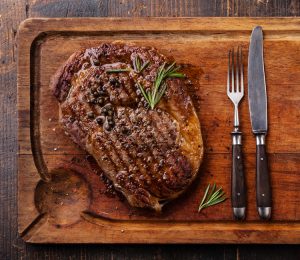
SteakWhen we think about cancer:

  • When fat and juices from the meat drip onto an open flame, carcinogenic polyaromatic hydrocarbons are formed that stick to the surface of the This can be reduced, but not eliminated, by lower fat meat choices.
  • When red meat is cooked at high temperatures, amino acids in the meat combine with creatine, which is found in all red meats, to form carcinogenic heterocyclic amines. This can be reduced, but not eliminated, by cooking the meat at lower
  • The nitrates and nitrites used as preservatives in many processed meats react with amino acids from the meat to form carcinogenic N-nitrosamines in our intestines.
  • Heme iron, which is found in all red meats, also combines with amino acids in the meat to form carcinogenic N-nitroso compounds in our intestines. This mechanism is inherent in all red meats and cannot be eliminated by choosing lower fat cuts or cooking at lower

Finally, diets high in red meat increase several markers of inflammation, and inflammation increases the risk of both heart disease and cancer.

How Can Diet Help Us Minimize The Bad And Maximize The Good?

Question MarkI’m going to start this section with a provocative statement: “Plant foods are the antidote to all the bad effects of red meat.” Let me explain.

Plant foods are an excellent source of:

  • Antioxidants
  • Polyphenols and other phytonutrients
  • Fiber
  • Plus, the fiber and phytonutrients found in plant foods support the growth of beneficial gut bacteria.

Here is where it gets very complex:

  • Beneficial gut bacteria convert some of the foods we eat into compounds that are absorbed into the bloodstream and improve blood sugar control, reduce cholesterol synthesis, and reduce inflammation.
  • Polyphenols support the growth of certain gut bacteria, and those gut bacteria can convert these polyphenols into compounds that can be absorbed from the intestine. This necessary for many polyphenols to exert their beneficial effects in the body.
  • And, as you might expect, the gut bacteria of meat eaters and vegetarians is very different.

With this in mind, let’s come back to the concept of plant foods being the antidote for red meat.
strong heartIn terms of heart health,

  • You may remember that I said above that the carnitine in red meat can be converted by gut bacteria into TMAO which increases the risk of heart disease. The operative wording here is “can be”. It turns out this only happens with the gut bacteria of habitual meat eaters. Here is the study that showed that:
    • When habitual meat eaters were fed an 8-ounce sirloin steak, both carnitine and TMAO increased in their blood and urine.
    • When vegans were fed the same 8-ounce steak, only carnitine increased. No TMAO was detected.
    • When the meat eaters were treated with an antibiotic that wiped out their gut bacteria prior to eating the steak, no TMAO was detected. This showed it was the gut bacteria in the meat eaters that were responsible for converting carnitine to TMAO.
  • Fiber from whole grains, fruits, and vegetables binds to cholesterol and flushes it out of the intestine, preventing its absorption into the bloodstream.
  • Plant-based diets are anti-inflammatory.
CancerIn terms of cancer,

  • The fiber found in fruits, vegetables and whole grains binds to polyaromatic hydrocarbons and heterocyclic amines and flushes them out through the intestines.
  • Polyaromatic hydrocarbons require activation by the liver before they become carcinogenic. Indoles and isothiocyanates found in broccoli, cabbage, and other cruciferous vegetables inhibit the enzymes that catalyze this activation.
  • Antioxidants found in fruits, vegetables and whole grains reduce the formation of N-nitroso compounds in the intestines.
  • A largely plant-based diet appears to favor a population of intestinal bacteria that is less likely to convert compounds in meat into cancer-causing chemicals. [Note: This is a new area of research, so the data supporting this mechanism of cancer prevention are less definitive than for the other three ]

These observations are based studies designed to identify the mechanisms by which plant-based diets negate the bad effects of red meat. For example, let me share a recent study (T Onali et al, Journal of Nutritional Biochemistry, 141, 109906, 2025) asking whether berries could negate the bad effects of adding red meat (pork) to a typical Finnish diet.

How Was This Study Done?

Clinical StudyThis study was conducted by a group of scientists at the University of Helsinki. They recruited 43 adults aged 20-68 and divided them into two groups. Each group was told to continue with their regular diet, except that consumption of any red meat or berries other than the foods they were provided with was prohibited.

  • Each group was given an extra 5 ounces of pork (minced pork, pulled pork, pork strips from fillet, cold cuts, sausages, and bacon) to eat each day.
  • One group was also given 1 cup of berries (bilberries, strawberries, cloudberries, raspberries, lingonberries, and blackcurrant) to eat each day.
    • Note: These are the foods most familiar to people from Finland in each category.
  • They were provided with these foods on a weekly basis.
  • This intervention portion of the study lasted four weeks.

Dietary intake was assessed in each group using 3-day food records (two weekdays and one weekend day) at the beginning and the end of the study.

Participants in the study collected stool samples on two consecutive days at the beginning and end of the study. These stool samples were analyzed in the following ways:

  • Bacterial DNA was extracted from the stool samples and used to determine which gut bacteria were present in the stools.
  • The stool samples were homogenized and filtered to:
    • Determine the polyphenols and polyphenol metabolites present in the stool samples.
    • Determine whether low molecular weight compounds present in the stool samples were able to inhibit the growth of human colon cancer cells in cell culture.

What Did The Study Show?

Questioning WomanThe dietary analysis found that total calories, protein, carbohydrate, fat, and saturated fat did not change significantly in either group. This indicates that the study participants likely substituted the pork they were given for other high-fat meats they were eating before the study.

However, in the group that was also given berries fiber, vitamin C, vitamin E, manganese, and several polyphenols increased significantly. This suggests that study participants likely substituted the berries for less healthy foods they were eating before the study.

The study found that:

  • In the red meat-only group the relative abundance of beneficial Roseburia and Fecalibacterium gut bacteria was decreased. This did not occur in the red meat + berries group.
  • In the red meat + berries group the concentration of several beneficial polyphenols and polyphenol metabolites was increased.
  • In the red meat + berries group, the filtrate obtained from stool samples inhibited the growth of several human colon cancer cell lines in cell culture experiments. These experiments did not identify which berry polyphenols were responsible for inhibiting the growth of cancer cells. It also did not determine whether the polyphenols came directly from the berries or were created when gut bacteria modified the polyphenol(s).

But these experiments did show that something from a high berry diet inhibited colon cancer cell growth.

The author’s concluded, “Berry supplementation to a diet high in red and processed meat led to berry-derived polyphenolic metabolites in the feces, beneficially modified gut microbiota, inhibited the viability of colon cancer cells, collectively suggesting potential in cancer prevention.

The difference seen in gut metabolism was probably induced by the higher intakes of dietary fiber, vitamin C and E, manganese, and polyphenols by the berry diet.”

Can Red Meat Be Good For You?

This study is one piece of the puzzle to help us understand the effect of diet on the benefits and risks of red meat consumption. Here is what I mean by that.

We can think of scientific investigations in terms of solving a large puzzle with lots of little pieces. If you are a puzzle enthusiast, you know the best way to solve a complicated puzzle is to put the edge pieces together first and then fill in the rest of the puzzle.

In this context, the studies showing that small amounts of red meat are not harmful in the context of healthy, primarily plant-based diets like the DASH and Mediterranean diets are the edge of the puzzle. Smaller studies that define the mechanisms of this effect and provide proof these mechanisms are accurate are the interior pieces that fill out the puzzle. This study is one of those interior pieces.

So, what does that mean for you? It means that diet context is important.

Most of the studies showing the bad effects of red meat have been done in the context of the typical American diet. That might consist of an 8 or 12-ounce steak with fries and either a soft drink or iced tea. Fruits and vegetables, if present at all, are minimal. Dessert usually consists of some sugary treats.

In this context, red meat is bad for you.

In contrast, consider the place red meat occupies in a primarily plant-based diet. Red meat becomes a condiment rather than the main course. Think of 2-3 ounces of red meat as part of a green salad or stir fry with a variety of greens and other vegetables. You might have beans, whole grains, or another vegetable to round out your plate. Dessert would be whatever fruit is in season. And your beverage might be water, milk, or herbal tea.

In this context, the bad effects of red meat disappear. In short, there are no bad foods, only bad diets.

I started this blog with the question, “Can red meat be good for you?”  You may be wondering if I have answered that question.

At the beginning of this article, I listed the good things about red meat, namely that it is a good source of protein, iron, vitamin B12, carnitine, and creatine.

If you remove the bad, only the good remains. So, the answer is, “Yes. In the right diet context red meat can be good for you”.

The Bottom Line

You have heard that red meat is bad for you. It increases your risk of heart disease and cancer. You should avoid it at all costs.

But is that true? In the article above I:

  • Describe both the benefits and risks of red meat.
  • Discuss how plant foods negate many of the bad effects of red meat.
  • Share a study providing proof of that concept.
  • Share how you can enjoy the benefits of red meat while avoiding the bad effects of red meat consumption.

For more details read the article above.

These statements have not been evaluated by the Food and Drug Administration. This information is not intended to diagnose, treat, cure or prevent any disease.

______________________________________________________________________________

My posts and “Health Tips From the Professor” articles carefully avoid claims about any brand of supplement or manufacturer of supplements. However, I am often asked by representatives of supplement companies if they can share them with their customers.

My answer is, “Yes, as long as you share only the article without any additions or alterations. In particular, you should avoid adding any mention of your company or your company’s products. If you were to do that, you could be making what the FTC and FDA consider a “misleading health claim” that could result in legal action against you and the company you represent.

For more detail about FTC regulations for health claims, see this link.

https://www.ftc.gov/business-guidance/resources/health-products-compliance-guidance

______________________________________________________________________

About The Author 

Dr. Chaney has a BS in Chemistry from Duke University and a PhD in Biochemistry from UCLA. He is Professor Emeritus from the University of North Carolina where he taught biochemistry and nutrition to medical and dental students for 40 years.

Dr. Chaney won numerous teaching awards at UNC, including the Academy of Educators “Excellence in Teaching Lifetime Achievement Award”.

Dr Chaney also ran an active cancer research program at UNC and published over 100 scientific articles and reviews in peer-reviewed scientific journals. In addition, he authored two chapters on nutrition in one of the leading biochemistry text books for medical students.

Since retiring from the University of North Carolina, he has been writing a weekly health blog called “Health Tips From the Professor”. He has also written two best-selling books, “Slaying the Food Myths” and “Slaying the Supplement Myths”. And most recently he has created an online lifestyle change course, “Create Your Personal Health Zone”. For more information visit https://chaneyhealth.com.

For the past 45 years Dr. Chaney and his wife Suzanne have been helping people improve their health holistically through a combination of good diet, exercise, weight control and appropriate supplementation.


The Estrogenic Myth

What Does Increase Breast Cancer Risk? 

Author: Dr. Stephen Chaney 

breaking newsIt seems like every time you turn around there are new headlines warning us that a particular food or supplement increases your risk of cancer. If you believe all those headlines, there would be little you could eat. You might starve to death trying to avoid eating anything that increases your risk of cancer.

So, it’s important to ask which of those warnings are true and which are just myths.

For example, a few days ago, a friend called me and said, “I just heard that resveratrol is estrogenic and causes breast cancer. Should I read the labels of the herbal supplements I take and avoid anything with resveratrol in it.”

I assured her that this was just a myth. The likelihood that resveratrol and related polyphenols cause breast cancer is very low. And if she was concerned about breast cancer, there were much more important things to worry about.

But as I started to explain why it was a myth, I realized the explanation was complex. I was able to explain it to my friend in a 20-minute discussion. But it was then I realized I needed to write a “Health Tips From the Professor” article to help explain it to the general public.

Why Are We Concerned?

Questioning WomanYou might be asking, “Why is this such a big deal? Why do we care if something has estrogenic properties?” Let me start at the beginning.

When I first started teaching medical students in 1972, hormone replacement therapy (a combination of estrogen and progesterone) was thought to be a safe and effective treatment for menopausal symptoms and post-menopausal bone loss, and it was very widely prescribed.

That practice came to a screeching halt in 2002 when the Woman’s Health Initiative study showed that it increased the risk of breast, endometrial, and ovarian cancer. Today,

  • The hormone composition of hormone replacement therapy has been changed.
  • It is only prescribed for severe menopausal symptoms. And drugs are the treatment of choice to reduce post-menopausal bone loss.
  • It is prescribed for the shortest possible time to limit exposure.

These simple changes in hormone replacement therapy represent the single most important intervention for reducing breast cancer risk in the past 50 years. Yes, you heard that right. These changes were more effective than any other medication or preventative strategy for reducing the number of women developing and dying from breast cancer.

This lesson made a big impression on the medical community. So, it is easy to understand why anything resembling estrogen is immediately suspected of increasing the risk of breast cancer. But the reality is far more complicated. So, it’s time for another of my “Biochemistry 101” segments.

Biochemistry 101: What Does Estrogenic Mean?

professor owlLet’s start at the beginning with what polyphenols are. They comprise a diverse group of compounds with these common features.

  • If you look at their structures, they contain multiple rings (A chemist would tell you they have more than one phenol group, hence the term polyphenol. But that terminology is only useful if you are a chemist).
  • They are found in plants. Specifically, they are found in fruits, vegetables, herbs, spices and beverages (coffee, tea, and cocoa, for example).
  • They have antioxidant properties.

Types of polyphenols include flavonoids, phenolic acids, lignans, and stilbenes. I mention this only because soy isoflavones, which I will talk about later, are flavonoids.

Some of these compounds have structures that resemble estrogen. If they bind to estrogen receptors and have the same effect as estrogen in cultured human cells, they are said to have “estrogenic properties”.

That’s why you see blogs warning about foods and herbal ingredients we should avoid because of their “estrogenic” properties. Some of these blogs are written by people with “Dr” on front of their name. But they aren’t biochemists and don’t know what biochemists know.

Let’s dig a little deeper. Here are some of the complexities that most bloggers either don’t know about or ignore.

  • There is more than one kind of estrogen receptor.
  • Different estrogen receptors have different effects in the cell. For example, some estrogen receptors activate pathways that increase cancer risk. Other receptors activate pathways that decrease cancer risk.
  • The same estrogen receptor can have different effects in different cell types. That’s why estrogen replacement therapy reduced menopausal symptoms and post-menopausal bone loss AND increased cancer risk in other tissues.

The Estrogenic Myth

breast cancerA couple of weeks ago I talked about “The Soy Myth”, specifically the myth that soy isoflavones increase breast cancer risk. That myth was based on the observation that soy isoflavones have estrogenic properties and a simplistic interpretation of what that means. But in fact, soy isoflavones:

  • Are found naturally in most soy foods unless they are highly processed.
  • Bind strongly to the estrogen receptors that decrease cancer risk.
  • Bind weakly to the estrogen receptors that increase breast cancer risk.

In contrast, estrogen:

  • Binds strongly to the estrogen receptors that increase breast cancer risk.
  • Binds weakly to the estrogen receptors that decrease breast cancer risk.
  • Soy isoflavones compete with estrogen for binding to the receptors that increase breast cancer risks. This helps protect breast cells from the cancer-promoting effects of estrogen.

So, it is true that soy isoflavones bind to estrogen receptors, but on the balance, you would predict that soy isoflavones decrease, rather than increase breast cancer risk.

The key word here is “predict” breast cancer risk. If you are a woman, you don’t want a prediction, you want to know one way or the other.

That’s why multiple human clinical studies have been conducted to determine the effect of soy foods on breast cancer risk. As I told you two weeks ago:

  • Some studies showed no effect of soy consumption on the risk of getting breast cancer or breast cancer recurrence if you have previously had breast cancer.
  • Other studies found that soy consumption reduced the risk of breast cancer occurrence and recurrence.
  • No studies found that soy consumption increased the risk of breast cancer occurrence or recurrence.

So, for soy the answers are clear.

  • Yes, soy isoflavones have estrogenic properties. That is a fact.
  • No, soy consumption is not associated with an increased risk of breast cancer. That is a myth.

grape polyphenolsThe situation with resveratrol is similar:

  • It is found naturally in grapes and many other fruits.
  • It has estrogenic properties.
  • Cell culture experiments show that it activates pathways that reduce cancer risk.
  • Animal studies predominantly show that it reduces cancer risk. The only exceptions are a few animal studies with very high doses of resveratrol.
  • The few clinical studies that have been done show that it either has no effect on breast cancer risk or reduces cancer risk.
  • No human clinical trials have shown that resveratrol increases cancer risk.

The take home lesson is clear. Knowing that a food or herbal ingredient has estrogenic properties is meaningless unless you have data from human clinical trials on cancer outcomes.

So, the next time you see headlines telling you that you should avoid a food or herbal ingredient because it has “estrogenic properties” treat them skeptically. Unless the claim is backed up by human clinical trials showing an increased cancer risk, the claim is probably a myth.

What Does Increase Breast Cancer Risk?

American Cancer SocietyThe take home lesson is clear. If you are concerned about your risk of breast cancer or any other form of cancer you should ignore the social media posts, podcasts, and blogs about the cancer risks of estrogenic foods and herbal ingredients.

Unless they are backed by human clinical trials showing they increase cancer risks, the claims are likely to be mythical rather than real.

If they have any effect on cancer risk, it is likely to be small. Instead, focus on the important risk factors.

According to the American Cancer Society, the top 5 risk factor for breast cancer, and most other cancers, are:

#1: Overweight and obesity. The American Cancer Society recommends that you get and stay at a healthy weight.

Let me put this in perspective for you. Even if things like soy and resveratrol increased your risk of breast cancer, their effect is very small compared to estrogen and you are only exposed to them briefly once or twice a day.

In contrast, fat cells produce estrogen, and if you are overweight, fat cells accumulate in your breasts. Those fat cells are bathing your breast cells in a bath of pure estrogen 24/7.

#2: Inactivity. The American Cancer Society recommends that adults get at least 150 to 300 minutes of moderate intensity or 75 to 150 minutes of vigorous intensity activity each week (or a combination of these), preferably spread throughout the week.

#3: Alcohol use. The American Cancer Society says it is best not to drink alcohol at all. For women who do drink, they should have no more than 1 alcoholic drink a day.

#4: Hormone use after menopause. The American Cancer Society recommends talking to your health care provider about non-hormonal options to treat menopausal symptoms.

#5: Poor diet. The American Cancer Society recommends a diet low in fat, processed and red meat, and sugary drinks, but high in fruits and vegetables.

The Bottom Line 

It seems like every day you hear about another food or supplement you should avoid because it has “estrogenic properties” and is likely to cause cancer. I call this the estrogenic myth because those claims are generally mythological rather than factual. In this article:

  • I discuss why these claims are myths rather than facts using soy isoflavones and resveratrol as examples.
  • Tell you what the American Cancer Society tells you to focus on if you want to decrease your risk of breast cancer and other cancers.

For more details on these studies and what they mean for you, read the article above.

These statements have not been evaluated by the Food and Drug Administration. This information is not intended to diagnose, treat, cure, or prevent any disease.

 ____________________________________________________________________________

My posts and “Health Tips From the Professor” articles carefully avoid claims about any brand of supplement or manufacturer of supplements. However, I am often asked by representatives of supplement companies if they can share them with their customers.

My answer is, “Yes, as long as you share only the article without any additions or alterations. In particular, you should avoid adding any mention of your company or your company’s products. If you were to do that, you could be making what the FTC and FDA consider a “misleading health claim” that could result in legal action against you and the company you represent.

For more detail about FTC regulations for health claims, see this link.

https://www.ftc.gov/business-guidance/resources/health-products-compliance-guidance

 ______________________________________________________________________

About The Author 

Dr. Chaney has a BS in Chemistry from Duke University and a PhD in Biochemistry from UCLA. He is Professor Emeritus from the University of North Carolina where he taught biochemistry and nutrition to medical and dental students for 40 years.  Dr. Chaney won numerous teaching awards at UNC, including the Academy of Educators “Excellence in Teaching Lifetime Achievement Award”. Dr Chaney also ran an active cancer research program at UNC and published over 100 scientific articles and reviews in peer-reviewed scientific journals. In addition, he authored two chapters on nutrition in one of the leading Biochemistry textbooks for medical students.

Since retiring from the University of North Carolina, he has been writing a weekly health blog called “Health Tips From the Professor”. He has also written two best-selling books, “Slaying the Food Myths” and “Slaying the Supplement Myths”. And most recently he has created an online lifestyle change course, “Create Your Personal Health Zone”. For more information visit https://chaneyhealth.com.

For the past 53 years Dr. Chaney and his wife Suzanne have been helping people improve their health holistically through a combination of good diet, exercise, weight control and appropriate supplementation.

Can Processed Foods Cause Dementia?

A Holistic Approach For Preventing Dementia

Author: Dr. Stephen Chaney

Cognitive-DeclineYou already know that processed foods are not your friend. In previous issues of “Health Tips From the Professor” I have covered the linkage between processed food consumption and obesity, diabetes, heart disease, cancer, stroke, and premature death.

I have also covered the linkage between processed food consumption and mood, particularly anxiety and depression.

If you want to read some of those articles, just go to https://chaneyhealth.com/healthtips/ and put processed foods in the search box.

But what if they also affect cognition? What if they increase your risk of dementia?

Of all the diseases associated with aging, dementia is perhaps the scariest. What use is it to reach your “golden years” if you can’t recognize friends and family, you lose your precious memories, and you cannot perform the most basic functions for yourself.

That’s why I found the study (H Li et al, Neurology, 99(10)e1056-e1066, 2022) I am discussing today so interesting. It looks at the association of ultraprocessed food consumption and dementia.

I realized that “ultraprocessed food” is not a familiar term for most of you. So, before I discuss the article, I will describe how scientists define ultraprocessed food.

What Are Ultraprocessed Foods? 

Before I proceed with describing the findings of this study, I should probably contrast the common definition of processed foods with the current scientific definition of ultraprocessed foods.

The scientific community has recently developed something called “The NOVA food classification system” to describe the various levels of food processing.

The NOVA system categorizes foods into four groups according to the extent of processing they have undergone:

#1: Unprocessed or minimally processed foods.

  • This category includes foods like fruit, vegetables, milk, and meat.

#2: Processed culinary ingredients.

  • This category includes foods you might find in restaurants or prepare yourself to which things like sugar, vegetable oils, butter, or cream were added in the preparation.

#3: Processed foods.

  • This category includes foods like canned vegetables, freshly made breads, and cheeses.

#4: Ultraprocessed foods.

  • This category includes foods like soft drinks, chips, packaged snacks, most breakfast cereals, chicken nuggets & fish sticks, fast food burgers, hot dogs, and other processed meats.

The actual list is much longer, but you get the idea. What we call processed foods; scientists call ultraprocessed foods. Since the term “ultraprocessed foods” has not yet entered the popular vocabulary, I will use the term “processed foods” in describing the results of this study because it is more understandable to the average reader.

How Was This Study Done? 

clinical studyThe authors used information from the UK Biobank Study. The UK Biobank Study enrolled 500,000 people from England, Scotland, and Wales between 2006-2010 and has followed them continuously until the present. The participants were aged 40-69 on enrollment. The UK Biobank study collects health, lifestyle, environmental, and biological data from participants and makes the data available for studies such as this one.

This study included 72,083 participants from the UK Biobank study who:

  • Were 55 years or older on enrollment.
  • Were free from dementia on enrollment.
  • Had completed at least two 24-hour dietary assessments during the study.

The participants were followed for an average of 10 years.

Newly diagnosed cases of dementia were obtained through electronic linkages to hospital and mortality records (Yes, Big Brother is watching, especially in countries like England).

Ultraprocessed food intake (defined as described above) was determined from the 24-hour dietary recalls. Participants were divided into quartiles (4 groups) based on the amount of ultraprocessed foods in their diet.

The study measured the association between ultraprocessed food consumption and dementia. The data were statistically corrected for other lifestyle factors that affect cognition, such as age, sex, family history, and obesity.

As I said above, since the term “ultraprocessed foods” has not yet entered the popular vocabulary, I will use the term “processed foods” in describing the results of this study because it is more understandable to the average reader.

Can Processed Foods Cause Dementia? 

Dementia-WomanThe results were striking:

For every 10% increase in calories from processed foods, the risk of:

  • Dementia from all causes increased by 25%.
  • Alzheimer’s disease increased by 14%.
  • Vascular dementia (dementia caused by a blood clot or brain bleed) increased by 29%.

When they compared those in the highest quartile of processed food consumption with those in the lowest quartile:

  • The risk of dementia from all causes increased by 51%.

The only good news from the study was that replacing 10% calories from processed food with an equal proportion of unprocessed or minimally processed foods decreased the risk of dementia by 19%.

The authors hypothesized that the increase in dementia caused by processed foods could be due to:

  • Displacement from the diet of whole, unprocessed foods that have been shown to decrease dementia risk.
  • The high sodium content of processed foods can cause hypertension, which decreases cerebral blood flow and has been shown to increase the risk of dementia.
  • Diets high in processed foods promote systemic inflammation, which accelerates neurodegeneration and increases the risk of dementia.
  • Processed foods contain food additives and molecules formed during processing which have been shown to have negative effects on cognition and memory.

The authors concluded, “[Our study shows]…higher consumption of ultraprocessed foods was associated with higher risk of dementia, and substituting unprocessed or minimally processed foods for ultraprocessed foods was associated with a lower risk of dementia.”

What Does This Study Mean For You?

QuestionsYou already know that a diet high in processed foods:

  • Is associated with obesity.
    • Increases your risk of:
    • Diabetes
    • Heart Disease
    • Cancer
    • High Blood Pressure
    • Stroke
    • Premature death
  • Can increase your risk of anxiety and depression.

Their effect on dementia is just one more reason to do away with processed foods and replace them with whole, unprocessed foods.

But that is a tall order for most Americans who get 55% of their calories from processed foods. It is difficult to make wholesale changes in your diet, so I will leave you a bit of good news.

The authors reported that even minor improvements in diet could have beneficial effects. For example:

  • Replacing as little as 50 grams of processed food with 50 grams of unprocessed foods (equivalent to half an apple, a serving of corn, or a bowl of bran cereal) decreases your risk of dementia by 3%.

That may not seem like much. But what if you make that change in month one? Then in month 2 replace another 50 grams of processed food with unprocessed food and keep repeating that process month after month. At the end of a year:

  • You would have decreased your risk of dementia by 36%.
  • You may have lost weight without going on a restrictive weight loss diet.
  • You would have significantly decreased your risk of diabetes, heart disease, cancer, and several other diseases.
  • You might even be calmer and happier.

A Holistic Approach For Preventing Dementia

Of course, for best results you want to do more than just avoid processed foods. A holistic approach is best.

  • Eat a healthy diet.
    • As the study suggested, replace processed foods with whole, unprocessed fruits, vegetables, fish, nuts, legumes, and low-fat dairy.
    • Red meats and unprocessed foods high in saturated fat are better than highly processed foods, but they are not optimal.
    • As for specific diets, the Mediterranean, DASH, and MIND diets are backed by clinical studies showing that they slow cognitive decline and reduce dementia risk.
  • Get plenty of omega-3 fatty acids.
    • Some of those omega-3s can come from fatty, cold-water fish, but most people will need an omega-3 supplement providing 500-1,000 mg of EPA and DHA.
    • Some studies claim DHA works best. Others report that EPA works best. I would recommend a supplement that provides both.
  • Exercise regularly.
    • Exercise improves blood flow to the brain, and that is a good thing.
  • Control your weight.
    • Obesity increases chronic inflammation and the risk of dementia.
    • You don’t need to become ‘twiggy”. Even small decreases in body weight help slow cognitive decline.
  • Socialize with friends and family.
    • Scientists don’t know how this works, but it does.
    • This requires physical interactions. Facebook friends don’t count.
  • Exercise your mind.
    • This can be things like crossword puzzles, sudoku, or new projects that require creativity.
    • Learn new things. It could be a new language, new dance step, or new skill.

The Bottom Line

You already knew that diets high in processed foods increase your risk of obesity, diabetes, heart disease and several other diseases. And diets high in processed foods may leave you feeling anxious and depressed.

A recent study added to the bad news about processed foods. It looked at the association of processed foods and dementia. It found that:

  • Diets high in processed foods increase the risk of dementia by as much as 51%.
  • The only good news from the study was that replacing 10% calories from processed food with an equal proportion of unprocessed or minimally processed foods decreased the risk of dementia by 19%.

For more details about the study, what it means for you, and a holistic approach for brain health read the article above.

These statements have not been evaluated by the Food and Drug Administration. This information is not intended to diagnose, treat, cure or prevent any disease.

____________________________________________________________________________

My posts and “Health Tips From the Professor” articles carefully avoid claims about any brand of supplement or manufacturer of supplements. However, I am often asked by representatives of supplement companies if they can share them with their customers.

My answer is, “Yes, as long as you share only the article without any additions or alterations. In particular, you should avoid adding any mention of your company or your company’s products. If you were to do that, you could be making what the FTC and FDA consider a “misleading health claim” that could result in legal action against you and the company you represent.

For more detail about FTC regulations for health claims, see this link.

https://www.ftc.gov/business-guidance/resources/health-products-compliance-guidance

 ______________________________________________________________________

About The Author 

Dr. Chaney has a BS in Chemistry from Duke University and a PhD in Biochemistry from UCLA. He is Professor Emeritus from the University of North Carolina where he taught biochemistry and nutrition to medical and dental students for 40 years.

Dr. Chaney won numerous teaching awards at UNC, including the Academy of Educators “Excellence in Teaching Lifetime Achievement Award”.

Dr Chaney also ran an active cancer research program at UNC and published over 100 scientific articles and reviews in peer-reviewed scientific journals. In addition, he authored two chapters on nutrition in one of the leading biochemistry text books for medical students.

Since retiring from the University of North Carolina, he has been writing a weekly health blog called “Health Tips From the Professor”. He has also written two best-selling books, “Slaying the Food Myths” and “Slaying the Supplement Myths”. And most recently he has created an online lifestyle change course, “Create Your Personal Health Zone”. For more information visit https://chaneyhealth.com.

For the past 53 years Dr. Chaney and his wife Suzanne have been helping people improve their health holistically through a combination of good diet, exercise, weight control and appropriate supplementation.

 

Can Vitamin C Reduce Colds In Children?

A Holistic Approach Is Best

Author: Dr. Stephen Chaney 

child with fluCold and flu season is here. And if you have children, that’s not good news. Children and adolescents are particularly susceptible to respiratory infections (colds, sore throat, sinusitis, pneumonia, and bronchitis). That’s because:

  • Their immune systems are immature.
  • Their diet and sleep patterns are far from optimal.
  • Increasing environmental pollution makes the problem worse.

And that’s a problem. The WHO says:

  • Respiratory diseases are the leading cause of childhood deaths globally.
  • RSV alone results in 3.6 million hospitalizations and 100,000 deaths each year.

The death rates are not as high in the US, but every day your child is sick at home:

  • They are not in school leaning.
  • One parent has to stay home from their job to take care of them.

If you want to protect your child from respiratory infections and do it naturally, you need to strengthen their immune system. And that requires a holistic approach which I have described in a previous issue of “Health Tips From The Professor”.

But ever since Dr. Linus Pauling published “Vitamin C and the Common Cold” in 1970, there has been a lot of discussion about the role of vitamin C in preventing respiratory infections. I don’t need to tell you this has been a controversial topic.

Several recent studies have confirmed the role of vitamin C in preventing and shortening respiratory infections in adults, and this did not require the mega-dose levels recommended by Dr. Pauling.

However, high-quality studies on the role of preventing respiratory infections in children and adolescents are lacking. The study (C Li et al, Frontiers in Nutrition, 12:1601218, 2025) I will describe today was designed to fill this gap.

How Was This Study Done?

clinical studyThe authors of this study used data from the 2017-2018 National Health and Nutrition Examination Survey (NHANES) in the United States. The NHANES study included 8,704 people, of which 1,344 were children or adolescents aged 6-19 years old.

At the time of enrollment:

  • Serum levels of vitamin C were determined by laboratory analysis.
  • The incidence of recent (within 30 days) respiratory infections was determined from a self-reported health questionnaire. In this study the most frequent respiratory infection was the common cold. But the term respiratory infections also included sore throats, sinusitis, pneumonia, and bronchitis.

Of the 1,344 participants, 238 (17.7%) reported a respiratory infection within the past 30 days.

The participants were divided into quartiles based on serum levels of vitamin C, and the highest versus lowest quartiles were compared for the risk of developing respiratory infections.

Finally, the data were statistically corrected for confounding variables like sex, age, race, obesity, asthma, and tobacco smoke exposure.

Can Vitamin C Reduce Colds in Children? 

The results were clear cut:

  • There was a significant negative association between serum levels of vitamin C and the risk of respiratory infections (In plain English that means as serum levels of vitamin C increased, the risk of respiratory infections decreased).
  • For every 10 unit increase in serum vitamin C levels, the risk of respiratory disease decreased by 7%.
  • Children and adolescents in the top quartile of serum vitamin C were 50% less likely to develop a respiratory infection than those in the bottom quartile.

Based on previous studies, the authors said the most likely mechanisms for the effect of vitamin C on the risk of developing a respiratory disease are:

  1. Vitamin C exerts antioxidant protection against free radicals generated by immune cells, which protects the integrity of cells lining the respiratory track.

2) Vitamin C strengths the ability of neutrophils to clear pathogens (bacteria and viruses) from the blood.

3) Vitamin C inhibits pro-inflammatory cytokines, thereby reducing inflammatory responses that can worsen and prolong respiratory infections.

The authors concluded,

  • “This study demonstrates a negative association between serum vitamin C and respiratory infection risk in a nationally representative sample of children and adolescents.
  • These findings highlight the protective role of vitamin C against respiratory infections and underscore the importance of maintaining optimal vitamin C levels.
  • Our findings suggest that vitamin C supplementation may be potentially used for the prevention and treatment of respiratory infections among children and adolescents.”

What Does This Study Mean For You? 

Questioning WomanThis study suggests that vitamin C supplementation may help protect our children and grandchildren from respiratory infections. However, we need to acknowledge the strengths and limitations of the study.

On the positive side, this study is fully consistent with previous studies showing that vitamin C supplementation reduces the risk of getting respiratory infections in adults – and reduces the duration and severity of respiratory infections when they do occur.

On the negative side, this is a single study. It highlights the need for more studies of the effect of vitamin C on respiratory infections in children.

You also may be thinking, “This study talks in terms of serum levels of vitamin C. It doesn’t tell me how much vitamin C my children and grandchildren should be getting.”

There is a good reason this study was based on serum levels of vitamin C. It’s the most accurate measure of vitamin C status.

  • Intake of vitamin C based on dietary questionnaires is often inaccurate.
  • There is not a linear relationship between dietary vitamin C and serum levels of vitamin C.
  • Serum levels of vitamin C can be influenced by obesity and other metabolic and disease states.

So, I have done a little research to give you an approximation of what vitamin C levels are appropriate.

The average serum vitamin C levels in the highest quartile (the one with the lowest risk of respiratory infections) was 87 µmol/L. To estimate the dose of vitamin C required to reach that level I turned to the NIH “Vitamin C Fact Sheet For Health Professionals”. From that fact sheet, I estimate that the dose needed to reach 87 µmol/L is:

  • 150-200 mg/day for children.
  • 200-300 mg/day for adolescents.

This is a very rough approximation, but it provides you with guidelines you can use. And those guidelines suggest you don’t need give your child a megadose of vitamin C – a chewable vitamin C supplement in the 250 mg range should be plenty.

A Holistic Approach Is Best 

Bullets

I don’t want to give you the idea that vitamin C is a “magic bullet” that will protect your children from respiratory infections. For that, your children will need a strong immune system, and adequate vitamin C is just one component of a strong immune system.

For a strong immune system, a holistic approach is best. That includes:

  • A balanced diet composed of whole, unprocessed foods without a lot of fat and simple sugars. Unfortunately, American children currently get an average of 67% of their calories from ultra-processed foods.
  • Adequate sleep. The recommendations are 9-12 hours for children aged 6-12 and 8-10 hours for adolescents aged 13-18. Unfortunately, 30% of school-age children and 75% of adolescents don’t get enough sleep.
  • Adequate exercise. Unfortunately, children and adolescents spend far too much time on their electronic devices and too little time exercising.
  • Ideal body weight. Unfortunately, ultra-processed foods and lack of exercise are packing on the pounds. Almost 40% of American children and adolescents are overweight or obese.
  • Supplementation. Because most children eat too much ultra-processed food, I recommend a high-quality children’s multivitamin and a protein supplement to make sure they are getting the nutrients they need to build a strong immune system. That is, of course, in addition to the vitamin C supplement I mentioned above.

I recognize none of this is easy. Our son is in his 40s now, but I remember his childhood and teenage years. My only advice is to:

  • Pick your battles.
  • Be the example.

The Bottom Line 

Although several recent studies have shown that vitamin C reduces the risk of respiratory infections in adults, few studies have looked at the effects of vitamin C on respiratory infections in children.

In this issue of “Health Tips From the Professor” I reviewed a study showing that vitamin C reduced the risk of respiratory infections by up to 50% in children and adolescents.

  • The authors concluded, “Our findings suggest that vitamin C supplementation may be potentially used for the prevention and treatment of respiratory infections among children and adolescents.”

For more information on this study, what it means for your children or grandchildren, and a holistic approach to strengthening their immune system, read the article above.

These statements have not been evaluated by the Food and Drug Administration. This information is not intended to diagnose, treat, cure or prevent any disease.

_____________________________________________________________________________

My posts and “Health Tips From the Professor” articles carefully avoid claims about any brand of supplement or manufacturer of supplements. However, I am often asked by representatives of supplement companies if they can share them with their customers.

My answer is, “Yes, as long as you share only the article without any additions or alterations. In particular, you should avoid adding any mention of your company or your company’s products. If you were to do that, you could be making what the FTC and FDA consider a “misleading health claim” that could result in legal action against you and the company you represent.

For more detail about FTC regulations for health claims, see this link.

https://www.ftc.gov/business-guidance/resources/health-products-compliance-guidance

_______________________________________________________________________

About The Author 

Dr. Chaney has a BS in Chemistry from Duke University and a PhD in Biochemistry from UCLA. He is Professor Emeritus from the University of North Carolina where he taught biochemistry and nutrition to medical and dental students for 40 years.

Dr. Chaney won numerous teaching awards at UNC, including the Academy of Educators “Excellence in Teaching Lifetime Achievement Award”.

Dr Chaney also ran an active cancer research program at UNC and published over 100 scientific articles and reviews in peer-reviewed scientific journals. In addition, he authored two chapters on nutrition in one of the leading biochemistry text books for medical students.

Since retiring from the University of North Carolina, he has been writing a weekly health blog called “Health Tips From the Professor”. He has also written two best-selling books, “Slaying the Food Myths” and “Slaying the Supplement Myths”. And most recently he has created an online lifestyle change course, “Create Your Personal Health Zone”. For more information visit https://chaneyhealth.com.

For the past 53 years Dr. Chaney and his wife Suzanne have been helping people improve their health holistically through a combination of good diet, exercise, weight control and appropriate supplementation.

What Diet Is Best For Healthy Aging?

What About Primarily Meat-Based Diets?

Author: Dr. Stephen Chaney

Pinochio

It’s so confusing. Everyone claims they have clinical proof that their diet is the best. You will be healthier and live longer.

But the diets are so different. They range from vegan to keto. They can’t all be equally healthy. What is the truth?

To answer that question, we first need to understand how the proponents of each diet can claim theirs is the perfect diet for health and longevity. It’s because they base their claims on:

  • Short-term studies. Most of their claims are based on studies that range from a few weeks to a few months. You need 20- or 30-year studies to measure the effects of a particular diet on health outcomes.
  • Biological markers (Things like cholesterol and triglyceride levels, blood sugar control, and/or inflammation). Biological markers can predict possible health outcomes. But without long-term studies on actual health outcomes, you don’t know whether those predictions are accurate.
  • Comparisons with the typical American diet. Any diet looks good compared with the American diet.
  • Elimination of highly processed foods. While these diets emphasize different foods, they are all whole food diets. Again, any diet that eliminates processed foods is an improvement.
    • It doesn’t matter whether you restrict calories, restrict certain foods or food groups, or restrict the time you allow yourself to eat. You unconsciously eat less.
    • And when you eat less, you lose weight.
    • And when you lose weight, your cholesterol and triglyceride levels fall, your blood sugar control improves, and inflammation decreases.
    • That’s why short-term weight loss and improvement in biological markers are virtually identical with vegan and keto diets. Those diets are as different as any two diets could be. But they are both highly restrictive diets.

The take-home lesson is clear. Don’t be confused by claims based on short-term studies. What you should look for is:

  • Long-term studies (20 years or more)…
  • that look at the effect of diet on health outcomes, and…
  • do not compare their diet with the typical American diet.

When I first reviewed this topic 8 years ago, I could only find a few studies that met these criteria:

  • One study showed that people consuming primarily plant-based diets weighed less than people who consumed primarily meat-based diets for 20 years or more.
  • Other studies showed that people consuming primarily plant-based diets had a reduced risk of diabetes and heart disease compared to people consuming primarily meat-based diets for 20 years or more.

These are valuable observations, but they are limited. That’s why I was so excited when I came across a recent 30-year study (A-J Tessier et al, Nature Medicine, volume 31, pages 1644-1652, 2025) looking at the effect of 9 different diets on longevity and health outcomes. In short, this study looked at the effect of different diets on healthy aging.

How Was This Study Done?

Clinical StudyThe authors of this study used data from 105,015 participants in the Nurses’ Health Study (NHS) and Health Professionals Follow Up Study (HPFS). Both studies enrolled participants in 1986 and followed them through 2016. In short, they were both 30-year studies. Participants with preexisting chronic diseases were excluded from the study.

  • Lifestyle factors and medical histories were assessed every two years.
  • A detailed dietary assessment was conducted every four years. The assessments measured the intake of 152 foods. Food intakes were averaged over the duration of the study for each participant.

[Note: This study did not measure how the diets of participants changed between 1986 and 2016, although that is an interesting question. Perhaps a future study is planned.]

Based on the foods eaten, the diets of the participants were evaluated for adherence to 9 dietary patterns, which I have described in more detail below.

[Note: To be clear, the participants were not trying to follow these diets. They ate what they ate, and the investigators subsequently compared their dietary pattern with various healthy diets.]

For each of the diets included in this study, participants were divided into quintiles based on how closely their food intake adhered to the recommendations for that diet. Then the highest quintile was compared to the lowest quintile to determine how well that diet predicted “healthy aging” after a 30-year follow-up.

The term “healthy aging” was based on 5 criteria:

  • Longevity – achieving an age of 70 or more.
  • Absence of the top 11 major chronic diseases (cancer, diabetes, myocardial infarction (heart attack), coronary artery disease, congestive heart failure, stroke, Parkinson’s disease, multiple sclerosis, and ALS).
  • No impairment of cognitive function.
  • No impairment of physical health.
  • No mental health issues.

In other words, these were not just individuals who survived 70 years or more. They survived and thrived. They were enjoying their golden years because they still had good health and excellent quality of life.

Diets Included In This Study

The diets included in this study were:

  • AHEI – Alternative Healthy Eating Index (A scoring system developed by Harvard researchers to measure overall diet quality based on its ability to predict lower risks of heart attacks, strokes, and diabetes).
  • aMed – Alternative Mediterranean Diet Index (The aMed diet index differs from the original Med index by separating fruits and nuts into different groups, eliminating dairy, emphasizing whole grains, and excluding red and processed meats in favor of chicken and fish).
  • DASH – Dietary Approaches to Stop Hypertension (The name speaks for itself. But I also sometimes refer to this diet as “the Americanized version of the Mediterranean diet’ because it features foods more familiar to Americans. For example, it allows more red meat options than most of the other diets in this list.
  • MIND – Mediterranean-Dash intervention for Neurogenerative Delay (It is a dietary pattern designed to reduce the risk of Alzheimer’s disease and other forms of dementia. It combines elements of the Mediterranean and DASH diets but differs from both by emphasizing berries as a major fruit source, among other things.)
  • hPDI – Healthy Plant-Based Diet Index (It is a scoring system that measures adherence to a diet rich in healthy plant-based foods and lower consumption of less-healthy plant foods and animal foods.)
  • PHDI – Planetary Health Diet Index (It emphasizes foods (primarily plant foods) that are healthy and are good for the environment. Of the diets on this list, it is the most restrictive and closest to a vegan diet)
  • EDIH – Empirical Dietary Index For Hyperinsulinemia (It is a scoring system that measures the potential of a diet to cause chronically high insulin levels, which is associated with type 2 diabetes and certain cancers.)
  • EDIP – Empirical Dietary Inflammation Pattern (It is a scoring system that measures the inflammatory potential of a diet.)
  • UPF – Consumption of Ultraprocessed Foods (Since recent studies have shown that most Americans get between 55 and 70% of their calories from ultraprocessed foods, this is fast becoming a measure of the typical American diet.)

Note: Except for the UPF diet, these are all whole food, primarily plant-based diets.

What Diet Is Best For Healthy Aging?

Here are the results of the study (drum roll, please):

  • Of the 105,015 participants in this study, only 9.3% achieved healthy aging.
  • Adherence to any of the 8 healthy diets improved the probability of achieving healthy aging.
  • The odds of achieving healthy aging ranged from 1.45 for the Healthy Plant-Based Diet to 1.86 for the Alternative Healthy Eating Index.
  • If you were to pick one winner, it would be the Alternative Healthy Eating Index. And if you were to define healthy aging as achieving an age of 75 or more with the other 4 criteria, the odds increase to 2.24 (more than double) for the Alternative Healthy Eating Index.
  • As you might expect, adherence to a diet high in ultraprocessed foods had the opposite effect. It decreased the odds of achieving healthy aging by 32%.

When you look at each of the criteria for healthy aging individually, the results were a bit more nuanced:

  • For survival to 70+ years, the Alternative Healthy Eating Index and the Planetary Health Diet Index were tied. Both increased the odds of survival by more than 2-fold.
  • The Alternative Healthy Eating Index and the Planetary Health Diet Index were also tied for surviving to 70 with intake cognitive health and intact physical function.
  • The Empirical Dietary Index For Hyperinsulinemia edged out the Alternative Healthy Eating Index for freedom from 11 chronic diseases.

The effect of healthy diets on the odds of achieving healthy aging is independent from BMI, smoking, and physical activity. This means that:

  • The effects of healthy diets on healthy aging were not because people consuming healthy diets weighed less, smoked less, or exercised more.
  • Even if some of your lifestyle choices are suboptimal, choosing a healthy diet will increase your odds of surviving and thriving.

Finally, the study looked at the effects of individual foods on healthy aging. The results were:

  • Higher intakes of fruits, vegetables, whole grains, unsaturated fats, nuts, legumes, and low-fat dairy products increase your odds of healthy aging.
  • Higher intakes of trans fats, sodium, sugary beverages, and red or processed meats decrease your odds of achieving healthy aging.

The effects of these foods on healthy aging aren’t novel. They are consistent with dozens of other studies that have looked at the effect of individual foods on long-term health outcomes. In fact, the diets included in this study were chosen because they included foods that positively affect health outcomes and minimize foods that negatively affect health outcomes.

What About Primarily Meat-Based Diets?

the paleo dietI have good friends who advocate for primarily meat-based diets such as keto, paleo, and carnivore. I’m sure they are going to say, “This study is a sham. It only included primarily plant-based diets, so, of course, it is only going to show benefits for primarily plant-based diets.” I can hear their their questions now:

  • Why didn’t this study include any of the primarily meat-based diets? My answer is: “All the popular meat-based diets exclude one or more of the food groups associated with health and longevity and emphasize one or more of the food groups associated with a shorter, less healthy life. And these food associations are consistent among multiple long-term studies looking at the effect of various foods on health outcomes. 

The authors could have constructed a similar index for each of the popular meat-based diets. But they would have been the inverse of the plant-based diet indices because the foods included and excluded from plant-based and meat-based diets are opposite. Therefore, just like the UPF index, they would have been associated with a decreased probability of achieving healthy aging.”

  • Why did the scientists designing this study ignore the proven health benefits of primarily meat-based diets? My answer is: “The “proven benefits” of primarily meat-based diets are based on short-term studies showing the effects of those diets on biological markers. Long-term studies looking at health outcomes are lacking.”
  • But modern primarily meat-based diets are a special case because they limit carbohydrates and cause ketosis. Why weren’t they included in the study? My answer is: “The Atkins diet limits carbohydrates and causes ketosis. It has been around for more than 50 years. And, to my knowledge, there are no studies showing it is beneficial long term. If the Atkins diet cannot be shown to have long-term health benefits, it is unlikely that modern diets that mimic it are healthy long term.

What Does This Study Mean For You?

confusionThe answer is clear. If you want to survive and thrive in your 70s and beyond, choose a whole food, primarily plant-based diet.

If you want the absolute best diet, follow the Alternative Healthy Eating Index recommendations. There are many online resources to guide you.

However, any whole food, primarily plant-based diet will do. The ones with the most online resources are the Mediterranean, DASH, and MIND diets. Choose the one that best fits your food preferences and lifestyle.

If you want to go more vegetarian, the Healthy Plant-Based Diet is a bit easier than a strict vegan diet.

If you are concerned about the environment, the Planetary Diet is best for you.

If you have specific health issues like hypertension, diabetes, or inflammation, there are diets designed just for you.

And if following structured diets is not your style, just:

  • Eat more fruits, vegetables, whole grains, unsaturated fats, nuts, legumes, and low-fat dairy products.
  • Eat less trans fats, sodium, sugary beverages, and red or processed meats, and ultraprocessed foods.

Finally, even if some of your lifestyle choices are suboptimal, this study shows choosing a healthy diet will increase your odds of surviving to your 70s and thriving.

The Bottom Line

A recent 30-year study looked at the effect of 8 whole food, primarily plant-based diets on healthy aging defined as:

  • Achieving an age of 70 or more.
  • The absence of the top 11 major chronic diseases.
  • No impairment of cognitive function.
  • No impairment of physical health.
  • No mental health issues.

The key findings were:

  • Adherence to any of 8 whole food, primarily plant-based diets improved the probability of achieving healthy aging.
  • The odds of achieving healthy aging ranged from 1.45 for the Healthy Plant-Based Diet to 1.86 for the Alternative Healthy Eating Index.

For more information on this study, why primarily meat-based diets were not considered healthy enough to be included in this study, and what this study means for you, read the article above.

These statements have not been evaluated by the Food and Drug Administration. This information is not intended to diagnose, treat, cure or prevent any disease.

 ____________________________________________________________________________

My posts and “Health Tips From the Professor” articles carefully avoid claims about any brand of supplement or manufacturer of supplements. However, I am often asked by representatives of supplement companies if they can share them with their customers.

My answer is, “Yes, as long as you share only the article without any additions or alterations. In particular, you should avoid adding any mention of your company or your company’s products. If you were to do that, you could be making what the FTC and FDA consider a “misleading health claim” that could result in legal action against you and the company you represent.

For more detail about FTC regulations for health claims, see this link.

https://www.ftc.gov/business-guidance/resources/health-products-compliance-guidance

 _______________________________________________________________________

About The Author 

Dr. Chaney has a BS in Chemistry from Duke University and a PhD in Biochemistry from UCLA. He is Professor Emeritus from the University of North Carolina where he taught biochemistry and nutrition to medical and dental students for 40 years.  Dr. Chaney won numerous teaching awards at UNC, including the Academy of Educators “Excellence in Teaching Lifetime Achievement Award”. Dr Chaney also ran an active cancer research program at UNC and published over 100 scientific articles and reviews in peer-reviewed scientific journals. In addition, he authored two chapters on nutrition in one of the leading Biochemistry textbooks for medical students.

Since retiring from the University of North Carolina, he has been writing a weekly health blog called “Health Tips From the Professor”. He has also written two best-selling books, “Slaying the Food Myths” and “Slaying the Supplement Myths”. And most recently he has created an online lifestyle change course, “Create Your Personal Health Zone”. For more information visit https://chaneyhealth.com.

For the past 53 years Dr. Chaney and his wife Suzanne have been helping people improve their health holistically through a combination of good diet, exercise, weight control and appropriate supplementation.



Can Cosmetics Raise Your Blood Pressure?

Do Phenols And Parabens Raise Blood Pressure?

Author: Dr. Stephen Chaney

We live in a toxic world. While we are exposed to hundreds of toxic chemicals, most research in recent years has focused on two classes of toxic chemicals – phenols and parabens. They are widely used as antimicrobial agents and preservatives in personal care products, cosmetics, pharmaceuticals, and foods.

  • Almost 80% of personal care products contain parabens.
  • You find them in unexpected places like toothpaste, soap, and skin care products.
  • You won’t find them listed on the label of fragrances because fragrance ingredients are considered proprietary.

These chemicals are excreted in the urine, are incompletely removed during wastewater treatment, and end up in our drinking water.

With so many routes of exposure, it is no wonder our bodies have become toxic waste dumps.

  • Methyl and propyl parabens have been detected in the urine of 95% of adults and 99% of teenagers in this country.
  • Multiple phenols and parabens have been detected in the urine of most US adults.
  • Levels are higher in women than men because women use more personal care products.

And that is a concern because phenols and parabens:

  • Are endocrine disruptors.
  • Are associated with reproductive difficulties and developmental delays, pregnancy complications (hypertension and gestational diabetes), and birth defects.

The best evidence for these effects comes from animal studies. It has been difficult to reproduce these effects in human studies because it has been difficult to identify a large group of subjects with high enough phenol and paraben levels to give statistically significant results.

The study (JR Varshavsky et al, Journal of Environmental Health Perspectives, volume 134, Issue 8, August, 2024)  I will discuss today was designed to overcome those difficulties. It determined the effect of maternal phenol and paraben levels on blood pressure and hypertension during pregnancy in a high-risk group of women – women who live in a region of Puerto Rico with 18 Superfund sites that have high concentrations of phenols and parabens in the groundwater.

How Was This Study Done?

clinical studyThe investigators used data from the PROTECT Center that studies exposure to environmental contamination in drinking water in Puerto Rico and its contribution to adverse pregnancy outcomes.

A total of 1,433 pregnant women between the ages of 18 and 40 (average ~25 years old) were included in the study.

  • They lived in the heavily contaminated Karst region in the northern part of Puerto Rico.
  • They were evenly split between normal and overweight + obese.
  • Most of them had household incomes <$30,000 per year.

Women were excluded from the study if they:

  • Used in vitro fertilization or oral contraceptives within 3 months of the study.
  • Had any known medical condition.
  • Were already experiencing pregnancy-related high blood pressure or gestational diabetes at the time of enrollment.

They visited clinics within the region at weeks 16-20 (visit 1) and 24-28 (visit 2) of pregnancy.

Demographic information (e.g. age, BMI, income, etc) was collected at the first visit. Blood pressure and urine samples were taken at both visits. The blood samples were analyzed for 12 phenols and parabens.

The study participants were divided into two categories according to their blood pressure.

  • The non-hypertensive group (<120-129 mmHg systolic blood pressure and <80 mmHg diastolic blood pressure.
  • The hypertensive group (130->140 mmHg systolic blood pressure and 80->90 mmHg diastolic blood pressure.

The investigators then calculated the effect of each of these phenols and parabens on the odds (risk) that the pregnant mothers would have blood pressure in the hypertensive range rather than the non-hypertensive range.

Do Phenols And Parabens Raise Blood Pressure During Pregnancy?

high blood pressureWhen the investigators combined the data from clinical visits 1 and 2, the following phenols and parabens significantly increased the odds of maternal blood pressure being in the hypertensive range:

  • M-PB (methylparaben) – found in cosmetics (foundations, concealers, blushes, eyeshadows, mascara, lip liners, and lipstick), skincare (moisturizers, lotions, creams, serums, face cleansers, facial treatments, and sunscreens), haircare (shampoos, conditioners, hair color and bleaching products, and styling gels), and other personal care products (shaving creams and gels, aftershave, deodorants, baby lotions, and diaper creams).
  • P-PB (propylparaben – found in many of the same products as M-PB (often in combination).
  • TCS (triclosan) – found in toothpaste, mouthwash, soaps, shampoos, deodorants, and skin creams.
  • TCC (triclocarban) – found in antibacterial and deodorant soaps, cosmetics, deodorants and antiperspirants.
  • 2,4-DCP (2,4-dichlorophenol) – found in personal care products from the breakdown of triclosan.
  • 2,5-DCP (2,5-dichlorophenol) – a breakdown product of 1,4-dichlorobenzene.

When the effect of these phenols and parabens on maternal hypertension was analyzed individually, the increased risk of maternal hypertension (high blood pressure) was 10-50%.

But when the combined effect of all the phenols and parabens was analyzed, the increased risk of maternal hypertension was almost double.

The authors concluded, “Our findings suggest that exposure to certain phenols, parabens, and their mixture may be related to maternal blood pressure differences during pregnancy, as well as to increased risk of hypertension, especially during the later stages of pregnancy.

This is important given the critical nature of cardiometabolic health during pregnancy on the future health of the both the mother and their children.”

Can Cosmetics Raise Your Blood Pressure?

Questioning WomanAt the beginning of this article I raised the question, “Can Cosmetics Raise Your Blood Pressure?”

The answer appears to be, “Yes, with a few caveats.”

1) It is the phenols and parabens in cosmetics that are responsible for the increase in blood pressure.

2) When you consider all the personal care products that contain phenols and parabens, cosmetics are just “the tip of the iceberg”

3) Most importantly, this study is what is called a “proof of concept study”. It simply shows that phenols and parabens can raise blood pressure in humans under the right conditions.

    • Because the investigators selected a population with very high exposure to toxic chemicals, there were enough women with high levels of polyphenols and parabens in their bodies to obtain a statistically significant association between phenols and parabens with hypertension.
    • The investigators also chose a population group (pregnant moms) that have a high risk of developing hypertension.

But what does this mean for you? That’s a hard question to answer.

  • If you are a pregnant mom with similar exposure to phenols and parabens, your risk of maternal hypertension is probably similar.
  • But if you’re not pregnant and your exposure is less, it is almost impossible to extrapolate your risk from these data. That’s what makes this field of research so difficult.

But let me just make these observations.

  • If you use personal care products, your exposure to phenols and parabens is not zero.
  • This, and other studies, show that we can’t just focus on the risks of individual toxic chemicals. In today’s world, we are exposed to hundreds of toxic chemicals, and their combined effects are much greater than that of any individual toxic chemical.
  • It’s not just blood pressure that is affected. These chemicals are endocrine disruptors that negatively affect our health in multiple ways.

In short, nobody can tell you the risks you will experience from phenol and paraben exposure, but that risk is not zero. It only makes sense to proactively limit your exposure. But how do you do that in today’s world?

How Can You Reduce Your Exposure To Phenols And Parabens? 

Here are a few simple tips for reducing your exposure to phenols, parabens, and other toxic chemicals.

  • Start By Choosing Personal Care Products With EWG (Environmental Working Group) Verification: EWG verification means the products are free of over 500 chemicals of concern (including phenols and parabens), have full ingredient transparency (what’s in the product is on the label), and meet rigorous health and safety standards based on the latest scientific research.
  • Use a Water Filter: This removes contaminants, including phenols and parabens, from your tap water.
  • Avoid Non-Stick Cookware: Switch from non-stick (PFOA/PFAS-free) cookware to stainless steel or cast iron to avoid potential exposure to other harmful chemicals.
  • Keep the Air Fresh: Let in outside air to maintain good indoor air quality and reduce exposure to various environmental chemicals found in drapes, upholstery, carpets, and mattresses.
  • Shop Fresh and Organic: Choose fresh, organic foods and reduce your consumption of foods in plastic containers, as they may contain these chemicals.
  • Limit Processed Foods: Reduce or limit your intake of fast food, microwave popcorn, and takeout food.

The Bottom Line 

Phenols and parabens are widely used as preservatives in cosmetics and other personal care products. Both are known endocrine disruptors and have been linked to a wide variety of adverse health consequences.

But most of the studies linking these chemicals to adverse health effects have been done with animals. It has been difficult to confirm these effects in human studies.

In this article, I describe a study with a high-risk group of women who were exposed to high levels of phenols, parabens, and other toxic chemicals. This study showed that phenol and paraben exposure increases the risk of maternal hypertension in this group of high-risk, high-exposure women.

This is what is called a “proof of concept” study. It clearly shows that phenol and paraben exposure can have adverse health effects in humans. But it is not clear how this risk extrapolates to low-risk, low-exposure populations.

In this article I discuss what the study means for you and how you can reduce your risk of exposure to phenols, parabens, and other toxic chemicals

For more information on this study, what it means for you, and how you can reduce your exposure to toxic chemicals, read the article above.

These statements have not been evaluated by the Food and Drug Administration. This information is not intended to diagnose, treat, cure, or prevent any disease.

 _____________________________________________________________________________

My posts and “Health Tips From the Professor” articles carefully avoid claims about any brand of supplement or manufacturer of supplements. However, I am often asked by representatives of supplement companies if they can share them with their customers.

My answer is, “Yes, as long as you share only the article without any additions or alterations. In particular, you should avoid adding any mention of your company or your company’s products. If you were to do that, you could be making what the FTC and FDA consider a “misleading health claim” that could result in legal action against you and the company you represent.

For more detail about FTC regulations for health claims, see this link.

https://www.ftc.gov/business-guidance/resources/health-products-compliance-guidance 

_____________________________________________________________________________

About The Author 

Dr. Chaney has a BS in Chemistry from Duke University and a PhD in Biochemistry from UCLA. He is Professor Emeritus from the University of North Carolina where he taught biochemistry and nutrition to medical and dental students for 40 years.  Dr. Chaney won numerous teaching awards at UNC, including the Academy of Educators “Excellence in Teaching Lifetime Achievement Award”. Dr Chaney also ran an active cancer research program at UNC and published over 100 scientific articles and reviews in peer-reviewed scientific journals. In addition, he authored two chapters on nutrition in one of the leading Biochemistry textbooks for medical students.

Since retiring from the University of North Carolina, he has been writing a weekly health blog called “Health Tips From the Professor”. He has also written two best-selling books, “Slaying the Food Myths” and “Slaying the Supplement Myths”. And most recently he has created an online lifestyle change course, “Create Your Personal Health Zone”. For more information visit https://chaneyhealth.com.

For the past 53 years Dr. Chaney and his wife Suzanne have been helping people improve their health holistically through a combination of good diet, exercise, weight control and appropriate supplementation.


Can Protein Supplements Increase GLP-1?

What Is GLP-1 And What Does It Do?

Author: Dr. Stephen Chaney

I don’t need to tell you that GLP-1 (glucagon-like peptide 1) drugs are all the rage. Total spending on GLP-1 drugs in the United States exceeded $71 billion in 2023, a 500% increase in just 5 years. There are 15 million Americans on GLP-1 drugs at any one time. And most of this increase has been driven by the weight-loss market.

Let me be clear. These drugs work. For people with poorly controlled type 2 diabetes or severe obesity-related health issues, they can be a godsend. But like any “quick fix” weight loss drugs they are overprescribed.

And when you have millions of people taking a drug, you need to take a serious look at side effects. The most frequent side effects are:

  • Nausea
  • Vomiting
  • Diarrhea
  • Constipation
  • Increased heart rate.
  • Hypoglycemia
  • Allergic reactions

These are side effects that aren’t life threatening and are easily detected. When someone experiences these side effects, they usually give their doctor a call, and their doctor either takes them off the drug or modifies the dosage.

However, more recent studies have identified two additional side effects that are much more troubling.

  • The first is depression, anxiety, and suicidal thoughts.
    • These are symptoms that many patients may not associate with the drug, especially if they already have these tendencies.
    • And the consequences can be life threatening. There have already been reports of suicides of people on GLP-1 medications.
  • The second is loss of muscle mass.
    • This is a particular concern for seniors who struggle to maintain muscle mass as they age.
    • And this is a silent symptom. Most seniors don’t realize they are losing muscle mass until it significantly affects their quality of life.

And, of course, the biggest drawback of GLP-1 drugs is that they are only a temporary fix. Unless someone changes their lifestyle, the weight comes roaring back as soon as they quit using GLP-1.

So. It’s no wonder some people are asking whether it is possible to increase their GLP-1 levels naturally without the side effects associated with GLP-1 drugs. I will discuss this below, but first I should review what GLP-1 is and what it does.

What Is GLP-1 And What Does It Do? 

Let me start by reviewing the hormones insulin and glucagon to create a proper perspective for understanding the role of GLP-1.

Insulin: Almost everyone has heard of insulin. It is released by the pancreas whenever we eat, and blood sugar levels start to rise. Its role is to lower blood sugar levels.

Glucagon: Glucagon is less well known, but you can think of it as the Yin to insulin’s Yang. It is released by the pancreas when blood sugar levels fall and continues to be present until the next meal. Its role is to increase blood sugar levels and make sure that our cells get the food they need until the next meal.

GLP-1: GLP-1 stands for glucagon-like peptide 1. With a name like that, you might expect GLP-1 to have significant sequence homology with glucagon, bind to the same receptors, and have a similar effect on our metabolism. You would be wrong!

Both peptide hormones are derived from a much larger peptide called proglucagon. This is the only way that GLP-1 is “like” glucagon.

One portion of proglucagon is processed to give glucagon in pancreatic alpha cells. Another portion is processed to give GLP-1 in intestinal L cells. [L cells are endocrine (hormone producing cells) found in the intestinal mucosa.] There is very little sequence or structural homology between glucagon and GLP-1.

Their function is also very different. You can think of GLP-1 as a partner to insulin. It is released by intestinal L cells in response to the presence of nutrients (primarily protein, fat, and carbohydrate) in the intestine. It binds to GLP-1 receptors on the…

  • Pancreas to stimulate insulin release and inhibit glucagon release. This is why it helps type 2 diabetics control their blood sugar levels.
  • Stomach to reduce the rate of gastric emptying. This prolongs the feeling of fullness after each meal.
  • Small intestine to reduce gut motility, which increases transit time through the small intestine. This also prolongs the feeling of fullness after a meal. But it can also lead to gastrointestinal side effects.
  • Brain to turn down your “appestat”. This reduces feelings of hunger between meals. But at high doses, it can affect the brain in negative ways (anxiety, depression, and suicidal thoughts).

Can Protein Supplements Increase GLP-1? 

Questioning WomanYou may be wondering, “Is it possible to increase GLP-1 levels naturally without side effects?” The answer is clearly, “Yes”. Every time you eat a meal, your GLP-1 levels increase naturally.

When you eat a meal, GLP-1 levels rise within 10 minutes and remain elevated for 1-2 hours. Then enzymes present in the bloodstream digest GLP-1 and it disappears. This is the way nature intended. There are no side effects to the natural rise and fall of GLP-1 after a meal.

And protein appears to play an important role in this process. High-protein meals result in higher and more prolonged GLP-1 levels than high-fat or high-carbohydrate meals. That’s because protein is digested to amino acids in the intestine. And some of those amino acids bind to receptors in intestinal L-cells and stimulate GLP-1 release.

You may be wondering what this has to do with protein supplements. Theoretically, protein supplements should offer the same benefit as a high-protein meal with fewer calories.

This hypothesis has been tested with a few protein supplements, and they have been shown to increase GLP-1 levels naturally. And, based on the limited data available, it appears that the increase in GLP-1 is proportional to the protein content of the supplement.

So, it appears that the answer I posed at the beginning of this article is,

  • Yes, it appears that protein supplements can increase protein levels naturally.
  • And it appears that the higher the protein content of the supplement, the greater the increase in GLP-1 levels.

However, there are many variations in the formulation of protein supplements, and we don’t know how these variations influence the effect of protein supplements on GLP-1 levels. Therefore,

  • We can’t yet say that all protein supplements increase GLP-1 levels equally.
  • When choosing a protein supplement, you should ask for clinical studies with their product showing it increases GLP-1 levels.

What Does This Mean For You?

If you can raise your GLP-1 levels naturally with high-protein meals and protein supplements, you might be asking, “What makes the GLP-1 drugs different?” To understand the answer to that question, you first need to know what GLP-1 drugs are.

  • GLP-1 drugs mimic the natural GLP-1 peptide.
  • However, GLP-1 drugs have been genetically modified to make them resistant to enzymatic digestion. They can stay in the bloodstream for up to 24 hours.

This is what makes them so effective as weight loss drugs. But it’s not nice to fool with mother nature. This is also why they have side effects.

And let’s remember that while GLP-1 drugs are effective, you will need to take them for the rest of your life unless you change your diet and lifestyle. And with long-term usage of the drugs, you are likely to experience one or more of their side effects at some point.

So, if you are willing to change your diet and lifestyle, it may be worthwhile looking at increasing your GLP-1 levels naturally. The effect may not be as strong as with the GLP-1 drugs, but it may help you suppress your appetite enough to successfully implement your lifestyle changes. You have lots of options.

  • Every time you eat a meal your GLP-1 levels increase. And the bigger the meal, the bigger the increase. But the bigger the meal, the greater the calories. So, that’s not an optimal way to increase GLP-1 levels.
  • That’s where protein supplements come in.
  • And since you are trying to maximize GLP-1 levels with the minimum calories, I recommend a 20–40-gram protein supplement with a minimum of carbohydrate and fat. Just be sure the manufacturer has done a clinical study to demonstrate their protein supplement raises GLP-1 levels.

The Bottom Line

In this article I asked the question, “Can protein supplements increase GLP-1 levels naturally without the side effects of GLP-1 drugs?” The answer is, “Yes”. In this article I tell you:

  • What GLP-1 is and what it does.
  • Why GLP-1 drugs have side effects.
  • How protein supplements can raise your GLP-1 levels naturally without the side effects of GLP-1 drugs.

For more details read the article above.

These statements have not been evaluated by the Food and Drug Administration. This information is not intended to diagnose, treat, cure or prevent any disease.

 ______________________________________________________________________________

My posts and “Health Tips From the Professor” articles carefully avoid claims about any brand of supplement or manufacturer of supplements. However, I am often asked by representatives of supplement companies if they can share them with their customers.

My answer is, “Yes, as long as you share only the article without any additions or alterations. In particular, you should avoid adding any mention of your company or your company’s products. If you were to do that, you could be making what the FTC and FDA consider a “misleading health claim” that could result in legal action against you and the company you represent.

For more detail about FTC regulations for health claims, see this link.

https://www.ftc.gov/business-guidance/resources/health-products-compliance-guidance

 _______________________________________________________________________

About The Author 

Dr. Chaney has a BS in Chemistry from Duke University and a PhD in Biochemistry from UCLA. He is Professor Emeritus from the University of North Carolina where he taught biochemistry and nutrition to medical and dental students for 40 years.

Dr. Chaney won numerous teaching awards at UNC, including the Academy of Educators “Excellence in Teaching Lifetime Achievement Award”.

Dr Chaney also ran an active cancer research program at UNC and published over 100 scientific articles and reviews in peer-reviewed scientific journals. In addition, he authored two chapters on nutrition in one of the leading biochemistry text books for medical students.

Since retiring from the University of North Carolina, he has been writing a weekly health blog called “Health Tips From the Professor”. He has also written two best-selling books, “Slaying the Food Myths” and “Slaying the Supplement Myths”. And most recently he has created an online lifestyle change course, “Create Your Personal Health Zone”. For more information visit https://chaneyhealth.com.


For the past 53 years Dr. Chaney and his wife Suzanne have been helping people improve their health holistically through a combination of good diet, exercise, weight control and appropriate supplementation.

Protein – The Longevity Nutrient

How Much Protein Do You Need?

Author: Dr. Stephen Chaney 

breaking newsIn 2016 the New York Times ran an article with the title, “Can You Get Too Much Protein?” The article asserted that most Americans were getting too much protein in their diet and that protein supplements were useless and perhaps dangerous.

At the time I wrote a “Health Tips From the Professor” article summarizing recent research showing that many people needed more than the RDA for protein and that those people were often consuming too little, rather than too much, protein.

In the 9 years since then the evidence that many Americans may not be getting enough protein has only gotten stronger.

  • The standard for protein intake used to be a “one size fits all” recommendation of 46g gm/day for women and 56 gm/day for men with slight increases recommended for pregnant and lactating women. Today we know:
    • That standard was based on outdated methodology from the 1930’s. Recent studies suggest protein intake should be at least 50% higher.
    • That standard was based on studies with healthy, sedentary adults (the adult “couch potato” crowd). Protein requirements are significantly higher for anyone who doesn’t fit that description.
  • We used to think in terms of total daily protein intake. Today we know that:
    • Protein intake should be divided equally between the 3 primary meals.
    • Protein quality is important. Protein requirements should be increased if low-quality proteins are consumed.
  • We used to worry that high protein intake might damage your kidneys. Today we know that:
    • Protein intake does not cause kidney disease. It is not a concern as long as hydration is adequate and excess alcohol is avoided.
    • Protein intake is only a concern if someone has kidney disease.

Protein – Your Longevity Nutrient

If you want to delve into the latest protein research and what it means for you, I highly recommend the book, “Forever Strong: A New, Science-Based Strategy For Aging Well” by Dr. Gabrielle Lyon.

Her book is focused on helping each of us create adequate healthy muscle mass. She says, “Adequate muscle mass is essential for health and longevity. And muscle is the only organ over which we have voluntary and complete control.”

Of course, adequate muscle mass requires both exercise and adequate protein. Dr. Lyon covers both in her book, but exercise is not my expertise, so I will only cover adequate protein intake in this “Health Tips From the Professor” article.

In her book, Dr. Lyons details recent research on the amount of protein needed to optimize muscle mass. Dr. Lyon was the one who alerted me to the fact that the current protein RDA is based on outdated methodology from the 1930’s and that actual protein needs are much higher.

Dr. Lyon concludes that most Americans are not consuming enough protein to optimize their muscle mass and that adequate protein intake is essential for longevity, metabolic function, and quality of life. Specifically, she says that optimal muscle mass:

  • Improves strength and mobility.
  • Improves blood sugar control.
  • Decreases blood triglyceride levels.
  • Strengthens the immune system.
  • Improves bone mineral density and strength.
  • Reduces all-cause mortality (risk of dying) and morbidity (risk of disease).

I will use the latest science on protein needs described in her book and in recently published clinical studies to answer the important question, “How much protein do you need?” But first I want to help you understand the dynamics of protein metabolism.

The Dynamics Of Protein Metabolism 

ProfessorMost people associate muscle mass with strength and endurance. Many understand the important role muscle mass plays in burning off excess calories and keeping us slim. But few people understand the important role that muscle protein plays in our everyday energy metabolism.

Whenever we eat a meal containing protein, we store some of the protein we eat as increased muscle mass, especially when protein intake is coupled with exercise. But muscle protein plays other very important functions. It is a precious resource.

The synthesis of new muscle in the fed state is driven by:

  • Insulin, which is released into the blood stream whenever we eat a meal.
  • Exercise because it makes muscle more sensitive to the effects of insulin.
  • The amino acid leucine, which is most abundant in high quality protein sources.

In the fed state most of our energy is derived from blood glucose. This is primarily controlled by insulin.  As blood glucose levels fall, we move to the fasting state and start to call on our stored energy sources to keep our body functioning. This process is primarily controlled by a hormone called glucagon.

  • In the fasting state most tissues easily switch to using fat as their main energy source, but…
    • Red blood cells and a few other tissues in the body are totally dependent on glucose as an energy source.
    • Our brain is normally dependent on glucose as an energy source, and our brains use a lot of energy. [Note: Our brain can switch to ketones as an energy source with prolonged starvation or prolonged carbohydrate restriction, but that’s another story for another day.]
  • Because our brain and other tissues need glucose in the fasting state, it is important to maintain a constant blood glucose level between meals.
    • Initially, blood glucose levels are maintained by calling on carbohydrate reserves in the liver.
    • But because those reserves are limited, our body starts to break down muscle protein and convert it to glucose as well – even in the normal dinner/sleep/breakfast cycle.

Simply put, in addition to its other important roles in the body, muscle protein is also an energy store. You can think of it like a bank.

When we eat, we make a deposit to that energy store. Between meals we make a withdrawal from that energy store. When we are young the system works perfectly. Unless we fast for prolonged periods of time, we are always adding enough muscle protein in the fed state to balance out the withdrawals between meals.

But there are many physiological situations where protein metabolism becomes unbalanced, either because protein breakdown is accelerated or because protein synthesis is diminished. In each of those situations, our protein needs are increased.

I will describe each of these situations and how they affect our protein needs in the section below.

How Much Protein Do You Need? 

couch potatoThe Coach Potato Group: If this is you, I won’t be judgmental. But I highly recommend you read Dr. Lyon’s book. It may just inspire you to increase your fitness level and your protein intake.

As I said before the standard RDA recommendation for the coach potato group is 46 gm/day for women and 56 gm/day for men. That’s based on 0.36 grams of protein per pound of body weight and assumes that women weigh around 127 pounds and men weigh around 155 pounds.

There are two major problems with the standard protein RDAs:

1) The protein RDA should not be a “one-size-fits-all” recommendation. The standard used to calculate the RDA is based on weight. If you are a woman weighing 127 pounds or a man weighing 155 pounds, you are to be congratulated. But in today’s world the average woman weighs 170 pounds, and the average man weighs 201 pounds.

  • That means the average protein requirement should be 61 gm/day for women and 72 gm/day for men.
  • And that’s just the average. Your protein requirement is based on your weight.

2) As I mentioned earlier, the 0.36 gm/pound standard is based on outdated methodology from the 1930’s. Based on current technology, Dr. Lyon says the standard should be closer to 0.54 gm/pound.

  • If you use that standard and use the current average weight for men and women, the average protein requirement for the couch potato group is closer to 91.5 gm/day for women and 108 gm/day for men.
  • And since protein intake should be divided equally between meals, that amounts to 30 gm/meal for women and 36 gm/meal for men. If you weigh significantly more or less than the average American, you should adjust your intake accordingly.

The Over 50 Group: When we are young muscle protein deposits in the fed state and muscle protein withdrawals during the fasting state are in balance. And if we add exercise and increase our protein intake, it’s pretty easy to increase our muscle mass.

But once we reach our Golden Years things start to change. Muscle protein synthesis becomes less efficient. We need to increase the intensity of our workouts and increase our protein intake just to maintain our muscle mass.

If we fail to do that, we gradually lose muscle mass as we age, a process referred to as sarcopenia. Between 50 and 60 we lose 5-8% of our muscle mass, and the rate that we lose muscle accelerates with each subsequent decade. And that loss of muscle mass has severe consequences. For example:

  • It interferes with daily activities like playing with our grandchildren and engaging in activities we love.
  • It decreases our metabolic rate which increases our risk of obesity and obesity-related diseases.
  • It increases our risk of falls.

In short, our quality of life is diminished, and we become unhealthy and frail.

Dr. Lyon describes the training program needed to prevent sarcopenia as we age in her book Forever Strong. But we also need more protein.

On average older adults need around 35 – 45 gm of protein per meal to prevent sarcopenia. There are not enough published studies for me to provide more specific recommendations. But here are some guidelines:

  • If you are at ideal weight and in your 50’s or 60’s, you can probably do well at the lower end of the range.
  • If you are overweight or in your 70’s or 80’s, you should probably aim for the upper end of the range.
  • I recommend getting a body composition test on an annual basis and adjusting your exercise and protein intake based on your change in muscle mass. My doctor has a simple device for measuring my body composition as part of my annual physical. If your doctor doesn’t have a device like that, find out who does in your community.

Happy woman on scaleThe Weight Loss Group: If you are actively trying to lose excess weight, I congratulate you. But the sad fact is that up to 35% of weight loss on most diets comes from muscle, not fat.

That’s because your body interprets caloric restriction as starvation and increases the rate of protein breakdown.

But you can prevent that by adding resistance training to your diet plan and increasing your protein intake. By increasing your protein intake from 15% of calories (which is what most Americans get) to 30% of calories, you can rebalance muscle metabolism by increasing muscle protein synthesis. When you do this, you can reduce muscle loss to less than 10% of weight loss.

You may be wondering, “Why set the recommendation as a percentage of calories rather than gm/pound or gm/meal”. The answer is simple. Your caloric intake changes significantly you are on a diet, so expressing protein as a percentage of calories makes more sense.

For example, 30% of calories on a 1,000-calorie diet translates into 25-30 gm/meal. You might look at that recommendation and say, “That’s less than you recommended for the couch potato who is not trying to lose weight.” My answer would be, “Yes, but the couch potato is eating 2-3-times more calories.

So, the recommendation that’s easiest to understand if you are trying to lose weight is to aim for 25-30 gm of protein/meal/1,000 calories per day.  

  • Adjust your protein intake per meal based on the daily calories allowed on your diet. 
  • And if you are on a diet that restricts the kinds of food that you can eat or the amount of time you can eat, track your actual caloric intake for a few days. The “hidden secret” behind those diets is that most people eat fewer calories because of the restrictions.

Final thought: The latest data suggest that GLP-1 drugs accelerate the muscle loss associated with dieting. This is a significant concern, especially for people over 50. Some experts are recommending as much as 35-50 gm of protein/meal if you are using a GLP-1 drug to aid your weight loss.

Weight TrainingThe Fitness Group: The question I get most often from the fitness group is, “How much protein do I need after my workout to maximize recovery and muscle gain?” This has been well researched, and the answer is age dependent.

  • If you are in your 30’s, most experts recommend 15-20 grams of protein after your workout.
  • If you are in your 60s, most experts recommend 30-35 grams of protein after your workout.
  • While precise recommendations are not available for every age, you can extrapolate from these numbers.

Does Protein Quality Matter? 

I’m often asked whether all proteins are equally effective at building muscle mass or does protein quality matter? The answer is, “Yes. Protein quality matters, but not in the way that we have thought about it in the past.”

We used to think that protein quality was measured by the balance of all the essential amino acids. While balance is important, the increase in muscle mass is driven primarily by the amino acid leucine. That’s because leucine is the only amino acid that directly stimulates muscle protein synthesis.

Simply put, proteins that are high in leucine are used more efficiently by our bodies to increase muscle mass. In fact, Dr. Lyon measures protein quality solely based on its leucine content.

Many studies have looked at the optimal amount of leucine content in protein. The numbers vary somewhat from study to study, but they average around 1 gram of leucine for every 10 grams of protein.

If you look at the leucine contents of various proteins, it is clear that a 1:10 ratio is primarily found in animal proteins. Soybeans are the only vegetable protein source that comes close.However, there are many health reasons for consuming a primarily plant-based diet. Dr. Lyon doesn’t tell her patients to avoid plant proteins. But if they are consuming primarily plant proteins, she recommends that they increase their protein intake by 35-45%, so they will be getting enough leucine to maximize muscle protein synthesis.

What Role Do Protein Supplements Play? 

Protein SupplementRemember that New York Times article that said protein supplements were useless and perhaps dangerous? That’s outdated advice. In fact, you should view protein supplements as essential for reaching your protein goals.

That’s because our protein intake needs to be divided equally between our 3 major meals, but that’s not how we eat. Most of us have no trouble getting 30-40 grams of protein at dinner, but…

  • We only get around 15 grams of protein at breakfast, and…
  • 15-20 grams of protein at lunch.

But that’s assuming we eat a typical breakfast or lunch. If we eat…

  • An unhealthy breakfast of croissants and coffee or a healthy breakfast of cornflakes, skim milk, and fruit slices, we only get around 6 grams of protein.
  • A healthy green salad for lunch, we may get as little as 2 grams of protein.

A recent study has shown that adding a protein supplement to your low protein meals can help you increase your muscle mass in as little as 24 weeks.

What Does This Mean For You? 

how much protein do athletes needProtein is your longevity nutrient. My advice is:

  • Use the information in this article to set your protein goals (Talk with your doctor first if you have any health issues that may limit your protein intake).
  • Use a simple protein tracker to identify your low-protein meals.
  • Add additional protein foods or supplements to your low-protein meals to bring your protein up to recommended levels.
  • Focus on high-leucine protein foods and supplements. (If you eat more plant protein than animal protein, as I do, increase your recommended protein intake by 35-45% to make sure you are getting the leucine you need to maximize your muscle mass.)

As for what kind of protein supplement, I recommend a plant protein supplement with added leucine.

The Bottom Line 

In her book, “Forever Strong”, Dr. Gabrielle Lyon says, “Adequate muscle mass is essential for health and longevity. And muscle is the only organ over which we have voluntary and complete control.” She goes on to state that the current RDAs for protein intake are outdated. And if we look at protein needs based on the latest research, most Americans aren’t getting enough protein in their diet to achieve adequate muscle mass.

In this article, I summarize her findings. And based on the latest research, I provide protein intake recommendations for:

  • Adult couch potatoes.
  • Fitness enthusiasts.
  • People over 50.
  • People who are trying to lose weight.

I also discuss protein quality and protein supplements.

For more information on these topics and what they mean for you, read the article above.

These statements have not been evaluated by the Food and Drug Administration. This information is not intended to diagnose, treat, cure or prevent any disease.

 _____________________________________________________________________________

My posts and “Health Tips From the Professor” articles carefully avoid claims about any brand of supplement or manufacturer of supplements. However, I am often asked by representatives of supplement companies if they can share them with their customers.

My answer is, “Yes, as long as you share only the article without any additions or alterations. In particular, you should avoid adding any mention of your company or your company’s products. If you were to do that, you could be making what the FTC and FDA consider a “misleading health claim” that could result in legal action against you and the company you represent.

For more detail about FTC regulations for health claims, see this link.

https://www.ftc.gov/business-guidance/resources/health-products-compliance-guidance

______________________________________________________________________

About The Author 

Dr. Chaney has a BS in Chemistry from Duke University and a PhD in Biochemistry from UCLA. He is Professor Emeritus from the University of North Carolina where he taught biochemistry and nutrition to medical and dental students for 40 years.

Dr. Chaney won numerous teaching awards at UNC, including the Academy of Educators “Excellence in Teaching Lifetime Achievement Award”.

Dr Chaney also ran an active cancer research program at UNC and published over 100 scientific articles and reviews in peer-reviewed scientific journals. In addition, he authored two chapters on nutrition in one of the leading biochemistry text books for medical students.

Since retiring from the University of North Carolina, he has been writing a weekly health blog called “Health Tips From the Professor”. He has also written two best-selling books, “Slaying the Food Myths” and “Slaying the Supplement Myths”. And most recently he has created an online lifestyle change course, “Create Your Personal Health Zone”. For more information visit https://chaneyhealth.com.

For the past 53 years Dr. Chaney and his wife Suzanne have been helping people improve their health holistically through a combination of good diet, exercise, weight control and appropriate supplementation.



The Soy Myth

Why Is There So Much Confusion About Soy?

Author: Dr. Stephen Chaney

soyWhat is the truth about soy and breast cancer? Does it increase the risk of breast cancer, or is that just a myth? If you are a woman, particularly a woman with breast cancer, it is an important question.

Some experts say soy should be avoided at all costs. They say that soy will increase your risk of breast cancer. Other experts say soy is perfectly safe and may even reduce your risk of breast cancer. Who is right?

If you are a breast cancer survivor, the question of whether soy increases or decreases your risk of disease recurrence is even more crucial. You have already endured surgery, chemotherapy, and/or radiation. You never want to go through that again.

Why Is There So Much Confusion About Soy?

Questioning WomanSoy isoflavones decrease estrogen production, strengthen the immune system, inhibit cell proliferation, and reduce the production of reactive oxygen species. These are all effects that might reduce breast cancer risk.

On the other hand, soy isoflavones also bind to estrogen receptors and exhibit weak estrogenic activity. This effect has the potential to increase breast cancer risk.

Cell culture and animal studies have only confused the issue. Soy isoflavones stimulate the growth of breast cancer cells in a petri dish. Soy isoflavones also stimulate breast cancer growth in a special strain of mice lacking an immune system. However, in studies in both mice and rats with a functioning immune system, soy isoflavones decrease breast cancer risk.

The confusion has been amplified by claims and counterclaims on the internet. There are bloggers who are more interested in the spectacular than they are in accuracy (Today we call this fake news). They have taken the very weak evidence that soy isoflavones could possibly increase breast cancer risk and have blown it all out of proportion.

Their blogs claim that soy definitely increases breast cancer risk and should be avoided at all costs. Their claims have been picked up by other web sites and blogs. Eventually, the claims have been repeated so many times that people started to believe them. A “myth” has been created. I call it a myth because it was never based on convincing scientific evidence.

In the meantime, scientists looked at the cell culture and animal studies and took a more responsible approach. They said “If this is true, it is an important public health issue. We need to do clinical trials in humans to test this hypothesis.”

What Have Previous Clinical Studies Shown?

breast cancerThe question of whether soy consumption increased the risk of developing breast cancer was settled a long time ago. Some studies have shown no effect of soy consumption on breast cancer risk. Others have reported that soy consumption decreased breast cancer risk. A meta-analysis of 18 previous clinical studies found that soy slightly decreased the risk of developing breast cancer (J Natl Cancer Inst, 98: 459-471, 2006). None of those studies found any evidence that soy increased the risk of breast cancer.

What about recurrence of breast cancer in women who are breast cancer survivors? There have been five major clinical studies looking at the effects of soy consumption on breast cancer recurrence in both Chinese and American populations. Once again, the studies have shown either no effect of soy on breast cancer recurrence or a protective effect. None of them have shown any detrimental effects of soy consumption for breast cancer urvivors.

A meta-analysis of all 5 studies was published in 2013 (Chi et al, Asian Pac J Cancer Prev., 14: 2407-2412, 2013). This study combined the data from 11,206 breast cancer survivors in the US and China. Those with the highest soy consumption had a 23% decrease in recurrence and a 15% decrease in mortality from breast cancer.

What Did The Most Recent Study Show?

Clinical StudyIn earlier clinical studies the protective effect of soy has been greater in Asian populations than in North American populations. This could have been because Asians consume more soy. However, it could be due to other population differences as well.

To better evaluate the effect of soy consumption on breast cancer survivors in the North America, a group of investigators correlated soy consumption with all-cause mortality in breast cancer survivors in the US and Canada (Zhang et al, Cancer, DOI: 10.1002/cncr.30615, March 2017).

The data were collected from The Breast Cancer Family Registry, an international research infrastructure established in 1995. The women enrolled in this registry either have been recently diagnosed with breast cancer or have a family history of breast cancer.

This study included 6235 breast cancer survivors from the registry who lived in the San Francisco Bay area and the province of Ontario in Canada. The women represented an ethnically diverse population and had a median age of 51.8 at enrollment. Soy consumption was assessed either at the time of enrollment or immediately following breast cancer diagnosis. The women were followed for 9.4 years, during which time 1224 of them died.

The results were as follows:

  • There was a 21% decrease in all-cause mortality for women who had the highest soy consumption compared to those with the lowest soy consumption.
  • The protective effect of soy was strongest for those women who had receptor negative breast cancer. This is significant because receptor-negative breast cancer is associated with poorer survival rates than hormone receptor-positive cases.
  • The protective effect was also greatest (35% reduction in all-cause mortality) for women with the highest soy consumption following breast cancer diagnosis. This suggests that soy may play an important role in breast cancer survival.
  • The authors concluded “In this large, ethnically diverse cohort of women with breast cancer, higher dietary intake of [soy] was associated with reduced total mortality.”

In an accompanying editorial, Omer Kucuk, MD, of the Winship Cancer Institute of Emory University, noted that the United States is the number 1 soy producer in the world and is in a great position to initiate changes in health policy by encouraging soy intake.  He said “We now have evidence that soy foods not only prevent breast cancer but also benefit women who have had breast cancer. Therefore, we can recommend women to consume soy foods because of soy’s many health benefits.”

The Soy Myth

Myth Versus FactsEvery clinical study has its limitations. If there were only one or two studies, the question of whether soy increases breast cancer risk might still be in doubt. However, multiple clinical studies have come to the same conclusion. Either soy has no effect on breast cancer risk and breast cancer recurrence, or it has a protective effect.

Not a single clinical study has found any evidence that soy increases breast cancer risk. It is clear that consumption of soy foods is safe, and may be beneficial, for women with breast cancer. The myth that soy increases breast cancer risk needs to be put to rest.

On the other hand, we should not think of soy as a miracle food. Breast cancer risk is also decreased by a diet that:

  • Contains lots of fruits and vegetables.
  • Is low in processed grains & sweets and high in whole grains.
  • Is low in saturated & trans fats and high in omega-3 and monounsaturated fats.
  • Is low in red & processed meats and high in beans, fish & chicken.

Furthermore, diet is just one component of a holistic approach for reducing the risk of breast cancer. In addition to a healthy diet, the American Cancer Society recommends that you:

  • Control your weight
  • Be physically active
  • Limit alcohol
  • Don’t smoke
  • Limit hormone replacement therapy unless absolutely necessary.
  • Reduce stress

The Bottom Line

  • It is time to put the myth that soy increases breast cancer risk to rest. This myth is based on cell culture and animal studies, and those studies were inconclusive.
  • Multiple clinical studies have shown that soy either has no effect on breast cancer risk, or that it reduces the risk.
  • Multiple clinical studies have also shown that soy either has no effect on breast cancer recurrence in women who are breast cancer survivors, or that it reduces recurrence.
  • The most recent clinical study is fully consistent with previous studies. It reports:
    • There was a 21% decrease in all-cause mortality for women who had the highest soy consumption compared to those with the lowest soy consumption.
    • The protective effect of soy was strongest for those women who had receptor negative breast cancer. This is significant because receptor-negative breast cancer is associated with poorer survival rates than hormone receptor-positive cases.
    • The protective effect was also greatest (35% reduction in all-cause mortality) for women with the highest soy consumption following breast cancer diagnosis. This suggests that soy may play an important role in breast cancer survival.
  • No clinical studies have provided any evidence to support the claim that soy increases either breast cancer risk or breast cancer recurrence.

For more information on this study and other things you can do to reduce the risk of breast cancer read the article above.

These statements have not been evaluated by the Food and Drug Administration. This information is not intended to diagnose, treat, cure, or prevent any disease.

 ___________________________________________________________________________

My posts and “Health Tips From the Professor” articles carefully avoid claims about any brand of supplement or manufacturer of supplements. However, I am often asked by representatives of supplement companies if they can share them with their customers.

My answer is, “Yes, as long as you share only the article without any additions or alterations. In particular, you should avoid adding any mention of your company or your company’s products. If you were to do that, you could be making what the FTC and FDA consider a “misleading health claim” that could result in legal action against you and the company you represent.

For more detail about FTC regulations for health claims, see this link.

https://www.ftc.gov/business-guidance/resources/health-products-compliance-guidance

About The Author 

Dr. Chaney has a BS in Chemistry from Duke University and a PhD in Biochemistry from UCLA. He is Professor Emeritus from the University of North Carolina where he taught biochemistry and nutrition to medical and dental students for 40 years.  Dr. Chaney won numerous teaching awards at UNC, including the Academy of Educators “Excellence in Teaching Lifetime Achievement Award”. Dr Chaney also ran an active cancer research program at UNC and published over 100 scientific articles and reviews in peer-reviewed scientific journals. In addition, he authored two chapters on nutrition in one of the leading Biochemistry textbooks for medical students.

Since retiring from the University of North Carolina, he has been writing a weekly health blog called “Health Tips From the Professor”. He has also written two best-selling books, “Slaying the Food Myths” and “Slaying the Supplement Myths”. And most recently he has created an online lifestyle change course, “Create Your Personal Health Zone”. For more information visit https://chaneyhealth.com.

For the past 53 years Dr. Chaney and his wife Suzanne have been helping people improve their health holistically through a combination of good diet, exercise, weight control and appropriate supplementation.



Tips For Choosing The Best Multivitamin

Don’t Fall For Misleading Marketing Claims 

Author: Dr. Stephen Chaney

ConfusionThere are lots of multivitamin-multimineral products in the marketplace. Every company must differentiate their product from the competition to win their market share. When that differentiation is based on quality, purity, and clinical proof the product works, I am all for it. May the best company win.

However, the pressure to win market share is intense. Quality controls and clinical studies are expensive. All too often companies try to differentiate their multivitamin-multimineral products based on marketing hype and/or worthless ingredients that subtract money from your wallet without adding anything of value to your health.

With so many claims and counter claims in the marketplace, it has become almost impossible for the average consumer to know which claims are true and which are false. Everyone wants to get the best multivitamin-multimineral for their health at the least possible cost. Perhaps that is why I am so frequently asked for guidance on how to choose the best multivitamin.

In this week’s article, I will give you 6 tips you can use to select the multivitamin-multimineral product that is best for you. I will tell you what to look for in a good multivitamin and which marketing claims you should just ignore.

But first, we need to look at how nutritional standards are set.

How Are Nutritional Standards Set?

The standards for nutritional supplements are set in a two-step process.

Step 1: In the first step, The Institute of Medicine (IOM) of the National Academies of Sciences selects a committee of experts called the Food and Nutrition Board to set standards for a specific set of nutrients. They set 3 kinds of standards:

  • Recommended Dietary Allowances or RDAs are the average daily dietary intake level sufficient to meet the nutrient requirements of nearly all (97-98 percent) healthy individuals in a group.
  • Adequate Intakes or AIs are established when evidence is insufficient to develop an RDA and are set at a level assumed to ensure nutritional adequacy.
  • Where toxicity is a potential concern, Tolerable Upper Limits or ULs represent the maximum daily intake unlikely to cause adverse health effects.
  • Just to confuse things, all three standards are part of what is called Dietary Reference Intakes or DRIs.

Step 2: The DRIs are specific for age, gender, pregnancy & lactation. It would be hopelessly complicated to use DRIs for nutrition labels on foods and supplements. Therefore, the FDA sets a Daily Value (DV) for the purposes of food and supplement labeling. Originally, DVs were set based on the highest DRI for a specific nutrient. However, currently the DV is an average of DRIs for adults and children 4 years and older. It is not identical to the RDA or DRI for any specific group, but it is a useful standard for supplement labels.

With this information in mind, let’s get back to the 6 tips for choosing the best multivitamin.

#1: Good Product Design Matters

nutritional supplementComparing nutrition labels on multivitamin-multimineral supplements can be tricky. Some supplements only provide 5-10% of the Daily Value (DV) for some nutrients. Are those nutrients unimportant? Some supplements provide hundreds or thousands % of the DV for other nutrients. Is more better?

Often companies will quote some random scientist or one or two clinical studies to support the mix of nutrients they include in their multivitamin-multimineral supplement. Don’t fall for their marketing hype.

The only valid nutritional standards for multivitamin-multimineral products in the United States are the DV standards set by the Food & Nutrition Board of the Institute of Medicine. They are the standards you should look for in evaluating nutrition labels.

That’s because the National Academies of Sciences is the real deal. The National Academies represents the top 1-2% of scientists in the country. To be selected to the National Academies you must be nominated by an Academy member and voted on by the entire Academy. Selection is based on your research contributions over decades. (No, I am not a member of the Academy, but thanks for thinking that question).

The Institute of Medicine of the National Academies of Sciences selects the best of the best to serve on the Food and Nutrition Board. They are world renowned experts who review all the pertinent literature (not just one or two studies) They decide on which nutrients are essential and how much of them we need.

It always amazes me that some companies pretend they know more than the Food and Nutrition Board. It amazes me even more that some people believe those companies.

With that in mind, this is what to look for when comparing nutrition labels:

  • The FDA has set Daily Value (DV) recommendations for 24 vitamins and minerals (23 if the supplement is for adult men or postmenopausal women and does not contain iron). Make sure your multivitamin-multimineral has all 24. Count them. If a company leaves out an essential nutrient, they are not required to list it on the label.
  • The Food and Nutrition Board has classified several other nutrients as essential but does not feel there have been enough studies to establish a DRI. Without a DRI, the FDA cannot set a DV. Those nutrients are represented with a “dagger” symbol on the label with the footnote “Daily Value not established”. These can be useful additions to a multivitamin-multimineral supplement, provided they are not present in excess.
  • Ignore anything companies list on their nutrition labels that does not have a %DV value or a “dagger” symbol. This is often just marketing hype. In some cases, the ingredients have no proven benefit. In many other cases, it’s just not possible to put enough of them in a multivitamin-multimineral tablet to provide any real benefit.

#2: Look For Balance

balance scaleThis is another area in which we need to be guided by the recommendations of the Food and Nutrition Board of the Institute of Medicine. One of the reasons many experts recommend that people get their vitamins and minerals from foods rather than from supplements is because many supplements are unbalanced. That’s a problem because there are many cases in which too much of one nutrient can interfere with the absorption or metabolism of related nutrients. For example,

  • Zinc and copper compete for absorption. For best absorption and maximal utilization by the body, the zinc to copper ratio should be close to 1:1 based on DV.
  • B vitamins should be in balance. Look for a multivitamin-multimineral supplement that provides 100-200% of the DV for all 8 essential B vitamins. (The levels can be higher in a B Complex supplement, but they should still be in balance.)

Some manufacturers will leave out the expensive B vitamins and load up on the cheap ones. This saves them money. It also allows them to use marketing terms like “mega” or “super”. A supplement that provides 50% or less of the DV for some B vitamins and 1,000% or more of the DV for others is ridiculous. There is absolutely no rationale for a ratio like that except to mislead consumers.

  • As for the other nutrients in multivitamin-multimineral supplements, they should not be significantly below 50% or significantly above 250% of the DV.
  • Calcium, magnesium, and phosphorous are a special case. They are bulky, so many manufacturers only provide 5-10% of them in their multivitamin-multimineral supplements. This is not ideal because many of the nutrients in a multivitamin-multimineral supplement are required for optimal utilization of calcium and magnesium in bone formation.

Many Americans get only 50% of the DV for calcium and magnesium in their diet. Thus, it makes good sense to provide 30-50% of the DV for calcium and magnesium in a multivitamin multimineral supplement. Most Americans get close to the DV for phosphorous from their diet, so the amount of phosphorous in a supplement is not particularly important.

#3: Don’t Fall For The Hype

companies that use deceptive food labelsIn their attempts to differentiate themselves, many companies claim that they use a more natural or a better utilized form of the vitamin or mineral than their competitors. Ignore those claims. They are just marketing hype. For example,

  • In previous issues of “Health Tips From the Professor” I have debunked the claims that folate and methyl folate are more natural, safer and more effective than folic acid. The claims that alternate chemical forms of other vitamins are more natural, safer, and more effective are equally bogus.
  • The claims by some manufacturers that they use a form of calcium that is more readily absorbed are not just misleading. That is the wrong question. Calcium in our bloodstream can do bad things (like calcification and hardening of the arteries) if it is not quickly utilized for bone formation.
    • Thus, the important question is how well the calcium is utilized for bone formation. Look for clinical studies showing that the calcium in their multivitamin-multimineral supplement is efficiently utilized for bone formation rather than hype about how quickly it gets into the bloodstream.
  • There is a good reason that many supplement companies continue to use ingredients like folic acid for B9, cyanocobalamin for B12, pyridoxine for B6, etc. All of them are supported by hundreds of clinical studies showing that they are safe and effective. I have no issue with companies choosing to use different forms of these vitamins. Just don’t fall for their hype that the forms they are using are somehow more natural, safer or more effective than the traditionally used forms of the same vitamin.

#4: Don’t Fall For Buzz Words

Pinochio

Some manufacturers attempt to differentiate their products by claiming they are natural, organic, non-GMO, or are made from food. The companies are attaching buzz words to their product that they know resonate with the American people. Don’t believe them. Those claims are all bogus. They are marketing hype. For example,

  • There is no standard for “natural” so companies are not required to provide any evidence to back up their claim. If they claim that their product is natural, ask for a detailed list of the source and processing method for all their ingredients. If they are unwilling or unable to provide you with that information, don’t believe their claim of natural.
  • “Organic” certification for a supplement simply means that ingredients come from crops raised using organic methods. It is no guarantee of purity. Organically grown crops can still be contaminated if the air, soil or water is contaminated from any nearby pollution source. For example, ground water pollution is the major source of heavy metal contamination often seen in rice-derived ingredients. It is far more important to select your supplement based on rigorous quality control standards that assure it is pure than to rely on “organic” on the label.
  • A “non-GMO” designation is useful for foods and for protein, but it is meaningless for the ingredients in a multivitamin-multimineral supplement. Those ingredients have been extensively purified. They contain no genetic information. They are chemically indistinguishable from purified ingredients obtained from GMO sources. If you would like more detailed information about the GMO controversy, I have provided a balanced perspective on GMO in a video.
  • Claims by some companies that their vitamins are derived from foods are completely bogus. That is a physical impossibility. For example, let’s look at what it would take to provide the DV for just 3 of the nutrients in a single multivitamin pill, assuming they started with the best food sources of those 3 nutrients:
    • It would take 1 cup of cooked lentils, 2 cups of cooked spinach, or 4 cups of cooked broccoli to provide the DV for folic acid.
    • It would take 1 cup of sunflower seeds, 1.5 cups of pistachio nuts, or 7 ounces of cooked tuna to provide the DV for vitamin B6.
    • It would take 5 ounces of cooked chicken breast, 1 cup of peanuts, or 6 cups of green peas to provide the DV for niacin.

That’s just 3 nutrients and one multivitamin tablet. You do the math. If they lie to you about their vitamins coming from food, they will probably lie about other things as well.

#5: Don’t Fall For Scare Tactics

Darth VaderSome companies try to scare you into buying their products by claiming their competitors are using unsafe ingredients. These claims are usually bogus, but it is useful to understand where this misinformation comes from.

There is a lot of unfounded hysteria on the internet about product ingredients. Much of this hysteria has been fueled by a few well-known bloggers. I believe their intentions were pure in the beginning. They started by warning the public about truly dangerous ingredients like artificial colors, flavors, preservatives and sweeteners.

However, blogging has a dark side. To capture a large audience, your blog posts need to be sensational every week. As the weeks go by it becomes harder and harder to find subject matter that is both sensational and accurate. That’s when some bloggers go over to “the dark side”.

They become more concerned about the size of their audience than the accuracy of the information they post. They start vilifying ingredients that are perfectly safe as long as the manufacturer purifies them correctly and tests them for purity. These are ingredients which might be of concern for products made by a company with poor quality controls but pose no concern for products made by a company with high quality control standards. In other words, they should not be spreading hysteria about the ingredient. They should focus on some of the real quality control issues in our industry.

To help you sort through all the hysteria about product ingredients, I have previously published a two-part series on ingredients in which I sorted through the claims and divided common ingredients into the good, the bad, and the ugly.

#6: Demand Proof

Clinically ProvenThis is the most important tip of all. Many companies make wild claims about their products but feel no need to back up their claims. Ignore their hype and demand they give proof to back up their claims.

  • If they claim their products are pure, ask how many quality control tests they run on their products.
  • If they claim their products work, ask for proof. Ask for clinical studies…
    • That have been done with people, not with animals, cell culture, or test tubes*
    • That have been published in peer-reviewed scientific journals.
    • That have been done with their product, not studies done with another product.

*Animal, cell culture and test tube studies are valid if they are used to identify a potential mechanism of action but should not be cited as proof the product works. For ethical reasons, I prefer companies that do not use animal studies.

The Bottom Line

Everyone would like to get the best multivitamin-multimineral for their health at the least possible cost. However, there are lots of multivitamin-multimineral products in the marketplace. The pressure to win market share is intense. Quality controls and clinical studies are expensive. All too often companies try to differentiate their multivitamin-multimineral products based on marketing hype.

With so many claims and counter claims in the marketplace, it has become almost impossible for the average consumer to know how to choose the best multivitamin-multimineral product. In this week’s article, I have given you 6 tips you can use to select the multivitamin-multimineral product that is best for you. I have told you what to look for in a good multivitamin and which marketing claims you should just ignore. In summary:

  • Start with the nutrition label. A good multivitamin-multimineral supplement should contain all 24 essential nutrients recommended by the Food and Nutrition Board of the Institute of Medicine (23 if the supplement is without iron). Anything else is probably marketing hype.
  • Make sure the nutrients are in the correct balance. Again, your evaluation should be guided by the Institute of Medicine.
  • Don’t fall for the hype. Many companies claim that they use a more natural, safer, or better utilized form of certain vitamins or minerals than their competitors. Ignore those claims. They are usually just marketing hype
  • Don’t fall for buzz words. Some companies attempt to differentiate their products by claiming they are natural, organic, non-GMO, or are made from food. The companies are attaching buzz words to their product that they know resonate with the American people. Don’t believe them. Those claims are all bogus. They do nothing to improve your health. They are marketing hype.
  • Don’t fall for scare tactics. Some companies try to scare you into buying their products by claiming their competitors are using unsafe ingredients. These claims are usually bogus.
  • Demand poof. This is the most important tip of all. Many companies make wild claims about their products but feel no need to back up their claims. Ignore their hype and demand they give proof to back up their claims.
  • If they claim their products are pure, ask how many quality control tests they run on their products.
  • If they claim their products work, ask for proof. Ask for clinical studies…
    • That have been done with people, not with animals, cell culture, or test tubes.
    • That have been published in peer-reviewed scientific journals.
    • That have been done with their product, not studies done with another product.

For more details about each of those tips, read the article above.

These statements have not been evaluated by the Food and Drug Administration. This information is not intended to diagnose, treat, cure or prevent any disease.

____________________________________________________________________________

My posts and “Health Tips From the Professor” articles carefully avoid claims about any brand of supplement or manufacturer of supplements. However, I am often asked by representatives of supplement companies if they can share them with their customers.

My answer is, “Yes, as long as you share only the article without any additions or alterations. In particular, you should avoid adding any mention of your company or your company’s products. If you were to do that, you could be making what the FTC and FDA consider a “misleading health claim” that could result in legal action against you and the company you represent.

For more detail about FTC regulations for health claims, see this link.

https://www.ftc.gov/business-guidance/resources/health-products-compliance-guidance

 ______________________________________________________________________

About The Author 

Dr. Chaney has a BS in Chemistry from Duke University and a PhD in Biochemistry from UCLA. He is Professor Emeritus from the University of North Carolina where he taught biochemistry and nutrition to medical and dental students for 40 years.  Dr. Chaney won numerous teaching awards at UNC, including the Academy of Educators “Excellence in Teaching Lifetime Achievement Award”.

Dr Chaney also ran an active cancer research program at UNC and published over 100 scientific articles and reviews in peer-reviewed scientific journals. In addition, he authored two chapters on nutrition in one of the leading biochemistry text books for medical students.

Since retiring from the University of North Carolina, he has been writing a weekly health blog called “Health Tips From the Professor”. He has also written two best-selling books, “Slaying the Food Myths” and “Slaying the Supplement Myths”. And most recently he has created an online lifestyle change course, “Create Your Personal Health Zone”. For more information visit https://chaneyhealth.com.

For the past 45 years Dr. Chaney and his wife Suzanne have been helping people improve their health holistically through a combination of good diet, exercise, weight control and appropriate supplementation.

 

Health Tips From The Professor