Omega-3s have become the latest “super food”. Wherever you get your news, you are constantly seeing articles about the latest “miracle results” obtained by adding omega-3s to your diet.
There is good evidence that omega-3s:
Lower blood pressure.
Reduce triglycerides (fatty particles in your bloodstream).
Reduce chronic inflammation.
Slow the buildup of plaque in the arteries (which combined with lowering blood pressure, reducing triglycerides, and reducing inflammation likely lowers heart disease risk).
Reduce the risk of depression and anxiety.
Improve neurodevelopment (cognitive function, memory, and learning) in infants and children.
Reduce inflammation in joints.
In addition, omega-3s may:
Reduce the risk of cognitive decline and Alzheimer’s as we age.
Reduce the risk of arrhythmias (irregular heartbeats).
Protect against age-related macular degeneration.
Improve immune function.
Reduce the risk of certain cancers.
Improve blood sugar regulation.
Because obesity is associated with chronic inflammation and inflammation is associated with many of the health risks associated with obesity, the authors of the study I will be describing today (J Torres-Vanegas et al. Healthcare, 13:103, 2025) decided to look at the effect of supplementation with 1.8 grams of long-chain omega-3s (fish oil capsules) on the beneficial effects of a weight loss diet in a double-blind, placebo-controlled, 8 week study.
There were two interesting wrinkles to this study.
Previous studies have suggested that a 5:1 ratio of omega-6 fats to omega-3 fats is optimal for these effects, but the typical American has an omega-6 to omega-3 ratio of between 15:1 and 20:1. So, the authors designed their study so that participants achieved a 5:1 omega-6 to omega-3 ratio.
Because short-chain omega-3s (found in plant foods) have little effect on inflammation, they were used as the “active” placebo instead of omega-6 fats.
In short, both groups received an omega-3 supplement. The “intervention” group received long-chain omega-3s from fish oil, and the “placebo control” group received short-chain omega-3s from vegetable oils (chia and flaxseed oil).
[Note: Short-chain omega-3s have many health benefits. However, their conversion to long-chain omega-3s in the human body is very inefficient, and they do not have all the health benefits associated with long-chain omega-3s.]
How Was This Study Done?
The authors of this study enrolled 40 obese (BMI≥30) adults (40% females, 60% males), aged 30-50 in a randomized, active placebo-controlled, double-blind weight loss study for 8 weeks.
The estimated caloric expenditure was determined for each participant prior to the study. Based on that estimate calories were reduced by 200 calories/day for the first 4 weeks and 400 calories/day for weeks 5-8.
Dietitians designed a recipe book of 3 main meals and 2 snacks for each day. The diets were designed to achieve the caloric restriction described above and to achieve a 5:1 ratio of omega-6 to omega-3.
Participants completed a 3-day food frequency questionnaire including 2 weekdays and 1 weekend day at the start of the study and at week 8. Participants were guided in this by a dietitian using food models to help them assess portion sizes.
Half of the participants were given a long-chain omega-3 supplement containing 1080 mg of EPA plus 720 mg of DHA (1,800 mg total) from fish oil. The other half of the participants were given a short-chain omega-3 supplement consisting of 1,600 mg of ALA from chia and flaxseed oil. The dietary assessments showed that both groups were successful in achieving a 5:1 omega-6 to omega-3 ratio when the supplements were included in the calculation.
Can Omega-3s Improve Weight Loss Diets?
Because both groups had equal caloric restriction. Therefore, as expected, both groups experienced decreased:
Body weight.
BMI.
Percent body fat.
Total cholesterol.
Triglycerides.
VLDL.
However, when the scientists measured markers of inflammation, a different picture was observed.
IL-6 (Interleukin 6) and RvD1 (resolving D1) are inversely associated with inflammation (They increase when inflammation decreases).
IL-6 and RVD1 increased only in the group supplementing with long-chain omega-3s (EPA + DHA).
IL-10 and MCP-1 (monocyte chemoattractant protein-1) are directly associated with inflammation (They decrease when inflammation decreases).
IL-10 and MCP-1 decreased only in the group supplementing with long-chain omega-3s.
These differences were highly significant.
The authors concluded, “A diet supplemented with marine n-3 (long-chain omega-3s from fish oil) improves inflammatory markers by increasing systemic levels of Resolvin D1 and IL-10 and decreasing IL-6 and MCP-1.”
“These results could provide a guide for future nutritional intervention strategies aimed to…reduce chronic low-grade inflammation by considering the omega-6 to omega-3 ratio content as a necessary calculation for a proper diet.”
[I would note that both diets achieved an omega-6 to omega-3 ratio of 5:1, but only the diet containing long-chain omega-3s reduced inflammation. So, the author’s statement is only true for long-chain omega-3s.]
In short, weight loss is known to help reduce chronic inflammation. Both groups lost weight, but only the group supplementing with long-chain omega-3s had a significant improvement in inflammatory markers.
These data suggest that supplementation with long-chain omega-3s while on a weight loss diet greatly enhances the reduction in inflammation associated with weight loss.
These data also suggest that short-chain omega-3s do not significantly reduce inflammation.
Both findings are consistent with earlier studies.
The Unexpected Benefits Of Omega-3s
The study also found that:
Abdominal obesity was reduced by 35% in the long-chain omega-3 group compared to 5.6% in the short-chain omega-3 group, and these differences were highly significant.
Weight loss for men in the long-chain omega-3 group was 9.25 pounds compared to 4.8 pounds in the short-chain omega-3 group, and these differences were significant.
Reductions in percent body fat and waist circumference were also greater for men in the long-chain omega-3 group, but these differences were not statistically significant in this small study.
In short, these data suggest that long-chain omega-3 supplementation may have enhanced weight loss. This is an intriguing finding that needs to be confirmed by future studies.
What Does This Study Mean For You?
This study is a randomized, double-blind, placebo-controlled trial, which is the gold standard for clinical studies. But it is also a very small study, so we need to carefully consider the validity of the study.
It had three major findings.
#1: Omega-3s enhance the anti-inflammatory effect of weight loss diets.
#2: This effect is only seen for the long-chain omega-3s EPA and DHA found in fish oil. The short-chain omega-3 ALA found in vegetable oils and other plant foods had no significant effect on inflammation.
The anti-inflammatory effect of long-chain omega-3s and the lack of an effect of short-chain omega-3s on inflammation are consistent with many previous studies. The only novel aspect of this study was the finding that the same effects occurred when omega-3 supplementation was added to a weight loss diet.
That is an important consideration because many weight loss diets focus on plant foods or red meats. Fish are often missing from the diet plan and long-chain omega-3 supplementation is seldom recommended.
That’s unfortunate because chronic inflammation is associated with obesity. And chronic inflammation increases the risk of heart disease, diabetes, cancer, and all the “itis” diseases. Omega-3 supplementation should be an important part of any weight loss diet.
#3: This study also suggests that long-chain omega-3 supplementation may increase the effectiveness of weight loss diets.
At this point I consider this finding as possible, but not probable. Previous studies have reported conflicting results. Some studies have suggested omega-3s aid weight loss. Others have found no effect.
We need many more studies before I would be ready to recommend omega-3 supplementation as an aid to weight loss. However, omega-3s have many proven benefits. If they also happen to make weight loss diets more effective, this would be an unexpected benefit.
The Bottom Line
A recent study looked at the effect of omega-3 supplementation during a weight loss diet. The study had three main findings.
#1: Omega-3 supplementation enhances the anti-inflammatory effect of weight loss diets.
#2: This effect is only seen for the long-chain omega-3s EPA and DHA found in fish oil. The short-chain omega-3 ALA found in vegetable oils and other plant foods had no significant effect on inflammation.
#3: This study also suggests that long-chain omega-3 supplementation may increase the effectiveness of weight loss diets.
For more information on this study and what it means for you, read the article above.
These statements have not been evaluated by the Food and Drug Administration. This information is not intended to diagnose, treat, cure or prevent any disease.
My posts and “Health Tips From the Professor” articles carefully avoid claims about any brand of supplement or manufacturer of supplements. However, I am often asked by representatives of supplement companies if they can share them with their customers.
My answer is, “Yes, as long as you share only the article without any additions or alterations. In particular, you should avoid adding any mention of your company or your company’s products. If you were to do that, you could be making what the FTC and FDA consider a “misleading health claim” that could result in legal action against you and the company you represent.
For more detail about FTC regulations for health claims, see this link.
Dr. Chaney has a BS in Chemistry from Duke University and a PhD in Biochemistry from UCLA. He is Professor Emeritus from the University of North Carolina where he taught biochemistry and nutrition to medical and dental students for 40 years.
Dr. Chaney won numerous teaching awards at UNC, including the Academy of Educators “Excellence in Teaching Lifetime Achievement Award”.
Dr Chaney also ran an active cancer research program at UNC and published over 100 scientific articles and reviews in peer-reviewed scientific journals. In addition, he authored two chapters on nutrition in one of the leading biochemistry text books for medical students.
Since retiring from the University of North Carolina, he has been writing a weekly health blog called “Health Tips From the Professor”. He has also written two best-selling books, “Slaying the Food Myths” and “Slaying the Supplement Myths”. And most recently he has created an online lifestyle change course, “Create Your Personal Health Zone”. For more information visit https://chaneyhealth.com.
For the past 53 years Dr. Chaney and his wife Suzanne have been helping people improve their health holistically through a combination of good diet, exercise, weight control and appropriate supplementation.
Winter is just around the corner. Temperatures will plunge and winter winds will blow. And with the winter months come winter illnesses.
You probably have already winterized your car and have had your heating system checked to make sure it is winter-ready. But have you winterized your immune system?
We are being told to expect new strains of the flu and COVID this winter. RSV isn’t changing, but it is still hanging around. We are being told to get our shots now. But those shots don’t protect us from the common cold and other viral illnesses, so we are also being advised about which drugs to take if we do get sick.
But you may be wondering if there is a holistic approach for strengthening your immune system…
…A natural approach that might make improve the effectiveness of the shots or allow you to do without them.
…A natural approach that would improve your resistance to the illnesses that shots don’t touch.
My answer is yes! Here are my suggestions:
Have You Winterized Your Immune System?
.
There are charlatans that will sell you specialized pills and potions to strengthen your immune system. Ignore them. For the most part their claims are bogus.
There are the “Dr. Strangeloves” of the internet that will recommend highly specialized and/or restrictive dietary programs to strengthen your immune system. Ignore them. They are more interested in audience numbers than in science.
I recommend a simple, common-sense approach. We don’t need specialized recommendations to strengthen our immune systems. In fact, there is one healthy lifestyle that benefits us in multiple ways. The same recommendations that reduce our risk of health disease, cancer, and diabetes also strengthen our immune system.
Start by eating a balanced diet composed of whole, unprocessed foods without a lot of fat and simple sugars. A great place to start designing a balanced diet that is perfect for your age, gender and activity level is https://choosemyplate.gov.
Get plenty of sleep. The experts recommend 8 hours of sleep a night, but most Americans get far less than that.
Exercise on a regular basis. Both too little and too much exercise can weaken the immune system (You might have guessed that the problem for most of us is the “too little”, not the “too much”). The experts recommend at least 30 minutes at least 5 days a week. Twice that amount is probably optimal unless you want to run marathons or become a “muscle man”.
Maintain ideal body weight. Those excess pounds really zap our immune system.
Minimize your reliance on medications. Many common medications weaken the immune system (Just listen to the disclaimers in the TV commercials for examples). But you must work with your physician on this. Once your physician knows that you are willing to take personal responsibility for your diet and lifestyle, they will generally be willing to minimize the number of medications that they prescribe.
Focus on the positive. Studies show that optimists are healthier and live longer than pessimists. And the good news is that anyone can cultivate an attitude of optimism. For most of us it is a lifestyle choice – not something that we were born with.
Add a supplement program to assure that your immune system is functioning optimally. In the ideal world supplements wouldn’t be necessary, but there are very few “saints” who do a great job in all 6 of the areas that I mentioned above.
What Role Does Supplementation Play?
A well-designed supplement program fills in the “gaps”. We want to make sure that we are getting adequate nutrition to keep our immune system healthy. Here are the nutrients you need:
B vitamins and protein because our immune cells need to divide very rapidly when we have immune challenges.
Antioxidants because our immune cells create lots of free radicals.
Trace minerals, especially iron and zinc, because they are required by important enzymes of the immune system.
Vitamin D because it is vitally important for a strong immune system and most of us are not getting enough.
Probiotics (healthy bacteria) because 70% of our immune system reside in the gut, and “bad” bacteria and yeast in our intestines can weaken the immune system.
Omega-3 fatty acids to modulate the immune system once it has taken care of the invading bacteria or viruses.
We don’t need mega-doses. We just need enough.
One final thought: Remember that a holistic approach to strengthening our immune system is not an “either – or” proposition. Experts tell us that the flu shot is 66% effective in preventing the flu for people with a strong immune system and only 33% effective in preventing the flu for people with a weak immune system.
Optimizing Your Immune Response
A group of experts recently published an exhaustive review of the role nutrition plays in preventing upper respiratory viral infections (PC Calder et al, “Optimal Nutritional Status For A Well-Functioning Immune System Is An Important Factor To Protect Against Viral Infections”, Nutrients, 1181-1200, 2020).
Their conclusions were:
1) “Supplementation with some nutrients in addition to a well-balanced diet is a safe, effective, and low-cost strategy to help support optimal immune function.”
They recommended ~100% of the RDA for vitamins a, B6, B12, E, folic acid, and minerals zinc, iron, selenium, magnesium, and copper.
They recommended 250 mg/day of EPA and DHA.
2) “Supplementation with above the RDA for vitamins C and D is warranted.”
They recommended 200 mg/day of vitamin C for healthy individuals and 1-2 g/day for individuals who are sick.
They recommended 2,000 IU/day for vitamin D.
3) “Public Health individuals should include nutritional strategies in their recommendations.”
The Bottom Line
This week I shared tips on winterizing your immune system, so you can withstand the worst that winter brings.
These statements have not been evaluated by the Food and Drug Administration. This information is not intended to diagnose, treat, cure or prevent any disease.
My posts and “Health Tips From the Professor” articles carefully avoid claims about any brand of supplement or manufacturer of supplements. However, I am often asked by representatives of supplement companies if they can share them with their customers.
My answer is, “Yes, as long as you share only the article without any additions or alterations. In particular, you should avoid adding any mention of your company or your company’s products. If you were to do that, you could be making what the FTC and FDA consider a “misleading health claim” that could result in legal action against you and the company you represent.
For more detail about FTC regulations for health claims, see this link.
Dr. Chaney has a BS in Chemistry from Duke University and a PhD in Biochemistry from UCLA. He is Professor Emeritus from the University of North Carolina where he taught biochemistry and nutrition to medical and dental students for 40 years. Dr. Chaney won numerous teaching awards at UNC, including the Academy of Educators “Excellence in Teaching Lifetime Achievement Award”. Dr Chaney also ran an active cancer research program at UNC and published over 100 scientific articles and reviews in peer-reviewed scientific journals. In addition, he authored two chapters on nutrition in one of the leading Biochemistry textbooks for medical students.
Since retiring from the University of North Carolina, he has been writing a weekly health blog called “Health Tips From the Professor”. He has also written two best-selling books, “Slaying the Food Myths” and “Slaying the Supplement Myths”. And most recently he has created an online lifestyle change course, “Create Your Personal Health Zone”. For more information visit https://chaneyhealth.com.
For the past 53 years Dr. Chaney and his wife Suzanne have been helping people improve their health holistically through a combination of good diet, exercise, weight control and appropriate supplementation.
Osteoporosis is one of the dreaded diseases associated with aging.
Over 50% of women and 25% of men will develop osteoporosis in their lifetime.
And the risk of osteoporosis is highest for Caucasians.
Over 40% of white women and 13% of white men will develop an osteoporotic fracture in their lifetime.
And osteoporotic fractures can be deadly. Bone fractures increase the risk of death 3-5-fold within the next few months. Moreover, the quality of life is diminished, and the risk of death is elevated for years after the fracture occurs.
So, if you are like many people, you are doing all you can to keep your bones strong so you will minimize your chances of developing osteoporosis. You probably even have a check list:
Resistance exercise (strengthens the bones you pull on)……Check
Walking (strengthens hip and leg bones)………………………Check
Adequate calcium & vitamin D (essential for strong bones)…Check
Magnesium & vitamin K (also important for strong bones)…..Check
Adequate protein (Muscle pulling on bone strengthens it)…..Check
Adequate omega-3s………………………………………………What!!!
You probably didn’t know about omega-3s. But recent research suggests they may also play a role in building strong bones and preventing osteoporosis. For example, studies show that omega-3s may influence bone metabolism by:
Enhancing absorption of calcium from the intestine.
Reducing the rate at which bone is broken down.
Increasing the rate at which new bone is built.
But large-scale population studies showing that omega-3 intake influences the risk of developing osteoporosis are lacking. The study ( Z Liu et al, Frontiers In Nutrition, 11: 1467559, 2023) I am discussing today was designed to fill that gap.
But before I describe the study, I should give you a quick review of bone metabolism.
Biochemistry 101: Bone Metabolism
To truly understand osteoporosis and how to prevent it, you need to know a bit about bone metabolism. We tend to think of our bones as solid and unchanging, much like the steel girders supporting an office building. Nothing could be further from the truth. Our bones are dynamic organs that are in constant change throughout our lives.
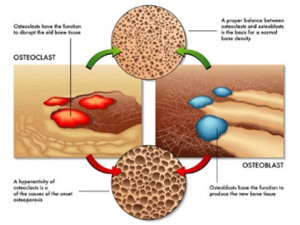
Cells called osteoclasts constantly break down old bone (a process called resorption), and cells called osteoblasts replace it with new bone (a process called accretion). Without this constant renewal process our bones would quickly become old and brittle.
In short, our bones are not inert. They are in constant flux. If we exercise regularly and get enough calcium, vitamin D, magnesium, and vitamin K from our diet, bone metabolism looks like this as we age.
When we are young, osteoblast activity predominates, so accretion (the bone building process) exceeds bone resorption, and our bones grow in size and density.
When we are adults, osteoblast and osteoclast activity are in balance. Thus, bone accretion and resorption are in balance, and our bone density stays constant. The top portion of the picture above depicts what happens when osteoclast and osteoblast activity are in balance.
However, as we age osteoclast activity predominates, and we start to lose bone density. Eventually our bones look like Swiss cheese and break very easily. This is called osteoporosis. The bottom portion of the picture depicts this.
We should also think of our bones as calcium reservoirs. We need calcium in our bloodstream 24 hours a day for our muscles, brain, and nerves to function properly, but we only get calcium in our diet at discrete intervals. Consequently:
When we eat our body tries to store as much calcium as possible in our bones.
Between meals, we break down bone material so that we can release the calcium into our bloodstream that our muscle, brain & nerves need to function.
If we lead a “bone healthy” lifestyle, all of this works perfectly. We build strong bones during our growing years, maintain healthy bones during our adult years, and only lose bone density slowly as we age – maybe never experiencing osteoporosis. We always accumulate enough calcium in our bones during meals to provide for the rest of our body between meals.
I should note that this is the current paradigm for bone metabolism. The study I am discussing today is asking whether omega-3 fatty acids should also be considered as part of a bone-healthy lifestyle.
How Was This Study Done?
The investigators used data from NHANES (National Health And Nutrition Examination Survey), an ongoing study to assess the health and nutritional status of adults and children in the United States. Specifically, this study combined data from participants from the 2005-2010, 2013-2014, and 2017-2018 NHANES surveys.
The participants included in the survey:
Were greater than 50 years old.
Had completed two 24-hour dietary recall surveys to determine the omega-3 content of their diet (The average omega-3 intake of the two surveys was used for this study).
Had a bone mineral density (BMD) test performed using dual-energy X-ray absorptiometry (DXA) scans.
Participants were excluded from the study if they had incomplete diet or bone mineral density data or if they had a disease that affects bone metabolism.
A total of 8,889 participants were included in the study. They were divided into 3 categories based on their bone density:
Normal bone density (4,421 participants)
Osteopenia (3,952 participants)
Osteoporosis (516 participants)
Finally, the participants were divided into quartiles based on their omega-3 intake, and omega-3 intake was correlated with bone density.
Are Omega-3s Needed For Strong Bones?
The study results were as follows:
Omega-3 intake was inversely related to bone density. Simply put, that means:
The highest intake of omega-3s was observed in the group with normal bone density, and…
The lowest omega-3 intake was observed in the osteoporosis group.
When the participants were divided into quartiles based on their omega-3 intake:
Participants with the highest omega-3 intake were 29% less likely to develop osteoporosis than participants with the lowest omega-3 intake.
When the investigators looked at subgroups, they found stronger effects of omega-3s on osteoporosis risk for women, people under 60, and non-smokers. Specifically:
Women with the highest omega-3 intake were 35% less likely to develop osteoporosis.
People under 60 were 49% less likely to develop osteoporosis.
Non-smokers were 36% less likely to develop osteoporosis.
The investigators concluded, “This study demonstrates a significant inverse relationship between dietary omega-3 fatty acid intake and osteoporosis risk, suggesting omega-3s play a crucial role in bone health. However, further longitudinal studies are needed to confirm these studies and refine dietary recommendations for osteoporosis prevention.”
Why Are Omega-3s Needed For Strong Bones?
You are probably thinking,
“Calcium and magnesium are part of bone structure. Vitamin D and vitamin K facilitate the incorporation of calcium into bone. So, it is logical that these nutrients would be important for strong bones.”
“But what role do omega-3s play? They aren’t incorporated into bone, and they don’t affect calcium metabolism.”
Here is what the authors said about that:
Omega-3s are anti-inflammatory. They decrease production of the pro-inflammatory cytokines that stimulate osteoclasts – the cells that break down bone.
EPA and DHA are also converted to prostaglandins that stimulate osteoblasts – the cells that build new bone.
Finally, the authors said, “Omega-3 fatty acids, especially EPA and DHA, have been shown to enhance calcium absorption in the gut – a process crucial for maintaining optimal bone mineral density…Omega-3s …do this by altering the lipid composition of cell membranes, thereby affecting calcium channels and enhancing calcium availability for bone tissue.”
Let me help you understand that statement.
While we might think of our cell membranes as rigid structures, they are quite fluid. The closest analogy I can think of is a large lake. You may not see any waves or ripples, but if a leaf drops on the surface it doesn’t stay in one place. It moves. We can think of calcium channels in our membrane like leaves on the water. They move across the cell membrane.
How fast they move depends on the fluidity of the cell membrane. This is determined by the lipids (fats) in the cell membrane, which in turn is determined by the fats in our diet. This is the one case where it is literally true that we are what we eat.
When we have lots of saturated fats in our cell membranes, fluidity is low, and calcium channels move slowly across the membrane.
When we have omega-3 fats in our cell membrane, fluidity is high, and calcium channels move quickly across the cell membrane.
Calcium channels work best when they cluster together, and this works best with highly fluid, omega-3-rich cell membranes.
What Does This Mean For You?
This study strongly suggests that omega-3s play a role in bone health, and they may be important for reducing our risk of osteoporosis. The authors concluded, “The findings suggest that omega-3 fatty acids play a critical role in bone health, supporting the need for dietary recommendations that encourage omega-3 consumption as a preventative measure against osteoporosis.”
However, this is the first study of its kind, which is why the authors said, “Further longitudinal studies are needed to confirm these findings.”
However, my biggest concern with the study is that it did not include information on the intake of the other nutrients essential for bone health (calcium, vitamin D, magnesium, and vitamin K). We don’t know at present the importance of omega-3s for preventing osteoporosis relative to dietary intake of other bone-healthy nutrients. For example:
Are omega-3s important for bone health when intake of calcium and/or the other bone-healthy nutrients are low?
Or are omega-3s equally important for bone health under all conditions?
However, the good news is that omega-3s have many proven health benefits such as heart health, controlling blood pressure, and reducing inflammation. If they are also important for bone health, we can consider it an unexpected benefit.
With that in mind, there are two important takeaways for you:
Omega-3s were most effective at preventing osteoporosis in people under 60. That is entirely consistent with what we know about preventing osteoporosis. The best prevention strategy is to build strong bones while you are young and maintain strong bones as long as possible in your adult years.
The optimal reduction of osteoporosis risk in this study was seen with an omega-3 intake of 1.86 g/d. While more studies are needed to define the optimal dose of omega-3s for reducing osteoporosis risk, this dose is within the “sweet spot” for the other omega-3 benefits I mentioned.
The Bottom Line
A recent study asked whether omega-3 fatty acids reduce the risk of osteoporosis.
The study found:
Omega-3 intake was inversely related to bone density.
When the participants were divided into quartiles based on their omega-3 intake:
Participants with the highest omega-3 intake were 29% less likely to develop osteoporosis than participants with the lowest omega-3 intake.
When the investigators looked at subgroups, they found stronger effects of omega-3s on osteoporosis risk for women, people under 60, and non-smokers.
The investigators concluded, “This study demonstrates a significant inverse relationship between dietary omega-3 fatty acid intake and osteoporosis risk, suggesting omega-3s play a crucial role in bone health. This supports the need for dietary recommendations that encourage omega-3 consumption as a preventative measure against osteoporosis.”
For more information on this study, why omega-3s reduce osteoporosis risk, and what this study means for you, read the article above.
These statements have not been evaluated by the Food and Drug Administration. This information is not intended to diagnose, treat, cure, or prevent any disease.
My posts and “Health Tips From the Professor” articles carefully avoid claims about any brand of supplement or manufacturer of supplements. However, I am often asked by representatives of supplement companies if they can share them with their customers.
My answer is, “Yes, as long as you share only the article without any additions or alterations. In particular, you should avoid adding any mention of your company or your company’s products. If you were to do that, you could be making what the FTC and FDA consider a “misleading health claim” that could result in legal action against you and the company you represent.
For more detail about FTC regulations for health claims, see this link.
Dr. Chaney has a BS in Chemistry from Duke University and a PhD in Biochemistry from UCLA. He is Professor Emeritus from the University of North Carolina where he taught biochemistry and nutrition to medical and dental students for 40 years. Dr. Chaney won numerous teaching awards at UNC, including the Academy of Educators “Excellence in Teaching Lifetime Achievement Award”. Dr Chaney also ran an active cancer research program at UNC and published over 100 scientific articles and reviews in peer-reviewed scientific journals. In addition, he authored two chapters on nutrition in one of the leading Biochemistry textbooks for medical students.
Since retiring from the University of North Carolina, he has been writing a weekly health blog called “Health Tips From the Professor”. He has also written two best-selling books, “Slaying the Food Myths” and “Slaying the Supplement Myths”. And most recently he has created an online lifestyle change course, “Create Your Personal Health Zone”. For more information visit https://chaneyhealth.com.
For the past 53 years Dr. Chaney and his wife Suzanne have been helping people improve their health holistically through a combination of good diet, exercise, weight control and appropriate supplementation.
Several years ago, I came across a headline in our local newspaper that said, “Try Nutrition, Not Drugs, for ADHD”. The article made claims like “No good evidence exists to support the ADHD disease hypothesis” and “…on numerous occasions we have seen ADHD symptoms completely disappear without medication”.
As a scientist, I am always a little skeptical about bold claims that run counter to established scientific wisdom. However, the authors of this article implied that their claims were based on a 2012 article in Pediatrics, which is a highly respected journal in its field, so I decided to investigate the article (Millichap and Yee, Pediatrics, 129: 1-8, 2012).
The article was written by two pediatricians with extensive experience treating children with ADHD. The article turned out to be a thorough review of the literature on nutritional approaches for controlling ADHD. It did not approach the rigor of a meta-analysis study. Rather, it is what I refer to as an “interpretive review”. By that I mean that the clinical studies were interpreted in part based on their clinical experience in treating children with ADHD.
Interpretive reviews can be either good or bad, depending on the objectiveness of the reviewers. In this case, I was familiar with many of the clinical studies they reviewed and found their interpretations to be accurate, so I decided to share their conclusions with you. But first I should probably talk about our ADHD epidemic and ask two important questions:
Is ADHD over diagnosed?
Are drugs always the best solution for controlling ADHD symptoms?
Are Natural Approaches Better Than Drugs?
The ADHD epidemic.
ADHD has increased by 89% in the United States in just 25 years (1997-2022).
In 2022 11.5% of US children aged 3-17 were diagnosed with ADHD. That’s 7.1 million children.
Some experts claim that’s because of better diagnosis. But let me point out what many experts miss.
Is ADHD Over Diagnosed?
Perhaps we should be asking whether teachers and parents might be tempted to overestimate the severity of the symptoms.
For parents,
Parents don’t have the time they used to have to supervise their kids.
In most cases, both parents are working.
Some are working from home. In theory that could give them flexibility to take care of their children. But remote work often involves online meetings and strict deadlines that leave little time for their children.
And then there is social media. In today’s world, many parents are glued to their phones 24/7.
It’s easier to request a hyperactivity assessment, so that child can be put on drugs.
For teachers,
Class sizes are large, and there aren’t enough teachers’ aides.
They don’t have the time to deal with a child that requires extra attention.
It is easier to request an ADHD assessment, so that child can be put on drugs.
But there are other options. There are schools in which children with ADHD thrive, and many public schools have programs set up for ADHD children.
Why is the increase in ADHD diagnoses a concern?
The answer is simple. The use of ADHD drugs has increased by 58% since 2012. Today over 50% of children diagnosed with ADHD are put on drugs. That’s a concern because:
Most of these drugs are stimulants.
Many are amphetamines.
They have serious side effects. For example:
Loss of appetite and weight loss.
Difficulty sleeping.
Upset stomach and nausea.
Many children don’t like how the drugs make them feel. They make them feel irritable, depressed, anxious, or tense.
They can be gateway drugs.
They lose effectiveness over time. So, unless you have figured out the cause of the problem, the symptoms will return.
Because of this many parents are searching for natural solutions.
Natural Approaches For Controlling ADHD
The pediatricians reviewed all the major nutritional approaches that have been used over the years to control ADHD. Let me start by saying that they are not wild-eyed proponents of “a nuts and berries diet cures all”. In fact, they use medications as the primary intervention for most of their ADHD patients. They advocate dietary approaches when:
Medicines fail or there are adverse reactions (side effects).
The parents or the patients prefer a more natural approach.
There are symptoms or signs of a mineral deficiency (more about that below).
There is a need to substitute an ADHD-free healthy diet for an ADHD-linked diet (Simply put, if the child’s diet is bad enough, there are multiple benefits from switching to a healthier diet – a possible reduction in ADHD symptoms is just one of them.)
I will summarize their key findings below:
Omega-3 Fatty Acids
The authors reported that many studies have shown that children with ADHD tend to have low levels of essential fatty acids, especially the omega-3 fatty acids. They cite several studies which showed significant improvement in reading skills and reductions in ADHD symptoms when children with ADHD were given omega-3 supplements but also noted that other studies showed no effect. They postulated that some children may benefit more from omega-3 supplementation than others.
They routinely use doses of 300-600 mg of omega-3s with their ADHD patients. They find that this intervention reduces ADHD symptoms in many children but does not completely eliminate the need for medications.
My Two Cents: I have recently reported) on a study that strengthens the association between omega-3 supplementation and a reduction in ADHD symptoms. Whether omega-3 supplements will help your child is anyone’s guess. However, it is a natural approach with no side effects. It is certainly worth trying.
Food Additives
The current interest in food additives and ADHD originated with the Feingold diet. The Feingold diet eliminated
food additives, foods with salicylates (apples, grapes, luncheon meats, sausage, hot dogs and drinks containing artificial colors and flavors), and chemical preservatives (e.g. BHA and BHT).
It was popularized in the 1970s when some proponents claimed that it reduced ADHD symptoms in 50% of the children treated. After clinical studies showed that only a small percentage of children benefitted from this diet, it rapidly fell out of favor.
However, Millichap and Yee pointed out that more recent studies have shown that the subset of children who responded to the Feingold diet were not a “statistical blip”. A recent review of the literature reported that when children with suspected sensitivities to food additives were challenged with artificial food colors, 65–89% of them displayed ADHD symptoms.
My Two Cents: I have recently reported) on more recent studies documenting the effects of artificial food colors on ADHD. The studies I reviewed in that article reported that up to 28% of children with ADHD were sensitive to the amount of artificial food colors in the typical western diet and that removing those food colors resulted in a significant improvement in ADHD symptoms. Plus, those studies were just looking at food colors – not the hundreds of other food additives in the average American child’s diet.
I consider food additives to be problematic for many reasons. Even if removing them doesn’t reduce their ADHD symptoms, eliminating as many of those food additives as possible is probably a good idea. It doesn’t need to be complicated. Just replacing processed foods and sodas with fresh fruits and vegetables and with low fat milk and natural fruit juices diluted with water to reduce their sugar content might make a significant difference in your child’s ADHD symptoms.
Food Sensitivities
Even natural foods can be a problem for children with food sensitivity, and it appears that there may be a large percentage of hyperactive children with food sensitivities. Millichap and Yee reported that elimination diets (diets that eliminate all foods which could cause food sensitivity) improve behavior in 76-82% of hyperactive children.
Even though this approach can be very effective Millichap and Yee don’t normally recommend it for their patients because it is difficult and time-consuming. The elimination diet is very restrictive and needs to be followed for a few weeks. Then individual foods need to be added back one at a time until the offending food(s) are identified. (They reported that antigen testing is not a particularly effective way of identifying food sensitivities associated with hyperactivity)
My Two Cents: I have previously reported on the link between food sensitivities and hyperactivity. I agree with Millichap and Yee that elimination diets are difficult and view this as something to be tried after all other natural approaches have failed. However, if there is a particular food that causes hyperactivity in your child, identifying it and eliminating it from their diet could just be something that will benefit them for the rest of their life.
Sugar
This is a particularly interesting topic. Many parents are absolutely convinced that sugary foods cause hyperactivity in their children, but the experts are saying that clinical studies have disproven that hypothesis. They claim that sugar has absolutely no effect on hyperactivity.
Millichap and Yee have an interesting perspective on the subject. They agree that clinical studies show that a sugar load does not affect behavior or cognitive function in small children, but they point to numerous clinical studies showing that the reactive hypoglycemia that occurs an hour or two after a sugar load adversely affects cognitive function in children, and that some children are more adversely affected than others.
My Two Cents:Reducing intake of refined sugars in your child’s diet makes sense for many reasons, especially considering the role of sugar intake in obesity. If your child has a tendency towards reactive hypoglycemia, it may also reduce ADHD symptoms.
Iron and Zinc Deficiency
Millichap and Yee reported some studies suggested that iron and zinc deficiencies may be associated with ADHD symptoms and recommend supplementation with an iron or zinc supplement when there is a documented deficiency.
My Two Cents: A simpler and less expensive approach would be a children’s multivitamin to prevent the possibility of iron or zinc deficiency. Of course, I would recommend that you choose one without artificial colors, preservatives and sweeteners.
A Healthy Diet
Millichap and Yee closed their review by discussing a recent study in Australia that reported a significant reduction in ADHD symptoms in children eating “Healthy” diets (fish, vegetables, tomato, fresh fruit, whole grains & low-fat dairy products) compared to children eating “Western” diets (Fast foods, red meat, processed meats, processed snacks, high fat dairy products & soft drinks). This is the dietary approach, along with omega-3 supplementation, that they recommend most frequently for their patients.
My Two Cents: I wholeheartedly agree. In fact, if you and your family were to follow a “Healthy” diet instead of a “Western” diet it would likely have numerous health benefits. Plus, you are automatically removing ADHD triggers like food additives and sugar from your child’s diet.
The Bottom Line
This review of natural approaches for controlling ADHD symptoms (Millichap and Yee, Pediatrics, 129: 1-8, 2012) is both good news and bad news. The good news is that there are multiple natural approaches that can significantly reduce ADHD symptoms. These include:
Use of omega-3 supplements. They recommended 300-600 mg/day.
Removal of food additives (particularly food colors) from the diet.
Identification of food sensitivities and removal of those foods from the diet.
Reducing the amount of simple sugars in the diet.
Elimination of iron and zinc deficiencies if they exist (Iron deficiency is relatively common in American children. Zinc deficiency is not.) Alternatively, I recommend a children’s multivitamin to prevent iron and zinc deficiencies in the first place.
Eating a healthy diet rather than a Western diet. This also has the benefit of reducing the amount of food additives and sugars in the diet.
The bad news is that each of these approaches seems to work only in a subset of children with ADHD.
If you are a parent who is interested in a natural alternative to ADHD stimulant medications this means you may need to be patient and try several natural approaches until you find the one(s) that work(s) best for your child. The benefit of making the effort is that all these approaches will also improve the health of your child in other important ways, and none of them have any side effects.
Unfortunately, physicians with only about 10 minutes to spend with each patient (which is increasingly the medical model in this country), may not have time to explore natural options. Medications are much easier to prescribe. You may need to be the one who takes the responsibility of exploring natural alternatives for your child.
These statements have not been evaluated by the Food and Drug Administration. This information is not intended to diagnose, treat, cure or prevent any disease.
My posts and “Health Tips From the Professor” articles carefully avoid claims about any brand of supplement or manufacturer of supplements. However, I am often asked by representatives of supplement companies if they can share them with their customers.
My answer is, “Yes, as long as you share only the article without any additions or alterations. In particular, you should avoid adding any mention of your company or your company’s products. If you were to do that, you could be making what the FTC and FDA consider a “misleading health claim” that could result in legal action against you and the company you represent.
For more detail about FTC regulations for health claims, see this link.
Dr. Chaney has a BS in Chemistry from Duke University and a PhD in Biochemistry from UCLA. He is Professor Emeritus from the University of North Carolina where he taught biochemistry and nutrition to medical and dental students for 40 years.
Dr. Chaney won numerous teaching awards at UNC, including the Academy of Educators “Excellence in Teaching Lifetime Achievement Award”.
Dr Chaney also ran an active cancer research program at UNC and published over 100 scientific articles and reviews in peer-reviewed scientific journals. In addition, he authored two chapters on nutrition in one of the leading biochemistry text books for medical students.
Since retiring from the University of North Carolina, he has been writing a weekly health blog called “Health Tips From the Professor”. He has also written two best-selling books, “Slaying the Food Myths” and “Slaying the Supplement Myths”. And most recently he has created an online lifestyle change course, “Create Your Personal Health Zone”. For more information visit https://chaneyhealth.com.
For the past 53 years Dr. Chaney and his wife Suzanne have been helping people improve their health holistically through a combination of good diet, exercise, weight control and appropriate supplementation.
You’ve seen the claims. “You should avoid all seed oils. They are toxic.”
Any time you see claims like, “Avoid all…[add the food villain of the day]” or “[a certain food] is toxic” your “truth-meter” should go on high alert. Claims like that are more likely to be hype than truth.
More specifically, the claims about seed oils are:
They are heavily processed.
They contain toxic ingredients.
They are genetically modified.
They cause inflammation and oxidative damage.
They increase your risk of inflammatory diseases, heart disease, and cancer.
A healthier option is to replace seeds oils with animal foods high in saturated fats.
Like any good food myth, there is a kernel of truth to each of these claims. In this article I will describe the kernel of truth associated with each of these claims, put them into perspective, and give practical guidelines for incorporating seed oils into your diet.
The topics I will cover are:
The truth about fats.
The truth about omega-6 fats.
The truth about saturated fats.
The truth about canola oil.
The truth about seed oils.
The Truth About Fats
The health authorities and media must think the American public is stupid. They oversimplify everything. They tell us:
Animal fats are saturated fat.
Olive oil is monounsaturated fat.
Vegetable oils are omega-6 polyunsaturated fat.
Fish oil is omega-3 polyunsaturated fat.
The truth is that every naturally occurring fat and oil is a mixture of all four kinds of fat. And each food contains a unique mixture of fats. The kernel of truth is:
Animal fats have a higher percentage of saturated fat than other fats and oils.
Olive oil has a higher percentage of monounsaturated fat than other oils.
Vegetable oils have a higher percentage of omega-6 polyunsaturated fat than other oils.
Fish oil has a higher percentage of omega-3 polyunsaturated fat than other oils.
But the full truth is that each food contains a unique mixture of fats. For example,
Meat and butter from grass-fed animals contain a greater percentage of omega-3 fats than meat and butter from animals which were fattened on corn.
Flaxseed oil has a higher percentage of omega-3 fats than other seed oils.
High-oleic sunflower oil has the highest percentage of monounsaturated fat than other seed oils.
Other vegetable oils with high monounsaturated fat content include olive oil, avocado oil, and canola oil. [Note: Although olive oil is the source of monounsaturated fat that we hear about most, avocado oil is equally high in monounsaturated fat and has a higher smoke point, which makes it a better choice for high-heat cooking.]
Walnuts have a higher percentage of omega-3 fats than other nuts.
Macadamia nuts and almonds have the highest percentage of monounsaturated fats than other nuts, with cashews and peanuts not far behind. Nut butters, of course, reflect the fat composition of the nuts.
The point I am making is that while myths are simple, the truth is much more complex.
Take Home Lesson:Every vegetable oil and every seed oil has a unique composition of fats. Each has its unique benefits and unique drawbacks.
That is something you will want to think about the next time you read an article about the dangers or the benefits of all seed oils. Every seed oil is unique. No generalization applies to all of them.
Biochemistry 101 – Essential Fats
Let’s start with the most important point.
Omega-6 fats and omega-3 fats are essential. Simply put, that means:
We can’t make them.
They are essential for life.
We must get them from our diet.
If they are essential, the next question is, “Why do we need them?” Let me start with a little “Biochemistry 101” and talk about their role in cell membranes and cellular regulation.
Cell Membranes:
You might think of cell membranes as a solid protective armor around the cells, but nothing could be farther from the truth. A better analogy would be the ocean that covers vast areas of our planet. Our membranes are quite fluid.
And that membrane fluidity is important. Our cell membranes contain receptors like the cholesterol receptor and insulin receptor that must cluster together for cholesterol and insulin to be transported into the cell. Those receptors cluster best when cell membranes are very fluid.
Our membranes are most fluid when they contain high levels of polyunsaturated fats (For membrane fluidity it doesn’t matter if they are omega-6 or omega-3). Conversely, our membranes are less fluid when they contain high levels of saturated fats.
And here is the most important point. Because our bodies cannot make omega-6 and omega-3 polyunsaturated fats, this is the one time it is literally true that, “We are what we eat”. If our diets are high in saturated fats, our membranes are high in saturated fats. If our diets are high in polyunsaturated fats, our membranes are high in polyunsaturated fats.
And the ratio of omega-6 and omega-3 polyunsaturated fats in our membranes reflects the ratio of omega-6 and omega-3 polyunsaturated fats in our diet.
Take Home Lesson: Diets high in omega-6 and/or omega-3 fats help lower cholesterol levels and improve blood sugar regulation.
Cellular Regulation:
Our cells also use the polyunsaturated fats in our cell membrane to make hormone-like substances called prostaglandins and leukotrienes that exert profound effects on nearby tissues. [Note: For the sake of simplicity, I will just talk about prostaglandins for the rest of this article, but what I say applies equally to leukotrienes.]
The enzymes that make prostaglandins do not distinguish between omega-6 and omega-3 polyunsaturated fats. They just use whatever polyunsaturated fat they come across.
That’s important because the effects of omega-6 and omega-3 prostaglandins are often different and are sometimes opposite.
Here’s where the “We are what we eat” principle comes into play. The ratio of omega-6 and omega-3s in our diet determines the omega-6 and omega-3 content of our membranes. And that determines the type of prostaglandins our cells produce.
Take Home Lessons:
Some of the benefits of omega-6s are unique because they are dependent on omega-6 prostaglandins. These benefits cannot be duplicated by diets high in omega-3s.
Because some effects of omega-6 and omega-3 prostaglandins are opposite, we need to look closely at the omega-6 to omega-3 ratio in the diet to optimize the health benefits of these two essential polyunsaturated fats.
Now, with Biochemistry 101 behind us, we are ready to look at the truth about omega-6 fats.
The Truth About Omega-6 Fats
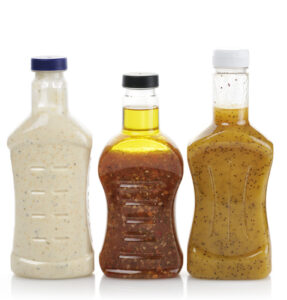
Assortment Of Salad Dressing Bottles
Let’s start by looking at the pros and cons of omega-6 fats.
Pros Of Omega-6 Fats:
Cellular Health: Omega-6 and fats are important for maintaining proper membrane fluidity. And omega-6 prostaglandins also regulate cell metabolism and cellular repair mechanisms.
Heart Health: Omega-6s are associated with lower risk of heart disease. This is caused by:
Lower cholesterol levels due to proper membrane fluidity which allows clustering of cholesterol receptors.
More flexible endothelial cells lining our arteries, which helps lower blood pressure and prevent blockage of the arteries by blood clots. This is most likely due to more fluid cell membranes and the production of beneficial prostaglandins.
Some of these benefits are duplicated by omega-3 fats, but the American Heart Association stated in a recent Health Advisory (WS Harris et al, Circulation, 119, 902-907, 2009) that omega-6 fats are essential for some heart health benefits. They cannot be replaced by omega-3s.
Brain Health: Omega-3s get most of the press here, but experts feel that omega-6s play an important and independent role as well.
Fetal Growth and Development: Omega-6 fats are essential for normal neural development and growth. The mechanism(s) for this benefit are ill-defined.
Other Benefits:
Omega-6 fats support healthy skin, hair, and bones. The mechanisms for these effects are unknown, but most experts feel they are independent of omega-3 fats.
Omega-6 fats are also important for reproductive health. Most experts think this is due to the production of omega-6 prostaglandins.
Take Home Lesson: Omega-6 fats are essential for a healthy heart, a healthy brain, and normal fetal growth and development.
Cons Of Omega-6 Fats:
Oxidation: Omega-6 (and omega-3) fats are very susceptible to oxidation, especially at high temperatures. This can lead to free radical formation, which can promote the formation of cancer cells.
You may have seen the statement that omega-6 fats cause cancer. This is an oversimplification. A more accurate statement would be, “Improperly used, any polyunsaturated fat may increase cancer risk. But this is largely avoidable. Here are the precautions I recommend:
Choose your source carefully.
For seeds and nuts look for freshness. If they look or taste funny, throw them out.
For oils choose reputable brands and choose ones that use low-heat processing. Also, look for ones with minimal processing. They may be cloudy rather than clear, but they will also contain naturally occurring antioxidants and polyphenols.
Don’t overheat them.
Most vegetable oils are only suitable for use as salad dressings and other room temperature cooking.
The exceptions are vegetable oils with high smoke points – for example, olive oil for stir fries and avocado oil for higher temperature cooking.
Store them safely. Don’t give them a chance to become oxidized.
We store sunflower seeds and almonds in our refrigerator and walnuts in our freezer.
We buy unsaturated vegetable oils in small quantities (so they are used up quickly) and store them in the refrigerator.
Take Home Lesson: Improperly used, omega-6 fats, like any unsaturated fat, can become oxidized and form free radicals (the kernel of truth). Choose your source carefully. Don’t overheat them. Store them safely.
Inflammation: This is the one you hear the most about. You have been told that omega-6 vegetable oils (seed oils) cause inflammation. As a blanket statement, it is mostly untrue. But it does have a kernel of truth.
Let’s start with the kernel of truth:
Omega-6 fats are inflammatory only when compared to omega-3 fats. You have also been told that omega-6 fats are inflammatory when compared to saturated fats. This is false, as I will discuss below.
Let me elaborate on the first statement with a little more Biochemistry 101 (If you haven’t guessed, that’s my favorite topic. Once a professor, always a professor).
Omega-6 fats are converted into one inflammatory prostaglandin. Omega-3 fats are converted into several anti-inflammatory prostaglandins (This is an example of some omega-6 and omega-3 prostaglandins having opposite effects).
Because of their opposite effects on inflammation, some experts say that the optimal ratio of omega-6 to omega-3 fats is in the range of 1:1 to 4:1. But the typical American diet is around 15:1.
If the omega-6 to omega-3 ratio is important (and not every expert agrees that it is), the statement that we should avoid omega-6-containing vegetable oils (seed oils) because they are inflammatory is mostly untrue.
Every omega-6 oil has a different omega-6 to omega-3 ratio. For example,
Corn oil has a 50:1 ratio and sesame oil has a 42:1 ratio. If you are just going by omega-6 to omega-3 ratios, you might want to avoid these.
Soybean oil has a 7:1 ratio and extra virgin olive oil has a 5:1 ratio. They are almost in the optimal range.
Canola oil has a 2:1 ratio. It’s in the optimal range.
And flaxseed oil is the clear winner with a 1:4 ratio.
But the truth is also much more complex than you have been led to believe.
The kernel of truth is that omega-6 fats can be converted to an inflammatory prostaglandin.
But omega-6 fats can also be converted to anti-inflammatory prostaglandins. And some omega-6 fats such as GLA are anti-inflammatory.
Human clinical studies find that omega-6 fats either have no effect on inflammation or decrease it slightly (A Poli et al, International Journal of Molecular Sciences, 24, 4567, 2023).
Take Home Lesson: Omega-6 fats are converted into one inflammatory prostaglandin (the kernel of truth). But they are also converted to anti-inflammatory prostaglandins. The net effect in the human body is a slight anti-inflammatory effect.
The Truth About Saturated Fats
You have been told that saturated fats are anti-inflammatory and decrease the risk of heart disease. For many Americans those claims are enticing because it means they don’t have to change their diet. But are the claims true?
You have been told that these claims are based on science. There are clinical studies behind them. Is that true?
The problem is that there are a lot of bad studies on saturated fats in the literature, and the Dr. Strangeloves of the world cherry pick the ones that support their beliefs.
If you want to compare the effect of different kinds of fat on either inflammation or heart health, you must make sure that all other components of the diet are the same. Too many of these studies have compared a whole food diet high in saturated fat with the typical American diet high in omega-6 fats. The results are predictable. Anything is better than the typical American diet.
In a previous issue of “Health Tips From The Professor” I discussed the criteria for a good study of fats. High quality studies must:
Show the subjects stick with the new diet for the duration of the study. Subjects find it difficult to adhere to a diet to which they are not accustomed long term and often revert to their more familiar diet. This requires either very close monitoring of what the subjects are eating or measurement of fat membrane composition to verify diet adherence, or both.
Carefully control or measure what the saturated fats are replaced with. In good studies only the fat composition of the diet changes. All other components of the diet remain the same.
Last two years or more. The fats we eat determine the fat composition of our cell membranes, and that is what ultimately determines both inflammation in our bodies and our risk of dying from heart disease. While it is true to say, “We are what we eat”, changing the fat composition of our cell membranes does not occur overnight. It takes 2 years or more to achieve a 60-70% change in the fat composition of cell membranes.
Measures multiple markers of inflammation or actual cardiovascular end points such as heart attack, stroke, and deaths due to heart disease.
When studies are done that meet these criteria the results are as follows:
Inflammation (A Poli et al, International Journal of Molecular Sciences, 24: 4567, 2023):
Replacing saturated fats with omega-6 fats reduces inflammation by 8%.
Replacing saturated fats with omega-3 fats reduces inflammation by 48%
Heart Disease(FM Sacks et al, Circulation, 136, Number 3, 2017):
Replacing saturated fats with omega-6 from decreased the risk of heart disease by 24%.
Replacing saturated fats with a mixture of both omega-6 and omega-3 fats decreased the risk of heart disease by 29%. This is equivalent to statin therapy, without the side effects.
When the replacement of saturated fats with omega-6 and omega-3 fats occurred in the context of a heart healthy diet such as the Mediterranean diet, heart disease risk was reduced by 47%.
The Food and Nutrition Board of the Institute of Medicine recommends that Americans not exceed 10% of calories from saturated fat.
Two thirds of Americans exceed this limit.
The Food and Nutrition Board recommends that omega-6 fats be around 5-6% of calories. Because omega-6 fats play an important role in heart health, the American Heart Association recommends they be at 5-10% of calories.
Americans get around 6.5% of their calories from omega-6 fats.
Take Home Lesson: Replacing saturated fat with omega-6 fats reduces both inflammation and heart disease risk. Adding omega-3 fats reduces both even more. So, bringing omega-6 and omega-3 into a better balance is a good idea. But omega-6 fats are essential and are at the recommended intake for most Americans, so don’t do this by cutting back on healthy omega-6 fats. Instead, add some more omega-3s.
The Truth About Canola Oil
There are a lot of things to like about canola oil:
It is an excellent source of healthy omega-6 fats.
It has a good omega-6 to omega-3 ratio (2:1), which makes it anti-inflammatory.
It is also a good source of monounsaturated fats and has a moderate smoke point, which makes it suitable for low heat cooking.
So, why is it so unpopular? Unfortunately, it suffers from a lot of undeserved myths. Each has a kernel of truth. But like a secret passed around the room, the myths have grown with each repetition, and the truth has become unrecognizable.
So, let’s try to separate the myths from the truth.
Myth: It is genetically engineered.
Truth: It was created by old-fashioned plant breeding.
Myth: Canola oil contains toxic ingredients.
Truth:
Rapeseed oil comes from the oilseed rape plant (a relative of mustard).
Rapeseed oil contains erucic acid and glucosinolates, both of which can be toxic in large amounts (the kernel of truth).
Baldur Stefansson from the University of Manitoba bred a “double low” variety the oilseed rape plant which produces an oil that contains <2% of both erucic acid and glucosinolates and is safe for human consumption. This new oil was named canola oil (from Canada and ola for oil). This was achieved by conventional plant breeding. Not genetic engineering.
Both cultivars of the oilseed rape plant are still grown. Rapeseed oil is used for industrial purposes, and canola oil is used for human consumption.
Canola oil is tightly regulated in Canada, the US, and the EU to <2% erucic acid.
98% of the canola oil sold in the US is grown in Canada and the northern US.
Myth: Canola oil is unhealthy.
Truth: Because it is one of the least expensive omega-6 oils, canola oil is often found as an ingredient in unhealthy, highly processed, food (the kernel of truth). The solution is simple. Avoid unhealthy foods. Adding a different kind of fat to unhealthy foods is not going to make them healthier.
The Truth About Seed Oils
By now I have covered most of the myths about seed oils in my sections on omega-6 fats, saturated fats, and canola oil, but here is a quick review.
Myth: All seed oils are…[add your favorite derogatory term here].
Truth: Every seed oil has a unique composition of fats. Each has its unique benefits and unique drawbacks.
Myth: Seed oils are genetically modified.
Truth: The plants producing canola oil and high oleic sunflower oil have been modified (the kernel of truth), but they were modified by conventional plant breeding rather than genetic engineering.
Myth: Seed oils contain toxic ingredients. This myth is most often directed at canola oil.
Truth: Rapeseed oil contains components that can be toxic at high levels (the kernel of truth). However, the rapeseed plant has been bred to produce canola oil with safe levels of those components.
Myth: Seed oils are inflammatory, which increases your risk of inflammatory diseases and heart disease.
Truth: Seed oils contain omega-6 fats which can be converted into one inflammatory prostaglandin (the kernel of truth). But they are also converted to anti-inflammatory prostaglandins. The net effect in well done human clinical trials is a slight anti-inflammatory effect.
Myth: Seed oils cause oxidative damage, which increases your risk of cancer.
Truth: Seed oils (like any polyunsaturated fat) are susceptible to oxidation, especially at high temperatures. This can lead to free radical formation and oxidative damage (the kernel of truth). But this is only true when you use them improperly. The solution is to chose your source wisely, store them safely, and to not overheat them when cooking.
Myth: Saturated fats are healthier than seed oils. Replacing saturated fat with the omega-6 fats found in seed oils increases inflammation and heart disease risk.
Truth: Many studies in this area of research are poorly designed. Well-designed studies show that replacing saturated fat with the omega-6 fats found in seed oils reduces both inflammation and heart disease risk.
Myth: Omega-3 fats are healthier than the omega-6 fats found in seed oils, so we should replace seed oils with omega-3 fats.
Fact: Omega-3 fats are more effective than omega-6 fats at reducing inflammation and heart disease risk (the kernel of truth). However, omega-6 fats are essential for a healthy heart, a healthy brain, and normal fetal growth and development. We can’t make them, so we must get them from our diet. Americans are currently consuming the recommended amount of omega-6 fats. So, we should not decrease the amount of omega-6 fats in our diet. Instead, we would benefit from adding more omega-3s to our diet.
Myth: Seed oils are highly processed. High heat processing alters the oils. Processing also removes beneficial antioxidants and polyphenols from the oils.
Truth: This is mostly true. The solution is to choose your brands carefully.
For oils choose reputable brands and choose ones that use low-heat processing. Also, look for ones with minimal processing. They may be cloudy rather than clear, but they will also contain naturally occurring antioxidants and polyphenols.
It’s not easy to choose your source carefully. But this difficulty is not unique to seed oils. For example:
The term EVO is supposed to mean extra virgin olive oil was used, but cheaper oils are sometimes blended into the olive oil to save money.
If a company wishes to use the term “grass fed” on their product, they must file a certification with the USDA, but the USDA does not inspect to determine whether the certification is accurate.
Seed oils are also found as an ingredient in unhealthy, highly processed foods. The solution here is simple. Avoid unhealthy foods. Adding a different kind of fat to unhealthy foods is not going to make them healthier.
For more details about each of these Truth statements, read the article above.
The Bottom Line
There are many myths about seed oils. Each myth has a kernel of truth but is mostly false. In this week’s “Health Tips From the Professor” I discuss the myths and truths about seed oils. Because this is a complex subject, I have broken it down into individual topics that address one or more seed oil myths before talking about seed oil myths directly.
The topics I covered are:
The truth about fats.
The truth about omega-6 fats.
The truth about saturated fats.
The truth about canola oil.
The truth about seed oils.
For more details read the article above.
These statements have not been evaluated by the Food and Drug Administration. This information is not intended to diagnose, treat, cure or prevent any disease.
My posts and “Health Tips From the Professor” articles carefully avoid claims about any brand of supplement or manufacturer of supplements. However, I am often asked by representatives of supplement companies if they can share them with their customers.
My answer is, “Yes, as long as you share only the article without any additions or alterations. In particular, you should avoid adding any mention of your company or your company’s products. If you were to do that, you could be making what the FTC and FDA consider a “misleading health claim” that could result in legal action against you and the company you represent.
For more detail about FTC regulations for health claims, see this link.
Dr. Chaney has a BS in Chemistry from Duke University and a PhD in Biochemistry from UCLA. He is Professor Emeritus from the University of North Carolina where he taught biochemistry and nutrition to medical and dental students for 40 years.
Dr. Chaney won numerous teaching awards at UNC, including the Academy of Educators “Excellence in Teaching Lifetime Achievement Award”.
Dr Chaney also ran an active cancer research program at UNC and published over 100 scientific articles and reviews in peer-reviewed scientific journals. In addition, he authored two chapters on nutrition in one of the leading biochemistry text books for medical students.
Since retiring from the University of North Carolina, he has been writing a weekly health blog called “Health Tips From the Professor”. He has also written two best-selling books, “Slaying the Food Myths” and “Slaying the Supplement Myths”. And most recently he has created an online lifestyle change course, “Create Your Personal Health Zone”. For more information visit https://chaneyhealth.com.
For the past 45 years Dr. Chaney and his wife Suzanne have been helping people improve their health holistically through a combination of good diet, exercise, weight control and appropriate supplementation.
In short, the evidence that omega-3s reduce the risk of heart attacks and other forms of cardiovascular disease keeps getting stronger. However, the effect of omega-3s on heart failure is not as clear. Some studies suggest that omega-3s reduce the risk of heart failure and heart failure deaths. But other studies find little or no effect.
That’s unfortunate because heart failure is responsible for 45% of cardiovascular deaths and 14% of all deaths in the United States. In 2023 6.7 million Americans had heart failure, and that number is expected to increase to 8.5 million in 2030.
But numbers don’t tell the whole story. It is the trend in heart failure deaths that is truly concerning. Heart failure deaths per 100,000 Americans decreased by 20% between 1999 and 2012. Then the trend abruptly reversed. By 2021 heart failure deaths per 100,000 people was greater than in 1999. And the increase in heart failure deaths shows no signs of slowing down.
Nobody knows what is causing this rapid increase in heart failure deaths. But clearly the miracles of modern medicine are not working. And because the clinical studies on omega-3s and heart failure risk have been confusing, omega-3s are not currently recommended for heart failure patients.
This utilized data from the UK Biobank study. The UK Biobank study is an ongoing study that enrolled 502,366 subjects, aged 40-69, from the United Kingdom between April 1, 2007, and December 31, 2010. It regularly collects environmental, lifestyle, and genetic data on these individuals and tracks their health outcomes.
Within the study 273,033 participants had their blood levels of omega-3s determined by mass spectrometry. These measurements were used to calculate the Omega-3 Index (% of membrane fatty acids that are omega-3s) of these participants.
Of these participants:
271,794 did not have a heart failure diagnosis at the time the omega-3 levels were determined. This group was used to evaluate the effect of omega-3s on the risk of developing heart failure.
1,239 had a heart failure diagnosis at the time the omega-3 levels were determined. This group was used to determine whether omega-3s reduced the risk of death in heart failure patients.
20,000 from this group had a repeat measurement of omega-3 levels around 4 years after the first measurement to determine the consistency of omega-3 levels. On average the repeat measurements were slightly lower, but the differences were small.
These participants were followed for an average of 13.7 years.
A diagnosis of heart failure was based on international diagnosis standards.
Deaths were identified by using the central death registry in the United Kingdom.
The News About Omega-3s Just Got Better
The data were clear. When participants with an Omega-3 Index in the top 20% were compared to those with an Omega-3 Index in the bottom 20%:
The risk of developing heart failure during the 13.7-year follow-up period was reduced by 21%.
When participants with a heart failure diagnosis prior to omega-3 measurement were compared in the same manner:
All-cause mortality was reduced by 48%
Cardiovascular mortality was reduced by 43%.
When the investigators looked at the effect of omega-3 supplementation in this population:
The risk of developing heart failure was 5% lower for those who reported omega-3 supplement use. I will discuss the reason for the discrepancy between comparisons based on omega-3 supplement use and comparisons based on blood levels of omega-3s below.
The authors concluded, “Higher plasma levels of marine omega-3 fatty acids were associated with a lower incidence of heart failure. Furthermore, among patients with preexisting heart failure, higher omega-3 levels were associated with lower risks of all-cause mortality and cardiovascular mortality. These findings suggest that increasing plasma omega-3 levels, whether by diet or supplementation, could reduce both risk for development of heart failure and death in those with prevalent heart failure.”
What Are The Strengths And Weaknesses Of This Study?
This was a very large, very well-done study. There is the usual caveat for this type of study, namely that it looks at associations and cannot prove cause and effect. However, it would be impossible to perform a double blind, placebo-controlled study with that many people for almost 14 years.
And heart failure does not happen overnight. Studies of the size and length are required to show meaningful effects of diet and/or supplementation on health outcomes like heart failure are not feasible.
Another major strength of this study is that it measured blood levels of omega-3s and showed those blood levels were relatively stable over time rather than relying on participants remembering what they ate and/or what supplements they used.
In terms of supplement use, studies like this one simply ask whether omega-3 supplements were used. They do not ask what the dose was, how frequently they were taken, the form of the omega-3 supplement (fish oil, EPA-only, DHA-only), and whether they were consumed with food or not (which affects absorption).
Studies that rely on diet recall and/or supplement use also have another weakness, namely individual differences in the absorption and utilization of omega-3 fatty acids. Simply put, two individuals getting the same dose of omega-3s from diet and supplementation may have different levels of omega-3s in their cellular membranes.
The authors felt it was these differences that explained why they saw a much stronger and more accurate effect of omega-3s on heart failure when they based their comparison on blood levels of omega-3s rather than omega-3 supplement use.
In short, this study significantly strengthens the evidence that omega-3s reduce the risk of heart failure and improve survival for those with heart failure.
What Does This Study Mean For You?
Here are the take-home lessons from this study:
As I said above, this study significantly strengthens the evidence that omega-3s reduce the risk of heart failure and improve survival for those with heart failure. That means:
Optimizing your intake of omega-3s may be a good strategy for reducing your risk of heart failure. More importantly, optimizing omega-3 intake may also be a good strategy for improving your survival if you have been diagnosed with heart failure.
The authors said, “Because omega-3 is a well-tolerated over-the-counter nutrient…it is perplexing why this safe and affordable therapy…has not been widely incorporated into guideline-directed medical therapy for heart failure. Omega-3s…should be considered as add-on therapy to the standard regimen in the prevention and treatment of heart failure.” I agree.
But what is the optimum intake of omega-3s? This is what the authors had to say about that:
The top 20% of participants in this study had a blood Omega-3 Index of >5.45%, but this is not necessarily optimal.
Previous studies have suggested that an Omega-3 Index of 8% is the optimal target for reducing the risk of death from other forms of heart disease, and the authors feel this is also the optimal target for reducing the risk of heart failure.
The average American has an Omega-3 Index of 4-5%, which is associated with a high risk of heart disease.
Previous studies have indicated that an average intake of 1.4 g/day of EPA + DHA is required to move from an Omega-3 Index of 4% to 8%.
But the key word here is “average”.
None of us are average. We all absorb and retain omega-3s with different efficiencies. Many people will do great with 1.4 g/day. But some may need more to achieve an Omega-3 of 8%. And others will need less.
That’s why I recommend that you request blood tests of your Omega-3 Index and use those to guide you to an optimal 8% rather than relying on dosage of omega-3 supplements or frequency of omega-3-rich fish consumption alone.
However, I recognize that Omega-3 Index determinations are expensive and not all doctor’s offices are equipped to provide them. On average, an intake of 1-2 g/day of EPA + DHA is safe and likely effective at reducing risk of heart failure and other forms of heart disease. But it may not be optimal for you.
The Bottom Line
Previous studies have shown that an optimal intake of omega-3s is likely to reduce the risk of heart attacks and deaths from heart disease. But the news about omega-3s just got better. A recent study strengthened the evidence that omega-3s also reduce the risk of heart failure and improve survival for those with heart failure.
The authors concluded, “Higher plasma levels of marine omega-3 fatty acids were associated with a lower incidence of heart failure. Furthermore, among patients with preexisting heart failure, higher omega-3 levels were associated with lower risks of all-cause mortality and cardiovascular mortality. These findings suggest that increasing plasma omega-3 levels, whether by diet or supplementation, could reduce both risk for development of heart failure and death in those with prevalent heart failure.”
For more details on this study and what it means for you, read the article above.
These statements have not been evaluated by the Food and Drug Administration. This information is not intended to diagnose, treat, cure, or prevent any disease.
My posts and “Health Tips From the Professor” articles carefully avoid claims about any brand of supplement or manufacturer of supplements. However, I am often asked by representatives of supplement companies if they can share them with their customers.
My answer is, “Yes, as long as you share only the article without any additions or alterations. In particular, you should avoid adding any mention of your company or your company’s products. If you were to do that, you could be making what the FTC and FDA consider a “misleading health claim” that could result in legal action against you and the company you represent.
For more detail about FTC regulations for health claims, see this link.
Dr. Chaney has a BS in Chemistry from Duke University and a PhD in Biochemistry from UCLA. He is Professor Emeritus from the University of North Carolina where he taught biochemistry and nutrition to medical and dental students for 40 years. Dr. Chaney won numerous teaching awards at UNC, including the Academy of Educators “Excellence in Teaching Lifetime Achievement Award”. Dr Chaney also ran an active cancer research program at UNC and published over 100 scientific articles and reviews in peer-reviewed scientific journals. In addition, he authored two chapters on nutrition in one of the leading biochemistry text books for medical students.
Since retiring from the University of North Carolina, he has been writing a weekly health blog called “Health Tips From the Professor”. He has also written two best-selling books, “Slaying the Food Myths” and “Slaying the Supplement Myths”. And most recently he has created an online lifestyle change course, “Create Your Personal Health Zone”. For more information visit https://chaneyhealth.com.
For the past 45 years Dr. Chaney and his wife Suzanne have been helping people improve their health holistically through a combination of good diet, exercise, weight control and appropriate supplementation.
You may remember the nursery rhyme, “Jack Sprat could eat no fat. His wife could eat no lean…” You may know people who fit these extremes. And in terms of diets these extremes might represent the vegan and keto diets in today’s world.
The nursery rhyme assures us that, “…between them they licked the platter clean.” But were their diets equally healthy? Which of them would have been more likely to live a long and healthy life?
And, since this is Heart Health Month, we might ask, “Which diet would have been better for their hearts?”
If you search Mr. Google – even with AI assist – you might be confused. That’s because AI bases its recommendations on the quantity of posts, not the accuracy of posts. And lots of media influencers recommend both diets, and just about every popular diet in between for heart health.
The investigators reviewed 99 clinical studies with tens of thousands of participants that looked at the associations between foods or food groups and heart disease risk.
Most of the studies were “prospective cohort” studies in which:
Populations are divided into groups (cohorts) based on the foods they consume…
…and followed for a number of years (this is where the term “prospective” comes from)…
…and at the end of the study, the association between food and heart outcomes is measured.
However, the review also included several major randomized controlled clinical trials, including:
The DASH diet study.
The Lyon Diet Heart study.
The PREDIMED study.
Eating For A Healthy Heart
Here are the findings of the study. Most will sound very familiar. But you will note some subtle differences based on recent data.
The overall summary was that for a healthy adult population:
Low consumption of salt and foods of animal origin…
…and increased intake of plant foods…
…are associated with reduced heart disease risk.
Of course, we have known that for years. It’s when they broke the data down further that it became more interesting.
Foods Of Animal Origin:
Processed meats increase heart disease risk. A single serving of processed meat is associated with a 27% to 44% increased risk of heart disease. This is not new.
Unprocessed red meat is also associated with increased risk of heart disease, but this association is not as consistent as for processed meats. The authors noted that some of this may be due to differences in saturated fat content or cooking methods of the red meats included in individual studies.
But this analysis also showed that the effect of red meat on heart disease risk may be dose dependent. For example:
The studies they reviewed suggested that consuming ≥2 servings per day of red meat is associated with a 27% increased risk of heart disease. However, consuming <3 servings per week may not increase risk.
The idea that the effect of red meat on heart disease risk may be dose-dependent is novel. However, the authors said we also need to ask what replaces red meat in the diet. They postulated that when red meat consumption is decreased, it is often replaced with healthier protein sources.
White meatsuch as poultry does not appear to affect heart disease risk. This has been predicted by earlier reports, but this analysis strengthens those predictions.
Fish consumption decreases heart disease risk. This is not new. But this review added precision about recommended fish intake (2-4 servings/week) and a couple of caveats:
The heart benefits of fish may be due to their omega-3 content and may not apply equally to fish with lower omega-3 content.
The authors also expressed concerns about the sustainability of high-omega-3 fish populations. I would also add that our oceans are increasingly polluted, so contamination is another concern.
Egg consumption up to one egg/day does not appear to increase heart disease risk. This is consistent with the current American Heart Association recommendations.
However, the authors noted that the effect of eggs on serum cholesterol, and hence heart disease risk depends on several factors.
Genetics, obesity, and diabetes can make it more difficult to regulate serum cholesterol levels. For these individuals, eggs may need to be eaten only sparingly.
Diets low in saturated fat and high in fiber from plant foods help the body regulate serum cholesterol. Several studies suggest that eggs may decrease heart disease risk in the context of this type of diet.
Dairy: Neither low-fat nor high-fat dairy foods appear to influence heart disease risk. This is different from the standard recommendation to consume low-fat dairy foods. But it is in line with the trend of recent research studies on dairy and heart disease.
Once again, there were a couple of caveats:
There is increasing evidence that fermented dairy foods may decrease heart disease risk which may explain why certain high-fat cheeses and other high-fat fermented dairy foods appear to have a neutral or slightly beneficial effect on heart disease risk.
As with eggs the effect of high-fat dairy foods on heart disease risk may be influenced by genetics and diet context.
Foods Of Plant Origin:The effect of plant foods have been known for some time, and the most recent studies included in this analysis have not changed those conclusions.
Fruits and Vegetables consistently reduce heart disease risk in multiple studies. In each case, the optimal intake appears to be about 2 servings of each per day which provides an 18-21% risk reduction for vegetables and a 21-32% risk reduction for fruits.
Legumes(beans and peas) also consistently reduce heart disease risk in multiple studies. At the optimal intake of around 4 servings per week the risk reduction is around 14%.
Nuts also consistently reduce heart disease risk. At the optimal intake of around one serving (a handful) per day, the risk reduction is around 25%.
Cereals (grains) were divided into 3 categories:
Refined carbohydrates with a high glycemic index (e.g., white rice, white bread) are associated with increased heart disease risk in multiple studies probably due to their effect on blood sugar levels. And the increased risk is significant (Around 66% higher risk for every 2 servings).
Refined carbohydrates with a low glycemic index(e.g., pasta, corn tortillas) show an inconsistent effect on heart disease risk.
Whole grains are consistently associated with a lower heart disease risk. Two servings of whole grains per day are associated with a 25%-34% decreased risk.
Miscellaneous Foods:
Soft Drinks are associated with increased heart disease risk. One serving per day increases the risk by around 15-22% and recent evidence suggests that artificially sweetened soft drinks offer no heart health benefits compared to sugar sweetened soft drinks.
Coffee and Tea are both associated with decreased heart disease risk. For coffee the optimal benefit may occur at around 3 cups/day. Higher levels may have an adverse effect on heart disease risk.
Summary of Heart Health Recommendations
If you are thinking that was a lot of information, the authors provided a numerical summary of their recommendations for a heart-healthy diet. They are:
Two servings per day of vegetables, fresh fruits, and whole grains.
One serving per day of nuts and seeds, low-glycemic index refined cereals, extra-virgin olive oil or non-tropical vegetable oils, and yogurt.
Four servings per week of legumes and fish.
No more than 3 servings per weekof white meat, eggs, cheese, and milk.
No more than 2 servings per week of high-glycemic index refined starchy foods, red meat, and butter.
Only occasional consumption of processed meats.
What Does This Study Mean For You?
Of course, nobody wants to follow a “diet by the numbers”. If you are like most of us, you want flexibility and you want to be able to eat some of your favorite foods. So, let me put these recommendations into a more “user friendly” form.
If you want a healthy heart:
Whole, unprocessed or minimally processed, plant foods are your friends.
Your heart-healthy foundation should be fruits, vegetables, whole grains, nuts and seeds, healthy plant oils, and legumes.
Your heart-healthy foundation can also include fermented dairy foods and low-glycemic index refined grains.
Your “go-to” beverages should be water, tea (both caffeinated and herbal teas), and coffee. You should avoid soft drinks and other sugar-sweetened or artificially sweetened beverages.
Once you have achieved a heart-healthy foundation you can add a few servings per week of white meat, eggs, cheese, and dairy, even high-fat dairy.
If you have good adherence to the heart-healthy foundation described above and no genetic or health issues that increase your risk of heart disease, you can probably eat more of these foods.
Conversely, if your adherence to the heart-healthy foundation is poor and/or you are at high risk of heart disease, you may wish to consume less of these foods.
If you have good adherence to the heart-healthy foundation, you can also add up to 1-2 servings of high-glycemic index refined carbohydrates, red meat, or butter per week. With red meat, you may want to consider it as a garnish that adds flavor to a plant-based meal rather than the centerpiece of the meal.
You should eat processed meats seldom or never.
The Bottom Line
A new comprehensive review and meta-analysis of 99 clinical studies with tens of thousands of participants has updated the correlation between foods and heart disease risk.
Many of the recommendations based on this analysis are identical to previous recommendations for a heart-healthy diet.
But there are some subtle changes to those recommendations based on the latest data.
For more details about this study and what a heart-healthy diet might look like for you, read the article above.
These statements have not been evaluated by the Food and Drug Administration. This information is not intended to diagnose, treat, cure, or prevent any disease.
My posts and “Health Tips From the Professor” articles carefully avoid claims about any brand of supplement or manufacturer of supplements. However, I am often asked by representatives of supplement companies if they can share them with their customers.
My answer is, “Yes, as long as you share only the article without any additions or alterations. In particular, you should avoid adding any mention of your company or your company’s products. If you were to do that, you could be making what the FTC and FDA consider a “misleading health claim” that could result in legal action against you and the company you represent.
For more detail about FTC regulations for health claims, see this link.
Dr. Chaney has a BS in Chemistry from Duke University and a PhD in Biochemistry from UCLA. He is Professor Emeritus from the University of North Carolina where he taught biochemistry and nutrition to medical and dental students for 40 years. Dr. Chaney won numerous teaching awards at UNC, including the Academy of Educators “Excellence in Teaching Lifetime Achievement Award”. Dr Chaney also ran an active cancer research program at UNC and published over 100 scientific articles and reviews in peer-reviewed scientific journals. In addition, he authored two chapters on nutrition in one of the leading biochemistry text books for medical students.
Since retiring from the University of North Carolina, he has been writing a weekly health blog called “Health Tips From the Professor”. He has also written two best-selling books, “Slaying the Food Myths” and “Slaying the Supplement Myths”. And most recently he has created an online lifestyle change course, “Create Your Personal Health Zone”. For more information visit https://chaneyhealth.com.
For the past 45 years Dr. Chaney and his wife Suzanne have been helping people improve their health holistically through a combination of good diet, exercise, weight control and appropriate supplementation.
Fad diets abound. High protein, low carb, low fat, vegan, keto, paleo – the list is endless. They all claim to be backed by scientific studies showing that you lose weight, lower your cholesterol and triglycerides, lower your blood pressure, and smooth out your blood sugar swings.
They all claim to be the best. But any reasonable person knows they can’t all be the best. Someone must be lying.
My take on this is that fad diet proponents are relying on “smoke and mirrors” to make their diet look like the best. I have written about this before, but here is a brief synopsis:
They compare their diet with the typical American diet.
Anything looks good compared to the typical American diet.
Instead, they should be comparing their diet with other weight loss diets. That is the only way we can learn which diet is best.
They are all restrictive diets.
Any restrictive diet will cause you to eat fewer calories and to lose weight.
And as little as 5% weight loss results in lower cholesterol & triglycerides, lower blood pressure, and better control of blood sugar levels.
Simply put, any restrictive diet will give you short-term weight loss and improvement in blood parameters linked to heart disease, stroke, and diabetes. But are these diets healthy long term? For some of them, the answer is a clear no. Others are unlikely to be healthy but have not been studied long term. So, we don’t know whether they are healthy or not.
What if you started from the opposite perspective? Instead of asking, “Is a diet that helps you lose weight healthy long term?”, what if you asked, “Does the diet you choose matter for weight loss? Can healthy eating help you lose weight?” The study (S Schutte et al, American Journal of Clinical Nutrition, 115: 1-18, 2022)) I will review this week asked these question.
This was an excellent study. It compared a healthy diet to an unhealthy diet with the same degree of caloric restriction. And it compared both diets to the habitual diet of people in that area. This study was performed in the Netherlands, so both weight loss diets were compared to the habitual Dutch diet.
How Was The Study Done?
This was a randomized controlled trial, the gold standard of clinical studies. The investigators recruited 100 healthy, abdominally obese men and women aged 40-70. At the time of entry into the study none of the participants:
Had diabetes.
Smoked.
Had a diagnosed medical condition.
Were on a medication that interfered with blood sugar control.
Were on a vegetarian diet.
The participants were randomly assigned to:
A high-nutrient quality diet that restricted calories by 25%.
A low-nutrient-quality diet that restricted calories by 25%.
A continuation of their habitual diet.
The study lasted 12 weeks. The participants met with a dietitian on a weekly basis. The dietitian gave them all the foods they needed for the next week and monitored their adherence to their assigned diet. They were advised not to change their exercise regimen during the study.
At the beginning and end of the study the participants were weighed, and cholesterol, triglycerides, and blood pressure were measured.
Does Diet Matter For Weight Loss?
This study compared a healthy diet to an unhealthy diet with the same degree of caloric restriction. And it compared both diets to the habitual diet of people in that area. This study was performed in the Netherlands, so both weight loss diets were compared to the habitual Dutch diet.
To put this study into context, these were not healthy and unhealthy diets in the traditional sense.
Both were whole food diets.
Both included fruits, vegetables, low-fat dairy, and lean meats.
Both restricted calories by 25%.
The diets were designed so that the “high-nutrient quality” diet had significantly more plant protein (in the form of soy protein), fiber, healthy fats (monounsaturated and omega-3 fats), and significantly less fructose and other added sugars than the “low-nutrient-quality” diet.
When the investigators measured weight loss at the end of 12 weeks:
Participants lost significant weight on both calorie-restricted diets compared to the group that continued to eat their habitual diet.
That is not surprising. Any diet that successfully restricts calories will result in weight loss.
Participants on the high-nutrient quality diet lost 33% more weight than participants on the low-nutrient-quality diet (18.5 pounds compared to 13.9 pounds).
Participants on the high-nutrient quality diet lost 50% more inches in waist circumference than participants on the low-nutrient-quality diet (1.8 inches compared to 1.2 inches).
Waist circumference is a direct measure of abdominal obesity.
When the investigators measured blood pressure, fasting total cholesterol levels, and triglyceride levels at 12 weeks:
These cardiovascular risk factors were significantly improved on both diets.
Again, this would be expected. Any diet that causes weight loss results in an improvement in these parameters.
However, the reduction in total serum cholesterol was 2.5-fold greater and the reduction in triglycerides was 2-fold greater in the high-nutrient quality diet group than in the low-nutrient-quality diet group.
And the reduction in systolic blood pressure was 2-fold greater and the reduction in diastolic blood pressure was 1.67-fold greater in the high-nutrient quality diet group than in the low-nutrient-quality diet group.
The authors concluded, “Our results demonstrate that the nutrient composition of an energy-restricted diet is of great importance for improvements of metabolic health in an overweight, middle-aged population. A high-nutrient quality energy-restricted diet enriched with soy protein, fiber, monounsaturated fats, omega-3 fats, and reduced in fructose and other added sugars provided additional health benefits over a low-nutrient quality energy-restricted diet, resulting in greater weight loss…and promoting an antiatherogenic blood lipid profile.”
In short, participants in this study lost more weight and had a better improvement in risk factors for heart disease on a high-nutrient-quality diet than on a low-nutrient-quality diet. Put another way, diet does matter for weight loss. Healthy eating helped them lose more weight and gave them greater improvement in their health.
Who Benefits Most From A Healthy Diet?
None of the participants in this study had been diagnosed with diabetes when the study began. However, all of them were middle-aged, overweight, and had abdominal obesity. That means many of them likely had some degree of insulin resistance.
Because of some complex metabolic studies that I did not describe, the investigators suspected that insulin resistance might influence the relative effectiveness of the two energy-restricted diets.
To test this hypothesis, they used an assay called HOMA-IR (homeostatic model assessment of insulin resistance). Simply put, this assay measures how much insulin is required to keep your blood sugar under control.
They used a HOMA-IR score of 2.5 to categorize insulin resistance among the participants.
Participants with a HOMA-IR score >2.5 were categorized as insulin-resistant. This was 55% of the participants.
Participants with a HOMA-IR score ≤2.5 were categorized as insulin-sensitive. This was 45% of the participants.
When they used this method to categorize participants they found:
Insulin-resistant individuals lost about the same amount of weight on both diets.
Insulin-sensitive individuals lost 66% more weight on the high-nutrient-quality diet than the low-nutrient-quality diet (21.6 pounds compared to 13.0 pounds).
The investigators concluded, “Overweight, insulin-sensitive subjects may benefit more from a high- than a low-nutrient-quality energy-restricted diet with respect to weight loss…”
What Does This Study Mean For You?
Simply put this study confirms that:
Caloric restriction leads to weight loss, and…
Weight loss leads to improvement in cardiovascular risk factors like total cholesterol, triglycerides, and blood pressure.
This is not new.
This is true for any diet that results in caloric restriction.
However, this study breaks new ground in that it shows a high-nutrient quality diet results in significantly better…
Weight loss and…
Reduction in cardiovascular risk factors….
…compared to a low-nutrient quality diet with the same degree of caloric restriction.
As I said above, the distinction between a “high-nutrient-quality” diet and a “low-nutrient-quality” diet may not be what you might have expected.
Both diets were whole food diets. Neither diet allowed sodas, sweets, and highly processed foods.
Both included fruits, vegetables, grains, and lean meats.
Both reduced caloric intake by 25%.
If you want to get the most out of your weight loss diet, this is a good place to start.
However, in this study the investigators designed their “high-nutrient-quality” diet so that it contained:
More plant protein in the form of soy protein.
In this study they did not reduce the amount of animal protein in the “high-nutrient-quality” diet. They simply added soy protein foods to the diet. I would recommend substituting soy protein for some of the animal protein in the diet.
More fiber.
The additional fiber came from substituting whole grain breads and brown rice for refined grain breads and white rice, adding soy protein foods, and adding an additional serving of fruit.
More healthy fats (monounsaturated and omega-3 fats).
The additional omega-3s came from adding a fish oil capsule providing 700mg of EPA and DHA.
Less added sugar.
While this study focused on fructose, their high-nutrient-quality diet was lower in all added sugars.
All these changes make great sense if you are trying to lose weight.
I would group these changes into 7 recommendation
1) Follow a whole food diet. Avoid sodas, sweets, and highly processed foods.
2) Include all 5 food groups in your weight loss diet. Fruits, vegetables, whole grains, dairy, and lean proteins all play an important role in your long-term health.
3) Eat a primarily plant-based diet. My recommendation is to substitute plant proteins for at least half of your high-fat animal proteins. And this study reminds us that soy protein foods are a convenient and effective way to achieve this goal.
4) Eat a diet high in natural fiber. Including fruits, vegetables, whole grains, beans, nuts, seeds, and soy foods in your diet is the best way to achieve this goal.
5) Substitute healthy fats (monounsaturated and omega-3 fats) for unhealthy fats (saturated and trans fats) in your diet. And this study reminds us that it is hard to get enough omega-3s in your diet without an omega-3 supplement.
6) Reduce the amount of added sugar, especially fructose, from your diet. That is best achieved by eliminating sodas, sweets, and highly processed foods from the diet. I should add that fructose in fruits and some healthy foods is not a problem. For more information on that topic, I refer you to a previous “Health Tips” article.
7) Finally, I would like to remind you of the obvious. No diet, no matter how healthy, will help you lose weight unless you cut back on calories. Fad diets achieve that by restricting the foods you can eat. In the case of a healthy diet, the best way to do it is to cut back on portion sizes and choose foods with low caloric density.
Finally, I should touch briefly on the third major conclusion of this study, namely that the “high-nutrient quality diet” was not more effective than the “low-nutrient-quality” diet for people who were insulin resistant. In one sense, this was not news. Previous studies have suggested that insulin-resistant individuals have more difficulty losing weight. That’s the bad news.
However, there was a silver lining to this finding as well:
Only around half of the overweight, abdominally obese adults in this study were highly insulin resistant.
That means there is a ~50% chance that you will lose more weight on a healthy diet.
More importantly, because both diets restricted calories by 25%, insulin-resistant individuals lost weight on both diets.
That means you can lose weight on any diet that successfully reduces your caloric intake even if you are insulin resistant. That’s the good news.
However, my recommendation would still be to choose a high-nutrient quality diet that is designed to reduce caloric intake, because that diet is more likely to be healthy long term.
The Bottom Line
A recent study asked, “Can healthy eating help you lose weight?” This study was a randomized controlled study, the gold standard of clinical studies. The participants were randomly assigned to:
A high-nutrient quality diet that restricted calories by 25%.
A low-nutrient-quality diet that restricted calories by 25%.
Continue with their habitual diet.
These were not healthy and unhealthy diets in the traditional sense.
Both were whole food diets.
Both included fruits, vegetables, low-fat dairy, and lean meats.
Both restricted calories by 25%.
The diets were designed so that the “high-nutrient quality” diet had significantly more plant protein (in the form of soy protein), fiber, healthy fats (monounsaturated and omega-3 fats), and significantly less fructose and other added sugars than the “low-nutrient-quality” diet.
At the end of 12 weeks:
Participants on the high-nutrient quality diet lost 33% more weight and had better cardiovascular markers than participants on the low-nutrient-quality diet.
The authors concluded, “Our results demonstrate that the nutrient composition of an energy-restricted diet is of great importance for improvements of metabolic health in an overweight, middle-aged population. A high-nutrient quality energy-restricted diet enriched with soy protein, fiber, monounsaturated fats, omega-3 fats, and reduced in fructose and other added sugars provided additional health benefits over a low-nutrient quality energy-restricted diet, resulting in greater weight loss…and promoting an antiatherogenic blood lipid profile.”
In short, participants in this study lost more weight and had a better improvement in risk factors for heart disease on a high-nutrient-quality diet than on a low-nutrient-quality diet. Put another way, diet does matter for weight loss. Healthy eating helped them lose more weight and gave them greater improvement in their heart health.
For more details on this study, what this study means for you, and my 7 recommendations for a healthy weight loss diet, read the article above.
These statements have not been evaluated by the Food and Drug Administration. This information is not intended to diagnose, treat, cure, or prevent any disease.
My posts and “Health Tips From the Professor” articles carefully avoid claims about any brand of supplement or manufacturer of supplements. However, I am often asked by representatives of supplement companies if they can share them with their customers.
My answer is, “Yes, as long as you share only the article without any additions or alterations. In particular, you should avoid adding any mention of your company or your company’s products. If you were to do that, you could be making what the FTC and FDA consider a “misleading health claim” that could result in legal action against you and the company you represent.
For more detail about FTC regulations for health claims, see this link.
Dr. Chaney has a BS in Chemistry from Duke University and a PhD in Biochemistry from UCLA. He is Professor Emeritus from the University of North Carolina where he taught biochemistry and nutrition to medical and dental students for 40 years.
Dr. Chaney won numerous teaching awards at UNC, including the Academy of Educators “Excellence in Teaching Lifetime Achievement Award”.
Dr Chaney also ran an active cancer research program at UNC and published over 100 scientific articles and reviews in peer-reviewed scientific journals. In addition, he authored two chapters on nutrition in one of the leading biochemistry text books for medical students.
Since retiring from the University of North Carolina, he has been writing a weekly health blog called “Health Tips From the Professor”. He has also written two best-selling books, “Slaying the Food Myths” and “Slaying the Supplement Myths”. And most recently he has created an online lifestyle change course, “Create Your Personal Health Zone”. For more information visit https://chaneyhealth.com.
For the past 45 years Dr. Chaney and his wife Suzanne have been helping people improve their health holistically through a combination of good diet, exercise, weight control and appropriate supplementation.
In the nearly twelve years that I have been publishing “Health Tips From The Professor”, I have tried to go behind the headlines to provide you with accurate, unbiased health information that you can trust and apply to your everyday life.
The 600th issue of any publication is a major cause for celebration and reflection – and “Health Tips From The Professor” is no different.
I am dedicating this issue to reviewing some of the major stories I have covered in the past 100 issues. There are lots of topics I could have covered, but I have chosen to focus on three types of articles:
Articles that have debunked long-standing myths about nutrition and health.
Articles that have corrected some of the misinformation that seems to show up on the internet on an almost daily basis.
Articles about the issues that most directly affect your health.
Here are my picks from the last two years:
Weight Loss Diets
Since it is almost January, let’s start with a couple of articles about diet and weight loss (or weight gain). I have covered the effectiveness of the Paleo, Keto, Mediterranean, DASH, vegetarian, and Vegan diets for both short and long-term weight loss in my book “Slaying The Food Myths”, so I won’t repeat that information here. Instead, I will share a few updates from the past 100 issues.
Is Time-Restricted Eating Better Than Other Diets? Time-restricted eating is one of the latest fads. But is it really better than other diets for weight loss and improved health? In this article I reviewed two studies that compare time-restricted eating with diets that do not restrict time of eating but cut calories to the same extent. You may be surprised at the results.
Can You Lose Weight Without Dieting? In this article I share 8 tips for losing weight without going on a diet. The article is based on research by Dr. Brian Wansink, a behavioral psychologist who specializes in studying how external clues influence our eating patterns. As you might suspect his 8 tips for losing weight have nothing to do with counting calories or going on restrictive diets.
Healthy Diets
Is Whole Fat Dairy Healthy? For years dietary guidelines have been telling us to select low fat dairy foods. But some health gurus are telling you that isn’t true. They claim whole fat dairy is healthy. So, you are probably wondering, “What is the scoop (as in ice cream) on whole fat dairy?” In this article I look at the study behind the headlines and answer that question. But the answer is not a simple “Yes” or “No”. The answer is more nuanced. It turns out that whole fat dairy is healthier in some diets than in others.
Are Low Carb Diets Healthy? Are low carb diets good for you or bad for you? It depends on which study you quote. Two major studies in recent years have come to opposite conclusions. In this article I help you sort through the conflicting studies and rephrase the question. Instead of, “Are low carb diets healthy”, the question should be, “Which low carb diets are healthy?”
Are All Plant-Based Diets Healthy? Plant-based diets have acquired a “health halo” in recent years. Your mama told you to eat your fruits and vegetables. And many health gurus have been telling you not to neglect your grains, legumes, nuts, and seeds as well. But some of these foods require a lot of food preparation.
Never fear! The food industry has come to your rescue with a wide variety of processed plant-based foods. No need for food prep. But are they as good for you as the unprocessed plant foods they replace? In this article I review a study that answers that question.
You probably know what that answer is, but the article is worth a read anyway. That is because the study also asks whether vegan and vegetarian diets are healthier than other primarily plant-based diets. And you may not know the answer to that question.
Diet And Heart Disease
Are Eggs Bad For You? For years we were told that eggs are bad for us because they contain cholesterol. Then we were told that eggs in moderation may not increase our risk of heart disease. And recently studies have appeared claiming eggs may be good for our hearts. What is the truth about eggs and heart disease? In this article I review a recent study claiming eggs are bad for our heart and put that study into the context of other recent studies to clear up the “eggfusion”.
Which Diets Are Heart Healthy? Every popular diet claims to help you lose weight, reduce your risk of diabetes, and reduce your risk of heart disease. All these claims can’t be true. Which diets deliver on their promises, and which are just pretenders? In this article I review a recent study that answered that question for heart disease.
This study was a very large metanalysis of over 40 studies with 35,548 participants that looked at the effect of different diets on heart disease outcomes. The study identified two diets that significantly reduced the risk of heart disease. There are other diets that might reduce the risk of heart disease, but their benefits have not been proven by high quality clinical studies. They are merely pretenders.
The Dangers Of Processed Foods
In previous issues of “Health Tips From the Professor” I have shared articles showing that diets high in processed foods are associated with an increased risk of obesity, diabetes, and heart disease. But the story keeps getting worse. Here are two articles on recent studies about processed foods that appeared in “Health Tips From The Professor” in the last two years.
Why Does Processed Food Make You Fat? We already know that eating a lot of highly processed food is likely to make us fat. But what is it about processed food that makes us fat? In this article I review a recent study that answers that question.
This study is interesting for two reasons.
It identifies the characteristics of processed foods that make us want to eat more.
It identifies some minimally processed foods that have the same characteristics and suggests we should choose minimally processed foods wisely. Simply put, knowledge is power. We may want to avoid minimally processed foods that have the same obesity-inducing characteristics as processed foods.
Do Processed Foods Cause Cancer? Previous studies have shown that processed food consumption is associated with a higher risk of obesity, diabetes, and heart disease. Can it get any worse? In this article I review a recent study that shows processed food consumption is associated with an increased risk of several kinds of cancer.
Maintaining Muscle Mass As We Age
As we age, we begin to lose muscle mass, a process called sarcopenia. Unless we actively resist loss of muscle mass it will eventually impact our quality of life and our health.
We can prevent this loss of muscle mass with resistance exercise, adequate protein intake, and adequate intake of the amino acid leucine. Previous studies have shown people over 50 need more of each of these to maintain muscle mass, but the amount they need has been uncertain until now. Three recent studies have given seniors better guidelines for maintaining muscle mass.
Can You Build Muscle In Your 80s? In this article I review a recent study that enrolled a group of octogenarians in a high-intensity exercise program to see if they could gain muscle mass. They were able to increase their muscle mass, but the intensity of the exercise required may surprise you.
Optimizing Protein Intake For Seniors. In this article I review two recent studies that looked at the amount, timing, and kind of protein needed for seniors in their 60s and 70s to maximize gain in muscle mass.
How Much Leucine Do Seniors Need? In this article I review a recent study that determined the amount of leucine seniors in their 70s need to optimize gains in muscle mass and strength.
The Benefits And Risks Of Supplementation
If you listen to Big Pharma or the medical profession, you hear a lot about the “risks” of supplementation and very little about the benefits. In “Health Tips From the Professor” I try to present a more balanced view of supplementation by sharing high-quality studies showing benefit from supplementation and studies that put the supposed risks into perspective.
The Good News About Omega-3s and Stroke. Multiple studies have shown that omega-3 supplementation reduces the risk of ischemic strokes (strokes caused by a blood clot). But it has been widely assumed they might increase the risk of hemorrhagic strokes (strokes caused by bleeding). In this article I review a meta-analysis of 29 clinical studies with 183,000 participants that tested that assumption.
How Much Omega-3s Are Best For Blood Pressure? Multiple studies have shown that omega-3 supplementation can reduce high blood pressure. But the doses used vary widely from one study to the next. In this article I review a meta-analysis of 71 double-blind, placebo-controlled clinical studies that determined the optimal dose of omega-3s for controlling blood pressure.
Omega-3 Supplements Are Safe. As I said above, it has been widely assumed that omega-3 supplementation increases the risk of bleeding and hemorrhagic stroke. In this article I review the definitive study on this topic. More importantly, it reveals which omega-3 supplements might increase bleeding risk and which do not.
Are Calcium Supplements Safe? Big Pharma and the medical profession have been warning us that calcium supplements may increase heart disease risk. In this article I review the definitive study on this topic.
Prenatal Supplements
If you are pregnant or thinking of becoming pregnant, your health professional has likely recommended a prenatal supplement. You probably assume that prenatal supplements provide everything you need for a healthy pregnancy. Unfortunately, recent research has shown that assumption is not correct.
Is Your Prenatal Supplement Adequate? In this article I review a study that should serve as a wakeup call for every expectant mother. It showed that most prenatal supplements were woefully inadequate for a healthy pregnancy.
What Nutrients Are Missing In Prenatal Supplements? In this article I review a study that identified additional nutrients that are missing in most prenatal supplements.
Prenatal Supplements Strike Out Again. In this article I review a study that looked at the diet of pregnant women to determine their needs and compared that to the nutrients found in prenatal supplements. Once again, most prenatal supplements were woefully inadequate. Is it, “Three strikes and you are out”?
Exercise
Walking Your Way To Health. We have been told that walking is good for our health. But how many steps should you take, how fast should you walk, and does it matter whether these steps are part of your daily routine or on long hikes? In this article I review a study that answers all these questions.
Which Exercise Is Best For Reducing Blood Pressure? If you have high blood pressure, you have probably been told to exercise more. But which exercise is best? In this article I review a study that answers that question. And the answer may surprise you.
Did You Know?
If you have been reading “Health Tips From the Professor” for a while, you probably know that I enjoy poking holes in popular myths. Here are two new ones I deflated in past two years.
Is Low Alcohol Consumption Healthy? You have probably heard that low alcohol intake (that proverbial glass of red wine) is good for you. But is that true? In this article I review a recent study that shows that myth was based on faulty interpretation of the data and provides a more nuanced interpretation of the data.
Is HDL Good For Your Heart? You have been told that increasing your HDL levels reduces your risk of heart disease so many times it must be true. But is it? In this article I review HDL metabolism and a recent study to provide a more nuanced interpretation of the relationship between HDL and heart disease risk.
How To Talk With Your Doctor About Cancer
Because of my years in cancer research, I am often asked whether someone should follow their oncologist’s advice and go on a recommended chemotherapy or radiation regimen. Of course, it would be unethical for me to provide that kind of advice.
In this article I tell you the questions to ask your oncologist about the prescribed treatment regimen, so you can make an informed decision. However, I also recommend you only ask these questions if you can handle the answers.
The Bottom Line
I have just touched on a few of my most popular articles above. You may want to scroll through these articles to find ones of interest to you that you might have missed over the last two years. If you don’t see topics that you are looking for, just go to https://chaneyhealth.com/healthtips/ and type the appropriate term in the search box.
In the coming years, you can look for more articles debunking myths, exposing lies and providing balance to the debate about the health topics that affect you directly. As always, I pledge to provide you with scientifically accurate, balanced information that you can trust. I will continue to do my best to present this information in a clear and concise manner so that you can understand it and apply it to your life.
Final Comment: You may wish to share the valuable resources in this article with others. If you do, then copy the link at the top and bottom of this page into your email. If you just forward this email and the recipient unsubscribes, it will unsubscribe you as well.
These statements have not been evaluated by the Food and Drug Administration. This information is not intended to diagnose, treat, cure, or prevent any disease.
My posts and “Health Tips From the Professor” articles carefully avoid claims about any brand of supplement or manufacturer of supplements. However, I am often asked by representatives of supplement companies if they can share them with their customers.
My answer is, “Yes, as long as you share only the article without any additions or alterations. In particular, you should avoid adding any mention of your company or your company’s products. If you were to do that, you could be making what the FTC and FDA consider a “misleading health claim” that could result in legal action against you and the company you represent.
For more detail about FTC regulations for health claims, see this link.
Dr. Chaney has a BS in Chemistry from Duke University and a PhD in Biochemistry from UCLA. He is Professor Emeritus from the University of North Carolina where he taught biochemistry and nutrition to medical and dental students for 40 years. Dr. Chaney won numerous teaching awards at UNC, including the Academy of Educators “Excellence in Teaching Lifetime Achievement Award”. Dr Chaney also ran an active cancer research program at UNC and published over 100 scientific articles and reviews in peer-reviewed scientific journals. In addition, he authored two chapters on nutrition in one of the leading biochemistry text books for medical students.
Since retiring from the University of North Carolina, he has been writing a weekly health blog called “Health Tips From the Professor”. He has also written two best-selling books, “Slaying the Food Myths” and “Slaying the Supplement Myths”. And most recently he has created an online lifestyle change course, “Create Your Personal Health Zone”. For more information visit https://chaneyhealth.com/lifestylechange/.
For the past 45 years Dr. Chaney and his wife Suzanne have been helping people improve their health holistically through a combination of good diet, exercise, weight control and appropriate supplementation.
Six weeks ago, the title of my “Health Tips From the Professor” article was, “Are Omega-3 Supplements Safe?” That’s because I was reviewing a study that claimed long-term use of omega-3 supplements increased the risk of atrial fibrillation and stroke. And it had led to headlines like, “Omega-3 Supplements May Increase the Risk of Heart Disease” and “Fish Oil Supplements May Increase The Risk of Stroke and Heart Conditions”.
This week, the title of my article is, “Omega-3 Supplements Are Safe”. I did not choose this title to express my opinion, although I am in general agreement with the statement. I chose that title because the omega-3 pendulum has swung again. The article (M Javaid et al, Journal of The American Heart Association, Volume 13, Number 10: e032390, 2024) I am reviewing today came to the conclusion that omega-3 supplements don’t increase the risk of stroke.
I understand your confusion. You are wondering how scientists can tell you one thing today and the total opposite tomorrow. It is conflicting results like this that cause the public to lose faith in science. And when people lose faith in science they are easily influenced by “snake oil” charlatans on the internet.
So, after I describe this study, I will discuss why scientific studies come up with conflicting results and compare these two studies in detail. That is probably the most important part of this article.
How Was This Study Done?
Scientists from Freeman Hospital and Newcastle University in the UK conducted a meta-analysis combining the data from 120,643 patients enrolled in 11 clinical trials that evaluated the effects of omega-3 supplementation. The inclusion criteria for this meta-analysis were as follows:
The studies were randomized trials that compared omega-3 supplements with placebo or standard treatment. Half the patients received the omega-3 supplement.
The patients were either previously diagnosed with heart disease or were at high risk of developing heart disease.
The studies reported the incidence of bleeding events.
The study asked whether omega-3 supplementation increased the risk of bleeding events (defined as hemorrhagic stroke, intracranial bleeding, or gastrointestinal bleeding) compared to a placebo or standard treatment.
Omega-3 Supplements Are Safe
The results were reassuring for omega-3 supplement users. When compared to a placebo or standard treatment, omega-3 supplements.
Did not increase the risk of overall bleeding events.
Did not increase the risk of hemorrhagic stroke, intracranial bleeding, or gastrointestinal bleeding.
Did not increase the risk of bleeding in patients who were also taking blood thinners (Blood thinners reduce the ability of blood to clot and can lead to bleeding events. This study found that adding omega-3 supplements to these drugs did not increase bleeding risk.
But here is where it gets interesting. One of the 11 studies included in the meta-analysis used a high dose (4 grams/day) of Vascepa, a highly purified ethyl ester of EPA produced by the pharmaceutical company Amarin. When the authors analyzed the data from this study alone, they found that Vascepa:
Increased the relative risk of bleeding by 50% compared to the control group.
While this sounds scary, the absolute risk of bleeding was only increased by 0.6% compared to the control group.
I will explain the difference between relative risk and absolute risk below. But for now, you can think of absolute risk as a much more accurate estimate of your actual risk.
The authors of the meta-analysis speculated that the increased bleeding risk associated with the use of Vascepa could be due to the:
High dose of EPA (4 gm/day) or…
Lack of DHA and other naturally occurring omega-3s in the formulation. The authors said:
The effect of DHA on the endothelial lining is weaker than that of EPA (EPA makes the endothelial lining “less sticky” which reduces its ability to trigger blood clot formation. This is one of the mechanisms by which EPA is thought to decrease blood clot formation.)
The ability of DHA to inhibit oxidation of Apo-B-containing particles was less sustained than that of EPA (Oxidized Apo-B-containing particles increase the risk of blood clot formation. Inhibition of that oxidation by EPA is another of the mechanisms by which EPA is thought to decrease blood clot formation.)
The authors concluded, “Omega-3 PUFAs [polyunsaturated fatty acids] were not associated with increased bleeding risk. Patients receiving high-dose purified EPA [Vascepa] may incur additional bleeding risk, although its clinical significance is very modest.”
What Is The Difference Between Relative And Absolute Risk?
Relative risk is best defined as the percentage increase or decrease in risk compared to the risk found in a control group. Absolute risk, on the other hand, is the actual increase or decrease in risk in the group receiving the intervention.
Relative risk is an excellent tool for identifying risks. However, it magnifies the extent of the risk, so it can be misleading. For example,
If the absolute risk of some event occurring in the general population was 40%, a 50% increase in relative risk would increase the absolute risk by 20% (40% X 0.5 = 20%) to give a total risk of 60% (40% + 20%). In this case, both the relative and absolute risk are significantly large numbers.
However, if the absolute risk in the general population was 1%, a 50% increase in relative risk would only increase the absolute risk to 1.5%, a 0.5% increase in absolute risk. In this case, the increase in relative risk appears significant, but it is misleading because the absolute increase in risk is a modest 0.5%.
The latter resembles the situation in this study when the authors compared bleeding events in patients receiving Vascepa to those receiving a placebo. The absolute risk of bleeding events in the control group was 1.2%. The risk of bleeding events in the Vascepa group was 1.8%. That is a 50% increase in relative risk but only a 0.6% increase in absolute risk.
Why Do Clinical Studies Disagree?
As I have said many times before, there is no perfect clinical study. Every study has its strengths and its flaws. So, it is perhaps instructive to compare this study and the previous study I reviewed 6 weeks ago. Here are some of the questions I ask when evaluating the strengths and weaknesses of clinical studies.
#1: What kind of study is it?
The previous study was an association study. It can only report on associations. It cannot determine cause and effect. Outcomes like atrial fibrillation and strokes could have been caused by unrelated variables in the population studied.
The current study was a meta-analysis of 11 randomized controlled clinical trials. Because the only difference between the two groups is that one received omega-3 supplements, it can determine cause and effect.
#2: How many people were in the study?
Both studies were very large, so this was not a factor.
#3: How long was the study?
The previous study lasted 12 years. The clinical trials within this meta-analysis lasted one to five years. This is a slight advantage for the previous study because it might be better able to detect risks of chronic use of omega-3 supplements.
#4: How were participants selected?
Participants in the previous study had no previous diagnosis of heart disease while participants in the current study either had a previous diagnosis of heart disease or were at high risk of developing heart disease.
This difference would be relevant if both studies were looking at the benefits of omega-3 supplements. However, the current study was only looking at the side effects of omega-3 supplements, so this is not an important consideration.
#5: How was omega-3 intake monitored?
This was a significant flaw of the previous study. Use of omega-3 supplements was determined by a questionnaire administered when the subjects entered the study. No effort was made to determine whether the amount of omega-3s consumed remained constant during the 12-year study.
The clinical studies within the current meta-analysis were comparing intake of omega-3 supplements to placebo and monitored the use of the omega-3 supplements throughout the study.
#6: What is the dose-response?
This was another serious flaw of the previous study. There was no dose-response data.
The current study provided limited dose-response data. From the data they presented it appeared that the risk of bleeding events was only slightly dose-dependent except for the clinical study with the high dose (4 gm/day) EPA-only Vascepa drug. It was a clear outlier, which is why they analyzed the data from that study independently from the other studies.
#7: What outcomes were measured?
The only common outcome measured in the two studies was hemorrhagic stroke.
The previous study reported that omega-3 supplementation increased the risk of stroke by 5% in the general population. However:
That result just barely reached statistical significance.
It was a 5% increase in relative risk. The authors did not report absolute risk.
It was an association study, so it could not determine cause and effect.
The current study found omega-3 supplementation had no effect on the risk of stroke in a population that either had heart disease or were at high risk of heart disease.
The exception, of course, was the group taking the high dose Vascepa drug (see below).
#8: Was the risk clinically significant?
As I said above, the previous study only reported relative risk, which can be misleading. However, absolute risk can be calculated from their data. For example,
The risk of developing atrial fibrillation in the group taking omega-3 supplements was 4.4% (calculated from Table 2 of the manuscript). The authors said that represented a 13% increase in relative risk compared to the group not taking omega-3 supplements. This means the absolute (actual) increase in risk is about 0.6%.
The risk of stroke in the group taking omega-3 supplements was 1.5% (calculated from Table 2 of the manuscript). The authors said that represented a 5% increase in relative risk compared to the group not taking omega-3 supplements. This means the absolute (actual) increase in risk is about 0.08%.
In the current study the increased risk of stroke in the group taking the high-dose (4 gm/day) EPA-only Vascepa drug was 50% for relative risk, but only 0.6% for absolute risk.
The authors of the current study argued that, based on absolute risk, the risk of stroke for people taking Vascepa was “clinically insignificant”. I would argue the same is true for the results reported in the previous study and the headlines they generated.
#9: Who sponsored the study?
The previous study was supported by the Bill and Melinda Gates Foundation, an organization that has no obvious interest in the outcome of the study.
The current study is sponsored by Amarin, the pharmaceutical company that manufactures and markets Vascepa.
However, to their credit, the authors made no effort to hide the negative data about Vascepa.
In fact, they highlighted the negative data, noted that the increased bleeding risk with Vascepa was different from the omega-3 supplements studied, and offered possible explanations for why a high potency, EPA-only supplement might increase the risk of bleeding more than a lower potency omega-3 supplement containing both EPA and DHA.
They did, however, choose to emphasize the 0.6% absolute increase in bleeding risk rather than the 50% relative increase in bleeding risk. However, as I noted above absolute risk is a more accurate way to report risk, especially when the risk in the control group is only 1.2%.
Perspective On This Comparison:
You may be tempted to conclude that the previous study was garbage. Before you do, let me provide some perspective.
The data for that study came from the UK Biobank, which is a long-term collection of data by the British government from over 500,000 residents in the United Kingdom. The data are made available to any researcher who wants to study links between genetic and environmental exposure to the development of disease. However, the data were not collected with any particular study in mind.
This is why omega-3 intake was only determined at the beginning of the study and there was no dose-response information included. The experimental design would have been different if the study were specifically designed to measure the influence of omega-3 supplementation on health outcomes. However, because of cost, the sample size would have been much smaller, which would have made it difficult to show any statistically significant results.
Relative risk rather than absolute risk is almost universally used to describe the results of clinical studies because it is a larger number and draws more attention. However, as I described above, relative risk can be misleading. In my opinion, both relative and absolute risk should be listed in every publication.
What Does This Study Mean For You?
Scientists know that every study has their flaws, so we don’t base our recommendations on one or two studies. Instead, we look at the totality of data before making recommendations. When looking at the totality of data two things stand out.
The bleeding risk with Vascepa is not unique. There are some studies suggesting that high dose (3-4 gm/day) omega-3 supplements containing both EPA and DHA may increase bleeding risk, although probably not to the same extent as Vascepa.
An optimal Omega-3 Index of 8% is associated with a decreased risk of heart disease and does not appear to increase the risk of atrial fibrillation or bleeding events such as hemorrhagic stroke. And for most people, an 8% Omega-3 Index can be achieved with only 1-2 gm/day of omega-3s.
So, my recommendations are the same as they were 6 weeks ago.
Be aware that high-dose (3-4 gm/day) of omega-3 supplements may cause an increased risk of atrial fibrillation and stroke, but the risk is extremely small.
Omega-3 supplementation in the 1-2 gm/day range appears to be both safe and effective.
I recommend getting your Omega-3 Index determined, and if it is low, increasing your omega-3 intake to get it into the 8% range.
The Bottom Line
A recent meta-analysis concluded that omega-3 supplementation does not increase the risk of bleeding events, including hemorrhagic stroke, intracranial bleeding, and gastrointestinal bleeding.
The exception was the high-dose (4 gm/day), EPA-only drug Vascepa, which increases bleeding risk from 1.2% to 1.8%, a 0.6% increase in absolute risk.
This study contradicts a previous study I shared with you only six weeks ago, so I made a detailed comparison of the strengths and weaknesses of each study.
For more details on these studies and what they mean for you, read the article above.
These statements have not been evaluated by the Food and Drug Administration. This information is not intended to diagnose, treat, cure or prevent any disease.
My posts and “Health Tips From the Professor” articles carefully avoid claims about any brand of supplement or manufacturer of supplements. However, I am often asked by representatives of supplement companies if they can share them with their customers.
My answer is, “Yes, as long as you share only the article without any additions or alterations. In particular, you should avoid adding any mention of your company or your company’s products. If you were to do that, you could be making what the FTC and FDA consider a “misleading health claim” that could result in legal action against you and the company you represent.
For more detail about FTC regulations for health claims, see this link.
Dr. Chaney has a BS in Chemistry from Duke University and a PhD in Biochemistry from UCLA. He is Professor Emeritus from the University of North Carolina where he taught biochemistry and nutrition to medical and dental students for 40 years.
Dr. Chaney won numerous teaching awards at UNC, including the Academy of Educators “Excellence in Teaching Lifetime Achievement Award”.
Dr Chaney also ran an active cancer research program at UNC and published over 100 scientific articles and reviews in peer-reviewed scientific journals. In addition, he authored two chapters on nutrition in one of the leading biochemistry text books for medical students.
Since retiring from the University of North Carolina, he has been writing a weekly health blog called “Health Tips From the Professor”. He has also written two best-selling books, “Slaying the Food Myths” and “Slaying the Supplement Myths”. And most recently he has created an online lifestyle change course, “Create Your Personal Health Zone”. For more information visit https://chaneyhealth.com.
For the past 45 years Dr. Chaney and his wife Suzanne have been helping people improve their health holistically through a combination of good diet, exercise, weight control and appropriate supplementation.
 Omega-3s have become the latest “super food”. Wherever you get your news, you are constantly seeing articles about the latest “miracle results” obtained by adding omega-3s to your diet.
 The authors of this study enrolled 40 obese (BMI≥30) adults (40% females, 60% males), aged 30-50 in a randomized, active placebo-controlled, double-blind weight loss study for 8 weeks.
 Because both groups had equal caloric restriction. Therefore, as expected, both groups experienced decreased:
 The study also found that:
 This study is a randomized, double-blind, placebo-controlled trial, which is the gold standard for clinical studies. But it is also a very small study, so we need to carefully consider the validity of the study.
 Dr. Chaney has a BS in Chemistry from Duke University and a PhD in Biochemistry from UCLA. He is Professor Emeritus from the University of North Carolina where he taught biochemistry and nutrition to medical and dental students for 40 years.