Do Artificial Food Colors Cause ADHD?

Is This Just The Tip Of The Iceberg?

Author: Dr. Stephen Chaney

Artificial colors are in the news again. And, unfortunately, what should solely be a health question has become political. Politics aside, most people fall into one of 3 camps:

  • Artificial colors are bad for us and should be removed from the food supply.
  • The fears about artificial colors are overblown.
  • What are artificial colors and why should I care?

Let me start with the third camp. Every nutrition expert worth their salt will tell you that whole, unprocessed foods are best for us. The problem is that they have a low profit margin.

The food industry makes most of their money from highly processed foods (50-60% profit from highly processed foods versus 8.5% for unprocessed foods).

And the market for highly processed foods is very competitive. Let me give you some metrics to help you understand just how competitive the market is:

  • In the average supermarket, unprocessed foods are located around the edge. The vast interior is mostly highly processed foods.
  • The most recent studies report that 60-70% of the foods Americans consume are highly processed.

With so much competition, the food industry needs to make their brand of processed foods stand out.

  • There are artificial preservatives to give processed foods long shelf life.
  • There are artificial flavors and flavor enhancers to make them taste yummy.
  • There are ingredients added to give them mouth appeal (how they feel in your mouth).
  • And finally, there are artificial colors (also known as synthetic food dyes) for eye appeal. Those are added to make them “pop” – to make them say “eat me”.

The seven most common food colors are Blue #1, Blue #2, Green #3, Red #3, Red #40, Yellow #5, and Yellow #6. They make processed foods look good.

But there are also health concerns associated with artificial food colors. The two most common are:

  • Cancer. Several studies have suggested that artificial food colors may increase the risk of cancer. However, because artificial food colors are added to foods of low nutritional value (candy, soft drinks, sugary cereals, etc.), it has been difficult to determine whether the increased cancer risk is due to the artificial colors or the foods they are found in.
  • ADHD. The studies are a bit stronger for this category. Because artificial colors can be hidden in chocolate cookies (when you mix all the colors together you get brown anyway), it has been possible to perform double-blind, placebo-controlled studies. And since both the food color and placebo groups are getting chocolate cookies, the only difference between the groups is whether the cookies contain artificial colors.

So, in today’s “Health Tips From the Professor” I will summarize what we know about artificial food colors and ADHD. But first, let’s start with a brief overview of ADHD.

A Brief Overview Of ADHD

adhd symptoms childrenWhat is ADHD? ADHD is a broad term that encompasses two types of behaviors.

  • The AD portion of ADHD stands for attention deficit.
    • Children with attention deficit have difficulty focusing and staying on task.
    • This can affect their learning in standard classroom settings. I underlined standard classroom settings for a reason, which I will come back to later.
  • The H portion of ADHD stands for hyperactivity.
    • Children with hyperactivity “bounce off walls” (I will define hyperactivity more precisely below.)
    • This can lead to problems at home, in the classroom, and in relationships.
  • Some children have both. If you are their parents, I can only say, “Lucky you”.
  • The final D stands for disorder, implying that these conditions are not normal.

The ADHD epidemic.

  • ADHD has increased by 89% in the United States in just 25 years (1997-2022).
  • In 2022 11.5% of US children aged 3-17 were diagnosed with ADHD. That’s 7.1 million children.

Some experts claim that’s because of better diagnosis. Let’s examine that claim.

How is ADHD diagnosed?

Child With ADHDThe American Psychiatric Society diagnoses attention deficit based on 3 or more of the following criteria:

  • Has problems staying focused.
  • Doesn’t pay attention to details.
  • Doesn’t seem to listen.
  • Doesn’t follow instructions.
  • Has problems organizing tasks.
  • Avoids sustained mental effort.
  • Is easily distracted.

For those of you who are parents or grandparents, I would simply ask, “Does any of this sound familiar? Doesn’t every child have some of these behaviors?”


The American Psychiatric Society diagnoses hyperactivity based on 3 or more of the following criteria:what causes adhd in kids

  • Fidgets, taps hands, squirms in seat.
  • Not able to stay seated.
  • Runs around where it is inappropriate.
  • Unable to play quietly.
  • Always “on the go”.
  • Talks too much.
  • Has difficulty waiting for their turn.
  • Interrupts or intrudes on others.

Again, for those of you who are parents or grandparents, I would simply ask, “Does any of this sound familiar?”

Even worse, the final diagnosis is based primarily on the subjective reporting of symptoms by teachers and parents. The psychiatric evaluation is done primarily to eliminate other mental or physical diseases as causes of the symptoms.

Is ADHD Overdiagnosed?

So. perhaps we should ask whether teachers and parents might be tempted to overestimate the severity of the symptoms.

For teachers,

  • Class sizes are large, and there aren’t enough teacher’s aides.
  • They don’t have the time to deal with a child that requires extra attention.
  • It is easier to request an ADHD assessment, so that child can be put on drugs.

But there are other options. There are schools in which children with ADHD thrive, and many public schools have programs set up for ADHD children.

For parents,

  • Parents don’t have the time they used to have to supervise their children.
    • In most cases, both parents are working.
    • Some are working from home. In theory that could give them flexibility to take care of their children. But remote work often involves online meetings and strict deadlines that leave little time for their children.
    • And then there is social media. In today’s world, many parents are glued to their phones 24/7.
  • It’s easier to request a hyperactivity assessment, so that child can be put on drugs.

Could the increase in ADHD diagnoses be real?

Most experts agree that the causes of ADHD are complex, with the top 4 causes being genetics, diet, family & social environment, and physical environment (environmental pollutants).

The simplest way to think about it is that genetics cocks the gun and one or more of the other causes pulls the trigger.

With that in mind, we need to ask ourselves, “Has diet, family and social environment, or our physical environment gotten worse over the past 25 years?” The answer is a clear yes for all three.

So, while part of the increase in ADHD could be due to overdiagnosis, part of it is likely to be real.

Why is the increase in ADHD diagnoses a concern?

drug side effectsThe answer is simple. The use of ADHD drugs has increased by 58% since 2012. Today over 50% of children diagnosed with ADHD are put on drugs. That’s a concern because:

  • Most of these drugs are stimulants.
  • Many are amphetamines.
  • They have serious side effects. For example:
    • Loss of appetite and weight loss.
    • Difficulty sleeping.
    • Upset stomach and nausea.
    • Feeling irritable, depressed, anxious, or tense.
  • Many children don’t like how the drugs make them feel.
  • They can be gateway drugs.
  • They lose effectiveness over time. So, unless you have figured out the cause of the problem, the symptoms will return.

Because of this many parents are searching for natural solutions. One approach is to change their child’s diet. In today’s “Health Tips From the Professor” I will discuss the effect of one dietary change – the removal of artificial food colors from the diet.

Do Artificial Food Colors Cause ADHD?

The idea that food additives – specifically artificial colors and preservatives – might be responsible for hyperactivity was first raised by Dr. Ben Feingold 50 years ago. He devised the Feingold Diet – a diet that was free of artificial food colors and preservatives.

Some small-scale clinical studies suggested that the diet might be successful, and millions of parents used the diet for their hyperactive children with great success.

But the medical authorities pooh-poohed the Feingold Diet. They pointed out that when parents are putting their child on a special diet, they are also giving that child more attention – and it might be the parent’s increased attention that decreased the child’s hyperactive behavior.

They also pointed out that when you eliminate food additives from the diet you are decreasing the “junk” food and increasing fresh fruits and vegetables – in short, the child’s diet is much healthier.

They did a double-blind, placebo-controlled study and reported only 5% of the children with an ADHD diagnosis benefited from removing artificial food colors and preservatives from the diet. They considered 5% to be an artifact – just random noise in the statistical analysis of the data. Headlines proclaimed, “The Feingold Diet doesn’t work.”

So eventually the Feingold Diet lost popularity – but the idea that artificial food colors & preservatives might trigger hyperactivity has refused to go away.

The first inkling that the Feingold hypothesis might hold some water came from studies looking at the 5% of children whose ADHD symptoms improved when artificial colors were removed. When these children were evaluated in a second double-blind, placebo-controlled study, over 85% of them showed improvement in symptoms when artificial food colors were removed from their diet.

In short, this told us that artificial food colors and preservatives do cause ADHD symptoms in some children. The percentage of children is small, but these children are true responders.

This has led to further studies designed to provide a better estimate of the percentage of children whose ADHD symptoms are triggered by artificial food colors.

In 2004 a meta-analysis of 15 double-blind, placebo-controlled studies (DW Schah et al, Journal of Developmental & Behavioral Pediatrics, 25: 423-434, 2004) estimated that 28% of children with ADHD benefited from removal of artificial colors from their diet.

A more recent meta-analysis (IT Nigg et al, Journal of the American Academy of Child and Adolescent Psychiatry, 51: 86-97, 2012) estimated that 8% of ADHD children benefited from removal of artificial food colors from their diet.

And a pilot study published three years ago (AE Kirkland et al, Nutritional Neuroscience, 25: 159-168, 2022) suggests the effect of artificial food colors on ADHD symptoms may not be limited to children. They found a similar effect of artificial food colors on college students with ADHD.

In summary, the current evidence suggests:

  • Artificial food colors (and other artificial ingredients) can trigger ADHD symptoms in both children and adults.
  • The percentage of children and adults with ADHD who will benefit from removing artificial food colors from their diet is small (5-28%) but reproducible.
  • If you or your child happen to be sensitive to artificial food colors, relief from ADHD symptoms could be as simple as eliminating artificial food colors from their diet.

Is This Just The Tip Of The Iceberg?

Earlier in this article I used the analogy that genetic predisposition to ADHD cocked the gun, but it was diet, family & social environment, and/or physical environment that pulled the trigger.

Then I summarized the evidence that artificial colors are one dietary component that “pulls the trigger” (causes ADHD) in sensitive individuals. But that leads to two questions:

  • Is that all there is, or is that just the “tip of the iceberg”?
  • Have there been other changes in our diet that might explain the rapid increase in ADHD cases?

Let’s examine the data:

  • In the 1970s when Dr. Feingold introduced his diet food additives were used sparingly.
    • Today over 50% of the foods in the American diet contain more than 3 food additives.
  • In the 1970s there were a few thousand food additives in the American food supply.
    • Today there are more than 10,000 additives, and less than 5% of them have been tested for their effects on brain development in children.
  • In the 1970s 10-15% of foods in the American diet were ultra-processed.
    • Today 60-70% of the foods Americans eat are ultra-processed.

In short, in 1975 Dr. Feingold showed that artificial food colors and a handful of other additives triggered ADHD symptoms in a small percentage of children. Today our children’s diets are far worse, and they are exposed to thousands of untested food additives that did not exist in the 1970s.

Is this a coincidence or is this deterioration in diet and explosion of food additives driving the ADHD epidemic. Nobody knows.

But Pediatrics Professor Dr. Herbert Needleman has been quoted as saying, “We are conducting a vast toxicologic experiment in our society, in which our children and our children’s children are the experimental subjects.”

What Does This Mean For You?

questionsIf you are the parent or grandparent of a child with ADHD, the simplest thing you can do is to remove foods with artificial colors and preservatives from their diet whenever possible. If the child is sensitive to food colors, that one simple change may reduce their symptoms dramatically.

But, as I said above, artificial food colors and preservatives may just be the tip of the iceberg. My recommendation is to switch to a whole, unprocessed food diet for the entire family. Everyone in the family will be healthier, and you will have an even better chance of reducing your child’s ADHD symptoms.

The Bottom Line 

ADHD cases are skyrocketing. Drugs work, but they have serious side effects. If you are the parent or grandparent of a child with ADHD, you may be searching for natural approaches to help that child control their ADHD symptoms. In this article, I discuss:

  • The causes of ADHD and how it is diagnosed.
  • Whether the rapid increase in ADHD cases is caused by overdiagnosis or the deterioration of our children’s diets.
  • The evidence that artificial food colors and preservatives trigger ADHD symptoms in sensitive children.
  • Other natural approaches that may reduce ADHD symptoms.

For more information on this topic and what it means for you, read the article above.

These statements have not been evaluated by the Food and Drug Administration. This information is not intended to diagnose, treat, cure, or prevent any disease.

 ____________________________________________________________________________

My posts and “Health Tips From the Professor” articles carefully avoid claims about any brand of supplement or manufacturer of supplements. However, I am often asked by representatives of supplement companies if they can share them with their customers.

My answer is, “Yes, as long as you share only the article without any additions or alterations. In particular, you should avoid adding any mention of your company or your company’s products. If you were to do that, you could be making what the FTC and FDA consider a “misleading health claim” that could result in legal action against you and the company you represent.

For more detail about FTC regulations for health claims, see this link.

https://www.ftc.gov/business-guidance/resources/health-products-compliance-guidance

 _______________________________________________________________________

About The Author 

Dr. Chaney has a BS in Chemistry from Duke University and a PhD in Biochemistry from UCLA. He is Professor Emeritus from the University of North Carolina where he taught biochemistry and nutrition to medical and dental students for 40 years.  Dr. Chaney won numerous teaching awards at UNC, including the Academy of Educators “Excellence in Teaching Lifetime Achievement Award”. Dr Chaney also ran an active cancer research program at UNC and published over 100 scientific articles and reviews in peer-reviewed scientific journals. In addition, he authored two chapters on nutrition in one of the leading Biochemistry textbooks for medical students.

Since retiring from the University of North Carolina, he has been writing a weekly health blog called “Health Tips From the Professor”. He has also written two best-selling books, “Slaying the Food Myths” and “Slaying the Supplement Myths”. And most recently he has created an online lifestyle change course, “Create Your Personal Health Zone”. For more information visit https://chaneyhealth.com.

For the past 53 years Dr. Chaney and his wife Suzanne have been helping people improve their health holistically through a combination of good diet, exercise, weight control and appropriate supplementation.


Natural Approaches For Controlling ADHD

Are Natural Approaches Better Than Drugs?

Author: Dr. Stephen Chaney 

diet for children with adhdSeveral years ago, I came across a headline in our local newspaper that said, “Try Nutrition, Not Drugs, for ADHD”. The article made claims like “No good evidence exists to support the ADHD disease hypothesis” and “…on numerous occasions we have seen ADHD symptoms completely disappear without medication”.

As a scientist, I am always a little skeptical about bold claims that run counter to established scientific wisdom. However, the authors of this article implied that their claims were based on a 2012 article in Pediatrics, which is a highly respected journal in its field, so I decided to investigate the article (Millichap and Yee, Pediatrics, 129: 1-8, 2012).

The article was written by two pediatricians with extensive experience treating children with ADHD. The article turned out to be a thorough review of the literature on nutritional approaches for controlling ADHD. It did not approach the rigor of a meta-analysis study. Rather, it is what I refer to as an “interpretive review”. By that I mean that the clinical studies were interpreted in part based on their clinical experience in treating children with ADHD.

Interpretive reviews can be either good or bad, depending on the objectiveness of the reviewers. In this case, I was familiar with many of the clinical studies they reviewed and found their interpretations to be accurate, so I decided to share their conclusions with you. But first I should probably talk about our ADHD epidemic and ask two important questions:

  1. Is ADHD over diagnosed?
  1. Are drugs always the best solution for controlling ADHD symptoms?

Are Natural Approaches Better Than Drugs? 

Increase The ADHD epidemic.

  • ADHD has increased by 89% in the United States in just 25 years (1997-2022).
  • In 2022 11.5% of US children aged 3-17 were diagnosed with ADHD. That’s 7.1 million children.

Some experts claim that’s because of better diagnosis. But let me point out what many experts miss.

Is ADHD Over Diagnosed?

Perhaps we should be asking whether teachers and parents might be tempted to overestimate the severity of the symptoms.

For parents,

  • Parents don’t have the time they used to have to supervise their kids.
    • In most cases, both parents are working.
    • Some are working from home. In theory that could give them flexibility to take care of their children. But remote work often involves online meetings and strict deadlines that leave little time for their children.
    • And then there is social media. In today’s world, many parents are glued to their phones 24/7.
  • It’s easier to request a hyperactivity assessment, so that child can be put on drugs.

For teachers,

  • Class sizes are large, and there aren’t enough teachers’ aides.
  • They don’t have the time to deal with a child that requires extra attention.
  • It is easier to request an ADHD assessment, so that child can be put on drugs.

But there are other options. There are schools in which children with ADHD thrive, and many public schools have programs set up for ADHD children.

Why is the increase in ADHD diagnoses a concern?

drug side effectsThe answer is simple. The use of ADHD drugs has increased by 58% since 2012. Today over 50% of children diagnosed with ADHD are put on drugs. That’s a concern because:

  • Most of these drugs are stimulants.
  • Many are amphetamines.
  • They have serious side effects. For example:
    • Loss of appetite and weight loss.
    • Difficulty sleeping.
    • Upset stomach and nausea.
  • Many children don’t like how the drugs make them feel. They make them feel irritable, depressed, anxious, or tense.
  • They can be gateway drugs.
  • They lose effectiveness over time. So, unless you have figured out the cause of the problem, the symptoms will return.

Because of this many parents are searching for natural solutions.

Natural Approaches For Controlling ADHD 

The pediatricians reviewed all the major nutritional approaches that have been used over the years to control ADHD. Let me start by saying that they are not wild-eyed proponents of “a nuts and berries diet cures all”. In fact, they use medications as the primary intervention for most of their ADHD patients. They advocate dietary approaches when:

  • Medicines fail or there are adverse reactions (side effects).
  • The parents or the patients prefer a more natural approach.
  • There are symptoms or signs of a mineral deficiency (more about that below).
  • There is a need to substitute an ADHD-free healthy diet for an ADHD-linked diet (Simply put, if the child’s diet is bad enough, there are multiple benefits from switching to a healthier diet – a possible reduction in ADHD symptoms is just one of them.)

I will summarize their key findings below: 

Omega-3 Fatty Acids

Child Raising HandThe authors reported that many studies have shown that children with ADHD tend to have low levels of essential fatty acids, especially the omega-3 fatty acids. They cite several studies which showed significant improvement in reading skills and reductions in ADHD symptoms when children with ADHD were given omega-3 supplements but also noted that other studies showed no effect. They postulated that some children may benefit more from omega-3 supplementation than others.

They routinely use doses of 300-600 mg of omega-3s with their ADHD patients. They find that this intervention reduces ADHD symptoms in many children but does not completely eliminate the need for medications.

My Two Cents: I have recently reported) on a study that strengthens the association between omega-3 supplementation and a reduction in ADHD symptoms. Whether omega-3 supplements will help your child is anyone’s guess. However, it is a natural approach with no side effects. It is certainly worth trying.

Food Additives

The current interest in food additives and ADHD originated with the Feingold diet. The Feingold diet eliminated

food additives, foods with salicylates (apples, grapes, luncheon meats, sausage, hot dogs and drinks containing artificial colors and flavors), and chemical preservatives (e.g. BHA and BHT).

It was popularized in the 1970s when some proponents claimed that it reduced ADHD symptoms in 50% of the children treated. After clinical studies showed that only a small percentage of children benefitted from this diet, it rapidly fell out of favor.

However, Millichap and Yee pointed out that more recent studies have shown that the subset of children who responded to the Feingold diet were not a “statistical blip”. A recent review of the literature reported that when children with suspected sensitivities to food additives were challenged with artificial food colors, 65–89% of them displayed ADHD symptoms.

My Two Cents: I have recently reported) on more recent studies documenting the effects of artificial food colors on ADHD. The studies I reviewed in that article reported that up to 28% of children with ADHD were sensitive to the amount of artificial food colors in the typical western diet and that removing those food colors resulted in a significant improvement in ADHD symptoms. Plus, those studies were just looking at food colors – not the hundreds of other food additives in the average American child’s diet.

I consider food additives to be problematic for many reasons. Even if removing them doesn’t reduce their ADHD symptoms, eliminating as many of those food additives as possible is probably a good idea. It doesn’t need to be complicated. Just replacing processed foods and sodas with fresh fruits and vegetables and with low fat milk and natural fruit juices diluted with water to reduce their sugar content might make a significant difference in your child’s ADHD symptoms.

Food Sensitivities

Even natural foods can be a problem for children with food sensitivity, and it appears that there may be a large percentage of hyperactive children with food sensitivities. Millichap and Yee reported that elimination diets (diets that eliminate all foods which could cause food sensitivity) improve behavior in 76-82% of hyperactive children.

Even though this approach can be very effective Millichap and Yee don’t normally recommend it for their patients because it is difficult and time-consuming. The elimination diet is very restrictive and needs to be followed for a few weeks. Then individual foods need to be added back one at a time until the offending food(s) are identified. (They reported that antigen testing is not a particularly effective way of identifying food sensitivities associated with hyperactivity)

My Two Cents: I have previously reported on the link between food sensitivities and hyperactivity. I agree with Millichap and Yee that elimination diets are difficult and view this as something to be tried after all other natural approaches have failed. However, if there is a particular food that causes hyperactivity in your child, identifying it and eliminating it from their diet could just be something that will benefit them for the rest of their life.

Sugar

sugar cubesThis is a particularly interesting topic. Many parents are absolutely convinced that sugary foods cause hyperactivity in their children, but the experts are saying that clinical studies have disproven that hypothesis. They claim that sugar has absolutely no effect on hyperactivity.

Millichap and Yee have an interesting perspective on the subject. They agree that clinical studies show that a sugar load does not affect behavior or cognitive function in small children, but they point to numerous clinical studies showing that the reactive hypoglycemia that occurs an hour or two after a sugar load adversely affects cognitive function in children, and that some children are more adversely affected than others.

My Two Cents: Reducing intake of refined sugars in your child’s diet makes sense for many reasons, especially considering the role of sugar intake in obesity. If your child has a tendency towards reactive hypoglycemia, it may also reduce ADHD symptoms.

Iron and Zinc Deficiency

Millichap and Yee reported some studies suggested that iron and zinc deficiencies may be associated with ADHD symptoms and recommend supplementation with an iron or zinc supplement when there is a documented deficiency.

My Two Cents: A simpler and less expensive approach would be a children’s multivitamin to prevent the possibility of iron or zinc deficiency. Of course, I would recommend that you choose one without artificial colors, preservatives and sweeteners.

A Healthy Diet

Millichap and Yee closed their review by discussing a recent study in Australia that reported a significant reduction in ADHD symptoms in children eating “Healthy” diets (fish, vegetables, tomato, fresh fruit, whole grains & low-fat dairy products) compared to children eating “Western” diets (Fast foods, red meat, processed meats, processed snacks, high fat dairy products & soft drinks). This is the dietary approach, along with omega-3 supplementation, that they recommend most frequently for their patients.

My Two Cents: I wholeheartedly agree. In fact, if you and your family were to follow a “Healthy” diet instead of a “Western” diet it would likely have numerous health benefits. Plus, you are automatically removing ADHD triggers like food additives and sugar from your child’s diet.

The Bottom Line

This review of natural approaches for controlling ADHD symptoms (Millichap and Yee, Pediatrics, 129: 1-8, 2012) is both good news and bad news. The good news is that there are multiple natural approaches that can significantly reduce ADHD symptoms. These include:

  • Use of omega-3 supplements. They recommended 300-600 mg/day.
  • Removal of food additives (particularly food colors) from the diet.
  • Identification of food sensitivities and removal of those foods from the diet.
  • Reducing the amount of simple sugars in the diet.
  • Elimination of iron and zinc deficiencies if they exist (Iron deficiency is relatively common in American children. Zinc deficiency is not.) Alternatively, I recommend a children’s multivitamin to prevent iron and zinc deficiencies in the first place.
  • Eating a healthy diet rather than a Western diet. This also has the benefit of reducing the amount of food additives and sugars in the diet.

The bad news is that each of these approaches seems to work only in a subset of children with ADHD.

  • If you are a parent who is interested in a natural alternative to ADHD stimulant medications this means you may need to be patient and try several natural approaches until you find the one(s) that work(s) best for your child. The benefit of making the effort is that all these approaches will also improve the health of your child in other important ways, and none of them have any side effects.
  • Unfortunately, physicians with only about 10 minutes to spend with each patient (which is increasingly the medical model in this country), may not have time to explore natural options. Medications are much easier to prescribe. You may need to be the one who takes the responsibility of exploring natural alternatives for your child.

These statements have not been evaluated by the Food and Drug Administration. This information is not intended to diagnose, treat, cure or prevent any disease.

 _____________________________________________________________________________

My posts and “Health Tips From the Professor” articles carefully avoid claims about any brand of supplement or manufacturer of supplements. However, I am often asked by representatives of supplement companies if they can share them with their customers.

My answer is, “Yes, as long as you share only the article without any additions or alterations. In particular, you should avoid adding any mention of your company or your company’s products. If you were to do that, you could be making what the FTC and FDA consider a “misleading health claim” that could result in legal action against you and the company you represent.

For more detail about FTC regulations for health claims, see this link.

https://www.ftc.gov/business-guidance/resources/health-products-compliance-guidance

______________________________________________________________________

About The Author 

Dr. Chaney has a BS in Chemistry from Duke University and a PhD in Biochemistry from UCLA. He is Professor Emeritus from the University of North Carolina where he taught biochemistry and nutrition to medical and dental students for 40 years.

Dr. Chaney won numerous teaching awards at UNC, including the Academy of Educators “Excellence in Teaching Lifetime Achievement Award”.

Dr Chaney also ran an active cancer research program at UNC and published over 100 scientific articles and reviews in peer-reviewed scientific journals. In addition, he authored two chapters on nutrition in one of the leading biochemistry text books for medical students.

Since retiring from the University of North Carolina, he has been writing a weekly health blog called “Health Tips From the Professor”. He has also written two best-selling books, “Slaying the Food Myths” and “Slaying the Supplement Myths”. And most recently he has created an online lifestyle change course, “Create Your Personal Health Zone”. For more information visit https://chaneyhealth.com.

For the past 53 years Dr. Chaney and his wife Suzanne have been helping people improve their health holistically through a combination of good diet, exercise, weight control and appropriate supplementation.


Do Artificial Colors Cause Hyperactivity?

Color Them Hyperactive

Author: Dr. Stephen Chaney
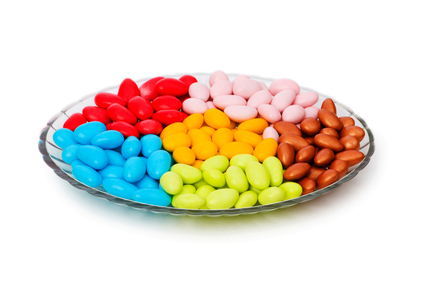
artificial food colorsEach year between 3 and 10% of school aged children are diagnosed with attention deficit/hyperactivity disorder (ADHD), also known as hyperactivity.

Most of these children are currently being treated with drugs. And these drugs have side effects – ranging from relatively minor (loss of appetite, weight loss, insomnia and mood swings) to major (suicidal thoughts, psychotic behavior and drug abuse).

So it is only natural for parents to ask whether there is a more natural approach that they could follow and, more specifically, whether diet could make a difference.

The Feingold Diet And Hyperactivity

To answer that question let’s start by looking at just one aspects of children’s diets – the increasing prevalence of artificial food colors and preservatives in the diet. The average child today is consuming over 10 pounds of food additives every year!

The idea that food additives – specifically artificial colors and preservatives – might be responsible for hyperactivity was first raised by Dr. Ben Feingold over 30 years ago. He devised the Feingold Diet – a diet that was free of artificial food colors, preservatives
and other artificial food additives.

Some small scale clinical studies suggested that the diet might be successful and millions of parents used the diet for their hyperactive children with great success.

But the medical authorities pooh-poohed the Feingold Diet. They pointed out that when parents are putting their child on a special diet they are also giving that child more attention – and it might be the parent’s increased attention that decreased the child’s hyperactive behavior.

They also pointed out when you eliminate food additives from the diet you are decreasing the “junk” food and increasing fresh fruits and vegetables – in short the child’s diet is much healthier.

So eventually the Feingold Diet lost popularity – but the idea that artificial food colors & preservatives might trigger hyperactivity has refused to go away.

Do Artificial Colors Cause Hyperactivity?

Angry boy portraitIn fact, a couple of recent studies have substantially strengthened the link between artificial ingredients and hyperactivity.

The first study was a meta-analysis of 15 previous studies looking at the effect of artificial food colors and preservatives on hyperactivity (Journal of Developmental & Behavioral Pediatrics, 25: 423-434, 2004).

This meta-analysis concluded that artificial food colors & preservatives caused an increase in hyperactivity in 28% of the children tested.

Almost all of the children in those previous studies were selected for the study because they had been diagnosed as hyperactive (ADHD). However, a more recent study looked at 297 children from Southampton England who had not been diagnosed as hyperactive (Lancet, 370: 1560-1567, 2007).

After an 8 week elimination phase in which artificial food colors and preservatives were removed from their diets, they were given a one week challenge consisting of fruit juice containing one of two different mixtures of four artificial food colors and the preservative sodium benzoate or a placebo.

The amount of artificial food colors and sodium benzoate in the fruit juice drinks was designed to match the average amount found in the English diet (which isn’t all that different from the American diet).

Once again, the results were clear. The amount of artificial food colors and preservatives found in the typical child’s diet is enough to trigger hyperactivity in many children.

The Bottom Line

So what does that mean to you if you have a hyperactive child? Could the simple act of eliminating artificial colors, flavors & preservatives from your child’s diet eliminate hyperactivity and give you back that calm, sweet child that you love?

  • The available data suggest that removing artificial food additives from your child’s diet can make a difference in their behavior, but I tend to side with experts who suggest that a holistic approach is best.
  • Eliminating food additives from your child’s diet is important, but also make sure the diet is a healthy one, that your child is getting all of the nutrients that they need and that they are getting all of the attention and support that they need.

These statements have not been evaluated by the Food and Drug Administration. This information is not intended to diagnose, treat, cure or prevent any disease.

Health Tips From The Professor