Are Omega-3s Needed For Strong Bones?

Why Are Omega-3s Needed For Strong Bones?

Author: Dr. Stephen Chaney

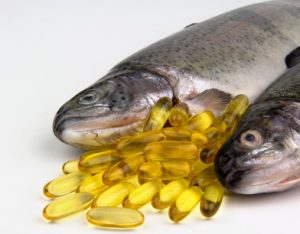
fish and fish oilOsteoporosis is one of the dreaded diseases associated with aging.

  • Over 50% of women and 25% of men will develop osteoporosis in their lifetime.

And the risk of osteoporosis is highest for Caucasians.

  • Over 40% of white women and 13% of white men will develop an osteoporotic fracture in their lifetime.

And osteoporotic fractures can be deadly. Bone fractures increase the risk of death 3-5-fold within the next few months. Moreover, the quality of life is diminished, and the risk of death is elevated for years after the fracture occurs.

So, if you are like many people, you are doing all you can to keep your bones strong so you will minimize your chances of developing osteoporosis. You probably even have a check list:

  • Resistance exercise (strengthens the bones you pull on)……Check
  • Walking (strengthens hip and leg bones)………………………Check
  • Adequate calcium & vitamin D (essential for strong bones)…Check
  • Magnesium & vitamin K (also important for strong bones)…..Check
  • Adequate protein (Muscle pulling on bone strengthens it)…..Check
  • Adequate omega-3s………………………………………………What!!!

You probably didn’t know about omega-3s. But recent research suggests they may also play a role in building strong bones and preventing osteoporosis. For example, studies show that omega-3s may influence bone metabolism by:

  • Enhancing absorption of calcium from the intestine.
  • Reducing the rate at which bone is broken down.
  • Increasing the rate at which new bone is built.

But large-scale population studies showing that omega-3 intake influences the risk of developing osteoporosis are lacking. The study ( Z Liu et al, Frontiers In Nutrition, 11: 1467559, 2023) I am discussing today was designed to fill that gap.

But before I describe the study, I should give you a quick review of bone metabolism.

Biochemistry 101: Bone Metabolism

bone metabolism osteoporosisTo truly understand osteoporosis and how to prevent it, you need to know a bit about bone metabolism. We tend to think of our bones as solid and unchanging, much like the steel girders supporting an office building. Nothing could be further from the truth. Our bones are dynamic organs that are in constant change throughout our lives.

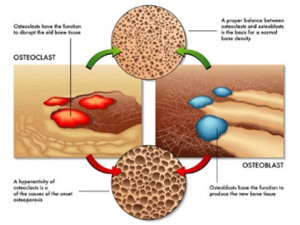
Cells called osteoclasts constantly break down old bone (a process called resorption), and cells called osteoblasts replace it with new bone (a process called accretion). Without this constant renewal process our bones would quickly become old and brittle.

In short, our bones are not inert. They are in constant flux. If we exercise regularly and get enough calcium, vitamin D, magnesium, and vitamin K from our diet, bone metabolism looks like this as we age.

  • When we are young, osteoblast activity predominates, so accretion (the bone building process) exceeds bone resorption, and our bones grow in size and density.
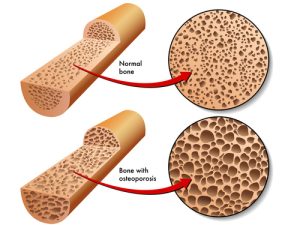
  • When we are adults, osteoblast and osteoclast activity are in balance. Thus, bone accretion and resorption are in balance, and our bone density stays constant. The top portion of the picture above depicts what happens when osteoclast and osteoblast activity are in balance.
  • However, as we age osteoclast activity predominates, and we start to lose bone density. Eventually our bones look like Swiss cheese and break very easily. This is called osteoporosis. The bottom portion of the picture depicts this.

We should also think of our bones as calcium reservoirs.  We need calcium in our bloodstream 24 hours a day for our muscles, brain, and nerves to function properly, but we only get calcium in our diet at discrete intervals. Consequently:

  • When we eat our body tries to store as much calcium as possible in our bones.
  • Between meals, we break down bone material so that we can release the calcium into our bloodstream that our muscle, brain & nerves need to function.

If we lead a “bone healthy” lifestyle, all of this works perfectly. We build strong bones during our growing years, maintain healthy bones during our adult years, and only lose bone density slowly as we age – maybe never experiencing osteoporosis. We always accumulate enough calcium in our bones during meals to provide for the rest of our body between meals.

I should note that this is the current paradigm for bone metabolism. The study I am discussing today is asking whether omega-3 fatty acids should also be considered as part of a bone-healthy lifestyle.

How Was This Study Done?

clinical studyThe investigators used data from NHANES (National Health And Nutrition Examination Survey), an ongoing study to assess the health and nutritional status of adults and children in the United States. Specifically, this study combined data from participants from the 2005-2010, 2013-2014, and 2017-2018 NHANES surveys.

The participants included in the survey:

  • Were greater than 50 years old.
  • Had completed two 24-hour dietary recall surveys to determine the omega-3 content of their diet (The average omega-3 intake of the two surveys was used for this study).
  • Had a bone mineral density (BMD) test performed using dual-energy X-ray absorptiometry (DXA) scans.

Participants were excluded from the study if they had incomplete diet or bone mineral density data or if they had a disease that affects bone metabolism.

A total of 8,889 participants were included in the study. They were divided into 3 categories based on their bone density:

  • Normal bone density (4,421 participants)
  • Osteopenia (3,952 participants)
  • Osteoporosis (516 participants)

Finally, the participants were divided into quartiles based on their omega-3 intake, and omega-3 intake was correlated with bone density.

Are Omega-3s Needed For Strong Bones?

Healthy BoneThe study results were as follows:

  • Omega-3 intake was inversely related to bone density. Simply put, that means:
    • The highest intake of omega-3s was observed in the group with normal bone density, and…
    • The lowest omega-3 intake was observed in the osteoporosis group.

When the participants were divided into quartiles based on their omega-3 intake:

  • Participants with the highest omega-3 intake were 29% less likely to develop osteoporosis than participants with the lowest omega-3 intake.

When the investigators looked at subgroups, they found stronger effects of omega-3s on osteoporosis risk for women, people under 60, and non-smokers. Specifically:

  • Women with the highest omega-3 intake were 35% less likely to develop osteoporosis.
  • People under 60 were 49% less likely to develop osteoporosis.
  • Non-smokers were 36% less likely to develop osteoporosis.

The investigators concluded, “This study demonstrates a significant inverse relationship between dietary omega-3 fatty acid intake and osteoporosis risk, suggesting omega-3s play a crucial role in bone health. However, further longitudinal studies are needed to confirm these studies and refine dietary recommendations for osteoporosis prevention.”

Why Are Omega-3s Needed For Strong Bones?

QuestionsYou are probably thinking,

  • “Calcium and magnesium are part of bone structure. Vitamin D and vitamin K facilitate the incorporation of calcium into bone. So, it is logical that these nutrients would be important for strong bones.”
  • “But what role do omega-3s play? They aren’t incorporated into bone, and they don’t affect calcium metabolism.”

Here is what the authors said about that:

  • Omega-3s are anti-inflammatory. They decrease production of the pro-inflammatory cytokines that stimulate osteoclasts – the cells that break down bone.
  • EPA and DHA are also converted to prostaglandins that stimulate osteoblasts – the cells that build new bone.
  • Finally, the authors said, “Omega-3 fatty acids, especially EPA and DHA, have been shown to enhance calcium absorption in the gut – a process crucial for maintaining optimal bone mineral density…Omega-3s …do this by altering the lipid composition of cell membranes, thereby affecting calcium channels and enhancing calcium availability for bone tissue.”

Let me help you understand that statement.

  • While we might think of our cell membranes as rigid structures, they are quite fluid. The closest analogy I can think of is a large lake. You may not see any waves or ripples, but if a leaf drops on the surface it doesn’t stay in one place. It moves. We can think of calcium channels in our membrane like leaves on the water. They move across the cell membrane.
  • How fast they move depends on the fluidity of the cell membrane. This is determined by the lipids (fats) in the cell membrane, which in turn is determined by the fats in our diet. This is the one case where it is literally true that we are what we eat.
    • When we have lots of saturated fats in our cell membranes, fluidity is low, and calcium channels move slowly across the membrane.
    • When we have omega-3 fats in our cell membrane, fluidity is high, and calcium channels move quickly across the cell membrane.
  • Calcium channels work best when they cluster together, and this works best with highly fluid, omega-3-rich cell membranes.

What Does This Mean For You?

Question MarkThis study strongly suggests that omega-3s play a role in bone health, and they may be important for reducing our risk of osteoporosis. The authors concluded, “The findings suggest that omega-3 fatty acids play a critical role in bone health, supporting the need for dietary recommendations that encourage omega-3 consumption as a preventative measure against osteoporosis.”

However, this is the first study of its kind, which is why the authors said, “Further longitudinal studies are needed to confirm these findings.”

However, my biggest concern with the study is that it did not include information on the intake of the other nutrients essential for bone health (calcium, vitamin D, magnesium, and vitamin K). We don’t know at present the importance of omega-3s for preventing osteoporosis relative to dietary intake of other bone-healthy nutrients. For example:

  • Are omega-3s important for bone health when intake of calcium and/or the other bone-healthy nutrients are low?
  • Or are omega-3s equally important for bone health under all conditions?

However, the good news is that omega-3s have many proven health benefits such as heart health, controlling blood pressure, and reducing inflammation. If they are also important for bone health, we can consider it an unexpected benefit.

With that in mind, there are two important takeaways for you:

  • Omega-3s were most effective at preventing osteoporosis in people under 60. That is entirely consistent with what we know about preventing osteoporosis. The best prevention strategy is to build strong bones while you are young and maintain strong bones as long as possible in your adult years.
  • The optimal reduction of osteoporosis risk in this study was seen with an omega-3 intake of 1.86 g/d. While more studies are needed to define the optimal dose of omega-3s for reducing osteoporosis risk, this dose is within the “sweet spot” for the other omega-3 benefits I mentioned.

The Bottom Line 

A recent study asked whether omega-3 fatty acids reduce the risk of osteoporosis.

The study found:

  • Omega-3 intake was inversely related to bone density.
  • When the participants were divided into quartiles based on their omega-3 intake:
  • Participants with the highest omega-3 intake were 29% less likely to develop osteoporosis than participants with the lowest omega-3 intake.
  • When the investigators looked at subgroups, they found stronger effects of omega-3s on osteoporosis risk for women, people under 60, and non-smokers.

The investigators concluded, “This study demonstrates a significant inverse relationship between dietary omega-3 fatty acid intake and osteoporosis risk, suggesting omega-3s play a crucial role in bone health. This supports the need for dietary recommendations that encourage omega-3 consumption as a preventative measure against osteoporosis.”

For more information on this study, why omega-3s reduce osteoporosis risk, and what this study means for you, read the article above.

These statements have not been evaluated by the Food and Drug Administration. This information is not intended to diagnose, treat, cure, or prevent any disease.

 _____________________________________________________________________________

My posts and “Health Tips From the Professor” articles carefully avoid claims about any brand of supplement or manufacturer of supplements. However, I am often asked by representatives of supplement companies if they can share them with their customers.

My answer is, “Yes, as long as you share only the article without any additions or alterations. In particular, you should avoid adding any mention of your company or your company’s products. If you were to do that, you could be making what the FTC and FDA consider a “misleading health claim” that could result in legal action against you and the company you represent.

For more detail about FTC regulations for health claims, see this link.

https://www.ftc.gov/business-guidance/resources/health-products-compliance-guidance

______________________________________________________________________

About The Author 

Dr. Chaney has a BS in Chemistry from Duke University and a PhD in Biochemistry from UCLA. He is Professor Emeritus from the University of North Carolina where he taught biochemistry and nutrition to medical and dental students for 40 years.  Dr. Chaney won numerous teaching awards at UNC, including the Academy of Educators “Excellence in Teaching Lifetime Achievement Award”. Dr Chaney also ran an active cancer research program at UNC and published over 100 scientific articles and reviews in peer-reviewed scientific journals. In addition, he authored two chapters on nutrition in one of the leading Biochemistry textbooks for medical students.

Since retiring from the University of North Carolina, he has been writing a weekly health blog called “Health Tips From the Professor”. He has also written two best-selling books, “Slaying the Food Myths” and “Slaying the Supplement Myths”. And most recently he has created an online lifestyle change course, “Create Your Personal Health Zone”. For more information visit https://chaneyhealth.com.

For the past 53 years Dr. Chaney and his wife Suzanne have been helping people improve their health holistically through a combination of good diet, exercise, weight control and appropriate supplementation.
 

Are Calcium Supplements Safe?

What Does This Study Mean For You?

Author: Dr. Stephen Chaney 

Pendulum
Pendulum

Should you avoid calcium supplements because they increase your risk of heart disease? Some headlines and blog posts would have you believe that. You may have been told that by your doctor. But is it true?

Unfortunately, this is another example of the swinging pendulum that we often see in supplement studies. One day a study comes out saying that calcium supplements increase the risk of heart disease. A few months later another study comes out saying that is not true. Calcium supplements don’t increase heart disease risk.

The pendulum keeps swinging until you are totally confused. You don’t know what to believe. And “experts” (including your doctor) pick one side or the other depending on what they believe about supplements in general.

I have told you before that good scientists wait until multiple studies have been done and base their opinion based on what the preponderance of studies show. I can tell you that multiple studies have been done and the preponderance of studies show that calcium supplements do not increase the risk of heart disease. But that doesn’t prove that calcium supplements are safe. It just shows they are likely to be safe.

That is why the authors of the current study (X Huo et al, Current Developments In Nutrition, volume 7, Issue 3: 100046, March 2023) analyzed the weaknesses of previous studies and tried to design a study that lacked those weaknesses.

How Was This Study Done?

clinical studyThe investigators searched through the literature to identify all placebo-controlled, randomized clinical trials (the gold standard for clinical studies) assessing the effects of calcium supplements alone or calcium supplements with vitamin D on heart disease, stroke, and all-cause mortality.

They restricted their analysis to studies with at least 500 participants that lasted for at least a year. They further restricted their analysis to studies whose authors were willing to share unpublished data on the number of participants in each treatment group who had a heart attack, stroke, or any other kind of heart disease; died from heart disease; or died from all causes during the study.

They ended up with 11 clinical studies in their analysis. The breakdown was as follows:

  • Seven studies with 8,634 participants compared calcium alone with placebo.
    • Participants in these studies averaged 71 years old and were 79% female.
    • The daily calcium dose varied from 1.0 to 1.5 g/day.
    • The mean duration of treatment was 4.1 years (range = 2-5 years).
  • Six studies with 46,804 participants compared calcium plus vitamin D with placebo.
    • Participants in these studies averaged 65 years old and were 98% female.
    • The daily calcium dose varied from 1.0 to 1.5 g/day and the daily vitamin D dose ranged from 400 to 2,000 IU/d.
    • The mean duration of treatment was 6 years (range = 1.5-7 years).
  • In case you were wondering about the math, some studies included both calcium alone versus placebo and calcium plus vitamin D versus placebo.

The authors then combined the data from all 11 studies and performed a meta-analysis on the effect of calcium alone on adverse heart outcomes and calcium plus vitamin D on adverse heart outcomes.

Are Calcium Supplements Safe? 

calcium supplementsThe results were clear-cut.

  • Calcium alone was not significantly associated with any increased risk of heart attack, stroke, heart disease of any kind, deaths from heart disease, and deaths from all causes.
  • Calcium with vitamin D was not significantly associated with any excess risk of heart attack, stroke, heart disease, deaths from heart disease, and deaths from all causes.

In their discussion, the authors pointed out two caveats to their conclusions:

  • In the calcium only portion of the meta-analysis the number of participants who experienced a stroke or types of heart disease other than heart attack and stroke was very small. So, they could not exclude an absolute increased risk of 0.3-0.5% per year for these types of rare events.
  • The participants in the 11 studies included in their meta-analysis were not selected based on their risk of heart disease. So, the authors could not exclude the possibility that calcium supplements might increase the risk of heart disease in people who were already at high risk of heart disease.

The authors concluded, “This meta-analysis demonstrated that calcium supplements were not associated with any significant hazard for heart disease, stroke, or all-cause mortality…Hence, for people with low bone density and low absolute risks of heart disease, the present report demonstrates no concern about excess heart disease risks associated with calcium supplements.

However, further large trials are needed to assess the efficacy and safety of combined supplementation with calcium and vitamin D for the prevention of osteoporotic fracture in older people at high risk of heart disease.”

What Does This Study Mean For You?

Questioning WomanAs I said above, the preponderance of evidence suggests that calcium supplementation does not increase your risk of heart disease. This study reinforces that conclusion.

I can’t guarantee that some future study won’t come to the opposite conclusion, and the pendulum will swing again. And I can’t guarantee that your doctor has kept up with the most recent literature on calcium supplementation and heart disease risk.

The authors of this study also pointed out that we don’t have any clinical studies on the effect of calcium on heart disease risk if you are already at high risk of heart disease. So, if you are at high risk of heart disease, any advice that I or your doctor give you about calcium supplementation might be wrong. We simply don’t know.

Finally, I realize that you may be equally confused about whether calcium supplementation can strengthen your bones and reduce your risk of osteoporosis. I won’t discuss that question today. Instead, I will refer you to two previous articles I have written in “Health Tips From the Professor” on that topic.

The first article discusses the flaws in previous studies claiming that calcium supplements are ineffective at increasing bone density and preventing osteoporotic fracture.

The second article describes a bone-healthy lifestyle.

The Bottom Line

While the preponderance of studies have shown that calcium supplementation does not increase the risk of heart disease, that conclusion remains controversial.

To clarify that issue, a group of investigators searched through the literature to identify all placebo-controlled, randomized clinical trials (the gold standard for clinical studies) assessing the effects of calcium supplements alone or calcium supplements with vitamin D on heart disease, stroke, and all-cause mortality. They then performed a meta-analysis of those clinical studies.

Their meta-analysis showed that:

  • Calcium alone was not significantly associated with any increased risk of heart attack, stroke, heart disease of any kind, deaths from heart disease, and deaths from all causes.
  • Calcium with vitamin D was not significantly associated with any excess risk of heart attack, stroke, heart disease, deaths from heart disease, and deaths from all causes.

This study strengthens the conclusion that calcium supplementation does not increase the risk of heart disease.

For more details about the study and references discussing the effect of calcium supplementation on bone density, read the article above.

These statements have not been evaluated by the Food and Drug Administration. This information is not intended to diagnose, treat, cure, or prevent any disease.

______________________________________________________________________________

My posts and “Health Tips From the Professor” articles carefully avoid claims about any brand of supplement or manufacturer of supplements. However, I am often asked by representatives of supplement companies if they can share them with their customers.

My answer is, “Yes, as long as you share only the article without any additions or alterations. In particular, you should avoid adding any mention of your company or your company’s products. If you were to do that, you could be making what the FTC and FDA consider a “misleading health claim” that could result in legal action against you and the company you represent.

For more detail about FTC regulations for health claims, see this link.

https://www.ftc.gov/business-guidance/resources/health-products-compliance-guidance

_______________________________________________________________________

About The Author

Dr. Chaney has a BS in Chemistry from Duke University and a PhD in Biochemistry from UCLA. He is Professor Emeritus from the University of North Carolina where he taught biochemistry and nutrition to medical and dental students for 40 years.  Dr. Chaney won numerous teaching awards at UNC, including the Academy of Educators “Excellence in Teaching Lifetime Achievement Award”. Dr Chaney also ran an active cancer research program at UNC and published over 100 scientific articles and reviews in peer-reviewed scientific journals. In addition, he authored two chapters on nutrition in one of the leading biochemistry text books for medical students.

Since retiring from the University of North Carolina, he has been writing a weekly health blog called “Health Tips From the Professor”. He has also written two best-selling books, “Slaying the Food Myths” and “Slaying the Supplement Myths”. And most recently he has created an online lifestyle change course, “Create Your Personal Health Zone”. For more information visit https://chaneyhealth.com.

For the past 45 years Dr. Chaney and his wife Suzanne have been helping people improve their health holistically through a combination of good diet, exercise, weight control and appropriate supplementation.
Are Vegan Diets Bad For Your Bones?

The Secrets To A Healthy Vegan Diet

Author: Dr. Stephen Chaney

Frail ElderlyOsteoporosis is a debilitating and potentially deadly disease associated with aging. It affects 54 million Americans. It can cause debilitating back pain and bone fractures. 50% of women and 25% of men over 50 will break a bone due to osteoporosis. Hip fractures in the elderly due to osteoporosis are often a death sentence.

As I discussed in a previous issue of “Health Tips From The Professor”, a “bone-healthy lifestyle requires 3 essentials – calcium, vitamin D, and weight bearing exercise. If any of these three essentials is presence in inadequate amounts, you can’t build healthy bones. In addition, other nutrients such as protein, magnesium, zinc, vitamin B12, and omega-3 fatty acids may play supporting roles.

Vegan and other plant-based diets are thought to be very healthy. They decrease the risk of heart disease, diabetes, and some cancers. However, vegan diets tend to be low in calcium, vitamin D, zinc, vitamin B12, protein, and omega-3 fatty acids. Could vegan diets be bad for your bones?

A meta-analysis of 9 studies published in 2009 (LT Ho-Pham et al, American Journal of Clinical Nutrition 90: 943-950, 2009) reported that vegans had 4% lower bone density than omnivores, but concluded this difference was “not likely to be clinically relevant”.

However, that study did not actually compare bone fracture rates in vegans and omnivores. So, investigators have followed up with a much larger meta-analysis (I Iguacel et al, Nutrition Reviews 77, 1-18, 2019) comparing both bone density and bone fracture rates in vegans and omnivores.

How Was This Study Done?

Clinical StudyThe investigators searched the literature for all human clinical studies through November 2017 that compared bone densities and frequency of bone fractures of people consuming vegan and/or vegetarian diets with people consuming an omnivore diet.

  • Vegan diets were defined as excluding all animal foods.
  • Vegetarian diets were defined as excluding meat, poultry, fish, seafood, and flesh from any animal but including dairy foods and/or eggs. [Note: The more common name for this kind of diet is lacto-ovo vegetarian, but I will use the author’s nomenclature in this review.]
  • Omnivore diets were defined as including both plant and animal foods from every food group.

The investigators ended up with 20 studies that had a total of 37,134 participants. Of the 20 studies, 9 were conducted in Asia (Taiwan, Vietnam, India, Korea, and Hong-Kong), 6 in North America (the United States and Canada), and 4 were conducted in Europe (Italy, Finland, Slovakia, and the United Kingdom).

Are Vegan Diets Bad For Your Bones?

Here is what the investigators found:

Unhealthy BoneBone density: The clinical studies included 3 different sites for bone density measurements – the lumbar spine, the femoral neck, and the total body. When they compared bone density of vegans and vegetarians with the bone density of omnivores, here is what they found:

Lumbar spine:

    • Vegans and vegetarians combined had a 3.2% lower bone density than omnivores.
    • The effect of diet was stronger for vegans (7% decrease in bone density) than it was for vegetarians (2.3% decrease in bone density).

Femoral neck:

    • Vegans and vegetarians combined had a 3.7% lower bone density than omnivores.
    • The effect of diet was stronger for vegans (5.5% decrease in bone density) than it was for vegetarians (2.5% decrease in bone density).

Whole body:

    • Vegans and vegetarians combined had a 3.2% lower bone density than omnivores.
    • The effect of diet was statistically significant for vegans (5.9% decrease in bone density) but not for vegetarians (3.5% decrease in bone density). [Note: Statistical significance is not determined by how much bone density is decreased. It is determined by the size of the sample and the variations in bone density among individuals in the sample.]

Bone FractureBone Fractures: The decrease in bone density of vegans in this study was similar to that reported in the 2009 study I discussed above. However, rather than simply speculating about the clinical significance of this decrease in bone density, the authors of this study also measured the frequency of fractures in vegans, vegetarians, and omnivores. Here is what they found.

  • Vegans and vegetarians combined had a 32% higher risk of bone fractures than omnivores.
  • The effect of diet on risk of bone fractures was statistically significant for vegans (44% higher risk of bone fracture) but not for vegetarians (25% higher risk of bone fractures).
  • These data suggest the decreased bone density in vegans is clinically significant.

The authors concluded, “The findings of this study suggest that both vegetarian and vegan diets are associated with lower bone density compared with omnivorous diets. The effect of vegan diets on bone density is more pronounced than the effect of vegetarian diets, and vegans have a higher fracture risk than omnivores. Both vegetarian and vegan diets should be appropriate planned to avoid dietary deficiencies associated with bone health.”

The Secrets To A Healthy Vegan Diet

Emoticon-BadThe answer to this question lies in the last statement in the author’s conclusion, “Both vegetarian and vegan diets should be appropriate planned to avoid dietary deficiencies associated with bone health.” 

The problem also lies in the difference between what a nutrition expert considers a vegan diet and what the average consumer considers a vegan diet. To the average consumer a vegan diet is simply a diet without any animal foods. What could go wrong with that definition? Let me count the ways.

  1. Sugar and white flour are vegan. A vegan expert thinks of a vegan diet as a whole food diet – primarily fruits, vegetables, whole grains, beans, nuts, and seeds. A vegan novice includes all their favorites – sodas, sweets, and highly processed foods. And that may not leave much room for healthier vegan foods.

2) Big Food, Inc is not your friend. Big Food tells you that you don’t need to give up the taste of animal foods just because you are going vegan. They will just combine sugar, white flour, and a witch’s brew of chemicals to give you foods that taste just like your favorite meats and dairy foods. The problem is these are all highly processed foods. They are not healthy. Some people call them “fake meats” or “fake cheeses”. I call them “fake vegan”.

If you are going vegan, embrace your new diet. Bean burgers may not taste like Big Macs, but they are delicious. If need other delicious vegan recipe ideas, I recommend the website https://forksoverknives.com.

3) A bone healthy vegan diet is possible, but it’s not easy. Let’s go back to the author’s phrase “…vegan diets should be appropriate planned to avoid dietary deficiencies associated with bone health.” A vegan expert will do the necessary planning. A vegan novice will assume all they need to do is give up animal foods. 

As I said earlier, vegan diets tend to be low in calcium, vitamin D, zinc, vitamin B12, protein, and omega-3 fatty acids. Let’s look at how a vegan expert might plan their diet to get enough of those bone-healthy nutrients.

    • Calcium. The top plant sources of calcium are leafy greens and soy foods at about 100-250 mg (10-25% of the DV) of calcium per serving. Some beans and seeds are moderately good sources of calcium. Soy foods are a particularly good choice because they are a good source of calcium and contain phytoestrogens that stimulate bone formation.

A vegan expert makes sure they get these foods every day and often adds a calcium supplement.

    • Protein. Soy foods, beans, and some whole grains are the best plant sources of protein.soy

It drives me crazy when a vegan novice tells me they were told they can get all the protein they need from broccoli and leafy greens. That is incredibly bad advice.

A vegan expert makes sure they get soy foods, beans, and protein-rich grains every day and often adds a protein supplement.

    • Zinc. There are several plant foods that supply around 20% the DV for zinc including lentils, oatmeal, wild rice, squash and pumpkin seeds, quinoa, and black beans.

A vegan expert makes sure they get these foods every day and often adds a multivitamin supplement containing zinc.

    • Vitamin D and vitamin B12. These are very difficult to get from a vegan diet. Even vegan experts usually rely on supplements to get enough of these important nutrients.

4) Certain vegan foods can even be bad for your bones. I divide these into healthy vegan foods and unhealthy “vegan” foods. 

    • Healthy vegan foods that can be bad for your bones include.
      • Pinto beans, navy beans, and peas because they contain phytates.
      • Raw spinach & swiss chard because they contain oxalates.
      • Both phytates and oxalates bind calcium and interfere with its absorption.
      • These foods can be part of a healthy vegan diet, but a vegan expert consumes them in moderation.
    • Unhealthy “vegan” foods that are bad for your bones include sodas, salt, sugar, and alcohol.
      • The mechanisms are complex, but these foods all tend to dissolve bone.
      • A vegan expert minimizes them in their diet.

5) You need more than diet for healthy bones. At the beginning of this article, I talked about the 3 Weight Trainingessentials for bone formation – calcium, vitamin D, and exercise. You can have the healthiest vegan diet in the world, but if you aren’t getting enough weight bearing exercise, you will have low bone density. Let me close with 3 quick thoughts:

    • None of the studies included in this meta-analysis measured how much exercise the study participants were getting.
    • The individual studies were generally carried out in industrialized countries where many people get insufficient exercise.
    • The DV for calcium in the United States is 1,000-1,200 mg/day for adults. In more agrarian societies dietary calcium intake is around 500 mg/day, and osteoporosis is almost nonexistent. What is the difference? These are people who are outside (vitamin D) doing heavy manual labor (exercise) in their farms and pastures every day.

In summary, a bone healthy vegan lifestyle isn’t easy, but it is possible if you work at it.

The Bottom Line 

A recent meta-analysis asked two important questions about vegan diets.

  1.     Do vegans have lower bone density than omnivores?

2) Is the difference in bone density clinically significant? Are vegans more likely to suffer from bone fractures?

The study found that:

  • Vegans had 5.5%–7% lower bone density than omnivores depending on where the bone density was measured.
  • Vegans were 44% more likely to suffer from bone fractures than omnivores.

The authors of the study concluded, ““The findings of this study suggest that…vegan diets are associated with lower bone density compared with omnivorous diets, and vegans have a higher fracture risk than omnivores…Vegan diets should be appropriate planned to avoid dietary deficiencies associated with bone health.”

In evaluating the results of this study, I took a detailed look at the pros and cons of vegan diets and concluded, “A bone healthy vegan lifestyle isn’t easy, but it is possible if you work at it.”

For more details about study and my recommendations for a bone healthy vegan lifestyle read the article above.

These statements have not been evaluated by the Food and Drug Administration. This information is not intended to diagnose, treat, cure, or prevent any disease.

Is Vitamin D Overhyped?

Are Clouds Gathering For the Sunshine Vitamin?

Author: Dr. Stephen Chaney

Clouds Obscuring The SunWe’ve known for years that vitamin D plays an essential role in calcium metabolism and is important for bone health. In fact, the use of vitamin D to prevent and cure rickets is one of the greatest success stories in the field of nutrition.

However, in recent years a number of studies have suggested that adequate vitamin D status was also important in reducing the risk of cancer, heart disease, diabetes, infectious diseases and autoimmune diseases – as well as overall mortality. Suddenly it seemed as if vitamin D could leap over tall buildings in a single bound (I realize that I’m probably dating myself with that analogy).

So when I saw the headlines about a new study (Theodoratou et al, BMJ, 2014;348:g2035 doi: 10.1136/bmj.g2035)  that concluded all of those benefits of vitamin D were unconfirmed, I was not surprised. After all there have been many examples of periods in which individual vitamins were reported to have miraculous benefits – only to have most of those benefits debunked by subsequent studies. I fully expected that would be the theme of this issue of “Health Tips From the Professor”.

But when I read the article I found that the study had multiple flaws (more about that latter). I also discovered that the same issue of the British Medical Journal had another, much better designed, study that came to the exact opposite conclusion (Chowdhury et al, BMJ 2014;348:g1903 doi: 10.1136/bmj.g1903).

Funny how only the first study made it into the headlines. It’s only the negative news that sells.

Is Vitamin D Overhyped?

The first study was a very large meta-analysis that included 107 systematic reviews, 74 meta-analyses of observation studies (studies that compare population groups) and 87 meta-analyses of randomized, placebo controlled trials. In case you were wondering, the total number of patients enrolled in these studies must have numbered in the hundreds of thousands.

The authors of the study reported that:

  • There was no relationship between vitamin D intake and cancer, heart disease, autoimmune disease, infectious diseases, diabetes and other diseases. In other words, they concluded that most of the recent excitement about vitamin D was just hype.
  • There was also no evidence that vitamin D increased bone density or reduced the risk of fractures and falls in older people – in contrast to many previous studies.

Based on this evidence the authors said “universal conclusions about vitamin Ds benefits cannot be drawn [from current data]” and that vitamin D “might not be as essential as previously thought in maintaining bone mineral density”.

Both of those statements are pretty revolutionary, but a study this large has to be true – right? The answer is a definite maybe. The problem is that many of the studies included in this meta-analysis were poorly designed by today’s standards. Remember the old saying “garbage in, garbage out”.

The Study Is Flawed

My specific criticisms of the study are:

1)     The conclusions about vitamin D and bone density were seriously flawed. The authors acknowledged that previous studies have shown that calcium and vitamin D together increased bone density, but they considered calcium to be a confounding variable and only included clinical trials using vitamin D supplementation alone. That shows a complete misunderstanding of the biochemical role of vitamin D.

The purpose of vitamin D is to maintain constant levels of blood calcium, not to build strong bones.

  • When blood levels of calcium are high, vitamin D lowers it by depositing the calcium in bones.
  • When blood levels of calcium are low, vitamin D raises it by leaching calcium from bone.

That’s why vitamin D and calcium work together. It is utter nonsense to expect vitamin D to increase bone density or prevent fractures unless you make sure that calcium intake is at least adequate.

2)     Most studies of vitamin D supplementation did not stratify the data based on low versus high levels of 25-hydroxy vitamin D at the beginning of the study. That’s important because you would only expect vitamin D supplementation to be of benefit in people with low levels of 25-hydroxy vitamin D to begin with. If their 25-hydroxy vitamin D levels are already optimal, vitamin D supplementation is unlikely to be of additional benefit.

3)     Finally, the authors did not separate the studies based on whether vitamin D2 or vitamin D3 was used. That’s important because some recent studies have suggested that D3 is more beneficial than D2.

Is Vitamin D Beneficial After All?

SunThe second study came to the exact opposite conclusions. It was also a very large study. It included 73 observational studies (849,412 participants) and 22 randomized, placebo controlled studies (30,716) participants. Here is what the authors of this study concluded.

  • High blood levels of 25-hydroxy vitamin D decreased the risk of heart disease by 35%, cancer by 14% and overall mortality by 35%.
  • Supplementation with vitamin D3 reduced overall mortality by 11%, while supplementation with vitamin D2 increased overall mortality by an insignificant 4%.
  • 65% of the US population can be classified as vitamin D insufficient (blood levels of 25-hydroxy vitamin D of below 30 ng/ml) and 4% as severely deficient in vitamin D (blood levels below 10 ng/ml)
  • Vitamin D deficiency contributes to 13% of the deaths in the United States. For comparison the corresponding numbers for other major risk factors are: smoking – 20%, physical inactivity – 11% and alcohol – 9%.
  • About the only point on which the two studies agreed was that there is a need for more, better designed studies to clarify the benefits of vitamin D.

The Bottom Line:

1)     Two studies were published in the April 2014 issue of the British Medical Journal. The first concluded that all of the supposed benefits of vitamin D – including increasing bone density – were not supported by the available data. The second study concluded that adequate intake of vitamin D significantly reduced deaths due to heart disease and cancer and also significantly reduced overall mortality. Somehow, only the first study made it into the headlines. Why does that not surprise me?

2)     The suggestion in the first study that vitamin D may not be essential for strong bones is based on a complete misunderstanding of the role of vitamin D in the body. There are ample clinical studies showing that vitamin D and calcium together are essential for strong bones. Nobody who understands biochemistry would expect vitamin D to increase bone density in the absence of calcium, but the authors only considered studies that excluded calcium in drawing their conclusion that vitamin D did not increase bone density.

3)     The only point of agreement between the two studies is that more and better studies are needed to sort out the benefits of vitamin D and what levels of vitamin D are optimal. I wholeheartedly agree.

4)     My advice is to ignore the headlines telling you that vitamin D is dead. On the other hand, don’t get caught up in the hype and buy megadoses of vitamin D supplements. While the evidence is rock solid that vitamin D and calcium together are essential for strong bones, the jury is still out on some of the other health benefits of vitamin D.

5)     If you are supplementing with vitamin D you should know that the RDAs for vitamin D are 600 IU for ages 1-70 and 800 IU over 70. The safe upper limit has been set at 4,000 IU. You should only go above that on a doctor’s advice.

6)     However, people metabolize vitamin D with different efficiencies, so I strongly recommend that you get your blood levels of 25-hydroxy vitamin D tested and let your doctor help you determine how much vitamin D you should be getting.

7)     Finally, a number of recent studies suggest that vitamin D3 may be more effective than vitamin D2, so I only recommend supplements that contain D3.

These statements have not been evaluated by the Food and Drug Administration. This information is not intended to diagnose, treat, cure or prevent any disease.

Health Tips From The Professor