Can Folate Prevent Obesity In Adolescents?

When Pigs Fly

Author: Dr. Stephen Chaney

obesity is toxicThe obesity epidemic has reached our children!

  • The prevalence of obesity in children and adolescents has increased 3-fold in the past 30 years.

According to the CDC:

  • In 2023 almost 20% of US children and adolescents (ages 6-17) were obese.
    • And if you expand the category to overweight AND obese the percentage is over 30%.
  • The medical costs for treating obese children and adolescents in 2023 was $1.3 billion. That’s:
    • $116 higher per person for obese children than children of normal weight.
    • $310 higher per person for severely obese children than children of normal weight.

In the short-term, obesity in children and adolescents affects:

  • Growth
  • Hormone balance.
  • Self-image and psychological wellness.

Longer term, obesity in children and adolescents increases the risk of:

  • Heart Disease.
  • Diabetes and other metabolic disorders.
  • Certain cancers.
  • Premature death.

That’s why recent headlines suggesting that folate decreases the risk of obesity in children and adolescents were so intriguing.

  • We know that around 13% of boys and 40% of girls aged 12-15 have inadequate folate intake.
  • Could something as simple as a folate supplement decrease the risk of your child or teenager becoming obese?

Maybe. But before you rush out and buy folate supplements for your children, perhaps we should examine the study (F Yan et al. BMC Pediatrics, 26: 141, 2026) behind the headlines and see if there is a simpler explanation of the data.

How Was This Study Done?

clinical studyThis study utilized data from the US National Health and Nutrition Examination Survey (NHANES) that is conducted by the CDC on a continuous basis. This particular study utilized data collected from 49,693 Americans of all ages and ethnicities between 2009 and 2018.

For this study, children were classified as ages 6-11 years (4458 individuals) and adolescents as ages 12-19 years (4946 individuals).

Dietary folate intake was calculated from two 24-hour dietary recalls spaced 3-10 days apart.

  • The data only included folates from food sources and did not include any dietary supplements.
  • The first dietary recall interview was conducted in person and the second by phone.
  • Daily folate intake was calculated as folate intake in mcg per 1,000 calories of food (mcg/1,000 calories).
  • Finally, the participants were divided into quartiles: Q1 <143, Q2 143-182, Q3 182-235, Q4 ≥235, all in units of mcg/1,000 calories.

The study correlated folate intake with both overall overweight/obesity and central obesity.

  • Overweight/obesity was defined as a BMI ≥ than the sex- and age-specific 85Th percentile for BMI.
  • Central obesity was defined as a waist circumference ≥ than the sex- and age-specific 90th percentile corrected for height.

Can Folate Prevent Obesity In Adolescents?

folic acidThe data appeared to be convincing. For example:

In the total population of children plus adolescents (9,405 individuals):

  • Folate intake was negatively corelated with obesity.
  • When folate intake was analyzed as a continuous variable, for every unit increase of dietary folate intake:
    • The percentage of overweight/obese children and adolescents decreased by 11%.
    • The percentage of children and adolescents with central obesity decreased by 13%.
  • When folate intake was analyzed by quartiles.
    • When quartile 2 (folate intake of 143-182) was compared to quartile 1 (folate intake <143), overweight/obesity decreased by 26% and central obesity by 23%.
    • When quartile 3 (folate intake of 182-235) was compared to quartile 1, overweight/obesity decreased by 29% and central obesity by 26%.
    • When quartile 4 (folate intake ≥235) was compared to quartile 1, overweight/obesity decreased by 35% and central obesity decreased by 36%.

As you might have guessed from the previous data, the effect of folate on the risk of obesity/overweight and central obesity was non-linear. There was an inflection point around 192 mcg/1,000 calories.

    • When folate intake was below 192 mcg/1,000 calories, an increase of 100 mcg/1,000 calories decreased the risk of overweight/obesity and central obesity by 35%.
    • When folate intake was above 192 mcg/1,000 calories, the effect of additional folate intake was not statistically significant.

When they broke down the data by age and gender:

  • The effect of folate intake on overweight/obesity and central obesity was not significant in children.
  • However, the effect of folate intake on overweight/obesity and central obesity was highly significant in adolescents and the effect was gender specific.
    • When comparing folate intake in the Q4 range (≥235 mcg/1,000 calories) to the Q1 range (<143 mcg/1,000 calories) overweight/obesity:
      • Was reduced by 47% in men and 50% in women.
    • When comparing folate intake in the Q4 range to the Q1 range central obesity:
      • Was reduced by 58% in women, but no statistically significant decrease was seen in men.

The authors concluded, “This cross-sectional study indicates that higher dietary folate is associated with lower odds of overweight/obesity and central obesity in children and adolescents in the United States. The association exhibits non-linear characteristics with potential thresholds of 190 mcg/1,000 calories and 195 mcg/1,000 calories, respectively. It is worth noting that this association is mainly significant in the adolescent population. This study reveals a possible dose-response relationship between dietary folate and obesity in children and adolescents.”

When Pigs Fly

If Pigs Could FlyIt would be easy to accept the conclusions of these authors at face value. After all, the statistical correlation between higher folate intake and the risk of obesity in adolescents was very strong.

And the authors invoked a lot of impressive sounding metabolic mumbo-jumbo to explain how folate could affect appetite and body weight. [I’m qualified to call it mumbo-jumbo because I taught human metabolism to medical students for 40 years.]

You might be tempted to rush out and buy a folate supplement for your teenager, especially if they are starting to get a bit plump. But then, you might think, “Wait. It couldn’t be that simple. It just doesn’t sound plausible that folate intake has anything to do with obesity”.

The 16th century English and Scotts had a phrase for impossible events. They were things that only happened “When pigs fly”. The original version of the saying was, “When pigs fly with their tails forward.” In other words, the pigs were not only flying. They were flying backwards.

What Could Go Wrong?

SkepticAs I said above, the inverse association between folate intake and obesity in adolescents was very strong. What could go wrong? As Mark Twain said years ago, “There are lies. There are damn lies. And then there are statistics.” Let me explain.

This was an association study. Association studies measure the association between a single variable (folate intake) and an outcome (obesity). But, for the results to be reliable they need to be corrected for other variables that affect the same outcome. There are two kinds of variables – known variables and confounding variables.

  • The known variables for this study were age, sex, race, poverty level, physical activity, and total energy intake. They were all corrected for in this study.
  • “Confounding variables” are unknown variables that also affect the outcome of the study. But since they are unknown, they are not corrected for.

Let me give you a simplistic example of a confounding variable. Let’s say you were doing a study of dietary habits, and you found an association between ice cream consumption and mortality. You might conclude that ice cream consumption is bad for you. It increases your risk of dying.

But then you might remember that ice cream consumption increases during the summer. And then you might reason that people swim more during the summer, and there is a correlation between swimming and drowning deaths.

Swimming could be a confounding variable. To make sure that your initial conclusion that ice cream increases the risk of dying was correct, you would need to correct your data for swimming deaths during the summer and see if you still found a correlation between ice cream consumption and mortality.

In this study there was an inverse correlation between folate consumption and energy intake (calories consumed per day). The authors focused on the decreased energy intake associated with high folate intake. They postulated several mechanisms to explain this correlation, but their arguments were weak.

They should have been focusing on the other end of the spectrum. Adolescents in the lowest quartile of folate intake were consuming 10% more calories than those in the top quartile, yet their folate intake was 65% less.

The authors should have been asking, “How do you consume 10% more calories and end up with 65% less folate?” The answer is obvious.

  • The adolescents in the lowest quartile must be consuming a lot more highly processed foods – otherwise know as junk and convenience foods.

So, let’s ask what else we know about the situation:

  • Adolescents like to eat junk food.
  • There is strong correlation between consumption of highly processed foods and obesity.
  • The mechanisms underlying the correlation between highly processed foods and obesity have been well defined, and they have nothing to do with folate intake.
  • Highly processed food consumption was an obvious confounding variable, but the authors never asked what foods the adolescents in each folate quartile were eating.

This is sounding a lot like the correlation between ice cream consumption and death. The pigs are flying.

So, if you want your teens to be slim and healing, don’t reach for a folate supplement. Instead, try to convince your teens to cut back on their junk food consumption.

The Bottom Line

A recent study found a strong inverse association between folate intake and obesity in adolescents. For example:

  • When the highest folate intake was compared to the lowest, the risk of overweight and obesity was decreased by 35%.

However, you can’t believe every published study. In this case, the authors made a critical mistake in interpreting their data. The actual interpretation of their data should have been much different.

For more details about this study, what the study should have concluded, and what the study means for you, read the article above.

These statements have not been evaluated by the Food and Drug Administration. This information is not intended to diagnose, treat, cure or prevent any disease.

 _____________________________________________________________________________

My posts and “Health Tips From the Professor” articles carefully avoid claims about any brand of supplement or manufacturer of supplements. However, I am often asked by representatives of supplement companies if they can share them with their customers.

My answer is, “Yes, as long as you share only the article without any additions or alterations. In particular, you should avoid adding any mention of your company or your company’s products. If you were to do that, you could be making what the FTC and FDA consider a “misleading health claim” that could result in legal action against you and the company you represent.

For more detail about FTC regulations for health claims, see this link.

https://www.ftc.gov/business-guidance/resources/health-products-compliance-guidance

 ______________________________________________________________________

About The Author 

Dr. Chaney has a BS in Chemistry from Duke University and a PhD in Biochemistry from UCLA. He is Professor Emeritus from the University of North Carolina where he taught biochemistry and nutrition to medical and dental students for 40 years.

Dr. Chaney won numerous teaching awards at UNC, including the Academy of Educators “Excellence in Teaching Lifetime Achievement Award”.

Dr Chaney also ran an active cancer research program at UNC and published over 100 scientific articles and reviews in peer-reviewed scientific journals. In addition, he authored two chapters on nutrition in one of the leading biochemistry text books for medical students.


Since retiring from the University of North Carolina, he has been writing a weekly health blog called “Health Tips From the Professor”. He has also written two best-selling books, “Slaying the Food Myths” and “Slaying the Supplement Myths”. And most recently he has created an online lifestyle change course, “Create Your Personal Health Zone”. For more information visit https://chaneyhealth.com.


For the past 54 years Dr. Chaney and his wife Suzanne have been helping people improve their health holistically through a combination of good diet, exercise, weight control and appropriate supplementation.


Could Toxic Chemicals Lower Our Child’s IQ?

Is The Science Solid? 

Author: Dr. Stephen Chaney 

Toxic-BarrelsAs Earth Day approaches, our thoughts turn to our environment. Most of the concern is with global warming, and rightly so. But should we be concerned about the effects of toxic chemicals in our environment on our health – or, more importantly the health of our children?

The short answer is, “Maybe.” But let’s delve a little deeper.

In a past issue of “Health Tips From the Professor” I examined the evidence suggesting that toxic chemicals in the home could cause childhood asthma. That is alarming because asthma can predispose individuals to other diseases and affects quality of life.

But what if that were only the tip of the iceberg? For example, a recent headline stated: “More Toxic Chemicals [In Our Environment] Are Damaging Children’s Brains”. If that headline is true, it’s downright scary.

The authors of this study suggested that toxic chemicals which are abundant in our environment can cause decreases in IQ and aggressive or hyperactive behavior in children – and that those changes may be permanent.

The Study Behind The Headlines

clinical studyThe paper that generated the headlines (Grandjean & Landrigan, The Lancet Neurology, 13: 330-338, 2014) was a review of the literature, not an actual clinical study.

Based on published clinical studies, the authors identified 11 chemicals commonly found in the environment as developmental neurotoxins (toxins that interfere with normal brain development) based.

This finding compares with 6 developmental neurotoxins that they were able to identify in a similar study in 2006.

The authors were not claiming that the number or amount of neurotoxic chemicals changed between 2006 and 2014. They were saying that science has advanced to the point where we can classify six more chemicals that have been in our environment for years as developmental neurotoxins.

Even more worrisome, the authors postulate that many more environmental neurotoxins remain undiscovered, and these environmental neurotoxins come from many sources.

  • Some are industrial pollutants.
  • Some are persistent groundwater contaminants.
  • Some are insecticides and herbicides used in agriculture.
  • Some are found in common household products and furnishings.

Could Toxic Chemicals Lower Our Child’s IQ?

Confused ChildTo answer that question, you need to look at some of the studies they cited in their review. For example:

The effects of many of the neurotoxic chemicals they identified on IQ were difficult to quantify. However, the authors estimated that average exposure of US children to just 3 of the best studied chemical neurotoxins (lead, methylmercury, and organophosphate pesticides) was sufficient to lower their average IQ by 1.6 points.

The authors spoke of the environmental neurotoxins they identified as representing a “silent pandemic of a chemical brain drain” that could cost the US economy billions of dollars.

One of the blog posts I read on this topic summarized the consequences in a very graphic manner. It said:

If one child’s IQ is reduced by 5 points, it doesn’t appear to make a big difference.  For example, that child might be:

  • A little slower to learn.
  • A little shorter of attention.
  • A little less successful at tests and at work.

That might result in $90,000 in lost lifetime earnings.

However, if the average IQ of every child in the US were decreased by 5 points, the effect becomes significant:

  • Only half as many members of the next generation would be “intellectually gifted”.
  • Twice as many of the next generation would be “intellectually impaired”.
  • Lost productivity could be in the billions.

Of course, statements like that are a bit over the top. Drs. Grandjean and Landrigan did not claim that the net effect of the chemicals they identified was a 5-point drop in IQ. Nor did they claim that all US children were affected equally.

Still, it’s enough to make you think.

Are Toxic Chemicals Causing Behavior Problems?

adhd symptoms childrenThe authors cited numerous studies linking the chemical neurotoxins they identified to aggression and hyperactivity. But perhaps the most compelling reason to suspect that environmental chemicals may be affecting brain development is the spiraling incidence of developmental disorders such as autism and ADHD. For example:

  • Autism has increased by 78% since 2007 and now affects 1 of 88 eight-year-old children.
  • ADHD has increased by 43% since 2003 and now affects 11% of children aged 4-17.

Some of this increase could be due to better diagnosis of these conditions, but nobody believes that all of it is due to improved diagnosis. The authors claim that much of this increase is likely due to environmental exposure to the kinds of developmental neurotoxins they identified.

Is The Science Solid?

The TruthOf course, you have seen these kinds of warnings before. Is this crazy talk, or is it something you should take seriously? What is the truth? Is the science solid?

The problem is this is a very difficult area of research. You can’t do a gold standard double-blind, placebo-controlled clinical trial. Nobody in their right mind would give one group of children toxic chemicals and the other group a placebo.

The studies cited in this paper were mostly population studies. Basically, this means that they compared children with exposure to certain toxic chemicals to a control group that was as similar as possible to the first group except that their exposure to the toxic chemicals was less.

The limitation of this kind of study is obvious. We are usually comparing children from different locations or of different backgrounds. We almost never know if we have controlled for all possible variables so that the groups are truly identical.

Consequently, it becomes important to ask how many studies come to the same conclusion. For some of the toxic chemicals, such as lead, methylmercury, and organophosphate pesticides, the weight of evidence is very strong. For some of the newer additions to their list of developmental neurotoxins, it is clear that the chemicals have neurotoxic properties, but the significance of those effects on the developing human brain are hard to quantify at this point.

So, rather than ask, “Is this true?”, we should ask, “What if it were true?” The consequences of lowered IQ and developmental behavioral problems are so significant that it may not make sense to wait until we have unassailable scientific evidence before we act.

We don’t need to panic. The science isn’t that strong. But we should take sensible precautions. The developmental neurotoxins identified in this study come from many sources. Here are the sources and sensible precautions we can take.

  • Some are industrial pollutants. For these, we need to lobby for better environmental regulation.
  • Some are persistent groundwater contaminants. For these we need to drink purified water whenever possible.
  • Some are insecticides and herbicides used in agriculture. For these we need to buy organic, locally grown produce whenever possible.
  • Some are found in common household products and furnishings. For these we need to become educated label readers and use non-toxic products in our home whenever possible.

The Bottom Line:

1) A recent review claims that there is a good scientific basis for classifying at least 11 environmental chemicals as developmental neurotoxins that are likely to reduce IQ and contribute to behavioral problems in US children.

2) The science behind the claims in this review is solid, but not iron clad. This is an area of science where it is virtually impossible to come up with a definitive conclusion.

3) However, there are times when we need to simply ask ourselves: “What if it were true?” The consequences of lowered IQ and developmental behavioral problems are so significant that it may not make sense to wait until we have unassailable scientific evidence before we act.

4) We all need to be guardians of our personal environment. The article above identifies practical steps each of us can take.

For more details and to learn what practical steps you can take to reduce your family’s exposure to toxic chemicals, read the article above.

These statements have not been evaluated by the Food and Drug Administration. This information is not intended to diagnose, treat, cure or prevent any disease.


How Much Omega-3s Do Children Need?

What Does This Study Mean For Your Children?

Author: Dr. Stephen Chaney 

It is back to school time again. If you have children, you are probably rushing around to make sure they are ready.

  • Backpack…Check.
  • Books…Check
  • School supplies…Check
  • Omega-3s…???

Every parent wants their child to do their best in school. But do they need omega-3s to do their best? I don’t need to tell you that question is controversial.

Some experts claim that omega-3 supplementation in children improves their cognition. [Note: Cognition is defined as the mental action or process of acquiring knowledge and understanding through thought, experience, and the senses. In layman’s terms that means your child’s ability to learn.]

Other experts point out that studies in this area disagree. Some studies support these claims. Others don’t. Because the studies disagree these experts conclude there is no good evidence to support omega-3 supplementation in children.

The authors of this study (ISM van der Wurff et al, Nutrients, 12: 3115, 2020) took a different approach. They asked why these studies disagreed. They hypothesized that previous studies disagreed because there is a minimal dose of omega-3s needed to achieve cognitive benefits in children. In short, they were asking how much omega-3s do children need.

They based their hypothesis on recent studies showing that a minimum dose of omega-3s is required to show heart health benefits in adults.

What Have We Learned From Studies on Omega-3s And Heart Health?

Omega-3s And Heart DiseaseThe breakthrough in omega-3/heart health studies came with the development of something called the omega-3 index. Simply put, omega-3s accumulate in our cell membranes. The omega-3 index is the percent omega-3s in red blood cell membranes and is a good measure of our omega-3 status.

Once investigators began measuring the omega-3 index in their studies and correlating it with heart health, it became clear that:

  • An omega-3 index of ≤4% correlated with a high risk of heart disease.
  • An omega-3 index of ≥8% correlated with a low risk of heart disease.
  • Most Americans have an omega-3 index in the 4-6% range.
  • Clinical studies in which participants’ omega-3 index started in the low range and increased to ~8% through supplementation generally showed a positive effect of omega-3s on reducing heart disease risk. [I say generally because there are other factors in study design that can obscure the effect of omega-3s.]

This is the model that the authors adopted for their study. They asked how much omega-3s do children need to show a positive effect of omega-3s on their cognition (ability to learn).

How Was The Study Done?

Clinical StudyThe authors included 21 studies in their analysis that met the following criteria:

  • All studies were placebo controlled randomized clinical trials.
  • The participants were 4-25 years old and had not been diagnosed with ADHD.
  • Supplementation was with the long-chain omega-3s DHA and/or EPA.
  • The trial assessed the effect of omega-3 supplementation on cognition.

I do not want to underestimate the difficulties the authors faced in their quest. The individual studies differed in:

  • The dose of omega-3s.
    • The relative amount of DHA and EPA.
    • Whether omega-3 index was measured. Only some of the studies measured fatty acid levels in the blood. The authors were able to calculate the omega-3 index in these studies.
  • How cognition (ability to learn) was measured.
  • The age of the children.
    • 20 of the studies were done with children (4-12 years old) or late adolescents (20-25 years old).
    • Only one study was done on early to middle adolescents (12-20 years old).
  • All these variables influence the outcome and could obscure the effect of omega-3s on cognition.

In short, determining the omega-3 dose-response for an effect on cognition was a monumental task. It was like searching for a needle in a haystack. These authors did a remarkable job.

How Much Omega-3s Do Children Need?

Child Raising HandHere is what the scientists found when they analyzed the data:

  • 60% of the studies in which an omega-3 index of ≥6% was achieved showed a beneficial effect of omega-3 supplementation on cognition (ability to learn) compared to 20% of the studies that did not achieve an omega-3 index of 6%.
    • That is a 3-fold difference in effectiveness once a threshold of 6% omega-3 index was reached.
  • 50% of the studies in which a dose of ≥ 450 mg/day of DHA + EPA was used showed a beneficial effect of omega-3 supplementation on cognition (ability to learn) compared to 25% of the studies that used <450 mg/day DHA + EPA.
    • That is a 2-fold difference in effectiveness once a threshold of 450 mg/day DHA + EPA was given.

The authors concluded, “Daily supplementation of ≥450 mg/day DHA and/or EPA and an increase in the omega-3 index to >6% makes it more likely to show efficacy [of omega-3s] on cognition (ability to learn) in children and adolescents.”

What Does This Study Tell Us?

Question MarkIt is important to understand what this study does and does not tell us.

This study does not:

  • Prove that omega-3 supplementation can improve cognition (ability to learn) in children and adolescents.
  • Define optimal levels of DHA + EPA.
  • Tell us whether DHA, EPA, or a mixture is better.

It was not designed to do any of these things. It was designed to give us a roadmap for future studies. It tells us how to design studies that can provide definitive answers to these questions.

This study does:

  • Define a threshold dose of DHA + EPA for future studies (450 mg/day).
  • Tells us how to best use the omega-3 index in future studies. To obtain meaningful results:
    • Participants should start with an omega-3 index of 4% or less.
    • Participants should end with an omega-3 index of 6% or greater.
  • In my opinion, future studies would also be much more effective if scientists in this area of research could agree on a single set of cognitive measures to be used in all subsequent studies.

In short, this study provides critical information that can be used to design future studies that will be able to provide definitive conclusions about omega-3s and cognition in children.

What Does This Study Mean For Your Children?

child geniusAs a parent or grandparent, you probably aren’t interested in optimizing the design of future clinical studies. You want answers now.

Blood tests for omega-3 index are available, but they are not widely used. And your insurance may not cover them.

So, for you the most important finding from this study is that 450 mg/day DHA + EPA appears to be the threshold for improving a child’s cognition (their ability to learn).

  • 450 mg/day is not an excessive amount. The NIH defines adequate intakes for omega-3s as follows:
  • 4-8 years: 800 mg/day
  • 9-13 years: 1 gm/day for females, 1.2 gm/day for males
  • 14-18 years: 1.1 gm/day for females and 1.6 gm/day for males.
  • With at least 10% of that coming from DHA + EPA

Other organizations around the world recommend between 100 mg/day and 500 mg/day DHA + EPA depending on the age and weight of the child and the organization.

  • Most children need supplementation to reach adequate omega-3 intake. The NIH estimates the average child only gets around 40 mg/day omega-3s from their diet. No matter which recommendation you follow, it is clear that most children are not getting the recommended amount of DHA + EPA in their diet.
  • Genetics.
  • Diet.
  • Environment.
  • The value placed on learning by parents and peers.

Supplementation is just one factor in your child’s ability to learn. But it is one you can easily control. . And if your child is like most, he or she is probably not getting enough omega-3s in their diet.

The Bottom Line 

It is back to school time again. Every parent wants their child to do their best in school. But do they need omega-3s to do their best? I don’t need to tell you that question is controversial.

Some studies support these claims, but others don’t. Because the studies disagree some experts conclude there is no good evidence to support omega-3 supplementation in children.

The authors of a recent study took a different approach. They asked why these studies disagreed. They hypothesized that previous studies disagreed because there was a minimal dose of omega-3s needed to achieve cognitive benefits in children. They asked how much omega-3s children need.

They analyzed the data from 21 previous studies looking at the effect of omega-3 supplementation on cognition (ability to learn) in children and adolescents. Their analysis showed:

  • 60% of the studies in which an omega-3 index of ≥6% was achieved showed a beneficial effect of omega-3 supplementation on cognition (ability to learn) compared to 20% of the studies that did not achieve an omega-3 index of 6%.
    • That is a 3-fold difference in effectiveness once a threshold of 6% omega-3 index was reached.
  • 50% of the studies in which a dose of ≥ 450 mg/day of DHA + EPA was used showed a beneficial effect of omega-3 supplementation on cognition (ability to learn) compared to 25% of the studies that used <450 mg/day DHA + EPA.
    • That is a 2-fold difference in effectiveness once a threshold dose of 450 mg/day DHA + EPA was given.

The authors concluded, “Daily supplementation of ≥450 mg/day DHA + EPA and an increase in the omega-3 index to >6% makes it more likely to show efficacy [of omega-3s] on cognition (ability to learn) in children and adolescents.”

For more details on the study and what it means for your children and grandchildren, read the article above.

These statements have not been evaluated by the Food and Drug Administration. This information is not intended to diagnose, treat, cure, or prevent any disease.

Is Diabetes Increasing In Our Children?

Why Is Diabetes Increasing In Our Children? 

Author: Dr. Stephen Chaney

Last week I shared a study documenting the alarming increase in ultraprocessed food consumption by our children and the effect it was having on their health (https://www.chaneyhealth.com/healthtips/are-we-killing-our-children-with-kindness/). For example, childhood obesity is closely linked to ultraprocessed food consumption.

In case you don’t understand why that is, here is what I said last week: “Because ultraprocessed foods are made in a factory, not grown on a farm:

  • They are high in fat, sugar, and refined carbohydrates. That means they have a high caloric density. Each bite has 2-3 times the calories found in a bite of fresh fruits and vegetables.
  • Even worse, the food industry has weaponized our natural cravings for sweet, salty, and fatty foods. They feed their prototypes to a series of consumer tasting panels until they find the perfect blend of sugar, salt, and fat to create maximum craving.
  • And if that weren’t enough, they add additives to create the perfect flavor and “mouth appeal”.
    • It is no wonder that clinical studies have found a strong correlation between high intake of ultraprocessed food and obesity in both children and adults.
    • It is also no wonder that the rate of childhood obesity has almost quadrupled in the last 40 years.”

Unfortunately, whenever you see an increase in obesity, type 2 diabetes is not far behind. Several studies have reported a dramatic increase in type 2 diabetes in our children over the last 20 years.

Because diabetics can manage their blood sugar levels with insulin and/or a variety of drugs, many people consider it as just an inconvenience. Nothing could be further from the truth. Diabetes is a deadly disease, and it is even deadlier when it appears early in life.

You probably already know that long-term complications of diabetes include heart disease and irreversible damage to nerves, kidneys, eyes, and feet. But you may not have known that childhood diabetes is more dangerous than diabetes in adults because:

  • It is more challenging to manage in children.
  • The complications of diabetes start to show up much earlier in life and affect quality of life at a much earlier age. For example:
    • Cardiovascular events occur 15 years earlier in someone with diabetes.
    • On average, a 50-year-old with diabetes will die 6 years earlier than someone without diabetes.
    • On average, a 10-year-old with diabetes will die 19 years earlier than a child without diabetes.

The study (JM Lawrence et al, JAMA, 326: 717-727, 2021) I will discuss today is the largest and most comprehensive study of childhood diabetes to date.

How Was This Study Done?

Clinical StudyThe data for this study were obtained from the SEARCH For Diabetes In Youth Study. This study collected data on physician-diagnosed cases of diabetes in 3.47 million children ages 19 or younger from 6 geographical areas in the US in 2001, 2009, and 2017.

The 6 geographical areas were:

  • Southern California (7 counties, including Los Angeles).
  • Colorado (14 counties, including Denver).
  • Ohio (8 counties, including Cincinnati)
  • South Carolina (4 counties, including Columbia).
  • Washington State (5 counties, including Seattle).
  • Indian Health Service users in select areas of Arizona and New Mexico.

The data on diabetes diagnoses were obtained by creating active surveillance networks composed of pediatric and adult endocrinologists, other clinicians, hospitals, and health plans in the study areas.

Is Diabetes Increasing In Our Children?

IncreaseTo answer this question let’s start with a historical perspective:

  • In 1950 obesity in US children was rare and type 2 diabetes in children was practically unknown.
    • Since then, obesity rates have skyrocketed, and type 2 diabetes has followed along behind it.
  • Between 1925 and 1950 the prevalence of type 1 diabetes in US children remained constant, but it has been steadily increasing since 1950.
    • Type 1 diabetes remains more prevalent than type 2 diabetes in our children, but the prevalence of type 2 diabetes has been increasing faster than type 1 diabetes.

Now let’s look at the results from the SEARCH For Diabetes In Youth Study:

Prevalence of Type 2 Diabetes:

  • The prevalence of type 2 diabetes in US children aged 10-19 increased from 0.34/1000 youths in 2001, to 0.46/1000 youths in 2009, to 0.67/1000 youths in 2017.
    • This is a 94% increase between 2001 and 2017. Put another way, the prevalence of type 2 diabetes in our children has almost doubled in just 16 years!
    • The greatest increase was seen among Black (0.85/1000 youths), Hispanic (0.57/1000 youths), and American Indian (0.42/1000 youths) population groups.
  • These data are consistent with 3 previous studies reporting a doubling of type 2 diabetes in children over similar time periods.

Note: Since data collection ended in 2017, this study does not take into account the increase in type 2 diabetes caused by increased body weight and reduced activity in children during the pandemic. There are no firm data on the increase in type 2 diabetes in children during the pandemic, but some hospitals have reported increases of 50% to 300% in new diagnoses of type 2 diabetes in 2020.

Prevalence of Type 1 Diabetes:

  • The prevalence of type 1 diabetes in US children aged 19 and younger increased from 1.48/1000 youths in 2001, to 1.93/1000 youths in 2009, to 2.15/1000 youths in 2017.
  • This is a 45% increase between 2001 and 2017.
    • The greatest increase was seen among White (0.93/1000 youths), Black (0.89/1000 youths), and Hispanic (0.59/1000 youths) population groups.
    • These data are consistent with a similar study of type 1 diabetes in children in Holland.

In summary:

  • This study documents a dramatic increase in the prevalence of both type 1 and type 2 diabetes in US children between 2001 and 2017.
  • Type 2 diabetes is still less prevalent than type 1 diabetes in US children, but it is increasing twice as fast.

Why Is Diabetes Increasing In Our Children?

Question MarkWhen it comes to type 2 diabetes, the experts agree:

  • The increase in type 2 diabetes in children is directly related to the obesity epidemic, which is now impacting our children. The obesity epidemic is, in turn, caused by:
    • Decreased exercise. Video games and social media have replaced actual games played outside.

However, when it comes the increase in type 1 diabetes, the experts are perplexed. There is no easy explanation. Let’s start with the basics:

  • Type 1 diabetes is an autoimmune disease. With type 1 diabetics, their immune system starts attacking the insulin-producing beta cells in their pancreas. Consequently, they lose the ability to produce insulin.
  • The autoimmune response seen in type 1 diabetes is caused by a combination of genes and environment. Specifically:
    • Certain genes predispose to type 1 diabetes. However:
      • Only some people with those genes develop type 1 diabetes.
      • Our genetics doesn’t change with time, so genetics cannot explain the increases in type 1 diabetes we are seeing.
  • That leaves the environment. There are many hypotheses about how our children’s environment influences their risk of developing type 1 diabetes. However:
    • Some of these hypotheses involve things that have not changed over the last 15-20 years. They cannot explain the increase in type1 diabetes we are seeing in children.
    • Some of these hypotheses are not supported by good data. They are speculative.

With that in mind, I will list the top 5 current hypotheses and evaluate each of them.

#1: The viral infection hypothesis: Basically, this hypothesis states that type 1 diabetes can be triggered by child with flucommon viral infections such as the flu.

  • This is a plausible hypothesis. Whenever our immune system is stimulated by invaders it sometimes goes rogue and triggers autoimmune responses.
  • It is also supported by good data. The onset of type 1 diabetes is often associated with a viral infection in genetically susceptible children.
  • However, prior to the pandemic viral infections have been constant. They haven’t changed over time. Therefore, they cannot explain an increase in type 1 diabetes between 2001 and 2017.

#2: The hygiene hypothesis: Basically, this hypothesis states that when we raise our children in a sterile environment, their immune system doesn’t develop normally. Essentially the hypothesis is saying that it’s not a bad thing if your toddler eats some dirt and moldy fruits. However:

  • The data linking hygiene to food allergies is better than the data linking hygiene to autoimmune responses.
  • There is no evidence that hygiene practices have changed significantly between 2001 and 2017.

#3: The vitamin D hypothesis: Basically, this hypothesis states that vitamin D deficiency is associated with the autoimmune response that causes type 1 diabetes.

  • One of the functions of vitamin D is to regulate the immune system.
  • As I have reported previously, suboptimal vitamin D levels are associated with increased risk of developing type 1 diabetes.
  • While we know that up to 61% of children in the US have suboptimal vitamin D levels, we don’t know whether that percentage has changed significantly in recent years.

happy gut bacteria#4: The gut bacteria hypothesis: Basically, this hypothesis suggests that certain populations of gut bacteria increase the risk of developing type 1 diabetes. This is what we know.

  • Children who develop type 1 diabetes have a unique population of gut bacteria.
  • This population of gut bacteria also triggers inflammation, and chronic inflammation can lead to autoimmune responses.
  • A diet rich in highly processed foods supports growth of the same gut bacteria found in children with type 1 diabetes.
  • Consumption of highly processed foods has increased significantly in the last twenty years.

#5: The obesity hypothesis: Basically, this hypothesis suggests that obesity increases the risk of developing type 1 diabetes.

  • While the mechanism is not clear, childhood obesity is associated with both inflammatory and autoimmune diseases like type 1 diabetes.
  • Childhood obesity has increased dramatically in the past few years.

As you may have noticed, there are weaknesses to each of these hypotheses. This is why there is no current agreement among experts as to why type 1 diabetes is increasing in our children.

My guess is that none of these hypotheses can fully explain the increase in type 1 diabetes in our children, but that several of them may contribute to it.

What Can We Do?

Family Riding BicyclesWhatever the mechanism, the increase in both type 1 and type 2 diabetes in our children is troubling. Unless this trend is reversed, we may be dooming our children to short, unhealthy lives. So, what can we, as concerned parents and grandparents, do?

For type 2 diabetes, the answer is clear.

1) Reverse the dominance of ultraprocessed foods in children’s diets. Encourage the consumption of whole, unprocessed or minimally processed foods, and include lots of fresh fruits and vegetables. Set a good example as well.

2) Encourage more activity. Get them outside and moving. Create family activities that involve exercise.

3) Reverse the obesity epidemic. If we succeed in reversing the dominance of ultraprocessed foods in their diet and encouraging more activity, we can reverse the obesity epidemic without putting our children on crazy diets.

For type 1 diabetes, the answer is less clear because the cause for the increase in type 1 diabetes is uncertain. However, I will point out that:

1) Increased consumption of fresh fruits and vegetables, whole grains, and legumes supports the growth of friendly gut bacteria that reduce inflammation and the risk of autoimmune diseases. For more detail on an anti-inflammatory diet, click here.

2) Reversing the obesity epidemic also reduces inflammation and the risk of autoimmune diseases.

3) Adequate vitamin D levels reduce the risk of autoimmune diseases, including type 1 diabetes. My recommendation is to get your 25-hydroxyvitamin D levels tested and supplement with vitamin D3 as needed, especially during the winter months.

The Bottom Line

Last week I shared a study documenting the alarming increase in ultraprocessed food consumption by our children and the effect it was having on their health. For example, childhood obesity is closely linked to ultraprocessed food consumption, and the rate of childhood obesity has almost quadrupled in the last 40 years.

Unfortunately, whenever you see an increase in obesity, type 2 diabetes is not far behind. This week’s study looked at the prevalence of childhood diabetes in 3.47 million children from 6 geographical areas of the United States between 2001 and 2017. This study found:

  • The prevalence of type 2 diabetes in US children increased 94% between 2001 and 2017. It almost doubled.
  • The prevalence of type 1 diabetes in US children increased 45% between 2001 and 2017.

These statistics are tragic because diabetes is a deadly disease.

You probably already know that long-term complications of diabetes include heart disease and irreversible damage to nerves, kidneys, eyes, and feet. But you may not have known that childhood diabetes is more dangerous than diabetes in adults because:

  • It is more challenging to manage in children.
  • The complications of diabetes start to show up much earlier in life and affect quality of life at a much earlier age. For example:
    • Cardiovascular events occur 15 years earlier in someone with diabetes.
    • On average, a 50-year-old with diabetes will die 6 years earlier than someone without diabetes.
    • On average, a 10-year-old with diabetes will die 19 years earlier than a child without diabetes.

For more details about this study, why the prevalence of diabetes in US children is increasing, and what we can do about it, read the article above.

These statements have not been evaluated by the Food and Drug Administration. This information is not intended to diagnose, treat, cure, or prevent any disease

Are We Killing Our Children With Kindness?

The Danger Of Ultraprocessed Foods 

Author: Dr. Stephen Chaney

fast foodIt breaks my heart when I see a mom and her children in the checkout line of a supermarket with a cart filled with sodas, sweets, and convenience foods and devoid of fresh fruits and vegetables – or when I see fast food restaurants packed with parents and their children.

I get it. Our kids love these foods. It seems like an act of kindness to give them the foods they crave. But are we killing our children with kindness?

Let me explain. The human brain is hardwired to crave sweets, salt, and fat. In prehistoric times each of these cravings had a survival benefit. For example:

  • Mother’s milk is naturally sweet. It only makes sense that babies should crave the nutrition source that is essential for their early growth and development.
  • Fruits provide a cornucopia of vitamins, minerals, and phytonutrients. But fruits were scarce and seasonal in prehistoric times. Their sweetness provided an incentive for early man to seek them out.
  • Some salt is essential for life. Yet in early history it was scare. It was worth its weight in gold.
  • In prehistoric times it was feast or famine. The human body has an unlimited capacity to store fat in times of plenty, and those fat stores carried early man through times of famine.

Today most Americans live in a time of food abundance. There are fast food restaurants on almost every street corner and in every shopping mall. We think of famine as the days we skipped lunch because we were busy.

Yet these cravings remain, and the food industry has weaponized them. They are churning out an endless supply highly processed foods and beverages. These foods are not being designed to improve their nutritional value. They are designed to satisfy our cravings and lure us and our children into consuming more of them every year.

Scientists have developed a classification system that assigns foods in the American diet to different groups based on the degree of processing of that food. As you might expect, the best classification is unprocessed foods. The worst classification is called “ultraprocessed foods”. [I will describe this classification system in more detail in the next section.]

It is time we asked how much ultraprocessed foods our children are eating and what it is doing to their health. That is the topic of the study (L Wang et al, JAMA, 326: 519-530, 2021) I will discuss today.

How Was This Study Done?

Clinical StudyThe data for this study were obtained from NHANES (National Health and Nutrition Examination Survey) dietary data collected from 33,795 American children (ages 2-19, average age = 10) between 1999 and 2018.

NHANES is a program conducted by the CDC to survey the health and nutritional status of adults and children in the United States. The survey has been conducted on a continuous, yearly basis since 1999.

The dietary data are collected via 24-hour dietary recalls conducted by trained interviewers, with a second recall administered over the phone 3-10 days later to improve the accuracy of the data.

  • Children aged 12-19 completed the dietary survey on their own.
  • For children aged 6-11, a parent or guardian assisted them in filling out the survey.
  • For children aged 2-5, a parent or guardian filled out the survey for them.

The foods and beverages consumed by the children were divided into 4 major groups based on the extent of processing using a well-established classification system called NOVA. The 4 groups are:

1) Unprocessed Or Minimally Processed Foods.

  • This includes whole foods and foods that are minimally processed without the addition of oils, fats, sugar, salt, or other ingredients to the food.
  • Examples of minimally processed foods include things like oatmeal, nut butters, dried fruit, frozen fruits or vegetables, and dried beans.

2) Processed Culinary Ingredients.

  • This includes recipes from restaurants or in-home cooking that add small amounts of oils, fats, sugar, salt, and seasonings to whole foods.

3) Processed Foods

  • This includes foods made in factories by the addition of salt, sugar, oil, or other substances added to whole or minimally processed foods.
  • Examples include tomato paste, canned fruits packed in sugar syrup, cheese, smoked or cured meat.

4) Ultraprocessed Foods

  • These are industrial formulations created in factories mostly or entirely from substances extracted from foods (oils, fats, sugar, starch, and proteins), derived from food constituents (hydrogenated fats and modified starch), or synthesized in laboratories (flavor enhancers, colors, and food additives).
  • Examples include sugar sweetened beverages; sweet or savory packaged snacks; chocolates and candies; burgers, hot dogs, and sausages; poultry and fish nuggets, pastries, cakes, and cake mixes.

Are We Killing Our Children With Kindness?

Obese ChildAs I said above, the important question is, “Are we killing our children with kindness when we give them the sugary drinks, sweets, convenience foods, and fast foods they crave?” After all, the foods we give them when they are young are the ones they are most likely to select when they get older.

Let’s start by looking at how pervasive these foods have become. That was the purpose of the study I am discussing today, and the results of this study are alarming. When they looked at the changes in food consumption by our children between 1999 and 2018:

  • The percentage of calories from ultraprocessed foods increased from 61.4% to 67%. That means:
    • Today, more than 2/3 of the calories our children consume daily come from ultraprocessed foods!
  • The percentage of calories from unprocessed and minimally processed foods decreased from 28.8% to 23.5%. That means:
    • In the span of just 19 years the diets of our children have gone from bad to worse!
  • Ultraprocessed foods were more likely to be consumed away from home and at fast food restaurants.

When the investigators looked at individual categories of ultraprocessed foods:

  • The percentage of calories coming from ready to heat and eat dishes like frozen pizzas and other frozen meals or snacks increased from 2.2% to 11.2%.
  • The percentage of calories coming from sweet snacks and desserts increased from 10.7% to 12.9%.
  • The percentage of calories coming from sugar sweetened beverages decreased from 10.8% to 5.3%.
    • This is potentially the only good news from this study.

The authors concluded. “Based on NHANES data from 1999 to 2018, the estimated energy intake from consumption of ultraprocessed foods has increased among youths in the US and has consistently comprised the majority of their total energy intake.”

“These results suggest that food processing may need to be considered as a food dimension in addition to nutrients and food groups in future dietary recommendations and food policies.”

The Danger Of Ultraprocessed Foods

Fast Food DangersThis study clearly shows that ultraprocessed foods have become the mainstay of our children’s diets. Forget a balanced diet! Forget “Eat your fruits and vegetables”! Our children’s diets have been fundamentally transformed by “Big Food, Inc”.

You might be saying to yourself, “So, they are eating their favorite processed foods. What’s the big deal? How bad can it be?” My answer is, “Pretty Bad”. I chose the title, “Are we killing our children with kindness”, for a reason.

When you look at what happens to children who eat a diet that is mostly ultraprocessed foods:

#1: Their nutrition suffers. When the investigators divided the children into 5 groups based on the percentage of calories coming from ultraprocessed foods, the children consuming the most ultraprocessed food had:

  • Significantly higher intakes of carbohydrates (mostly refined carbohydrates); total fats; polyunsaturated fats (mostly highly processed omega-6-rich vegetable oils); and added sugars.
  • Significantly lower intakes of fiber; protein; omega-3 polyunsaturated fatty acids; calcium; magnesium; potassium; zinc; vitamins A, C, D, and folate.
    • The low intake of fiber means our children will be less likely to have health-promoting friendly bacteria and more likely to have disease-promoting bad bacteria in their guts.
    • The low intake of calcium, magnesium, and vitamin D means they will be less likely to achieve maximum bone density as young adults and will be more likely to suffer from osteoporosis as they age.

#2: They are more likely to become obese. Remember, these are foods that are made in a factory, not grown on a farm.

  • They are high in fat, sugar, and refined carbohydrates. That means they have a high caloric density. Each bite has 2-3 times the calories found in a bite of fresh fruits and vegetables.
  • As I said earlier, the food industry has weaponized our natural cravings for sweet, salty, and fatty foods. They feed their prototypes to a series of consumer tasting panels until they find the perfect blend of sugar, salt, and fat to create maximum craving.
  • And if that weren’t enough, they add additives to create the perfect flavor and “mouth appeal”.
    • It is no wonder that clinical studies have found a strong correlation between high intake of ultraprocessed food and obesity in both children and adults.
    • It is also no wonder that the rate of childhood obesity has almost quadrupled (5% to 18.5%) in the last 40 years.

#3: They are more likely to become sick as adults and die prematurely.

  • Obesity; high intake of fat, sugar, and refined carbohydrates; and low intake of fiber, omega-3s, and essential nutrients all contribute to an increased risk of diabetes, heart disease, and some cancers.
    • It is no wonder that clinical studies have found a strong correlation between high intake of ultraprocessed food and increased risk of diabetes, heart disease, some cancers, and premature death in adults.
    • It is also no wonder a recent study found that type 2 diabetes in children has almost doubled between 2001 and 2017.

The data are clear. When we allow our children to subsist on a diet mostly made up of the ultraprocessed foods they crave, we may be giving them, not love, but a lifetime of obesity and declining health instead. And yes, we may be killing them with kindness.

Instead, my recommendations are:

  • expose your children to a variety of fresh fruits, vegetables, and minimally processed foods at an early age.
  • They will reject some of them, and that’s OK. Introduce others until you find whole, minimally processed foods they like. Reintroduce them to some of the foods they initially rejected as they get older.
  • Don’t keep tempting ultraprocessed foods in your house.
  • You may just succeed in putting your children on the path to a healthier diet and a healthier, longer life.

The Bottom Line

It breaks my heart when I see a mom and her children in the checkout line of a supermarket with a cart filled with sodas, sweets, and convenience foods and devoid of fresh fruits and vegetables – or when I see fast food restaurants packed with parents and their children.

I get it. Our kids love these foods. It seems like an act of kindness to give them the foods they crave. But are we killing our children with kindness?

It is time we asked how much ultraprocessed foods our children are eating and what it is doing to their health. A recent study did just that. When they looked at the changes in food consumption by our children between 1999 and 2018:

  • The percentage of calories from ultraprocessed foods increased from 61.4% to 67%. That means:
    • Today, more than 2/3 of the calories our children consume daily come from ultraprocessed foods!
  • The percentage of calories from unprocessed and minimally processed foods decreased from 28.8% to 23.5%. That means:
    • In the span of just 19 years the diets of our children have gone from bad to worse!

This study clearly shows that ultraprocessed foods have become the mainstay of our children’s diets. Forget a balanced diet! Forget “Eat your fruits and vegetables”! Our children’s diets have been fundamentally transformed by “Big Food, Inc”.

You might be saying to yourself, “So, they are eating their favorite processed foods. What’s the big deal? How bad can it be?” My answer is, “Pretty Bad”. I chose the title, “Are we killing our children with kindness”, for a reason.

When you look at what happens to children who eat a diet that is mostly ultraprocessed foods:

  • Their nutrition suffers.
  • They are more likely to become obese.
  • They are more likely to become sick as adults and die prematurely.

For more details about this study, read the article above.

These statements have not been evaluated by the Food and Drug Administration. This information is not intended to diagnose, treat, cure, or prevent any disease.

Can Fish Oil Make Children Smarter?

When Do Omega-3 Supplements Make Sense?

Author: Dr. Stephen Chaney

Confused ChildWe know that the omega-3 fatty acids found in fish oil are critically important for brain development. But will they really help our kids learn better? Some studies suggest that they do, while other studies have come up empty. Why is this? More importantly, what does it mean for your children? Will fish oil supplements help or not?

I’ve selected today’s study (Portillo-Reyes et al, Research in Developmental Disabilities, 35: 861-870, 2014) because it sheds some light on those important questions.

Can Fish Oil Make Children Smarter?

This study looked at the effect of supplementation for 3 months with 360 mg of EPA + DHA on cognitive function of malnourished Mexican children, ages 8-12 years old. The children came from poor neighborhoods where foods rich in omega-3 fatty acids were seldom available. Low intake of omega-3 fatty acids was confirmed by a food frequency survey.

Cognition was assessed based on a battery of 16 standardized cognition tests at the beginning of the study and again 3 months later.

The results were fairly clear cut. The children receiving the fish oil supplements showed significant gains in mental processing speed, visual-motor coordination, perceptual integration, attention span and executive function compared to children receiving a placebo. In case you were wondering, the first three most strongly affect a child’s ability to learn and last two affect their tendency to display ADHD symptoms.

What Is the Significance of This Study?

There are a lot of things not to like about the study:

  • It was a small study (59 children total)
  • Blood levels of omega-3 fatty acids were not determined.
  • It was a short term study (12 months would have been better).
  • Measuring the ability to learn is difficult. Experts in the field differ about which cognitive tests are best. I’m not taking a position on the adequacy of the tests they were using because that is not my area of expertise.
  • Because it was done in a poor region of Mexico, one could argue that its applicability to children in this country is uncertain.


So why even mention this study? That’s because it illustrates an important principle – one that is often ignored in the design and interpretation of clinical studies.

Simply put, the principle is that not everyone will benefit equally from supplementation. It is the malnourished and the sick who will benefit most. When you focus your clinical studies on those groups you are most likely to observe a benefit of supplementation. When you focus your study on well nourished, healthy individuals it will be much more difficult to observe any benefit. And if you perform a meta-analysis of all studies, without evaluating the studies on the basis of need – nutrition status and health status – benefits will also be much more difficult to demonstrate.

This study is just one example of that principle. In an earlier “Health Tips From the Professor” (Can DHA Help Johnny Read?) I reported on a study looking at the effect of DHA supplementation on reading ability of English schoolchildren. In that study, it was the children who were most deficient in DHA and started with the lowest reading skills who benefitted most from DHA supplementation.

What does all of this mean to you?

  • If you are a parent, you may be asking if a study done with Mexican children eating poor diets has any relevance for your kids. In today’s world of pop tarts and pizza it just might. Most children don’t order sardines on their pizza. As a consequence, many American children don’t get enough omega-3 fatty acids in their diet.
  • Should your children be getting more omega-3s in their diet? A recent study concluded that most American children only get 20-40 mg/day of DHA from their diet. So if your child’s food preferences don’t include salmon, sardines and the like – and if your child is experiencing learning issues or problems with ADHD, you might consider adding fish oil supplements to their diet. There’s no need to megadose. The international standard is around 200 mg/day of DHA for children 7 or older.
  • If you are one of those people who is confused by conflicting headlines about the benefits of supplementation, you may want to look at the studies behind those headlines and ask if supplementation would have been likely to provide any benefit in the subjects studied.

The Bottom Line:

1)     A recent study reported that supplementation with fish oil significantly improved learning skills in children consuming a diet that was deficient in omega-3 fatty acids.

2)     If your children are not consuming foods rich in omega-3 fatty acids such as coldwater fish, you might wish to make sure that they are getting adequate levels of omega-3 fatty acids in their diet. Most experts recommend around 200 mg/day for children over 7.

3)     This study also illustrates the principle that supplementation is most likely to be of demonstrable benefit to those who have the worst diets and the greatest need. That doesn’t mean that supplementation won’t benefit everyone, but it does mean that it may be difficult to prove the value of supplementation in healthy people consuming a good diet.

These statements have not been evaluated by the Food and Drug Administration. This information is not intended to diagnose, treat, cure or prevent any disease.

 

Could Omega-3s Improve Reading Skills?

Can DHA  Help Johnny Read?

Author: Dr. Stephen Chaney

Child-Reading-BookIf you are like most parents, you want to do everything you can to assure that your kids have the skills they need to succeed in school, and reading probably tops the list of necessary skills. If your child is reading below their age level, could something as simple as better nutrition improve their reading ability?

Recent studies have shown that the omega-3 fatty acids, especially DHA, play a very important role in normal brain function – especially memory, focus, concentration, and attention span.

I have shared with you previous studies which have shown that optimal DHA intake in pregnant women plays an important role in the early mental development of their children. On the other end of the age spectrum, studies have shown that optimal omega-3 fatty acid intake in older adults can delay cognitive decline.

I have also shared with you studies showing that omega-3 fatty acid supplementation in children with ADD and ADHD significantly reduce their symptoms. What about children without hyperactivity? Could omega-3 fatty acids affect their ability to learn?

Many Children Are Deficient in Omega-3 Fatty Acids

The Food and Nutrition Board has not yet set US standards for DHA intake, but the international standard is 200 mg for children 7 years old and older. Unfortunately, cod liver oil is a thing of the past, and foods rich in DHA are not particularly popular with children. Consequently, most children in this country are only getting around 20-40 mg of DHA per day.

And that shows up in their blood levels of omega-3 fatty acids. A recent study in England looked at blood levels of omega-3 fatty acids in 493 seven to nine year olds with below average reading performance who were enrolled in Oxfordshire primary schools (P. Montgomery et al, PLoS ONE, doi: 10.1371/journal.pone.0066697).

All of them had low blood levels of omega-3 fatty acids (both DHA and EPA), and the blood levels of omega-3 fatty acids were directly related to their reading ability. In non-scientific language that simply means that those with the poorest reading abilities had the lowest blood levels of omega-3 fatty acids.

This study is particularly significant because another study by the same group showing that DHA supplementation improved reading skills in underperforming children.

Could Omega-3s Improve Reading Skills?

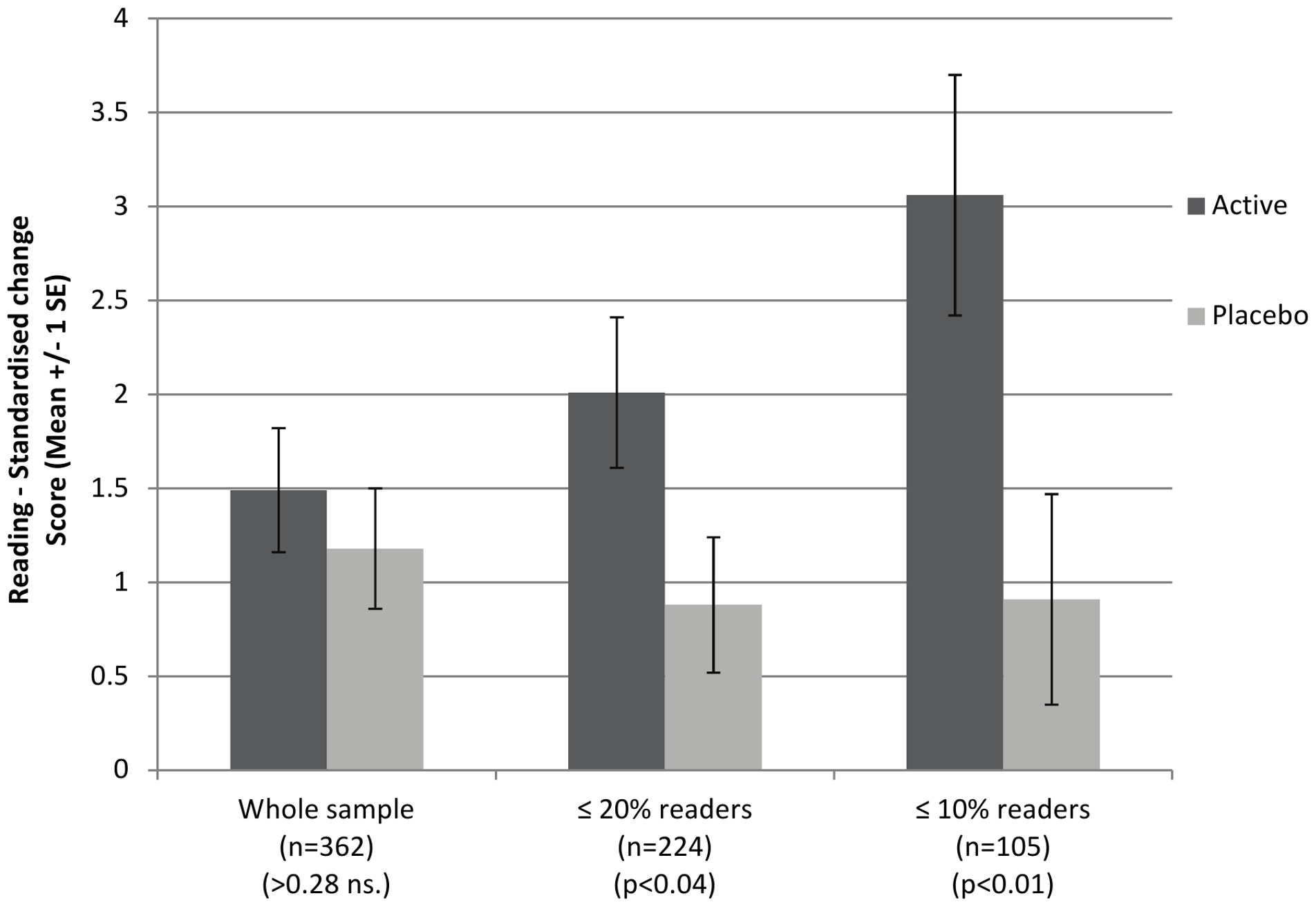
This study (Richardson et al., PLoS ONE 7: e43909.doi:10.1371/journal.pone.0043909) looked at 362 normal 7-9 year old children enrolled in mainstream primary schools in Oxfordshire, England.

These children were all reading at significantly below the average for their grade levels. The study excluded children with specific medical difficulties that might affect their ability to read, children who were already taking medications expected to affect behavior or learning, children for whom English was not their first language, and children who were already eating fish more than twice a week or taking omega-3 supplements.

The children were given either supplements containing 600 mg of DHA per day or a placebo containing corn and soybean oil. At the end of 16 weeks the children were rescored on a standardized reading test.

Reading-ScoresThe results were quite interesting. When the scientists looked at children reading in the lower third of their class, the affect of DHA on their ability to read was non-significant. However, when they looked at the children who were performing in the bottom 20% of their class with respect to reading, DHA supplementation resulted in a 20% improvement in their reading score. And when they looked at children in the bottom 10% of their class with respect to reading, DHA supplementation resulted in a 50% increase in reading scores. These changes were highly significant.

To put this in perspective, the children performing in the bottom 20% of their class improved their reading efficiency by around 0.8 months with respect to their normal reading age, and the children in the bottom 10% of their class improved their reading efficiency by around 1.9 months with respect to their normal reading age.

Strengths and Weaknesses of The Studies


On The Minus Side:

  • First and foremost we must remember that nutrition is only one of many factors that can affect reading performance in children. You shouldn’t think of DHA as a magic bullet that will cure your child’s reading problems by itself.
  • This is a single pair of studies that need to be replicated.
  • This study does not establish the optimal dose of DHA needed to improve reading in underperforming children. Until dose response studies have been done we don’t know whether 600 mg is needed or whether simply making sure that the children reach the recommended 200 mg per day of DHA would be sufficient.

On The Plus Side:

  • Both of these were very well controlled studies, and they complemented each other perfectly.  One study showed that students with the poorest reading ability had the lowest blood levels of DHA. The other study showed that children with the poorest reading ability experienced the greatest improvement with DHA supplementation.
  • These studies were not done with third world children. They were studies with normal, healthy children in a prosperous European country.
  • These studies are fully consistent with previous studies looking at the effects of DHA on cognition in children.

The Bottom Line

What does this study mean for parents whose children may be struggling with their reading in school?

  • The lead author concluded: “We have shown that in the mainstream, general population, something as simple as DHA can benefit reading abilities in underperforming children.”
  • It’s perhaps not that ironclad yet. But if your kid or grandkid is reading below their grade level, DHA supplementation is both safe and inexpensive. It’s worth giving it a try.

These statements have not been evaluated by the Food and Drug Administration. This information is not intended to diagnose, treat, cure or prevent any disease.

Health Tips From The Professor