Are All Food Additives Bad-Part2?

The Bad and The Ugly

Author: Dr. Stephen Chaney 

Are All Food Additives Bad-Part2?

QuestionsI get a lot of questions about food ingredient labels. That’s because in today’s social media world everyone is an “expert” wanting to be heard. Couple that with the fact that old news is boring, and we have a problem. To keep their followers engaged these “experts” must keep coming up with new information that is novel and scary. It doesn’t need to be true – just novel and scary.

Last week I talked about “good” food additives, which I defined as food additives that are on the social media “naughty lists” but are actually OK for most people most of the time. I would be the first to admit the using the word “good” as a descriptor for food additives is a bit of a misnomer.

Of course, the word “good” should really be reserved for organic fresh fruits and vegetables along with other whole, unprocessed foods. The problem is that most of us don’t eat enough of those foods, so we need to know which ingredients in the processed foods and food supplements we eat are OK.

This week I will cover food additives that are “bad” for some of us, and food additives that are bad for most of us – These are the ones I call “ugly”.

Food Additives – The Bad

Emoticon-BadThe term “bad” for the food additives is also a bit of a misnomer. In some cases, these are food ingredients that some people should avoid but are perfectly OK for others. In other cases, the type of food determines whether the additive is OK or should be avoided. However, these are nuances that seem to escape the average internet social media influencer.

Sodium Nitrate and Nitrite: This is a perfect example of a food ingredient that can be “bad” in certain foods and “good” in others. Briefly:

  • When sodium nitrate and/or sodium nitrite are added to processed meats, they can combine with the amino acids from the meat in the intestine to form cancer-causing nitrosamines. As you might suspect, this is not a good
  • On the other hand, when sodium nitrate or sodium nitrite are found in fruits and vegetables or combined with natural antioxidants such as vitamin C in food supplements, they are converted to nitric oxide, which improves arterial health and can lower blood pressure.

Sugar & High Fructose Corn Syrup: As I have described in earlier issues of “Health Tips From The Professor”, there are no sugar villains and there are no sugar heroes. The problems associated with sugars of all types in the American diet are related to the amount of sugar in our diet (too much) and the kinds of foods they are found in. In summary:

  • When sugars are consumed as a part of foods that are rich in fiber and/or protein they have much less of an effect on blood sugar levels (a lower glycemic index) than when they are consumed in sodas, juices and highly processed That’s important because the bad health consequences of sugars are primarily caused by foods that lead to high blood sugar levels.
  • Consequently, we should focus on the glycemic index (the effect on blood sugar levels) of the foods we eat rather than obsessing about the amount or kinds of sugar on the label.
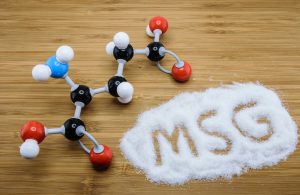
MSG: MSG, or monosodium glutamate, is a particularly interesting case. MSG is the sodium salt of the amino acid glutamate. Glutamate is found in every protein in our body and in every protein we eat. However, glutamate is also a neurotransmitter. That poses a problem for some people:

  • When MSG is used as a flavor enhancer in foods with a low protein content, the glutamate is very rapidly taken up by the brain and can overstimulate some neurons.
    • For most people this is no problem, but a small number of people experience what used to be called “Chinese Restaurant Syndrome” due to the large amounts of MSG used in some Chinese foods.
    • The common symptoms associated with “Chinese Restaurant Syndrome” are headache, sweating, skin flushing, nausea & fatigue. Allergic reactions to MSG can even be life threatening in some individuals.

Because of that, MSG is no longer widely used as a flavor enhancer, and most restaurants either no longer use it or provide warning labels so sensitive individuals can avoid foods containing MSG.

However, now the internet bloggers are warning you to avoid foods containing hydrolyzed or enzymatically digested vegetable protein and sodium caseinate because they contain MSG. That is utter nonsense.

  • Glutamate is one of the 20 amino acids found in every protein we eat. As that protein is digested in our intestine, monosodium glutamate (MSG) is released. Hydrolyzed vegetable protein and sodium caseinate are simply pre-digested They contain no more MSG than we would have produced if we digested them ourselves.
  • Monosodium glutamate (MSG) formed during the digestion of a complete protein is no more dangerous than any of the other amino acids released during digestion of that protein. That is because when all the amino acids are in the blood at the same time, they compete with glutamate for uptake into the brain. This slows the entry of glutamate into the brain and prevents overstimulation of neurons.

The bottom line is that MSG as a flavor enhancer is harmless for most people, but problematic for some. MSG as a component of hydrolyzed vegetable protein or sodium caseinate is harmless for everyone because it is in balance with the other naturally occurring amino acids.

Salt (Sodium): I could, and probably should, write a whole article on sodium intake. Suffice it to say that:

1) most of us consume too much sodium,

2) most of that sodium is hidden in the foods we eat rather than added at the table.

3) some people are more sensitive to the bad effects of sodium than others.

As a rule, most of us should consume only limited amounts of high sodium foods and be careful with our saltshaker (Try using herbs for flavoring rather than sodium). However, we need to be aware that some of us are more sensitive to sodium than others.

Food Additives – The Ugly

Emoticon-BadFinally, there are some food ingredients that most experts (except for those in the food industry) agree should be avoided. The Environmental Working Group ie respected for their careful evaluation of foods and food ingredients that are good for us and those that should be avoided. So I have listed their “Dirty Dozen” – The food additives most likely to cause major health harms, increased risk of cancer, and/or developmental harm and hormone disruption.

1) Potassium Bromate. Potassium bromate is a possible human carcinogen added to flour used in packaged baked goods

2) Propyl Paraben. Propyl paraben is a preservative used in pastries and some tortillas. It causes developmental and reproductive harm.

3) BHA. Butylated hydroxyanisole, better known as BHA, is a preservative used in cured meats and other foods. Multiple sources have identified it as a possible human carcinogen.

4) BHT. Butylated hydroxytoluene, also called BHT, is a preservative found in cereals and other foods. It’s a chemical cousin of BHA and is a possible human carcinogen.

5) Titanium Dioxide. Titanium dioxide is a color additive used mostly in candy. It may damage DNA.

6) Artificial Colors. Synthetic food dye can be found in many types of food and beverages. It can affect development and cause behavioral difficulties in children. There are seven dyes that are especially concerning: Red 3, Red 40, Yellow 5, Yellow 6, Blue 1, Blue 2 and Green 3.

7) Aspartame. Aspartame is an artificial sweetener that can affect the hormones that regulate metabolism and have a negative effect on weight control. It has also been linked to heart disease and increased risk of cancer.

8) ADA. Azodicarbonamide, or ADA, is used as a dough conditioner and strengthener, as well as a bleaching agent in breads and pastries. ADA has been linked to an increased risk of cancer. It may also cause liver and kidney injury and affect the blood and the nervous and respiratory systems.

9) Propyl Gallate. Propyl gallate is a preservative used in vegetable oil, meat products and chewing gum, among other products. It may cause hormone disruption and has been linked to an increased risk of asthma, hyperactivity and even cancer.

10) TBHQ. TBHQ is a preservative that prevents oxidation. Also known as tertiary butylhydroquinone, it is typically added to packaged foods like crackers, potato chips and baked goods containing oil. Many animal studies have associated TBHQ with immune dysfunction, including potential impairment of the body’s ability to regulate inflammation and fight infections and cancer.

11) Sucralose. Sucralose is an artificial sweetener that is about 600 times sweeter than sugar. Non-sugar sweeteners like sucralose may increase risk of Type 2 diabetes, cardiovascular disease and mortality in adults, as well as preterm birth.

12) Sodium Nitrate. Sodium nitrite is an additive used to preserve meat. When added to processed foods, nitrites are associated with an increased risk of cancer. [As I noted above sodium nitrate is actually good for us when found naturally in plant foods or paired with antioxidants in food supplements.]

The Bottom Line

Last week I listed some “good” food additives, which I define as food additives that are on the social media “naughty lists” but are actually OK for most people most of the time.

This week I have discussed the bad and the ugly food additives.

These statements have not been evaluated by the Food and Drug Administration. This information is not intended to diagnose, treat, cure or prevent any disease.

___________________________________________________________________________

My posts and “Health Tips From the Professor” articles carefully avoid claims about any brand of supplement or manufacturer of supplements. However, I am often asked by representatives of supplement companies if they can share them with their customers.

My answer is, “Yes, as long as you share only the article without any additions or alterations. In particular, you should avoid adding any mention of your company or your company’s products. If you were to do that, you could be making what the FTC and FDA consider a “misleading health claim” that could result in legal action against you and the company you represent.

For more detail about FTC regulations for health claims, see this link.

https://www.ftc.gov/business-guidance/resources/health-products-compliance-guidance

_____________________________________________________________________

About The Author 

Dr. Chaney has a BS in Chemistry from Duke University and a PhD in Biochemistry from UCLA. He is Professor Emeritus from the University of North Carolina where he taught biochemistry and nutrition to medical and dental students for 40 years.  Dr. Chaney won numerous teaching awards at UNC, including the Academy of Educators “Excellence in Teaching Lifetime Achievement Award”. Dr Chaney also ran an active cancer research program at UNC and published over 100 scientific articles and reviews in peer-reviewed scientific journals. In addition, he authored two chapters on nutrition in one of the leading Biochemistry textbooks for medical students.

Since retiring from the University of North Carolina, he has been writing a weekly health blog called “Health Tips From the Professor”. He has also written two best-selling books, “Slaying the Food Myths” and “Slaying the Supplement Myths”. And most recently he has created an online lifestyle change course, “Create Your Personal Health Zone”. For more information visit https://chaneyhealth.com.

For the past 54 years Dr. Chaney and his wife Suzanne have been helping people improve their health holistically through a combination of good diet, exercise, weight control and appropriate supplementation.
Can Artificial Sweeteners Make You Hungry?

Why Is There So Much Confusion About Artificial Sweeteners? 

Author: Dr. Stephen Chaney

Artificial SweetenersWhen artificial sweeteners were first introduced over 100 years ago, we were promised they would end obesity. We didn’t have to change our diets. We could just substitute calorie-free artificial sweeteners for sugar in all our favorite foods.

Since then, both consumption of artificial sweeteners and obesity have skyrocketed in this country. For example, in just the past 20 years:

  • The consumption of artificial sweeteners has increased by 54%, and…
  • The percentage of obese Americans has increased by 41%.

Today, over 40% of Americans are obese, and almost 10% of Americans are severely obese. That is a 4-fold increase since 1960!

Clearly, something isn’t working. Artificial sweeteners are not the magic solution we once thought they would be.

However, as I have told you before, association does not prove causation. Therefore, two important questions are:

  1. Are we consuming more artificially sweetened foods and drinks because more of us have become obese, or…

2) Do artificial sweeteners cause obesity?

Unfortunately, hundreds of clinical studies on this topic have not provided a definitive answer. For example, when we look at studies on diet sodas:

When the studies are tightly controlled by dietitians so that the people consuming diet sodas don’t add any extra calories to their diet, the results are exactly as expected. People consuming diet sodas lose weight compared to people drinking regular sodas.

However, the results are different in the real world where you don’t have a dietitian looking over your shoulder. In these studies, diet sodas are just as likely to cause weight gain as regular sodas.

As Barry Popkin, a colleague at the University of North Carolina, put it” “The problem is that we [Americans] areNo Fast Food using diet sodas to wash down our Big Macs and fries.” In short, people drinking diet sodas tend to increase their caloric intake by adding other foods to their diet. Even worse, the added foods aren’t usually fruits and vegetables. They are highly processed junk foods.

In other words, the suspicion is that artificial sweeteners may cause you to overeat. Various mechanisms for this effect have been proposed. For example, it has been proposed that artificial sweeteners may:

  • Increase your appetite.
  • Interfere with blood sugar control.
  • Increase your cravings for sweets.
  • Alter your gut bacteria.

Unfortunately, clinical studies designed to test these hypotheses have produced inconsistent results. So, we are left with the question:

3) Why are studies on artificial sweeteners so confusing? 

A recent clinical study (AG Yunker et al, JAMA Network Open, 4(9):e2126313, 2021) sheds light on all 3 of these important questions.

How Was This Study Done?

Clinical StudyThis study was called the “Brain Response to Sugar” study. It was designed to test the hypothesis that previous studies of artificial sweeteners may have provided misleading results because they didn’t account for the sex and BMI (a measure of obesity) of the study participants.

Many previous studies had primarily enrolled male, ideal weight participants. This study hypothesized that the response to artificial sweeteners might be different in female, overweight participants.

This study recruited 76 participants from the Southern California area between July 2016 and March 2020, when recruitment was halted because of the COVID-19 pandemic. The characteristics of the participants were:

  • 18-35 years old.
  • Weight stable for at least 3 months before the study.
  • Not taking medications and no history of eating disorders, diabetes, or other diseases.
  • 42% male and 58% female.
  • 37% healthy weight, 32% overweight, and 31% obese.
  • 40% included artificial sweeteners in their diet prior to the study, 60% did not.

The study was what is called a “within-participant randomized crossover trial”. Simply put, this means that each participant served as their own control. Here is how it worked:

  • Each participant came to the Dornsife Cognitive Neuroimaging Center three times. They arrived at the testing center at 8 AM after an overnight fast.
    • They drank either 75 grams of sucrose in 300 mL of water, enough sucralose in 300 mL of water to provide equivalent sweetness, or 300 mL of plain water at the beginning of each visit. The order in which the drinks were administered was randomized.
  • At 20 minutes after each drink, the participants were placed into an MRI machine shown various food and non-food images.
    • Four high-calorie food images (2 sweet and 2 savory), 4 low-calorie food images, and 4 non-food images were shown to the participants in random order.
    • As the images were shown, the MRI scanned the medial frontal cortex and orbitofrontal cortex, regions of the brain associated with appetite and hunger. Specifically, these are regions of the brain that affect:
      • Conditioned motivation to eat.
      • The reward value associated with food cues.
      • In addition, greater food cue reactivity in these regions of the brain has been shown to be associated with obesity.
  • At 125 minutes after each drink, the participants were allowed to select their meal from a buffet table, and the calories consumed was recorded.

Can Artificial Sweeteners Make You Hungry?

HungryHere are the results of the study:

  • There was no overall difference in brain activity in the regions of the brain associated with appetite, hunger, and desire for high-calorie foods following the sucralose and sucrose drinks. However:
    • For participants who were obese, high-calorie savory food images elicited greater brain activity in participants who had consumed sucralose than in participants who had consumed sucrose drinks. This difference was not seen in patients who were normal weight or overweight.
    • For female participants, high-calorie sweet and savory food images elicited greater brain activity in participants who had consumed sucralose than in participants who had consumed sucrose drinks. This difference was not seen in male patients.
    • These differences were not small. The effect of sucralose on brain activity in regions that control appetite and hunger was several-fold greater than the effect sucrose on brain activity in these regions.
    • And as you might expect, the different response to sucralose and sucrose was greatest for women who were obese.
  • Participants consumed more calories at the buffet table after the sucralose drink than after the sucrose drink.
    • There was no significant effect of weight on the differential response to sucralose and sucrose. However:
    • The differential response to sucralose and sucrose was larger for female participants than for the whole group.
  • These results are consistent with previous studies suggesting that appetite responses to food cues might be greater in females and individuals with obesity. However, this was the first study designed to directly test this hypothesis.

The authors concluded, “Our findings indicate that female individuals and those who are obese, and especially female individuals with obesity, might be particularly sensitive to greater neural responsivity elicited by sucralose compared to sucrose consumption. This study highlights the need to consider individual biologic factors in research studies and potentially dietary recommendations regarding the use and efficacy of non-nutritive sweeteners [artificial sweeteners] for body weight management.”

[Note: You may have noticed that the authors extrapolated from their data on sucralose to all artificial sweeteners. Is this extrapolation valid? The short answer is, “We don’t know”. Most of the mechanistic studies have been done with sucralose, but some studies suggest these same effects may be seen with other artificial sweeteners.]

Why Is There So Much Confusion About Artificial Sweeteners?

confusionIt seems like a “no brainer” that zero calorie drinks and reduced calorie foods would reduce weight gain and promote weight loss. But that just doesn’t seem to happen in the real world. Why is that?

  • Is it psychological? Do we feel so virtuous about consuming artificially sweetened foods and drinks that we allow ourselves to splurge on high-calorie junk foods?
  • Or is it physiological? Do artificial sweeteners increase our appetite for high-calorie junk foods?

Unfortunately, clinical studies have not been much help. Some studies suggest that artificial sweeteners increase our appetite for high-calorie foods, while others suggest they don’t. Clinical studies are supposed to resolve questions like these. Why have they been so confusing?

Part of the problem is that some of the studies on artificial sweeteners have been too small and/or too poorly designed to provide clear-cut answers. However, even well-designed clinical studies have two fundamental flaws:

  • Clinical studies are based on averages. They assume everyone is the same.
    • This study, and others like it, show the flaw in that assumption.
      • It appears that artificial sweeteners affect the appetite for high calorie foods more in individuals who are obese than in individuals who are normal weight or slightly overweight.
      • Artificial sweeteners also affect the appetite for high calorie foods more for females than for males.
      • What about age and ethnicity? Is the effect of artificial sweeteners on the appetite for high calorie foods affected by age or ethnicity? No one knows.
      • What about genetics? Is the effect of artificial sweeteners dependent on our genetic background? No one knows.
      • What about our microbiome? Again, no one knows.
  • Gold standard clinical studies only change one variable at a time. In studies of artificial sweeteners, the variable is artificial sweetener versus sugar. But we don’t eat just artificial sweeteners or sugar. We eat foods containing artificial sweeteners or sugar. Do the foods we eat alter the effect of the artificial sweeteners on appetite?
    • One recent study) suggests they might. It found that consumption of sucralose plus easily digested carbohydrate (such as might be found in artificially sweetened junk foods) may increase the craving for sweets more than consumption of either sucralose or sucrose alone.

What Does This Study Mean For You?

Simply put, the initial promise of artificial sweeteners as a solution to the obesity epidemic and the alarming increase in diabetes has not been borne out by either clinical studies or real-life experience.

And I have not addressed the potential risks of artificial sweeteners in this article. However, in my opinion, something that has potential risks, no matter how small, and no proven benefit is something to avoid.

But don’t take my word for it. As I reported in a previous “Health Tips From the Professor” article, an international consortium of scientists recently reviewed all the pertinent literature and published a position paper on whether artificially sweetened beverages were of value in responding to the global obesity crisis. They concluded:

  • “In summary, the available evidence…does not consistently demonstrate that artificially-sweetened beverages are effective for weight loss or preventing metabolic abnormalities [pre-diabetes and diabetes]. Evidence on the impact of artificially-sweetened beverages on child health is even more limited and inconclusive than in adults.”
  • “The absence of evidence to support the role of artificially sweetened beverages in preventing weight gain and the lack of studies on their long-term effects on health strengthen the position that artificially-sweetened beverages should not be promoted as part of a healthy diet.”

The Bottom Line

When artificial sweeteners were first introduced over 100 years ago, we were promised they would end obesity. We didn’t have to change our diets. We could just substitute calorie-free artificial sweeteners for sugar in all our favorite foods.

Since then, both consumption of artificial sweeteners and obesity have skyrocketed in this country. Clearly, something isn’t working. Artificial sweeteners are not the magic solution we once thought they would be.

In recent years some studies have suggested that the reason that artificial sweeteners have failed us is that they stimulate our appetite for high calorie foods. However, this idea has been controversial. Some studies have supported it. Others have not.

Why have the clinical studies been so confusing? The study I describe in this article was designed to test the hypothesis that previous studies of artificial sweeteners may have provided misleading results because they didn’t account for the sex and BMI (a measure of obesity) of the study participants.

Many previous studies had primarily enrolled male, ideal weight participants. This study hypothesized that the response to artificial sweeteners might be different in female, overweight participants. The study found:

  • There was no overall difference in brain activity in the regions of the brain associated with appetite, hunger, and desire for high-calorie foods following consumption of drinks containing sucralose or sucrose. However:
    • For participants who were obese, high-calorie savory food images elicited greater brain activity in participants who had consumed sucralose than in participants who had consumed sucrose drinks.
    • For female participants, high-calorie sweet and savory food images elicited greater brain activity in participants who had consumed sucralose than in participants who had consumed sucrose drinks.
    • These differences were not small. The effect of sucralose on brain activity in regions that control appetite and hunger was several-fold greater than the effect sucrose on brain activity in those regions.
  • Participants consumed more calories at the buffet table after the sucralose drink than after the sucrose drink.
    • The differential response to sucralose and sucrose was larger for female participants than for the whole group.
  • These results are consistent with previous studies suggesting that appetite responses to food cues might be greater in females and individuals with obesity. However, this was the first study designed to directly test this hypothesis.

The authors concluded, “Our findings indicate that female individuals and those who are obese, and especially female individuals with obesity, might be particularly sensitive to greater neural responsivity elicited by sucralose compared to sucrose consumption. This study highlights the need to consider individual biologic factors in research studies and potentially dietary recommendations regarding the use and efficacy of non-nutritive sweeteners [eg, artificial sweeteners] for body weight management.”

For more details about this study and what it means for you, read the article above.

These statements have not been evaluated by the Food and Drug Administration. This information is not intended to diagnose, treat, cure, or prevent any disease.

Why Do Diet Sodas Make You Fat?

Is Mixing Diet Sodas With Carbs Bad For You?

Why Do Sodas Cause Obesity?Many people, and many doctors, believe that diet sodas and artificially sweetened foods are a healthy choice. After all:

  • Cutting calories by drinking diet sodas and eating artificially sweetened foods should help you lose weight.
  • If sugar is the problem for diabetics, diet sodas and artificially sweetened foods should be a healthier choice.

On the surface, these ideas appear to be self-evident. They seem to be “no-brainers”. The truth, however, is more complicated.

When studies are tightly controlled by dietitians so that the people consuming diet sodas don’t add any extra calories to their diet, the results are exactly as expected. People consuming diet sodas lose weight compared to people drinking regular sodas.

However, as I have described in an earlier issue of “Health Tips From the Professor”, the results are different in the real world where you don’t have a dietitian looking over your shoulder. In those studies, diet sodas are just as likely to cause weight gain as regular sodas.

As Barry Popkin, a colleague at the University of North Carolina, put it” “The problem is that we [Americans] are using diet sodas to wash down our Big Macs and fries.” In short, people drinking diet sodas tend to increase their caloric intake by adding other foods to their diet. Even worse, the added foods aren’t usually fruits and vegetables. They are highly processed junk foods.

Why is that? The short answer is that nobody knows (more about that later). However, a recent study (JR Dalenberg et al, Cell Metabolism, 31: 493-502, 2020) suggests an unexpected mechanism for the weight gain associated with diet soda consumption. Let’s look at that study.

How Was The Study Done?

Clinical StudyThe study recruited 45 healthy young adults (ages 20-45) who habitually consumed less than 3 diet sodas a month. They were randomly assigned to three groups. The participants in each group came into the testing facility seven times over a span of 2 weeks. Each time they were given 12 ounces of one of three equally sweet tasting beverages in a randomized, double-blind fashion.

  • Group 1 received a sucralose-sweetened drink contained 0.06 grams of sucralose (equivalent to two packets of Splenda).
  • Group 2 received a sugar-sweetened drink contained 7 teaspoons of sucrose (table sugar).
  • Group 3 received a combo drink contained 0.06 grams of sucralose plus 7 teaspoons of maltodextrin. Maltodextrin is a water-soluble carbohydrate that does not have a sweet taste.

o   Maltodextrin was used because Splenda and most other commercial sucralose products contain it along with sucralose. You need something to fill up those little sucralose-containing packets.

o   This drink was included as a control. The expectation was that it would give the same results as the sucralose-sweetened drink.

Three measurements were performed prior to and following the 2-week testing period:

  • An oral glucose tolerance test in which participants drink a beverage containing a fixed amount of glucose. Then their blood sugar and blood insulin levels are measured over the next two hours.

o   This is a measure of how well they were able to control their blood sugar levels.

  • A test in which they were given samples that had either a sweet, sour, salty, or savory taste. Then:

o   They were asked to identify each taste and report how strong the taste was.

o   MRI scans of their brains were performed to determine how strongly their brains responded to each of the tastes.

Is Mixing Diet Soda With Carbs Bad For You?

The results were surprising. The first surprise came when the investigators unblinded the results of the oral glucose tolerance test:

  • Blood sugar and blood insulin responses were unaffected by the 2-week exposure to sugar-sweetened drinks.

o   This was expected.

  • Blood sugar and blood insulin were relatively unaffected by the 2-week exposure to sucralose-sweetened drinks. If anything, the control of blood sugar levels was slightly improved at the end of two weeks.

o   This was a disappointment for the investigators. One of the prevailing theories is that artificially sweetened beverages alter the blood sugar response. The investigators found no evidence for that idea.

  • Following the 2-week exposure to the combo drinks (sucralose plus maltodextrin), blood sugar levels were unaffected, but blood insulin levels were increased. This implies that more insulin was required to control blood sugar levels. In other words, these participants had developed insulin resistance.

o   This result was unexpected. Remember the investigators had included this drink as a control.

o   The investigators pointed out that the insulin resistance associated with the sucralose-maltodextrin combo could increase the risk of type 2 diabetes and obesity.

  • Because of this unexpected result, the investigators did a follow-up study in which participants were given a maltodextrin-only drink using the same study protocol. The oral glucose tolerance test was unchanged by the 2-week exposure to maltodextrin-only drinks.

When the investigators conducted taste tests, the ability of participants to taste all four flavors was unchanged by a 2-week exposure to any of the drinks.

However, when the investigators did MRI scans to measure the brain’s response to these flavors:

  • A two-week exposure to the sucralose plus maltodextrin drinks reduced the brain’s response to sweet but not to any of the other flavors.

o   In other words, the subjects could still taste sweet flavors, but their brains were not responding to the sweet taste. Since sweetness activates pleasure centers in the brain this could lead to an increased appetite for sweet-tasting foods.

o   This might explain the weight gain that has been observed in many previous studies of diet sodas.

  • Two-week exposures to the other drinks had no effect on the brain’s response to any of the flavors. Once again, this effect was only seen in the sucralose-maltodextrin combination.

The investigators concluded:

  • “Consumption of sucralose combined with carbohydrates impairs insulin sensitivity…and…neural responses to sugar.
  • Insulin sensitivity is not altered by sucralose or carbohydrate consumption alone.
  • The results suggest that consumption of sucralose in the presence of a carbohydrate dysregulates gut-brain regulation of glucose metabolism.”

The investigators pointed out that this could have several adverse consequences. Again, in the words of the authors:

“Similar exposure combinations (artificial sweeteners plus carbohydrates) almost certainly occur in free-living humans, especially if one considers the consumption of a diet drink along with a meal. This raises the possibility that the combination effect may be a major contributor to the rise in incidence of type 2 diabetes and obesity. If so, addition of artificial sweeteners to increase the sweetness of carbohydrate-containing food and beverages should be discouraged and consumption of diet drinks with meals should be counseled against.”

Why Do Diet Sodas Make You Fat?

As I mentioned at the start of this article, there are a lot of hypotheses as to why diet sodas make us fat. These hypotheses break down into two classifications: psychological and physiological.

The psychological hypothesis is easiest to explain. Essentially, it goes like this: We feel virtuous for choosing a zero-calorie sweetener, so we allow ourselves to eat more of our favorite foods. It is unlikely that this hypothesis holds for all diet soda drinkers. However, it is also hard to exclude it as at least part of the explanation for the food overconsumption associated with diet soda use.

There are multiple physiological hypotheses. Most of them are complicated, but here are simplified explanations of the three most popular hypotheses:

  • The sweet taste of artificial sweeteners tricks the brain into triggering insulin release by the pancreas. This causes blood sugar levels to plummet, which increases appetite.
  • The sweet taste of artificial sweeteners is not appropriately recognized by the brain. This diminishes release of hormones that suppress appetite.
  • Artificial sweeteners interfere with insulin signaling pathways, which leads to insulin resistance.

There is some evidence for and against each of these hypotheses.

However, this study introduces a new physiological hypothesis – namely that it is the combination of artificial sweeteners and carbohydrates that results in a dysregulation of the normal mechanisms controlling appetite and blood sugar.

What Does This Study Mean For You?

Diet Soda DangersLet’s start with the obvious. This is just a hypothesis.

  • This was a very small study. Until it is confirmed by other, larger studies, we don’t know whether it is true.
  • This study only tested sucralose. We don’t know whether this applies to other artificial sweeteners.
  • The study only tested maltodextrin in combination with sucralose. We don’t know whether it applies to other carbohydrates.

Therefore, in discussing how this study applies to you, let’s consider two possibilities – if it is true, and if it is false.

If this hypothesis is true, it is concerning because:

  • We often consume diet sodas with meals. If, for example, we take the earlier example of a diet soda with a Big Mac and fries, both the hamburger bun and the fries are high carbohydrate foods.


  • Sucralose and other artificial sweeteners are used in low calorie versions of many carbohydrate rich processed foods.

If this hypothesis is false, it does not change the underlying association of diet soda consumption with weight gain and type 2 diabetes. It is merely an attempt to explain that association. We should still try to eliminate diet sodas and reduce our consumption of artificially sweetened, low calorie foods.

My recommendation is to substitute water and other unsweetened beverages for the diet drinks or sugar sweetened beverages you are currently consuming. If you crave the fizz of sodas, drink carbonated water. If you need more taste, try herbal teas or infuse water with slices of lemon, lime, or your favorite fruit. If you buy commercial brands of flavored water, check the labels carefully. They may contain sugars or artificial sweeteners. Those you want to avoid.

The Bottom Line

Many studies have called into question the assumption that diet sodas and diet foods help us lose weight. In fact, most of these studies show that diet soda consumption is associated with weight gain rather than weight loss.

There are many hypotheses to explain this association, but none of them have been proven at present.

This study introduces a new hypothesis – namely that the combination of artificial sweeteners and carbohydrates results in a dysregulation of the normal mechanisms controlling appetite and blood sugar. In particular, this study suggested that combining sucralose with carbohydrates caused insulin resistance and reduce the ability of the brain to respond appropriately to sweet tastes.

The authors concluded: “Similar exposure combinations (artificial sweeteners plus carbohydrates) almost certainly occur in free-living humans, especially if one considers the consumption of a diet drink along with a meal. This raises the possibility that the combination effect may be a major contributor to the rise in incidence of type 2 diabetes and obesity. If so, addition of artificial sweeteners to increase the sweetness of carbohydrate-containing food and beverages should be discouraged and consumption of diet drinks with meals should be counseled against.”

If this hypothesis is true, it is concerning because:

  • We often consume diet sodas with meals. If, for example, we take the example of a diet soda with a Big Mac and fries, both the hamburger bun and the fries are high carbohydrate foods.
  • Artificial sweeteners are used in low calorie versions of many carbohydrate rich processed foods.

If this hypothesis is false, it does not change the underlying association of diet soda consumption with weight gain and type 2 diabetes. It is merely an attempt to explain that association. We should still try to eliminate diet sodas and reduce our consumption of artificially sweetened, low calorie foods.

My recommendation is to substitute water and other unsweetened beverages for the diet drinks or sugar sweetened beverages you are currently consuming. If you crave the fizz of sodas, drink carbonated water. If you need more taste, try herbal teas or infuse water with slices of lemon, lime, or your favorite fruit. If you buy commercial brands of flavored water, check the labels carefully. They may contain sugars or artificial sweeteners. Those you want to avoid.

For more details, read the article above.

These statements have not been evaluated by the Food and Drug Administration. This information is not intended to diagnose, treat, cure or prevent any disease.

Health Tips From The Professor