Is Sorbitol Dangerous?

Should You Avoid Foods Containing Sorbitol?

Author: Dr. Stephen Chaney

Sorbitol is in the news. And the news doesn’t seem to be good. Social media influencers are telling you:

  • Sorbitol can cause gastrointestinal distress (cramping, bloating, cramping, and diarrhea).
  • Sorbitol can cause heart attacks and strokes.
  • Sorbitol can cause liver disease.

They are telling you to scan every label and avoid anything with sorbitol in it. Should you listen to them, or are they promoting food myths to get more followers and clicks?

After all, sorbitol is found in lots of healthy foods such as peaches, pears, apples, nectarines, apricots, cherries, sweet corn, white cabbage, and eggplant. Should you give up those as well?

And our body produces sorbitol from other sugars, so we always have some sorbitol circulating through our bloodstream.

In short, sorbitol is not a foreign substance. It’s not an artificial sweetener. Our body knows how to handle it safely.

But every food myth starts with a kernel of truth. So, let me discuss each of these claims and separate the kernel of truth from the myth.

Can Sorbitol Cause Gastrointestinal Distress?

This claim is true, but:

  • It is true for every sugar alcohol.
  • It is a matter of dose.
  • It is also true for the sugar alcohols found in healthy foods.

Let’s examine those last two points in more detail.

For most people, the small amount of sugar alcohols found in the foods they eat cause no problem. It’s only when they consume large amounts that they experience gastrointestinal distress. [Note: I said most people. If you have Irritable Bowel Syndrome (IBS) or Small Intestinal Bacterial Overgrowth (SIBO), you may be sensitive to even small amounts of sugar alcohols – and many other things.]

And the gastrointestinal effects of large amounts of sugar alcohols are not limited to processed foods. They can also be associated with consumption of healthy foods. Let me share my personal experiences, and you can see if you have had similar experiences.

Years ago, I had a strawberry patch and several fig bushes. At the height of their seasons, it was tempting to eat lots of strawberries and lots of figs. After all, why let those delicious fruits go to waste?

I quickly discovered that 8-10 strawberries on my breakfast cereal was a treat, but 30 strawberries at a sitting was a BIG problem. Similarly, 2-3 figs for dessert were the perfect ending to a meal, but 10 figs at a time was a BIG problem.

The take-home lesson was clear. Small amounts of sorbitol and other sugar alcohols in healthy foods and supplements are no problem. Our body knows how to handle them. But large amounts of sorbitol and other sugar alcohols can cause gastrointestinal distress. And it doesn’t matter if those large amounts come from healthy foods or unhealthy processed foods. 

Can Sorbitol Cause Heart Attacks And Strokes?
Human heart attack time bomb as a symbol of urgent health problems due to poor cholesterol levels and bad diet eating fatty greasy junk food.

This claim is mostly false. In the first place, the study on which this claim is based was done with erythritol, not sorbitol. More importantly, the study was deeply flawed.

I have described the flaws in a recent issue of “Health Tips From the Professor”.

In addition to its many flaws the study only found an association between erythritol and heart disease at very high intakes of erythritol. Specifically:

  • There was no association between erythritol and heart disease at low to moderate intakes of erythritol. As with sorbitol, erythritol is found in many healthy foods and our bodies know how to handle the amount of erythritol found in healthy foods and supplements.
  • The association between erythritol and heart disease was only seen at intakes of 30 grams/day or above. The only way you could get that much erythritol daily would be to consume a diet with lots of erythritol-sweetened highly processed foods. And we already know a diet of highly processed foods is associated with an increased risk of heart attack and stroke.

After reviewing the study and analyzing its flaws, I concluded,” Clearly, it doesn’t matter what sweetener we are talking about. Large intake of any natural sweetener in the context of a diet rich in highly processed foods appears to have an adverse effect on our health. And we don’t know whether these adverse health effects are caused by the sweetener or some other components of the highly processed foods.

If you want to improve your health, the best solution is to decrease your intake of highly processed foods. That will automatically reduce your intake of sweeteners and other unhealthy components of highly processed foods and increase your intake of healthy components from the whole foods you will be eating instead”

Many other experts have come to a similar conclusion after reviewing that study.

However, that hasn’t kept social media influencers from warning you to read labels and avoid everything with sorbitol in it because it increases your risk of heart attack and stroke. And, unfortunately, some respectable web sites have repeated that claim without examining the study behind the claim.

Can Sorbitol Increase The Risk Of Liver Disease?
fatty liver disease causesThis claim is also mostly false. The study behind this claim was done in zebrafish, not humans. And the zebrafish were put on antibiotics that wiped out their intestinal bacteria. Under these conditions, when the zebrafish were fed glucose, they developed fatty liver disease.

I realize that description of the experimental protocol has probably left you confused. So, let me walk you through the metabolic rationale for the study.

  • In zebrafish, like in humans, a small amount of dietary glucose is converted to sorbitol by intestinal mucosal cells.
  • In zebrafish and humans, the small amount of sorbitol produced in the intestine is degraded by intestinal bacteria. No harm, no foul.
  • However, when the intestinal bacteria are wiped out, sorbitol accumulates and is absorbed into the bloodstream. Simply put, this was way to create very high blood levels of sorbitol in zebrafish.
  • Zebrafish and humans are both able to metabolize small amounts of sorbitol. But when the blood levels of sorbitol are high enough, the normal metabolic pathways are overwhelmed.
  • Under these conditions, sorbitol goes to the liver where it is converted to fructose.
  • Previous studies have shown that excess fructose in the liver can cause fatty liver disease.

The authors of this study concluded, “These results indicate that sorbitol is derived from glucose in the zebrafish intestine, implicate gut microbiota [gut bacteria] in protecting against sorbitol-induced steatosis [abnormal accumulation of fat], and suggest that dietary sorbitol, which is used as a sugar substitute, may increase the risk of developing steatotic liver disease [fatty liver disease].”

This is the message you have probably seen from social media influencers and some websites. Of course, they consider “fatty liver disease” to be too complicated, so their warnings are usually that sorbitol can cause liver disease or liver “danger”.

It sounds scary, but this claim ignores the flaws in this study. In the first place, the study was conducted with zebrafish with no intestinal bacteria. We don’t know whether this is true for humans under normal conditions. And if it is true, it required high blood levels of sorbitol which can only be attained in humans by eating lots of highly processed sorbitol-sweetened foods.

And to put this in proper perspective we also need to investigate the link between fructose and fatty liver disease, as I have done in previous issues of “Health Tips From the Professor”.

  • Fructose or “fruit sugar” is, as the name suggests, found in almost all fruits.
  • Fructose in fruits is present in small amounts and is encased with fiber, so it is absorbed slowly.
  • Our bodies are designed to handle the fructose found in fruits. It is slowly converted to glucose, avoiding the blood sugar spikes associated with sucrose (table sugar) and glucose consumption.
  • Fructose in highly processed foods is present in much larger amounts with no fiber to slow its absorption into the bloodstream.
  • Under these conditions, our normal metabolic pathways for dealing with dietary fructose are overwhelmed. Fructose accumulates in the liver, where it is converted to fat.
  • If we consume highly processed fructose-containing foods long enough, we develop fatty liver disease.

Is this starting to sound familiar? In short, fructose, erythritol, sorbitol, and other sugar alcohols are not a problem in the small doses found in supplements and healthy foods. They only become a problem when we consume lots of processed foods that use them as sweeteners.

Is Sorbitol Dangerous?

danger symbolThe short answer is, “No”. You can ignore the dire warnings about the dangers of sorbitol. They are food myths! You don’t need to become a label reader and avoid every supplement and food with sorbitol on the label.

Here is the truth about sorbitol:

#1: It can cause gastrointestinal distress (cramping, bloating, cramping, and diarrhea) if you eat too much sorbitol-containing foods at one time. Other studies suggest that this occurs for most people at doses of 10-15 grams of sorbitol. This can occur with excess consumption of both healthy foods and processed foods that are high in sorbitol.

And most of us figure out pretty quickly which foods are a problem for us. That doesn’t require label reading. It just requires paying attention to our symptoms.

#2: The claims about increased risk of heart disease and liver disease are mostly false.

  • The claim that sorbitol increases the risk of heart disease was based on a study with erythritol, not sorbitol, and the study was highly flawed.
  • The claim that sorbitol increases the risk of liver disease was done with zebrafish, not humans.
  • If those studies tell us anything, it is that health issues associated with sorbitol consumption only occur at high doses which can only be achieved by eating lots of sorbitol-sweetened highly processed foods.
  • There is no evidence of health issues associated with the small amounts of sorbitol found in some supplements and healthy foods. Our bodies are designed to handle small amounts of sorbitol because they occur naturally in a healthy diet containing fruits and vegetables.

I suppose you could read the labels of processed foods and avoid the ones containing sorbitol. However, there are lots of health concerns with highly processed foods. Sorbitol is the least of the concerns.

A better choice would be to avoid highly processed foods. You don’t need to read their labels to know they are bad for you. 

The Bottom Line

We are constantly bombarded with new food ingredients we need to avoid. Social media influencers are telling us to scan food and supplement labels, so we know which ones we shouldn’t eat.

The latest warnings are about sorbitol, a sugar alcohol that occurs naturally in healthy foods and is also added to processed foods. We are being told that:

  • Sorbitol can cause gastrointestinal distress (cramping, bloating, cramping, and diarrhea).
  • Sorbitol can cause heart attacks and strokes.
  • Sorbitol can cause liver disease.

are telling you to scan every label and avoid anything with sorbitol in it. Should you listen to them, or are they promoting food myths to get more followers and clicks?

Here is the truth about sorbitol:

  • The claim that high levels of sorbitol can cause gastrointestinal distress are mostly true, but they are equally true for healthy foods and processed foods that are high in sorbitol.

And most of us figure out pretty quickly which foods are a problem for us. That doesn’t require label reading. It just requires paying attention to our symptoms.

  • The claims that sorbitol increases our risk heart and liver disease are mostly false. They are based on flawed studies that were not done with sorbitol in humans.
    • If those studies tell us anything, it is that health issues associated with sorbitol consumption only occur at high doses which can only be achieved by eating lots of sorbitol-sweetened highly processed foods.
    • There is no evidence of health issues associated with the small amounts of sorbitol found in some supplements and healthy foods. Our bodies are designed to handle small amounts of sorbitol because they occur naturally in a healthy diet containing fruits and vegetables.

I suppose you could read the labels of processed foods and avoid the ones containing sorbitol. However, there are lots of health concerns with highly processed foods. Sorbitol is the least of the concerns.

A better choice would be to avoid highly processed foods. You don’t need to read their labels to know they are bad for you.

For more details, read the article above.

These statements have not been evaluated by the Food and Drug Administration. This information is not intended to diagnose, treat, cure or prevent any disease.

___________________________________________________________________________

My posts and “Health Tips From the Professor” articles carefully avoid claims about any brand of supplement or manufacturer of supplements. However, I am often asked by representatives of supplement companies if they can share them with their customers.

My answer is, “Yes, as long as you share only the article without any additions or alterations. In particular, you should avoid adding any mention of your company or your company’s products. If you were to do that, you could be making what the FTC and FDA consider a “misleading health claim” that could result in legal action against you and the company you represent.

For more detail about FTC regulations for health claims, see this link.

https://www.ftc.gov/business-guidance/resources/health-products-compliance-guidance

 ______________________________________________________________________

About The Author 

Dr. Chaney has a BS in Chemistry from Duke University and a PhD in Biochemistry from UCLA. He is Professor Emeritus from the University of North Carolina where he taught biochemistry and nutrition to medical and dental students for 40 years.  Dr. Chaney won numerous teaching awards at UNC, including the Academy of Educators “Excellence in Teaching Lifetime Achievement Award”. Dr Chaney also ran an active cancer research program at UNC and published over 100 scientific articles and reviews in peer-reviewed scientific journals. In addition, he authored two chapters on nutrition in one of the leading biochemistry textbooks for medical students.

Since retiring from the University of North Carolina, he has been writing a weekly health blog called “Health Tips From the Professor”. He has also written two best-selling books, “Slaying the Food Myths” and “Slaying the Supplement Myths”. And most recently he has created an online lifestyle change course, “Create Your Personal Health Zone”. For more information visit https://chaneyhealth.com.

For the past 53 years Dr. Chaney and his wife Suzanne have been helping people improve their health holistically through a combination of good diet, exercise, weight control and appropriate supplementation.

Is It The Sugar Or Is It The Food?

Is Fructose Bad For You?

Author: Dr. Stephen Chaney

I don’t usually report on studies done in mice, but this study sheds light on a particularly puzzling question: Why is fructose bad for us?

The studies are clear-cut. High fructose consumption is associated with inflammation, obesity, non-alcoholic liver disease, insulin resistance, type 2 diabetes, kidney disease, increased LDL cholesterol and triglycerides, and heart disease. Based on these associations, fructose appears to be deadly. Why would anyone want to consume it?

Yet fructose is found in virtually every fruit. In fact, fructose, also known as fruit sugar, was first isolated from fruits. Hence the name fructose. Humans have been eating fruits safely for thousands of years. Fruits are very good for us. That raises the question: “If fruits are good for us, how can fructose be bad for us?”.

An important clue can be found by looking at what the food industry has done to the American diet. Because fructose imparts a pleasurable, sweet taste to foods the food industry keeps adding it to more and more foods. As a result, dietary intake of fructose has increased 100-fold over the past two centuries. It has reached the point where fructose now accounts for almost 10% of the caloric intake in the United States.

Is It The Sugar, Or Is It The Food?

Let me expand the discussion by using a couple of graphics I developed for my book, “Slaying The Food Myths”

There Are No Sugar Villains. There Are No Sugar Heroes:

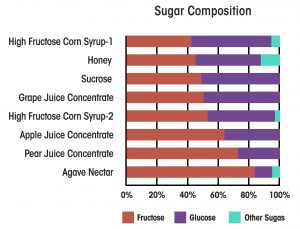
Sugar ComparisonsVirtually all sweeteners are primarily a mixture of fructose and glucose. The graphic on the left compares high fructose corn syrup (the current villain) with other “natural” sweeteners used in foods (our current heroes). High fructose corn syrup ranges from about 40% fructose to 55% fructose. The exact percentage depends on what kind of food product is being made with it.

Honey and coconut sugar are about 45% fructose. Sucrose and grape juice concentrate are around 50% fructose. Apple juice concentrate is around 60% fructose, and agave sugar comes in at a whopping 80% fructose.

In other words, if fructose is the culprit that everyone makes it out to be, “healthy” sugars are no better than high fructose corn syrup. Simply substituting a “healthy” sugar for high fructose corn syrup is unlikely to provide any meaningful benefit.

Is It The Sugar, Or Is The Food?

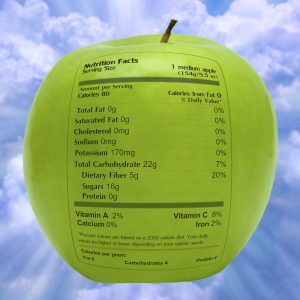
Apple With Nutrition LabelThis graphic shows us what a nutrition label would look like on a medium apple. I am sure that label is a wake-up call for many of you. The amount of sugar and the percentage of fructose and glucose are about the same as in an 8-ounce soda sweetened with high fructose corn syrup. The same is true for virtually every other fruit you can think of.

Now let me share one more thing you won’t hear from what I refer to as “Dr. Strangelove’s Health Blog” (You probably know the ones I am referring to). Virtually all the studies showing the bad effects of fructose consumption have been done with sodas and sugary junk foods. They haven’t been done with apples.

In fact, virtually every study looking at fruit and vegetable consumption has shown they are incredibly good for us. They lower inflammation and reduce the risk of obesity, diabetes, heart disease, and cancer. And the more the better. One study found that the health benefits of fruit and vegetable consumption topped out at around 10 servings a day.

With this background, you should now fully understand why the question “If fruits are good for us, how can fructose be bad for us?” is so perplexing.

My simplistic explanation has always been that whole foods like fruits have fiber, which slows the absorption of fructose from the intestine. Our bodies were designed to handle fructose in a safe manner when it enters the bloodstream slowly. It is taken up by the liver, converted to glucose, and then slowly metered back into the bloodstream. This provides our brain and other tissues with the glucose they need for energy without blood sugar spikes. This is how fructose is supposed to be metabolized by our bodies.

Sodas and junk foods, on the other hand, have little to slow the absorption of fructose. When lots of fructose enters the bloodstream rapidly, our “safe” metabolic pathways for handling it are overwhelmed, and it is forced into the pathways that are harmful. For example, the “excess” fructose is converted to fat by the liver, which causes inflammation, obesity, fatty liver disease, and triglyceride production.

This is, of course, simply my hypothesis for explaining the different effect of fructose in fruits and sodas. It is based on sound metabolic principles, but it is far from proven. That is why I found a recent study (C. Jang et al, Cell Metabolism, 27: 351-361, 2018) so interesting. It provides a metabolic rationale for my hypothesis.

How Was The Study Done?

Mice were fed a 1:1 mixture of fructose and glucose at doses that approximated the ranges of typical human fructose consumption. The fructose was isotopically labeled so that fructose and its metabolites could be identified by LC-MS (liquid chromatography – mass spectrometry). After feeding the mice the labeled fructose, the investigator measured the amount of fructose and its metabolites in various organs and in the portal vein, which transports sugars from the intestine to the liver for additional metabolism before they enter the bloodstream.

Is Fructose Bad For You?

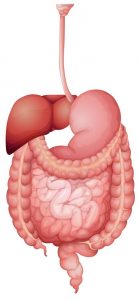
intestine & liverThe first surprise was that most of the fructose was metabolized by the intestinal mucosal cells that line the small intestine rather than the liver. Previous reports had assumed that fructose was primarily metabolized by the liver because that was where most of the bad effects of fructose metabolism had been observed.

These investigators observed that fructose was primarily converted to glucose and small molecular weight metabolites by the intestinal mucosal cells before being released into the portal vein, where they were transported to the liver. However, there was a strong dose response effect.

  • At low fructose doses, 90% of fructose was metabolized by intestinal mucosal cells before being released to the liver.
  • At high fructose doses, only 70% of fructose was metabolized by intestinal mucosal cells.
  • That means at high fructose doses the amount of fructose reaching the liver unchanged increases from 10% to 30%. That is a 3-fold increase!

The authors concluded:

  • “Based on these findings, we propose that the small intestine shields the liver from fructose and that excessive doses of fructose overwhelm the small intestine, spilling over to the liver where they cause toxicity.”
  • “A key difference between the health effects of fiber-rich fruits (and perhaps even fiber-rich prepared foods) and juices/sodas is their rate of intestinal fructose release.”
  • “It is likely that the appearance rate of free fructose in the small intestine plays a critical role in dictating its metabolic fate. Like the lower doses in our experiments, a slower rate of fructose appearance will result in more complete intestinal clearance, whereas higher doses and faster rates result in fructose overflow to the liver.”

This study needs to be confirmed, and the mechanism may be entirely different in humans. However, whether mechanism is the same in mice and humans is immaterial. We already know that fructose in sodas and junk foods exerts a very different effect on our health than fructose in fruits and other fiber-containing foods.

Despite what Dr. Strangelove tells you, fructose is not bad for you. It isn’t the problem. It is sodas and junk foods containing high-fructose corn syrup that are the problem. And substituting other sugars for high-fructose corn syrup doesn’t make them any better. As I showed you above, the so called “healthy” sugars are chemically and biologically indistinguishable from high-fructose corn syrup.

The Bottom Line

Previous studies have clearly shown that fructose in sodas and junk foods is bad for us, while fructose in fruits is good for us. A recent study in mice provides a metabolic explanation for this difference. The study found:

  • At low fructose doses, 90% of fructose was metabolized by intestinal mucosal cells before being released to the liver.
  • At high fructose doses, only 70% of fructose was metabolized by intestinal mucosal cells.
  • That means at high fructose doses the amount of fructose reaching the liver unchanged increases from 10% to 30%. That is a 3-fold increase!

The authors concluded:

  • “Based on these findings, we propose that the small intestine shields the liver from fructose and that excessive doses of fructose overwhelm the small intestine, spilling over to the liver where they cause toxicity.”
  • “A key difference between the health effects of fiber-rich fruits (and perhaps even fiber-rich prepared foods) and juices/sodas is their rate of intestinal fructose release.”
  • “It is likely that the appearance rate of free fructose in the small intestine plays a critical role in dictating its metabolic fate. Like the lower doses in our experiments, a slower rate of fructose appearance will result in more complete intestinal clearance, whereas higher doses and faster rates result in fructose overflow to the liver.”

This study needs to be confirmed, and the mechanism may be entirely different in humans. However, whether mechanism is the same in mice and humans is immaterial. We already know that fructose in sodas and junk foods exerts a very different effect on our health than fructose in fruits and other fiber-containing foods.

Despite what Dr. Strangelove tells you, fructose is not bad for you. It isn’t the problem. It is sodas and junk foods containing high-fructose corn syrup that are the problem. And substituting other sugars for high-fructose corn syrup doesn’t make them any better. As I showed you above, the so called “healthy” sugars are chemically and biologically indistinguishable from high-fructose corn syrup.

For more details, read the article above.

These statements have not been evaluated by the Food and Drug Administration. This information is not intended to diagnose, treat, cure, or prevent any disease.

Is Fructose Good For You Or Bad For You?

Is It The Fructose Or Is It The Food?

Author: Dr. Stephen Chaney

VillainFructose is the villain of the day. It is #1 on everyone’s “No-No” list. Almost every website, blog, and diet book demonize it. Even authors I highly respect say we should absolutely avoid it.

We are told it causes obesity, diabetes, heart disease, and non-alcoholic fatty liver disease – a disease that was unheard of only a few decades ago. We are told to read labels and avoid any foods with fructose or high-fructose corn syrup listed on their label.

But wait. Isn’t fructose a natural sugar? The answer is, “Yes”. It is the main sugar in fruit and many other naturally sweet whole foods. In fact, there is the same amount of fructose in an 8-ounce soda and a medium apple.

Does that mean that fruits are also bad for us? What is the truth?

Is It The Fructose Or Is It The Food?

AppleLet me put this into perspective for you. I have covered this in detail in a previous issue of Health Tips From The Professor. Here is a brief summary.

  • There are no sugar villains. There are no sugar heroes. Most of your favorite “natural” sugars are chemically and biologically indistinguishable from high-fructose corn syrup. Other natural sugars, like agave sugar, contain more fructose than high-fructose corn syrup.
  • All the studies showing the bad effects of fructose have been done with sodas and/or highly processed foods with added sugar. Let’s be clear. Those foods are bad for you.
  • Fruits, on the other hand, are good for you. You’ve heard the old adage, “An apple a day keeps the doctor away”. A recent study showed that isn’t just an “old wives’ tale”. It is true.

Why is that? Why is fructose in sodas and junk foods bad for us and fructose in fruits good for us?

Part of the answer is that fruits are high in fiber, which slows the release of fructose into the intestine as fruits are digested. In addition, the fructose in fruits is trapped in a cellular matrix, which also slows the release of fructose during digestion.

Sodas and highly processed foods, on the other hand, have nothing to slow the release of fructose. It is immediately available as soon as the food reaches the intestine.

A recent study sheds light on why the rate of fructose release in our intestine may be important. The study showed:

  • When fructose is released slowly our bodies know exactly what to do with it.
    • Most of it is metabolized by the cells that line our intestine, and the rest is metabolized by the liver.
    • In both cases fructose is converted to glucose and slowly released into the bloodstream.
    • This stabilizes blood sugar levels.
  • When fructose is released quickly our bodies are overwhelmed and bad things happen.
    • The intestine passes the excess on to the liver, and the liver converts it to fat rather than glucose.
    • The fat is stored in the liver.
    • This leads to insulin resistance, diabetes, heart disease, and fatty liver disease.

But could the fiber in fruits have other beneficial effects such as supporting populations of beneficial gut bacteria? The study ( J Beisner et al, Nutrients, 12: 3444, 2020) I will focus on today suggests the answer is yes.

How Was The Study Done?

Clinical StudyInvestigators from the University of Hohenheim, Germany recruited 12 healthy female volunteers, ages 20 – 40 (average age = 28).

Each of the subjects was given a series of diets to follow for one week each.

  • Week one was a low fructose diet (10 g of fructose/day). For this diet phase subjects had to avoid sweets, highly processed foods, sodas, and fruits and vegetables containing more than 1 g of fructose per serving.
  • Week two was a high fructose fruit diet (100 g of fructose/day). This diet phase emphasized fructose-rich fruits and vegetables. Sweets, highly processed foods, and sodas had to be avoided.
  • Week three was a repeat of the low fructose diet (10 g of fructose/day).
  • Week four was a high-fructose corn syrup diet (100 g of fructose/day). For this diet phase subjects had to sweeten the food they were eating with a measured amount of high-fructose corn syrup. They also had to avoid fructose-rich fruits and vegetables.

The diets were designed to have around 2,000 calories/day and to have the same amounts of fat (30% of calories), protein (15% of calories), and carbohydrate (55% of calories). However, the fiber content of the diets was very different (around 17 g/day on the low fructose and high-fructose corn syrup diets and around 38 g/day on the high fructose fruit diet).

The subjects were given detailed instructions and training before starting on the 4-week program. They also kept a daily dietary record of everything they ate and drank so the investigators would know how closely they stuck to their dietary instructions.

This experimental design was based on previous studies showing that populations of gut bacteria change within 24-48 hours when you go on a new diet. Stool samples were collected at the end of each week and analyzed for gut bacteria.

Is Fructose Good For You Or Bad For You?

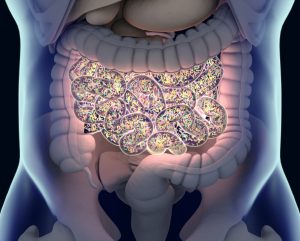
MicrobiomeThe study showed:

  • Consumption of a high-fructose, fruit-rich diet resulted in:
    • An increase in beneficial butyrate-producing bacteria (more about that below).
    • A decrease in bacteria associated with elevated total and LDL cholesterol.
    • Decreased blood levels of total and LDL cholesterol.
  • Consumption of a high-fructose corn syrup diet had the opposite effect. It resulted in:
    • A decrease in beneficial butyrate-producing bacteria.
    • An increase in bacteria associated with elevated total and LDL cholesterol.
    • Increased blood levels of total and LDL cholesterol.

The authors concluded: “We provide evidence that the high-fructose corn syrup diet induces an imbalanced microbiota [gut bacteria] profile characterized by a significantly reduced abundance of beneficial butyrate-producing bacteria and of bacteria known for anti-obesity effects…Despite the high fructose content, the fruit-rich diet shifts the intestinal microbiota composition in a protective manner…”

The authors said that there were probably two mechanisms for the different effects of fructose in high-fructose corn syrup and in fruits.

  • The fiber found in fruit supports the growth of beneficial bacteria in our intestine.
  • When high-fructose corn syrup is present in foods with low fiber content, it is released rapidly in the intestine. As I noted above, the cells that line our intestine become overwhelmed and pass some of that excess fructose on to our liver. However, the authors cited previous studies showing that some of that excess fructose remains in our intestine and supports the growth of unhealthy bacteria.

What Does Butyrate Do?

Question MarkYou are probably wondering what is special about butyrate-producing bacteria. Here is a brief synopsis.

  • Butyrate is a short chain fatty acid. As you might expect from its name, it was originally identified as a constituent of butter.
  • Some species of gut bacteria convert the fats in our diet to butyrate.
    • It is used as a preferred energy source for the cells that line our intestine. Consequently, butyrate production in our intestines has been linked to:
      • Reduced inflammation of the cells lining our intestine, which reduces the risk for diseases like inflammatory bowel disease (IBS) and Crohn’s Disease.
      • Reduced risk of “leaky gut syndrome”.
      • Reduced risk of colon cancer.
    • It is also absorbed into the bloodstream and appears to affect several metabolic pathways. For example, butyrate production in the intestine is associated with:
      • Decreased cholesterol levels.
      • Improved blood sugar control.
      • A healthy body weight.

What Does This Mean For You?

Questioning ManThis was a small study. As the authors noted, larger studies of longer duration are needed to confirm that the effects of fructose on our gut bacteria depend on the food the fructose is in. However, several other studies have come to similar conclusions.

More importantly, this study merely shows that the effect of fructose-containing foods on our gut bacteria is a potential mechanism for explaining why the effect of fructose depends on the food it is in.

There is already overwhelming evidence that fructose in fruits is good for us, while high-fructose corn syrup in sodas and highly processed foods is bad for us.

Does that mean high-fructose corn syrup is villainous? Should we read labels and avoid any food containing high-fructose corn syrup?

I would remind you that the amount of fructose and the relative abundance of fructose and glucose are virtually identical in fruits and high-fructose corn syrup. It is not high-fructose corn syrup that is the problem, it is the foods it is found in.

We don’t need to become compulsive label readers. We just need to eat more foods without labels.

The Bottom Line 

High-fructose corn syrup has been vilified in recent years. However, there is increasing evidence that it is not fructose that is the problem. It is the foods it is found in.

A recent study was designed to test that hypothesis. The investigators fed subjects high fructose diets in which the fructose came either from fruits or high-fructose corn syrup. The amount of fructose was identical in the two diets. The investigators then asked what effect the two diets had on gut bacteria. In short:

  • Consumption of the high-fruit diet increased healthy levels of beneficial gut bacteria and suppressed levels of unhealthy gut bacteria.
  • Consumption of the high-fructose corn syrup diet had the opposite effect. It increased unhealthy bacteria and suppressed beneficial bacteria.

The authors concluded: “We provide evidence that the high-fructose corn syrup diet induces an imbalanced microbiota [gut bacteria] profile characterized by a significantly reduced abundance of beneficial…bacteria and of bacteria known for anti-obesity effects…Despite the high fructose content, the fruit-rich diet shifts the intestinal microbiota composition in a protective manner…”

My take is as follows: This study shows that the effect of fructose-containing foods on our gut bacteria is a potential mechanism for explaining why the effect of fructose depends on the food it is in.

There is already overwhelming evidence that fructose in fruits is good for us, and high-fructose corn syrup in sodas and highly processed foods is bad for us.

Does that mean that high-fructose corn syrup is villainous? Should we read labels and avoid any food containing high-fructose corn syrup?

I would remind you that the amount of fructose and the relative abundance of fructose and glucose is virtually identical in fruits and high-fructose corn syrup. It is not high-fructose corn syrup that is the problem, it is the foods it is found in.

We don’t need to become compulsive label readers. We just need to eat more foods without labels.

For more details read the article above.

These statements have not been evaluated by the Food and Drug Administration. This information is not intended to diagnose, treat, cure or prevent any disease.

Reversing Fatty Liver Disease

Are Sodas Damaging Your Child’s Liver?

 Author: Dr. Stephen Chaney


reversing fatty liver diseaseIs reversing fatty liver disease possible?

Years ago, fatty liver disease was unheard of in children. Chronic liver disease in children was almost always caused by rare gene mutations. That was before the obesity epidemic. Obesity and overweight have increased two- to three-fold in our children and adolescents over the last two decades, and the incidence of non-alcoholic fatty liver disease has skyrocketed along with it.

Non-alcoholic fatty liver disease is now the leading cause of chronic liver disease in children and adolescents in the United States. It was found in 9.6% of all our children, 17.3% of our adolescents ages 15-19, and 38% of our children who are overweight or obese (JB Schwimmer et al, Pediatrics, 118: 1388-1393, 2006).

This is alarming because fatty liver disease increases the risk of developing type-2 diabetes, heart disease, cirrhosis of the liver, end stage liver disease, and liver cancer. If this epidemic of fatty liver disease in our adolescents is not reversed, we are condemning them to a lifetime of poor health.

Consumption of sodas and sugary processed foods is strongly associated with both obesity and fatty liver disease. That has led many experts to recommend we eliminate sodas, fruit juices, and sugary desserts and processed foods from our diet. However, associations do not prove cause and effect. Food manufacturers have claimed there was no proof these foods cause obesity and fatty liver disease.

That’s where a recent study performed at Emory University and the University of California at San Diego, (JB Schwimmer et al, JAMA, 321: 256-265, 2019) comes in. This study was a randomized clinical trial that asked whether elimination of soft drinks, fruit juices, and foods with added sugars from the diet of adolescents with fatty liver disease could reverse the disease.

This study has two important implications. If it showed that elimination of these foods can reverse fatty liver disease:

  • It provides a strategy for treatment of children and adults with fatty liver disease.
  • It strengthens the evidence that these foods cause fatty liver disease.

How Was The Study Done?

reversing fatty liver disease studyThe study started with 40 adolescent boys, ages 11-16, who already had fatty liver disease. They averaged 21-25% liver fat, which is more than four times the normal limit.

  • The study only included boys, because the incidence of fatty liver disease is higher in males than in females. All the subjects were severely overweight or obese (average BMI was >30).
  • The subjects were primarily (90%) Hispanic, because the incidence of fatty liver disease is slightly higher for Hispanics than for other ethnic groups.

The study design was as follows:

  • Twenty of the subjects were randomly assigned to an 8-week intervention diet designed to decrease free sugars (defined as added sugars found in sodas and processed foods and naturally occurring sugars found in fruit juices) from 10% of calories to <3% of calories.
  • Use of artificial sweeteners was prohibited because studies suggest they are also highly correlated with obesity and insulin resistance, both of which increase the risk of fatty liver disease.
  • The whole family followed the intervention diet during the 8-week study. By including the whole family in the study, the adherence of the adolescent to the diet was significantly improved.
  • Prior to starting on the intervention diet, study staff inventoried all food items in the household. Sodas, fruit juices, and processed foods containing added sugar were removed and replaced with low or no-added-sugar food items.
  • A registered dietitian prepared weekly diet plans tailored to family food preferences and the habitual diet of the child without restricting calorie intake. In short, this was not designed as a weight loss diet. In fact, the children consumed on average an additional 291 calories per day on the intervention diet.
  • The diets were neither low carb nor low fat. They did not restrict any food groups. They did not restrict sugars found naturally in fruits, vegetables, grains, and legumes. They were simply healthier versions of the diets the families were already eating without fruit juices and the added sugars found in sodas and processed foods.
  • Participants were instructed to avoid sugar-containing processed foods and drinks including fruit juice when not eating at home.
  • Food sufficient for the entire family was delivered to each participant’s home twice a week. Participants and their families were instructed not to purchase any food and to consume only the food provided by the study staff.
  • If the parents preferred to prepare their own meals, the ingredients for the meals were provided to ensure they met the free-sugar goal.
  • To increase dietary adherence, the study staff made twice-weekly calls to assess food satisfaction, cravings, and assist with special family events and holiday alternatives.
  • Each participant’s diet was evaluated based on 24-hour food recalls on 2 weekdays and 1 weekend at the beginning of the study and between weeks 3 and 8.
  • The other twenty subjects were told to continue with their present diet.
  • Participants in the control group were provided with a weekly food stipend to be used at the food stores of their choice.
  • Participants were told not to make any major changes to their physical activity for the duration of the study.

In short, this was a very well-designed study.


Reversing Fatty Liver Disease is Possible?


reversing fatty liver disease possibleThe results of the study were dramatic. For the intervention group:

  • Adherence to the diet was excellent. 18 of the 20 participants reduced free sugar intake to <3%. In fact, the average free sugar intake at week 8 was <1% of total calories.
  • The amount of fat in their livers was reduced from 25% to 17% in just 8 weeks.
  • Three markers of liver damage (ALT, aspartate aminotransferase, and γ-glutamyl transpeptidase) were also significantly reduced.
  • Participants lost an average of 3 pounds even though they were consuming an extra 291 calories per day. Forget calorie counting, low carb, and low fat. The best way to lose weight may be to cut out sodas and sugary junk foods. That’s everyone’s dream diet. Eat more and lose weight.

In the control group:

  • Free sugar intake decreased slightly to 10% of calories.
  • There was no significant change in the amount of fat in their livers.
  • ALT and aspartate aminotransferase decreased slightly.
  • Participants gained an average of 1.3 pounds during the 8-week study.

The authors concluded: “In this study of adolescent boys with non-alcoholic fatty liver disease, 8 weeks of provision of a diet low in free sugar compared with the usual diet resulted in significant improvement of hepatic steatosis [fat in the liver]…further research is required to assess long-term and clinical outcomes.”

In short, this is a preliminary study, but it suggests that elimination of sodas, sugary processed foods and fruit juice is enough to substantially reverse fatty liver disease.


Are Sodas Damaging Your Child’s Liver?


soda and reversing fatty liver diseaseThis study also strengthens the argument that sodas, sugary processed foods, and fruit juices play a significant role in the origin of fatty liver disease.

Why are sodas and the other foods such a problem? To answer that question, we first need to eliminate the myths.

  • Sugar isn’t the problem. This study did not eliminate naturally occurring sugars from fruits, vegetables, grains, and legumes. They aren’t the problem.
  • High fructose corn syrup isn’t the problem. High fructose corn syrup is a mixture of fructose and glucose and is chemically indistinguishable from sucrose (table sugar), honey, coconut sugar, and the fruit sugars used to sweeten “natural” processed foods. More to the point, an 8 oz soda contains the same amount and same kind of sugars as a medium apple. Apples are good for you, but sodas can give you fatty liver disease.
  • Fructose isn’t the problem. The name fructose is derived from fruit. It is the major sugar found in most fruits. Fruits are nutritional powerhouses and are an indispensable part of a healthy diet.
  • It’s sodas, sugary processed foods, and fruit juices that are the problem. That’s because our body was designed to handle the sugars found in fruits, vegetables, grains and legumes in a healthy manner. These sugars are packed into foods with lots of fiber and a cellular matrix that meters sugar into our bloodstream gradually.

When that happens, liver and muscle cells remove sugar from the bloodstream and store it as glycogen. Blood glucose and insulin levels never get very high. The liver converts fructose to glucose and releases it into the bloodstream slowly. Our metabolism is perfectly designed to handle foods in their natural form.

In contrast, sodas, sugary processed foods and fruit juices contain lots of sugar and very little fiber. The sugar rushes into our bloodstream and overwhelms our normal metabolic pathways. The excess glucose causes high blood sugar and insulin levels which increase inflammation and the risk of multiple diseases. The excess fructose is converted to fat in the liver. Some of that fat is released into the bloodstream as triglycerides, but much of it remains in the liver, where it can lead to fatty liver disease. For more details, read my book, Slaying The Food Myths.

In short, our body can metabolize naturally occurring sugars found in whole foods quite well. Those same sugars in sodas, sugary processed foods and fruit juices can destroy our health.

What Does This Study Mean For You?

reversing fatty liver disease questionsThe greatest strength of this study is also its greatest weakness.

  • The whole family went on the same diet. This was not just a diet for the children in the household.
  • The study staff inventoried all food items in the household. Sodas, sugary processed foods, and fruit juices were removed and replaced with healthier foods with low or no-added-sugar.
  • A dietitian designed the diets and families were provided with all the food they needed for the 8-week program.

Its weakness is obvious. If you think of this as a public health intervention, it would be impossible to implement it on a significant scale.

However, as a parent this is very doable. If you care about the health of your children, make a healthier change for the whole family.

  • Throw out the sodas, fruit juices, and processed foods with added sugars.
  • Replace them with whole unprocessed foods from all 5 food groups.
  • If you buy any processed foods, choose those with little or no added sugar.
  • Don’t replace them with artificially sweetened foods. Most recent studies suggest artificial sweeteners are just as bad for you as the sugars they replace. For more details, read my book, Slaying The Food Myths.


The Bottom Line


Fatty liver disease is increasing at an alarming rate in our children, especially our teenagers.

This is alarming because fatty liver disease increases the risk of developing type-2 diabetes, heart disease, cirrhosis of the liver, end stage liver disease, and liver cancer. If this epidemic of fatty liver disease in our adolescents is not reversed, we are condemning them to a lifetime of poor health.

Sodas, fruit juices, and processed foods with added sugars have been implicated in obesity and fatty liver disease. It has been difficult, however, to prove cause and effect.

A recent clinical study showed that eliminating sodas, fruit juices, and processed foods with added sugar from the diet of obese, adolescent boys with fatty liver disease for just 8-weeks:

  • Significantly reversed fat accumulation in the liver (fatty liver disease) and markers of liver damage. This may be a promising approach for reversing fatty liver disease. It also strengthens the argument that sodas and processed foods with added sugar play an important role in causing fatty liver disease.
  • The boys lost an average of 3 pounds even though they were consuming an extra 291 calories per day. Forget calorie counting, low carb, and low fat. The best way to lose weight may be to cut out sodas and sugary junk foods. That’s everyone’s dream diet. Eat more and lose weight.

This was a very well controlled study.

  • The whole family followed the intervention diet during the 8-week study. By including the whole family in the study, the adherence of the adolescent to the diet was significantly improved.
  • Prior to starting on the intervention diet, study staff inventoried all food items in the household. Sodas, fruit juices, and processed foods containing added sugar were removed and replaced with low or no-added-sugar food items.
  • A registered dietitian prepared weekly diet plans tailored to family food preferences and the habitual diet of the child without restricting calorie intake. In short, this was not designed as a weight loss diet. In fact, the children consumed on average an additional 291 calories per day on the intervention diet.
  • The diets were neither low carb nor low fat. They did not restrict any food groups. They did not restrict sugars found naturally in fruits, vegetables, grains, and legumes. They were simply healthier versions of the diets the families were already eating without fruit juices and the added sugars found in sodas and processed foods.
  • Food sufficient for the entire family was delivered to each participant’s home twice a week.
  • Adherence to the diet was strictly monitored.

If you think of this as a public health intervention, it would be impossible to implement it on a significant scale.

However, as a parent this is very doable. If you care about the health of your children, make a healthier change for the whole family.

  • Throw out the sodas, fruit juices, and processed foods with added sugars.
  • Replace them with whole unprocessed foods from all 5 food groups.
  • If you buy any processed foods, choose those with little or no added sugar.
  • Don’t replace them with artificially sweetened foods. Most recent studies suggest artificial sweeteners are just as bad for you as the sugars they replace.

For more details read the article above.


These statements have not been evaluated by the Food and Drug Administration. This information is not intended to diagnose, treat, cure or prevent any disease.

Health Tips From The Professor