Are Any Food Additives “Good” For You?
Author: Dr. Stephen Chaney
Are All Food Additives Bad-Part1?
In the last two issues of “Health Tips From The Professor” I have debunked myths about the dangers of erythritol and sorbitol – alcohol sugars that are widely used in supplements and processed foods. Perhaps it’s time to take a broader look at food additives and separate myths from facts.
I get a lot of questions about food ingredient labels. That’s because in today’s social media world everyone is an “expert” wanting to be heard. Couple that with the fact that old news is boring, and we have a problem. To keep their followers engaged these “experts” must keep coming up with new information that is novel and scary. It doesn’t need to be true – just novel and scary.
The warnings about which food additives to avoid are a perfect example. A few years ago, it was simple to know which ingredients to avoid. If you avoided foods with sugar, refined flour, trans fats and all the artificial stuff, you were OK. However, in recent years the list of ingredients to avoid keeps getting longer and longer.
It has reached the point where it is getting hard to find a food product or food supplement that doesn’t have any of the additives on the “naughty list”. You may even be wondering if there is anything besides organic fresh fruits and vegetables that you can eat. How did we get to this point?
The answer is obvious. All the social media “experts” needed something new to warn us about, so they took molehills and turned them into mountains. They took food additives that might cause a few problems for a limited number of people and characterized them as ingredients that were dangerous for everyone. Their posts were picked up and repeated by other “experts” and soon everyone thought they had to be true. The warnings about food ingredients became “nutrition myths”.
It is time for a myth buster to come along and help you sort through all the ingredient warnings so that you know which ones are true and which are myths. Let me be your guide.
I began my “research” by Googling “Food Ingredients to Avoid” to see what was on the internet. After a bit of “research” I came up with 25 of the most frequently mentioned “dangerous” food ingredients and have divided them into 3 categories. I call them “The Good, The Bad and the Ugly”.
Are Any Food Additives “Good” For You?
 Let me start by identifying the “good ones” – those are food additives that are on the social media “naughty lists” but are actually OK for most people most of the time. I would be the first to admit the using the word “good” as a descriptor for food additives is a bit of a misnomer.
The word “good” should really be reserved for organic fresh fruits and vegetables along with other whole, unprocessed foods. Of course, the problem is that most of us don’t eat enough of those foods, so we need to know which ingredients in the processed foods and food supplements we eat are OK.
The list of food additives that are perfectly OK for most of us would be a long one, so let me just mention a few that have inadvertently slipped onto the social media “naughty lists” that you may have seen.
I have discussed GMO foods and ingredients derived from GMO crops, soy foods and soy-derived food additives, and canola oil in previous editions of “health Tips From the Professor”. So, I won’t discuss them here. If you want more information on those topics, just go to https://chaneyhealth.com/healthtips/ and put the appropriate term in the search box
Carrageenan
 Carrageenan comes from seaweed and red algae. It has been used in food for thousands of years because of its gelling properties. In the supplement world, it is used to improve consistency and the disintegration of tablets.
There is a lot to like about carrageenan. It is natural, organic and non-GMO. Why then has it become an internet villain in the food ingredient world? The problem is that most of the internet “experts” who are vilifying carrageenan are not distinguishing between carrageenan and its breakdown product poligeenan. Here are the facts:
- In some animal studies poligeenan at very high doses has been shown to cause diarrhea, hemorrhaging & ulcerations of the colon and even colon Not all animal studies agree, but this does raise the possibility that high doses of poligeenan might cause the same effects in humans.
- Food grade carrageenan contains <5% poligeenan and does not raise the same concerns.
- Food grade carrageenan does not cause gastrointestinal problems in most animal studies. Nor has it been shown to cause cancer in any animal study.
- The FDA, USDA and WHO have reviewed all available studies and have concluded that food grade carrageenan is safe.
- The International Agency for Research on Cancer (IARC) has concluded that carrageenan does not cause cancer.
Caramel coloring is another example. I won’t go into detail here, but the situation is like that for carrageenan. It is a minor impurity of caramel coloring that is the concern. However, caramel coloring itself should not be a concern for products made by any reputable manufacturer that employs rigorous quality control tests on their ingredients.
Maltodextrin
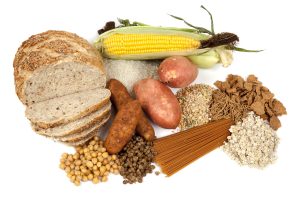
Maltodextrin is a natural food ingredient made from enzymatically digesting starchy foods. It is used as a stabilizer and thickener in foods. It is also combined with glucose and fructose in sports drinks to provide sustained energy.
Myth #1: Social media is filled with claims that maltodextrin causes gastrointestinal problems or that it is unsafe. There is very little evidence to back that up, and we need to consider those claims in light of the fact that we produce lots of maltodextrin in our intestines every day as we digest the starches in our diet.
Myth #2: “Maltodextrin is just another sugar. It is just another way for food manufacturers to hide the total amount of sugar in their products.” Maltodextrin is actually less sweet than most sugars. As described above, it is primarily added to foods for reasons other than to impart sweetness.
Myth #3: “Maltodextrin is GMO.” It’s true that most maltodextrin in the US comes from GMO corn. However, as I pointed out in my article on GMO foods, the genetic modifications are found only in the DNA and protein. Maltodextrin is a highly purified food ingredient that contains neither DNA nor protein. That means there are no health concerns associated with maltodextrin, only possible environmental concerns about the pesticides and herbicides used with GMO corn.
Carmine (Also Known As Cochineal)
 I find this one truly amusing. Social media posts breathlessly proclaim: “Did you know that the red dye used in your favorite food comes from ground up insects?”
Of course, the statement is factually correct. Carmine is a red food dye extracted and purified from a tropical beetle. However, the implication the statement suggests is completely misleading.
This is a highly purified ingredient. It contains no insect parts. In fact, you are far more likely to find insect parts in your breakfast cereal or piece of toast. The FDA allows up to 350 insect fragments, 5 rodent hairs, and 2 rodent poop pellets in every cup of flour. Enjoy your breakfast cereal and toast!
Carmine dye is natural, organic, and non-GMO. It is much safer than the Red #2 or Red #40 it replaces. What’s not to like?
Are the alarmists worried that the beetles will become an endangered species or are they concerned about the suffering of the beetles who give up their lives to produce carmine dye?
The Bottom Line
A few years ago, it was simple to know which ingredients to avoid. If you avoided foods with sugar, refined flour, trans fats and all the artificial stuff, you were OK. However, in recent years the list of ingredients to avoid keeps getting longer and longer.
It has reached the point where it is getting hard to find a food product or food supplement that doesn’t have any of the additives on the “naughty list”. How did we get to this point?
The answer is obvious. Social media “experts” always need something new to warn us about, so they can engage their followers. Their posts were picked up and repeated by other “experts” and soon everyone thought they had to be true. Their warnings about food ingredients became “food myths”.
It is time for a myth buster to come along and help you sort through all the ingredient warnings so that you know which ones are true and which are myths.
This week I started with the “good” additives, which I define as food additives that are on the social media “naughty lists” but are actually OK for most people most of the time.
The list of food additives that are perfectly OK for most of us would be a long one, so I have just mentioned a few that have inadvertently slipped onto the social media “naughty lists” that you may have seen.
Next week I will discuss the bad and the ugly food additives. Stay tuned.
For more details about the study and what it means for you, read the article above.
These statements have not been evaluated by the Food and Drug Administration. This information is not intended to diagnose, treat, cure, or prevent any disease.
___________________________________________________________________________
My posts and “Health Tips From the Professor” articles carefully avoid claims about any brand of supplement or manufacturer of supplements. However, I am often asked by representatives of supplement companies if they can share them with their customers.
My answer is, “Yes, as long as you share only the article without any additions or alterations. In particular, you should avoid adding any mention of your company or your company’s products. If you were to do that, you could be making what the FTC and FDA consider a “misleading health claim” that could result in legal action against you and the company you represent.
For more detail about FTC regulations for health claims, see this link.
https://www.ftc.gov/business-guidance/resources/health-products-compliance-guidance
______________________________________________________________________
About The Author
 Dr. Chaney has a BS in Chemistry from Duke University and a PhD in Biochemistry from UCLA. He is Professor Emeritus from the University of North Carolina where he taught biochemistry and nutrition to medical and dental students for 40 years. Dr. Chaney won numerous teaching awards at UNC, including the Academy of Educators “Excellence in Teaching Lifetime Achievement Award”. Dr Chaney also ran an active cancer research program at UNC and published over 100 scientific articles and reviews in peer-reviewed scientific journals. In addition, he authored two chapters on nutrition in one of the leading biochemistry text books for medical students.
Since retiring from the University of North Carolina, he has been writing a weekly health blog called “Health Tips From the Professor”. He has also written two best-selling books, “Slaying the Food Myths” and “Slaying the Supplement Myths”. And most recently he has created an online lifestyle change course, “Create Your Personal Health Zone”. For more information visit https://chaneyhealth.com.
For the past 54 years Dr. Chaney and his wife Suzanne have been helping people improve their health holistically through a combination of good diet, exercise, weight control and appropriate supplementation.