Can Vitamin C Reduce Colds In Children?

A Holistic Approach Is Best

Author: Dr. Stephen Chaney 
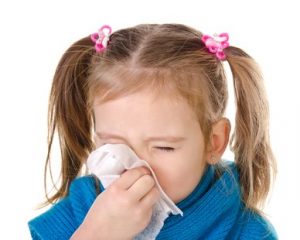
child with fluCold and flu season is here. And if you have children, that’s not good news. Children and adolescents are particularly susceptible to respiratory infections (colds, sore throat, sinusitis, pneumonia, and bronchitis). That’s because:

  • Their immune systems are immature.
  • Their diet and sleep patterns are far from optimal.
  • Increasing environmental pollution makes the problem worse.

And that’s a problem. The WHO says:

  • Respiratory diseases are the leading cause of childhood deaths globally.
  • RSV alone results in 3.6 million hospitalizations and 100,000 deaths each year.

The death rates are not as high in the US, but every day your child is sick at home:

  • They are not in school leaning.
  • One parent has to stay home from their job to take care of them.

If you want to protect your child from respiratory infections and do it naturally, you need to strengthen their immune system. And that requires a holistic approach which I have described in a previous issue of “Health Tips From The Professor”.

But ever since Dr. Linus Pauling published “Vitamin C and the Common Cold” in 1970, there has been a lot of discussion about the role of vitamin C in preventing respiratory infections. I don’t need to tell you this has been a controversial topic.

Several recent studies have confirmed the role of vitamin C in preventing and shortening respiratory infections in adults, and this did not require the mega-dose levels recommended by Dr. Pauling.

However, high-quality studies on the role of preventing respiratory infections in children and adolescents are lacking. The study (C Li et al, Frontiers in Nutrition, 12:1601218, 2025) I will describe today was designed to fill this gap.

How Was This Study Done?

clinical studyThe authors of this study used data from the 2017-2018 National Health and Nutrition Examination Survey (NHANES) in the United States. The NHANES study included 8,704 people, of which 1,344 were children or adolescents aged 6-19 years old.

At the time of enrollment:

  • Serum levels of vitamin C were determined by laboratory analysis.
  • The incidence of recent (within 30 days) respiratory infections was determined from a self-reported health questionnaire. In this study the most frequent respiratory infection was the common cold. But the term respiratory infections also included sore throats, sinusitis, pneumonia, and bronchitis.

Of the 1,344 participants, 238 (17.7%) reported a respiratory infection within the past 30 days.

The participants were divided into quartiles based on serum levels of vitamin C, and the highest versus lowest quartiles were compared for the risk of developing respiratory infections.

Finally, the data were statistically corrected for confounding variables like sex, age, race, obesity, asthma, and tobacco smoke exposure.

Can Vitamin C Reduce Colds in Children? 
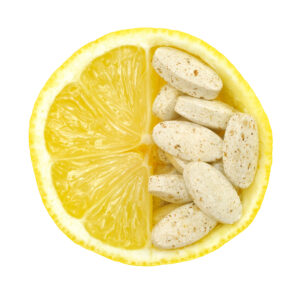
The results were clear cut:

  • There was a significant negative association between serum levels of vitamin C and the risk of respiratory infections (In plain English that means as serum levels of vitamin C increased, the risk of respiratory infections decreased).
  • For every 10 unit increase in serum vitamin C levels, the risk of respiratory disease decreased by 7%.
  • Children and adolescents in the top quartile of serum vitamin C were 50% less likely to develop a respiratory infection than those in the bottom quartile.

Based on previous studies, the authors said the most likely mechanisms for the effect of vitamin C on the risk of developing a respiratory disease are:

  1. Vitamin C exerts antioxidant protection against free radicals generated by immune cells, which protects the integrity of cells lining the respiratory track.

2) Vitamin C strengths the ability of neutrophils to clear pathogens (bacteria and viruses) from the blood.

3) Vitamin C inhibits pro-inflammatory cytokines, thereby reducing inflammatory responses that can worsen and prolong respiratory infections.

The authors concluded,

  • “This study demonstrates a negative association between serum vitamin C and respiratory infection risk in a nationally representative sample of children and adolescents.
  • These findings highlight the protective role of vitamin C against respiratory infections and underscore the importance of maintaining optimal vitamin C levels.
  • Our findings suggest that vitamin C supplementation may be potentially used for the prevention and treatment of respiratory infections among children and adolescents.”

What Does This Study Mean For You? 

Questioning WomanThis study suggests that vitamin C supplementation may help protect our children and grandchildren from respiratory infections. However, we need to acknowledge the strengths and limitations of the study.

On the positive side, this study is fully consistent with previous studies showing that vitamin C supplementation reduces the risk of getting respiratory infections in adults – and reduces the duration and severity of respiratory infections when they do occur.

On the negative side, this is a single study. It highlights the need for more studies of the effect of vitamin C on respiratory infections in children.

You also may be thinking, “This study talks in terms of serum levels of vitamin C. It doesn’t tell me how much vitamin C my children and grandchildren should be getting.”

There is a good reason this study was based on serum levels of vitamin C. It’s the most accurate measure of vitamin C status.

  • Intake of vitamin C based on dietary questionnaires is often inaccurate.
  • There is not a linear relationship between dietary vitamin C and serum levels of vitamin C.
  • Serum levels of vitamin C can be influenced by obesity and other metabolic and disease states.

So, I have done a little research to give you an approximation of what vitamin C levels are appropriate.

The average serum vitamin C levels in the highest quartile (the one with the lowest risk of respiratory infections) was 87 µmol/L. To estimate the dose of vitamin C required to reach that level I turned to the NIH “Vitamin C Fact Sheet For Health Professionals”. From that fact sheet, I estimate that the dose needed to reach 87 µmol/L is:

  • 150-200 mg/day for children.
  • 200-300 mg/day for adolescents.

This is a very rough approximation, but it provides you with guidelines you can use. And those guidelines suggest you don’t need give your child a megadose of vitamin C – a chewable vitamin C supplement in the 250 mg range should be plenty.

A Holistic Approach Is Best 

Bullets

I don’t want to give you the idea that vitamin C is a “magic bullet” that will protect your children from respiratory infections. For that, your children will need a strong immune system, and adequate vitamin C is just one component of a strong immune system.

For a strong immune system, a holistic approach is best. That includes:

  • A balanced diet composed of whole, unprocessed foods without a lot of fat and simple sugars. Unfortunately, American children currently get an average of 67% of their calories from ultra-processed foods.
  • Adequate sleep. The recommendations are 9-12 hours for children aged 6-12 and 8-10 hours for adolescents aged 13-18. Unfortunately, 30% of school-age children and 75% of adolescents don’t get enough sleep.
  • Adequate exercise. Unfortunately, children and adolescents spend far too much time on their electronic devices and too little time exercising.
  • Ideal body weight. Unfortunately, ultra-processed foods and lack of exercise are packing on the pounds. Almost 40% of American children and adolescents are overweight or obese.
  • Supplementation. Because most children eat too much ultra-processed food, I recommend a high-quality children’s multivitamin and a protein supplement to make sure they are getting the nutrients they need to build a strong immune system. That is, of course, in addition to the vitamin C supplement I mentioned above.

I recognize none of this is easy. Our son is in his 40s now, but I remember his childhood and teenage years. My only advice is to:

  • Pick your battles.
  • Be the example.

The Bottom Line 

Although several recent studies have shown that vitamin C reduces the risk of respiratory infections in adults, few studies have looked at the effects of vitamin C on respiratory infections in children.

In this issue of “Health Tips From the Professor” I reviewed a study showing that vitamin C reduced the risk of respiratory infections by up to 50% in children and adolescents.

  • The authors concluded, “Our findings suggest that vitamin C supplementation may be potentially used for the prevention and treatment of respiratory infections among children and adolescents.”

For more information on this study, what it means for your children or grandchildren, and a holistic approach to strengthening their immune system, read the article above.

These statements have not been evaluated by the Food and Drug Administration. This information is not intended to diagnose, treat, cure or prevent any disease.

_____________________________________________________________________________

My posts and “Health Tips From the Professor” articles carefully avoid claims about any brand of supplement or manufacturer of supplements. However, I am often asked by representatives of supplement companies if they can share them with their customers.

My answer is, “Yes, as long as you share only the article without any additions or alterations. In particular, you should avoid adding any mention of your company or your company’s products. If you were to do that, you could be making what the FTC and FDA consider a “misleading health claim” that could result in legal action against you and the company you represent.

For more detail about FTC regulations for health claims, see this link.

https://www.ftc.gov/business-guidance/resources/health-products-compliance-guidance

_______________________________________________________________________

About The Author 

Dr. Chaney has a BS in Chemistry from Duke University and a PhD in Biochemistry from UCLA. He is Professor Emeritus from the University of North Carolina where he taught biochemistry and nutrition to medical and dental students for 40 years.

Dr. Chaney won numerous teaching awards at UNC, including the Academy of Educators “Excellence in Teaching Lifetime Achievement Award”.

Dr Chaney also ran an active cancer research program at UNC and published over 100 scientific articles and reviews in peer-reviewed scientific journals. In addition, he authored two chapters on nutrition in one of the leading biochemistry text books for medical students.

Since retiring from the University of North Carolina, he has been writing a weekly health blog called “Health Tips From the Professor”. He has also written two best-selling books, “Slaying the Food Myths” and “Slaying the Supplement Myths”. And most recently he has created an online lifestyle change course, “Create Your Personal Health Zone”. For more information visit https://chaneyhealth.com.

For the past 53 years Dr. Chaney and his wife Suzanne have been helping people improve their health holistically through a combination of good diet, exercise, weight control and appropriate supplementation.


Have You Winterized Your Immune System?

What Role Does Supplementation Play?

Author: Dr. Stephen Chaney

Winter WindWinter is just around the corner. Temperatures will plunge and winter winds will blow. And with the winter months come winter illnesses.

You probably have already winterized your car and have had your heating system checked to make sure it is winter-ready. But have you winterized your immune system?

We are being told to expect new strains of the flu and COVID this winter. RSV isn’t changing, but it is still hanging around. We are being told to get our shots now. But those shots don’t protect us from the common cold and other viral illnesses, so we are also being advised about which drugs to take if we do get sick.

But you may be wondering if there is a holistic approach for strengthening your immune system…

…A natural approach that might make improve the effectiveness of the shots or allow you to do without them.

…A natural approach that would improve your resistance to the illnesses that shots don’t touch.

My answer is yes! Here are my suggestions:

Have You Winterized Your Immune System?

.

There are charlatans that will sell you specialized pills and potions to strengthen your immune system. Ignore them. For the most part their claims are bogus.

There are the “Dr. Strangeloves” of the internet that will recommend highly specialized and/or restrictive dietary programs to strengthen your immune system. Ignore them. They are more interested in audience numbers than in science.

I recommend a simple, common-sense approach. We don’t need specialized recommendations to strengthen our immune systems. In fact, there is one healthy lifestyle that benefits us in multiple ways. The same recommendations that reduce our risk of health disease, cancer, and diabetes also strengthen our immune system. 

  • Start by eating a balanced diet composed of whole, unprocessed foods without a lot of fat and simple sugars. A great place to start designing a balanced diet that is perfect for your age, gender and activity level is https://choosemyplate.gov.
  • Get plenty of sleep. The experts recommend 8 hours of sleep a night, but most Americans get far less than that.
  • Exercise on a regular basis. Both too little and too much exercise can weaken the immune system (You might have guessed that the problem for most of us is the “too little”, not the “too much”). The experts recommend at least 30 minutes at least 5 days a week. Twice that amount is probably optimal unless you want to run marathons or become a “muscle man”.
  • Maintain ideal body weight. Those excess pounds really zap our immune system.
  • Minimize your reliance on medications. Many common medications weaken the immune system (Just listen to the disclaimers in the TV commercials for examples). But you must work with your physician on this. Once your physician knows that you are willing to take personal responsibility for your diet and lifestyle, they will generally be willing to minimize the number of medications that they prescribe.
  • Focus on the positive. Studies show that optimists are healthier and live longer than pessimists. And the good news is that anyone can cultivate an attitude of optimism. For most of us it is a lifestyle choice – not something that we were born with.
  • Add a supplement program to assure that your immune system is functioning optimally. In the ideal world supplements wouldn’t be necessary, but there are very few “saints” who do a great job in all 6 of the areas that I mentioned above.

What Role Does Supplementation Play?

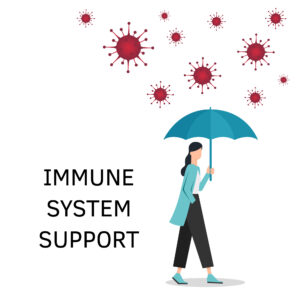
Immune SupportA well-designed supplement program fills in the “gaps”. We want to make sure that we are getting adequate nutrition to keep our immune system healthy. Here are the nutrients you need:

  • B vitamins and protein because our immune cells need to divide very rapidly when we have immune challenges.
  • Antioxidants because our immune cells create lots of free radicals.
  • Trace minerals, especially iron and zinc, because they are required by important enzymes of the immune system.
  • Vitamin D because it is vitally important for a strong immune system and most of us are not getting enough.
  • Probiotics (healthy bacteria) because 70% of our immune system reside in the gut, and “bad” bacteria and yeast in our intestines can weaken the immune system.
  • Omega-3 fatty acids to modulate the immune system once it has taken care of the invading bacteria or viruses.

We don’t need mega-doses. We just need enough.

One final thought: Remember that a holistic approach to strengthening our immune system is not an “either – or” proposition. Experts tell us that the flu shot is 66% effective in preventing the flu for people with a strong immune system and only 33% effective in preventing the flu for people with a weak immune system.

Optimizing Your Immune Response

OptimizeA group of experts recently published an exhaustive review of the role nutrition plays in preventing upper respiratory viral infections (PC Calder et al, “Optimal Nutritional Status For A Well-Functioning Immune System Is An Important Factor To Protect Against Viral Infections”, Nutrients, 1181-1200, 2020).

Their conclusions were:

1) “Supplementation with some nutrients in addition to a well-balanced diet is a safe, effective, and low-cost strategy to help support optimal immune function.”

    • They recommended ~100% of the RDA for vitamins a, B6, B12, E, folic acid, and minerals zinc, iron, selenium, magnesium, and copper.
    • They recommended 250 mg/day of EPA and DHA.

2) “Supplementation with above the RDA for vitamins C and D is warranted.”

    • They recommended 200 mg/day of vitamin C for healthy individuals and 1-2 g/day for individuals who are sick.
    • They recommended 2,000 IU/day for vitamin D.

3) “Public Health individuals should include nutritional strategies in their recommendations.”

The Bottom Line

This week I shared tips on winterizing your immune system, so you can withstand the worst that winter brings.

These statements have not been evaluated by the Food and Drug Administration. This information is not intended to diagnose, treat, cure or prevent any disease.

 ____________________________________________________________________________

My posts and “Health Tips From the Professor” articles carefully avoid claims about any brand of supplement or manufacturer of supplements. However, I am often asked by representatives of supplement companies if they can share them with their customers.

My answer is, “Yes, as long as you share only the article without any additions or alterations. In particular, you should avoid adding any mention of your company or your company’s products. If you were to do that, you could be making what the FTC and FDA consider a “misleading health claim” that could result in legal action against you and the company you represent.

For more detail about FTC regulations for health claims, see this link.

https://www.ftc.gov/business-guidance/resources/health-products-compliance-guidance

_____________________________________________________________________

About The Author 

Dr. Chaney has a BS in Chemistry from Duke University and a PhD in Biochemistry from UCLA. He is Professor Emeritus from the University of North Carolina where he taught biochemistry and nutrition to medical and dental students for 40 years.  Dr. Chaney won numerous teaching awards at UNC, including the Academy of Educators “Excellence in Teaching Lifetime Achievement Award”. Dr Chaney also ran an active cancer research program at UNC and published over 100 scientific articles and reviews in peer-reviewed scientific journals. In addition, he authored two chapters on nutrition in one of the leading Biochemistry textbooks for medical students.

Since retiring from the University of North Carolina, he has been writing a weekly health blog called “Health Tips From the Professor”. He has also written two best-selling books, “Slaying the Food Myths” and “Slaying the Supplement Myths”. And most recently he has created an online lifestyle change course, “Create Your Personal Health Zone”. For more information visit https://chaneyhealth.com.

For the past 53 years Dr. Chaney and his wife Suzanne have been helping people improve their health holistically through a combination of good diet, exercise, weight control and appropriate supplementation.
The Truth About Vitamin D And Respiratory Diseases

How Should You Prepare For This Winter?

deadSome health experts are making dire predictions for this fall when COVID-19 overlaps with our annual flu season. People are worried.

When people are worried, hucksters smell a quick buck and start coming out of the woodworks. They are touting all sorts of miracle pills and potions that will keep us safe this winter. The FDA is doing its best to shut them down, but it’s like the “Whack A Mole” game you may remember from the county fair. As soon as the FDA shuts one down, another pops up.

In the meantime, you are left trying to sort through the claims. I could write a whole book on the truth (and lies) about the claims you are seeing on the internet. But this week I will focus on vitamin D. I will give you unbiased answers to three questions.

1) What is the truth about vitamin D and respiratory disease?

2) Will vitamin D help protect you against COVID-19?

3) How should you prepare for this winter?

I am basing today’s “Health Tip” on a recently published study (H Brenner et al, Nutrients 2020, 12, 2488) looking at the effect of vitamin D status on deaths from respiratory disease in older German adults.

How Was The Study Done?

Clinical StudyThe data from this study were taken from an ongoing study in Germany looking at the effect of diet and lifestyle on health outcomes in older adults. In this case, 9548 adults, ages 50-75, from the region of Saarland in Germany were enrolled in the study between 2000 and 2002 and followed for an average of 15 years.

Blood samples were drawn at the time of enrollment and 25-hydroxyvitamin D levels were determined as a measure of vitamin D status. Deaths and cause of deaths over the 15 year period were obtain from German health records.

The basic characteristics of the study population were:

  • The gender breakdown was 43.8% men, 52.6% female.
  • The average age was 62.1 years.
  • Almost all participants were Caucasians of German or French descent.
  • 8% were vitamin D insufficient (25-hydroxyvitamin D of 30-<50 nmol/L)
  • 1% were vitamin D deficient (25-hydroxyvitamin D of <30 nmol/L)

Note: Almost 60% of this study group had an inadequate vitamin D status. The comparable figures for the US population are 42% with inadequate vitamin D status (34% vitamin D insufficient and 8% vitamin D deficient).

The reasons for this are likely two-fold:

  • Saarland is at the latitude of Newfoundland, Canada, so sun exposure is less than for most Americans.
  • Germans are less likely to consume supplements than Americans.

However, the fact that 60% of this study group has inadequate vitamin D status makes it a particularly good group to look at the effect of vitamin D status on health outcomes.

The Truth About Vitamin D And Respiratory Diseases

the truth signThis study found:

  • Vitamin D insufficiency (25-hydroxyvitamin D of 30-<50 nmol/L) increased the risk of dying from respiratory disease by 1.9-fold for men and 2.1-fold for women.
  • Vitamin D deficiency (25-hydroxyvitamin D of <30 nmol/L) increased the risk of dying from respiratory disease by 2.3-fold for men and 3.0-fold for women.

The authors pointed out that this was consistent with a recent meta-analysis of randomized clinical trials showing that supplementation with RDA levels of vitamin D reduced the risk of acute respiratory tract infections by 70% in people who were vitamin D deficient.

The authors concluded:

“Vitamin D insufficiency and deficiency are common and account for a large proportion of respiratory disease mortality in older adults…Our results, along with evidence from meta-analyses from RCTs [Randomized Placebo-Controlled Clinical Trials] regarding results of vitamin D3 supplementation on various outcomes, suggest that vitamin D3 supplementation could contribute to lowering mortality from respiratory and other diseases during and beyond the COVID-19 pandemic, particularly among women.”

How Should You Prepare For This Winter?

Winter WindNow it is time to answer the three questions I posed at the beginning of this article:

1) What is the truth about vitamin D and respiratory disease?

There have been many studies suggesting that inadequate vitamin D status increases the risk of “catching” respiratory diseases such as the seasonal flu. Some of those studies showed that supplementation with vitamin D3 reduced the risk of catching respiratory diseases. However, most of those were small studies.

This study and the meta-analysis the authors referred to were much larger, better designed studies. Other large, well designed studies are needed. But, taken together, these two studies strongly support the hypothesis that inadequate vitamin D status significantly increases the risk of developing and dying from respiratory diseases.

However, we do need to put this into perspective.

  • Supplementation with vitamin D primarily protects individuals with inadequate vitamin D status. It doesn’t appear to offer significant benefit for individuals with adequate vitamin D status (>50 nmol/L 25-hydroxyvitamin D).
  • Supplementation with vitamin D at doses of 2,000 IU or less appears to be sufficient for most people. There is little evidence that megadoses are beneficial unless you are severely vitamin D deficient (more about that below).

2) Will vitamin D help protect you against COVID-19?

vitamin dThe answer to this question is less clear. As we learn more about COVID-19 we have learned that it is much more than just a respiratory disease. On the other hand, cellular studies suggest that vitamin D may interfere with the mechanism by which COVID-19 attacks cells.

What do clinical studies say? We are just learning. Four small clinical trials and one large study have recently been published or posted online as preprints prior to being accepted for publication.

  • The second study (HW Kaufman et al, PLOS One, September 17, 2020) used data from a major national testing center (Quest Diagnostics) and linked COVID-19 test results with 25-hydroxyvitamin D test results for 191,779 patients. This study reported that vitamin D deficiency was associated with a 30% increased risk of testing positive for COVID-19.
  • The third study found that vitamin D deficiency was associated with hospital admissions for COVID-19.
  • The fourth study found that vitamin D deficiency was associated ICU admissions for COVID-19.

Taken together these 5 studies suggest that vitamin D deficiency may increase the risk of being infected by COVID-19 and on the severity of the disease if you are infected.

I should point out that these studies are preliminary. Normally we would say that they need to be confirmed by larger studies before becoming incorporated into the standard of care for COVID-19.

You might be saying to yourself, , “Why is the medical community paying so much attention to preliminary studies?” The answer is simple:

  • The need is urgent. We need all the tools at our disposal to fight this deadly disease, and we need them now.
  • Vitamin D3 supplementation at 2,000 IU or less is inexpensive and safe. Plus, even if further studies find that our vitamin D status has no effect on COVID-19 risk, we know that adequate vitamin D has many other potential health benefits.

To summarize:

  • Preliminary studies suggest that adequate vitamin D status may offer some protection for COVID-19. These studies are not definitive. No reputable scientist is ready to tell you that vitamin D will ward off COVID-19. However, supplementation with 2000 IU/day or less of vitamin D3 is safe and may have multiple health benefits.
  • Vitamin D should not be considered a “magic bullet”. It is just one aspect of a holistic approach to creating a healthy body that is less susceptible to respiratory diseases like COVID-19.

3) How Should You Prepare For This Winter?

Winter WindAs we approach the winter months, the days are getting shorter and sun exposure is decreasing. This is the time of year when your 25-hydroxyvitamin D levels will be at their lowest.

At the same time, we are likely to see a convergence of the seasonal flu, flu-like illnesses, and COVID-19 this winter. You will need a healthy body, a healthy immune system, and adequate vitamin D status more than ever.

When asked about vitamin D and COVID-19 in a recent interview, Dr. Anthony Fauci, Director of the National Institute of Allergy and Infectious Diseases, said, “If you’re deficient in vitamin D, that does have an impact on your susceptibility to infection. I would not mind recommending, and I do it myself, taking vitamin D supplements.”

I recommend supplementation with vitamin D3 to make sure your vitamin D status is adequate. The RDA for vitamin D is 600 IU for adults and 800 IU for seniors over the age of 70. However, because the efficiency with which we convert vitamin D3 to 25-hydroxyvitamin D varies from person to person, many experts recommend supplementing with 1,500-2,000 IU of vitamin D3.

I also recommend that you ask your health provider for a 25-hydroxyvitamin D test. If you are in the vitamin D deficient range, your health provider may recommend more than 2,000 IU/day of vitamin D3.

Finally, we should not rely on vitamin D alone. As I discussed in a previous issue of “Health Tips From The Professor”, I recommend a holistic approach for strengthening our immune systems, and I recommend the CDC guidelines for reducing the risk of catching both the flu and COVID-19.

I would note that social distancing, hand washing, and mask wearing are just as effective at reducing the risk of getting the flu as they are for getting COVID-19. In fact, some Asian countries practice mask wearing in public every flu season.

The Bottom Line

  • A recent study found that inadequate vitamin D status caused a 2-3-fold increased risk of dying from respiratory illnesses for seniors (ages 50-74).
  • A previous meta-analysis reported that supplementation with RDA levels of vitamin D reduced the risk of acute respiratory tract infections by 70% in people who were vitamin D deficient.
  • Taken together, these two studies strongly support the hypothesis that inadequate vitamin D status significantly increases the risk of developing and dying from respiratory diseases.
  • Preliminary studies suggest that adequate vitamin D status may offer some protection for COVID-19. These studies are not definitive. No reputable scientist is ready to tell you that vitamin D will ward off COVID-19. However, supplementation with 2000 IU/day or less of vitamin D3 is safe and may have multiple health benefits.
  • Vitamin D should not be considered a “magic bullet”. It just one aspect of a holistic approach to creating a healthy body that is less susceptible to respiratory diseases like COVID-19.

So, how should we prepare for this winter?

  • As we approach the winter months, the days are getting shorter and sun exposure is decreasing. This is the time of year when your 25-hydroxyvitamin D levels will be at their lowest.
  • At the same time, we are likely to see a convergence of the seasonal flu, flu-like illnesses, and COVID-19 this winter. You will need a healthy body, a healthy immune system, and adequate vitamin D status more than ever.
  • I recommend supplementation with vitamin D3 to make sure your vitamin D status is adequate. The RDA for vitamin D is 600 IU for adults and 800 IU for seniors over the age of 70. However, because the efficiency with which we convert vitamin D3 to 25-hydroxyvitamin D varies from person to person, many experts recommend supplementing with 1,500-2,000 IU of vitamin D3.
  • Finally, we should not rely on vitamin D alone. As I discussed in a previous issue of “Health Tips From The Professor”, I recommend a holistic approach for strengthening our immune systems, and I recommend the CDC guidelines for reducing the risk of catching both the flu and COVID-19.

I would note that social distancing, hand washing, and mask wearing are just as effective at reducing the risk of getting the flu as they are for getting COVID-19. In fact, some Asian countries practice mask wearing in public every flu season.

For more details, read the article above.

These statements have not been evaluated by the Food and Drug Administration. This information is not intended to diagnose, treat, cure, or prevent any disease.

Health Tips From The Professor