Do Eggs Prevent Cognitive Decline?

Are Eggs Brain Food?

Author: Dr. Stephen Chaney 

VillainFor much of the past 10 or 20 years, eggs have villainized. We were told that their high cholesterol levels would clog our arteries and increase our risk of heart attack and stroke.

We were told to eat egg whites, egg substitutes (even though egg substitutes were a witch’s brew of chemicals), or avoid eggs altogether.

But in recent years, the ground has shifted.

  • Cholesterol is no longer viewed as the demon it once was. It is now thought of as more of a bit player in a cast of dozens of factors contributing to increased risk of heart disease and stroke.

And when it comes to increased risk of heart disease, the AHA (American Heart Association) position on egg consumption and heart disease risk has shifted dramatically. They now recommend:

  • “Healthy adults can eat up to one whole egg per day as part of a heart-healthy diet.”
  • Diet context is very important. The AHA recommends:
    • “Eggs should not be paired with high-saturated fat foods like bacon, sausage, or butter. Instead, they should be poached, soft-boiled, or cooked in healthy fats like olive oil.”
    • I would add that recent studies have shown that if you are consuming a whole-food, primarily plant-based diet, consuming one or two eggs per day actually decreases your risk of heart disease.
  • Your body’s ability to regulate cholesterol levels is also important. For that reason, the AHA recommends:
    • “Individuals with diabetes, high blood cholesterol, or existing heart disease should be more cautious…limiting yolk consumption to 4 per week…[I would add obesity to this list].”

For more information on the studies behind these recommendations, go to https://www.chaneyhealth.com/healthtips/ and put eggs in the search box.

Are Eggs Brain Food?
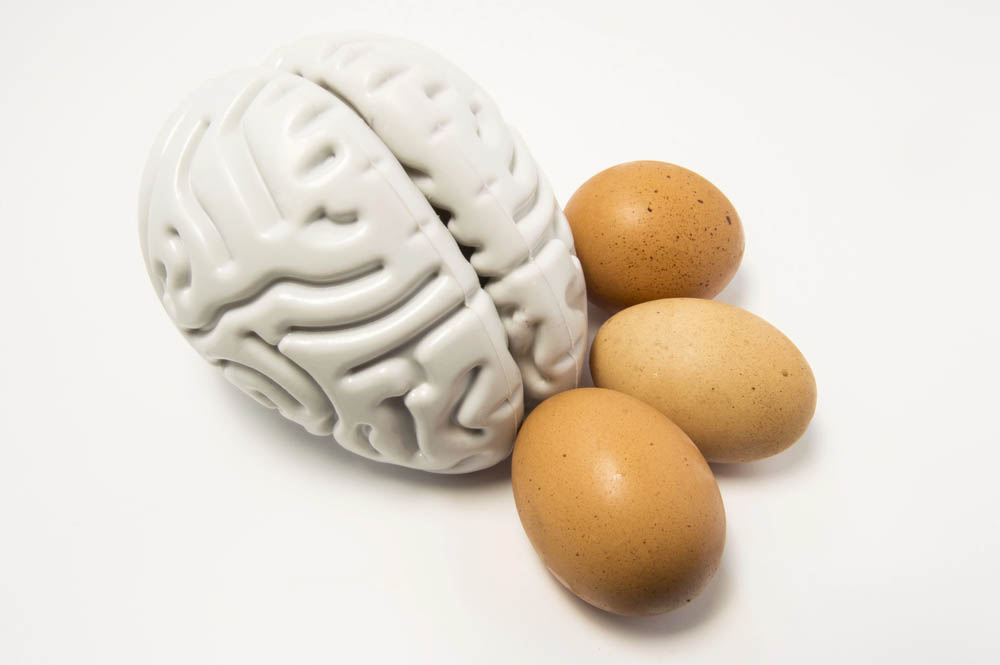
There are lots of reasons to think of eggs as brain food. The authors of the study I am about to share observed:

  • “Eggs are a good source of protein (6.29 gram/medium egg), which has been linked to improved memory and reaction time in healthy young adults and reduced risk of cognitive impairment in older adults.”
  • “Egg protein is a good source of the essential amino acid tryptophan (77 mg per egg), which is converted to the neurotransmitter serotonin, involved in decision-making and memory.”
  • “Egg yolks are a good source of choline (150 mg per egg), which is a precursor to acetylcholine, a neurotransmitter involved in memory and learning. The authors went on to say, “Choline intake between 187 mg and 399 mg per day has consistently been associated with improved cognitive performance for both healthy younger and older adults.
  • “Egg yolks are also a good source of phospholipids (3.3 gm per egg), which are an important part of nerve membranes. Phospholipids modulate neurotransmitter receptors and have been linked to enhanced reaction time in healthy middle-aged men.”
  • “Egg yolks are a good source of DHA (between 25 to 50 mg DHA for commercially produced eggs and 100-150 mg of DHA for pasture-raised eggs) which has been associated with a lower risk of dementia.”

In short, there are lots of reasons to think that eggs might be good for the brain and might reduce the risk of age-related cognitive decline.

So, the authors of this study (N Sultan et al, Journal of Nutrition, Health, and Aging, 29, 100696, 2025) decided to conduct a systematic review of existing studies to evaluate the association between whole egg consumption and cognitive decline in healthy adults.

How Was The Study Done?

clinical studyThe authors set out to create a systematic review of studies looking at the effect of egg consumption on cognitive decline in older adults. This was not an easy undertaking because:

  • Most published studies in this area have looked at the effect of diets (e.g. MIND or Mediterranean diets) on cognitive decline rather than the effect of individual foods.
  • There are many ways to measure cognitive function, and no two studies used the same measures of cognitive function.

The authors utilized the top 5 databases of clinical studies and identified 10 studies with a total of >38,000 participants that investigated the effect of whole egg consumption on cognitive outcomes in healthy, older adults (average age = 68, 50% female).

Because the studies used different measures of cognitive function, the outcomes were divided into the following cognitive domains:

  • Global cognitive functioning.
  • Language functioning.
  • Verbal learning.
  • Memory.
  • Processing speed.
  • Decision-making.
  • Attention.
  • Executive function.
  • Risk-taking.
  • Reaction time.
  • Visuospacial ability.
  • Orientation.
  • Cognitive flexibility.
  • Interoception.

From these individual domains an overall cognitive function score was derived.

Do Eggs Prevent Cognitive Decline?

Memory loss due to Dementia and Alzheimer’s disease with the medical icon of a tree in the shape of a human head and brain losing leaves.

This is what the authors reported:

  • Two studies reported a reduced risk of dementia or cognitive impairment associated with moderate egg consumption (0.5-1 egg per day).
  • One study reported increased risk at high intake levels (> 1 egg per day).
  • Several studies showed improvements in memory, verbal fluency, and/or processing speed with moderate, but not high, egg intake.

The authors concluded, “This systematic review identified preliminary observational evidence that moderate habitual egg consumption may be associated with better cognitive performance, particularly in memory and verbal fluency domains, and reduced risk of cognitive impairment in adults without chronic disease…Further rigorous studies are required to determine whether egg consumption contributes to cognitive resilience and to clarify dose-response relationships. These efforts will help determine whether eggs can be recommended as part of evidence-based dietary strategies to support cognitive function in aging populations.”

As the authors said, this is not a definitive study. It is a preliminary study that lays the groundwork for future definitive studies. As someone who had dozens of publicly funded grants during my research career, I can tell you that publications like this are important, because they can be used to support requests for public funding of future research projects on that topic.

What kind of future research projects would be definitive? The authors said:

  • “Further rigorous studies are required to determine whether egg consumption contributes to cognitive resilience [as we age] and to clarify dose-response relationships.” Ideally these studies would:
    • Be designed to test the dose-response relationship.
    • Use similar measurement of cognitive function, so the study results would be easy to compare.
    • Look at diet context. For example, do eggs have the same cognitive benefits in whole food, primarily plant-based diets and diets that are high in saturated fats and processed foods?
    • Look at the effect of health status. Cholesterol build up can block arteries leading to the brain. Studies on heart health have shown eggs may not be beneficial for people who already have elevated cholesterol, diabetes, and arterial disease.

What Does This Study Mean For You? 

questionsHere are my thoughts:

  • As I outlined above, there are lots of reasons to think of eggs as brain food.
  • Moderate egg consumption may help protect against cognitive decline as we age. The current data are suggestive, but not definitive.
  • The American Heart Association now says that moderate egg consumption can be part of a heart-healthy diet. So, the major reason for avoiding eggs has been removed.
  • Egg consumption is likely to be most beneficial as part of a whole food, primarily plant-based diet. When I grew up Alabama a normal breakfast was eggs cooked in butter, sausage, grits and “red-eye gravy” (gravy made from ham fat). To say that it was probably not a brain-healthy way to eat eggs would be an understatement.
  • If you are already struggling with high cholesterol, diabetes and arterial disease, you should probably consult your doctor before increasing your egg consumption.

What Does A Brain-Healthy Diet Look Like? 
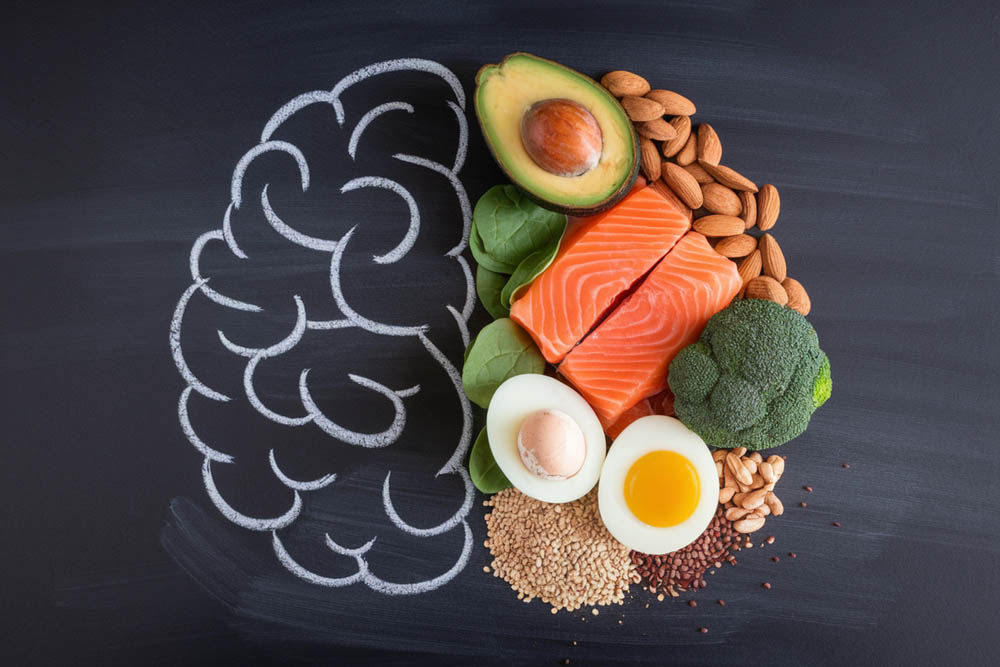
According to the most recent US News & World Health ratings of the best diets in various categories, the top 4 diets for brain health are:

  • MIND diet (The MIND diet combines the best of the Mediterranean and DASH diets with an emphasis on brain healthy foods such as berries.)
  • Mediterranean diet.
  • Flexitarian diet (a flexible version of a semi-vegetarian diet).
  • DASH diet.

My Comments:

  • All four diets are whole food, primarily plant-based diets.
  • Although the MIND diet was specifically designed for brain health, it does not perform significantly better than the Mediterranean and DASH diets in slowing cognitive decline.

Of course, most people prefer to think in terms of foods rather than diets. In terms of brain-healthy foods, a recent Harvard Health Review suggests these are the foods we should emphasize for brain health:

  • Green Leafy Vegetables: Kale, spinach, broccoli, and collards are rich in brain-healthy nutrients like vitamin K, lutein, folate, and beta-carotene.
  • Fatty Fish: Salmon, trout, sardines, and mackerel provide omega-3 fatty acids, which are crucial for brain function and for reducing dementia risk.
  • Berries: Blueberries, strawberries, and blackberries contain antioxidants that have been shown to delay cognitive decline.
  • Nuts and Seeds: Walnuts are high in omega-3 fatty acids (ALA), while others provide vitamin E.
  • Healthy Fats: Olive oil is recommended as the primary cooking fat.
  • Whole Grains and Legumes: Oats, quinoa, beans, and lentils provide a steady, slow release of glucose for brain energy. Plus, their fiber supports the growth of friendly bacteria that produce brain-healthy nutrients (This is sometimes referred to as the gut-brain axis).
  • Other Foods: Avocados (monounsaturated fats), beets (nitrates for blood flow), and cocoa (flavonoids) are beneficial.

My Comment:

  • Based on their nutrient content and studies like this one, I would add eggs (consumed in moderation) to the list.

The Bottom Line 

There are lots of reasons to think of eggs as brain food. A recent study suggests that moderate egg consumption may help slow cognitive decline as we age.

For more information on this study and what a brain-healthy diet looks like, read the article above.

These statements have not been evaluated by the Food and Drug Administration. This information is not intended to diagnose, treat, cure or prevent any disease.

_____________________________________________________________________________

My posts and “Health Tips From the Professor” articles carefully avoid claims about any brand of supplement or manufacturer of supplements. However, I am often asked by representatives of supplement companies if they can share them with their customers.

My answer is, “Yes, as long as you share only the article without any additions or alterations. In particular, you should avoid adding any mention of your company or your company’s products. If you were to do that, you could be making what the FTC and FDA consider a “misleading health claim” that could result in legal action against you and the company you represent.

For more detail about FTC regulations for health claims, see this link.

https://www.ftc.gov/business-guidance/resources/health-products-compliance-guidance 

___________________________________________________________________________

About The Author 

Dr. Chaney has a BS in Chemistry from Duke University and a PhD in Biochemistry from UCLA. He is Professor Emeritus from the University of North Carolina where he taught biochemistry and nutrition to medical and dental students for 40 years.

Dr. Chaney won numerous teaching awards at UNC, including the Academy of Educators “Excellence in Teaching Lifetime Achievement Award”.

Dr Chaney also ran an active cancer research program at UNC and published over 100 scientific articles and reviews in peer-reviewed scientific journals. In addition, he authored two chapters on nutrition in one of the leading biochemistry text books for medical students.

Since retiring from the University of North Carolina, he has been writing a weekly health blog called “Health Tips From the Professor”. He has also written two best-selling books, “Slaying the Food Myths” and “Slaying the Supplement Myths”. And most recently he has created an online lifestyle change course, “Create Your Personal Health Zone”. For more information visit https://chaneyhealth.com.

For the past 54 years Dr. Chaney and his wife Suzanne have been helping people improve their health holistically through a combination of good diet, exercise, weight control and appropriate supplementation.




Prenatal Supplements Strike Out Again

Is It Three Strikes And You Are Out?

Author: Dr. Stephen Chaney

Pregnant CoupleIf you are pregnant, you want the best for your unborn baby. Your doctor has recommended a prenatal supplement, but do the prenatal supplements on the market meet your needs? A few months ago, I shared two studies that concluded that most prenatal supplements on the market are woefully inadequate.

In fact, the authors said, “[Our] analysis found that prenatal supplements vary widely in content, often only contain a subset of essential vitamins, and the levels were often below…recommendations.”

In other words, their study found that most prenatal vitamins on the market may not be adequate to support your needs and the needs of your child through pregnancy and breastfeeding.

Now, a third study on the topic has been published (KA Saunders et al, American Journal of Clinical Nutrition, 117: 823-829, 2023. It differs from the previous studies in that:

1) The previous two studies took a comprehensive approach, while this study focused on 6 key nutrients.

  • The previous studies included all nutrients important for a healthy pregnancy including choline, iodine, and vitamin K, which have only recently been shown to be important for a healthy pregnancy.
  • This study focused on 6 nutrients, vitamin A, vitamin D, folic acid, calcium, iron, and omega-3 fatty acids, which have long been recognized as essential for a healthy pregnancy.

2) The previous two studies focused on prenatal supplements, while this study focused on all supplements that might be taken by pregnant women.

3) The previous two studies asked whether supplements provided recommended amounts of all nutrients needed for a healthy pregnancy. This study took a “Goldilocks approach” and asked whether levels of these 6 essential nutrients were appropriate (“just right”). The study:

  • Started by determining the intake of these 6 key nutrients by American women. The authors of the study then added the amount of each nutrient provided by the supplements in their study to the amount of that nutrient in the diet of American women and:
    • Calculated the minimum amount of each nutrient that would be needed to assure that 90% of American women taking a particular supplement would meet the recommended intake for pregnant and lactating women.
    • Calculated the maximum amount of each nutrient provided by supplements in their study to assure that that 90% of American women taking that supplement would not get potentially toxic amounts of that nutrient.
  • In other words, for each of the 6 nutrients they calculated a supplemental dose range that was neither too low nor too high. They called this the “appropriate dose range” for each nutrient. Goldilocks would have called it “just right”.

I’m sure you are anxiously waiting to learn what their study found. But before we go there, I will describe how the study was done.

How Was The Study Done?

clinical studyFor the dietary intake portion of the study, the authors used dietary intake data previously collected from the Environmental Influences on Child Health Outcomes (ECHO) study.

The ECHO study is a consortium of 69 medical centers across multiple states. It is an observational study of mothers and their offspring designed to understand the effects of early life exposures on child health and development.

The current study analyzed dietary intake data for 2450 participants from 6 medical centers across 5 states in the ECHO study. The women in this study were diverse with respect to ethnicity, education, and weight.

All pregnant women in the current study completed at least one 24-hour dietary recall between 6-week gestation until delivery (24% completed one dietary recall. 76% completed two or more dietary recalls). Dietary intake was generally assessed with an expert interviewer and included all foods and beverages consumed in the previous 24 hours.

For the supplement portion of the study, the authors used the NIH Dietary Supplement Label Database because it is the most complete listing of supplements in the US. The authors selected 20,547 supplements that contained at least one of the 6 essential nutrients from this database.

To determine which of the 20,547 supplements contained appropriate levels of the 6 nutrients (vitamin A, vitamin D, folic acid, calcium, iron, and omega-3 fatty acids) selected for this study, the authors used the process described in the introduction above. Briefly:

  • The authors added the amount of each nutrient provided by the supplements in their study to the amount of that nutrient in the diet of American women and:
  • Calculated the minimum amount of each nutrient that would be needed to assure that 90% of American women taking a particular supplement would meet the recommended intake for pregnant and lactating women.
  • Calculated the maximum amount of each nutrient provided by supplements in their study to assure that that 90% of American women taking that supplement would not get potentially toxic amounts of that nutrient.

In other words, for each of the 6 nutrients they calculated a supplemental dose range that was neither too low nor too high. They called this the “appropriate dose range” for each nutrient.

Why Are The 6 Nutrients Included In This Study Important?

Dietary Intake Is Often Inadequate

The diet analysis of pregnant American women in this study found:

  • 42% were at risk of inadequate vitamin A intake.
  • 96% were at risk of inadequate vitamin D intake.
  • 45% were at risk of inadequate folic acid intake.
  • 55% were at risk of inadequate calcium intake.
  • 93% were at risk of inadequate iron intake.
  • 67% were at risk of inadequate omega-3 intake.

The percentage of women at risk for inadequate intake of these nutrients varied with age, ethnicity, and income levels. But the overall message is clear. Most American women are not getting enough of these essential nutrients from their diet alone.

The Risk of Inadequate and Excessive Intake Of These Nutrients

These 6 nutrients were chosen in part because reviews by the Cochrane Collaboration have concluded that inadequate intake of these nutrients are associated with complications during pregnancy and delivery. They can also adversely affect the health and normal development of the baby.

This is important because the Cochrane Collaboration is considered the Gold Standard of clinical studies. You can find a more detailed description of Cochrane Collaboration studies and why they are the Gold standard here.

[Note: The Cochrane Collaboration has not yet evaluated choline, iodine, and vitamin K for pregnant women, but their inclusion in prenatal supplements is supported by multiple clinical studies.]

In addition, excess intake of all these nutrients except omega-3s can harm both the fetus and the mother. The is why the Food and Nutrition Board has set ULs (Upper Limits – the level above which toxicity can occur) for 5 of the 6 nutrients. This is important because previous studies have suggested that up to 25% of women may be getting toxic levels of one or more of these nutrients when you consider both their dietary intake and their prenatal supplement.

Summary

In other words, both too little and too much of these nutrients can harm the mom and her baby. It is critical that prenatal supplements get the dosing right.

It is for that reason that the authors of this study have set an “appropriate dose range” (high enough that 90% of women have enough of each nutrient to prevent deficiency and low enough that 90% of women do not exceed the UL for each nutrient) as the standard for evaluating the adequacy and safety of supplements for pregnant women.

Prenatal Supplements Strike Out Again

Of the 20,547 supplements (421 labeled as prenatal supplements) available on the US market as of December 31, 2022, the investigators reported that:

  • Only 69 (0.3%) supplements contained all 6 nutrients considered essential for a healthy pregnancy.
  • Only 1 supplement contained all 6 nutrients at the appropriate doses, and it wasn’t even labeled as a prenatal supplement.

In addition:

  • One supplement containing all 6 nutrients put 100% of the women in their study at risk for excessive intake of folic acid.
  • Another supplement containing all 6 nutrients put 46% of the women in their study at risk of inadequate calcium intake.

The authors concluded, “Almost no US dietary supplements provide key nutrients in the doses needed for pregnant women. Affordable and convenient products that fill the gap between food-based intake and estimated requirements of pregnancy without inducing excess intake are needed to support pregnant women and their offspring.”

In short, the conclusion of this study can be summed up as, “Prenatal Supplements Strike Out Again”.

[Note: It sometime takes a while for supplement labels to be posted in the NIH Dietary Supplement Label Database. The authors acknowledged that this study may not include supplements introduced or reformulated in the last quarter of 2022.]

Is It Three Strikes And You Are Out? 

pregnant women taking vitaminsIf you are pregnant or thinking of becoming pregnant, this should be a wake-up call.

70% of pregnant women in this country take prenatal supplements, usually based on recommendations by their health care provider. They assume the prenatal supplements meet their needs and the needs of their unborn baby.

Yet three studies evaluating the adequacy of prenatal supplements have been published in the past few months. They took very different approaches in evaluating the supplements. But all three studies concluded that the vast majority of prenatal supplements on the market are woefully inadequate.

You may be wondering, “Is it three strikes, and you are out?” Are there no decent prenatal supplements on the market?  The answer to those questions is, “No. There are good prenatal supplements on the market.”

You may be wondering how I can say that in the face of such overwhelming negative data. That’s because while all 3 studies were very good studies, they each had “blind spots”:

1) Each of the studies used very stringent criteria for identifying adequate prenatal supplements. In some cases, their criteria were stricter than the RDA recommendations and the recommendations of the American College of Obstetrics and Gynecology for pregnant and lactating women. It could be argued that their criteria were too stringent.

2) In the case of the current study, it could also be argued that evaluating only 6 nutrients is not a good criterion for evaluating the adequacy of prenatal supplements. For example, I looked up the one supplement rated as adequate in this study. It does provide appropriate doses of the 6 nutrients this study focused on. It also provides appropriate doses of vitamin K and iodine. But it does not provide choline. It is a very good supplement for women, but it is not the perfect prenatal supplement.

So, what can you do? How can you find the best prenatal supplement for you? Unfortunately, you cannot rely on advice from your friends or your health professional. You cannot rely on advertisements. That is a good place to start, but you have to do your own sleuthing.

With that in mind, I have listed 7 simple rules for selecting the best possible prenatal supplement in  my article about the first two studies. Use these rules for evaluating every prenatal supplement you come across. Happy sleuthing.

The Bottom Line 

A recent study evaluated all 20,547 supplements on the US market to see if they met the needs of pregnant women in this country.

  • They focused on 6 nutrients (vitamin A, vitamin D, folic acid, calcium, iron, and omega-3s) known to be essential for a healthy pregnancy.
  • They determined the dietary intake for all 6 nutrients in a cross section of pregnant women in the US.
  • They added the amount of the 6 nutrients in each of the 20,547 supplements to the dietary intake of those nutrients by pregnant women.
  • They then asked which supplements provided the “appropriate dose” of all 6 nutrients. They defined “appropriate dose” as the dose range that was.
    • High enough to prevent deficiency of that nutrient in 90% of pregnant women taking the supplement…and…
    • Low enough to prevent toxicity from that nutrient in 90% of pregnant women taking the supplement.
  • In other words, for each of the 6 nutrients they calculated a supplemental dose range that was neither too low nor too high.

Of the 20,547 supplements (421 labeled as prenatal supplements) available on the US market:

  • Only 69 (0.3%) supplements contained all 6 nutrients they considered essential for a healthy pregnancy.
  • Only 1 supplement contained all 6 nutrients at the appropriate doses, and it wasn’t even labeled as a prenatal supplement.

The authors concluded, “Almost no US dietary supplements provide key nutrients in the doses needed for pregnant women. Affordable and convenient products that fill the gap between food-based intake and estimated requirements of pregnancy without inducing excess intake are needed to support pregnant women and their offspring.”

[Note: It sometime takes a while for supplement labels to be posted in the NIH Dietary Supplement Label Database. The authors acknowledged that this study may not include supplements introduced or reformulated in the last quarter of 2022 or early 2023.]

If you are pregnant or thinking of becoming pregnant, this should be a wake-up call.

70% of pregnant women in this country take prenatal supplements, usually based on recommendations by their health care provider. They assume the prenatal supplements meet their needs and the needs of their unborn baby.

Yet three studies evaluating the adequacy of prenatal supplements have been published in the past few months. And all three studies concluded that the vast majority of prenatal supplements on the market are woefully inadequate.

You may be wondering, “Is it three strikes, and you are out?” Are there no decent prenatal supplements on the market?  The answer to those questions is, “No. There are good prenatal supplements on the market.”

You may be wondering how I can say that in the face of such overwhelming negative data. That’s because while all 3 studies were very good studies, they each had “blind spots”:

For more details on this study and 7 tips on finding the best prenatal supplement for you, read the article above.

These statements have not been evaluated by the Food and Drug Administration. This information is not intended to diagnose, treat, cure, or prevent any disease. 

____________________________________________________________________________

My posts and “Health Tips From the Professor” articles carefully avoid claims about any brand of supplement or manufacturer of supplements. However, I am often asked by representatives of supplement companies if they can share them with their customers.

My answer is, “Yes, as long as you share only the article without any additions or alterations. In particular, you should avoid adding any mention of your company or your company’s products. If you were to do that, you could be making what the FTC and FDA consider a “misleading health claim” that could result in legal action against you and the company you represent.

For more detail about FTC regulations for health claims, see this link.

https://www.ftc.gov/business-guidance/resources/health-products-compliance-guidance


Is Your Prenatal Supplement Adequate?

What Should You Look For In A Prenatal Supplement?

Author: Dr. Stephen Chaney

pregnant women taking omega-3You want to do the best for your unborn child. So, you try to find the best prenatal supplement. You may ask your doctor to recommend a prenatal supplement. You may ask your best friend what supplement she used when she was pregnant. Or perhaps you scan online reviews of prenatal supplements by random dietitians or nutrition gurus to select the “best” prenatal supplements.

Then you read the supplement label or the company’s website and see claims like:

  • “Supports optimal nutrition before, during, and after pregnancy”
  • “Packed with 16 nutrients to support fetal development, immunity, energy metabolism, and more”
  • “Concise prenatal formula supports both bone and brain development”

It sounds so good. You think you have found the perfect prenatal supplement. “Right?”

Perhaps not. A recent study (JB Adams et al, Maternal Health, Neonatology, and Perinatology, 8:4, 2022) did an in-depth review of prenatal supplement recommendations and how well prenatal supplements on the market met those recommendations.

The results were not encouraging. The authors concluded, “[Our] analysis found that prenatal supplements vary widely in content, often only contain a subset of essential vitamins, and the levels were often below…recommendations.”

In other words, their study found that most prenatal vitamins may not be adequate to support your needs and the needs of your child through pregnancy and breastfeeding.

I know this is likely to be a topic of great concern for many of you. So, I will examine the study in detail and give you some guidelines for selecting the perfect prenatal supplement.

How Was This Study Done?

clinical studyThis study can be divided into two parts.

#1: What Should The Ideal Prenatal Supplement Contain:

The authors started off by reevaluating the optimal recommendations for prenatal supplements. They reviewed over 200 articles, focusing on articles that:

  • Provided insight into optimal dosage [of essential nutrients] such as treatment studies on the effects of different doses on outcomes and biomarkers.
  • Were larger, more rigorously designed, such as randomized double-blind placebo-controlled studies.

The studies included in their review fell into three categories:

  1. The association of low levels of vitamins with health problems [during pregnancy and in the child after birth].

2) Studies on the changes in [blood] vitamin levels during pregnancy [when the mother is either] un-supplemented or supplemented (The blood level of many vitamins decreases dramatically during pregnancy without supplementation).

3) Clinical trials on the effect of vitamin supplementation on health problems [during pregnancy].

They used these data to create their recommendations for what an ideal prenatal supplement should contain. In some cases, their recommendations were higher than current RDA recommendations for pregnant women.

#2: How Do Currently Available Prenatal Supplements Compare With Their Recommendations For The Ideal Supplement?

For this part of the study, they created a comprehensive list of the nutrients provided by 188 prenatal supplements currently on the market using databases created by the National Institutes of Health. Where these databases were outdated, the nutrient list for that supplement was updated using information on the manufacturer’s websites or labels on retail websites such as Amazon.

Finally, they compared the nutrient content of all 188 prenatal supplements with their recommendations for the ideal prenatal supplement.

Is Your Prenatal Supplement Adequate?

Questioning WomanThere are four points I wish to make before I review the results of this study.

  1. I suspect you are most interested in finding out how prenatal supplements on the market compare with their recommendations for an ideal supplement, so that is what I will discuss below.

2) As I mentioned above, some of their recommendations exceed the current Daily Value (DV) recommendations for pregnant and lactating women. I will point that out whenever it significantly affects the comparisons.

3) The authors of this article made the point that most women going on a prenatal supplement will probably discontinue taking their multivitamin supplement. Thus, their recommendations included nutrients commonly included in multivitamin supplements. This is a valid point, and something you should consider when choosing a prenatal supplement. However, in my discussion below I will focus on the nutrients that are universally recognized as important for pregnancy and lactation.

4) The authors focused on prenatal supplements that had less than the recommended amount of essential nutrients. They did not ask how many of those supplements had excessive amounts of certain nutrients. In my non-systematic review of prenatal supplements, I found several that had doses of some nutrients in thousands of percent of the DV recommendations. In my opinion, this is potentially unsafe for pregnancy and nursing. I will cover this topic in more detail in my discussion.

With that in mind, here are the results of their review.

Vitamins:

When you look at vitamins that have long been recognized as essential for pregnant women, the results are encouraging:

  • Vitamin D, folate, vitamin B12, and vitamin B6 are found in adequate amounts compared to the DV in most prenatal supplements.

However, when you look at nutrients that have more recently been recognized as essential for pregnant women, the story is very different:

  • For vitamin K only 31% of prenatal supplements contain vitamin K and only 16% meet or exceed their recommendation for vitamin K.
    • Their recommendation (90 mcg/day) is identical to the DV for vitamin K. So, there is no doubt that most prenatal supplements do not provide adequate amounts of vitamin K.
  • For choline only 40 % of prenatal supplements contain choline and only 2% meet or exceed their recommendation for choline.
    • Their recommendation (350 mg/day) for choline is less than the 450 mg/day recommended by the NIH and the American College of Obstetricians and Gynecologists.
    • The average prenatal supplement only provides 25 mg of choline, which is wildly inadequate by any standard.
  • For DHA only 42% of prenatal supplements contain DHA and only 1% meet or exceed their recommendation for DHA.
    • Their recommendation (600 mg/day) for DHA is higher than the 200 – 300 mg/day recommended by the most health organizations.
    • However, the average prenatal supplement only provides 94 mg of DHA, so even at 200 – 300 mg/day a substantial percentage of prenatal supplements do not provide adequate amounts of DHA.

Minerals:

calcium supplementsThis study did not consider minerals, so I will draw on another source to estimate the adequacy of minerals in prenatal supplements.

Three key minerals for a healthy pregnancy are iron, calcium, and iodine (Yes, I realize that iodine is not a mineral, but it is usually listed with the minerals on supplement labels. And it is also essential for a healthy pregnancy). Fortunately, another recent study (LG Saldanha et al, Journal of the American Academy of Dietetics, 117: 1429-1436, 2017) looked at the adequacy of these nutrients in 214 prenatal supplements. This study found:

  • The iron DV for pregnant and lactating women is 27 mg/day and 95% of prenatal supplements contained iron at the recommended level.
  • The calcium DV for pregnant and lactating women is 1,300 mg/day. A high percentage (91%) of prenatal supplements contain calcium, but many prenatal supplements only provide 100-200 mg of calcium. That is far less than the DV.
  • The situation for iodine is even more alarming. Only 50% of prenatal supplements contain iodine. And for those that do contain iodine, the average iodine content is only 150 mcg (The DV for pregnant and lactating women is 290 mcg/day).

It is no wonder the authors of these two studies concluded that most prenatal supplements on the market do not provide adequate amounts of all the nutrients needed for a healthy pregnancy. The shortfalls are particularly acute for vitamin K, choline, DHA, iodine, and calcium.

What Should You Look For In A Prenatal Supplement?

Questioning WomanBy now you are probably wondering how you know a good prenatal supplement from a bad one. Here are six simple rules for choosing the ideal prenatal supplement.

  1. Don’t rely on health “gurus” to choose your prenatal supplement for you. I did a little “sleuthing” for you. I searched the internet for websites claiming to have identified the “best” prenatal supplements. I checked out the supplements they recommended, and here is what I found:
  • The supplements the gurus recommended checked all the boxes in that they had some of all the nutrients required for a healthy pregnancy.
  • However, the amount of those nutrients ranged from lows of 10-20% of the DV for pregnant and lactating women to thousands of percent of the DV for others.
  • In other words, they contained grossly inadequate levels of some nutrients and potentially toxic levels of others.

2) Don’t believe label claims or claims made on the manufacturer’s website. Remember the claim, “Concise prenatal formula supports both bone and brain development”, that I mentioned at the beginning of this article? The supplement associated with that claim had only 100 mg of calcium and no DHA. It is hard to imagine a supplement like that supporting either bone or brain health. The claim was bogus.

3) Don’t assume your doctor’s recommendation is the ideal prenatal supplement. A recent study (LG Saldanha et al, Journal of the American Academy of Dietetics, 117: 1429-1436, 2017) compared prescription (the kind your doctor is likely to prescribe) and non-prescription prenatal supplements. It found:

  • Compared with non-prescription supplements, prescription supplements contained significantly fewer vitamins (9 versus 11) and minerals (4 versus 8).
  • While prescription supplements contained more folic acid than non-prescription supplements, they contained significantly less vitamin A, vitamin D, iodine, and calcium.

4) Look for a prenatal supplement containing all the essential nutrients, not just those important for a healthy pregnancy. The authors of the first study made the point that most women will stop taking their regular multivitamin when they start their prenatal supplement. If that is you, your prenatal supplement should contain the nutrients you were getting from your multivitamin.

5) Look for a prenatal supplement that provide 100% of DV for all nutrients except the bulky ones. The ideal prenatal supplement should contain 100% of the DV for pregnant and lactating women for all essential nutrients. Avoid supplements with very low amounts of some nutrients and large excesses of others.

  • Bulky nutrients like calcium, magnesium, and choline are exceptions. It would be hard to get 100% DV for those nutrients in any supplement you could swallow.

6) Look for a prenatal supplement that “fills the gap” for bulky nutrients.

  • Fortunately, the NIH has estimated how much of these nutrients the average American woman gets in her diet. That allows us to estimate how much the average woman needs to get from her prenatal supplement to bring her total intake up to the DV for pregnant and lactating women. That amounts to 458 mg for calcium, 166 mg for magnesium, and 272 mg for choline.
    • That gives you a reasonable benchmark for assessing whether a prenatal supplement is providing enough of those important nutrients. When you read their labels, you will find most prenatal supplements are woefully inadequate for these nutrients.
    • You also need to ask whether your diet is “average”. For example, the average American gets 72% of their calcium from dairy foods. If you do not consume dairy, you may need to get more calcium from your supplement.

7) Avoid the excesses. Your unborn baby is precious. You don’t want to expose it to potentially toxic doses of vitamins or minerals. Avoid any prenatal supplement containing thousands of percent of the DV for some nutrients. And I would recommend caution with supplements containing over 200% of the DV for some nutrients if you are taking other supplements that may provide the same nutrient(s).

The Bottom Line 

Two recent studies have surveyed hundreds of prenatal vitamins and asked whether they provided adequate amounts of the nutrients that are essential for a healthy pregnancy. The results were shocking.

  • While most prenatal supplements provided adequate amounts of folic acid, vitamin B12, vitamin B6, vitamin D, and iron…
  • They were woefully inadequate for vitamin K, calcium, choline, iodine, and DHA – all nutrients that are essential for a healthy pregnancy.
  • Furthermore, prescription prenatal supplements (the kind your doctor is likely to prescribe) were no better than non-prescription supplements.

The authors of the first study concluded, “[Our] analysis found that prenatal supplements vary widely in content, often only contain a subset of essential vitamins, and the levels were often below…recommendations.”

In other words, their study found that most prenatal vitamins on the market may not be adequate to support your needs and the needs of your child through pregnancy and breastfeeding.

For more details on this study and my discussion of how you can select the ideal prenatal supplement for you and your unborn child, read the article above.

These statements have not been evaluated by the Food and Drug Administration. This information is not intended to diagnose, treat, cure, or prevent any disease


Health Tips From The Professor