What Does This Study Mean For You?
Author: Dr. Stephen Chaney
 Being a parent (or a grandparent) is hard. The Bible tells us, “Start children off on the way they should go, and even when they are old, they will not turn from it.” Proverbs 22:6
But what do you do when your child says, “All the other kids are doing it”? Or maybe they say, “But I see you doing it.”
Sometimes the choice is simple. If it has to do with bad behavior, alcohol, or drugs, the answer should clearly be no – even if that makes you the “bad guy” in their mind.
But what if it is something as simple as drinking sodas or other sugar-sweetened beverages? Why should you deprive them of such simple pleasures?
A recent study (M Nguven et al, Circulation, volume 154, Number 7, 2026) has answered that question by looking at the correlation between sugary drink consumption starting in childhood and hypertension as an adult.
How Was This Study Done?
 The authors used data from the Growing Up Today Study (GUTS), a large prospective clinical study managed by researchers at Harvard and the University of Toronto. This study followed 25,749 participants from the United States and Canada who were enrolled during childhood and adolescence (ages 9 to 16) and tracked over a 25-year follow-up into adulthood (average age = 36).
The participants were 55% female and 45% male. They were children of the Nurses Health Study II, so their ethnicity matched that study (predominantly non-Hispanic White).
During the study, data were collected every 1 to 4 years (yearly between 1996 and 1998 and every 2 to 4 years between 2001 and 2015) using self-reporting questionnaires.
That primary data collected included:
- Sugary beverage consumption was collected using a food frequency questionnaire designed to capture this information. It was divided into two categories:
-
- Sugar-sweetened beverages included sodas/soft drinks, sports drinks, fruit punches and fruit drinks with added sugar, lemonades, and sweetened teas.
-
- 100% fruit juice without added sugar.
- Water, milk, and whole fruit consumption were tracked separately using the same food frequency questionnaire.
- Hypertension data were obtained from a health evaluation form of physician-diagnosed medical conditions administered between 2010 and 2021. [Note: The dietary intake data were collected through the midpoint of the study, and the hypertension data were collected towards the endpoint of the study.]
The intake of sugary beverage and 100% fruit juice was divided into the highest intake group and lowest intakes group based on a 12-ounce serving size. For whole fruits serving size was one medium-sized fruit.
- For sugary beverages:

-
- Highest intake group = ≥2 servings per day.
-
- Lowest intake group = <3 servings per week.
- For 100% fruit juice:
-
- Highest intake group = ≥1.5 servings per day.
-
- Lowest intake group = <1 servings per week.
- For whole fruits:
-
- Highest intake group = ≥2 servings per day.
-
- Lowest intake group = <1 servings per week.
In each case, the risk of developing hypertension as adults was compared for the highest intake group and lowest intake group.
The study also determined the increase in hypertension risk for each additional serving of sugary beverages.
Finally, the study asked what the decreased risk would be if one serving whole fruit, water, or milk was substituted for a serving of sugary beverages or fruit juice.
There are, of course, many other behaviors that influence hypertension, and the study did its best to statistically eliminate those behaviors from the results. For example:
- People who consume lots of sugary drinks tend to have a poorer quality diet. The data were corrected for diet quality using the Alternative Healthy Eating Index obtained from a questionnaire administered at the same time as the food frequency questionnaires used to obtain data on sugary beverage and fruit juice intake.
- People who consume lots of sugary beverages tend to be overweight and are at increased risk for type 2 diabetes – both of which increase the risk of hypertension. The data were corrected for obesity, diabetes, and other health conditions using data obtained from the same questionnaire used to track hypertension.
- Physical inactivity, drug, and alcohol use can increase the risk of hypertension. The data were corrected for these factors using a lifestyle questionnaire.
Does Soda Consumption Doom Your Child To Hypertension?
 The common denominator between sugary drinks, fruit juices, and fruits is high fructose content, so the investigators started by asking if there was a correlation between fructose intake and hypertension.
- There was no correlation between total fructose intake and hypertension.
However, when the investigators looked at the effect of different fructose-containing foods the story was much different. When participants with the highest intake were compared to those with the lowest intake:
- The highest consumption of sugar-sweetened beverages (≥2 servings/day) increased the risk of hypertension by 52%.
- The highest consumption of fruit juices with no added sugar (≥1.5 servings/day) increased the risk of hypertension by 35%.
- The highest consumption of whole fruits (≥2 servings/day) had no effect on the risk of hypertension.
Looking at the data another way:
- Each serving of sugar-sweetened beverages increased the risk of hypertension by 14%. Sports drinks and sodas were the biggest contributors to the increased risk.
-
- Each serving of sports drinks increased the risk of hypertension by 36%.
-
- Each serving of sodas increased the risk of hypertension by 23%.
- The effect of each serving of 100% fruit juice on hypertension risk was not evaluated in this study.
Finally, the authors asked how much the risk of hypertension was affected by healthier choices:
- Replacing one serving of sugar-sweetened beverages with one serving of:
-
- water decreased the risk of hypertension by 9%.
-
- milk decreased the risk of hypertension by 13%.
-
- whole fruit decreased the risk of hypertension by 22%.
- Replacing one serving of 100% fruit juice with one serving of:
-
- whole fruit decreased the risk of hypertension by 19%.
-
- This was not due to any super fruit. It was true for every whole fruit analyzed in the study.
In the discussion, the authors said, “These findings underscore that the physical form and food source of the sugar matter immensely. While sodas, juices, and fruits all contain fructose molecules, liquid sugars trigger rapid blood sugar spikes and arterial stiffness. Transitioning to whole food alternatives introduces dietary fiber and essential nutrients that slow down absorption, actively protecting the vascular system from decades of cumulative strain.”
Finally, the authors concluded, “SSBs [sugar sweetened beverages] and fruit juice intakes were positively associated with a higher risk of hypertension, independent of overall diet quality, physical activity, and other factors. Our findings support public health guidelines to limit the overconsumption of SSBs [sugar sweetened beverages] and fruit juice starting in childhood to protect against the development of hypertension.”
What Does This Study Mean For You?
 Let me start by getting something off my chest. You can forget everything you’ve heard about the dangers of fructose. The myth about fructose is one of my pet peeves. This study, like many others, proves that fructose isn’t the problem. It’s some of the foods it is found in. For example:
- There was no correlation between total fructose uptake or the fructose found in whole fruits and the risk of hypertension.
- However, fructose found in sugar sweetened beverages and fruit juices significantly increases the risk of hypertension.
In short, it is only when you lack a cellular matrix, fiber, or protein to slow the rate at which fructose (or any other sugar) enters the bloodstream that you have a problem.
Now let me return to the main theme of this study. If you are a parent, you should be concerned about the health consequences of letting your child drink sugar sweetened beverages or fruit juices on a regular basis. And that is not easy in a society where the consumption of sugar sweetened beverages is the norm.
To emphasize the importance of helping your child make healthier choices, let me emphasize the following points:
#1: This is just the tip of the iceberg. Drinking sugar sweetened beverages increased the risk of developing hypertension by 52% after correcting the data for diet quality, obesity, diabetes, and physical inactivity and anything else that might increase the risk of hypertension.
Diets high in sugar sweetened beverage consumption are highly correlated with ultra processed food consumption, obesity, and diabetes, and each of these increases the risk of developing hypertension independently.
In the real world a child consuming lots of sugar sweetened beverages is also likely to consume ultra processed foods, be overweight, and be diabetic as an adult. Each of these has an additive effect on their risk of developing hypertension. That means their real risk of developing hypertension is likely to be well above 52%.
#2: The risk of hypertension increases as we age. According to data from the 2017-2018 National Health And Nutrition Examination Survey, the risk of hypertension is:
- 22% for ages 18-39.
- 54% for ages 40-59.
- 70% for ages 60+.
If that 52% increase in risk holds as we age, it is bad news at age 36 and devastating news at ages 60 and above.
#3: We don’t know to what extent the increased risk is reversible. The authors felt that some of the increased risk of hypertension associated with sugar sweetened drink consumption might be reversible if individuals change to a healthier diet when they become adults. I also hold that hope.
But their data doesn’t tell us that. It only tells us that healthier dietary choices over the duration of their study were associated with a decreased risk of hypertension. Until studies are done looking at high consumption of sugar sweetened beverages during childhood and adolescence followed by healthier diet choices as adults, we won’t know to what extent the increased risk of hypertension is reversible.
That is why the authors stated, “Our findings support public health guidelines to limit the overconsumption of SSBs [sugar sweetened beverages] and fruit juice starting in childhood to protect against the development of hypertension.”
#4: The dye may have been cast in childhood. That brings us back to the Bible verse I shared at the beginning of this article: “Start children off on the way they should go, and even when they are old, they will not turn from it.” Proverbs 22:6.
The problem is that if someone drinks a lot of sugar sweetened beverages in childhood and adolescence, the chance they will change behaviors as they get older is slim. Simply put, by not starting them on a healthier path when they were young, we may indeed be dooming them to increased risk of hypertension as they get older.
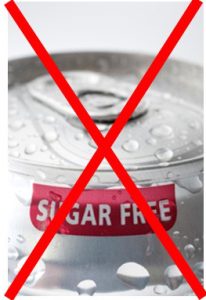 #5: Artificially sweetened drinks may not be the answer. I have covered this in previous issues of “Health Tips From The Professor”. To find those articles, just go to https://www.chaneyhealth.com/healthtips/ and put artificial sweeteners or diet sodas in the search box. Simply put:
- We assume artificial sweeteners are safe. Some studies have cast doubt on that assumption.
- We assume artificially sweetened beverages and foods reduce our chances of becoming obese. Some studies have cast doubt on that assumption.
- We are told artificially sweetened beverages and foods reduce our chances of developing diabetes. Some studies have cast doubt on that assumption.
The Bottom Line
A recent study looked at the effect of consuming sugar sweetened beverages, fruit juices, and whole fruits starting as children or adolescents on the risk of developing hypertension at age 36.
- The highest consumption of sugar-sweetened beverages (≥2 servings/day) increased the risk of hypertension by 52%.
- The highest consumption of fruit juices with no added sugar (≥1.5 servings/day) increased the risk of hypertension by 35%.
- The highest consumption of whole fruits (≥2 servings/day) had no effect on the risk of hypertension.
- There was also no correlation between total fructose intake and hypertension. The problem is the food, not the sugar.
For more information about the study and what it means for you, read the article above.
These statements have not been evaluated by the Food and Drug Administration. This information is not intended to diagnose, treat, cure, or prevent any disease.
____________________________________________________________________________________________
My posts and “Health Tips From the Professor” articles carefully avoid claims about any brand of supplement or manufacturer of supplements. However, I am often asked by representatives of supplement companies if they can share them with their customers.
My answer is, “Yes, as long as you share only the article without any additions or alterations. In particular, you should avoid adding any mention of your company or your company’s products. If you were to do that, you could be making what the FTC and FDA consider a “misleading health claim” that could result in legal action against you and the company you represent.
For more detail about FTC regulations for health claims, see this link.
https://www.ftc.gov/business-guidance/resources/health-products-compliance-guidance
___________________________________________________________________________________
About The Author
 Dr. Chaney has a BS in Chemistry from Duke University and a PhD in Biochemistry from UCLA. He is Professor Emeritus from the University of North Carolina where he taught biochemistry and nutrition to medical and dental students for 40 years. Dr. Chaney won numerous teaching awards at UNC, including the Academy of Educators “Excellence in Teaching Lifetime Achievement Award”. Dr Chaney also ran an active cancer research program at UNC and published over 100 scientific articles and reviews in peer-reviewed scientific journals. In addition, he authored two chapters on nutrition in one of the leading biochemistry text books for medical students.
Since retiring from the University of North Carolina, he has been writing a weekly health blog called “Health Tips From the Professor”. He has also written two best-selling books, “Slaying the Food Myths” and “Slaying the Supplement Myths”. And most recently he has created an online lifestyle change course, “Create Your Personal Health Zone”. For more information visit https://chaneyhealth.com.
For the past 54 years Dr. Chaney and his wife Suzanne have been helping people improve their health holistically through a combination of good diet, exercise, weight control and appropriate supplementation.