What Should You Put On Your Toast?
Author: Dr. Stephen Chaney
The Checkered History Of Margarine
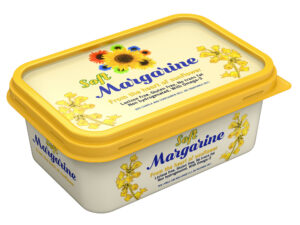 Many of you may have seen the recent headlines proclaiming that a recent study has shown that margarine is healthier than butter.
- Some of you may be saying, “I don’t believe it.”
- Others may be saying, “Of course. Hasn’t that always been true.”
So, to clear up the confusion, let me share a brief history of margarine.
- Margarine was invented in 1869 by a French chemist in response to a request from Napoleon III to create a poor man’s butter substitute. Napoleon’s intentions weren’t entirely altruistic. He also wanted a cheaper butter substitute for his armies.
- Margarine initially encountered a strong headwind in this country. The dairy lobby influenced congress and state legislatures to pass numerous laws designed to increase the cost and reduce the desirability of margarine.
- In the 1950s the ground started to shift. Scientists and the medical community started to recognize that saturated fats were a major contributor to heart disease. Suddenly, butter became a villain, something to avoid.
-
- But that was a problem. Butter was preferred spread for bread and toast. It was used for cooking. It was ubiquitous. You may even remember the popular “I like bread and butter” song. What was a person to do?
- At that time margarine was made by partially hydrogenating vegetable oils (usually corn oil because it was the cheapest). The hydrogenation converted some of the unsaturated fats in vegetable oils to saturated fats so that margarine would not be in liquid form at room temperature. However, the total amount of saturated fat in margarine was less than in butter, and the ratio of polyunsaturated fat to saturated fats was more heart-healthy. Margarine took on a new luster. It was now the healthier alternative to butter.
-
- Once margarine attained the “healthier” status, most of the anti-margarine laws were quickly abolished, and margarine quickly outpaced butter as the spread of choice.
- In the 1980s the ground shifted again. A French study found the margarine increased the risk of heart disease more than butter. Further studies showed that the hydrogenation process created a novel type of fat called trans fats. By the 1990s it was widely accepted that trans fats increased the risk of heart disease even more than saturated fats.
-
- Margarine became the villain, and butter was considered the more natural, healthier spread. By 2000 sales of butter once more surpassed those of margarine.
- In 2018 the ground shifted once again. After almost 20 years of deliberation, the FDA banned trans fats from the American food supply as of 2018. Margarine no longer contained trans fats.
Today’s study (C Weber et al, Public Health Nutrition, doi:10.1017/S1368980021004511) asks whether the reformulated, trans-fat-free margarines are once again a more heart-healthy alternative to butter.
Is Margarine More Heart-Healthy Than Butter?
 The study analyzed the fat composition of 53 margarine tub or squeeze products, 18 margarine stick products, 12 margarine-butter blend products and compared them with the fat composition of butter. The results are shown below:
There was no detectable trans fat in any of the margarine products. So, based on saturated fat content and the ratio of unsaturated fats to saturated fats, the margarine products were all more heart-healthy than butter. This is what the paper concluded.
| Mean % of Total Fat In: | ||||
| Margarine
Tub or Tube |
Margarine
Sticks |
Margarine-
Butter Blends |
Butter | |
| SFA* | 29% | 38% | 38% | 60% |
| MUFA* | 36% | 34% | 43% | 26% |
| PUFA* | 33% | 29% | 13% | 4% |
| *SFA = Saturated fats, MUFA = Monounsaturated fats,
PUFA = Polyunsaturated fats |
||||
But let’s look a bit deeper. First, we should look at the fat sources.
- The saturated fat in the margarine products comes from either palm or coconut oil. There are claims that these plant saturated fats may be healthier than saturated fats from animal sources. But there are no long-term studies to back up those claims, So, I will simply consider them equivalent to any other saturated fat for this review.
Next, we should look at the labels.
- The labels of most butter products are simple. Butter is sweet cream and salt. Unsalted butter is sweet cream and natural flavoring (usually lactic acid). This is the way that butter has been made for hundreds of years.
- Margarine products are manufactured foods. They didn’t come from a cow. Their labels are significantly longer. And you should read the labels carefully.
- Some margarine products are made with natural ingredients.
- However, many margarine products contain preservatives and artificial flavors.
So, choosing between margarine products and butter is not as simple as looking at saturated fat content alone.
But what if you didn’t have to choose between margarine and butter? What if there were other options to consider?
What Should You Put On Your Toast?
 Once you decide to look beyond margarine and butter you will find lots of healthy options. For example:
- If you have ever eaten at a fine Italian or Greek restaurant, you may have had your bread served with olive oil to dip it in. Of course, this may be a better option for lunch and dinner than for breakfast. (I don’t think jam would pair well with olive oil.)
- Nut butters are an excellent choice any time of day. Peanut and almond butters are the most popular, but there are many other nut butters to choose from.
- Avocado is another excellent choice.
- This just scratches the surface. There are healthier options for almost every palate.
If you look at the fat composition of my top four suggestions, you can readily see why they are healthier choices than either margarine or butter. They are much lower in saturated fat and high in heart healthy monounsaturated and polyunsaturated fats.
| Mean % of Total Fat In: | ||||
| Olive
Oil |
Almond
Butter |
Peanut
Butter |
Avocado | |
| SFA* | 14% | 9% | 22% | 16% |
| MUFA* | 74% | 64% | 53% | 71% |
| PUFA* | 12% | 27% | 25% | 13% |
| *SFA = Saturated fats, MUFA = Monounsaturated fats,
PUFA = Polyunsaturated fats |
||||
But that is just part of the story:
- Nut butters are also a good source of protein. And both nut butters and avocados provide nutrients, phytonutrients, and fiber you don’t find in margarine or butter.
There are also labels to consider:
- Avocados are whole foods and don’t require labels. There are no other ingredients. What you see is what you get.
- Olive oil is a bit more complicated. It is often blended with cheaper oils to reduce the cost, and that doesn’t always show up on the label. My best advice is to get extra virgin olive oil from a brand you trust.
- With nut butters, you should read the label. For example, the ingredient label for almond butter should list almonds as the sole ingredient. Peanut butter should just list peanuts. However, some brands add other oils, sugar, emulsifying agents, etc. These are the brands you should leave on the shelf.
Our “go-to” spread is almond butter. I like it with cinnamon sprinkled on top, although sliced bananas and cinnamon is another excellent choice.
As for butter, we still like it on baked sweet potatoes and corn on the cob. We freeze our butter and cut off a slice whenever we need it. A stick of butter lasts us many months.
The Bottom Line
Now that trans fats have been removed from margarine products a recent study revisited the question as to whether margarine or butter was the healthier choice. On the basis of their saturated fat content, the study concluded that margarine products were healthier than butter.
However, that is just part of the story. When you look at the labels:
- The labels of most butter products are simple. Butter is sweet cream and salt. Unsalted butter is sweet cream and natural flavoring (usually lactic acid). This is the way that butter has been made for hundreds of years.
- Margarine products are manufactured foods. They didn’t come from a cow. Their labels are significantly longer. And you should read the labels carefully.
So, choosing between margarine products and butter is not as simple as looking at saturated fat content alone. But what if you didn’t have to choose between margarine and butter? What if there were other options to consider?
Once you decide to look beyond margarine and butter you will find lots of healthy options. I discuss my top 4 choices above.
For more details, read the article above.
These statements have not been evaluated by the Food and Drug Administration. This information is not intended to diagnose, treat, cure or prevent any disease.
_____________________________________________________________________________
My posts and “Health Tips From the Professor” articles carefully avoid claims about any brand of supplement or manufacturer of supplements. However, I am often asked by representatives of supplement companies if they can share them with their customers.
My answer is, “Yes, as long as you share only the article without any additions or alterations. In particular, you should avoid adding any mention of your company or your company’s products. If you were to do that, you could be making what the FTC and FDA consider a “misleading health claim” that could result in legal action against you and the company you represent.
For more detail about FTC regulations for health claims, see this link.
https://www.ftc.gov/business-guidance/resources/health-products-compliance-guidance
___________________________________________________________________
About The Author
 Dr. Chaney has a BS in Chemistry from Duke University and a PhD in Biochemistry from UCLA. He is Professor Emeritus from the University of North Carolina where he taught biochemistry and nutrition to medical and dental students for 40 years. Dr. Chaney won numerous teaching awards at UNC, including the Academy of Educators “Excellence in Teaching Lifetime Achievement Award”. Dr Chaney also ran an active cancer research program at UNC and published over 100 scientific articles and reviews in peer-reviewed scientific journals. In addition, he authored two chapters on nutrition in one of the leading Biochemistry textbooks for medical students.
Since retiring from the University of North Carolina, he has been writing a weekly health blog called “Health Tips From the Professor”. He has also written two best-selling books, “Slaying the Food Myths” and “Slaying the Supplement Myths”. And most recently he has created an online lifestyle change course, “Create Your Personal Health Zone”. For more information visit https://chaneyhealth.com.
For the past 54 years Dr. Chaney and his wife Suzanne have been helping people improve their health holistically through a combination of good diet, exercise, weight control and appropriate supplementation.