How Is The Vitamin B12 For Supplements Produced?
Author: Dr. Stephen Chaney
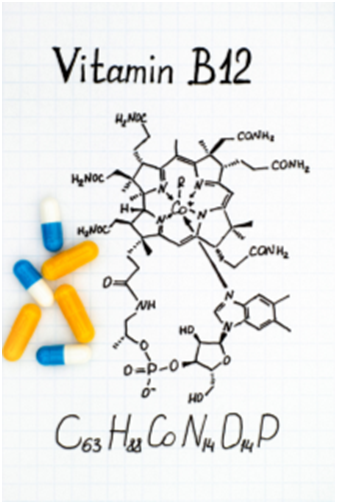
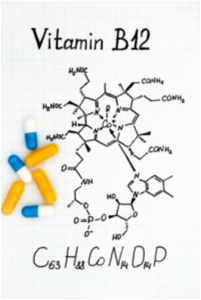 Vitamin B12 (also called cobalamin) is a complex molecule whose structure is shown on the left. It has a cobalt atom in its center which is essential for its functioning (more about that in a minute).
It was first discovered in 1947 and shown to be an essential nutrient for humans in 1948. It has been used in nutritional supplements since then.
The deficiency of vitamin B12 leads to a disease called pernicious anemia.
- The initial symptoms are like other forms of anemia, namely:
-
- Fatigue and weakness.
-
- Pale skin.
-
- Low red blood cell count.
- If the deficiency persists long enough, neurological symptoms also appear including:
-
- Numbness and tingling in hands and feet.
-
- Lack of fine motor skills.
-
- Difficulty maintaining balance and coordination.
-
- Cognitive issues and mood changes.
Vitamin B12 is found naturally in animal foods such as meat (liver is a particularly good source), fish, poultry, eggs, and dairy.
Vitamin B12 deficiency is most frequently observed in vegetarians (Plant foods contain no vitamin B12) and the elderly (As we age, we tend to lose a protein called intrinsic factor in our intestine that is important for vitamin B12 absorption).
In our bodies, vitamin B12 occurs in two forms, methylcobalamin (popularly referred to as methyl B12) and adenosylcobalamin.
- Adenosylcobalamin is important for energy production, especially the generation of energy from protein and fat.
- Methylcobalamin is important for nerve function, DNA and RNA synthesis, and gene regulation among other things.
- Both adenosylcobalamin and methylcobalamin are required to produce red blood cells.
How Is The Vitamin B12 For Supplements Produced?
 While it is theoretically possible to extract enough vitamin B12 for a B12 supplement from B12-rich foods such as liver, the extraction process is complex and inefficient. If a supplement company claims their methyl B12 supplement comes from food, they are probably lying to you.
And the structure of vitamin B12 is so complex it is almost impossible to synthesize chemically.
For years most of the vitamin B12 (cobalamin) for supplements has been generated by growing certain B12-producing bacteria and related organisms in large vats and purifying the vitamin B12 they produce. However, these bacteria were inefficient at incorporating cobalt into the cobalamin they made resulting in an excess of cobalt in the growth medium. Since large amounts of cobalt can be toxic, the remaining liquid had to be treated as a hazardous material and disposed of properly.
Recently this problem has been solved by genetically engineering the bacteria, so they are more efficient at utilizing cobalt. This is fast becoming the method of choice for making vitamin B12 for supplements.
In either case, the cobalamin is usually precipitated out of the growth medium as cyanocobalamin crystals and the crystals washed to remove impurities. Cyanocobalamin has been the primary source of vitamin B12 in supplements for the past 77 years (since 1948).
The methylcobalamin in most methyl B12 supplements is produced by reducing cyanocobalamin with sodium borohydride followed by the addition of methyl iodide or by directly adding methyl iodide to the bacterial cultures and using an alternate purification process.
The Methyl B12 Myths
 Some supplement manufacturers are now claiming that methyl B12 (methylcobalamin) is more natural and more effective than the cyanocobalamin that has been used in supplements for the past 77 years. Let’s look at the myths propagated by methyl B12 supplement manufacturers and compare them to the facts.
Myth: Methyl B12 (methylcobalamin) is more natural than cyanocobalamin. We get the methyl B12 in our supplements from foods.
Fact: As I said above, it would be impossible to extract enough methylcobalamin from foods, so this claim is false.
Some of the methylcobalamin in supplements is chemically synthesized from cyanocobalamin. It can never be more natural than its starting ingredients.
However, in today’s world both cyanocobalamin and methylcobalamin are most likely to be made by chemically altering the cobalamin produced by genetically modified bacteria. In one case a cyano group is added. In the other case a methyl group is added.
Myth: Cyanocobalamin is toxic.
Fact: You get much more cyanide from common foods such as almonds, lima beans, any fruit with a pit such as peaches, and even some fruits with seeds, such as apples. For example, a single almond contains 200 times more cyanide than a supplement providing the RDA of cyanocobalamin.
Does that mean you need to avoid almonds and other cyanide-containing foods? The answer is no. God has designed our bodies to thrive on the natural foods He created for us. We have an enzyme called rhodanese in our mitochondria that can convert the small amounts of cyanide found naturally in foods to thiocyanate. And thiocyanate can be harmlessly excreted in the urine.
In short, we can eat almonds safely and we can take cyanocobalamin supplements safely. Our bodies are designed to handle them.
Myth: Because methylcobalamin is one of the active forms of B12 inside cells (adenosylcobalamin is the other), it is better utilized by cells than cyanocobalamin.
Fact: Cyanocobalamin and methylcobalamin are equally well absorbed by the intestine and equally well transported to our cells. At the cell membrane, the cyano and methyl groups are stripped off and cobalamin (B12) binds to a transport protein called transcobalamin II. Once inside the cell either a methyl group or adenosyl group is added back to cobalamin.
In short, methylcobalamin offers no advantage over cyanocobalamin because its methyl group is removed before it enters our cells. Once the methyl and cyano groups have been removed, the cell has no way of knowing whether B12 started out in the methyl or cyano form.
Myth: Methylcobalamin is better utilized than cyanocobalamin for people with methylation defects.
Fact: A methylation defect would only affect methylation of cobalamin once it is released from transcobalamin II inside the cell. Once again, because the methyl and cyano groups are removed before cobalamin binds to transcobalamin II, methylcobalamin offers no advantage over cyanocobalamin.
What Does This Mean For You?
 The claims that everyone would benefit from methylcobalamin (methyl B12) instead of cyanocobalamin is outrageous. Anyone who takes the time to research how B12 enters our cells would realize that the claim is biochemically impossible.
In short, cyanocobalamin has been used for 77 years. There are hundreds of clinical studies showing it is safe and effective, even in individuals with a MTHFR deficiency. I can’t tell you whether the companies selling methyl B12 are ignorant of basic metabolism and the published studies refuting their claims or whether they are purposely trying to deceive the public—but neither is a good thing.
The Bottom Line
Some supplement manufacturers are now claiming that methyl B12 (methylcobalamin) is more natural and more effective than the cyanocobalamin that has been used in supplements for the past 77 years. In this issue of “Health Tips From the Professor” I debunk the methyl B12 myths used by the supplement manufacturers to sell their methyl B12 products.
I can’t tell you whether the companies selling methyl B12 are ignorant of basic metabolism and the published studies refuting their claims or whether they are purposely trying to deceive the public—but neither is a good thing.
For more specifics, read the article above.
These statements have not been evaluated by the Food and Drug Administration. This information is not intended to diagnose, treat, cure or prevent any disease.
______________________________________________________________________________
My posts and “Health Tips From the Professor” articles carefully avoid claims about any brand of supplement or manufacturer of supplements. However, I am often asked by representatives of supplement companies if they can share them with their customers.
My answer is, “Yes, as long as you share only the article without any additions or alterations. In particular, you should avoid adding any mention of your company or your company’s products. If you were to do that, you could be making what the FTC and FDA consider a “misleading health claim” that could result in legal action against you and the company you represent.
For more detail about FTC regulations for health claims, see this link.
https://www.ftc.gov/business-guidance/resources/health-products-compliance-guidance
_______________________________________________________________________
About The Author
 Dr. Chaney has a BS in Chemistry from Duke University and a PhD in Biochemistry from UCLA. He is Professor Emeritus from the University of North Carolina where he taught biochemistry and nutrition to medical and dental students for 40 years.
Dr. Chaney won numerous teaching awards at UNC, including the Academy of Educators “Excellence in Teaching Lifetime Achievement Award”.
Dr Chaney also ran an active cancer research program at UNC and published over 100 scientific articles and reviews in peer-reviewed scientific journals. In addition, he authored two chapters on nutrition in one of the leading biochemistry text books for medical students.
Since retiring from the University of North Carolina, he has been writing a weekly health blog called “Health Tips From the Professor”. He has also written two best-selling books, “Slaying the Food Myths” and “Slaying the Supplement Myths”. And most recently he has created an online lifestyle change course, “Create Your Personal Health Zone”. For more information visit https://chaneyhealth.com.
For the past 53 years Dr. Chaney and his wife Suzanne have been helping people improve their health holistically through a combination of good diet, exercise, weight control and appropriate supplementation.