
Subscribe To Our Newsletter And Get 2 Free eBooks
Our Mission
“Health Tips from the Professor” is dedicated to providing busy professionals with cutting edge health information in a way that is both scientifically accurate and understandable. Our goal is to keep you abreast of the latest developments in health, nutrition and fitness. We will cut through the sensational headlines and hype to let you know what information you can trust, and we will provide you with this information in a straight-forward manner so that you can apply it to your personal health goals.


Most Read Articles From Dr. Steve Chaney
Latest Article
Do NMN Supplements Increase Cancer Risk?
Posted September 15, 2026 by Dr. Steve Chaney
What Can We Learn From Previous Supplement-Cancer Claims?
Author: Dr. Stephen Chaney
 Many of you have asked me to comment on recent headlines claiming that NAD+-boosting supplements like NMN may stimulate cancer cell growth and, therefore, increase cancer risk. So, in today’s “Health Tips From the Professor” I will dig into the studies behind the headlines and evaluate the validity of those claims.
But before I do that, I’d like to remind you of what I call “Secrets Only Scientists Know”.
Secret #1: Most scientists design their experiments to disprove existing paradigms and create a new paradigm in the process. This constant testing and retesting of what we think we know is the strength of the scientific process.
The corollary of this in the supplement area is:
Corollary #1A: Many scientists design their studies of supplements to discover their dangers. This only makes sense. If a popular supplement is going to be used by millions of people, we should want to know if it poses any dangers.
The result is that we end up with contradictory studies on supplements in the scientific literature.
- Some studies show a supplement’s benefits. Other studies may suggest it doesn’t work.
- And you are almost always assured there will be some studies claiming that the supplement may be dangerous.
That brings us to the second “Secret Only Scientists Know”:
Secret #2: Every study has its flaws. Because of that, a good scientist never believes in a single study. We wait until there are multiple studies and ask what the majority of them show.
Finally, we don’t rely on cell culture or animal studies because they are unreliable. My research focus at the University of North Carolina was cancer drug development. From my experience, I can tell you that:
- Of cancer drug candidates that looked good in cell culture models, only 1 out of 1,000 worked in humans.
- Of cancer drug candidates that looked good in animal models, only 1 out of 100 worked in humans.
For that reason, good scientists insist on results from human clinical studies, preferably studies with thousands of subjects.
With that in mind, let’s look at some previous examples where headlines proclaimed certain supplements might cause cancer and what the human clinical studies actually showed.
What Can We Learn From Previous Supplement-Cancer Claims?
To add some perspective to the discussion of NMN and cancer risk, it is instructive to first look at past supplement-cancer myths.
The Soy – Breast Cancer Myth.
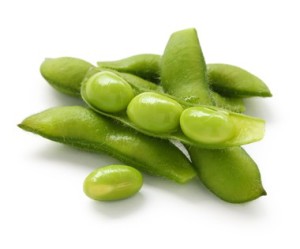 This myth originated with a review discussing the cellular effects of soy isoflavones.
- Some of those effects could theoretically stimulate the growth of breast cancer cells. Others could theoretically inhibit breast cancer cell growth.
-
- The potential stimulatory effects of soy isoflavones were emphasized. The inhibitory effects were ignored.
This was followed by studies looking at effect of soy isoflavones on breast cancer cells in cell culture.
- In some of those studies, soy isoflavones stimulated the growth of breast cancer cells in culture. In other studies, they had no effect on breast cancer growth.
-
- The studies showing soy isoflavones stimulated growth of breast cancer cells were emphasized. The other studies were ignored.
This was followed by studies in mouse model systems.
- In studies with mice lacking an immune system, soy isoflavones stimulated the growth of breast cancer cells. In studies with mice having a functional immune system, soy isoflavones inhibited breast cancer growth.
-
- The studies showing soy isoflavones stimulated growth of breast cancer cells were emphasized. The other studies were ignored.
By now, the myth that soy supplements increased breast cancer risk was well established, so the medical community did the responsible thing. They tested the hypothesis in human clinical trials.
- 18 clinical studies have been published looking at the effect of soy consumption on the risk of developing breast cancer.
-
- Some studies reported that soy consumption decreased breast cancer risk. Others reported no effect of soy consumption on breast cancer risk.
-
- None of the studies found that soy increased breast cancer risk.
-
- A meta-analysis of all 18 studies found that soy consumption slightly decreased breast cancer risk.
- 6 clinical studies have been published looking at the effect of soy consumption on breast cancer recurrence in women who were breast cancer survivors.
-
- Some studies reported that soy consumption decreased breast cancer recurrence. Others reported no effect of soy consumption on breast cancer recurrence.
-
- None of the studies found that soy increased the risk of breast cancer recurrence.
- A meta-analysis of 5 of the studies (a total of11,206 breast cancer survivors) found that soy consumption decreased breast cancer recurrence by 23% and breast cancer mortality by 15%.
In short, the clinical evidence is clear. Soy does not increase either breast cancer risk or breast cancer recurrence in breast cancer survivors. If anything, it has a protective effect.
So, why is the myth that soy increases breast cancer risk so persistent?
- The problem is that some doctors and most social media influencers do not understand the intricacies of human biology and do not know the “secrets only scientists know”.
- They don’t base their opinions on the majority of published studies, as good scientists do. Instead, they select only the studies that support their opinions.
- Motivation also plays a role. They are less interested in the accuracy of the information they post than the number of clicks, subscriptions, and sales their posts generate. And telling people that the scientific community is hiding the truth from them gets a lot more clicks than admitting the scientific community is right.
I have discussed the soy – breast cancer myth in more detail in a previous issue of “Health Tips From The Professor”.
The Folic Acid – Colon Cancer Myth.
 The origin of this myth is slightly different.
- Folic acid is involved in at least 20 metabolic pathways in humans. Some of those pathways could theoretically stimulate cancer cell growth. Others could theoretically inhibit cancer cell growth.
- Several population studies suggested that high intakes of folic acid might protect against cancer, especially colon cancer. So, several placebo-controlled clinical studies were conducted to test that hypothesis.
-
- Some of those studies reported that folic acid reduced cancer risk. Others reported it had no effect.
-
- None of the studies found that folic acid supplementation increased the risk of any kind of cancer.
- In 1998 mandatory folic acid fortification of grain products was introduced in the United States. Since this meant that folic acid intake was increased for a significant portion of the US population, the placebo-controlled studies were repeated a few years later.
- One of those studies reported that high folate intake was associated with an increased risk of colon adenomas. Adenomas are benign, but under certain conditions a small percentage of adenomas progress to carcinomas. This raised a red flag and was widely reported.
- Once again, the medical community did the responsible thing. The American Cancer Society commissioned a very large study (43,512 men and 56,011 women were followed for 8 years) to test the hypothesis that high intakes of folic acid increase the risk of colon cancer.
-
- The study found no evidence that folic acid increased the risk of colon cancer – even at intakes of up to 1,000 ug/day
-
- In fact, the study reported that high intakes of folic acid were associated with a decrease in colon cancer risk.
- Another meta-analysis of placebo-controlled studies with a total of 50,000 participants reported that folic acid supplementation did not increase the risk of any other form of cancer.
Once again, the clinical evidence is clear. Folic acid supplementation does not increase the risk of colon cancer or any other form of cancer. If anything, it has a protective effect.
And once again, the question remains, “Why is the myth that folic acid increases colon cancer risk still around?
- The same factors that have perpetuated the soy-breast cancer myth apply here as well.
- However, there is also an element of greed. Companies selling methylfolate supplements often perpetuate the folic acid-colon cancer myth to persuade people to buy their more expensive supplements.
I have discussed the folic acid – colon cancer myth in more detail in a previous issue of “Health Tips From The Professor”.
Do NMN Supplements Cause Cancer?
 With those two examples for perspective, let’s examine the evidence behind the claim that NMN supplements increase cancer risk.
I searched the scientific literature to look for evidence to support that claim. Unfortunately, there are very few published studies on the relationship between NMN supplements and cancer risk. Here is what I found.
- There are over 300 metabolic pathways in the human body involving NAD+ or NADH. One recent review identified some NAD+-dependent pathways that could theoretically stimulate cancer cell growth and other NAD+-dependent pathways that could theoretically inhibit cancer cell growth.
-
- The reviewer emphasized the pathways that might stimulate cancer cell growth and ignored the pathways that might inhibit cancer cell growth.
- There are five studies utilizing cell culture and animal model systems [which as I have said above are notoriously unreliable for predicting what happens in the human body]
-
- Two of those studies report that NMN may stimulate cancer cell growth. And one of those studies is an abstract from a presentation given at a scientific meeting. It has not yet gone through the peer review process required for publication.
-
- Two of those studies report that NMN may inhibit cancer cell growth.
-
- One study reported that NMN may reduce the side effects of chemotherapy.
- There are currently no published human clinical studies on NMN supplementation and cancer risk.
-
- There is one clinical trial registered with the FDA asking whether an NMN supplement can improve the safety and efficacy of combined radiation and immunotherapy by supporting the immune system and improving normal tissue recovery during treatment. The results of this study are not yet available.
- The lack of clinical data on the effect of NMN supplementation on cancer risk is a problem. As I showed above, it was not until well-designed, placebo-controlled clinical studies were published that we had a definitive answer about the validity of the soy-breast cancer and folic acid-colon cancer claims.
In summary, we currently have no idea whether NMN supplements increase or decrease cancer risk. Based on currently published studies, both possibilities are equally probable. And the little published data we do have is based on cell culture and animal experiments which are notoriously unreliable.
What Does This Mean For You?
 The claims that NMN supplements may increase cancer risk are clearly misleading. As I said above, we currently have no idea whether NMN supplements increase or decrease cancer risk. Based on currently published studies, both possibilities are equally probable.
But the real problem is that the only published studies we have were performed with cell culture or animals, and those kinds of studies do not reliably predict what happens in humans. Without published human clinical studies, any prediction that NMN might increase cancer risk is premature, to say the least. There is simply no clinical evidence to support that claim.
On the other hand, there is good clinical evidence that NMN supplements increase energy, strength, and endurance, especially in adults over 50. So, I understand why you might want to try an NMN supplement.
Without clear guidance from clinical studies, I only have two thoughts to share with you:
- If you currently have cancer or you have had cancer, you may wish to consult your health care provider before starting on an NMN supplement. Just understand that they have no reliable data on which to base their recommendation.
- Until more definitive data are available, I recommend avoiding NMN supplementation while undergoing cancer treatment. I am basing my recommendation on a single animal study suggesting that NMN may interfere with chemotherapeutic agents that damage DNA. And the fact that NADH is involved in DNA repair provides a theoretical rationale for this observation.
It is not clear whether this applies to cancer drugs that do not damage DNA. And it is balanced by animal models suggesting that NMN may improve the results of chemotherapy by enhancing the immune response.
I wish I could provide you with a more definitive answer to your questions about NMN and cancer risk. But, like your health care provider, I don’t have reliable data on which to base my recommendations. And unlike most bloggers and social media influencers, I value accuracy more than clicks.
The Bottom Line
Many of you have asked me about recent claims that NMN supplements increase cancer risk. After a careful search of the scientific literature, I have come to the following conclusions:
The claims that NMN supplements may increase cancer risk are clearly misleading. We currently have no idea whether NMN supplements increase or decrease cancer risk. Based on currently published studies, both possibilities are equally probable.
And the little published data we do have is based on cell culture and animal experiments which are notoriously unreliable. There are no published clinical studies that might provide a more definitive answer.
For more detailed information about these studies and my recommendation on NMN use if you currently have or you have had cancer, read the article above.
These statements have not been evaluated by the Food and Drug Administration. This information is not intended to diagnose, treat, cure, or prevent any disease.
________________________________________________________________________________________________
My posts and “Health Tips From the Professor” articles carefully avoid claims about any brand of supplement or manufacturer of supplements. However, I am often asked by representatives of supplement companies if they can share them with their customers.
My answer is, “Yes, as long as you share only the article without any additions or alterations. In particular, you should avoid adding any mention of your company or your company’s products. If you were to do that, you could be making what the FTC and FDA consider a “misleading health claim” that could result in legal action against you and the company you represent.
For more detail about FTC regulations for health claims, see this link.
https://www.ftc.gov/business-guidance/resources/health-products-compliance-guidance
________________________________________________________________________________________
About The Author
 Dr. Chaney has a BS in Chemistry from Duke University and a PhD in Biochemistry from UCLA. He is Professor Emeritus from the University of North Carolina where he taught biochemistry and nutrition to medical and dental students for 40 years. Dr. Chaney won numerous teaching awards at UNC, including the Academy of Educators “Excellence in Teaching Lifetime Achievement Award”. Dr Chaney also ran an active cancer research program at UNC and published over 100 scientific articles and reviews in peer-reviewed scientific journals. In addition, he authored two chapters on nutrition in one of the leading biochemistry text books for medical students.
Since retiring from the University of North Carolina, he has been writing a weekly health blog called “Health Tips From the Professor”. He has also written two best-selling books, “Slaying the Food Myths” and “Slaying the Supplement Myths”. And most recently he has created an online lifestyle change course, “Create Your Personal Health Zone”. For more information visit https://chaneyhealth.com.
For the past 54 years Dr. Chaney and his wife Suzanne have been helping people improve their health holistically through a combination of good diet, exercise, weight control and appropriate supplementation.